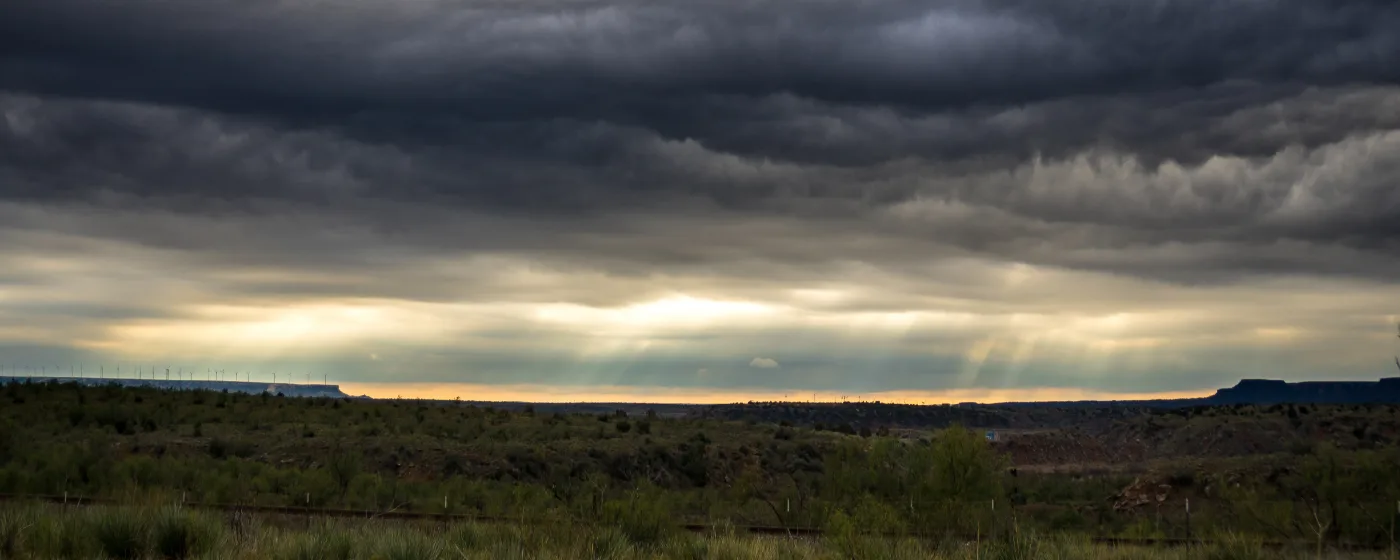
Most people picturing outdoor recreation in West Texas imagine driving a long way to find it. Lubbock surprises them. A city of 273,071 spread across the flat expanse of the Southern High Plains has built a park system that puts a green space within a 10-minute walk of more than half its residents, according to the Trust for Public Land's 2025 ParkScore Index. What it lacks in mountain peaks and river gorges it compensates for with 264 sunny days a year, genuinely uncrowded trails, and two short drives that deliver real water and canyon terrain — a rarity at this latitude.
The city's outdoor identity is shaped by three distinct anchors: Mackenzie Park, the urban workhorse with 248 acres of facilities right inside city limits; Buffalo Springs Lake, a 200-surface-acre reservoir roughly nine miles southeast that functions as the metro's beach substitute; and the Lubbock Lake Landmark, a 336-acre archaeological preserve that doubles as one of the more unusual trail experiences in Texas. Layer in Ransom Canyon's rugged cliffs about nine miles to the east and a growing multi-use trail network threading through neighborhood parks, and the picture that emerges is more complete than newcomers expect.
The honest trade-off is seasonal. Spring winds across the Llano Estacado are relentless — dust storms are a real weather category here, not a footnote — and summer afternoons push well past 100°F often enough that serious trail users shift to early mornings from June through August. But October through April is genuinely excellent: clear skies, mild temperatures, and park facilities that never feel overcrowded the way they do in Dallas or Austin. If you're coming from a city where trail parking is its own ordeal, that trade feels reasonable fast. The sections below cover Lubbock's signature parks, the trail network, water and outdoor recreation, and what weekends actually look like for residents who use the system regularly.
Mackenzie Park: The City's Outdoor Headquarters
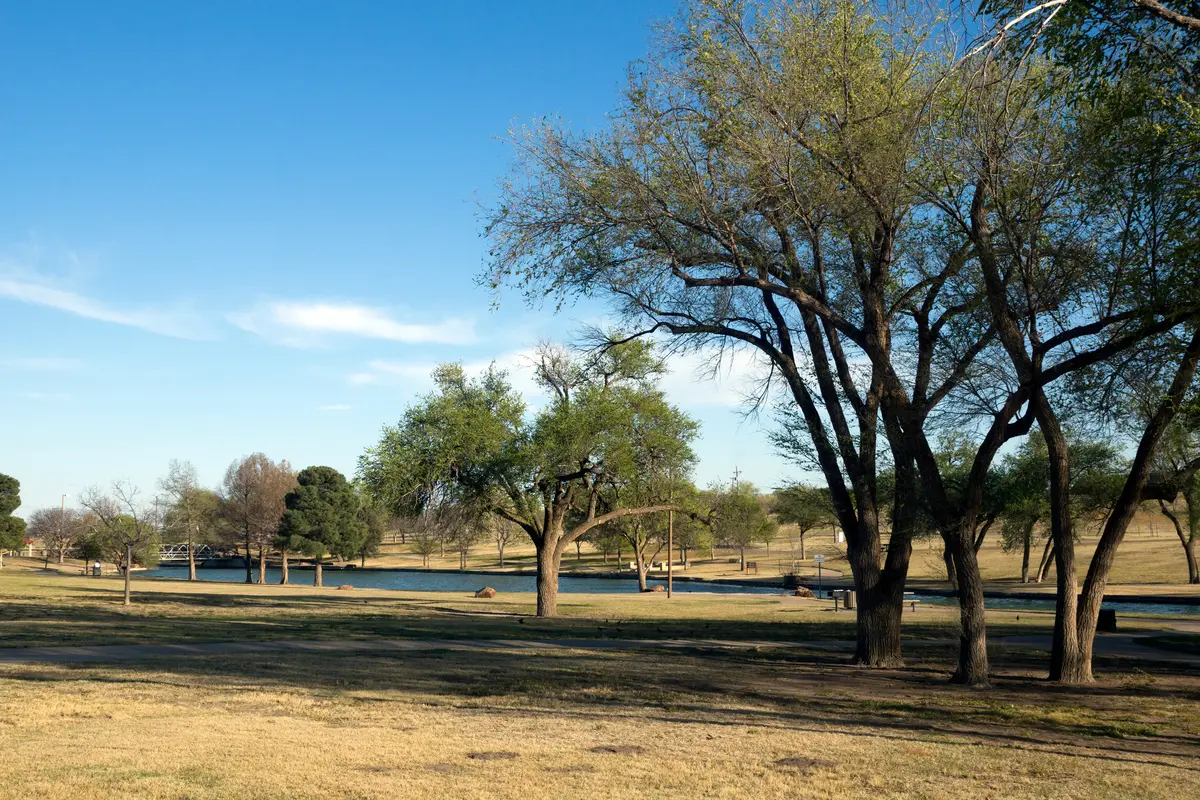
Mackenzie Park does more work per acre than any other green space in Lubbock. At 248 acres, it functions less like a single park and more like a recreation campus — one where golfers, disc golfers, dog owners, softball leagues, trail runners, and live-music fans all show up on the same Saturday afternoon without much friction.
Meadowbrook Golf Course
The golf anchor here is Meadowbrook Golf Course, a municipally operated facility with two full 18-hole layouts and a driving range. Serious golfers in Lubbock treat Meadowbrook as their default home course, and the volume of play it handles makes the conditions reasonably consistent year-round on the West Texas calendar.
Trails, Dog Park, and Fields
Mackenzie's trail system connects hikers, cyclists, and equestrians across the park's terrain. Canyon Run Dog Park gives off-leash access for residents who don't want to drive to find it. Two disc golf courses draw a dedicated local contingent, and the softball and baseball fields host organized league play through most of the year.
Prairie Dog Town and the Amphitheatre
Prairie Dog Town is exactly what it sounds like — a managed habitat where a resident black-tailed prairie dog colony has lived for generations, close enough to observe in detail. It's the kind of attraction that reads as a minor curiosity until you actually stand next to it with kids, at which point it becomes the whole reason you came. The Moonlight Musicals Amphitheatre hosts outdoor performances through the warmer months, and on those evenings the park fills with people in camp chairs who clearly consider this a weekly ritual rather than a special occasion.
Best for: Families Nature Walkable amenities
Lubbock Lake Landmark: Trails with 12,000 Years of Context
The Lubbock Lake Landmark is the most unusual outdoor space in the city, and also the most underused by newcomers who mistake it for a history museum rather than an active trail destination. It is both — a 336-acre National Historic Landmark and State Archeological Landmark managed by the Museum of Texas Tech University, free to the public, and threaded with 4.5 miles of walking and biking trails through native mixed-grass plains habitat.
The Trail System
Three distinct trails run through a meander of Yellowhouse Draw at the northern edge of the city. The Landmark Nature Trail covers 3.5 miles and is open to both walkers and cyclists. The Llano Estacado Wildflower Trail offers a shorter 0.5-mile loop through the preserve's native plant communities. The Archaeological Trail puts you on ground that holds evidence of nearly 12,000 years of continuous human occupation on the Southern High Plains — interpreted via signage that is genuinely informative rather than perfunctory.
Night Hikes and Volunteer Archaeology
What separates this place from a standard nature preserve is the programming. Monthly After Dark Night Hikes run through much of the year, and they draw a different crowd than the morning trail regulars — people who want the Llano Estacado sky away from city light. The volunteer archaeology program has run for decades and brings researchers from around the world to work alongside staff in survey, excavation, mapping, and lab work, all at no cost to participants with room and board provided. It is a credible reason for someone with a research background to choose Lubbock when they might otherwise pass.
Six months in, many residents who visited once out of curiosity find themselves back on the Landmark trails regularly — partly because the crowds never arrive, and partly because the landscape reads differently once you understand what's underneath it.
Best for: Nature Quiet Views

Buffalo Springs Lake and Ransom Canyon: Getting Off the Flatlands
The two most important things to know about outdoor recreation within easy reach of Lubbock are both a short drive east or southeast of the city, and neither is technically inside it. That's the relevant geography: the flat plateau that defines Lubbock proper gives way, quickly, to canyon terrain and reservoir water once you move off it.
Buffalo Springs Lake
Buffalo Springs Lake is a 200-surface-acre reservoir roughly nine miles southeast of Lubbock that functions as the closest thing the metro has to a beach weekend without leaving the region. The facility supports boating, jet skiing, canoeing, kayaking, ATV trails, nature trails, two beaches, a marina with watercraft rentals, and both tent and RV camping. Fishing targets largemouth bass, crappie, channel catfish, striped bass, and walleye.
In February 2025, the lake reduced its gate admission fees for the first time in its history, and active-duty and retired veterans receive free admission. For families weighing weekend options, this matters: a full afternoon at the lake no longer requires the budget commitment it once did.
The catch, and it is a real one, is that this is West Texas water — meaning the lake level and conditions vary with rainfall patterns, and drought years are not theoretical. Most summers work fine. In a dry stretch, call ahead.
Ransom Canyon
About nine miles east of Lubbock in Yellow House Canyon, Ransom Canyon is built around Lake Ransom Canyon, a 96-acre reservoir on the North Fork of the Double Mountain Fork of the Brazos River. The draw is as much visual as recreational: the canyon walls and rugged terrain look nothing like the surrounding plateau, and the hiking gives you elevation changes and canyon views that feel genuinely remote despite the short drive. Boating and fishing are available on the lake. For newcomers from flatter regions of Texas, this is often the first place that actually surprises them.
For more on the neighborhoods surrounding Ransom Canyon and how proximity to these outdoor anchors affects where people choose to live, see the Lubbock neighborhoods guide.
Best for: Families Nature Views
Looking to buy in Lubbock? Estimate your payment.
Enter your numbers to see an estimated monthly mortgage payment.
Estimate only. Excludes HOA fees and mortgage insurance. The interest rate above is a starting point, not a quoted rate — replace it with your own to see real numbers. Insurance is a flat placeholder, not a Lubbock quote.
Trails, Neighborhood Parks, and Weekends & Local Favorites
Beyond the signature destinations, Lubbock's everyday park infrastructure is more functional than its reputation suggests. The Trust for Public Land figures confirm that half the city's population lives within a 10-minute walk of a park — meaningful in a city this spread out — and the trail network has enough mileage to support serious training, not just casual strolling.
The Trail Network
Dunbar Historic Lake anchors one of the city's more substantial off-road trail systems, with a 6.98-mile and a separate 2.71-mile bike trail loop. Additional walking and running tracks are distributed across dozens of parks citywide. The terrain is flat throughout — ideal for pace work and long steady-state efforts, less so if you want climbing. Most runners who train for road races use Lubbock's trails and streets regularly without issue.
What Weekends Look Like
In the cooler months, a Saturday in Lubbock's park system looks like: morning trail run at the Landmark or Dunbar, afternoon golf or disc golf at Mackenzie, and an early evening at the Moonlight Musicals if there's a show. Spring and fall drive the heaviest park use because the weather cooperates and there's no school-year conflict pulling people indoors. Summer compresses outdoor activity into early mornings — genuinely early, before 8 a.m. — and the lakes absorb afternoon demand when shade is scarce on open trails.
Weekends & Local Favorites
After a morning at the Landmark or a round at Meadowbrook, the local dining and coffee scene fills in the rest of the day. J&B Coffee, Sugar Browns Coffee Co., Monomyth Coffee, Ooo La Lattes, and He-Brews Coffee all have followings among the outdoor-and-coffee crowd that overlaps heavily in this city. On the food side, Spanky's, Cast Iron Grill, Triple J Chophouse & Brew Co., Corralito Steak House Lubbock, and Aspen Creek Grill are the sit-down options residents return to consistently. The Lubbock Downtown Farmers Market and Texas Country Farmers Market both run through the growing season and are where a lot of the after-park Saturday foot traffic lands.
For families with school-age kids, youth sports leagues and UIL athletics at the middle and high school level are the other major driver of weekend park use — fields at Mackenzie and throughout the system host organized play most of the year. The Lubbock schools guide covers those programs in more detail.
Best for: Families Active commuters Value
Local Expert Takeaway: Lubbock's park system is built for residents, not tourists — which means Mackenzie Park's trails and disc golf courses are never crowded, the Lubbock Lake Landmark trails are often empty on a Tuesday morning, and Buffalo Springs Lake still has room to put a boat in without a two-hour wait. The seasonal window matters: plan your outdoor life around October through April and you get one of the better mild-weather recreation climates in Texas. Plan it around July afternoons and you'll spend more time inside than you expected.
Quick Takeaways & FAQs
✅ Mackenzie Park packs 248 acres of trails, two disc golf courses, a championship golf facility, a dog park, and Prairie Dog Town into a single city park — a genuinely strong urban recreation anchor.
⚠️ West Texas wind and summer heat are real limiting factors: dust storms arrive with spring and temperatures regularly exceed 100°F, compressing outdoor activity into early mornings from June through August.
📍 The Lubbock Lake Landmark is free, rarely crowded, and offers 4.5 miles of trails through a native mixed-grass plains preserve with nearly 12,000 years of archaeological history underfoot — most newcomers walk it once out of curiosity and keep coming back.
Is there good hiking near Lubbock?
Can you swim or boat near Lubbock?
What parks in Lubbock are good for kids and families?
How good is Lubbock's trail system for running and cycling?
What is the Lubbock Lake Landmark and is it worth visiting?
Moving to Texas?
Tell us what you need help with and we'll connect you with local resources.
