
What Is Living in Wichita Falls, Texas Like?
Maybe your company is relocating you here because of Sheppard Air Force Base. Maybe you've been priced out of the Dallas–Fort Worth market and someone mentioned that homes in Wichita Falls go for a fraction of what they cost in the Metroplex. Either way, the first thing most newcomers say after a few months is this: they didn't expect a city of 101,951 people to feel so self-contained. Wichita Falls sits on the Wichita River in the Red River Valley, about 115 miles northwest of Fort Worth, where I-44 and US-287 carry most of the cross-state traffic. It is not a suburb of anywhere — it has its own downtown, its own university, and its own economic engine, which is one of the largest Air Force bases in the country.
Sheppard Air Force Base is the gravitational center of the local economy. The base's 82nd Training Wing is the U.S. Air Force's largest technical training wing, running the world's only internationally manned and managed flying training program. That single installation contributed an estimated $2.8 billion to the Texas economy in 2025, according to the Texas Comptroller of Public Accounts. Beyond the base, Wichita Falls Independent School District holds a D rating, according to the Texas Education Agency — an honest number that matters if you have school-age children and one the district is working to improve. Midwestern State University adds a college-town layer to what would otherwise be a purely military and industrial city, and the city itself is among the major employers in the region.
The case for Wichita Falls on housing alone is easy to make. The typical home price here stands at $176,679 (July 2026), well below what buyers encounter in virtually any Texas metro, and the median household income of $60,177 is at or above the income needed to buy at that level — a balance that is genuinely rare in today's Texas market. See the full picture on the cost of living page. Daily life runs on 240 sunny days a year and hot summers that push August highs to around 97°F — the kind of heat that clears the trails by midmorning and fills them again after 7 p.m. The Circle Trail, a city-wide paved network planned at roughly 24 miles, gives runners and cyclists a genuine infrastructure to work with, and Lucy Park's 178 acres along the Wichita River is where the city actually gathers.
Whether you're considering a move or just researching the area, the sections below break down Wichita Falls's neighborhoods, housing market, commute patterns, local employers, and what daily life here is really like.

Wichita Falls at a Glance
Looking to buy in Wichita Falls? Estimate your payment.
Enter your numbers to see an estimated monthly mortgage payment.
Estimate only. Excludes HOA fees and mortgage insurance. The interest rate above is a starting point, not a quoted rate — replace it with your own to see real numbers. Insurance is a flat placeholder, not a Wichita Falls quote.
Why Are People Moving to Wichita Falls?
The short answer is Sheppard Air Force Base. A significant share of every new resident class arrives because of a military assignment, a defense contractor role, or a civilian position on the base. Sheppard trains graduates across aircraft maintenance, logistics, civil engineering, and nuclear operations — and that pipeline brings a steady, rotating population of people who arrive, plant roots, and in many cases decide to stay after their orders end.
But military relocation is not the only story. Wichita Falls is increasingly drawing remote workers and retirees from higher-cost Texas cities who want to own a home outright, not spend thirty years paying down a mortgage that started at $600,000. The math is straightforward here in a way it simply is not in Austin or Dallas.
The city is also making deliberate moves to diversify its economy. In 2025, the city approved the sale of 250 acres at its Business Park to a data center developer at a record $65,000 per acre — a transaction that signals a new category of employer arriving in North Texas's most affordable large city. That same year, the city purchased Sikes Senter Mall for $26 million, betting on a downtown-adjacent redevelopment that could reshape the commercial core.
The Employer Base
Sheppard Air Force Base is the anchor, but the employer list runs wider than the base alone. The major regional health system serves as one of the largest private employers in the county. Wichita Falls ISD and the City of Wichita Falls together employ a substantial slice of the workforce. Midwestern State University — a Texas Tech University System school — adds academic and research employment and brings a student population that keeps the restaurant and service economy running.
For buyers weighing the job market honestly: this is not a tech hub or a distribution corridor city. Many residents work at the base, in healthcare, in education, or remotely. That concentration is both a strength (the base is not going anywhere) and a practical reality (if your career is in finance, advertising, or media, your options here are narrower).
| Employer | Sector | Who It Draws |
|---|---|---|
| Sheppard Air Force Base | Military / Federal | Commuter Families |
| United Regional Health Care System | Healthcare | Commuter |
| Wichita Falls ISD | Education | Families |
| Midwestern State University | Higher Education | First-Time Buyers |
| City of Wichita Falls | Municipal Government | Value |
The base's economic reach extends well beyond its gates — defense contractors, training vendors, and supply-chain businesses all cluster nearby, adding private-sector depth to what looks on paper like a government-heavy town.
Who Actually Moves Here
Military families on PCS orders make up the most visible wave, but the second wave is quieter: Texas families priced out of suburban DFW who want a yard, a two-car garage, and a house payment they can manage on one income. A third group — smaller but growing — is remote workers in tech and finance who realized they could live anywhere and chose somewhere with actual housing affordability and 240 sunny days a year.
What Daily Life Feels Like in Wichita Falls
Wichita Falls is a driving city. Almost everything — work, groceries, school drop-off, the weekend errand run — happens by car, and the city's grid is laid out in a way that makes most trips under fifteen minutes. That compressed geography is one of the things newcomers appreciate most after spending years crawling through Dallas traffic.
The summers are genuinely brutal. August highs around 97°F are not a fluke — they are the baseline, and the humidity can make it feel worse. Locals structure outdoor time accordingly: early morning runs on the Circle Trail, afternoons indoors, and evenings back outside once the temperature drops. Tornado season is real, and the city takes it seriously. Most households know their plan. If you are moving from the Pacific Northwest or the Northeast, the severe-weather culture here will take some adjustment.
The Seasonal Rhythm
Late August is the city's most energetic stretch of the year. The Hotter'N Hell Hundred — first held in 1982 as part of Wichita Falls's centennial celebration — is the largest sanctioned century bicycle ride in the United States, drawing cyclists from across the country and beyond. What began as a single road ride has become a four-day fitness festival with gravel, mountain bike, and trail-run events spreading across downtown. If you move here in summer, you will know about it by the time August arrives.
Winters are mild by most standards — January averages around 43°F, and snowfall averages only about 4.1 inches a year. The mild stretch between October and April is when the city feels most livable outdoors, and Lucy Park fills up on weekend afternoons in a way it simply cannot in August.
Where Families Actually Gather
Lucy Park is the social center — 178 acres along the Wichita River, with the man-made Wichita Falls waterfall that recirculates roughly 35,000 gallons per minute. It is where youth sports practices happen, where the city's running community logs miles on weekday mornings, and where families spread out on a Saturday when the weather cooperates. The River Bend Nature Center, a 20-acre nonprofit facility with a 7,000-square-foot butterfly conservatory and nature trails, draws a steady stream of school groups and families looking for something genuinely educational on a weekend afternoon.
The school district's rating — Wichita Falls ISD holds a D rating, according to the Texas Education Agency — is the most common reason families pause before committing. Some families supplement with private schools; others buy in specific attendance zones and find results better than the district-wide numbers suggest. The full breakdown is on the schools page. It is worth reading before you tour neighborhoods.
Crime follows a split picture. The city carries a violent crime rate of 4 per 1,000 residents and a property crime rate of 27 per 1,000 residents — the violent rate is near the national figure, while the property crime rate runs higher than both state and national averages. Neighborhood choice matters more here than in lower-crime cities; the safety page breaks down where the differences sit.
The Wichita Falls Housing Market Right Now
The typical home price in Wichita Falls stands at $176,679 (July 2026, Zillow Home Value Index). That figure puts the city in a different conversation from virtually any other Texas market of comparable size — and unlike many affordable cities, the median household income here is at or above what it takes to actually buy at that level.
The city-wide typical rent runs $1,318 per month (Zillow ZORI, July 2026), which reflects the same basic dynamic: housing here is priced for people who actually live and work here, not for investors importing pricing from a different market. The full cost picture — taxes, utilities, groceries — is on the cost of living page.
What the Price Point Gets You
At the typical price, buyers are looking at established single-family homes — three bedrooms, a yard, a garage — in areas like Colonial Park or Faith Village. Entry-level homes start below that figure, and the upper end of the market in areas like Stone Lake Estates or Sikes Estates runs meaningfully higher, though still well below what comparable construction costs in suburban DFW.
The effective property tax rate is 1.77%, which is notable for Texas — the state has no income tax, and property tax carries much of the fiscal load. It is worth modeling into your monthly budget carefully, particularly if you are comparing to a state that spreads tax burden differently. The cost of living page has the full breakdown.
The Geographic Reality
Neighborhood character in Wichita Falls is shaped by two things: distance from the base and the age of the housing stock. Older, established neighborhoods closer to the city core tend to offer more character but more maintenance. Newer construction pushes toward the southwestern and northwestern edges of the city. Some areas cost noticeably more than others, but in a market at this price point, the spread is more manageable than in most Texas cities. The neighborhoods page maps this out in detail.
One thing buyers from higher-cost markets consistently underestimate: the property tax bill at closing. Texas's rate is real, and on a $176,679 home at 1.77%, it adds up in a way that catches people expecting California-style Prop 13 limits or PNW-style reassessment caps. Run the full numbers before you finalize your budget.
Wichita Falls Neighborhoods
Wichita Falls has several distinct areas — each with its own character and appeal. Here’s a breakdown to help you narrow down where to focus your home search.
🏡 Floral Heights (West Floral Heights Historic District)
One of Wichita Falls's most architecturally distinct areas, Floral Heights draws buyers who want older homes with genuine character — craftsman bungalows, mature trees, and streets that feel settled rather than developed. It suits history-minded buyers and those who prioritize walkability to the city's cultural core over newer construction.
🏠 Sikes Estates
Sikes Estates is a mid-century neighborhood with a neighborhood feel built around proximity to Sikes Senter Mall — a commercial anchor the city purchased in 2025 for redevelopment. It attracts buyers who want established residential character with easy access to retail and medical services.
🌳 Tanglewood
Tanglewood is a quieter residential area popular with families who want established housing stock and neighborhood stability. The area has a settled, low-traffic character that works well for buyers prioritizing a calm daily environment over urban proximity.
🏘 Faith Village
Faith Village sits in the western part of the city and has long attracted families and established residents who value its neighborhood cohesion and access to local schools. The housing stock runs toward mid-century single-family homes with yards and a residential pace that feels genuinely unhurried.
🏔 Colonial Park
Colonial Park is a solidly mid-city neighborhood that offers accessible pricing and a practical location for buyers whose daily routine keeps them moving across different parts of Wichita Falls. It suits first-time buyers and working families who need a reasonable starting point without committing to the city's edges.
🌆 Stone Lake Estates
Stone Lake Estates sits at the upper end of the Wichita Falls housing market, offering larger homes and a more manicured residential feel. It draws buyers looking for more square footage and neighborhood polish — the kind of area where the houses are newer and the lots more generous.
Pros & Cons of Living in Wichita Falls
The Pros
- Very affordable housing and cost of living compared to most of Texas
- Home to Sheppard Air Force Base, a stable, recession-resistant employer
- Short, easy commutes across town (average around 15 minutes)
- College-town amenities from Midwestern State University without big-city prices
The Cons
- Crime rates, especially property crime, run notably above the national average
- Population has been flat to slightly declining for years, limiting job and amenity growth
- Extreme summer heat and strong winds are a real adjustment for newcomers
Getting Around & Commuting in Wichita Falls
Wichita Falls is built for cars, and most residents never seriously consider anything else for their daily routine. The city's highway network — I-44 (Central Freeway), US-82 and US-277 (Kell Freeway), US-281 (Henry S. Grace Freeway), and US-287 (East Central Freeway) — knits the city together efficiently, and the practical result is that almost no commute within city limits takes more than twenty minutes on an average day.
The main commute anchor is Sheppard Air Force Base, about five miles north of the central business district. For military families, the drive is short — about 15 minutes to Sheppard Air Force Base or downtown Wichita Falls. That proximity means most base employees can live in virtually any part of the city without adding meaningful drive time.
The Kell Freeway Dynamic
The Kell Freeway — carrying both US-82 and US-277 — is the east-west spine that most residents use for daily movement across the city. Rush-hour congestion exists, but by the standards of any Texas metro, it is minor. The city does not have the stop-and-go culture of DFW or San Antonio; most commuters are moving, not sitting.
For residents making the trip to Fort Worth or Dallas — roughly 115 miles southeast — I-44 to US-287 is the primary route. That drive runs about two hours each way, which makes Wichita Falls a genuine commuter city for the Metroplex only for remote workers doing occasional in-office days, not for people with five-days-a-week obligations downtown.
Transit and Alternatives
Falls Ride, the Wichita Falls Transit System, operates local bus service across the city. It works for some riders, particularly those commuting to downtown employment or university destinations, but most residents treat the car as the default and the bus as a backup. Greyhound service connects Wichita Falls to regional destinations for longer trips.
The Wichita Falls Regional Airport (SPS) offers connecting service to DFW through American Airlines, which opens up the full domestic network. For anyone flying regularly for business, the connection to DFW is the practical entry point. A serious travel itinerary means driving to the airport or accepting the connection — flying nonstop from Wichita Falls is not the experience this city offers.
The Circle Trail — a paved network with roughly 24 miles planned — is becoming a genuine cycling infrastructure for recreation and, for some residents living close to the trail corridor, a practical commute option. A section connecting Loop 11 to Lucy Park broke ground in July 2025, funded largely by Texas Department of Transportation grants.
Schools in Wichita Falls
Families relocating to Wichita Falls have public, private, and higher-education options nearby. Here’s a quick overview.
🎓 School District
Wichita Falls Independent School District serves K–12 students across Wichita Falls and the surrounding area. Rated D (source: Texas Education Agency, 2025 A-F accountability rating (2024-25 school year)).
🏆 Graduation Rate
The 4-year high-school graduation rate here is approximately 96%.
📚 Higher Education
Texas’s public universities — the University of Texas at Austin, Texas A&M University, and the University of Houston — offer four-year degrees statewide, with one of the largest community college systems in the country (50+ public community college districts) providing two-year and workforce programs.
🌐 Online Learning
UT Austin Online and Texas A&M University Online offer fully accredited online degrees for remote learners across the state.
Safety in Wichita Falls
A quick look at how Wichita Falls compares on the numbers that matter most when weighing a neighborhood or a move.
🛡 Violent Crime
Approximately 4 per 1,000 residents.
🔒 Property Crime
Approximately 27 per 1,000 residents.
Compared to the most recent national figures from the Bureau of Justice Statistics (2024), Wichita Falls’s violent crime is above the national average (about 3.7 per 1,000), and property crime is above the national average (about 18.4 per 1,000).
Against Texas as a whole, Wichita Falls’s violent crime is about the same as the state average, and property crime is somewhat above the state average (Bureau of Justice Statistics, Crime Known to Law Enforcement, 2024 (tables 2 and 3)).
Crime rates can vary a lot within a single city, so the citywide numbers above are only a starting point. Some neighborhoods in Wichita Falls run well below these averages, while others run higher — the kind of block-by-block detail that matters most when you’re actually choosing where to live. The full guide below breaks it down neighborhood by neighborhood.
Working in Wichita Falls
Wichita Falls’s largest employers span several industries — here are some of the anchors of the local job market.
🏛 Sheppard Air Force Base
Military
🏥 United Regional Health Care System
Healthcare
🎓 Wichita Falls Independent School District
Education
🎓 Midwestern State University
Higher education
🏛 City of Wichita Falls
Municipal government
Parks & Recreation in Wichita Falls
Some of the outdoor spaces that shape everyday life in Wichita Falls.
🌱 Wichita Falls (man-made waterfall)
🌱 Lucy Park
Wichita Falls residents don’t have to go far for green space — spots like Wichita Falls (man-made waterfall) and Lucy Park are part of everyday life here, whether that’s a morning walk, a weekend hike, or just somewhere to unwind outside. The full guide below covers more of what Wichita Falls has to offer for parks and outdoor recreation.
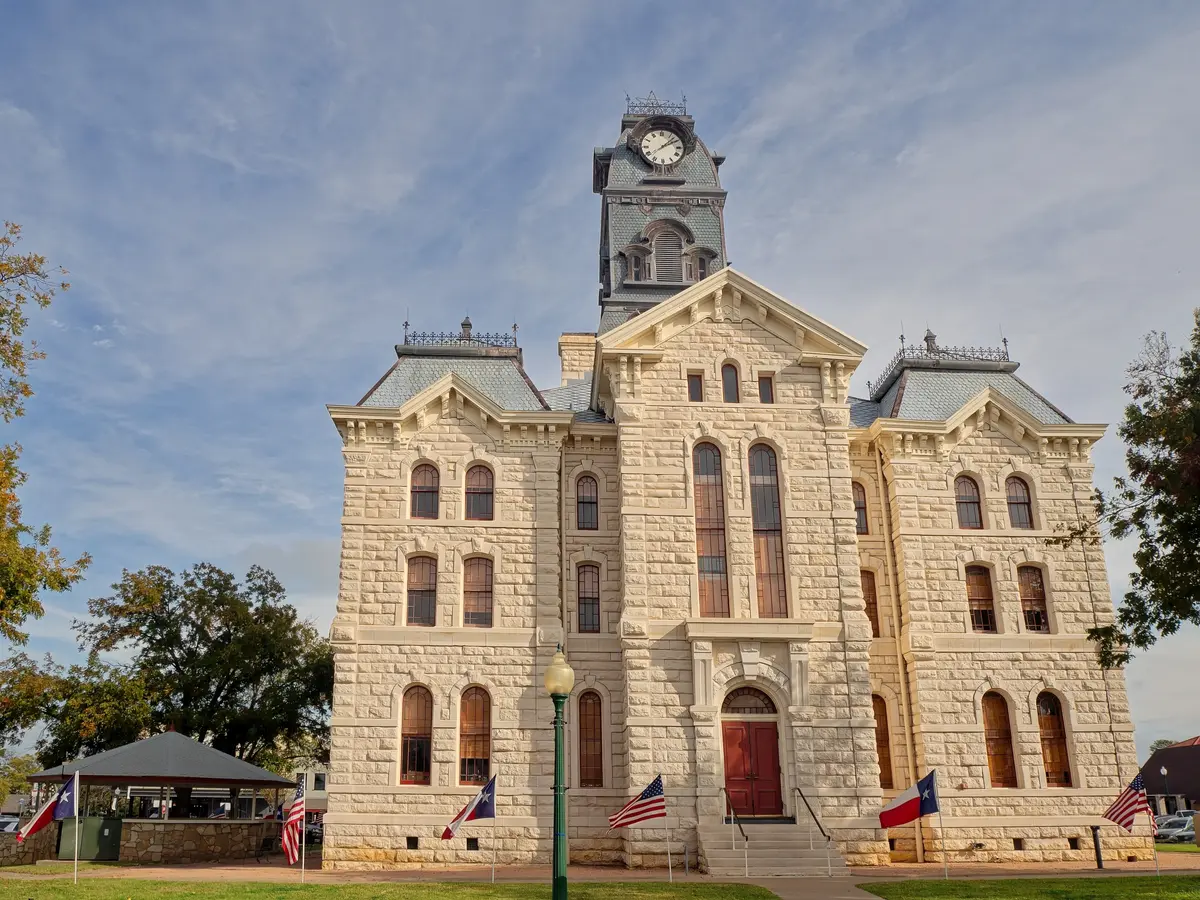
Retiring in Wichita Falls
Wichita Falls draws retirees for its balance of amenities, outdoor access, and cost. Here’s what to weigh.
🌤 Climate
Wichita Falls gets 240 sunny days a year, with mild winters averaging around 43°F in January and only about 4.1 inches of annual snowfall. Summers are intense — August highs average around 97°F — so outdoor activity tends to happen in the morning and evening. Spring brings tornado risk, which is part of life in this part of North Texas.
🍴 Lifestyle
The city offers a genuinely self-contained daily life at a fraction of what it costs in Texas metros. Lucy Park, the River Bend Nature Center's butterfly conservatory, the Kell House Museum, and the Museum of North Texas History give retirees meaningful ways to spend time without driving far. The dining scene has real local character, particularly among the independent steakhouses and coffee houses.
🏚 55+ Communities
No 55+ communities were found in Wichita Falls. Retirees here typically buy single-family homes in established neighborhoods or explore senior apartment options through local property managers. The healthcare infrastructure — centered on the regional health care system inside city limits — is a meaningful draw for retirees prioritizing medical access.
✈ Getting Around
A car is essential for daily life in Wichita Falls — most destinations are under fifteen minutes from nearly anywhere in the city. The Wichita Falls Regional Airport (SPS) offers connecting service to DFW via American Airlines, making the broader travel network accessible. The Circle Trail gives active retirees a quality paved route for walking and cycling.
🏛 Texas Taxes for Retirees — What to Know
- No state income tax — Texas has no personal income tax — constitutionally protected under Article VIII, Section 24. Social Security, pensions, 401(k)/IRA withdrawals, and annuity payments are all untaxed at the state level, with no state return to file.
- Sales tax is the tradeoff — The state sales tax is 6.25%, and local add-ons bring the combined rate in Wichita Falls to 8.25% (Texas Comptroller of Public Accounts, city sales and use tax rates, July 2026). Groceries and prescription drugs are exempt.
- Property taxes — the real tradeoff — Texas’s effective property tax rate averages about 1.40%, among the highest in the country, since property tax (not income tax) funds most local government and schools.
- Over-65 homestead exemption and school-tax freeze — Homeowners 65+ (or disabled) get an additional $60,000 exemption from their home’s value for school district taxes, on top of the general homestead exemption — $200,000 off school taxable value combined, following November 2025’s Proposition 11 (SB 23), which raised the over-65 exemption to $60,000, and Proposition 13 (SB 4), which raised the general homestead exemption to $140,000. Once claimed, your school district tax bill is frozen at that year’s amount and cannot increase as home values rise, and the ceiling can transfer if you move to a new home within Texas.
- Deferral option if cash is tight — Homeowners 65+ can defer property tax payment entirely for as long as they live in the home, rather than paying it currently — interest accrues, but no forced sale.
- No estate or inheritance tax — Texas has no estate tax, no inheritance tax, and no gift tax.
- No separate capital gains tax — Because Texas has no state income tax, capital gains — including on investments and home sales — are not taxed at the state level at all, unlike states such as Washington that tax capital gains separately from income.
Tax laws change frequently and individual situations vary. This is general information, not tax advice — always consult a qualified Texas tax professional or CPA for personalized retirement tax planning.
Weekends & Local Favorites in Wichita Falls
Wichita Falls has a local food and coffee scene that punches above what most people expect from a North Texas city of this size. The independent businesses here have real character — and they are concentrated enough that a weekend of exploring does not require covering a lot of ground.
Food & Coffee
For steakhouse dining — which is taken seriously in this part of Texas — McBride's Steakhouse and McBrides Land & Cattle Co are the names locals point to first, and Wellborn 2R Steakhouse rounds out the category for anyone who wants to eat beef done right on a Friday night. Backporch Drafthouse covers the casual end with a relaxed atmosphere that works for groups. Pelican's is worth knowing for something lighter.
On the coffee side, 8th St. Coffee House and Frank & Joe's Coffee House are where regulars establish their morning routines — both are independent and both have the kind of community-hangout energy that keeps people coming back. Margie's Bakery and Deli is the morning stop for baked goods. The Duck Coffee Company draws a younger crowd, and Snoba Asian Dessert Cafe fills a specific and much-appreciated niche in the dessert and specialty drink category.
Outdoors & Culture
Lucy Park is the city's outdoor anchor — 178 acres along the Wichita River, with the man-made waterfall that recirculates 35,000 gallons per minute and recreates what the original falls looked like before an 1886 flood wiped them out. Lake Wichita Park gives a different outdoor experience on the city's south side, and the River Bend Nature Center's butterfly conservatory — housed in a 7,000-square-foot glasshouse — is one of the genuinely surprising facilities in a city this size.
The Wichita Falls Skate Park is a fixture for the younger crowd, and the Circle Trail is where the running and cycling community has built its weekly habits. The Downtown Wichita Falls Farmers Market and Wichita Falls Farmers Market give residents fresh local produce options through the growing season.
For history and culture, the Kell House Museum — an early 1900s home with original Kell family items — is worth an afternoon. The Museum of North Texas History and the Wichita Falls Museum of Art at MSU Texas both sit downtown and offer a more complete picture of what this region was and what it has become. And the World's Littlest Skyscraper — 40 feet tall, built on a 1919 scam involving blueprints dimensioned in inches instead of feet — is the kind of landmark that tells you something real about the city's sense of humor about itself.
The Multi-Purpose Events Center (MPEC) handles the larger concerts, trade shows, and sporting events that cycle through the city, and the Hotter'N Hell Hundred weekend in late August turns downtown into something resembling a festival city for four days — easily the most energetic stretch of the city's calendar year.
Local favorites in Wichita Falls
Restaurants
- Backporch Drafthouse
- McBride's Steakhouse
- McBrides Land & Cattle Co
- Wellborn 2R Steakhouse
- Pelican's
Outdoors
- Lucy Park
- River Bend Nature Center
- Lake Wichita Park
- Wichita Falls Skate Park
- Circle Trail
Coffee
- 8th St. Coffee House
- Frank & Joe's Coffee House
- Margie's Bakery and Deli
- The Duck Coffee Company
- Snoba Asian Dessert Cafe
Farmers Markets
- Downtown Wichita Falls Farmers Market
- Wichita Falls Farmers Market
Top Things Locals Say About Wichita Falls
The best intel about a city comes from the people who actually live there. Here’s what Wichita Falls residents say when newcomers ask the questions everyone’s thinking.
“I knew it would be affordable, but I didn't expect how short everything would be. My commute to the base is twelve minutes, groceries are ten minutes the other direction, and I've never once sat in real traffic. Coming from San Antonio, that alone changed my quality of life.”
— Recent Wichita Falls home buyer
“What's the most surprising thing about living in Wichita Falls?”
How self-contained it feels. You don't need to drive to Fort Worth to have a full life here — there are real restaurants, a university, a museum, good parks, and a serious cycling and running community. The Hotter'N Hell Hundred in August puts the city on the national map in a way that surprises a lot of newcomers who thought they were moving somewhere low-key.
“What do locals love most about Wichita Falls?”
The commute — or lack of one. Most people can get anywhere in the city in fifteen minutes, which sounds like a small thing until you've spent years in DFW traffic. Lucy Park along the Wichita River is genuinely beautiful in the cooler months, and the independent coffee shops and steakhouses have the kind of regulars-know-your-order character that takes years to build.
“What should newcomers to Wichita Falls know?”
Take the summer heat seriously. The Circle Trail is wonderful, but running or cycling after 9 a.m. in July or August is genuinely rough — locals are out by 6:30 and done before the temperature spikes. Also: tornado season is real. Get a weather alert app on your phone before your first spring here, and know where your shelter is. It's not a constant worry, but it's not something to be casual about either.
“How much do you need a car in Wichita Falls?”
Almost entirely. Falls Ride bus service exists and covers the main corridors, but the overwhelming majority of residents drive for everything — groceries, work, school, weekend plans. The city's grid is efficient and traffic is light compared to any Texas metro, so car ownership here is more pleasant than in most places. A serious shopping run for anything outside the everyday staples may mean driving out of town.
Cities Near Wichita Falls
Other communities near Wichita Falls worth a look — each with its own character and price point.
| City | Distance | Best For | Vibe | Median Rent | Median Buy |
|---|---|---|---|---|---|
| Burkburnett | 14 mi | Commuters to Sheppard AFB, value buyers | Small-town, established, low-key | $900 | $165,000 |
| Iowa Park | 12 mi | Families, rural feel near city | Quiet, agricultural, tight-knit | $950 | $149,000 |
| Henrietta | 30 mi | Land buyers, wide-open space seekers | Rural, county-seat character, peaceful | $800 | $140,000 |
More Helpful Guides for Wichita Falls
Going deeper on Wichita Falls? Our blog series covers everything from first-time buying to retiring here — explore the guides below.
Local Expert Takeaway: Wichita Falls is one of the few Texas cities where the median household income actually covers the mortgage on the typical home — that balance is real and rare, and it is the starting point for understanding why people are moving here from DFW and beyond. The trade-off is honest: the school district holds a D rating from the Texas Education Agency, the summer heat is intense, and the job market leans heavily on Sheppard AFB and healthcare. Buy in a strong attendance zone, run the Circle Trail before 8 a.m. in August, and spend a Saturday at Lucy Park before you make your decision — the city reveals itself quickly once you are actually in it.
Quick Takeaways & FAQs
✅ The typical home price of $176,679 (July 2026) is among the most accessible in any Texas city above 100,000 people, and local incomes support it.
⚠️ Wichita Falls ISD holds a D rating from the Texas Education Agency — school quality is the most common reason families pause before committing to a neighborhood.
📍 The Hotter'N Hell Hundred, the largest sanctioned century bike ride in the United States, launches from downtown every late August and draws cyclists from across the country — plan your moving timeline accordingly.
Is Wichita Falls affordable compared to other Texas cities?
How are the schools in Wichita Falls?
What is the main employer in Wichita Falls?
What is the weather like in Wichita Falls?
Can you get around Wichita Falls without a car?
Helpful Links for Moving to Wichita Falls
Moving to Texas?
Tell us what you need help with and we'll connect you with local resources.
