
What Is Living in Deer Park, Texas Like?
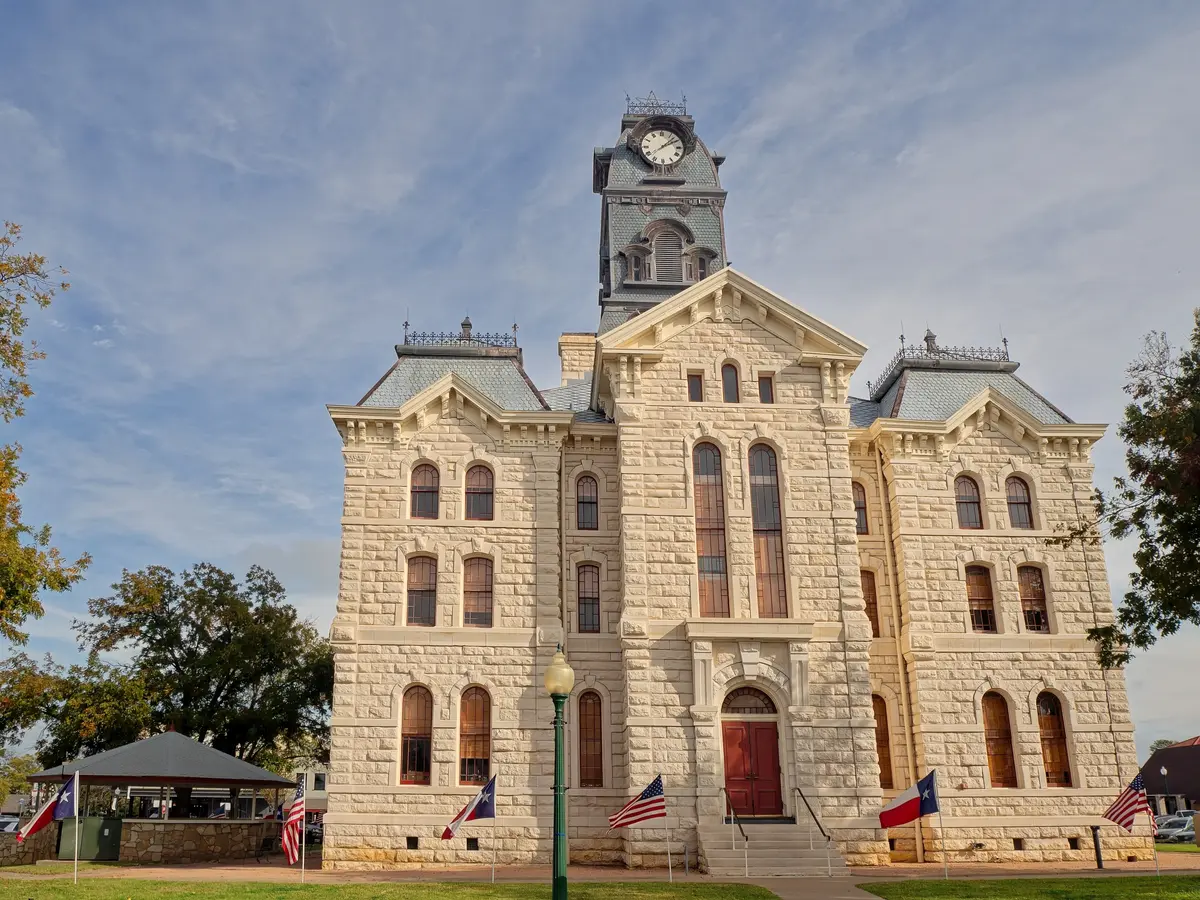
Deer Park calls itself the Birthplace of Texas — and that's not marketing spin. On April 21, 1836, the day after the Battle of San Jacinto, General Sam Houston and the Texas Cabinet sat in a cabin on this exact ground to draft the treaty that secured Texas independence from Mexico. A historical replica of that cabin stands in Heritage Park today. Most people moving here from Houston or the western suburbs arrive expecting an industrial fringe town and find instead a tight-knit community of 34,282 with real civic pride, well-maintained parks, and a school district that outperforms many of its neighbors. The tension worth understanding before you commit: this is a city shaped as much by the Houston Ship Channel and its petrochemical corridor as by its history, and how you feel about that geography will define your experience here.
The economic backbone of Deer Park is openly industrial. The Shell Chemical LP Deer Park Manufacturing Site, the Pemex Deer Park Refinery, and Dow Deer Park are the major private-sector anchors — and for people who work in operations, engineering, safety, or logistics along the Ship Channel, living here means a short commute to some of the largest facilities in North America. The Deer Park Independent School District, with 12,026 students enrolled in 2025-26, holds a B rating, according to the Texas Education Agency, and is a genuine reason families with school-age children choose this city over cheaper alternatives nearby. San Jacinto College has offered a Process Technology program specifically aligned with refinery operator careers for decades, creating a local workforce pipeline that is genuinely distinctive. The median household income in Deer Park sits at $99,908, a figure that reflects how well the energy sector compensates its workers.
The typical home price is $281,493 (Zillow Home Value Index, July 2026) — well below what comparable Houston suburbs command, and one of the more affordable entry points left inside Harris County. Pasadena to the west runs noticeably lower, and both La Porte and Baytown come in somewhat lower, but Deer Park's combination of price, school district quality, and community amenities keeps it competitive. The city has 203 sunny days a year and summers that run hot and humid from late May through September — this is Gulf Coast living, not a mild climate, and newcomers who arrive from drier parts of Texas often take a full season to adjust. Dow Park, the Jimmy Burke Activity Center grounds, and the Minchen Athletic Complex give families with kids a legitimate recreational infrastructure without driving to Houston.
Whether you are relocating for a refinery or Ship Channel job, looking for a stable Houston-area community with a strong school district, or simply trying to find a home you can actually afford inside Harris County, the sections below break down Deer Park's neighborhoods, housing market, commute patterns, local employers, and what daily life here is really like.

Deer Park at a Glance
Looking to buy in Deer Park? Estimate your payment.
Enter your numbers to see an estimated monthly mortgage payment.
Estimate only. Excludes HOA fees and mortgage insurance. The interest rate above is a starting point, not a quoted rate — replace it with your own to see real numbers. Insurance is a flat placeholder, not a Deer Park quote.
Why Are People Moving to Deer Park?
The straightforward answer is jobs and value. If you or your partner works at one of the major petrochemical facilities along the Houston Ship Channel — Shell Chemical, Pemex, Dow, or any of the dozens of contractor and supplier operations that support them — Deer Park puts you closer to work than almost any other livable Harris County community. That proximity matters when your shift starts at 6 a.m.
The city's founding story also attracts a specific kind of buyer: someone who wants a place with genuine local identity rather than a subdivision that could be anywhere in the metro. Deer Park was named in 1892 by Simeon Henry West for the deer that roamed the Gulf plains, incorporated in 1948, and grew steadily as refinery employment expanded after World War II. That history is present in the built environment in ways that newer master-planned communities simply can't replicate.
Who Actually Moves Here
The largest group is energy-sector workers and their families — operators, engineers, safety professionals, and logistics managers who want a short drive to work and a community where their colleagues live. The second group is Houston workers who have been priced out of Friendswood or Pearland and are looking for a Harris County address with a solid school district. A growing third group works remotely and chose Deer Park specifically for the affordability and the civic feel.
Parents with school-age children consistently cite the Deer Park Independent School District as the deciding factor. The district holds a B rating, according to the Texas Education Agency, covers a manageable geographic footprint, and has the kind of community investment in UIL athletics and extracurricular programs — the Deer Park Deer mascot appears on nearly every storefront during football season — that makes Friday nights feel like a genuine town event.
The Industrial Geography Question
The honest conversation to have before you move here: the Houston Ship Channel runs along the northern edge of Deer Park, and refineries and chemical plants are visible and sometimes audible from parts of the city. Most longtime residents have made their peace with this. Many of them work in those facilities. But if you are relocating from a market where the industrial corridor is across town rather than adjacent, the adjustment can take a few months. The neighborhoods in the southern and central parts of the city put more distance between daily life and the Ship Channel, and the neighborhoods page walks through that distinction in detail.
What Deer Park offers in return is something real: a median household income of $99,908, a housing market priced well below the Houston metro median, a school district that earns its rating, and a community that knows what it is. For the right buyer, that trade-off resolves quickly.
What Daily Life Feels Like in Deer Park
Living in Deer Park is quieter than most people expect from a Houston-adjacent city. The residential streets are genuinely calm, the parks are well-used, and the city runs a civic calendar that keeps the community engaged through the year. The annual 4th Fest at the Jimmy Burke Activity Center grounds — with live music, yard games, and fireworks — is the kind of event where you run into the same neighbors every year and it starts to feel like yours.
A City That Invests in Its Recreation
The city opened the Deer Park Active Complex in mid-summer 2025 after redeveloping the former community center facility. The 46,000-square-foot Jimmy Burke Activity Center, adjacent to the Minchen Athletic Complex — a 43-acre softball and recreational complex — added bocce ball courts, new parking, and landscaped terraces as part of the project. Dow Park and Dow Park Pool handle a significant share of the summer activity, especially for families with younger children.
The Battleground Golf Course is worth knowing about even if you don't golf: it opened on April 21, 1996, exactly 160 years after the Battle of San Jacinto, and sits within walking distance of the San Jacinto Battleground State Historic Site. The historic Pratt Truss Bridge connects the course to the surrounding landscape and carries a Texas Historical Commission marker. It's the kind of local detail that a resident mentions casually and a visitor finds remarkable.
What Surprises People After Six Months
The thing most newcomers don't anticipate is how insular — in the best sense — Deer Park's social life can feel. This is a city where people genuinely know their neighbors, where the school district functions as a community hub rather than just an institution, and where the same families show up to the same parks and events year after year. If you come from a larger or more transient metro environment, the adjustment is pleasant but real.
The summer humidity is the other adjustment. Temperatures range from around 46°F in winter to about 93°F in summer, and the Gulf Coast air moisture makes those summer highs feel significantly heavier than the thermometer suggests. Residents learn quickly to run errands before noon between June and September and to treat the city's indoor recreation options as essential rather than optional.
Getting Your Bearings Day to Day
Most daily errands require a car. The city is laid out for driving, and while the core residential neighborhoods are pleasant to walk within, routine shopping and services mean getting behind the wheel. The parks and recreation page covers the full trail and facility picture. Deer Park has a violent crime rate of 2 per 1,000 residents, well below the Texas state average of 4 per 1,000 — and that consistently registers as one of the quality-of-life factors that keeps residents here long-term. The safety page has the full breakdown.
The Deer Park Housing Market Right Now
The typical home price in Deer Park is $281,493 (Zillow Home Value Index, July 2026). For a Harris County address with a B-rated school district, that figure is genuinely competitive — the kind of entry point that draws buyers who looked at Pearland or Friendswood first and then did the math.
The median household income here, at $99,908, is at or above the income needed to purchase the typical home, which is not something every Houston-area city can say. That alignment between local wages and local prices is one of the structural reasons Deer Park's market stays stable: the buyers are primarily people who work here or nearby, not speculators chasing appreciation.
What the Housing Stock Looks Like
Most of Deer Park's housing is single-family, built in waves from the 1950s through the 1990s, with a smaller share of more recent construction. The lots tend to be generous by Harris County standards, and the established tree cover in the older neighborhoods gives the city a settled feel that newer master-planned communities lack. Some areas closer to the city's edge have seen newer infill, but Deer Park is not a city remaking itself — it is a city maintaining what it built.
Some areas run above the city-wide typical home price and others sit at or near it. For a full neighborhood-by-neighborhood character breakdown, the best neighborhoods page covers that in detail. The typical rent city-wide runs $1,695 per month — see the full cost picture at the cost of living page.
The Affordability Reality
Deer Park does not have the frenzied multiple-offer conditions of inner-loop Houston neighborhoods, nor the flat slowness of some outer exurbs. Well-priced homes in established neighborhoods move at a reasonable pace. The effective property tax rate is 1.09%, which is notably low for Harris County — the cost of living page puts the full tax picture in context. Texas has no state income tax, which is a factor that affects the real purchasing power behind that $99,908 median income figure in ways that matter when you are running the numbers on a home purchase.
Deer Park Neighborhoods
Deer Park has several distinct areas — each with its own character and appeal. Here’s a breakdown to help you narrow down where to focus your home search.
🏡 Villages of Deer Park
One of the more established residential pockets in the city, Villages of Deer Park suits families looking for mature tree cover and a settled neighborhood feel. The housing stock skews toward well-maintained single-family homes on comfortable lots.
🏠 Middle Deer Park
Centrally positioned and convenient to most of the city's parks and civic facilities, Middle Deer Park appeals to buyers who want to be close to the Jimmy Burke Activity Center grounds and the city's core amenities without being on the northern edge near the Ship Channel corridor.
🌳 Deer Park Gardens
Deer Park Gardens has a quiet, residential character that draws buyers looking for a lower-key pocket of the city. The housing here reflects Deer Park's broader mid-century single-family stock, with the kind of established landscaping that newer subdivisions take decades to develop.
🏘 Heritage
Heritage sits at the city-wide typical home price and is home to Heritage Park, which includes the historical replica cabin marking where Texas independence was secured. It is a neighborhood with a genuine sense of local identity woven into its geography.
🏔 San Jacinto Estates
San Jacinto Estates benefits from its proximity to the historical corridor and appeals to buyers who want to be near the Battleground Golf Course and the broader San Jacinto area. The neighborhood has a conventional single-family character with good lot sizes.
🌆 Palm Terrace
Palm Terrace is a compact, residential neighborhood that suits buyers prioritizing a quiet street environment and proximity to the city's southern residential core. It is a practical, unpretentious pocket of Deer Park that holds its value without drawing much outside attention.
Pros & Cons of Living in Deer Park
The Pros
- Abundant high-paying petrochemical, refining, and industrial jobs right in town
- Deer Park ISD offers strong AP/dual-credit options and a solid graduation rate
- Quick access to Houston, Galveston, and Gulf Coast beaches
- Active community calendar with concerts, holiday events, and family festivals at Dow Park
The Cons
- Heavy industrial presence along the Ship Channel can mean occasional odors, flaring, or air-quality concerns
- Low Walk Score and a car-dependent street layout
- No full-service hospital within city limits, only a freestanding ER
Getting Around & Commuting in Deer Park
Deer Park is a driving city. SH-225 (La Porte Freeway) is the primary east-west corridor connecting Deer Park with Houston, Pasadena, and La Porte — it is the road most residents use every day, and its condition and congestion is the defining commute experience for most households here. Beltway 8 (Sam Houston Parkway/Tollway) provides the broader Houston loop connection.
The SH-225 Reality
Getting to Downtown Houston takes about 30 minutes under normal conditions via SH-225. The operative phrase is "normal conditions." Morning rush hour, particularly inbound toward Houston, compresses that window and can run longer than GPS predictions suggest — SH-225 carries significant industrial traffic alongside commuter traffic, which is a combination that creates unpredictable chokepoints near the Ship Channel corridor. Residents who work in the energy sector often align their shifts to avoid peak passenger-car congestion, which is a practical advantage most office commuters don't have.
A $310 million TxDOT project launched in Summer 2024 is constructing direct connectors at the SH-225/Beltway 8 interchange to eliminate the signalized crossings that currently slow traffic at that junction. That project is the most consequential infrastructure change underway in the area for Deer Park commuters.
Driving Patterns and the Ship Channel Corridor
The major petrochemical employers — Shell Chemical, Pemex, and Dow — all sit close enough to most Deer Park neighborhoods that the commute is measured in minutes rather than highway miles. For residents who work at the ExxonMobil Baytown Complex in Baytown, the drive runs east rather than west, still manageable but in a different direction from most of the city's commuter flow. METRO bus service operates along the Spencer Highway corridor and serves Deer Park commuters heading toward Houston.
William P. Hobby Airport (HOU) is 18 miles from Deer Park — the closest major airport and the practical choice for most travel. Its location south of the city puts it on a reasonable path that avoids the worst of the Ship Channel corridor traffic.
Car-First by Design
Daily life in Deer Park runs on driving. Most errands mean getting behind the wheel, and the city's layout is built around that reality. Residents planning to work in the Texas Medical Center or Midtown Houston should run the commute math carefully — the distance is manageable but the SH-225/I-45 interchange adds friction that the direct Ship Channel corridor commute does not.
Schools in Deer Park
Families relocating to Deer Park have public, private, and higher-education options nearby. Here’s a quick overview.
🎓 School District
Deer Park Independent School District serves K–12 students across Deer Park and the surrounding area. Rated B (source: Texas Education Agency, 2025 A-F accountability rating (2024-25 school year)).
🏆 Graduation Rate
The 4-year high-school graduation rate here is approximately 94.2%.
📚 Higher Education
Texas’s public universities — the University of Texas at Austin, Texas A&M University, and the University of Houston — offer four-year degrees statewide, with one of the largest community college systems in the country (50+ public community college districts) providing two-year and workforce programs.
🌐 Online Learning
UT Austin Online and Texas A&M University Online offer fully accredited online degrees for remote learners across the state.
Safety in Deer Park
A quick look at how Deer Park compares on the numbers that matter most when weighing a neighborhood or a move.
🛡 Violent Crime
Approximately 2 per 1,000 residents.
🔒 Property Crime
Approximately 15.2 per 1,000 residents.
Compared to the most recent national figures from the Bureau of Justice Statistics (2024), Deer Park’s violent crime is below the national average (about 3.7 per 1,000), and property crime is below the national average (about 18.4 per 1,000).
Against Texas as a whole, Deer Park’s violent crime is roughly half the state average, and property crime is roughly two-thirds of the state average (Bureau of Justice Statistics, Crime Known to Law Enforcement, 2024 (tables 2 and 3)).
Crime rates can vary a lot within a single city, so the citywide numbers above are only a starting point. Some neighborhoods in Deer Park run well below these averages, while others run higher — the kind of block-by-block detail that matters most when you’re actually choosing where to live. The full guide below breaks it down neighborhood by neighborhood.
Working in Deer Park
Deer Park’s largest employers span several industries — here are some of the anchors of the local job market.
🎓 Deer Park Independent School District
Education
🏛 City of Deer Park
Municipal government
💼 Shell Chemical LP Deer Park Manufacturing Site
Petrochemicals
💼 Pemex Deer Park Refinery
Oil refining
🏭 Dow Deer Park
Chemical manufacturing
💼 ExxonMobil Baytown Complex
Petrochemicals, located in Baytown
Parks & Recreation in Deer Park
Some of the outdoor spaces that shape everyday life in Deer Park.
🌱 Dow Park
🌱 Deer Park Community Center
Deer Park residents don’t have to go far for green space — spots like Dow Park and Deer Park Community Center are part of everyday life here, whether that’s a morning walk, a weekend hike, or just somewhere to unwind outside. The full guide below covers more of what Deer Park has to offer for parks and outdoor recreation.
Retiring in Deer Park
Deer Park draws retirees for its balance of amenities, outdoor access, and cost. Here’s what to weigh.
🌤 Climate
Deer Park has 203 sunny days a year and a Gulf Coast climate that runs warm from late spring through early fall. Winters are mild, rarely dropping much below 46°F, but summers are long, hot, and humid — closer to 93°F — with the kind of sustained Gulf moisture that makes outdoor activity a morning activity from June through September.
🍴 Lifestyle
The city maintains solid recreational infrastructure for its size: Dow Park, the Jimmy Burke Activity Center grounds, and the Deer Park Active Complex all opened or expanded recently. The local dining scene covers the basics well, from neighborhood Italian to Texas-style barbecue, and the San Jacinto Battleground State Historic Site — just outside city limits — gives the area a cultural anchor that most comparably priced suburbs lack.
🏚 55+ Communities
No 55+ communities were found in Deer Park. Retirees considering the area typically look at the single-family housing stock directly, which offers generous lots and established neighborhoods at an accessible price point. A regional health system operates nearby, providing hospital access within a reasonable drive.
✈ Getting Around
A car is essential for daily life in Deer Park. SH-225 (La Porte Freeway) and Beltway 8 handle the regional connections, and most services and medical appointments are reachable within a reasonable drive. William P. Hobby Airport (HOU) is 18 miles away, making it the practical travel hub for most residents.
🏛 Texas Taxes for Retirees — What to Know
- No state income tax — Texas has no personal income tax — constitutionally protected under Article VIII, Section 24. Social Security, pensions, 401(k)/IRA withdrawals, and annuity payments are all untaxed at the state level, with no state return to file.
- Sales tax is the tradeoff — The state sales tax is 6.25%, and local add-ons bring the combined rate in Deer Park to 8.25% (Texas Comptroller of Public Accounts, city sales and use tax rates, July 2026). Groceries and prescription drugs are exempt.
- Property taxes — the real tradeoff — Texas’s effective property tax rate averages about 1.40%, among the highest in the country, since property tax (not income tax) funds most local government and schools.
- Over-65 homestead exemption and school-tax freeze — Homeowners 65+ (or disabled) get an additional $60,000 exemption from their home’s value for school district taxes, on top of the general homestead exemption — $200,000 off school taxable value combined, following November 2025’s Proposition 11 (SB 23), which raised the over-65 exemption to $60,000, and Proposition 13 (SB 4), which raised the general homestead exemption to $140,000. Once claimed, your school district tax bill is frozen at that year’s amount and cannot increase as home values rise, and the ceiling can transfer if you move to a new home within Texas.
- Deferral option if cash is tight — Homeowners 65+ can defer property tax payment entirely for as long as they live in the home, rather than paying it currently — interest accrues, but no forced sale.
- No estate or inheritance tax — Texas has no estate tax, no inheritance tax, and no gift tax.
- No separate capital gains tax — Because Texas has no state income tax, capital gains — including on investments and home sales — are not taxed at the state level at all, unlike states such as Washington that tax capital gains separately from income.
Tax laws change frequently and individual situations vary. This is general information, not tax advice — always consult a qualified Texas tax professional or CPA for personalized retirement tax planning.
Weekends & Local Favorites in Deer Park
Deer Park's weekend geography revolves around a few specific anchors. Dow Park is where a large share of the city's outdoor life happens — the park and its pool are the practical center of summer recreation for most families. The Jimmy Burke Activity Center grounds and the Minchen Athletic Complex fill the rest of the warm-weather calendar, particularly for households with kids in youth sports.
History Within Walking Distance
The Battleground Golf Course is one of the more unusual public courses in the Houston metro: 18 holes, opened on the anniversary of the Battle of San Jacinto, connected to a Texas Historical Commission-marked bridge, and adjacent to one of the most significant historical sites in the state. You don't have to be a golfer to appreciate the setting. The San Jacinto Battleground State Historic Site — featuring the San Jacinto Monument and Battleship Texas — sits just outside city limits and draws regional visitors from across the metro. Deer Park residents tend to treat it as a neighborhood landmark rather than a tourist attraction, which gives it a different quality than it reads in a visitor's guide.
Heritage Park, in the heart of the city, is where the historical replica cabin stands — the one marking the spot where Texas independence was secured. It is a small park with an outsized sense of place.
Where to Eat and Drink
The local dining scene is anchored by a handful of well-regarded spots. Antonio's Italian Grill is the kind of neighborhood Italian place that accumulates regulars over decades. The Brisket House delivers the straightforward Central Texas-style barbecue that Houston-area residents expect and take seriously. Guidry's has its own following for its local approach and consistent kitchen. For something different, Otsuka Ramen & Bar brings ramen and Japanese-inspired dishes to the local rotation, and Grand Buffet serves a broad spread for large groups or casual family meals.
For coffee, Sycamore Grounds Coffee & Bakery is a genuine local independent with a bakery component that makes it more than just a caffeine stop. Em Café runs a neighborhood café format that is well-suited to a working-from-home morning. Oh My Tea! - Deer Park rounds out the options with bubble tea and related drinks.
Friction Worth Knowing
Deer Park does not have the restaurant density or retail variety of larger Houston-area suburbs — a serious shopping run means driving out of town. Residents who move here expecting the commercial infrastructure of Pearland or Sugar Land tend to recalibrate within the first few months. The city compensates with a civic and outdoor life that feels proportionally richer than its commercial corridor would suggest, but the retail gap is real and worth factoring into the decision.
Local favorites in Deer Park
Restaurants
- Antonio's Italian Grill
- Grand Buffet
- Guidry's
- The Brisket House
- Otsuka Ramen & Bar
Outdoors
- Dow Park
- Dow Park Pool
- Battleground Golf Course
- Jimmy Burke Activity Center grounds
Coffee
- Sycamore Grounds Coffee & Bakery
- Em Café
- Oh My Tea! - Deer Park
Top Things Locals Say About Deer Park
The best intel about a city comes from the people who actually live there. Here’s what Deer Park residents say when newcomers ask the questions everyone’s thinking.
“I thought the industrial corridor would bother me more than it does — but once you're in the residential neighborhoods, you barely notice it. What I didn't expect was how much the school district actually functions like a community hub. Friday nights here feel like nothing I've experienced in other Houston suburbs.”
— Recent Deer Park home buyer
“What's the most surprising thing about living in Deer Park?”
How much local history is just part of daily life. Most people drive past Heritage Park without knowing that the replica cabin there marks where Texas independence was actually secured. Once you know the story, it changes how you think about the city. It's not a suburb that happened to grow near Houston — it has its own reason for existing.
“What do locals love most about Deer Park?”
The school district and the parks, in that order. The Deer Park ISD has a real community feel — parents are involved, the UIL programs are taken seriously, and the kids who grow up here tend to stay connected to the city. Dow Park and the Jimmy Burke Activity Center grounds give families somewhere to actually be on weekends without driving to Houston.
“What should newcomers to Deer Park know?”
Run your commute during actual rush hour on SH-225 before you commit. The 30-minute estimate to Downtown Houston is real when traffic cooperates, but the morning inbound push on the La Porte Freeway can add significant time if your job is west of the Ship Channel corridor. Also: the summers are genuinely humid in a way that takes a full season to adjust to. People who move from drier parts of Texas are the ones who get caught off guard.
“How much do you need a car in Deer Park?”
You need a car for essentially everything beyond walking within your immediate neighborhood. The city is laid out for driving, and routine errands — groceries, hardware, medical appointments — all mean getting in the car. METRO bus service runs along the Spencer Highway corridor if you commute toward Houston, but for daily life within the city, a car is the practical reality. Residents who work at the nearby petrochemical facilities often have short drives measured in minutes, which makes the car-dependent layout feel less burdensome than it does for longer-haul commuters.
Cities Near Deer Park
Other communities near Deer Park worth a look — each with its own character and price point.
| City | Distance | Best For | Vibe | Median Rent | Median Buy |
|---|---|---|---|---|---|
| Pasadena | 7 mi | Value-focused buyers, established neighborhoods | Larger, more commercial, affordable | $1,407 | $218,827 |
| La Porte | 8 mi | Families wanting waterfront access | Smaller, quieter, bayfront character | $1,659 | $257,347 |
| Baytown | 13 mi | Energy-sector workers, budget buyers | Industrial roots, growing amenities | $1,569 | $246,742 |
More Helpful Guides for Deer Park
Going deeper on Deer Park? Our blog series covers everything from first-time buying to retiring here — explore the guides below.
Local Expert Takeaway: Deer Park is most underrated by people who write it off as a refinery town without spending time there. The Deer Park ISD is a genuine competitive advantage at this price point inside Harris County, the community event calendar at the Jimmy Burke Activity Center grounds is well-run and well-attended, and the typical home price of $281,493 (July 2026) buys considerably more house here than in Friendswood or Clear Lake. The catch is the SH-225 commute — morning rush toward Houston on the La Porte Freeway is real, and if your job is in the Galleria or Midtown rather than along the Ship Channel, that commute is the thing to stress-test before you make an offer.
Quick Takeaways & FAQs
✅ Deer Park's typical home price of $281,493 (July 2026) gives Harris County buyers a rare combination of affordability and a B-rated school district in the same package.
⚠️ SH-225 morning congestion toward Houston is the most common complaint from residents who commute outside the Ship Channel corridor — run the commute before you commit.
📍 Deer Park calls itself the Birthplace of Texas for a documented reason: the treaty securing Texas independence was drafted on this ground in 1836, and a historical replica of the cabin stands in Heritage Park today.
Is Deer Park, TX a good place to raise a family?
How far is Deer Park from Downtown Houston?
What is the typical home price in Deer Park, TX?
Are there industrial odor or air quality concerns in Deer Park?
How are the Deer Park schools?
Helpful Links for Moving to Deer Park
Moving to Texas?
Tell us what you need help with and we'll connect you with local resources.
