
Smokies & Lakeway Area · Cost of Living · 2026
Cost of Living in the Smokies & Lakeway Area, Tennessee: Every City Ranked
Ranked by what it actually costs to own a home and live here, from working-town wages to resort-driven demand.
Ranked by what it actually costs to own a home and live here, from working-town wages to resort-driven demand.
If you're comparing towns across this stretch of East Tennessee, you've probably noticed that the price gap between them is wider than you'd expect for places that sit so close together. The Smokies corridor pulls in millions of visitors a year, and that tourism economy doesn't stay at the city limits — it spills into housing markets, drives up short-term rental demand, and pushes prices well above what local wages alone would support. The towns that have been absorbed into that orbit feel it. The towns that sit on the other side of a county line or a ridge tend not to.
Towns with a working-town economic base — local manufacturing, regional healthcare, everyday retail — tend to have housing prices that follow local incomes rather than Airbnb cap rates. Towns shaped by resort proximity, lakefront geography, and buyers who aren't purchasing a primary residence at all sit in a different cost category entirely. Understanding which force is shaping a given town is the most useful thing you can do before you start comparing ZIP codes. The sections below break down each city's cost picture, what drives it, and what kind of buyer it actually suits.
All prices reflect 2026 market data sourced from Zillow and cross-referenced with our individual city guides. County tax rates are verified effective rates.
Ranked by overall affordability. Click any city to jump to the full breakdown.
| # | City | Home Price | Monthly PITI | Income to Buy | Est. Rent |
|---|---|---|---|---|---|
| 1 | Morristown Hamblen County | $267,036 | $1,576/mo | $61,598/yr | $1,266/mo |
| 2 | Seymour Sevier County | $373,356 | $2,166/mo | $78,054/yr | $1,610/mo |
| 3 | Bean Station Grainger County | $271,160 | $1,623/mo | $91,611/yr | $1,200/mo |
| 4 | Dandridge Jefferson County | $385,497 | $2,301/mo | $99,946/yr | $1,500/mo |
| 5 | Sevierville Sevier County | $420,849 | $2,442/mo | $105,098/yr | $1,650/mo |
| 6 | Gatlinburg Sevier County | $406,899 | $2,361/mo | $124,702/yr | $1,400/mo |

#1 Most Affordable · Hamblen County
Best for buyers who want real-city services at working-town prices.
Morristown is the working city of this comparison, and its housing market reflects that honestly. A $267,036 typical home price puts ownership within reach of buyers on a single working income, something that's increasingly rare across the broader Smokies corridor. The city's economic base — manufacturing, healthcare, regional retail — keeps demand tied to local wages rather than investor speculation. US-11E and US-25E (Davy Crockett Parkway) give residents solid regional connectivity without the tourist congestion that clogs the mountain towns to the south.
Morristown suits buyers who want a real city's services — a hospital in town, a walkable commercial core, established neighborhoods — without paying a resort premium for them. It's a noticeably different character from Sevierville or Gatlinburg: this is a place people actually work and raise families, not a place that exists to host vacationers.

#2 Corridor Bedroom Town · Sevier County
Best for buyers splitting access between Knoxville and the Smokies.
Seymour sits in a geographic sweet spot that buyers find attractive and that the market prices accordingly. A $373,356 typical home price reflects strong demand from buyers who want easy access to the Great Smoky Mountains National Park and the Knoxville metro without committing to a resort-town address. US-441 (Chapman Highway) and US-411 (Maryville Highway) are the arteries that make that dual access possible, and they're also the reason Seymour has grown faster than its small-city infrastructure has always kept pace with.
Seymour tends to suit buyers who are splitting the difference — close enough to Knoxville for a realistic commute, close enough to the park for weekend access, and at a price point that still leaves room to own a home without a second income from short-term rentals. It's more of a bedroom community than a destination, which is exactly what draws the buyers it draws.
Looking to buy in Smokies & Lakeway Area? Estimate your payment.
Enter your numbers to see an estimated monthly mortgage payment.
Estimate only. Excludes HOA fees and mortgage insurance. The interest rate above is a starting point, not a quoted rate — replace it with your own to see real numbers. Insurance is a flat placeholder, not a Smokies & Lakeway Area quote.
Tax laws, local municipal fees, and utility costs change frequently and individual situations vary. This page is general information, not tax or legal advice — always consult a qualified tax professional, CPA, or local municipal offices for personalized guidance.

#3 Lowest Rent · Grainger County
Best for remote workers and retirees who want lakeside quiet.
Bean Station sits on Cherokee Lake in Grainger County, and the lake is doing real work in its housing market. A $271,160 typical home price looks accessible on paper, but the income needed to carry it runs steeper than that headline suggests — a sign that local wages in this smaller, more rural county haven't kept pace with waterfront-driven demand. US-25E (Dixie Highway) and US-11W (Lee Highway) connect residents to the broader region, though the town itself has a genuinely limited service base.
Bean Station draws buyers who want lakefront character without the full resort-town price tag. It's a better fit for remote workers or retirees who don't need local employment and don't need a full downtown — buyers who are specifically looking for the slower pace of a small Appalachian lake town and are willing to drive for everything else.

#4 Historic Douglas Lake Town · Jefferson County
Best for buyers drawn to historic small-town character on the lake.
Dandridge carries a price point that reflects two things working at once: it's one of the oldest towns in Tennessee, with a historic downtown on Douglas Lake, and it sits on I-40, which puts it within reach of both Knoxville and the Smokies corridor. A $385,497 typical home price reflects that geography and the lifestyle demand it creates. Jefferson County has stayed largely rural, which keeps some pressure off, but lakefront lots and historic district properties add real premiums within an otherwise modest county.
Dandridge suits buyers drawn to small-town character with genuine historical weight — the kind of place that has a real courthouse square, not a manufactured one. It's a different draw than Sevierville or Gatlinburg, which exist around tourism; Dandridge exists around the lake and the community that formed here long before the Smokies became a destination.
#5 Resort Gateway City · Sevier County
Best for buyers who want to live inside the resort economy.
Sevierville is where Smoky Mountain tourism meets full-city infrastructure, and that combination has a price. A $420,849 typical home price reflects sustained demand from primary buyers, second-home seekers, and short-term rental investors all competing for the same inventory. US-441 (The Parkway) and US-411 (Dolly Parton Parkway) are the commercial and residential spines of the city, and the traffic on them tells you everything about how much economic activity flows through here. Sevierville is the 34th-largest incorporated city in Tennessee, which means real services — but real congestion too.
Sevierville suits buyers who want to live inside the resort economy rather than commute to it — those who see a short-term rental as part of the financial equation, or who genuinely want the convenience of every chain, every service, and Dollywood within a few miles. Buyers who expect quiet or slow should look at Dandridge or Bean Station instead.
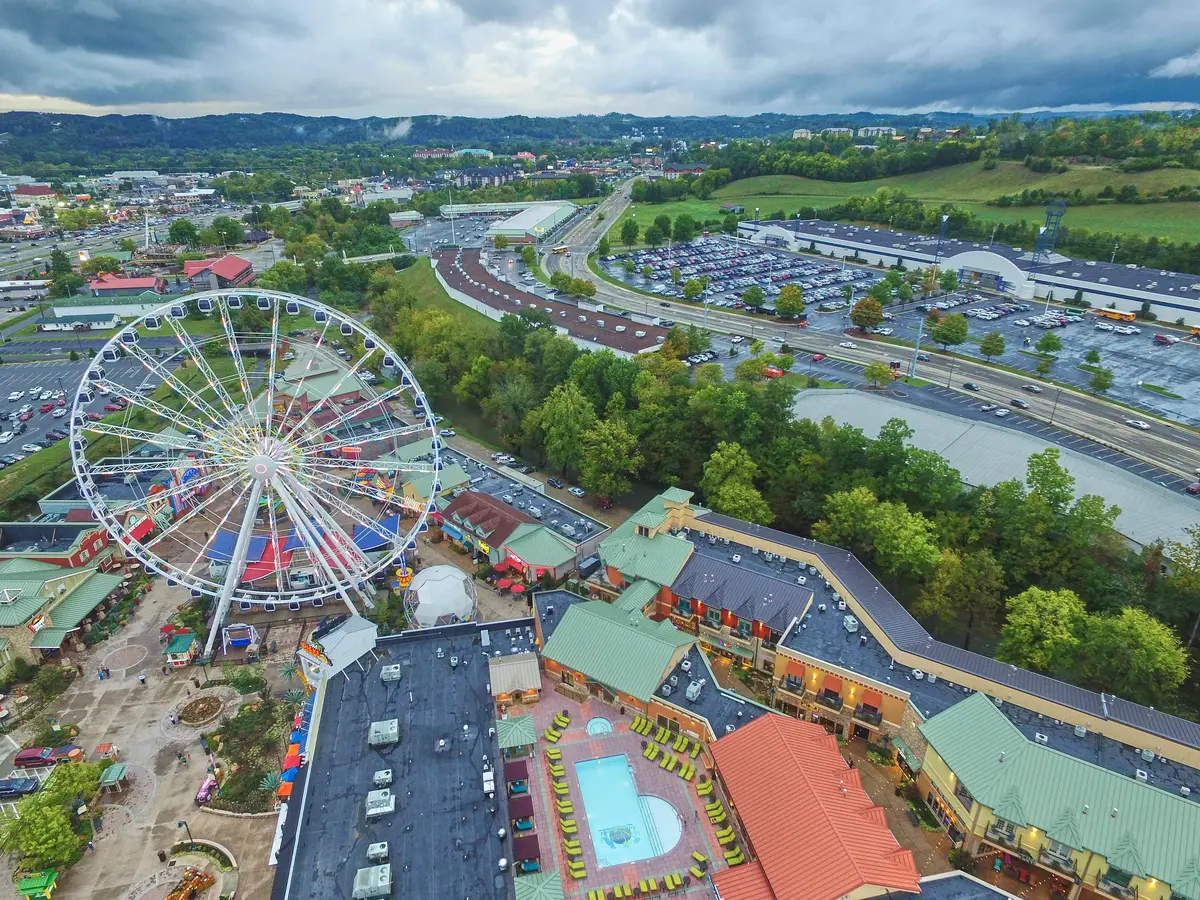
#6 Mountain Tourism Village · Sevier County
Best for short-term rental investors or mountain-town retirees.
Gatlinburg is one of the most visited small towns in America, and its housing market doesn't let you forget it. A $406,899 typical home price — despite the town's small permanent population — reflects demand driven almost entirely by tourism proximity and short-term rental income potential rather than by what local employers pay. US-441 and US-321 are the two main roads in and out of town, and in peak season both are legitimately difficult. The Great Smoky Mountains National Park begins at the city limits, which is both the town's greatest asset and the reason its supply of buildable land is essentially fixed.
Gatlinburg suits a specific buyer: someone who sees the home as a short-term rental asset first and a primary or secondary residence second, or someone retiring into a walkable mountain-town environment and willing to share that environment with enormous seasonal crowds. It is not a practical choice for someone commuting to a conventional job or seeking a quiet neighborhood — those buyers will find calmer streets and a more grounded cost picture elsewhere in this region.
Tourism demand and lakefront geography do more to shape housing costs in this region than local wages do — the towns where prices stay connected to what working households earn are the ones where the short-term rental economy hasn't fully arrived yet.
Tell us what you need help with and we'll connect you with local resources.
