
Sevierville surprises retirees who arrive expecting a tourist trap and find a real, functioning small city underneath it all. Sitting at the entrance to the Great Smoky Mountains, with US-441 (The Parkway) carrying millions of visitors through each year, the city of 19,010 permanent residents has built a service base — healthcare, dining, retail — that most towns this size simply cannot support. For retirees, that's an unexpected advantage: a city-level hospital inside city limits, a broad dining scene funded by tourism dollars, and mountain scenery as your literal backyard.
The practical case for Sevierville rests on three pillars. Tennessee collects no personal income tax, which means Social Security, pension checks, IRA withdrawals, and 401(k) distributions land in your account untouched at the state level. The effective property tax rate sits at approximately 0.37% — among the lowest in a state already known for light property taxation. And LeConte Medical Center, a Covenant Health facility inside city limits, gives retirees something genuinely rare for a city this size: a full-service acute-care hospital with an Advanced Primary Stroke Center designation and strong independent quality ratings from both Medicare and a national hospital safety organization. The typical home price is $420,849 (August 2026), which makes entry feasible for retirees selling out of pricier markets, though the median household income here falls well short of what's needed to buy at that level — context worth keeping in mind when you're reading the local market through a fixed-income lens.
The honest caveats are just as real. Sevierville is car-dependent in a way that catches some retirees off guard. Tourist-season congestion along The Parkway corridor is a genuine quality-of-life issue from spring through fall, and US-441 through the commercial strip can feel like a different city from the quieter residential neighborhoods to the west and north. There are no age-restricted 55+ ownership communities here. And while the Smokies offer extraordinary outdoor access for active retirees, the terrain is hilly enough that walking-for-errands is not the lifestyle on offer.
Whether you're comparing Sevierville against Gatlinburg, Pigeon Forge, or somewhere farther afield, the sections below break down the healthcare picture, the retiree tax situation, daily costs on a fixed income, walkability and community life, downsizing options, and how Sevierville stacks up against the nearest retirement alternatives.
Why Retirees Are Choosing Sevierville
Sevierville fits retirees who want mountain scenery without the altitude, a real hospital within city limits, and a cost structure that rewards cashing out of a higher-priced market. The typical home price of $420,849 (August 2026) — detailed on the cost-of-living page — sits well below what many arriving from the Mid-Atlantic, Midwest, or coastal markets are used to paying, which means equity from a prior home can stretch meaningfully here. Pair that with Tennessee's zero personal income tax and a property tax rate that rounds to a fraction of what most retirees paid elsewhere, and the financial picture is unusually compelling.
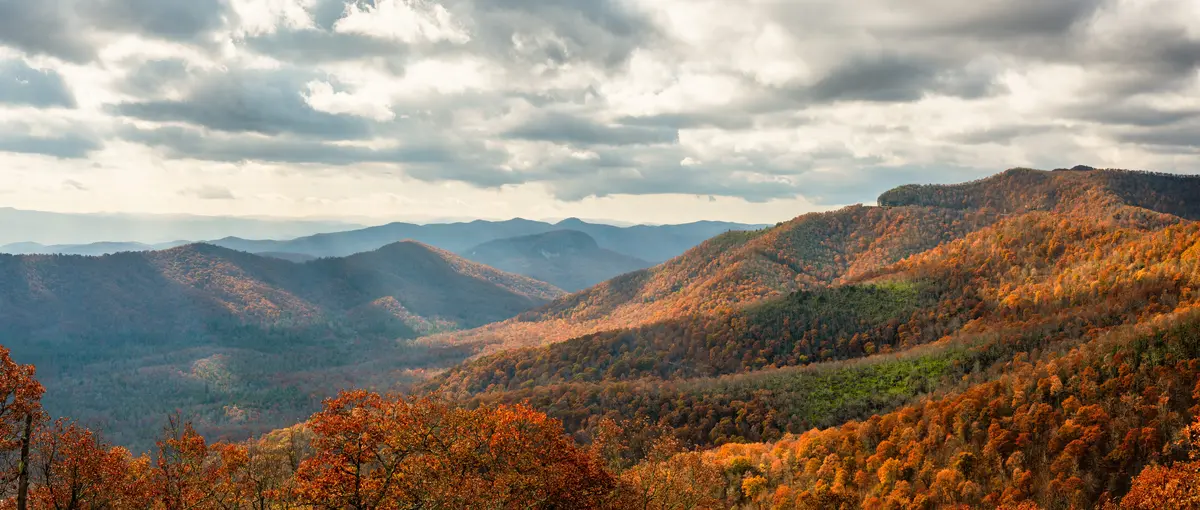
The retirees who thrive here tend to be outdoors-oriented and comfortable behind the wheel. Great Smoky Mountains National Park is accessible directly via US-441, and the park's 348 trails suit everyone from serious day-hikers to retirees who want a flat riverside walk. Douglas Lake offers a completely different kind of outdoor draw — fishing, quieter mornings, water-adjacent living — for those who want the Smokies without the foot traffic of the national park entrance corridor.
The retirees who find Sevierville less satisfying are usually those who imagined leaving the car behind. If walkable-to-coffee, errands-on-foot, or a compact downtown with evening stroll potential is the retirement vision, Sevierville will disappoint — not catastrophically, but consistently. The tourist corridor congestion from spring through fall is the other friction point that takes people by surprise; locals learn the back roads, but the adjustment takes longer than most new arrivals expect.
Healthcare & Medical Access in Sevierville
The Anchor: LeConte Medical Center
LeConte Medical Center sits inside Sevierville city limits and is part of the Covenant Health system — a meaningful distinction for retirees who've watched friends in similarly sized towns drive 45 minutes to reach emergency care. The hospital consistently earns high marks from both Medicare's national quality measurement program and independent hospital safety evaluators, reflecting strong performance across safety, readmission, and timely-care measures.
The accreditations are unusually deep for a community hospital. LeConte holds an Advanced Primary Stroke Center designation — the kind of certification that directly affects outcomes in the first hours after a stroke event, which is exactly when proximity matters most. The American College of Radiology has accredited every advanced imaging procedure the hospital offers, and it holds ACR designations as both a Lung Cancer Screening Center and a Comprehensive Breast Imaging Center of Excellence. For older adults managing chronic or age-related conditions, that depth of on-site imaging and screening is the difference between handling care locally and making frequent trips to a larger system.
The Specialist and Advanced-Care Reality
LeConte serves nearly 100,000 county residents plus millions of annual visitors — a demand profile that has pushed the hospital to maintain a broader specialist roster than most facilities of its size. Emergency services run around the clock, and surgical and rehabilitation services are both on-site. For routine specialty care — cardiology, orthopedics, oncology — most patients will find what they need locally or within the Covenant Health network.
Where retirees should plan ahead: highly specialized tertiary care — organ transplant, complex neurosurgery, Level I trauma — means the drive to Knoxville, where the University of Tennessee Medical Center and other major health systems operate. That drive is about 35 minutes to Knoxville under normal conditions, which is a reasonable safety net for planned procedures. For emergency-level complexity, the gap is real and worth factoring into how you think about your own health trajectory over a 10- to 20-year retirement.

The Retiree Budget in Sevierville
Tennessee's Tax Posture for Retirees
Tennessee collects no personal income tax. Social Security, pension income, IRA withdrawals, and 401(k) distributions are all tax-free at the state level. The Hall Income Tax — which previously touched interest and dividend income — was fully repealed in 2021, so investment income is also untaxed by Tennessee. For retirees drawing from multiple income sources, this is one of the cleanest tax pictures in the South.
Property taxes add very little friction. The effective rate in Sevierville runs at approximately 0.37%, which means the annual tax burden on a typical home is modest by almost any national comparison. The state also offers two senior-specific programs worth knowing: a Property Tax Relief Program for homeowners 65 and older (for the 2026 benefit year, the household income cap is $38,470), and a Property Tax Freeze Program that can lock your tax bill regardless of future assessment increases — a meaningful protection in a market that has seen values climb. Check current eligibility directly with the Sevier County Trustee's office, as thresholds adjust annually.
Day-to-Day Costs on a Fixed Income
Groceries, utilities, and dining in Sevierville run close to the Tennessee average — meaning noticeably below what most arriving retirees paid in larger metros. The tourism economy actually helps here: competition for the visitor dollar keeps restaurants plentiful and food quality high relative to what a permanent population of 19,010 would normally support. Independent dining options exist alongside the full range of national chains, and the tourism-driven commercial base keeps most services local and accessible.
The honest fixed-income caution: gasoline and car maintenance matter here in a way they don't in walkable retirement cities. Every errand is a drive, and during peak tourist season, those drives take longer than the miles suggest. Budget the car as a recurring, non-negotiable line item rather than an afterthought. The interactive calculator below can help you model the full monthly picture once you have a purchase price in mind.
Looking to buy in Sevierville? Estimate your payment.
Enter your numbers to see an estimated monthly mortgage payment.
Estimate only. Excludes HOA fees and mortgage insurance. The interest rate above is a starting point, not a quoted rate — replace it with your own to see real numbers. Insurance is a flat placeholder, not a Sevierville quote.
Beyond the Monthly Mortgage Payment — What to Factor In
- The property tax rate above — The 0.37% used in the estimate is the median effective rate — tax actually paid as a share of market value — published by Ownwell, 2026. Half of local homes pay more and half pay less: your own bill depends on that property's assessed value and any exemptions it qualifies for, which can differ a lot from its market price. Confirm with the Sevier County assessor before you budget.
- Total cost of ownership — Your monthly mortgage payment is just the baseline. Depending on the specific city, county, and service district, homeownership costs also include local utility fees, municipal surcharges, and special assessments (such as water, sewer, storm drainage, or local energy taxes) that vary by location.
- Independent due diligence — Because these recurring local costs and municipal fees change depending on the exact property address, buyers must research them independently during their transaction process.
Tax laws, local municipal fees, and utility costs change frequently and individual situations vary. This page is general information, not tax or legal advice — always consult a qualified tax professional, CPA, or local municipal offices for personalized guidance.
Walkability, Community & Staying Active in Sevierville
The Walkability Reality
Sevierville is car-dependent — not as a knock on the city, but as a practical fact for retirees planning daily life. Sidewalk infrastructure is incomplete throughout most residential neighborhoods, and the commercial corridors along US-441 and US-411 (Dolly Parton Parkway) are built for vehicle traffic. Most errands mean driving. Retirees who've imagined leaving the car behind will need to recalibrate that expectation before making an offer.
The terrain adds another layer: Sevierville sits at the foothills of the Smokies, and while the city itself isn't dramatically hilly, the surrounding residential areas rise and fall enough that casual walking-for-exercise looks different here than it does in a flat Sunbelt city. That's not necessarily a problem — the trails inside Great Smoky Mountains National Park offer some of the best accessible hiking in the eastern United States — but it is a different kind of active lifestyle, one organized around the car to the trailhead rather than the walk around the block.
Community Life and Staying Connected
The Sevier County community scene is more active than a quick glance at the population figure suggests. The county operates parks and recreation programs for older adults, and a senior center provides a regular gathering point for fitness classes, social events, and day trips — exactly the kind of infrastructure retirees often underestimate when evaluating a smaller city. Sevier County's library system adds programming and a quieter social anchor for retirees who prefer that rhythm.
The Great Smoky Mountains National Park itself functions as a year-round community asset. With 12.2 million recreational visits recorded in 2024, the park's ranger-led programs, accessible trails, and wildlife viewing draw retirees who want structure around their outdoor time. Forbidden Caverns and Boyds Creek Recreation Area fill out the local options for those who want variety without driving to Knoxville. For retirees who want low-key social connection, the farmers market and church communities in the area carry more of that role than any single civic institution — Sevierville has the social texture of a Southern county seat, and that shows up most in those informal spaces rather than in a purpose-built senior campus.
Right-Sizing: Downsizing in Sevierville
What the Market Offers
Retirees downsizing into Sevierville have a wider range of single-level and low-maintenance options than the tourism-focused image of the area might suggest. The residential fabric beyond the commercial corridors includes ranch-style homes, patio homes, and smaller craftsman-style builds on manageable lots — the kind of housing that fits a couple who no longer needs four bedrooms and a large yard but still wants ownership. The Walden Creek and Boyds Creek areas in particular have seen newer construction that skews toward open-plan, single-level designs that suit aging-in-place priorities.
Condos and townhomes exist in the market, often in developments that also serve the short-term rental market — so the line between a full-time residential community and a vacation-rental complex can be blurry. If low-maintenance condo living is the goal, ask specifically about owner-occupancy ratios and HOA rules before going under contract. A building dominated by short-term rentals has a fundamentally different feel than one with mostly permanent residents, and that distinction matters more in Sevierville than in most markets because the tourist economy is woven so thoroughly into the local real estate fabric.
55+ Communities
No 55+ communities were found in Sevierville. This is the most common gap retirees discover after assuming the Smokies retirement corridor would include age-restricted ownership options. The assisted living landscape is a separate question — Sevierville does have assisted living and memory care facilities for retirees who eventually need supported care — but no age-restricted ownership or active-adult neighborhood communities were identified within city limits. Retirees specifically seeking a 55+ community will need to look at the broader Knoxville metro or neighboring communities. For everything else the best-neighborhoods page covers the residential geography in detail.
Sevierville vs Nearby Retirement Destinations
| City | Cost vs Sevierville | Primary Hospital | Walkability | Senior Living Depth | Overall Retirement Fit |
|---|---|---|---|---|---|
| Sevierville | Anchor | LeConte Medical Center (in-city, highly rated on national quality measures, Advanced Primary Stroke Center) | Car-dependent; hilly terrain nearby | No 55+ communities; assisted living available | Strong for active, car-comfortable retirees with health priorities |
| Pigeon Forge | Somewhat higher | LeConte Medical Center (short drive) | Car-dependent; heavy tourist traffic on main strip | Limited; similar gap to Sevierville on 55+ options | Works for retirees who enjoy entertainment proximity; noisier day-to-day |
| Gatlinburg | About the same | LeConte Medical Center (drive required) | The most walkable of the three gateway cities; compact downtown | Very limited ownership options; high STR saturation | Appeals to retirees who want a walkable village feel; real-estate inventory is thin |
| Kodak | Noticeably lower | LeConte Medical Center (drive to Sevierville) | Car-dependent; rural character | Minimal senior-specific infrastructure | Best for retirees prioritizing affordability and quiet over amenities |
| Knoxville | Pricier overall | Multiple large health systems including University of Tennessee Medical Center | Considerably more walkable; transit options available | Broad 55+ and active-adult community options | Better fit for retirees who want urban amenities, walkability, or specialist-level healthcare nearby |
| Maryville | About the same | A regional hospital in-city | Modest walkability; quieter than Sevierville | Some 55+ options; more retirement-community infrastructure | Solid alternative for retirees who want Smokies proximity without the tourist corridor |
Knoxville is the clearest upgrade on healthcare depth and walkability — retirees who know their medical needs will require frequent specialist visits, or who want to leave the car at home for daily errands, will find Knoxville's infrastructure meaningfully better. The trade is a higher cost baseline and the pace of a mid-sized city rather than a small-town gateway.
Gatlinburg offers the most walkable streetscape of the Smoky Mountain gateway towns, but real-estate inventory for permanent residents is thin and heavily competed by the short-term rental market — it's harder to find the right property there, and the tourist intensity is even higher than Sevierville. Maryville is worth a serious look for retirees who want a quieter Smokies-adjacent community with its own hospital in-city and a slightly more developed retirement-community infrastructure. Kodak fits if the budget is the primary driver and access to services can be managed by car. For most retirees arriving with reasonable health, a reliable car, and a preference for mountain scenery over urban density, Sevierville holds its own well against all of them.
Local Expert Takeaway: Sevierville's retirement case is strongest for active retirees who drive, have reasonable health, and are selling out of a higher-priced market. LeConte Medical Center inside city limits is a genuine advantage — its stroke center designation and strong independent quality ratings are not typical for a city of 19,010. Tennessee's zero income tax means your Social Security, pension, and investment income stay whole. The honest friction: this is not a walking city, tourist congestion on US-441 is a real daily-life variable from April through October, and there are no age-restricted 55+ communities to land in. Great Smoky Mountains National Park is the social and recreational anchor retirees actually gather around here — and for the right person, that's not a consolation prize, it's the whole point.
Quick Takeaways & FAQs
✅ Tennessee collects no personal income tax on Social Security, pensions, IRA withdrawals, or investment income — one of the cleanest retiree tax pictures in the country.
⚠️ There are no 55+ ownership communities in Sevierville, and the city is car-dependent with incomplete sidewalk infrastructure — retirees who want walkable, age-targeted living will need to look elsewhere.
📍 LeConte Medical Center sits inside Sevierville city limits with an Advanced Primary Stroke Center designation and strong ratings from national hospital quality programs — unusual depth for a gateway city of this size.
Is Tennessee a tax-friendly state for retirees?
How good is the healthcare in Sevierville for retirees?
Are there 55+ communities or active-adult neighborhoods in Sevierville?
Can you get around Sevierville without a car in retirement?
How does Sevierville compare to Knoxville for retirement?
Moving to Tennessee?
Tell us what you need help with and we'll connect you with local resources.
