
Everyone who moves here from California says the same thing in month three: they can't believe what their money buys. Not in an abstract way — they mean it specifically. A four-bedroom house with a garage and a yard, in a quiet neighborhood with a top-rated school district, for a price that wouldn't touch a one-bedroom condo in much of where they came from. Maryville is a city of 32,442 about 25 minutes south of Knoxville, tucked at the foot of the Smoky Mountains and close enough to McGhee Tyson Airport (TYS) — roughly five miles away — that the flight back to visit family doesn't require a half-day ordeal getting to the terminal.
The economic backbone here is more diverse than the small-town feel suggests. Clayton Homes, DENSO Manufacturing Tennessee, Arconic, and Newell Brands all have significant operations in the area, and a regional healthcare system anchors the employment picture alongside them. Maryville City Schools — which holds an A rating, according to Niche — draws families with school-age children as reliably as the housing prices do. The city sits in Blount County within the broader Knoxville metro, which means it captures a mid-sized regional city's amenities while keeping its own distinct, walkable downtown character.
The cost-of-living shift from California is real and immediate. The typical home value in Maryville was $394,656 as of August 2026 — a figure that covers a lot of actual house here. Tennessee levies zero state income tax, a clean break from California's progressive brackets. Overall costs run roughly 9–14% below the U.S. national average depending on the index, and well below what most Californians are used to. The trade-off comes at the grocery checkout: Tennessee's combined sales tax rate runs among the highest in the country, a detail that surprises almost every transplant and is worth understanding before you pack the truck. Routine care costs noticeably less than in California, though you will drive farther if you ever need specialist or advanced care.
Whether you're a remote worker chasing square footage, a family outpriced by your current market, or someone ready to trade coastal traffic for mountain views, the sections below break down what the California-to-Maryville shift actually looks like — on taxes, on the housing market, on daily life, and on the things nobody warned you about before you made the move.
The Home Price Reality: What Your California Money Does Here
The comparison starts with a number that takes a moment to absorb. California's statewide typical home value of $764,158 — a figure that covers everything from Central Valley suburbs to coastal metros — is already nearly double Maryville's typical home value of $394,656 (August 2026). If you're coming from the Bay Area, Southern California, or any coastal market, the actual gap between where you lived and where you're landing is almost certainly wider than that statewide figure suggests.
What $394,656 looks like in Maryville is not a compromise. Established neighborhoods like Royal Oaks, Heritage Hills, and The Highlands offer single-family homes with mature trees, larger lots, and finished interiors that would read as luxury inventory in many California markets. The College Hill Historic District has genuine architectural character — restored bungalows and craftsman-era homes within walking distance of Maryville College. For buyers looking for newer construction, areas like Clover Ridge and Wimbledon deliver it without the premium that newer builds carry in supply-constrained California markets.
There's one honest caveat. The median household income in Maryville — $79,340 — sits below what's needed to comfortably carry the typical home here. That gap is smaller than what California buyers face in most of the markets they're leaving, but it's worth noting: the low prices that look like a windfall to a California transplant are genuinely stretched for a local buyer working in the regional economy. If you're bringing California equity or a remote income, you are entering this market from a meaningfully stronger position than most of its current residents.
Maryville runs noticeably above nearby Alcoa and somewhat above Knoxville and Seymour on home prices — which tells you something about what buyers value here. The A-rated schools, the walkable downtown, and the proximity to the Smokies all carry a price premium relative to surrounding options. For a full breakdown of what the cost of living looks like across categories, and for neighborhood-level character and context, see the best neighborhoods guide.
The Tax Picture: Where California Transplants Come Out Ahead
Tennessee's zero state income tax is the headline, and it deserves to be. California's top state income tax rate of 13.3% applies only to the highest earners, but California's progressive brackets bite at incomes well below that ceiling. Tennessee phased out even its narrow Hall Tax on investment dividends and interest — effective January 1, 2021 — leaving a genuinely clean zero. No bracket to manage, no quarterly estimated payment to a state revenue agency.
The income-tax savings are most meaningful for higher earners, remote workers with California-level salaries, and households with significant investment income. For middle-income earners, the overall tax picture is more mixed — the income-tax savings are real, but Tennessee's high sales tax and the absence of California's grocery exemption mean the day-to-day tax burden doesn't always feel as dramatic as the headline suggests. The net benefit depends heavily on your income, spending habits, and whether you're carrying California equity into the purchase.
The property tax gap compounds the advantage for most buyers. California's effective property tax rate of 0.71% — governed by Proposition 13's assessed-value rules — sounds modest, but on California home values it produces significant annual bills. Maryville's effective property tax rate is 0.40%, applied to a much lower assessed value. The result is a property tax bill that will strike most California buyers as almost implausibly low for what they're getting.
Tennessee also levies no state capital gains tax and no state estate or inheritance tax. Pension income, Social Security, and IRA or 401(k) withdrawals face no state-level tax at all — a detail that matters especially for buyers who are retiring here or who have investment income from California assets they're selling.
The Sales Tax Trade-Off
Tennessee offsets its income tax advantage with one of the highest combined sales tax rates in the country — a 7% state rate plus an average local rate that brings the combined total to roughly 9.55%. California's statewide base sales tax rate of 7.25% produces a lower combined average once local additions are factored in.
Where it stings most visibly is groceries: Tennessee taxes most food purchases, which California does not. Californians who are accustomed to no sales tax on a full grocery run will notice the difference immediately at the checkout — it's a recurring, visible cost that no amount of reading quite prepares you for until you're standing at the register.
A Note for High-Income California Departures
California's Franchise Tax Board actively scrutinizes high-income filers who leave the state. Establishing Tennessee domicile requires more than forwarding your mail — you'll need a Tennessee driver's license, updated voter registration, and documentation that you've genuinely severed your California ties. This is standard for any state-to-state move for high earners, but California enforces it more aggressively than most. Talk to a tax professional before your move date, not after.

What Daily Life Actually Looks Like After the Move
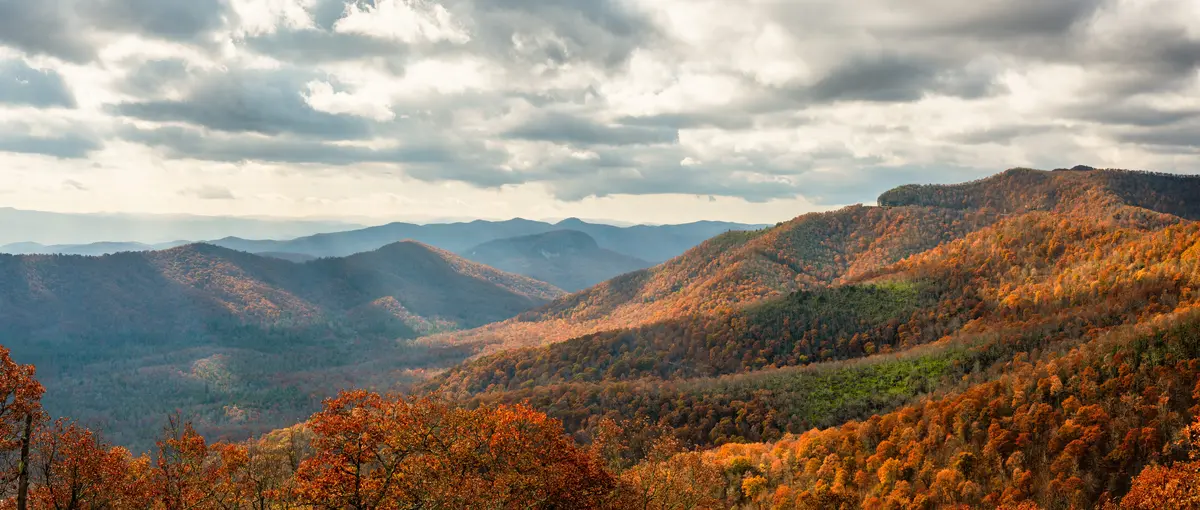
The Smoky Mountains are not background scenery here — they are a practical part of daily life. Maryville sits about 20 miles from the Townsend entrance to Great Smoky Mountains National Park, America's most-visited national park, which means a weekday hike is genuinely feasible if you have a flexible schedule. The Foothills Parkway delivers panoramic mountain views without fighting tourist traffic on the main Gatlinburg corridor. Little River runs accessible and close. The Greenbelt Park and Maryville Greenway and the Maryville-Alcoa Greenway give the city real, connected green infrastructure — the kind of trail network that makes car-free exercise actually work on a Tuesday morning.
McGhee Tyson Airport is roughly five miles from the city — about a 15-minute drive — with direct service to major hub airports. For California transplants who travel back to see family or maintain professional connections on the West Coast, that proximity matters more than it might seem in the abstract. You're not driving 45 minutes to catch a flight.
Downtown Maryville has a walkable core with historically restored buildings, locally owned restaurants, and a pace that is genuinely different from what you left. The Clayton Center for the Arts and Maryville College anchor the cultural end of things. Sam Houston Schoolhouse is a short piece of actual history — the future president taught here in the early 1800s. The city is small enough that you can know your neighborhood without effort, and the commute to Knoxville — about 25 minutes — gives residents access to a mid-sized regional city whenever they need it.
The city averages 200 sunny days a year, which is meaningfully less than coastal Southern California but not the gray-winter slog that transplants from the Pacific Northwest sometimes expect. Summers are humid — genuinely, deeply humid in a way that no amount of advance reading fully prepares a Californian for. Winters are mild by most measures but not by California standards: expect occasional snow, some ice, and heating bills that will be unfamiliar if you've spent years in a climate that barely needed a furnace.
Looking to buy in Maryville? Estimate your payment.
Enter your numbers to see an estimated monthly mortgage payment.
Estimate only. Excludes HOA fees and mortgage insurance. The interest rate above is a starting point, not a quoted rate — replace it with your own to see real numbers. Insurance is a flat placeholder, not a Maryville quote.
Beyond the Monthly Mortgage Payment — What to Factor In
- The property tax rate above — The 0.40% used in the estimate is the median effective rate — tax actually paid as a share of market value — published by Ownwell, 2026. Half of local homes pay more and half pay less: your own bill depends on that property's assessed value and any exemptions it qualifies for, which can differ a lot from its market price. Confirm with the Blount County assessor before you budget.
- Total cost of ownership — Your monthly mortgage payment is just the baseline. Depending on the specific city, county, and service district, homeownership costs also include local utility fees, municipal surcharges, and special assessments (such as water, sewer, storm drainage, or local energy taxes) that vary by location.
- Independent due diligence — Because these recurring local costs and municipal fees change depending on the exact property address, buyers must research them independently during their transaction process.
Tax laws, local municipal fees, and utility costs change frequently and individual situations vary. This page is general information, not tax or legal advice — always consult a qualified tax professional, CPA, or local municipal offices for personalized guidance.
Schools, Safety, and the Things Californians Ask About
The school district is a genuine differentiator. Maryville City Schools holds an A rating, according to Niche — a rare designation in any state — and operates as its own municipal district rather than a county system, with 5,617 students enrolled in 2024-25. On 2025-26 state assessments, 67.3% of students reached math proficiency and 67% reached reading proficiency. The district's active TSSAA athletics programs and the Rebels mascot produce the kind of Friday night football energy that builds a genuine community around it — something Californians moving from suburban markets often say they didn't expect to care about and then find they do. For a deeper look, the schools page covers the district in full.
On safety, Maryville runs well below state and national baselines. A violent crime rate of 1 per 1,000 residents compares against the Tennessee state rate of 6 per 1,000 and the national rate of 3.7 per 1,000. A property crime rate of 5 per 1,000 residents compares against the state rate of 20.8 per 1,000 and the national rate of 18.4 per 1,000. Those are meaningful gaps, not minor statistical variance. The full safety breakdown covers what those numbers look like at the neighborhood level.
The healthcare cost picture is favorable. Routine care costs run noticeably below what most Californians are accustomed to paying, and insurance premiums in Tennessee are generally lower than California equivalents. The honest trade-off: Maryville is a smaller city, and if you or a family member needs specialized or advanced care, you will sometimes need to travel for it. That's a real consideration, particularly for anyone with ongoing complex health needs, and it's worth factoring into the decision alongside the cost savings. The retiring page covers the healthcare landscape in more detail.
What Nobody Warned You: The Honest Frictions of This Move
Six months in, almost every California transplant mentions the same two surprises. The first is the sales tax on groceries — not because the dollar amount is ruinous, but because it runs counter to an ingrained habit. After years of filling a cart tax-free in California, seeing a sales tax line on a grocery receipt feels genuinely jarring every time until it doesn't.
The second surprise is the humidity in July and August. East Tennessee summers are hot in a wet, enveloping way that has no real equivalent in coastal California or even the inland valleys. If you've been living somewhere that air conditioning was optional or ran seasonally, plan for it to be non-negotiable here. Homes without strong HVAC are not comfortable in summer, and utility costs reflect that reality.
The pace of daily life takes adjustment. Downtown Maryville is walkable and genuinely pleasant, but it is not a city where everything is open late or where you'll find the density of choices that a California metro takes for granted. A serious shopping trip beyond everyday basics means driving out of town; you will be ordering online for anything the local shops don't carry. That is something some transplants love — the quiet, the space, the absence of traffic — and something others underestimate until they've lived it for a season.
One practical note for anyone planning to run a business from home, invest in real estate, or operate a short-term rental: local zoning and rental rules vary and are subject to change. Confirm the current ordinance with the city before you make any offer that depends on a specific use. Tennessee's favorable tax picture doesn't remove the need to do local due diligence — it just improves the backdrop for it.
For buyers who want to explore what Maryville actually feels like on the ground — the neighborhoods, the social texture, the weekend rhythm — the neighborhoods guide covers that ground directly.

Local Expert Takeaway: California equity buys a genuinely different life in Maryville — not a consolation version of it. The zero state income tax, the low property tax rate at 0.40%, and a typical home value of $394,656 (August 2026) combine to reset your monthly fixed costs in a way that compounds quickly. The Smoky Mountains are 20 miles from the Townsend entrance, the airport is five miles away, the school district holds an A rating, according to Niche, and the crime rates run well below both state and national baselines. The catches are real — grocery sales tax, summer humidity, and fewer options for specialist care or late-night everything — but they are the catches of a smaller, quieter city, not of a broken one. Most transplants stop second-guessing the move around month four.
Quick Takeaways & FAQs
✅ Tennessee's zero state income tax is the biggest financial shift for most California transplants — the savings are most meaningful for higher earners and households with significant investment or retirement income.
⚠️ Tennessee's combined sales tax rate runs among the highest in the country, including on groceries — a recurring out-of-pocket cost that surprises most California transplants who are used to paying no sales tax on food.
📍 McGhee Tyson Airport is roughly five miles from Maryville, with direct flights to major hubs — a meaningful convenience for transplants maintaining West Coast family or professional ties.
Is Maryville, TN significantly cheaper than California to buy a home?
Does Tennessee really have no state income tax?
What's the catch with Tennessee's tax structure for a California transplant?
How are the schools in Maryville compared to what a California family is used to?
What do California transplants find hardest about adjusting to Maryville?
Moving to Tennessee?
Tell us what you need help with and we'll connect you with local resources.
