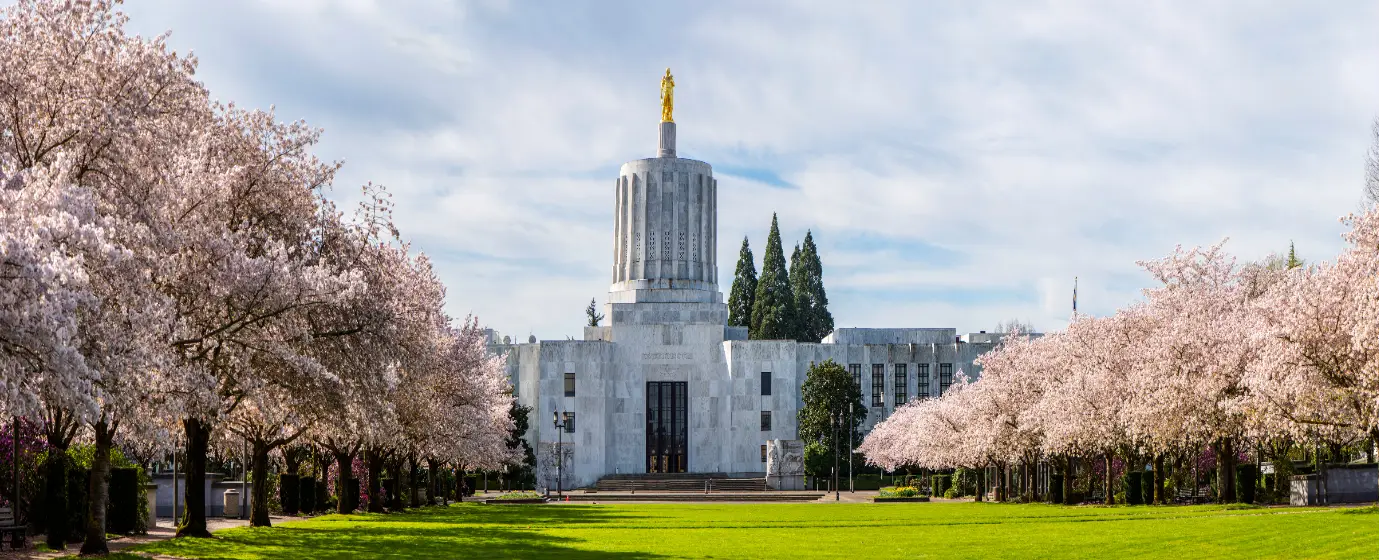
Salem doesn't announce its divisions loudly, but they're real. The Willamette River splits the city into two genuinely different worlds: the older, denser east side anchored by the Oregon State Capitol and Willamette University, and the hillier, quieter west side that many buyers discover only after they've already made an offer on the wrong side of the bridge. Getting that geography wrong is the single most common relocation mistake in this city.
With a population of 178,865, Salem is the 2nd-largest incorporated city in Oregon — large enough to have distinct neighborhood identities, but small enough that a wrong turn in the buying process lands you in a fundamentally different community than the one you researched. The state government is the dominant employer, with Salem-Keizer Public Schools, Marion County, and the City of Salem filling out the public sector. That employment base shapes everything: the commute patterns, the income range, and the neighborhoods where families with school-age children concentrate. Salem-Keizer Public Schools, which holds a B- rating, according to Niche, serves the vast majority of students across the city's neighborhoods.
Prices here sit well below Portland and noticeably below Silverton to the east, making Salem one of the more accessible entry points in the Willamette Valley. The typical home price is $440,726 (Zillow Home Value Index, July 2026) — a figure that still strains the median household income, so buyers who skip pre-approval often find themselves priced out of their target neighborhood by the time they start seriously looking. The city's walkability varies dramatically by district: downtown and Grant are genuinely pedestrian-friendly, while much of south and southeast Salem assumes a car for daily errands. For the full cost-of-living picture, including rent benchmarks and tax rates, see that dedicated page.
Whether you're being relocated by the state, moving from the Portland metro to stretch your budget, or simply researching the area before committing, the sections below break down Salem's eight neighborhoods by character, buyer type, honest trade-offs, and where renters get the most for their money.
The Salem Reality
The divide that matters most in Salem isn't income or age — it's the Willamette River. West Salem sits in Polk County, not Marion County, which means separate tax districts, a different county government, and — critically — a different mailing address. Buyers who assume they're getting a Salem school assignment and a Marion County property tax bill sometimes discover the distinction only at closing. If you're targeting West Salem, verify your county affiliation and school assignment before you fall in love with the house.
The second divide runs along the interstate corridor. The band between Commercial Street and the freeway forms the practical spine of the city's older, more affordable neighborhoods — Grant, South Central, and Morningside all sit in this zone. The neighborhoods that attract the most relocating families — South Salem and Faye Wright — sit south of Mission Street, where the 1960s-and-later housing stock tends to be larger and the streets are quieter. Southeast Mill Creek, the city's largest residential district, sits beyond that band with newer construction on larger parcels and direct freeway access that the downtown-adjacent neighborhoods simply don't offer.
School boundary lines in Salem-Keizer add a layer of complexity that doesn't show up on a neighborhood map. Two houses on the same block can feed different elementary schools, which matters when parents are choosing a neighborhood specifically for a school. The district serves 36,837 students enrolled in 2025-26 across a geography that covers both Salem and Keizer, so the boundary check — done at the district's official address tool — is a non-negotiable step before making an offer.
Neighborhoods at a Glance
| Neighborhood | Best For | Vibe |
|---|---|---|
| South Salem | Families Schools | Established suburban streets, strong neighborhood watch culture, close to south-side commercial corridors |
| West Salem | Views Luxury | Hillside Craftsman and ranch homes with river views; wine country at the doorstep; above the city median |
| Faye Wright | Families Schools | Tight-knit southeast neighborhood with four walkable parks and an unusual density of school options |
| Morningside | Commuters Value | Midcentury tree-lined streets near Commercial Street; wild turkeys included at no extra charge |
| Downtown Salem | Walkable Renters | Apartments and condos within walking distance of the Capitol, Willamette University, and the river |
| Grant | First-Time Walkable | Salem's only Heritage Neighborhood; Craftsman and Victorian homes from 1900–1940; below median entry |
| Southeast Mill Creek | Commuters Nature | Large southeast district with freeway access, Cascades Gateway Park, and Corban University nearby |
| South Central | Families Quiet | Walkable to Bush's Pasture Park and historic landmarks; close to downtown without the density |
Salem typical home price: $440,726 (Zillow ZHVI, July 2026). Typical rent: $1,584/mo (Zillow ZORI, July 2026). Neighborhood tiers on this page are relative to these figures.
Best Neighborhood by Buyer Type
| Buyer Type | Best Neighborhood | Why |
|---|---|---|
| First-Time Buyer | Grant | Homes priced below the city median with walkable streets and historic character make it Salem's most accessible owned-housing entry point. |
| Luxury Buyer | West Salem | The only neighborhood sitting above the city median, with hillside views of the Willamette River and the Willamette Valley wine country as a backyard. |
| Walkability Seeker | Downtown Salem | The only Salem neighborhood where the Capitol, the university, Riverfront Park, and a growing independent dining scene are all genuinely reachable on foot. |
| Families with Kids | South Salem | The highest concentration of established family neighborhoods, strong neighborhood watch presence, and convenient access to Salem's south-side school campuses. |
| Commuters | Southeast Mill Creek | Direct freeway access makes this the most highway-efficient corner of the city for anyone driving to Portland or east toward the Cascades. |
| Large-Lot Buyers | Southeast Mill Creek | The 5,800-acre district is Salem's largest residential zone, with newer construction on larger parcels not found in the older, tighter-lot neighborhoods closer to downtown. |
| Renters | Downtown Salem | The most apartment-dense neighborhood in the city, with the widest range of rental inventory and the shortest commute to the state government employment cluster. |
Looking to buy in Salem? Estimate your payment.
Enter your numbers to see an estimated monthly mortgage payment.
Estimate only. Excludes HOA fees and mortgage insurance. The interest rate above is a starting point, not a quoted rate — replace it with your own to see real numbers. Insurance is a flat placeholder, not a Salem quote.
Most Popular Neighborhoods
South Salem
South Salem is where most relocating families end up after doing their research — a mix of 1960s and 1970s ranch homes and newer suburban construction spread across quiet streets with organized neighborhood watch programs. The proximity to the south-side commercial corridors is convenient, but peak-hour congestion along Commercial Street can surprise newcomers. The housing stock here has no dramatic views or architectural flair, and the streets can feel interchangeable to someone new to the city.
Best for: Families with school-age children who want established housing, organized neighbors, and easy freeway access.
West Salem
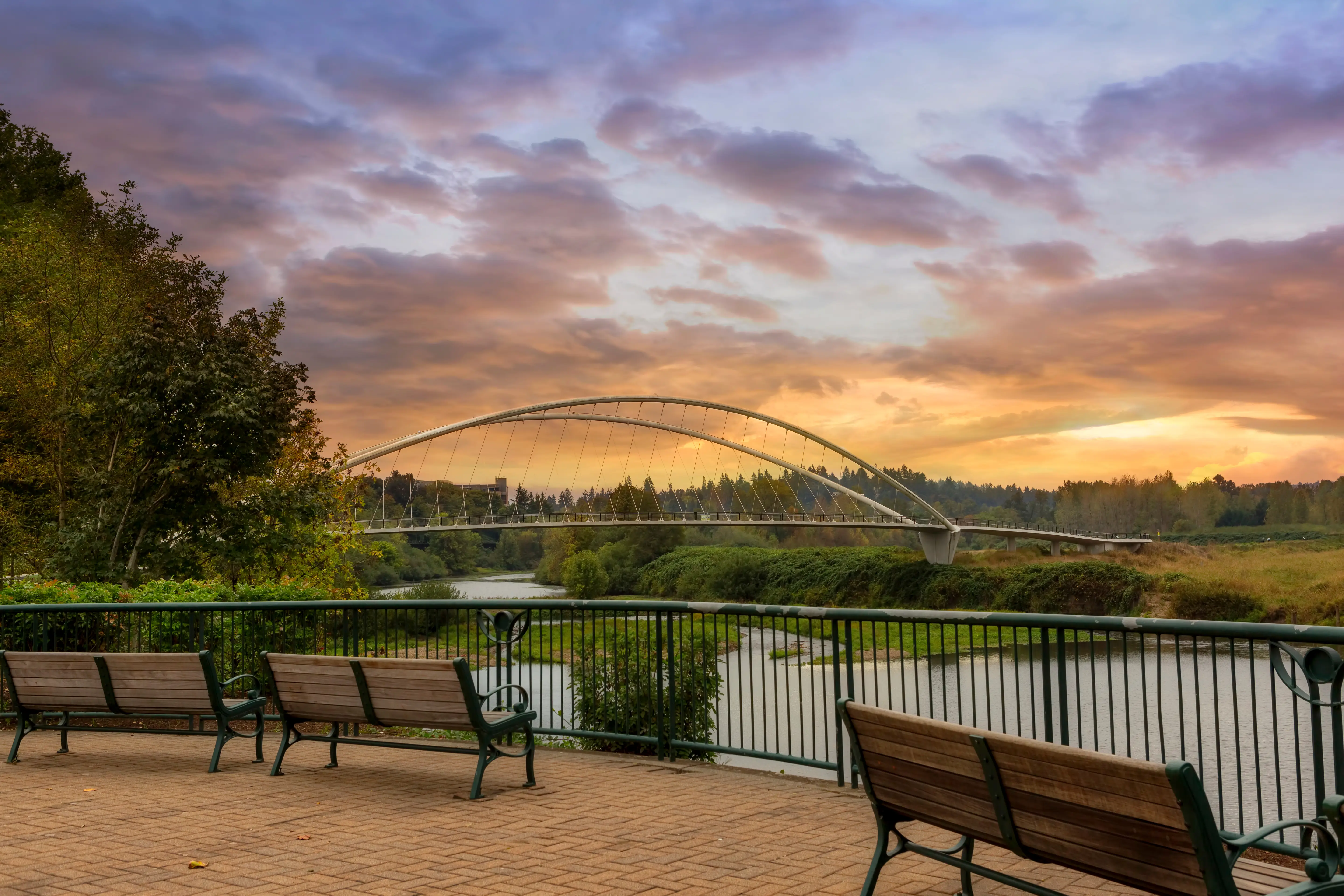
West Salem is Salem's most expensive neighborhood, sitting above the city median, and the river makes that premium feel real: the Union Street Railroad Bridge pedestrian crossing connects it to downtown, and the Willamette River and the vineyards of the Willamette Valley American Viticultural Area frame the western horizon. The eastern edge has 1940s Craftsman cottages; the newer western sections lean toward midcentury ranch and contemporary Craftsman styles. The catch is the bridge: one crossing point for a neighborhood that many residents commute from daily means that an accident or road work anywhere near the river turns a five-minute trip into a thirty-minute one.
Best for: Buyers who want river views, wine-country proximity, and the city's most distinctive housing stock, and who can work with a single bridge crossing.
Faye Wright
Faye Wright's neighborhood association has been active since 1972, and that organizational culture shows — this is a southeast Salem neighborhood that genuinely functions as a community. Woodmansee Park, a 30-acre green space with basketball, pickleball and tennis courts, walking paths, and a nine-hole disc golf course set among Oregon white oaks and Douglas firs, anchors the southern edge. Four school options — Faye Wright Elementary, Judson Middle School, Immanuel Evangelical Lutheran, and Queen of Peace Catholic — sit within walking distance for most residents, which is genuinely rare in Salem. Homes here sit at the city median, so it isn't a bargain, but you're paying for stability and school proximity rather than prestige.
Best for: Parents who want multiple school choices in one neighborhood and a park that can absorb a Saturday afternoon.
Morningside
Morningside's 1,774-acre footprint covers the band between the interstate and Commercial Street in south-central Salem, and its midcentury homes on tree-lined streets are among the most architecturally consistent in the city. Homes sit at the city median. The neighborhood's proximity to the Salem Brewery District and Commercial Street's transit corridor makes it appealing to buyers who want walkable weekends without the downtown density — but "proximity" is the key word, because Morningside itself is still car-dependent for most daily errands. The local detail that tends to surprise new residents: the wild turkeys. They are a real, documented feature of Morningside's residential streets, and the community Facebook page dedicated to tracking them is not a joke.
Best for: Buyers who want established midcentury character at the city median, with transit access nearby and the Brewery District within reasonable reach.
Downtown Salem
Downtown is the only Salem neighborhood where you can walk to the Oregon State Capitol, Willamette University, and Riverfront Park on the same morning. The housing stock is almost entirely apartments, condos, and historic row conversions, which makes this the strongest neighborhood for renters and the weakest for buyers looking for a single-family home with a yard. The independent dining scene and the weekly market are genuinely improving, but downtown Salem is still a work in progress — a few blocks from the Capitol in one direction and noticeably grittier in another. No price tier applies here; the renter-dominated inventory means the ownership market is thin and inconsistent.
Best for: State employees, Willamette University faculty and staff, and renters who want to walk to work without owning a car.
Grant
Grant is the smallest neighborhood association in Salem by geography and the oldest by housing stock — nearly every home dates to between 1900 and 1940, in a mix of Craftsman, Colonial, and Victorian styles that the Salem Historic Landmarks Commission recognized when it designated Grant as Salem's first Heritage Neighborhood. It borders the Capitol Mall at the north end of downtown, which puts it walkable to state government employment. Homes sit below the city median, making it one of the city's more accessible entry points for buyers who want character over square footage. Grant Community School, immediately adjacent to Grant Park, runs a dual-language immersion program for pre-K through 5th grade — a detail that draws families who might not otherwise consider a neighborhood this close to downtown.
Best for: First-time buyers, historic-architecture enthusiasts, and state-sector employees who want to walk to work and pay below the city median.
Southeast Mill Creek
Southeast Mill Creek is Salem's largest residential district — 5,800 acres established in 1986 — and it functions less like a traditional neighborhood and more like a self-contained southeastern sector of the city. Corban University anchors the institutional side; Cascades Gateway Park, the city's third-largest, offers a fishing lake and an 18-hole disc golf course. Direct freeway access makes it genuinely convenient for commuters heading north toward Portland or east toward the Cascades. Homes sit below the city median. The trade-off is that this is Salem's most car-dependent district — the scale of the neighborhood means on-foot access to daily amenities is limited, and the retail and dining options are spread out rather than concentrated.
Best for: Commuters, buyers who want larger lots below the city median, and anyone who prioritizes freeway access over walkable streets.
South Central
South Central sits just south of downtown and holds some of the most historically significant land in Salem: Bush's Pasture Park, the Asahel Bush House and Museum, the Deepwood Estate, the Gaiety Hill–Bush's Pasture Park Historic District, and Mahonia Hall, the official residence of Oregon's governor. It's the city's most landmark-dense residential neighborhood, walkable to downtown without sitting in its density. Homes sit at the city median. The catch is that "walkable to downtown" still means navigating Salem's surface streets, and the neighborhood's quiet, established character comes with a housing stock that skews older and occasionally requires more maintenance than buyers moving from newer suburban markets expect.
Best for: Buyers drawn to historic character and parkland access who want proximity to downtown without living in an apartment building.
Common Mistakes Buyers Make in Salem
Assuming West Salem Is Just Cheaper Downtown
West Salem is a genuinely different legal and administrative territory. It sits in Polk County, not Marion County, with separate county services and tax structures. Buyers who shop it as a riverside alternative to downtown occasionally close before registering that their county government, their emergency services district, and their mailing county are all different from the rest of Salem.
Buying in Southeast Mill Creek Without a Car Plan
Southeast Mill Creek's freeway access looks great on a commute map. What the map doesn't show is that the district's 5,800 acres spread its retail, dining, and services thin. Buyers relocating from walkable metros sometimes discover after moving in that every errand requires a separate drive, and that the scale of the neighborhood works against the spontaneous, on-foot access they assumed Salem's smaller size would provide.
Skipping the School Boundary Check
Salem-Keizer's boundaries don't follow neighborhood association lines. In Faye Wright and South Salem especially, two houses on the same street can feed different elementary schools. Buyers who choose a neighborhood based on school reputation without running the district's official address lookup sometimes end up outside the attendance zone they were counting on — and boundary transfer requests are not guaranteed.
Treating Grant's Price as a Signal of Problems
Grant's below-median price relative to the rest of the city is structural — the homes are small, the lots are small, and the neighborhood is dense — not a safety or quality signal. Buyers who dismiss it based on the number miss what is genuinely Salem's most architecturally coherent neighborhood, within walking distance of state employment, with a dual-language elementary school and a Heritage Neighborhood designation. The homes require patience and usually some updating; the neighborhood itself is not the issue.
Best Areas to Rent in Salem
| Area | Ideal For | Trade-off |
|---|---|---|
| Downtown Salem | State employees, Willamette University staff, car-free renters | Thinner inventory of larger units; street-level blocks vary significantly in character within a short distance |
| South Salem | Families wanting single-family rentals with yards and quiet streets | Single-family rentals turn over infrequently and compete with owner demand; limited apartment supply means fewer options |
| Morningside / Commercial Street Corridor | Commuters and transit-dependent renters who want a midcentury feel | Older rental stock can mean deferred maintenance; on-street parking pressure in the denser sections near Commercial |
| Southeast Mill Creek | Renters who need freeway access and don't mind a car-dependent lifestyle | Least walkable of Salem's rental zones; limited independent dining and retail within easy reach |
| South Central / Faye Wright | Renters who want parkland access and established neighborhood feel without downtown density | Rental inventory is limited in these owner-dominated neighborhoods; competition for available units tends to be quick |
Salem's typical 2BR rent range runs $1,460–$1,770, and the city-wide rental market reflects a shortage of quality single-family rentals relative to demand — particularly in South Salem and Faye Wright, where owner-occupancy dominates and rental availability is thin. For a full breakdown of citywide rent trends and how Salem compares to neighboring markets, see the cost-of-living page.
Local Expert Takeaway: The buyers who end up happiest in Salem are the ones who crossed the Willamette before making an offer, ran the district's school boundary tool before falling in love with a street, and understood that Grant's below-median price reflects house size, not neighborhood quality. South Salem and Faye Wright absorb most relocating families for good reasons — established streets, organized neighbors, and park access — but the city's most undervalued owned-housing opportunity is still Grant, where a Craftsman from 1915 on a quiet block near the Capitol Mall costs less than the city median and walks to state employment. West Salem's river views are real, but so is the single-bridge reality. Get the geography right before anything else.
Quick Takeaways & FAQs
✅ Faye Wright is one of the only Salem neighborhoods where four different schools — two public, two parochial — sit within walking distance of most homes, giving parents genuine choice without driving.
⚠️ West Salem sits in Polk County, not Marion County — a distinction with real consequences for tax districts and county services that surprises buyers who find out at closing rather than before.
📍 Grant Neighborhood is Salem's only Heritage Neighborhood designation and its most architecturally intact historic district, with homes from 1900–1940 priced below the city median and walkable to the Capitol.
What is the most family-friendly neighborhood in Salem, Oregon?
Which Salem neighborhood is most affordable for first-time buyers?
Is West Salem a good place to buy a home?
Where should I rent in Salem if I work for the state government?
How do Salem's neighborhoods differ in terms of school options?
Moving to Oregon?
Tell us what you need help with and we'll connect you with local resources.
