Most people who move to Newport from inland Oregon say the same thing once they settle in: they had no idea how much of the city they would spend outside. That's not a generic coastal promise — it's a function of geography. Newport sits at the convergence of Yaquina Bay, the open Pacific, and the basalt headlands that define this stretch of the central Oregon Coast. US-101 runs the spine of the city, and US-20 connects it inland to Corvallis, but what organizes daily life here isn't the road grid — it's the shoreline. The beach is never more than a few minutes away, no matter which neighborhood you're in.
Newport's 10,833 residents live alongside a working waterfront that doubles as a recreation hub. Yaquina Bay is the home of one of Oregon's most active commercial fishing fleets, and the same water that produces the crab and salmon at the Historic Bayfront's docks is where residents drop crab pots, cast for rockfish, and watch harbor seals haul out in the afternoon sun. The parks system — 17 parks covering roughly 11% of the city's land area — is anchored not by manicured playgrounds but by the coast itself: state parks, a federally designated natural area, bay trails, and miles of free public beach.
The honest caveat is the weather. Newport averages 156 sunny days a year — a figure that surprises nearly every newcomer who pictured a sunnier Oregon Coast than the data supports. The payoff for those overcast days is a coastline that stays green, wild, and largely uncrowded outside of peak summer. Storm season brings its own draw: surfers at Agate Beach, beachcombers scanning for agates after swells, and a particular brand of resident who genuinely prefers the coast in February. If that sounds like you, Newport's outdoor life will feel like a permanent amenity. If you need reliable sunshine, the trade-off is real.
This guide covers Newport's signature parks, its beach and trail network, the water-based recreation on Yaquina Bay, and the seasonal rhythms — whale watching, crabbing, seabird nesting — that shape what outdoor life here actually looks like month to month.
Yaquina Head and the State Parks: Newport's Outdoor Anchors
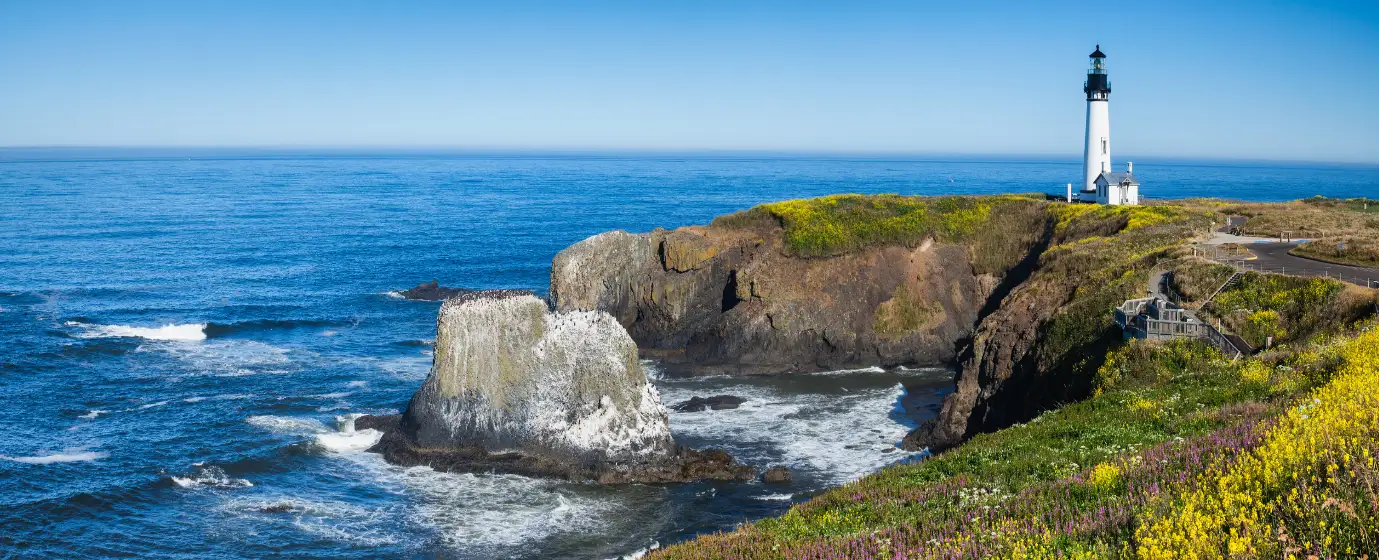
The two parks that define Newport's outdoor identity are not city-managed — and that's part of what makes them exceptional. Yaquina Head Outstanding Natural Area is a 100-acre basalt headland managed by the Bureau of Land Management, extending a full mile into the Pacific. Congress designated it in 1980 specifically to protect its scientific and scenic values, which means it has been deliberately kept in a state that most city parks never achieve.
The headland holds Oregon's tallest lighthouse — a 93-foot structure first lit in 1873 — along with tidepool access at Cobble Beach, short hiking trails to wildlife-viewing platforms, and one of the better harbor seal haul-out sites on the Oregon Coast. Peregrine falcons nest here. Thousands of seabirds raise young on the offshore rocks from late spring through mid-summer. Gray whales can be spotted from the headland any month of the year, though the organized sightings cluster around Oregon State Parks' two Whale Watch Weeks — one in late December, one in late March — when trained volunteers set up at Yaquina Head to help visitors catch the peak migration. Approximately 20,000 gray whales make the northward run from Baja California to Alaska each spring, and they hug the coastline close enough that binoculars are optional.
One thing to know before planning your first tidepool visit: during harbor seal pupping season and seabird nesting season — roughly mid-May through September — access to Cobble Beach and the tidepools may be limited to protect the animals. It's not a reason to skip the trip, but it is a reason to check conditions before you go.
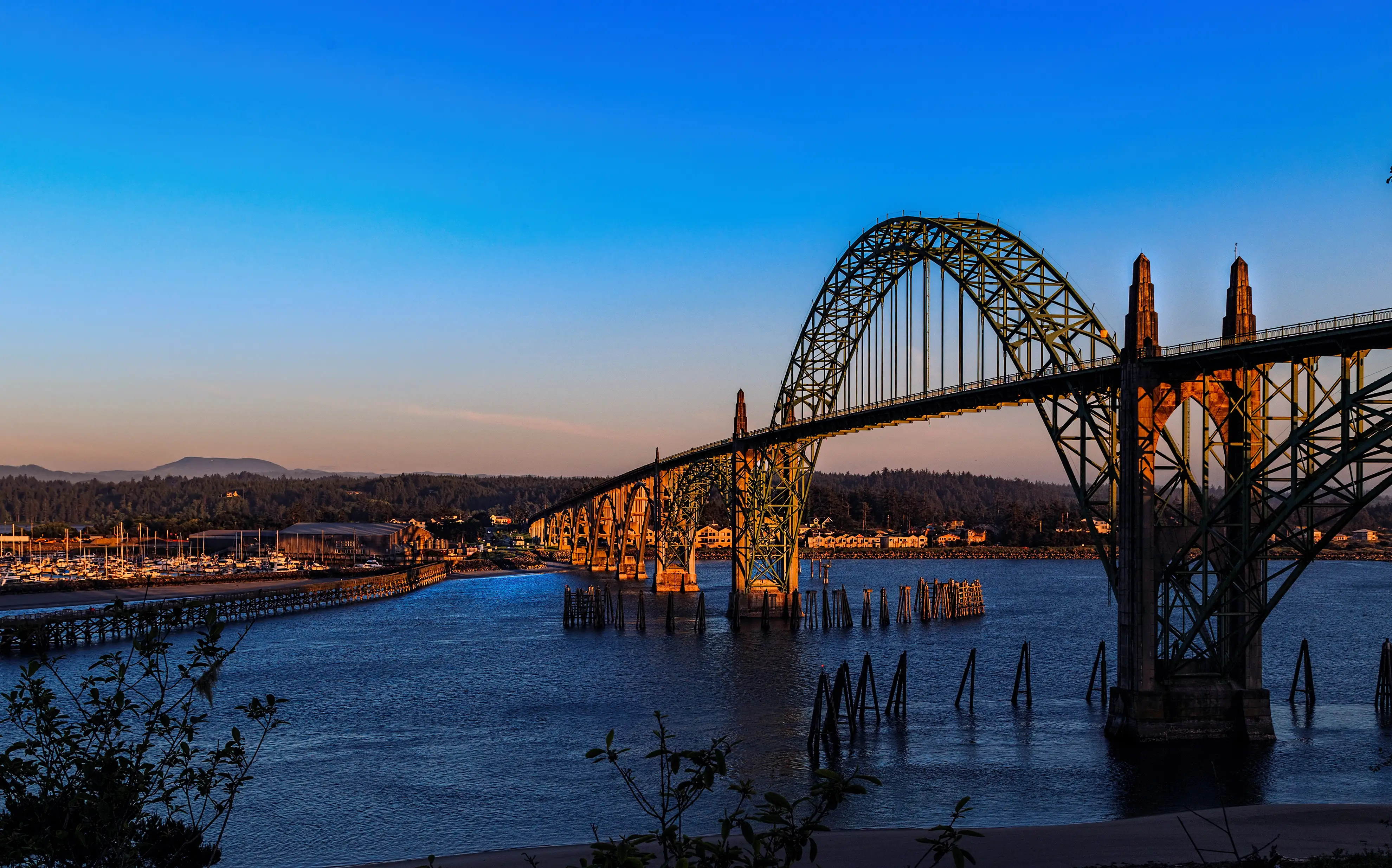
South Beach State Park sits just across the Yaquina Bay Bridge off US-101, and at 498 acres it is one of the largest parks on the Oregon Coast. The campground alone — 227 electrical and water sites, 60 tent sites, and 27 yurts — gives you a sense of scale. The recreation options are genuinely varied: hiking, biking, surfing, horseback riding, rockhounding, beachcombing, fishing, a 9-hole disc golf course, horseshoe pits, and an ADA-accessible paved Jetty Trail that runs along the bay edge. The park also runs interpretive programs and junior ranger activities during summer, which makes it a legitimate destination for parents with school-age children.
| Park / Area | Size | Managed By | Signature Activities | Best For |
|---|---|---|---|---|
| Yaquina Head Outstanding Natural Area | 100 acres | Bureau of Land Management | Tidepools, wildlife viewing, lighthouse, whale watching | Nature Views |
| South Beach State Park | 498 acres | Oregon State Parks | Hiking, biking, surfing, disc golf, camping, fishing | Families Nature |
| Yaquina Bay State Park | – | Oregon State Parks | Beach and bay access, picnicking, paved trails, lighthouse | Families Walkable |
| Nye Beach | Part of ~5-mi shoreline | City / State | Beachcombing, kite-flying, fat biking, surfing, picnicking | Walkable Renters |
| Agate Beach | Part of ~5-mi shoreline | State | Agate hunting, surfing, beachcombing | Nature Quiet |
| Yaquina Bay (water access) | Bay-wide | ODFW / Port | Crabbing, fishing, boating, birding | Nature Families |
Yaquina Bay State Park, positioned near the Yaquina Bay Bridge, is a quieter option that tends to get overlooked — paved trails, picnic areas, bay and jetty views, and the historic Yaquina Bay Lighthouse on the grounds.
The Beach Network: Nye Beach, Agate Beach, and Five Miles of Open Shore
Newport doesn't have one beach — it has a continuous run of coast. Nye Beach and Agate Beach connect without interruption to form nearly five miles of broad sandy shoreline, and access is free, with large public parking areas providing direct entry to the sand. That's not something you can take for granted on the Oregon Coast, where beach access can be complicated by topography or limited pullouts.
Nye Beach is the more urban end of the stretch — the neighborhood behind it has independent coffee shops, a handful of restaurants, and a walkable street grid that gives residents the closest thing Newport has to an on-foot beach lifestyle. The beach itself is wide and wind-prone, which makes it genuinely good for kite-flying and fat biking. Surfing happens here, though Agate Beach, to the north, tends to attract more consistent breaks and the surfers who know where to find them.
Agate Beach earns its name. After significant swells, the wave action turns over the cobble and deposits the translucent agates that collectors drive hours to find. New residents who move to the Agate Beach neighborhood and walk the tideline after a winter storm are routinely surprised by how much is there for the looking. It becomes a quiet habit fast.
What Locals Know About the Shore
The five-mile beach is rarely crowded outside of July and August. During those peak weeks, parking fills early and the sand near Nye Beach can feel genuinely busy — a seasonal rhythm that Newport residents either plan around or simply avoid by heading to the broader, quieter stretches toward Agate Beach. By September, the crowds thin dramatically, and the coast returns to something closer to its year-round character: a handful of walkers, a few surfers, a lot of open sky.
Fat biking on the firm sand near the waterline has grown into a real activity here — residents who want a longer ride link the beach miles to the paved trail network in South Beach State Park. It's not a marked route or a formal system, but it's one of those Newport habits that becomes obvious once someone shows you.
One honest friction point: the wind. Newport's coast is exposed, and summer afternoons can push gusts strong enough to make a beach picnic genuinely unpleasant if you haven't accounted for it. Mornings are more reliably calm. The residents who love the beach here tend to be morning people, or people who have learned to read the forecast for wind rather than rain.
Water, Trails, and Birding: Recreation on Yaquina Bay
Yaquina Bay is the other half of Newport's outdoor life, and it operates on a completely different rhythm than the open coast. Where the Pacific beach is about scale and weather, the bay is about timing — tides, seasons, migration — and the rewards go to people who pay attention to it.
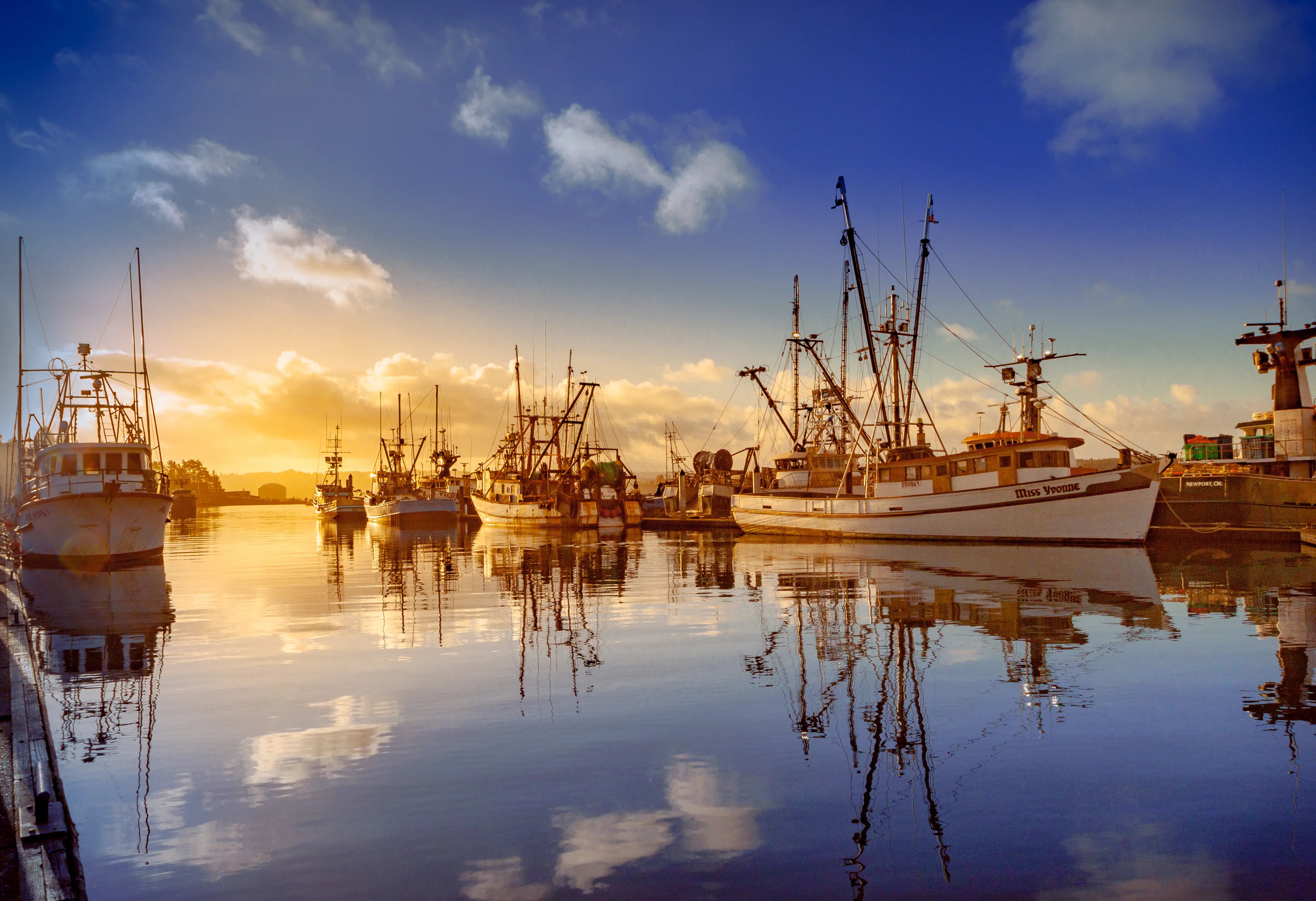
Crabbing on Yaquina Bay is as close to a local tradition as Newport has. The bay is accessible from the Historic Bayfront, and Dungeness crab season peaks in December — which means that while much of the country is indoors for the holidays, Newport residents are out on the water. The same bay supports year-round fishing and boating, with the port infrastructure that comes with a working commercial fleet giving recreational users genuine access rather than an afterthought marina.
Birding along the bay is specific and rewarding in a way that surprises people who associate coastal birding with the open beach. A 1-mile trail near the Hatfield Marine Science Center runs along the bay edge and draws year-round birders; the peak shorebird migration comes in late April, with Caspian and elegant terns appearing through summer. It's an easy walk — nothing technical — but the species diversity on that stretch is legitimately impressive for the distance involved.
Whale Watching: A Newport Rhythm You'll Plan Around
Gray whale watching becomes part of the calendar here in a way that doesn't happen in most coastal towns. Oregon State Parks' Whale Watch Weeks — one in late December and one in late March — station trained volunteers at Yaquina Head and other designated sites to help visitors spot gray whales during the peak migration pulses. Approximately 20,000 gray whales make the northward run each spring, and mothers with calves hug the coastline closely enough that sightings from the headland are common rather than lucky.
Outside of those organized weeks, whale watching is simply a year-round habit for Newport residents with a view of the headland or a habit of walking Yaquina Head's short trails. Gray whales are genuinely present year-round — the migration creates the peaks, but there are resident whales along this stretch of coast even in the quiet months. Narrated whale-watching and sea-life cruises operate out of the Historic Bayfront aboard a 65-foot vessel staffed by naturalist guides, running from spring through fall for those who want the water-level perspective.
The birding trail, the crabbing access, the whale watching — these are not things Newport's parks offer in a brochure sense. They're what residents actually do on a weekday morning or a slow weekend afternoon. That distinction matters when you're deciding whether a place will feel like somewhere to live or just somewhere to visit.
Looking to buy in Newport? Estimate your payment.
Enter your numbers to see an estimated monthly mortgage payment.
Estimate only. Excludes HOA fees and mortgage insurance. The interest rate above is a starting point, not a quoted rate — replace it with your own to see real numbers. Insurance is a flat placeholder, not a Newport quote.
Seasonal Recreation and What Six Months Here Actually Looks Like
Newport's outdoor calendar runs counter to most people's assumptions. The peak recreation window is not summer — or rather, summer is when the tourists arrive, and the residents who have been here a while know that the best months for actually using the parks are May, September, and October. The coast is spectacular in those shoulder months, the parks are quieter, and 156 sunny days a year means the sun shows up often enough to make them count.
Spring is the season that converts people. Gray whale mothers and calves move close to shore. Seabird chicks appear at Yaquina Head. Shorebird migration peaks along the bay trail near Hatfield. The tidepools are accessible before the seasonal restrictions begin in mid-May. If you move to Newport in early spring, the outdoor life reveals itself quickly and in sequence, and it's genuinely hard not to be absorbed by it.
Summer brings the trade-off: the crowds, the parking pressure at Nye Beach, and the July and August fog that can sit on the coast for days at a stretch. The fog is the seasonal quirk nobody mentions before you move here. Newport in July is frequently overcast and cool enough for a jacket — not unpleasant, but not the beach summer that inland Oregon residents sometimes picture when they make the move. The residents who thrive here either already knew this or adjusted faster than they expected.
Winter on the Coast
Winter is when Newport's outdoor culture becomes self-selecting. Storm watching — sitting near a picture window or walking the beach during a significant swell — is a real activity here, and the town doesn't shut down in the way that more tourist-dependent coastal towns do. Dungeness crab season peaks in December. The Whale Watch Week in late December draws volunteers and visitors even in the cold. The agate hunting after winter swells is some of the best of the year.
The residents who move to Newport from places with warmer winters often take six to eight months to find their footing with the outdoor rhythm. The activities are there — the beach, the bay, the trails, the wildlife — but they require a different relationship with weather than most people arrive with. The ones who figure it out tend to stay a long time. The ones who don't tend to mention the rain in conversations about why they left.
For a full look at how Newport's neighborhoods sit relative to its parks and shoreline access, see the best neighborhoods guide. For cost-of-living context, including home prices, visit the cost of living page.
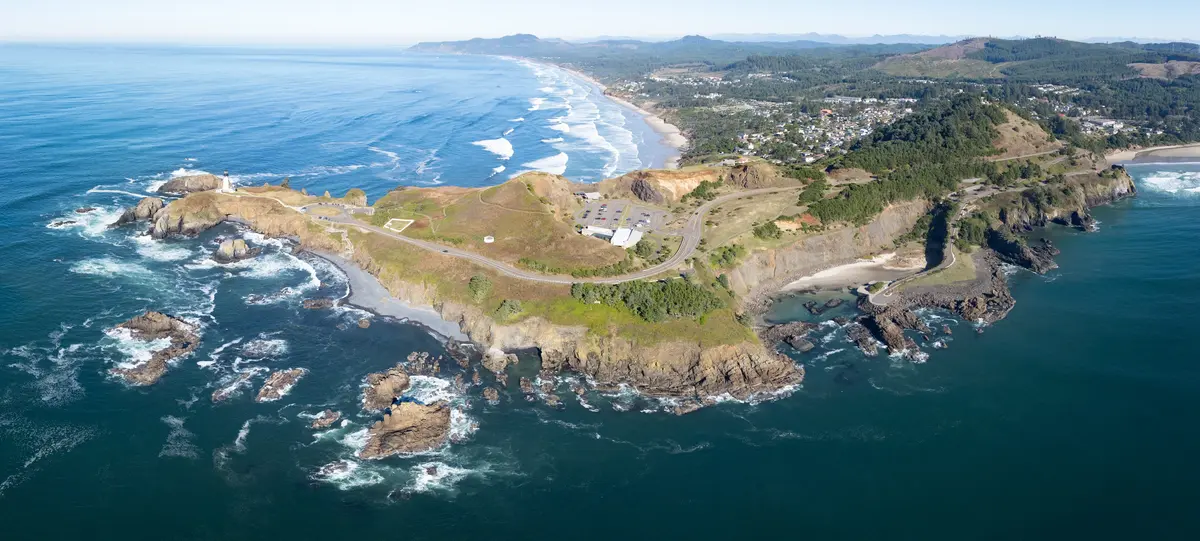
Local Expert Takeaway: Newport's outdoor life is genuinely exceptional, but it rewards the kind of person who shows up in February as much as August. The combination of Yaquina Head's tidepools and lighthouse, South Beach State Park's 498 acres of coast-to-bay terrain, the nearly five-mile beach running from Nye Beach through Agate Beach, and year-round whale watching and crabbing on Yaquina Bay is a parks portfolio that most Oregon cities its size can't match. The catch is weather: 156 sunny days a year means you will learn to love the gray, or you will fight it. The residents who lean into the storm walks, the morning agate hunts after a swell, and the late-April shorebird migration along the bay trail are the ones who feel like they won the lottery by moving here.
Quick Takeaways & FAQs
✅ Yaquina Head Outstanding Natural Area — a federally protected 100-acre basalt headland with Oregon's tallest lighthouse, tidepool access, and year-round gray whale sightings — sits inside Newport's city limits.
⚠️ Newport averages 156 sunny days a year, and summer fog along the coast can persist for days at a stretch — the beach town feel is real, but it's a Pacific Northwest beach town, not a Southern California one.
📍 South Beach State Park's ADA-accessible Jetty Trail and 9-hole disc golf course make it genuinely usable for a wide range of abilities and ages, not just campers and surfers.
Is Yaquina Head Outstanding Natural Area free to visit?
Can you swim at Newport's beaches?
What is the best time of year to go whale watching in Newport?
Is South Beach State Park worth visiting if you're not camping?
Where do Newport residents actually go to pick up agates?
Moving to Oregon?
Tell us what you need help with and we'll connect you with local resources.
