
California had you. Now it doesn't — or at least, you're running the numbers and Medford keeps appearing. The city sits roughly 27 miles north of the California border in the Rogue Valley, flanked by the Cascade foothills to the east and the Siskiyous to the south, anchored by I-5. With a population of 86,483, it is the 8th-largest incorporated city in Oregon — not a small town playing at being a city, but a genuine regional hub with its own airport, medical infrastructure, and employment base. The distance from your old life is shorter than you think: Rogue Valley International-Medford Airport offers nonstop flights to San Francisco and Los Angeles, which matters enormously when parents are still in Fresno or a client is still in the Bay Area.
The economic backbone here is healthcare, education, and government — the school district, Jackson County, and major regional healthcare employers define the employment landscape alongside Harry and David, which has been part of the Rogue Valley's identity for generations. The Medford School District 549C serves a community of families who moved here on purpose, often from more expensive markets, and Medford's median household income of $72,324 reflects a working city rather than a resort town. That distinction matters: Medford is where the actual residents of Southern Oregon live and work, not where they vacation.
The financial case for the move is real, though it is messier than the headline suggests. Housing costs run noticeably below California's, and that gap is driven almost entirely by real estate — Medford's typical home value stands at $412,596 (July 2026), which lands far below California's statewide typical home value of $773,735. The sales tax elimination is an immediate, clean savings on every retail purchase. The income tax story, however, requires more careful reading, and the wildfire smoke season requires honest preparation. More on both below.
Whether you have already signed with a moving company or are still building the spreadsheet, the sections below walk through the full California-to-Medford comparison: home prices and housing costs, the complete tax picture, what daily life actually looks like in the Rogue Valley, what surprises people after six months, and the honest trade-offs you should weigh before you make an offer.
The Housing Price Reality: What California Equity Actually Buys You
The single most motivating number in any California-to-Medford conversation is the home price gap. Medford's typical home value is $412,596 (July 2026). California's statewide typical home value of $773,735 — drawn from the same Zillow Home Value Index series, so the comparison is methodologically clean — means the typical Medford home runs at roughly half the California statewide figure. For someone selling a modest Bay Area or Southern California home with fifteen years of equity behind them, that gap can translate into a paid-off or near-paid-off property in the Rogue Valley.
That dynamic explains why a significant share of inbound movers to Oregon report high household incomes. The California-to-Oregon pipeline is not driven by people who couldn't afford California — it is driven by people who could afford California but chose to deploy that equity differently.
What does the Medford market actually look like on the ground? Entry-level inventory — older construction, smaller lots, homes that need cosmetic updating — starts below the typical price. Well-maintained homes in East Medford, Southwest Medford, and the Cherry Lane / Summerfield area push above it. The Rogue Valley Country Club corridor and Eagle Trace represent the upper end of the local market. For neighborhood character and what distinguishes one part of the city from another, the best neighborhoods guide covers this in detail.
One thing to recalibrate before you write an offer: the affordability picture is tighter than the raw number suggests. Medford's median household income of $72,324 is below the income level required to comfortably carry the typical home here. That gap means many local buyers are stretching, and it also means the market is partly sustained by out-of-state cash and equity transfers. If you are bringing California proceeds, you are in a structurally stronger position than most local buyers. If you are starting fresh without that equity, your budget math deserves the same careful scrutiny you would apply anywhere.
Airport Access Is Part of the Calculus
Rogue Valley International-Medford Airport sits inside city limits, approximately 3 miles from downtown, and operates nonstop service to San Francisco, Los Angeles, Portland, Seattle, Denver, and Phoenix. For a city of Medford's size, that is an unusually robust direct network. It matters for the relocation decision in a specific way: you are not cutting ties with California when you move here, you are relocating the base of operations while keeping the connection manageable.
The Full Tax Picture: Where You Win, Where You Don't
Most California transplants walk into the Oregon tax conversation with one assumption: they are moving to a lower-tax state. The reality is more textured, and getting it wrong at the planning stage can produce real financial surprises in year one.
| Tax Category | California | Oregon / Medford | Who Wins |
|---|---|---|---|
| State Sales Tax | California's statewide base sales tax rate of 7.25% (up to 10.25% with local surcharges) | 0% — no state sales tax | Oregon, cleanly |
| Top State Income Tax Rate | California's top state income tax rate of 13.3% | 9.9% top rate | Complicated — see below |
| Effective Property Tax Rate | California's effective property tax rate of 0.71% | 0.74% (Medford / Jackson County) | Roughly equal; Prop 13 complicates this |
| Social Security Tax | California taxes Social Security benefits | Oregon does not tax Social Security benefits | Oregon, for retirees |
| Housing Costs vs. California | Statewide typical home value of $773,735 | Typical home value of $412,596 (July 2026) | Oregon, decisively |
The Sales Tax Win Is Real and Immediate
Oregon has no state sales tax — one of only five states in the country. Every grocery run, hardware store trip, and clothing purchase is sticker price, final. For a household that spends heavily on goods, the elimination of California's statewide base sales tax rate of 7.25% (and whatever local surcharge sits on top of it) can represent meaningful annual savings. This is the clearest, most predictable financial gain in the move.
The Income Tax Win Is Not What You Think
This is where California movers most often miscalculate. Oregon's top rate of 9.9% is lower than California's top state income tax rate of 13.3%, but Oregon's tax brackets compress far earlier. The income tax savings favor high earners in a meaningful way; many middle-income households pay about the same or more here than they did in California. If you are a high earner, the income tax picture eventually favors Oregon. If you are a middle-income household, the sales tax elimination is doing more work for you than the income tax rate differential.
Property Tax: The Prop 13 Trap
Medford's effective property tax rate is 0.74% — nearly identical to California's effective property tax rate of 0.71%. On paper, these are a wash. In practice, they are not, for one specific reason: California's Proposition 13 caps annual assessed-value increases at 2% for existing homeowners. A Californian who bought in 2008 may be paying taxes on a valuation that is a fraction of what the home would sell for today. Oregon has no equivalent cap, so when you purchase in Medford, you are assessed at or near full purchase price from day one. If your California property tax bill has been held down by years of Prop 13 protection, your Oregon bill will feel higher — even though the nominal rates are almost identical. Factor this into your monthly cost projection before you close.
Retirees: One Meaningful Win
If you are arriving with retirement income, note that Oregon does not tax Social Security benefits at the state level. California does. That distinction is not trivial for households drawing primarily from Social Security — it can shift hundreds of dollars a month. Oregon does tax pension distributions, IRA and 401(k) withdrawals, and investment income at standard state rates of 4.75%–9.9%, so the full retirement-income picture deserves a conversation with a tax professional before the move. For a deeper look at the retiring-in-Medford picture, see the retiring in Medford guide.
Daily Life in the Rogue Valley: What Changes and What Doesn't
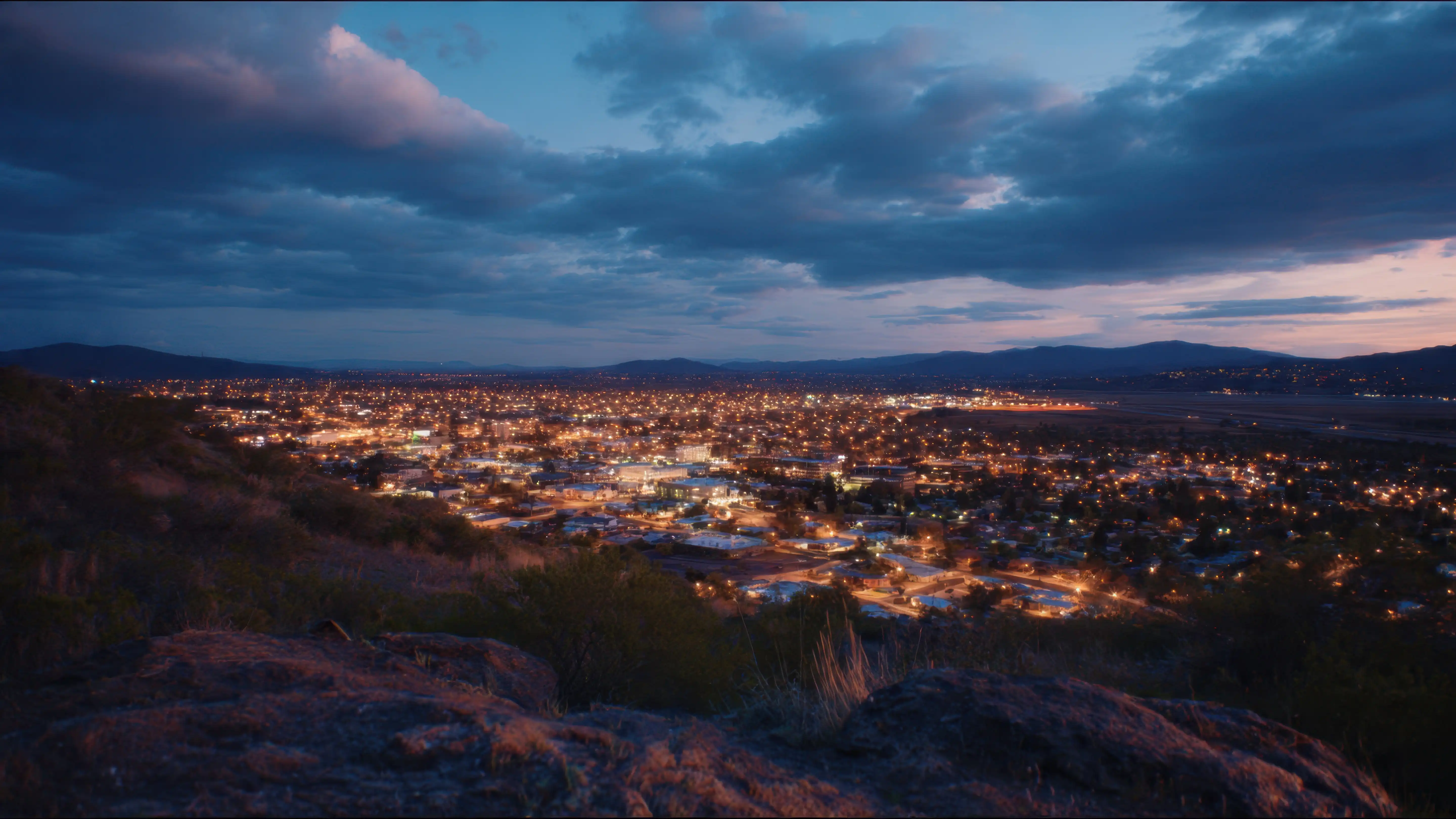
The Rogue Valley is genuinely different from California's major metros in ways that take six months to fully register. The pace is slower in a way that is either restorative or frustrating, depending on what you were used to. Medford is a real city — with a regional mall, a performing arts scene anchored by the Craterian Theater and the Historic Holly Theatre, Bear Creek Park running as a greenway through the city, and a legitimate regional dining and coffee culture — but it is not a city that pretends to be somewhere else.
What Californians Don't Expect: The Smoke Season
This is the friction moment that nobody puts in the brochure. The Rogue Valley sits in a basin, and that topography, combined with the region's dry late-summer conditions, means wildfire smoke can settle into the valley and stay. Between 2013 and 2025, Medford recorded 143 days with air quality at "unhealthy for sensitive groups" or worse — a dramatic increase from the prior thirteen-year period. Checking the air quality index before opening windows or planning outdoor activity becomes a genuine summer habit for longtime residents. If you or anyone in your household has respiratory sensitivities, this is not a minor footnote. It is the primary seasonal trade-off of living in this valley, and it deserves the same weight in your decision as the home price savings.
What Stays Familiar
Medford is close enough to California to feel like a continuation rather than a rupture. The city sits roughly 27 miles north of the California border, remains on West Coast time, and the airport's nonstop connections to San Francisco and Los Angeles mean the logistics of maintaining California ties are manageable. You are not moving to the Pacific Northwest's rainy coast — Medford averages 195 sunny days a year, with warm summers that feel familiar to Central Valley and inland California transplants.
The trade-off for that sunshine is summer heat and the smoke season described above. Spring and fall in the Rogue Valley are genuinely excellent. Winter brings cold but rarely the disruption of wetter Oregon climates — Medford averages modest snowfall that clears quickly.
Outdoors Without the Crowds
One thing Medford delivers on immediately is outdoor access. The dramatic flat-topped basalt formations visible from much of the city — a pair of volcanic buttes that have become icons of the region — offer hiking with views that would anchor a California state park. Bear Creek Greenway runs as a trail corridor through the city itself. Prescott Park and the Jackson County Sports Park anchor recreational life closer to daily routines. The Rogue Valley Growers & Crafters Market is where the community actually gathers during the warm months — a genuine farmers market, not a performative one.
Routine care costs and health insurance premiums both run noticeably below what most Californians were paying, though the honest trade-off is that you will drive farther for specialist care than you would in a large California metro. The retiring guide covers the healthcare picture in more detail for those weighing that factor heavily.
For a full breakdown of parks, trails, and recreational infrastructure, the parks and recreation page goes deeper.
Looking to buy in Medford? Estimate your payment.
Enter your numbers to see an estimated monthly mortgage payment.
Estimate only. Excludes HOA fees and mortgage insurance. The interest rate above is a starting point, not a quoted rate — replace it with your own to see real numbers. Insurance is a flat placeholder, not a Medford quote.
Weekends and Local Favorites: Where Medford Actually Gathers
Six months in, most California transplants have settled into a version of the same weekend routine: a morning coffee run, something outdoors, and an evening that stays local rather than driving an hour to find something worth the trip. Medford has enough for that to work without leaving the valley most weekends.
Coffee and Morning Anchors
Forage Coffee Company draws a loyal local crowd and is the kind of independent shop that functions as a neighborhood meeting point. Mellelo Coffee Roasters operates out of a roastery space that takes the product seriously without the attitude. SPiN Medford and Solid Ground Coffee + Tea both fill their corners of the city with regulars who know the staff by name. Artisan Bakery Cafe brings the pastry side of the morning equation. None of these are California transplants playing at being local — they are genuinely of this place.
Evenings and Dining
Wild River Brewing and Pizza Co. is the kind of anchor that a city this size is lucky to have: a brewpub with depth, not just quantity. Common Block Brewing Company fills a different slot — more downtown energy, later crowds. For a sit-down dinner, Cicily's Pastaria & Grill is the reference point locals give visitors without hesitation. Decant and Tap & Vine at 559 represent the wine-forward end of the dining scene, which makes sense given the Rogue Valley's proximity to legitimate wine country.
The Cultural Calendar
The Craterian Theater on the main drag and the Historic Holly Theatre are the anchors of Medford's performing arts life. Vogel Plaza and the Medford Carnegie Library give the downtown core its civic weight. Neither is pretending to be Portland, and that is the right posture — Medford works as a regional cultural center for Southern Oregon, and it fulfills that role without apology.
What takes California newcomers a beat to recalibrate: there is no late-night density, no neighborhood that functions like a walkable urban grid, and a serious shopping trip for certain goods means a drive or an online order. The payoff is that the scale of daily life is genuinely manageable, and the outdoor access within thirty minutes of the city is world-class by any measure.
The Honest Trade-Off: What You Gain and What You Give Up
The people who move from California to Medford and stay tend to share a specific profile: they wanted the equity conversion, they value outdoor access over urban density, and they are genuinely fine with a city where the airport is three miles from downtown but the nearest tier-one urban amenity is a few hours away. The people who leave — and some do — usually say the same thing: they underestimated how much they depended on the range of options that a large California metro quietly provides.
What You Actually Gain
The home price gap is real and significant. Medford's typical home value of $412,596 (July 2026) is well below California's statewide typical home value of $773,735 (Zillow Home Value Index), and for a household arriving with California equity, that gap can restructure your entire financial picture. The sales tax elimination is immediate — every purchase is sticker price. The pace of life is genuinely lower-stress. The outdoor access from day one — the volcanic buttes visible from much of the city, the Bear Creek Greenway running through it, and the broader Rogue Valley trail network — is the kind of thing California residents drive hours to find on a weekend.
The commute within Medford is also worth naming. Most residents work within the city. I-5 gives the city strong regional connectivity, and the airport's direct flights to major California cities mean the professional ties you maintain don't require a connection through Salt Lake City.
What You Give Up
Density of options. Medford is Southern Oregon's hub, which means it has everything a regional hub has — and not much of what a metropolitan area has. The restaurant scene has genuine quality; it does not have range. The school district — Medford School District 549C, with 13,602 students enrolled in 2025-26 — serves the community, and active OSAA athletics programs are a real part of local culture, but on 2024-25 state assessments, 28.9% of students reached math proficiency and 40.3% reached reading proficiency, which is a realistic picture for families weighing the schools decision carefully. The schools guide covers this in full.
The income tax picture, as covered above, is not the clean win most California movers expect. And the smoke season is not a footnote. If your family's outdoor life in California was built around summer hiking, summer mornings in the yard, and summer evenings on the patio, you will need to rebuild that expectation around an air quality calendar from late June through early September.
The Bottom Line for California Movers
Oregon has consistently drawn significant inbound migration, with California accounting for a large share of arrivals. Most of those movers came for the same reason you are likely considering it: the housing cost differential is the most straightforward lever available for restructuring household finances without leaving the West Coast. Medford delivers on that promise. It also delivers on outdoors, community scale, and a pace that many California transplants find genuinely preferable after six months. The trade-offs — smoke season, income tax nuance, reduced urban density — are real and worth naming before you make an offer, not after. For a full breakdown of what the cost picture looks like beyond housing, see the cost of living in Medford page.

Local Expert Takeaway: The California-to-Medford move makes the most financial sense when you are arriving with equity to deploy and you genuinely want less urban density, not just cheaper housing. The sales tax elimination is immediate and real. The home price gap is significant. But the income tax savings favor high earners — many middle-income households pay about the same or more here — Prop 13 means your property tax bill may actually increase, and the smoke season from late June through early September is a quality-of-life variable that should weigh equally with the financial math. The people who move here and stay usually say the outdoors was the deciding factor, and Medford delivers on that from the first week — the volcanic buttes overlooking the valley are within easy reach, the Bear Creek Greenway runs through the city itself, and the Rogue Valley Growers & Crafters Market is the kind of farmers market that makes Saturday mornings feel like a good reason to have moved here.
Quick Takeaways & FAQs
✅ Medford's typical home value of $412,596 (July 2026) sits well below California's statewide typical home value of $773,735, and California equity can restructure a buyer's entire financial picture here.
⚠️ Oregon has no state sales tax, but the income tax savings are smaller than most California movers expect — the brackets compress sooner, making state income tax higher than California's for many middle-income households.
📍 Wildfire smoke settles into the Rogue Valley basin from late June through early September — Medford recorded 143 days of unhealthy-for-sensitive-groups air quality between 2013 and 2025, and checking the AQI becomes a genuine seasonal habit.
Is Medford, Oregon actually cheaper than California for housing?
Does moving from California to Oregon save on income taxes?
What is wildfire smoke like in Medford, and should it affect my decision?
How do Oregon property taxes compare to California for someone moving from a Prop 13-protected home?
How close is Medford to California, and what are the flight options?
Moving to Oregon?
Tell us what you need help with and we'll connect you with local resources.
