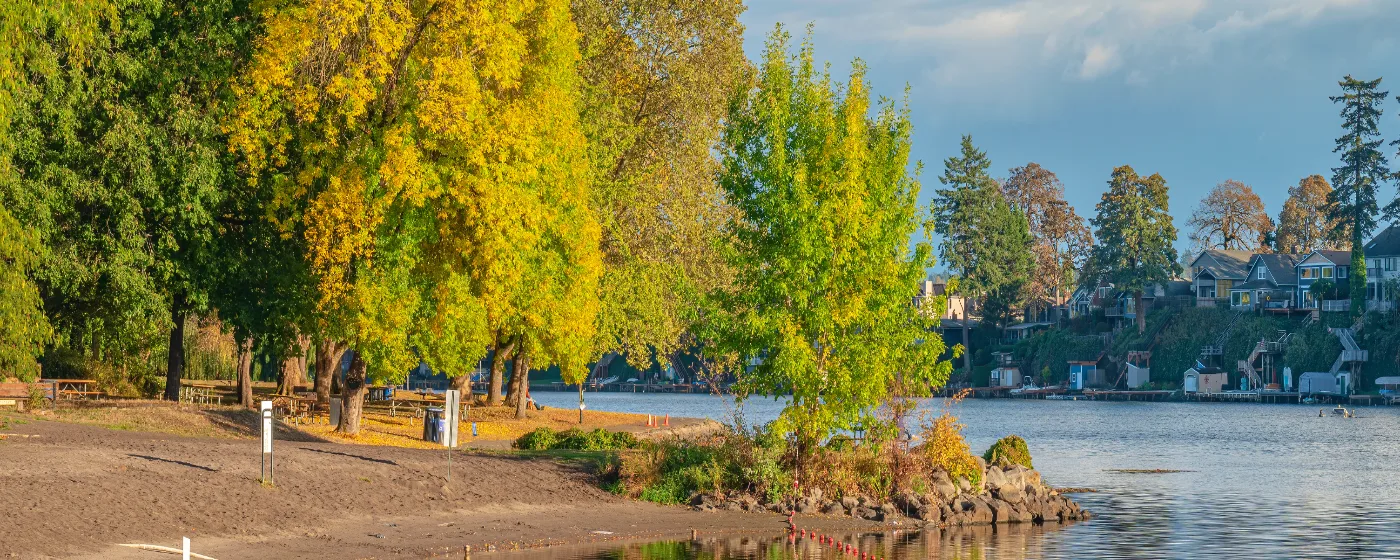
Fairview is one of those Portland Metro cities that surprises people on a second look. At 10,796 residents it is genuinely small, but it punches well above its size when it comes to geographic variety — a walkable neo-traditional village, two lakes with water access, a nationally recognized regional park, and an original historic downtown are all packed into a city you can drive across in about five minutes. The tension most buyers feel when researching Fairview is this: the city's lifestyle amenities are real and well-documented, but its school district and its affordability picture require honest eyes before you sign anything.
The economic backbone here runs through logistics and public institutions. Amazon and UPS operate in Fairview, drawn by what Greater Portland Inc. calls the city's exceptional regional highway access and fast-tracked permitting. The Reynolds School District, which holds a C- rating, according to Niche, serves the city and 9,610 students enrolled in 2025-26 — a fact that shapes where families with school-age children tend to look and where they hesitate. Many buyers who come from Gresham or Troutdale arrive expecting prices in a similar range, and they are right: Gresham runs about the same as Fairview's typical home price, and Troutdale does too. Wood Village comes in noticeably lower if stretching the budget is a concern. For a full cost breakdown, see the Fairview cost-of-living page.
Day-to-day life in Fairview leans heavily on its outdoor infrastructure. The Fairview Creek Greenway, Fairview Lake, and Blue Lake Regional Park give residents trail access and water recreation that most similarly sized Oregon cities cannot match. The typical 2BR rent range runs $1,590–$1,940, and the typical home price stands at $478,412 (July 2026) — figures that keep Fairview notably more accessible than inner Portland while still exceeding what the median household income can comfortably carry. Portland International Airport is roughly 10 miles away, and the drive to Downtown Portland takes about 25 minutes via I-84.
Whether you are buying your first home, looking for a quiet lakeside neighborhood, or deciding between renting and owning, the sections below break down all eight of Fairview's neighborhoods by character, buyer type, and honest trade-offs — plus the most common mistakes buyers make before they understand how the city actually works.
The Fairview Reality
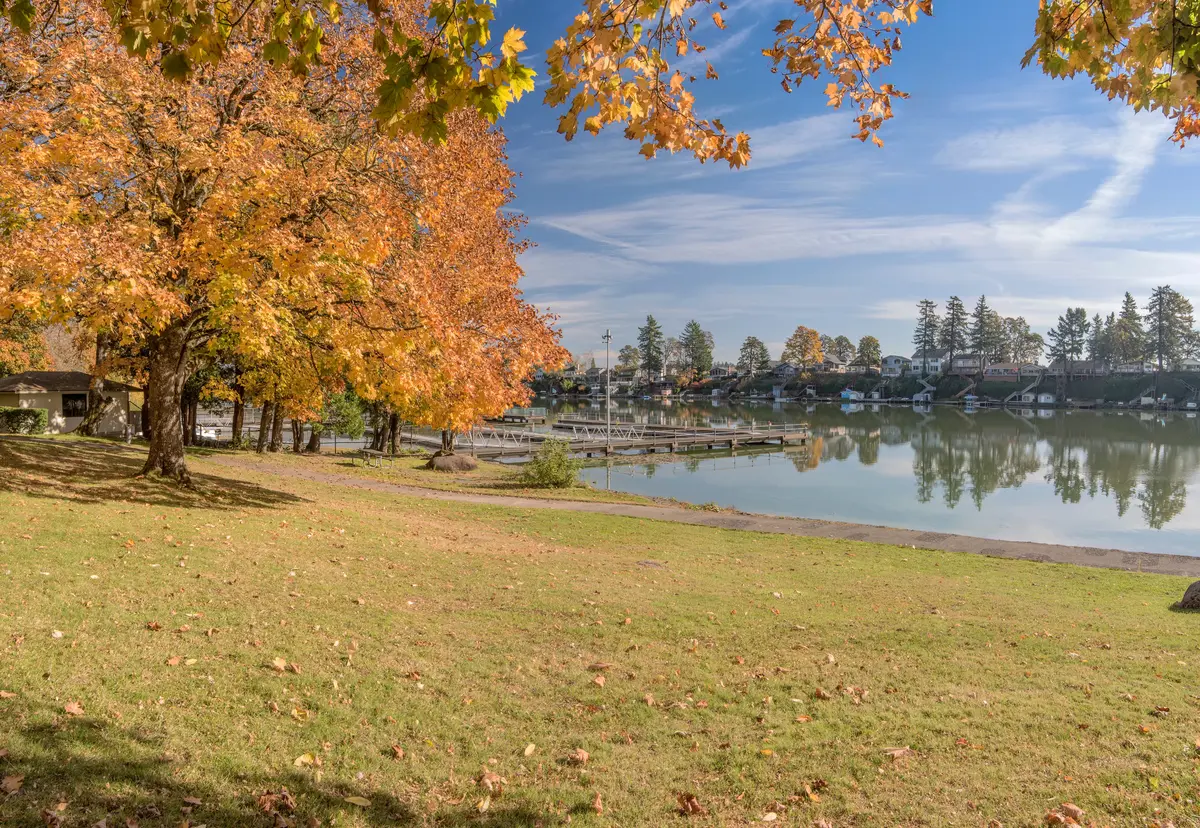
The single most important thing to understand about Fairview's geography is the split between the western, walkable core and the eastern lake-and-park edge. Fairview Village and the Historic District anchor the west side with civic infrastructure — city hall, the library, small parks, and a genuine walkable street grid. The Fairview Lake Area and the Blue Lake Area occupy the eastern and northern edges, where the draw is water access and regional parkland rather than on-foot errands. Buyers who conflate the two end up disappointed in one direction or the other.
The other reality is the corridor influence of I-84 and US-30. Both highways run through or directly adjacent to the city, and neighborhoods closest to those access points — Sandy Boulevard especially — skew toward apartments and commuter rentals rather than owner-occupied single-family homes. That is not a flaw; it is useful to know before you assume every Fairview neighborhood has the same ownership profile or street feel.
Reynolds School District serves the entire city, which means school boundaries are not the differentiating factor neighborhood to neighborhood that they are in many Portland Metro suburbs. Every Fairview address feeds into the same district, which holds a C- rating, according to Niche. Buyers prioritizing schools above all else typically look at this fact early and either make peace with it or shift their search toward neighboring districts — a trade-off worth understanding before you fall in love with a specific house.
Neighborhoods at a Glance
| Neighborhood | Best For | Vibe |
|---|---|---|
| Fairview Village | Walkable Families First-Time | Neo-traditional town center with civic anchors, small parks, and genuine on-foot access to shops and services |
| Fairview Lake Area | Luxury Nature Views | Quiet lakefront enclave; waterfront homes with docks sit alongside smaller non-access lots — know which you're buying |
| Fairview Historic District | First-Time Value Quiet | Original downtown character, bungalows and farmhouse-style homes, National Register landmarks, slower pace |
| Fairview Terrace | Families Commuter Value | Established residential streets with a suburban feel and reasonable highway access; low-key and practical |
| Sandy Boulevard | Renter Commuter Transit | Apartment-heavy corridor along US-30; most accessible to I-84 on-ramps; convenience over character |
| Osburn Park | Families Quiet Nature | Residential neighborhood near greenway trails; modest and green, with a neighborhood-park feel |
| The Lakes | Nature Renter Value | Mixed rental and owner-occupied stock near water features; more affordable entry into Fairview's lake corridor |
| Blue Lake Area | Families Nature Privacy | Low-density residential near a 101-acre Metro-operated park; outdoor lifestyle is the main selling point |
Fairview typical home price: $478,412 (Zillow ZHVI, July 2026). Typical rent: $1,730/mo (Zillow ZORI, July 2026). Neighborhood tiers on this page are relative to these figures.
Best Neighborhood by Buyer Type
| Buyer Type | Best Neighborhood | Why |
|---|---|---|
| First-Time Buyer | Fairview Historic District | Older housing stock and a quieter corridor tend to offer the city's more accessible entry points for buyers on a tighter budget. |
| Luxury Buyer | Fairview Lake Area | Waterfront homes with private docks represent the top of Fairview's market, with the lifestyle premium that comes with direct lake access. |
| Walkability Seeker | Fairview Village | The only neighborhood in Fairview with a genuine walkable street grid, retail, and civic services within steps of your front door. |
| Families with Kids | Fairview Village | Community parks, the Salish Ponds trail connection, and a neighborhood feel built around foot traffic make it the most family-functional area in the city. |
| Commuters | Sandy Boulevard | The corridor's proximity to I-84 access points makes it the most practical base for anyone driving into Portland or eastward daily. |
| Large-Lot Buyers | Blue Lake Area | Lower density near the regional park means more breathing room between homes than anywhere else in the city. |
| Renters | Sandy Boulevard | The highest concentration of apartment communities in Fairview sits along this corridor, with the widest range of available units. |
Looking to buy in Fairview? Estimate your payment.
Enter your numbers to see an estimated monthly mortgage payment.
Estimate only. Excludes HOA fees and mortgage insurance. The interest rate above is a starting point, not a quoted rate — replace it with your own to see real numbers. Insurance is a flat placeholder, not a Fairview quote.
Most Popular Neighborhoods
Fairview Village
Fairview Village is the city's most deliberate neighborhood — a 93-acre New Urbanism development where rowhouses, single-family homes, and apartments share blocks with small parks, a city hall, a public library, and a walkable retail corridor along Market Drive. About 30 acres of conservation land and trails connect residents to Salish Ponds Wetland Park via a covered bridge over Fairview Creek. The trade-off is density: the design philosophy means smaller lots and closer neighbors than most of Fairview, and buyers expecting a traditional suburban yard will need to recalibrate their expectations.
Best for: Walkability seekers, families with kids, first-time buyers who want a genuine neighborhood feel over square footage.
Fairview Lake Area
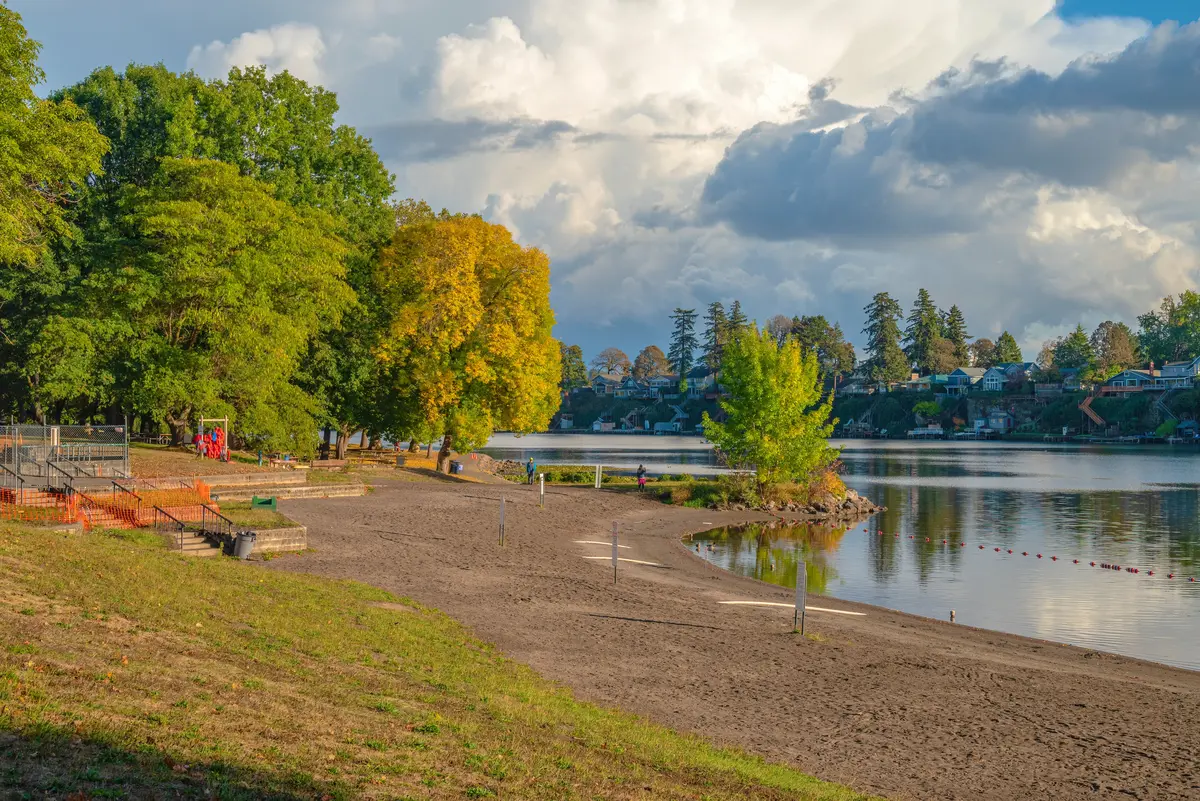
The Fairview Lake Area draws buyers who want water as part of daily life — the lake is open for non-motorized boats, and many waterfront properties have their own docks. The lifestyle gap between waterfront parcels and non-access homes a block away is significant; buyers who assume proximity to the lake means they can reach it from their backyard should verify exactly what each parcel includes before making an offer. Those two types of properties look similar in a listing search and feel completely different once you live there.
Best for: Buyers prioritizing waterfront lifestyle, lake views, and the quietest residential setting Fairview offers.
Fairview Historic District
This is where Fairview started — the original downtown corridor anchored by the Heslin House, a Western Farmhouse built around 1890 and now a museum, and the 1915 two-cell city jail, the last original correctional facility remaining in Multnomah County. Both are on the National Register of Historic Places. The housing stock is older bungalows and farmhouse-style homes, which gives the area character but also means buyers should budget for updates; deferred maintenance is more common here than in newer builds elsewhere in the city.
Best for: First-time buyers, history-minded buyers, and anyone who values neighborhood identity over amenity density.
Fairview Terrace
Fairview Terrace is the city's quiet middle — established residential streets with a conventional suburban feel, decent highway access, and none of the themed intentionality of Fairview Village or the waterfront character of the lake neighborhoods. It is the practical default for buyers who want a house in Fairview without strong opinions about which specific character they're buying into. The area is short on walkable destinations, so a car is necessary for most daily tasks.
Best for: Commuters, families who want a conventional suburban setup, and buyers making a pragmatic choice over a lifestyle one.
Sandy Boulevard
Sandy Boulevard runs along US-30 — the Columbia River Highway — and its residential profile reflects that: a corridor of apartment communities and smaller homes that sits closer to I-84 access points than any other Fairview neighborhood. It is Fairview's most renter-oriented stretch, and the street-level experience leans toward function over character. Buyers looking for a single-family home in a quiet street setting will find Sandy Boulevard a poor fit; renters who want commuter convenience at competitive rents will find it makes perfect sense.
Best for: Renters, commuters, and anyone who values highway access over neighborhood ambiance.
Osburn Park
Osburn Park is a quiet residential neighborhood with a green, low-key feel that reflects its proximity to Fairview Creek Greenway trails. The housing stock is modest and primarily owner-occupied, and the neighborhood draws families who want access to outdoor paths without paying a waterfront premium. The trade-off is limited neighborhood-level retail — daily errands require a drive, and the area lacks the walkable infrastructure of Fairview Village to the west.
Best for: Families, nature-oriented buyers, and residents who want trail access without a waterfront address.
The Lakes
The Lakes sits in Fairview's lake corridor but without the full waterfront premiums of the Fairview Lake Area proper. The mix of rental and owner-occupied stock makes it one of the more accessible areas in the city for buyers entering the market, and proximity to Fairview Lake adds outdoor appeal even for residents without direct water access. It is a transitional neighborhood in the best sense — useful for buyers who want into the lake-area character at a less demanding price point, though the rental density means the ownership feel varies block to block.
Best for: Value-conscious buyers, renters seeking proximity to water, and buyers entering the Fairview market for the first time.
Blue Lake Area
The Blue Lake Area's identity is almost entirely tied to Blue Lake Regional Park — a 101-acre Metro-operated park with a 64-acre spring-fed lake, a spray ground, an ADA-accessible fishing pier, kayaking, paddleboarding, a gold-level disc golf course, a discovery garden, and sports fields. Residential density here is low, and the neighborhood has a semi-rural fringe quality that sets it apart from the rest of Fairview. The honest downside: it is the least connected part of the city for walkable errands, and residents accept that a car trip is required for almost everything outside the park itself.
Best for: Outdoor-lifestyle buyers, families who prioritize park access, and buyers who want lower density and more space between neighbors.
Common Mistakes Buyers Make in Fairview
Treating Every Fairview Address the Same
Fairview is small, but the difference between a Fairview Village address and a Sandy Boulevard address is not cosmetic — it is a fundamentally different daily experience. One has on-foot access to a walkable retail corridor and civic services; the other is a commuter corridor lined with apartment complexes. Buyers who shop by zip code and assume the city is uniform consistently overpay for the wrong fit or discover the mismatch only after they have moved in.
Assuming Lakefront Means Lake Access
In the Fairview Lake Area and The Lakes, proximity to Fairview Lake does not automatically mean you can put a kayak in from your backyard. Some parcels have private docks and direct water access; others sit a block away with a lake view and nothing more. The lifestyle difference between these two situations is significant. Buyers who skip this verification step during their search regularly end up paying for something they did not actually get.
Underestimating the Car Dependency Outside Fairview Village
Fairview Village's walkable design is genuinely exceptional for a city this size, and it sometimes creates a halo effect that leads buyers to assume the rest of Fairview functions similarly. It does not. Fairview Terrace, Osburn Park, The Lakes, and the Blue Lake Area all require a car for daily errands without exception. Buyers moving from walkable Portland neighborhoods who choose one of these areas expecting comparable on-foot access to groceries or coffee will find the adjustment harder than the map suggested.
Overlooking the US-30 Corridor Noise Factor on Sandy Boulevard
The commuter appeal of Sandy Boulevard — its access to I-84 and US-30 — is real and well-documented. What buyers sometimes miss until they spend a weekday morning there is that those same access points bring consistent road noise. Apartments and homes closest to the US-30 corridor experience traffic sound at a level that matters more when you are sleeping there than when you are touring on a quiet weekend afternoon. Visiting at rush hour before committing is basic due diligence that too many buyers skip.
Best Areas to Rent in Fairview
| Area | Ideal For | Trade-off |
|---|---|---|
| Sandy Boulevard | Commuters, short-term renters, solo professionals | Road noise from US-30 and I-84 access; convenience-driven feel rather than neighborhood character |
| Fairview Village | Renters who want walkable amenities and community feel | Apartment availability is more limited than on Sandy Boulevard; competition for units is higher |
| The Lakes | Renters wanting proximity to water without a waterfront premium | Mixed ownership-to-rental ratio means the block-to-block feel is inconsistent |
| Fairview Terrace | Families and longer-term renters wanting a quieter suburban setting | Car required for all daily errands; limited walkable destinations |
| Blue Lake Area | Renters prioritizing outdoor access and lower density | The most car-dependent area in the city; limited rental inventory means fewer options to choose from |
The city-wide typical 2BR rent range of $1,590–$1,940 reflects Fairview's position as noticeably more affordable than inner Portland while still above the regional floor. Renters who want the most unit options should focus their search on Sandy Boulevard and the apartment communities within and adjacent to Fairview Village — those two corridors carry the bulk of Fairview's rental inventory.

Local Expert Takeaway: Fairview Village is the neighborhood that gets the most attention from relocating buyers, and the attention is justified — it is genuinely walkable in a way that almost nothing else east of Portland can match, and the covered bridge connection to Salish Ponds Wetland Park is the kind of daily trail access that most suburbs only advertise. But the city's real hidden decision is the lakefront question: the gap between a Fairview Lake Area waterfront parcel with a dock and a non-access lot two streets away is substantial in lifestyle terms. Get specific about which one you're actually buying before you fall for the lake view from the listing photos — the two types of properties can look nearly identical in a search and feel completely different once you live there.
Quick Takeaways & FAQs
✅ Fairview Village is one of the only genuinely walkable neighborhoods in the eastern Portland Metro, with a real retail corridor, parks, and city hall all within walking distance of residential streets.
⚠️ Reynolds School District holds a C- rating, according to Niche, and serves every Fairview address — school boundaries are not a differentiating factor between neighborhoods here, which matters if schools are a top priority.
📍 The waterfront parcels along Fairview Lake include private docks and direct water access, but nearby non-access lots are sometimes marketed with the same lake-area branding — verify access before making an offer.
What is the best neighborhood in Fairview, Oregon for families?
Is Fairview Village worth it compared to other Fairview neighborhoods?
What neighborhoods in Fairview are best for renters?
Do all homes near Fairview Lake have water access?
How far is Fairview from Portland, and which neighborhoods have the easiest commute?
Moving to Oregon?
Tell us what you need help with and we'll connect you with local resources.
