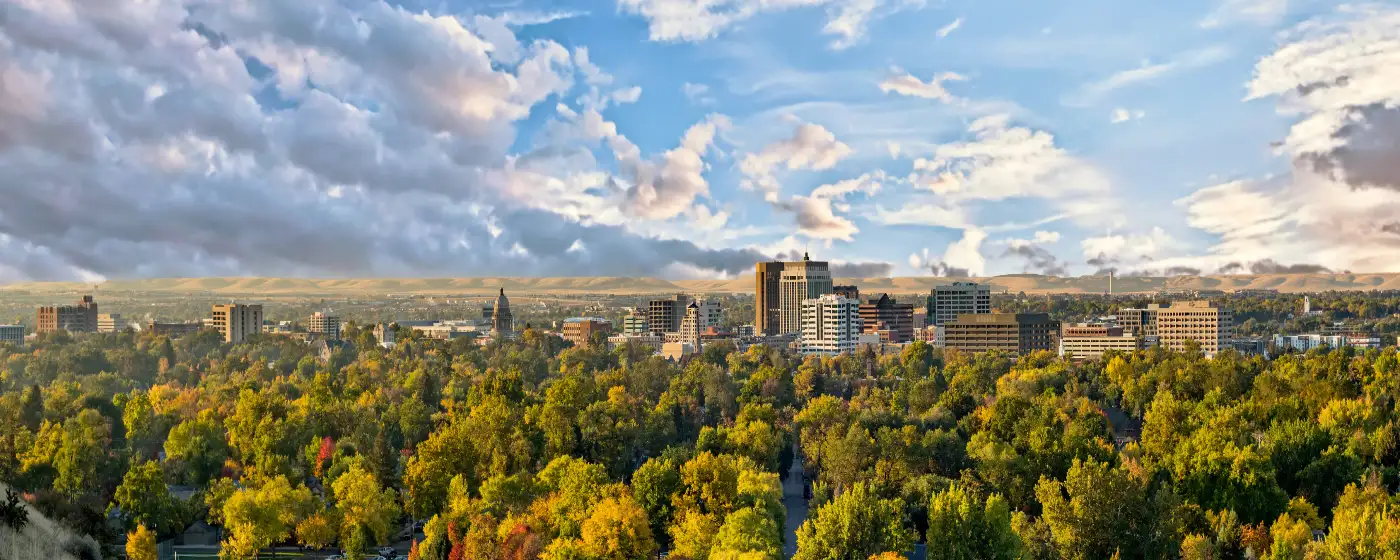
Maybe your financial planner ran the numbers and Idaho came up. Maybe you've been watching Treasure Valley home prices from Portland or the Bay Area and realized your retirement savings stretch significantly further here. Or maybe you visited in October — when the foothills are amber and the air is clean and cold — and the decision became emotional before it finished being logical. Whatever brought you to this page, Boise's case for retirement is real, but it comes with a specific profile: this city rewards active, engaged retirees and tends to frustrate those expecting a quiet, age-sorted enclave.
Boise sits at the edge of the Treasure Valley, where the high desert meets the foothills of the Boise Mountains, roughly 45 minutes from the Oregon border on I-84. Daily life here is shaped by that geography — four distinct seasons, access to Bogus Basin Mountain Recreation Area just 16 miles north of downtown, and the 25-mile Boise River Greenbelt threading through the city like a spine. St. Luke's Health System and Saint Alphonsus Regional Medical Center anchor a medical infrastructure that goes well beyond what most cities this size can offer. The median household income in Boise sits at $83,904, and about 11% of residents are 65 or older — a younger demographic mix than most retirement hotspots, which is a feature for some retirees and a drawback for others.
On cost: the Zillow Home Value Index pegged the typical Boise home at $508,045 in May 2026 — not cheap by Mountain West standards, but noticeably below comparable metros on the West Coast. Idaho's tax posture is genuinely favorable for retirees drawing Social Security. Property taxes are low by national standards, and the state's Circuit Breaker program offers additional relief for qualifying seniors. The full picture on Boise's cost of living is worth reading before you finalize a budget.
Whether you're comparing Boise to Nampa, Eagle, or somewhere out of state entirely, the sections below cover what actually matters in retirement: healthcare depth, the retiree tax picture, day-to-day walkability, downsizing options, and how Boise stacks up against nearby alternatives.

Why Retirees Are Choosing Boise
The retirees who land in Boise and stay are almost universally the ones who wanted a city — not a resort town or a retirement subdivision. They want a symphony, an art museum, an outdoor Shakespeare festival, and a trail system they can actually use. The Boise Philharmonic, Ballet Idaho, the Idaho Shakespeare Festival, and the Morrison Center for the Performing Arts at Boise State University give Boise a cultural calendar that most cities three times its size can't match. That's the pull.
The honest push-back: Boise is not an easy city to navigate without a car. The city-wide Walk Score of 38 reflects a mostly car-dependent layout outside of downtown. If you're planning to give up driving in your mid-70s and rely on transit, Boise will be a daily friction point. Valley Regional Transit runs about 19 bus lines with discounted senior fares, but frequency and coverage are limited compared to larger metros. You need to be realistic about that before you buy.
The typical home value of $508,045 (Zillow Home Value Index, May 2026) also means this is not an entry-level retirement market. Retirees coming from high-cost coastal states often find Boise affordable by comparison; those coming from the rural Mountain West or the Midwest may feel the opposite. The city suits retirees who are active, who have meaningful retirement savings or a solid pension, and who want proximity to real medical infrastructure — not those searching for the cheapest soft landing in the region. If that's the goal, Nampa or Kuna deserve a serious look first.
Healthcare & Medical Access in Boise
For most retirees, this is the section that matters most. Boise delivers — and delivers at a level that genuinely distinguishes it from smaller Idaho cities and many Mountain West metros of comparable size.
St. Luke's Boise Medical Center
St. Luke's Boise Medical Center is the region's largest facility at 437 beds, and it carries both a Level I stroke designation and a STEMI (heart attack intervention) designation — the two certifications that matter most when minutes count. St. Luke's Health System extends across the Treasure Valley with additional campuses in Meridian and Nampa, so specialty follow-up care doesn't require a long drive.
Saint Alphonsus Regional Medical Center
Saint Alphonsus Regional Medical Center is the second major system serving Boise retirees. It operates as a nonprofit and provides competing cardiology, oncology, and orthopedic programs — a meaningful advantage for patients who want a second opinion or a different care philosophy without leaving the metro. Competition between two full-service systems generally keeps access times shorter and quality standards higher than a monopoly market.
Boise VA Medical Center
For veterans, the Boise VA Medical Center earned a CMS 5-star overall quality rating in 2025 — one of only 290 hospitals nationwide to receive that designation. That's not a minor distinction. It means the facility ranked in the top tier nationally on patient outcomes, safety, and patient experience.
What Boise Doesn't Have
The honest limitation: highly specialized tertiary care — major transplant programs, complex pediatric oncology, rare neurological subspecialties — still routes to Salt Lake City or Seattle. For most retirees managing common chronic conditions, cardiac care, joint replacement, or cancer treatment, Boise's infrastructure is genuinely sufficient. But if you have a complex, pre-existing condition requiring a subspecialist, verify that your specific care team exists here before you move.
The Retiree Budget in Boise
Idaho's tax treatment of retirement income is one of the better deals in the Mountain West, and it starts with the most important line item for most retirees.
Social Security: Fully Exempt
Idaho exempts Social Security benefits entirely from state income tax, with no income ceiling and no age floor. It doesn't matter how much you receive or what your total household income is — those benefits are off the table for Idaho's income tax. That's a meaningful annual savings for retirees whose income sits primarily in Social Security.
Other Retirement Income
Withdrawals from tax-deferred retirement accounts, most private pensions, and other ordinary income are taxed at Idaho's flat income tax rate. AARP and SmartAsset cited this rate at 5.3% for 2025 returns, while a separate source (TaxShark, June 2026) noted 4.4% for the same tax year — suggesting a rate change may be in progress. Verify the current operative rate with the Idaho State Tax Commission at tax.idaho.gov before finalizing your retirement budget. Either figure is competitive with neighboring states, but the difference is worth confirming.
Property Taxes
Boise's effective property tax rate is approximately 0.76% — well below the national average of roughly 1.1%. For seniors aged 65 and older with 2025 income under $39,130, Idaho's Circuit Breaker program can reduce the property tax bill by $250 to $1,500 annually. Applications open January 1 and must be filed by April 15 at the Ada County Assessor's office — mark your calendar, because missing the window means waiting a full year. Idaho also levies no estate tax, no inheritance tax, and no gift tax, which simplifies long-term estate planning considerably.
Daily Costs on a Fixed Income
Groceries, utilities, and transportation run close to the national average — Boise is not dramatically cheaper day-to-day than most mid-sized western cities. The real savings show up in housing and taxes, not at the checkout counter. Retirees who bought before 2020 are sitting on significant equity and low effective tax rates. Those entering the market now at the current median need to run the numbers carefully; the monthly carrying costs on a $508,045 home are not trivial on a fixed income. The full cost-of-living breakdown covers groceries, utilities, and transportation in detail.
Looking to buy in Boise? Estimate your payment.
Enter your numbers to see an estimated monthly mortgage payment.
Estimate only. Excludes HOA fees and mortgage insurance. The interest rate above is a starting point, not a quoted rate — replace it with your own to see real numbers. Insurance is a flat placeholder, not a Boise quote.
Walkability, Community & Staying Active in Boise
Be honest with yourself about this one before you choose a neighborhood. The Boise that retirees imagine — walkable, social, culturally rich — exists, but it's geographically concentrated. The Boise that most people actually live in requires a car for almost everything.
Where Walkability Actually Works
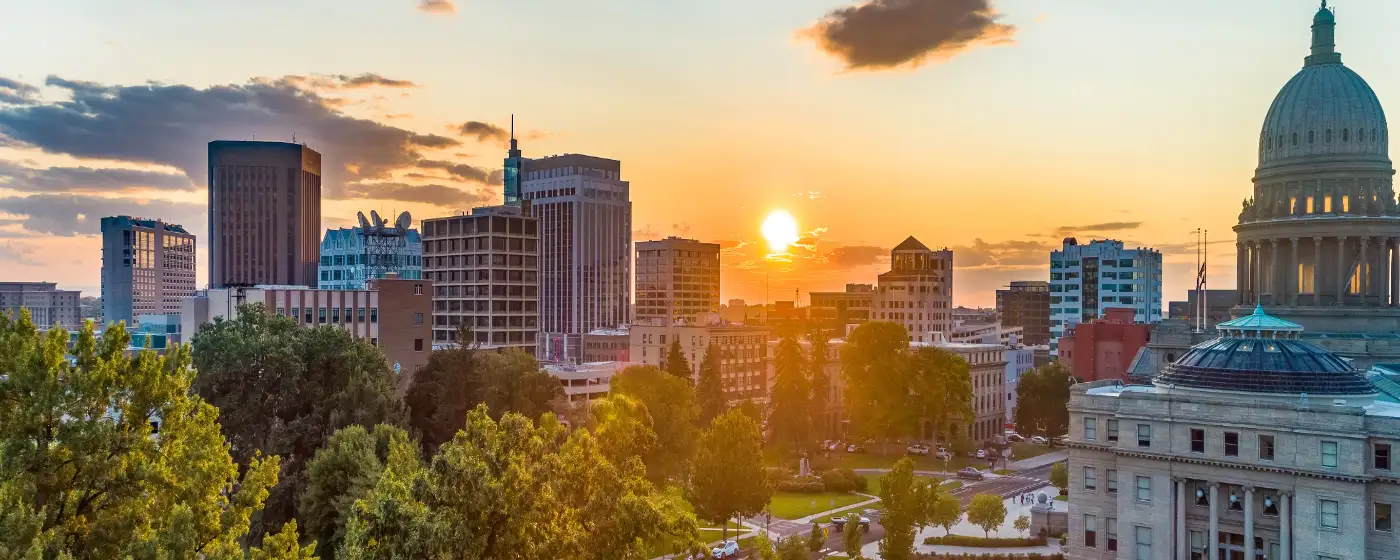
Downtown Boise scores 81 on Walk Score, with more than 80 restaurants, over 100 shops, the Boise Art Museum, the Egyptian Theatre, and multiple performing arts venues accessible on foot. If you're buying or renting downtown or in the adjacent North End, you can genuinely run errands, catch a show, and have dinner without touching your car keys. The Basque Block, one of the most concentrated Basque cultural districts outside of Spain, sits within easy walking distance of the downtown core.
The 25-mile Boise River Greenbelt is the single most-cited amenity by retirees who moved here. It's paved, flat, well-maintained, and connects Julia Davis Park to outlying neighborhoods — a genuine daily-use asset for walkers, cyclists, and anyone doing physical therapy who needs a low-impact route. You don't have to be an athlete to use it comfortably.
Active-Adult Social Life
Boise's senior center network and volunteer culture are stronger than you'd expect from a city this size. The city operates dedicated senior centers with fitness programs, social events, and meal services. The intergenerational character of Boise — only about 11% of residents are 65 or older — means you're not living in a bubble; you're part of a full community. Retirees who thrive here tend to find that energizing rather than isolating.
Bogus Basin Mountain Recreation Area, 16 miles north of downtown, stays open for skiing, snowshoeing, and cross-country trails through winter, and converts to hiking and mountain biking in summer. It's a four-season asset most cities this size simply don't have within metro reach. That said, it requires a car — there's no shuttle service that makes it practical without one.
What Surprises People After Six Months
The summer heat catches newcomers off-guard. July and August regularly hit the mid-90s, and Boise's high-desert sun is intense. Retirees accustomed to Pacific Northwest temps often find themselves restructuring their outdoor schedules to early morning. The trade-off is that winters are milder than the elevation suggests — snowfall in the city is modest, though the foothills get considerably more.
Right-Sizing: Downsizing in Boise
The downsizing decision in Boise is more complicated than in a lot of retirement markets, primarily because inventory in the single-level and active-adult segments hasn't kept pace with demand. That's the honest starting point.
Single-Level Homes and Patio Communities
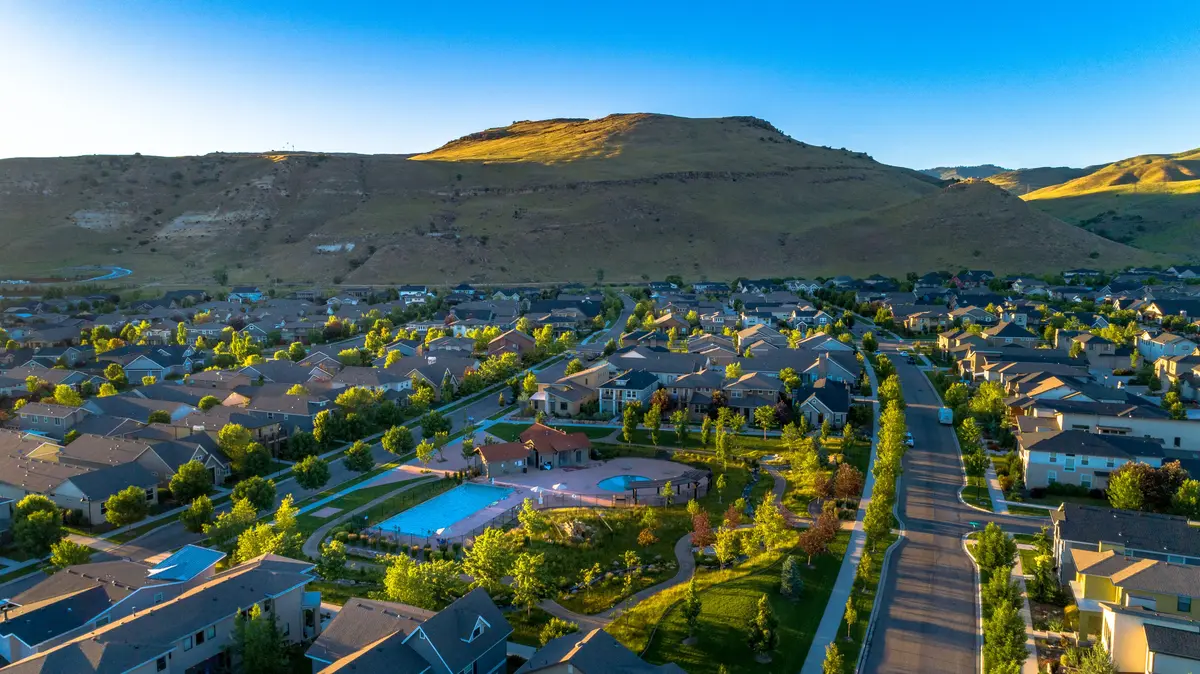
Single-story homes in established Boise neighborhoods like Southeast Boise and the Bench exist, but they move quickly and rarely sit on market long enough for leisurely comparison shopping. Patio-home communities — attached or detached single-level units with exterior maintenance handled by an HOA — have expanded on the city's periphery and in neighboring Meridian and Eagle. If you're flexible about which municipality you live in, your options widen considerably. Retirees who insist on staying within Boise city limits specifically will find a tighter selection and a more competitive buying environment.
55+ and Active-Adult Communities
The Terraces of Boise, an 11-acre continuing-care retirement community in the Harris Ranch neighborhood, sits within walking distance of the Greenbelt and was recognized by U.S. News among the 2025 Best 55+ Communities in Boise — earning marks specifically for activities and enrichment, dining, and staff quality. It's one of the more established options for retirees who want a full continuum of care in a single location.
Boise's active-adult market extends beyond that single community, with independent-living and assisted-living options distributed across the metro. The honest reality is that purpose-built 55+ communities are more concentrated in Meridian than in Boise proper — a pattern common in fast-growing Sun Belt and Mountain West metros, where newer development happens on the fringe.
Condos and Urban Downsizing
Downtown Boise's condo market appeals to retirees who want walkability above all else and are willing to pay for it. Units near the Basque Block and Julia Davis Park put you within a short walk of the Boise Philharmonic's home venue, the Morrison Center, the Boise Art Museum, and a dense concentration of independent restaurants. The catch is that downtown condo prices tend to carry a premium over comparable square footage elsewhere in the city, and building-specific HOA fees vary widely. If you're considering this route, budget time to review HOA financials carefully — deferred maintenance reserves in older downtown buildings have surprised more than a few buyers.
What to Avoid
Multi-story homes in hillside subdivisions — particularly on Warm Springs Mesa — look spectacular and price attractively relative to their views, but the staircase reality of daily life in a two- or three-story home catches up with most retirees within five years. If stairs are a current non-issue, they won't be forever. Buy single-level if you can, or at minimum verify that all essential living spaces — bedroom, bathroom, laundry — are on one floor.
Boise vs Nearby Retirement Destinations
| City | Cost vs Boise | Primary Hospital | Walkability | Senior Living Depth | Overall Retirement Fit |
|---|---|---|---|---|---|
| Boise | Anchor | St. Luke's Boise (437 beds, Level I stroke/STEMI) + Saint Alphonsus | Car-dependent overall; Downtown scores 81 | Moderate — growing but inventory-constrained | Outdoors Downtown Living Strong cultural and medical anchor |
| Meridian | About the same | St. Luke's Meridian campus (close proximity to Boise Medical Center) | Car-dependent; newer suburban grid | Strong — more 55+ inventory than Boise proper | Families Quiet Best active-adult community selection in the metro |
| Eagle | Noticeably pricier | Nearest full-service: St. Luke's Boise (~20 min) | Car-dependent; limited transit | Moderate — growing patio-home market | Luxury Privacy Premium price for quieter, upscale setting |
| Nampa | Noticeably cheaper | St. Luke's Nampa campus; full specialty care requires Boise drive | Car-dependent; limited downtown walkability | Good — more affordable senior housing options | Value Budget-Focused Best cost-to-space ratio in the metro for retirees on fixed incomes |
| Garden City | Slightly cheaper | Minutes from Boise's full hospital network | Greenbelt access; otherwise car-dependent | Limited — small city, few dedicated senior communities | Greenbelt Access Niche option for retirees who want Boise amenities at a modest discount |
| Kuna | Cheaper | Nearest full-service: Boise (~30 min) | Very car-dependent; rural-edge feel | Limited — small community, minimal senior-specific inventory | Quiet Value Suits retirees who prioritize space and silence over services |
If the primary goal is medical security, nothing in the immediate region matches staying within Boise proper — the combination of St. Luke's Boise Medical Center and Saint Alphonsus under one commute is hard to replicate from the outlying cities. Meridian is the strongest alternative for retirees prioritizing 55+ community selection and newer single-level construction without moving far from Boise's hospital network. Nampa is the honest budget call: meaningfully more affordable, with an adequate St. Luke's campus for routine care and a short drive to Boise when something serious arises. Eagle appeals to retirees who want a quieter, more affluent setting and aren't price-sensitive, but you're paying a notable premium for that. Garden City is a sleeper option — small, slightly more affordable than Boise, and stitched directly into the Greenbelt — but it lacks meaningful senior housing inventory, so you'd be buying or renting on the general market. Kuna suits retirees who genuinely want space, silence, and a rural edge, but the distance to advanced medical care is the real trade-off to weigh.
Local Expert Takeaway: The retirees who are happiest in Boise after five years are the ones who bought or rented downtown or in a Greenbelt-adjacent neighborhood, got the healthcare picture clear before they moved, and applied for the Circuit Breaker property-tax reduction the first January they were eligible. The ones who struggle moved to a car-dependent subdivision expecting to age in place without a car, or underestimated how much the summer heat reshapes daily outdoor routines. If you're serious about Boise, spend a week here in July and a week in January before you commit — the city feels genuinely different across seasons, and that matters more in retirement than it does when you're commuting to an office every day.
Quick Takeaways & FAQs
✅ Idaho fully exempts Social Security from state income tax — no income cap, no age floor — making it one of the more retiree-friendly tax states in the Mountain West.
⚠️ Boise is largely car-dependent (city-wide Walk Score of 38), and retirees who plan to give up driving will face real daily friction outside of the downtown core.
📍 The Terraces of Boise in Harris Ranch — a continuing-care community within walking distance of the Greenbelt — was recognized by U.S. News among the 2025 Best 55+ Communities in Boise.
Is Idaho a tax-friendly state for retirees?
What hospitals serve retirees in Boise?
Are there 55+ communities or active-adult communities in Boise?
How walkable is Boise for retirees who want to get around without a car?
Does Idaho offer any property tax relief specifically for seniors?
Moving to Idaho?
Tell us what you need help with and we'll connect you with local resources.
