What Is Living in Garden City, Idaho Like?
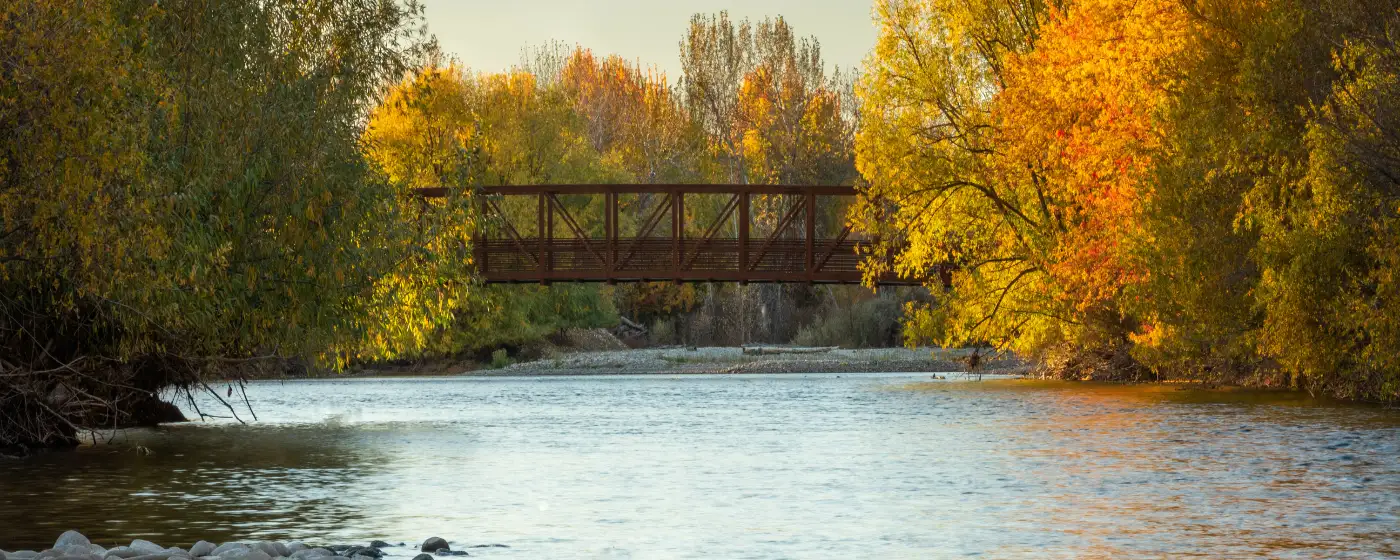
Maybe someone mentioned Garden City as a cheaper alternative to Boise proper, and you looked it up on a map and realized it's essentially inside Boise — 4.27 square miles of its own city, surrounded on nearly all sides by its neighbor, with its own mayor, its own zip code, and a personality that doesn't match the suburb you were imagining. The Boise River runs right through it. Chinden Boulevard — whose name is a portmanteau of "China" and "garden," a nod to the Chinese immigrants who farmed this land — cuts east-west through the heart of things. What actually drives daily life here is not a downtown grid or a school-district boundary but a specific corridor: the stretch of wineries, breweries, art studios, and river access that has made Garden City one of the most talked-about small cities in the Treasure Valley.
The economic backbone is genuinely unlike anything in surrounding suburbs. Expo Idaho at 5610 N. Glenwood Street anchors the city's events economy, drawing roughly 250,000 people to the Western Idaho Fair each August and another 750,000 visitors to trade shows, livestock events, and auctions throughout the year. The hospitality and arts sectors punch well above their weight for a city this size — craft beverage producers including Split Rail Winery, Telaya Wine Co., Coiled Wines, Proletariat Wine Company, Barbarian Brewing, Western Collective, Bert's Brewing, Belmont Brew House, and Ruckus Brewing have turned Chinden Boulevard into a recognized destination. The Boise School District, which serves Garden City students, holds an A- rating, according to Niche — a meaningful advantage for families who want urban access without sacrificing school quality. The people drawn here tend to be creative professionals, outdoor-oriented young adults, and buyers who have been priced out of trendier Boise addresses but refuse to trade the river for a cul-de-sac in Meridian.
Housing here runs noticeably below comparable walkable neighborhoods inside Boise city limits, with a Zillow Home Value Index of $474,544 as of April 2026 — a figure that makes Garden City one of the more accessible entries into Ada County's market. Day-to-day life revolves around the Boise River Greenbelt's 25-mile paved pathway, which runs directly through the city and is widely considered one of the most scenic stretches in the whole system. The Boise Whitewater Park between 34th and 35th Streets offers free, permanent standing waves for surfers and kayakers on any given weekday morning. And a downtown Boise commute of roughly five minutes means you're not actually giving anything up in access — just in property taxes, which run at an effective rate of approximately 0.52%, among the lower rates in the region. For the full cost breakdown, see the cost of living page.
Whether you're considering a move or just researching the area, the sections below break down Garden City's neighborhoods, housing market, employers, commute patterns, local employers, and what daily life here is really like once you unpack.
Garden City at a Glance
Looking to buy in Garden City? Estimate your payment.
Enter your numbers to see an estimated monthly mortgage payment.
Estimate only. Excludes HOA fees and mortgage insurance. The interest rate above is a starting point, not a quoted rate — replace it with your own to see real numbers. Insurance is a flat placeholder, not a Garden City quote.
Why Are People Moving to Garden City?
Garden City's appeal starts with a simple arithmetic: you get a Boise address in everything but name, river access, and a creative neighborhood feel — for less than most comparable Boise zip codes. That combination has attracted a specific kind of buyer: one who cares about walkable streets and weekend experiences more than square footage and new-construction finishes.
The Creative and Hospitality Economy
The city's employer base is deliberately unconventional. Expo Idaho is the anchor institution — a year-round events complex that employs staff across event management, logistics, and hospitality, with the Western Idaho Fair alone driving a significant seasonal surge. The Riverside Hotel adds to the hospitality employment picture. But the more diffuse economic engine is the craft beverage corridor on Chinden Boulevard, which has generated real employment and tax revenue across a string of independently operated wineries and breweries.
The arts sector is a genuine employer here, not a lifestyle amenity. The Surel Mitchell Live-Work-Create District and institutions like the Visual Arts Collective and Surel's Place have created a concentration of working artists, gallery staff, and arts educators that is unusual for a city of 12,936 people. That creative density is part of why the neighborhood draws people who would otherwise rent in the North End or Hyde Park in Boise.
The Brand-New Sports Anchor
The Stadium at Expo Idaho — a $42 million, 7,247-capacity soccer-specific venue at 12 N. Paddock Drive — opened April 4, 2026 as the home of USL1 club AC Boise. It's a significant economic and cultural addition for a small city: match days now bring a consistent influx of visitors within walking distance of the Chinden corridor businesses.
Who Actually Moves Here
| Buyer Type | What Garden City Offers Them | Best For |
|---|---|---|
| Creative professionals | Live-work studio options, arts community, independent business density | Walkable Views |
| Outdoor-first households | Greenbelt access, Whitewater Park, river fishing steps from home | Nature Views |
| Boise-adjacent commuters | ~5-minute commute to downtown Boise, lower entry price than Boise proper | Commuter Value |
| First-time buyers in Ada County | More affordable entry point than many Boise neighborhoods | First-Time Value |
| Renters stepping toward ownership | Smaller city scale, established rental stock along Chinden and near the river | Renter Transit |
| Downsizers from larger Idaho markets | Walkable streets, no-lawn river lifestyle, proximity to Boise's medical and cultural infrastructure | Quiet Walkable |
The one buyer Garden City consistently disappoints is someone shopping for a traditional single-family neighborhood with quiet cul-de-sacs and distance from commercial activity — that's a better fit for Eagle or parts of Meridian.
A Note on What Garden City Is Not
The city has real crime figures worth knowing before you decide — see the safety page for the full breakdown. The creative energy and river access are genuine, but the city's compact size means industrial uses, commercial corridors, and residential blocks sit closer together than in a planned suburb. That proximity is part of the charm for some buyers and a dealbreaker for others.
What Daily Life Feels Like in Garden City
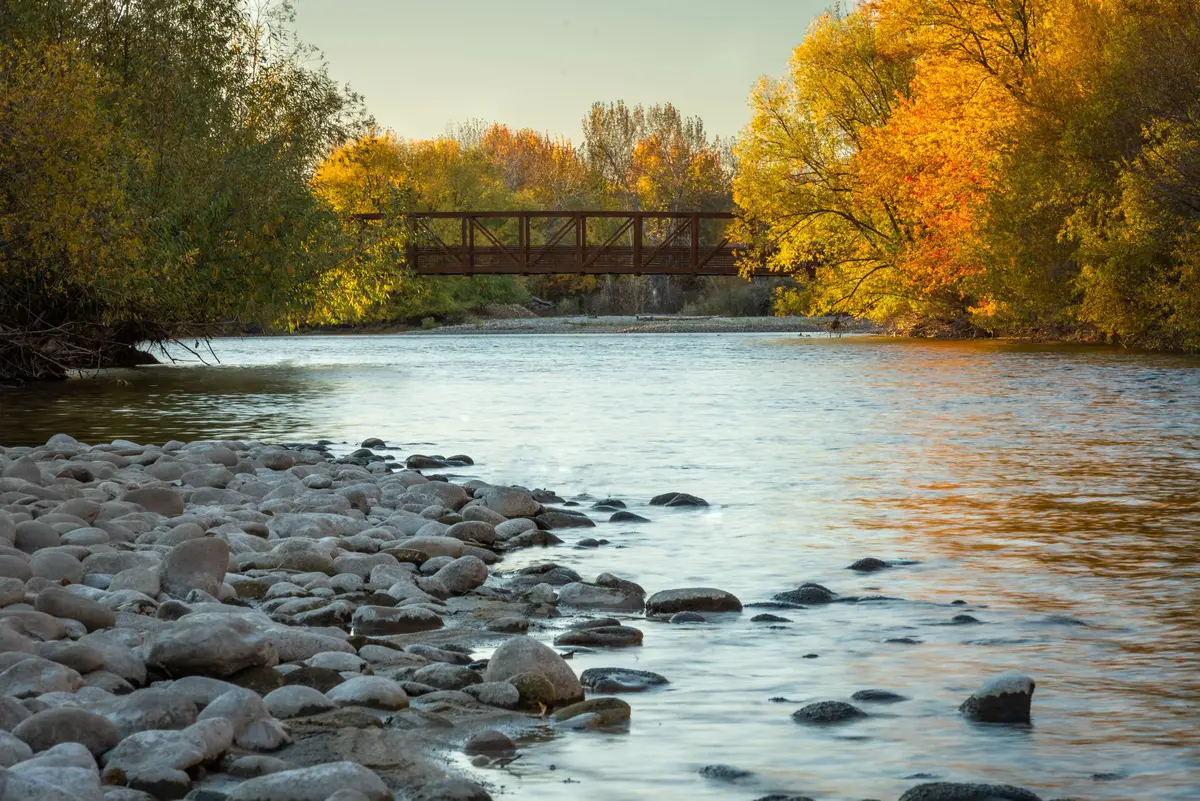
Six months after moving here, most newcomers say the same thing: they had no idea how much of their week would be spent on the Greenbelt. Not as a special occasion — as a commute, a dog walk, a lunchtime detour. The 25-mile paved pathway runs directly through Garden City, and the city's stretch, with the river visible on one side and the arts district on the other, is legitimately the best part of the whole system.
The Morning and Evening Rhythms
The Boise Whitewater Park between 34th and 35th Streets draws surfers and kayakers on weekday mornings before most office workers have logged on. It's free, the waves are permanent, and it operates with enough regulars that a social scene has formed around it. This is where the city's outdoor identity is most concentrated.
Evenings on Chinden Boulevard have a specific cadence: a tasting room crowd flows between Telaya Wine Co. on E. 32nd Street and the brewery row running west through Belmont Brew House and Ruckus Brewing. These aren't tourist-trap operations — they're the Friday spot for a large percentage of Garden City and North Boise residents. On AC Boise match nights at the Stadium at Expo Idaho, the whole corridor picks up traffic and energy that didn't exist before April 2026.
The Agricultural Footnote That Became a Civic Identity
Garden City is Idaho's first Bee City USA — an official designation reflecting a commitment to native pollinator habitat that traces directly to the Chinese market gardens that gave the city its name. A free public pollinator garden hosts lectures and demonstrations throughout the growing season. It sounds like a novelty, but longtime residents cite it as representative of the city's ethos: small-scale, agricultural, slightly alternative, proud of its history.
What Newcomers Underestimate
The Western Idaho Fair in August is not a weekend inconvenience — it's a 250,000-person event that changes traffic patterns on Glenwood Street for the better part of two weeks. If you live near Expo Idaho, plan accordingly. New residents who didn't grow up in the Treasure Valley are routinely caught off guard by the scale of it, especially the livestock events and the trade shows that extend the Expo Idaho calendar across most of the year.
For families researching youth activities and school options, the schools page covers the Boise School District's programs and what the Garden City attendance boundaries actually mean in practice.
The Honest Downside
The city's commercial-residential mix is real and occasionally jarring. Some blocks adjacent to Chinden carry light industrial uses — auto-related businesses, storage, wholesale operations — that sit immediately next to residential lots. Buyers who see the river and the arts district and assume the whole city has that character will be surprised. Drive the specific streets around any property you're seriously considering, not just the Greenbelt corridor.
The Garden City Housing Market Right Now
Garden City's Zillow Home Value Index sat at $474,544 as of April 2026, down 1.7% year-over-year — a modest correction that tracks the broader Treasure Valley softening without the sharper drops seen in some outer suburbs. For Ada County, that figure represents a relatively accessible entry point, though "accessible" here still means a serious purchase requiring full preparation. See the full cost of living breakdown for income-to-price context and rent figures.
The market moves faster than the price suggests. Garden City's inventory is structurally constrained: the city covers only 4.27 square miles and is essentially landlocked by Boise. New construction is limited, which means most transactions are resale — and well-located properties near the Greenbelt or the arts district attract competitive interest even in a softening market. Some parts of the city command a noticeable premium over the city-wide figure; others — particularly blocks with more commercial adjacency — trade below it. For neighborhood-level character and what different areas actually look like on the ground, the best neighborhoods page goes deeper.
Rental options along Chinden and near the river skew toward apartments and smaller units, reflecting the city's density and the investor interest generated by proximity to Boise's job core. The effective property tax rate of approximately 0.52% is one of the lower rates in the region — a meaningful factor in monthly carrying costs that distinguishes Garden City from higher-assessed suburbs. For buyers exploring loan programs and first steps, the first-time homebuyer page covers the process without the financing jargon.
Garden City Neighborhoods
Garden City has several distinct areas — each with its own character and appeal. Here’s a breakdown to help you narrow down where to focus your home search.
🏡 Surel Mitchell Live-Work-Create District
The creative heart of Garden City, built around working artists' studios, Surel's Place, and the Visual Arts Collective — this district draws painters, sculptors, and design professionals who want live-work space with genuine community rather than a converted loft in a high-rise. Housing tends toward older cottages and purpose-converted commercial buildings.
🏠 River District
The most desirable stretch of Garden City for buyers who prioritize Greenbelt and river access — properties here sit within easy walking distance of the Boise Whitewater Park and the paved pathway, and the neighborhood has a distinctly more residential, quieter feel than the Chinden corridor.
🌳 Chinden Corridor
The commercial and cultural spine of Garden City, where the craft beverage producers, restaurants, and retail businesses cluster — residential properties here accept proximity to commercial activity in exchange for walkable access to the city's most active social scene.
🏘 Government Island
A quieter, river-adjacent area of Garden City that takes its name from the island formation in the Boise River nearby — it suits buyers drawn to the water and the Greenbelt who want a bit more distance from the commercial Chinden corridor.
🏔 Garden City Core
The original residential center of the city, with a mix of modest mid-century single-family homes and newer infill — it's the most traditionally neighborhood-feeling part of Garden City, though its proximity to Chinden means commercial activity is always close.
🌆 Expo Idaho area
The northern section of Garden City anchored by the Expo Idaho fairgrounds and the new Stadium at Expo Idaho — residents here are close to the Western Idaho Fair, AC Boise matches, and year-round trade events, with the trade-off of significant event-day traffic on Glenwood Street throughout the year.
Pros & Cons of Living in Garden City
The Pros
- Vibrant arts and craft brewery scene
- Direct Greenbelt and Boise River access
- 5-minute commute to downtown Boise
- More affordable than Boise proper
The Cons
- Higher crime rates than surrounding areas
- Limited neighborhood variety in a 4-square-mile city
- Industrial past still visible in some areas
Getting Around & Commuting in Garden City
Garden City's commute story is simple and genuinely good: downtown Boise is roughly five minutes by car on a normal day. State Street runs east directly into Boise's core. Chinden Boulevard connects west toward Eagle and east to the Boise grid. For anyone working in downtown Boise, the central business district, or the Boise Bench, Garden City is one of the shortest drives in the metro.
The Geographic Reality
Because Garden City is essentially an enclave within Boise, it doesn't have the long-arterial commute problems that define life in Meridian or Nampa. You are not fighting Eagle Road or Ten Mile Road at 7:45 a.m. The tradeoff is that you're also not insulated from Boise's own traffic: State Street between Garden City and downtown gets congested during morning and afternoon peaks, particularly between Collister Drive and the connector to I-184.
The commute calculus changes completely for anyone working in the Boise State University area or the medical corridor along Broadway — those are 10 to 15 minutes without freeway access, which is still excellent by metro standards. Commutes to Meridian or Nampa require crossing Boise first, adding time that newcomers from more linearly-organized suburbs don't always anticipate.
Driving Is the Reality — With One Meaningful Exception
Car ownership is effectively required for most errands and most employment in Garden City. The Valley Regional Transit bus system provides connections, but frequency and coverage are limited enough that most residents treat transit as a backup rather than a primary mode. The exception is the Greenbelt: for residents who work in Boise's North End or the downtown core, a bike commute via the Greenbelt pathway is a genuine, year-round option that a meaningful percentage of Garden City residents actually use. It's one of the few places in the Treasure Valley where cycle-commuting isn't aspirational — it's just a Tuesday.
Access to the Broader Region
Boise Airport (BOI) is approximately 15 minutes from Garden City, accessible via I-184 west or State Street to I-84. That proximity matters for anyone with regular travel demands: there's no extended airport-commute tax here. Interstate 84 access via Boise is straightforward, connecting Garden City to the broader region — Twin Falls, Ontario, Portland — without requiring a cross-metro drive first.
| Destination | Typical Drive Time | Primary Route |
|---|---|---|
| Downtown Boise | ~5 minutes | State Street east |
| Boise State University | 10–15 minutes | State Street to Broadway |
| Meridian (city center) | 20–30 minutes | State Street / I-184 to Eagle Road |
| Eagle (city center) | 15–20 minutes | Chinden Blvd west |
| Boise Airport (BOI) | ~15 minutes | I-184 west or State to I-84 |
| Nampa | 30–40 minutes | I-84 west |
The Greenbelt cycle route into downtown Boise is a genuine commute option for fit riders — the path is paved, mostly flat, and removes any traffic friction from the State Street corridor.
Schools in Garden City
Families relocating to Garden City have public, private, and higher-education options nearby. Here’s a quick overview.
🎓 School District
Boise School District serves K–12 students across Garden City and the surrounding area. Rated A- (source: Niche.com).
🏆 Graduation Rate
The 4-year high-school graduation rate here is approximately 82.3%.
📚 Higher Education
Idaho’s public universities — Boise State, the University of Idaho, and Idaho State — offer four-year degrees statewide, with community colleges (CWI, CSI, NIC) providing two-year and workforce programs.
🌐 Online Learning
Boise State Online and University of Idaho Online offer fully accredited online degrees for remote learners across the state.
Safety in Garden City
A quick look at how Garden City compares on the numbers that matter most when weighing a neighborhood or a move.
🛡 Violent Crime
Approximately 6.6 per 1,000 residents.
🔒 Property Crime
Approximately 16.2 per 1,000 residents.
Compared to the FBI’s most recent national data (2024), Garden City’s violent crime is above the national average (about 3.6 per 1,000), and property crime is below the national average (about 17.6 per 1,000).
Against Idaho as a whole, Garden City’s violent crime is about three times the state average, and property crime is about double the state average (Bureau of Justice Statistics, Crime Known to Law Enforcement, 2024 (tables 2 and 3)).
Crime rates can vary a lot within a single city, so the citywide numbers above are only a starting point. Some neighborhoods in Garden City run well below these averages, while others run higher — the kind of block-by-block detail that matters most when you’re actually choosing where to live. The full guide below breaks it down neighborhood by neighborhood.
Working in Garden City
Garden City’s largest employers span several industries — here are some of the anchors of the local job market.
💼 Expo Idaho
Events and fairgrounds
🏥 Riverside Hotel
Hospitality
🏥 craft breweries and wineries
Hospitality
💼 local art studios and galleries
Arts
Parks & Recreation in Garden City
Some of the outdoor spaces that shape everyday life in Garden City.
🌱 Boise Whitewater Park
🌱 Boise River Greenbelt
Garden City residents don’t have to go far for green space — spots like Boise Whitewater Park and Boise River Greenbelt are part of everyday life here, whether that’s a morning walk, a weekend hike, or just somewhere to unwind outside. The full guide below covers more of what Garden City has to offer for parks and outdoor recreation.
Retiring in Garden City
Garden City draws retirees for its balance of amenities, outdoor access, and cost. Here’s what to weigh.
🌤 Climate
Garden City shares Boise's high-desert climate: 206 sunny days per year on average, dry summers that regularly reach the mid-90s, and mild winters with occasional snow that typically melts within days. Spring and fall are the most comfortable seasons for outdoor activity, and the Greenbelt remains usable most of the year — though January mornings on the river corridor run cold.
🍴 Lifestyle
The city's walkable corridor along Chinden and the Greenbelt suits retirees who want to stay active without driving everywhere. The arts scene at the Visual Arts Collective and Surel's Place provides a consistent cultural calendar, and the craft beverage corridor offers a social infrastructure that's notably more interesting than a typical suburb of this size. The Western Idaho Fair each August is a community highlight.
🏚 55+ Communities
Garden City's compact size and aging housing stock mean purpose-built active-adult communities are limited within the city itself. Neighboring Boise and Eagle have more established 55+ and independent-living options. Retirees drawn to Garden City for the Greenbelt lifestyle tend to purchase smaller single-family homes or condos — see the <a href="/idaho/garden-city/retiring-in-garden-city">retiring page</a> for a fuller picture of senior living options in the area.
✈ Getting Around
Most daily errands require a car, though the Greenbelt provides genuine bike and pedestrian access to Boise's core for those who want it. Boise Airport is approximately 15 minutes away via I-184 — a significant convenience for retirees with family in other states. Valley Regional Transit serves the corridor but functions better as a backup than a primary transportation mode.
🏛 Idaho Taxes for Retirees — What to Know
- Social Security is not taxed — Idaho does not tax Social Security benefits at the state level, regardless of income.
- Flat state income tax — Idaho has a flat income tax (5.3% for 2026). Other retirement income — pension distributions and 401(k)/IRA withdrawals — is taxed as ordinary income at that rate.
- Narrow retirement deduction — Idaho’s Retirement Benefits Deduction is limited: it reaches only certain government pensions (federal CSRS, Idaho firefighter/police, and military retirement) for those 65+ (or 62+ if disabled), and is reduced by Social Security received.
- Sales tax is the tradeoff — The state sales tax is 6.0%, and Garden City adds no local sales tax on general retail, so the combined rate is 6.0% (Idaho State Tax Commission, 2026). Groceries are taxed, but a grocery tax credit offsets part of it; prescription drugs are exempt. A small number of resort cities add a local option tax, usually on lodging, alcohol, and prepared food rather than general retail.
- Low property taxes, with senior relief — Idaho property taxes are relatively low. Homeowners 65+ who own and occupy their home may qualify for the “circuit breaker” Property Tax Reduction based on income.
- No estate or inheritance tax — Idaho has no estate, inheritance, or gift tax.
- Capital gains — Capital gains are taxed as ordinary income, though Idaho allows a deduction of up to 60% of the net gain on qualifying Idaho property.
Tax laws change frequently and individual situations vary. This is general information, not tax advice — always consult a qualified Idaho tax professional or CPA for personalized retirement tax planning.
Weekends & Local Favorites in Garden City
Weekend life in Garden City happens in layers: the river in the morning, the craft beverage corridor in the afternoon, and — increasingly — a match at the Stadium at Expo Idaho on weekend evenings. It's a compact rotation, but for a city of under 13,000 people, the density of options per square mile is genuinely remarkable.
The Greenbelt and the River
The Boise River Greenbelt through Garden City is the civic commons. On Saturday and Sunday mornings, it carries a mix of cyclists, trail runners, dog walkers, and anglers — the Boise River supports wild and stocked rainbow trout, native whitefish, and brown trout, and you'll regularly see people casting from the bank within a few blocks of Chinden. The Boise Whitewater Park at 34th and 35th Streets is free and draws a consistent surf-kayak crowd on warm-weather weekends.
The Beverage Corridor
The concentration of wineries and breweries along and just off Chinden Boulevard is not an exaggeration — Split Rail Winery, Telaya Wine Co. at E. 32nd Street, Coiled Wines, Proletariat Wine Company, Barbarian Brewing, Western Collective, Bert's Brewing, Belmont Brew House on W. Chinden Blvd, and Ruckus Brewing all operate within a corridor compact enough to visit on foot or by bike. This is where Garden City residents spend their Friday and Saturday afternoons, and it's where the city's social life is most concentrated.
Arts and Community Anchors
The Visual Arts Collective and Surel's Place anchor the cultural calendar — both host exhibitions, performances, and community events throughout the year. The Surel Mitchell Live-Work-Create District around them gives the area a working-artist density that makes gallery weekends feel like you're seeing something real rather than a curated tourist experience.
Garden City's designation as Idaho's first Bee City USA means the free public pollinator garden near the city core runs regular weekend programming — lectures, planting demonstrations, and seasonal events tied to the agricultural history the city takes seriously. It's a small thing, but it's also the kind of genuinely local detail that distinguishes weekend life here from a generic suburb. For a deeper look at parks, trails, and outdoor recreation options, see the parks and recreation page.
The Fair and the Stadium
The Western Idaho Fair in August — at Expo Idaho on Glenwood Street since 1897 — is a 250,000-person civic event that effectively takes over the northern part of the city for nearly two weeks. If you've never experienced a proper agricultural fair in the Treasure Valley, the scale is larger than most newcomers expect: livestock competitions, carnival midway, concerts, and a vendor footprint that fills the Expo Idaho campus. On top of that, the Stadium at Expo Idaho now brings AC Boise USL1 matches to Garden City from spring through fall — a new weekly anchor for the local social calendar that didn't exist before 2026.
Top Things Locals Say About Garden City
The best intel about a city comes from the people who actually live there. Here’s what Garden City residents say when newcomers ask the questions everyone’s thinking.
“I figured the Greenbelt would be nice, but I didn't expect it to basically become my commute, my gym, and my social life all at once. And the fair in August — nobody told me that Expo Idaho shuts down the whole north end of the city for two weeks. That first year caught me completely off guard.”
— Recent Garden City home buyer
“What's the most surprising thing about living in Garden City?”
How self-contained it feels despite being completely surrounded by Boise. You have your own city hall, your own events calendar, your own sense of place — but you're five minutes from everything Boise has. A lot of people also don't realize how different the blocks near Glenwood Street feel from the River District stretch near 36th Street. Drive both before you decide where you want to be.
“What do locals love most about Garden City?”
The Greenbelt access and the Chinden beverage corridor, without question. On any given Saturday afternoon you can bike from the Whitewater Park to Telaya Wine Co. or Belmont Brew House and back without touching a car. That kind of day — free, local, outdoors — is what makes people stay once they arrive. The Stadium at Expo Idaho has added a new layer since it opened in spring 2026, with AC Boise matches giving the corridor a weekend energy that's still feeling new.
“What should newcomers to Garden City know?”
August is not the month to be surprised by Expo Idaho. The Western Idaho Fair brings roughly 250,000 people to the Glenwood Street complex over about two weeks, and traffic on Glenwood and the surrounding streets reflects that. If you live near the fairgrounds, plan your grocery runs and your commute accordingly. The rest of the year the Expo Idaho campus is busy but manageable — it's just August that catches people off guard.
“Can you live in Garden City without a car?”
For most residents, no — a car is still necessary for grocery runs, most employment outside the Boise core, and the broader metro. The exception is residents who both live and work in the Boise downtown corridor: the Greenbelt bike commute is genuinely usable year-round, and Valley Regional Transit provides bus service with connections to Boise. But the transit frequency isn't strong enough to replace a car for most households, and the city's commercial layout assumes you'll be driving for most errands.
Cities Near Garden City
Other communities near Garden City worth a look — each with its own character and price point.
| City | Distance | Best For | Vibe | Median Rent | Median Buy |
|---|---|---|---|---|---|
| Boise | 2 mi | urban amenities, jobs, established neighborhoods | diverse, walkable, city-scaled | $1,650 | $520,000 |
| Eagle | 4 mi | newer construction, quiet streets, families | planned, upscale, suburban | $1,800 | $650,000 |
| Meridian | 6 mi | value, new builds, growing families | fast-growing, retail-heavy, suburban | $1,700 | $580,000 |
More Helpful Guides for Garden City
Going deeper on Garden City? Our blog series covers everything from first-time buying to retiring here — explore the guides below.
Local Expert Takeaway: Garden City works best for buyers who want genuine walkable access to the Boise River Greenbelt, don't mind a commercial-residential mix on some blocks, and want a Boise-area address without a Boise-area price tag. The five-minute drive to downtown Boise is real, the craft beverage corridor on Chinden is a legitimate social infrastructure, and the Boise Whitewater Park at 34th Street is the kind of free, world-class amenity that usually costs a lot more to live next to. The honest caveat: some blocks near Chinden carry light industrial neighbors, so walk or drive the specific street before you make an offer — the Greenbelt side and the Glenwood side of the city feel meaningfully different.
Quick Takeaways & FAQs
✅ The Boise River Greenbelt runs directly through Garden City, giving residents free, year-round access to one of the Treasure Valley's best outdoor corridors — including the Boise Whitewater Park at 34th Street.
⚠️ Some residential blocks in Garden City sit immediately adjacent to light industrial and commercial uses on Chinden Boulevard, a trade-off that surprises buyers who see only the river corridor before making an offer.
📍 Chinden Boulevard is a portmanteau of 'China' and 'garden,' tracing to the Chinese immigrant farmers who cultivated this land — and the same corridor now hosts one of Idaho's densest concentrations of independent wineries and breweries.
Is Garden City, Idaho a good place to live?
What is the typical home price in Garden City, Idaho?
How long is the commute from Garden City to downtown Boise?
What school district serves Garden City, Idaho?
What is the craft beverage scene in Garden City like?
Helpful Links for Moving to Garden City
Moving to Idaho?
Tell us what you need help with and we'll connect you with local resources.
