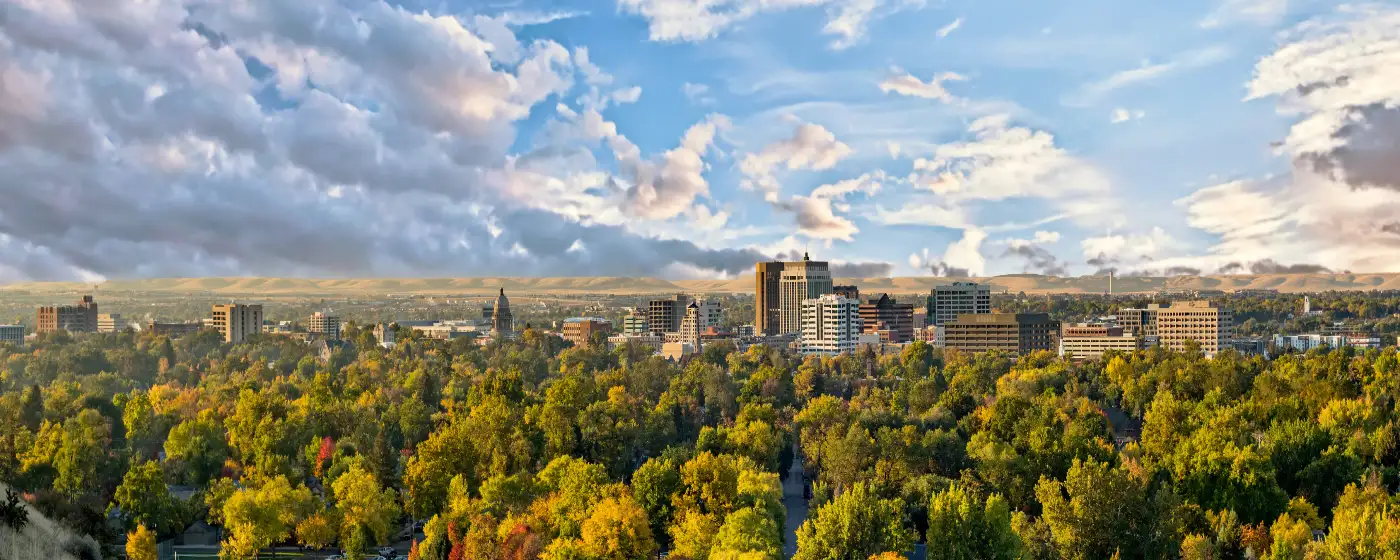
You've probably run the numbers already. Maybe you watched your Bay Area or Los Angeles rent climb past what your parents paid for their first house, or you realized the equity you'd built in a California home could be converted into something substantially more affordable two states over. Boise sits at the junction of I-84 and I-184 in the Treasure Valley, a high-desert basin ringed by foothills and fed by the Boise River — and for the past several years it has absorbed more California transplants than any other state has sent to Idaho. Approximately 62.7% of Idaho's net in-migration traces back to California, which means the question isn't whether Californians move here. It's whether the move actually delivers what they expected.
The city's economy is anchored by Micron Technology's semiconductor campus, HP Inc., Albertsons Companies' corporate headquarters, and Boise State University — a mix that skews toward tech, logistics, and higher education rather than the entertainment or finance sectors many transplants left behind. The Boise School District holds an A- rating, according to Niche, and the metro's growth has pushed infrastructure to keep up: Ada County alone added more than 10,000 residents in 2025. That growth is visible in new construction along the foothills and in longer waits on the Connector on weekday mornings.
The cost-of-living gap is real and not subtle. Boise's overall cost of living runs noticeably below Los Angeles and meaningfully below Sacramento as of mid-2026 — driven mainly by housing but reinforced by lower state income taxes, no estate tax, and generally cheaper utilities. The Boise Greenbelt, Camel's Back Park, the Boise River trail system, and easy access to Bogus Basin ski area and the Owyhee backcountry give daily life a texture that most transplants from Southern California find genuinely surprising rather than just pleasant. You can ski on Saturday morning and be in a board meeting Monday without a red-eye.
Whether you're finalizing a job offer at Micron or just watching Zillow from a Bay Area apartment, the sections below break down Boise's home price and tax comparison with California, what the culture shift actually looks like, the practical logistics of the move itself, what Californians typically underestimate, and the honest reasons some transplants eventually leave.
The Home Price and Tax Gap, Explained
The headline number: Boise's Zillow Home Value Index stood at $508,045 as of May 2026. California's statewide median sale price hit approximately $843,390 in Q1 2026. That gap is large enough to restructure a household's financial life — not just lower the monthly payment.
The Side-by-Side
| Category | California (Statewide) | Boise, Idaho |
|---|---|---|
| Median / typical home price | ~$843,390 (CAR, Q1 2026) | $508,045 (Zillow Home Value Index, May 2026) |
| State income tax structure | Progressive, 1%–13.3% | Flat 5.3% (effective Jan 1, 2025) |
| Top marginal income tax rate | 13.3% (incomes over $1M) | 5.3% — all income levels |
| Effective property tax rate | ~0.70%–0.75% (statewide avg) | approximately 0.76% (Boise / Ada County) |
| State sales tax on groceries | Exempt (most food) | 6.0% (with $155/person annual credit) |
| Estate / inheritance tax | None at state level | None |
| Tax Competitiveness Index rank | Lower third nationally | 9th overall (Tax Foundation, 2026) |
* Zillow Home Value Index (ZHVI) is a smoothed, seasonally adjusted estimate of a typical home's value. California figure is the California Association of Realtors' reported median sale price.
What the Income Tax Shift Actually Means
Idaho's flat 5.3% income tax — signed into law as HB 40 by Governor Brad Little in March 2025, down from 5.695% — replaces California's nine-bracket system that reaches 13.3% at the top. For a dual-income household earning a combined $250,000, the difference in marginal rate is immediate and significant. The gap between Idaho's flat rate and California's middle brackets starts showing up clearly in the $100,000–$200,000 range.
The Property Tax Nuance
Boise's effective property tax rate of approximately 0.76% is roughly in line with California's statewide average — this is one place where California's Proposition 13 protections have historically kept assessed values artificially low for long-term owners. If you've owned a California home for 15+ years with a locked-in assessed value, Idaho's property tax won't feel like a windfall. If you're a renter or a recent California buyer paying taxes close to current market value, Idaho's rate looks competitive.
The Sales Tax Trade-Off
Idaho charges 6.0% sales tax on groceries — California exempts most food. Idaho partially offsets this with a $155 per person annual grocery tax credit, but a family of four will feel the difference at checkout. This is the one area where California's tax structure is unambiguously friendlier for everyday household spending. For a broader look at Boise's full cost picture, see the Boise cost of living page.
What California Transplants Are Actually Moving Into
The Boise metro — including Meridian, Nampa, Eagle, and the surrounding Treasure Valley — grew by nearly 25% between 2014 and 2024, adding over 150,000 residents to reach approximately 770,000 people. The city has grown fast enough that some of what Californians picture when they hear "Boise" — a sleepy Western town with empty roads — is at least a decade out of date.
The Geography Matters More Than You Think
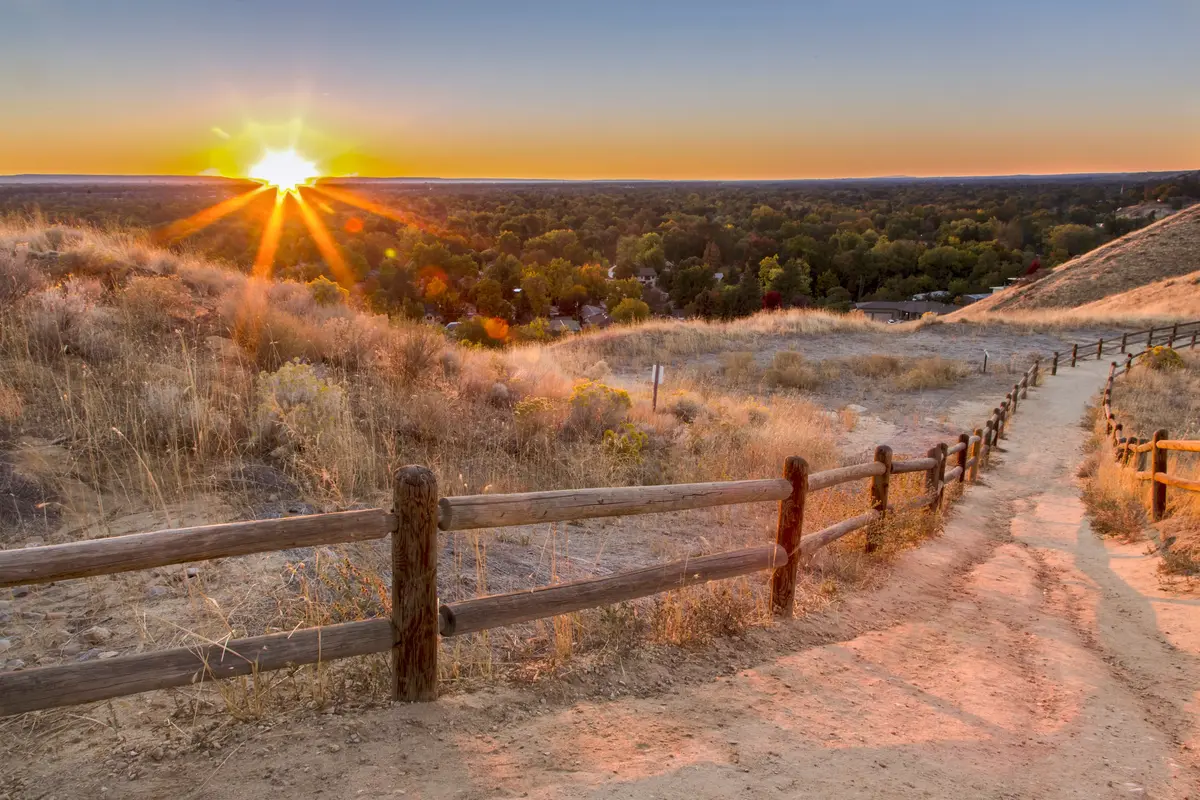
Boise is bisected by the Boise River and oriented toward the Boise Front foothills. The North End — the tree-lined blocks radiating out from Hyde Park — feels like a walkable Pacific Northwest neighborhood that somehow ended up in Idaho. The East End and Warm Springs Mesa offer views and older character. Downtown is compact and genuinely walkable. Areas south of the river, including the Bench, are denser and more affordable, while newer growth pushes east toward Harris Ranch and into Meridian.
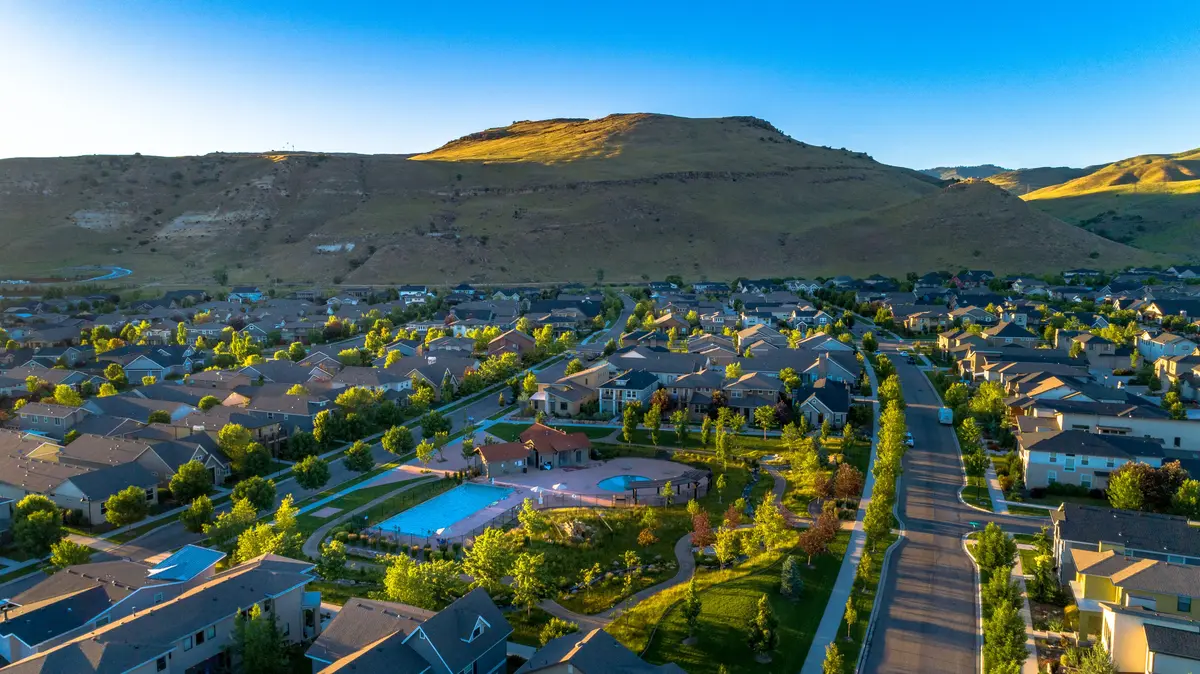
For a detailed breakdown of where different buyers tend to land, the Boise neighborhoods guide covers each area's character and trade-offs. What matters for a California transplant specifically: you will likely be comparing Boise proper to Meridian and Eagle, which offer newer construction and more suburban infrastructure at prices tracking similarly to Boise's own median.
What Locals Know That Zillow Doesn't Say
The Greenbelt connects 25 miles of the Boise River corridor through Julia Davis Park and beyond — and Boiseans treat it less like a weekend destination and more like a commuter route. People bike to work on it in March. That's a genuine shift from Southern California car culture, and most transplants from Los Angeles or the Bay Area report it as one of the better surprises after six months here.
The Basque Block on Grove Street is one of the only places in the American West with a working Basque community — festivals, a fronton, and a cluster of cultural institutions. It's a point of local pride that genuinely distinguishes Boise from other mid-size Western cities, and it's the kind of specific cultural infrastructure that transplants from California's coastal cities find unexpectedly resonant.
The Thing Nobody Warns You About
The smoke. Every August and early September, wildfire smoke from throughout the Northwest and Northern California settles into the Treasure Valley. Air quality regularly hits unhealthy levels for days at a stretch. If you're moving from coastal California where marine layer keeps air cleaner, this is a concrete quality-of-life adjustment. Outdoor recreation plans from late July through early fall need flexibility built in.
The Culture Shift: More Real Than You Expect
Boise is not Portland with mountains. It also is not the small Idaho town that national media tends to either romanticize or caricature. Six-figure growth in five years has created a city caught between its traditional Western Idaho identity and an increasingly cosmopolitan transplant culture — and that tension is visible in everyday life in ways that surprise people who assumed the move would be culturally neutral.
Politics and Social Environment
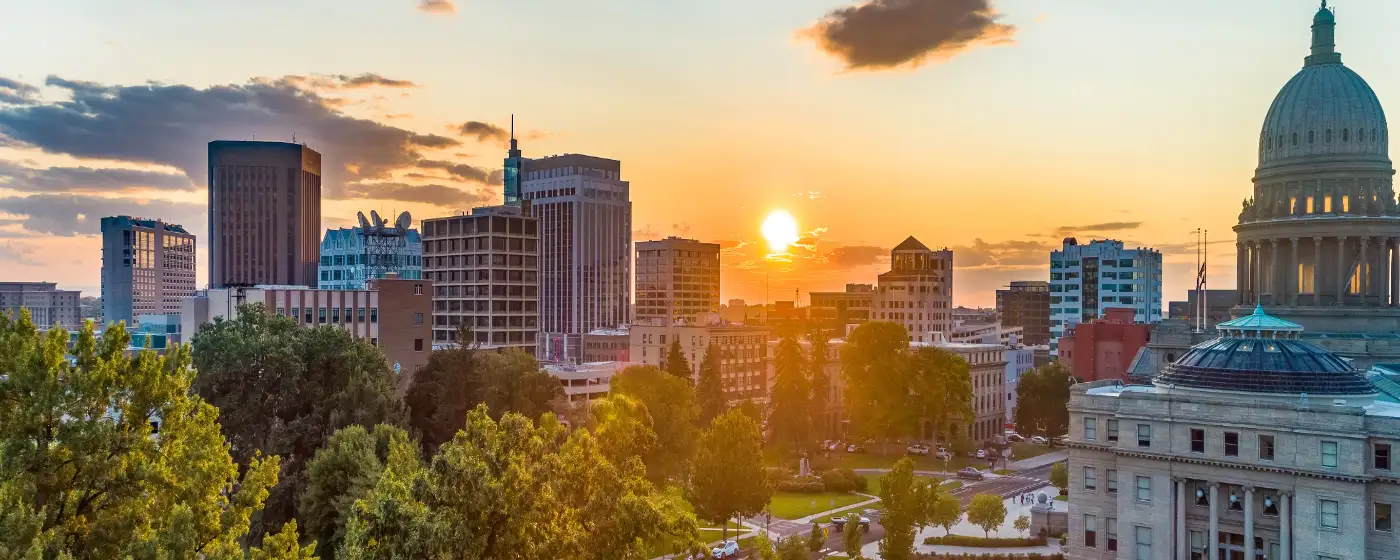
Idaho votes reliably Republican at the state level, and Ada County has trended more politically mixed as the city grew. Boise city government is generally more moderate than the state legislature. If you're moving from a majority-liberal California metro, you'll find local and national politics here feel noticeably different — not universally hostile, but different. The state legislature meets in the Idaho State Capitol building in downtown Boise, and its sessions generate policy debates that directly affect daily life in ways that some California transplants find jarring.
The Outdoor Culture Is the Real Connective Tissue
What actually unites transplants and long-timers here is access: Bogus Basin is 16 miles from downtown. The Owyhee Mountains offer serious backcountry. The Payette River corridor runs whitewater a short drive from the city. Nobody moves to Boise for the nightlife — they move here for the ratio of outdoor access to commute time, and that ratio is genuinely hard to match at this price point.
What Californians Underestimate
The pace of development means that the Boise some transplants researched in 2021 or 2022 is not the Boise they're moving into in 2026. Restaurant and retail options have expanded substantially. The arts scene around the Boise Art Museum, the Morrison Center, and the independent venue circuit has grown. What hasn't grown at the same rate: public transit. If you're coming from a Bay Area BART habit, Boise's bus system will require a full adjustment to car dependency outside the downtown core.
Where Families Gather
Camel's Back Park on the north side doubles as the informal social hub for parents with young kids on weekday afternoons — the climbing hill and tennis courts draw a consistent crowd. The farmers market at Capitol Terrace on Saturday mornings is where you'll recognize the same faces within a few months of arriving. These aren't tourist destinations; they're where Boise's social infrastructure actually runs.
Looking to buy in Boise? Estimate your payment.
Enter your numbers to see an estimated monthly mortgage payment.
Estimate only. Excludes HOA fees and mortgage insurance. The interest rate above is a starting point, not a quoted rate — replace it with your own to see real numbers. Insurance is a flat placeholder, not a Boise quote.
Practical Logistics of the Move
Moving from California to Boise is roughly 500 miles from Sacramento, 750 from Los Angeles, and just over 1,000 from the Bay Area — all of it accessible via I-80 to I-84. The drive from Sacramento can be done in eight hours with reasonable stops. That proximity makes a scouting trip realistic before you commit, and two or three long weekends in Boise will give you enough ground-truth to evaluate neighborhoods meaningfully.
Timing the Market
Boise's housing market has historically tightened in spring — inventory thins and competition picks up between March and June. If your California home sale closes in late winter, you may find yourself competing in Boise's peak window simultaneously. Sellers who can time a late-summer or fall Boise purchase often find more negotiating room. Ada County added more than 10,000 residents in 2025 alone, and demand hasn't shown signs of turning soft enough to make timing dramatically lower-stakes.
The Commute Reality
Boise's traffic is genuinely lighter than any comparable California market — until it isn't. The Connector (I-184) between downtown and the I-84 interchange backs up meaningfully between 7:30 and 8:30 a.m. and again between 4:45 and 5:45 p.m. The Eagle Road corridor in Meridian rivals anything in suburban Sacramento during peak hours. For a fuller picture of Boise's commute patterns, see the living in Boise guide.
What to Do With Your California Equity
Many transplants arrive with substantial California equity and can buy in Boise without stretching. The median Boise home price — $508,045 per the Zillow Home Value Index as of May 2026 — leaves meaningful room for buyers coming from markets where they sold above that figure. Some buyers use the equity gap to target newer construction in the North End or Harris Ranch with a stronger down payment position. See the Boise first-time homebuyer page for an overview of the buying process and available loan programs in Idaho.
Establishing Idaho Residency
Idaho residency requires a valid Idaho driver's license — you have 90 days after establishing domicile to convert your California license — along with vehicle registration transfer and updated voter registration. The Idaho State Tax Commission will expect you to file a part-year Idaho return for the year you move. If your situation involves remote work for a California employer, rental income from a California property, or any ongoing California business connections, consult a CPA who works in both states before you file. California's tax authority has a documented history of auditing departing residents who maintain California income sources after they leave, and a clean break makes the transition substantially simpler.
The Honest Case For and Against the Move
Most people who move here from California say the same thing around month three: they didn't realize how much the cost of housing was taxing their quality of life until it wasn't. The stress reduction from a lower mortgage relative to income is real and cumulative. That's the case for the move, stated plainly.
The Case For
Idaho's tax system ranks 9th overall on the Tax Foundation's 2026 State Tax Competitiveness Index. A flat 5.3% income tax is straightforward for W-2 earners to plan around, and the absence of estate or inheritance taxes matters if you're building intergenerational wealth. The outdoor access is not overstated — it's genuinely integrated into weekday life, not just a weekend pursuit. Boise's schools consistently perform well, and for school-specific data, see the Boise schools page.
The Case Against
Boise is growing fast enough that some of what made it attractive five years ago — the small-city ease, the low traffic, the sense that you were ahead of the crowd — is genuinely gone. If you're moving here partly because you want somewhere that doesn't feel crowded, you may find Ada County in 2026 more developed than you expected. The summers are hot and smoky. The winters are colder than Southern California in ways that feel obvious but still catch transplants off guard: Boise gets real snow, and the foothills get enough to require all-season tires by November.
Why People Leave
The honest reason some transplants eventually move again: they miss California's specific cultural and professional ecosystems. Boise's tech sector is real — Micron alone employs thousands — but it's narrower than the Bay Area's. Creative industries, entertainment, and finance are thinner here. Transplants who moved primarily for housing cost sometimes find after two or three years that the career ceiling feels lower, and the flight back to Sacramento or Portland picks up.
What Locals Advise
The people who stay and genuinely love it came for specific reasons they can articulate — not just to escape California's price tag. If your reason for moving is "cheaper housing," Boise will satisfy that for a while. If your reason is "I want a life that includes skiing before work, trail running after, and a backyard big enough for a garden," you'll find the city structured to support exactly that. Those are different moves, and only one of them tends to produce people who put down roots here for decades.
For a full look at crime patterns across Boise's areas, visit the Boise safety page. For parks, trails, and outdoor recreation details, see parks and recreation.
Local Expert Takeaway: The transplants who thrive in Boise came with a clear picture of the trade-offs — not just a spreadsheet showing Idaho's flat 5.3% income tax versus California's bracket structure. The home price gap is real: $508,045 versus $843,390 statewide in California is not a rounding difference, and for most buyers it restructures their monthly financial life immediately. But the grocery sales tax will surprise you at the register, the August smoke will test your patience, and the Connector at 5 p.m. is not the open road you imagined. The people who stay long-term are the ones who showed up for the outdoor life, found work at Micron or Boise State, and decided that biking the Greenbelt to work was worth the political climate adjustment.
Quick Takeaways & FAQs
✅ Idaho's flat 5.3% income tax and the absence of estate or inheritance taxes represent a meaningful structural advantage over California's progressive system for most working households.
⚠️ Boise is no longer a secret — Ada County added more than 10,000 residents in 2025 alone, and the easy-access, uncrowded small-city feel that drove early transplant interest has diminished noticeably.
📍 The August wildfire smoke season is the single most consistently underestimated quality-of-life factor for California transplants arriving from coastal markets — plan outdoor events with flexibility from late July onward.
How much cheaper are homes in Boise compared to California?
What is Idaho's income tax rate compared to California's?
Will California tax me after I move to Boise?
Is Boise still affordable in 2026, or has it already been priced up?
How do Californians fit in socially in Boise?
Moving to Idaho?
Tell us what you need help with and we'll connect you with local resources.
