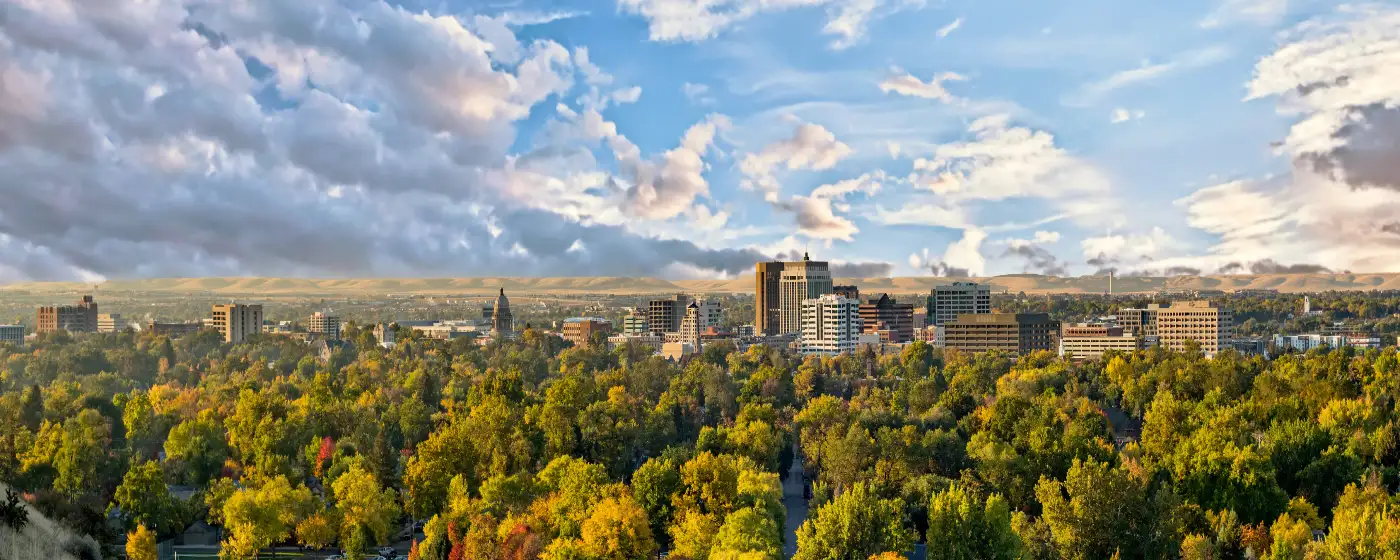
If you're choosing between Boise and a suburb like Meridian or Eagle, the decision usually comes down to this: do you want a neighborhood with sidewalks, century-old trees, and a walkable coffee shop — or a newer house with more square footage for the same money? Boise proper sits at the center of the Treasure Valley, bracketed by I-84 to the south and the Boise foothills to the north, with Meridian pushing west and Garden City splitting it from the Boise River corridor. That geography is not just scenery; it determines which side of town you land on, which school boundary your address falls into, and whether you'll need a car for every errand. Daily life here runs on a north-south axis more than most newcomers expect.
Boise School District holds an A- rating, according to Niche, but the district is not uniform — school assignments depend tightly on which side of a given street you buy on, and that boundary question shapes prices in a handful of neighborhoods more than any other single factor. Boise draws a steady stream of workers from both coasts who discover that the typical home value of $508,045 (Zillow Home Value Index, May 2026) goes much further here than where they're coming from — but further is relative, and some corners of Boise price well above that figure. For a full breakdown of what you'll spend day-to-day, see the cost of living in Boise page.
The outdoor access here is real, not marketing copy. Camel's Back Park sits inside a residential neighborhood. The Boise River Greenbelt runs 25 miles through the city and connects neighborhoods that don't share a single road. Julia Davis Park puts a major art museum and rose garden between downtown and Boise State's campus in a way that actually changes how people use their weekends. Boise's parks and trail system give the city a day-to-day quality of life that punches well above its population — for more on that, the parks and recreation page goes deep. What the outdoor access doesn't fix: the city is car-dependent outside of a handful of walkable pockets, summers are genuinely hot, and well-priced homes in the North End and Harris Ranch were selling in under two weeks in early 2026.
Whether you're narrowing a list of neighborhoods or just starting to understand how Boise is laid out, the sections below break down all eight neighborhoods by price, character, and honest trade-offs — plus a buyer-type guide, the mistakes relocating buyers make most often, and where to look if you're renting first.
The Boise Reality
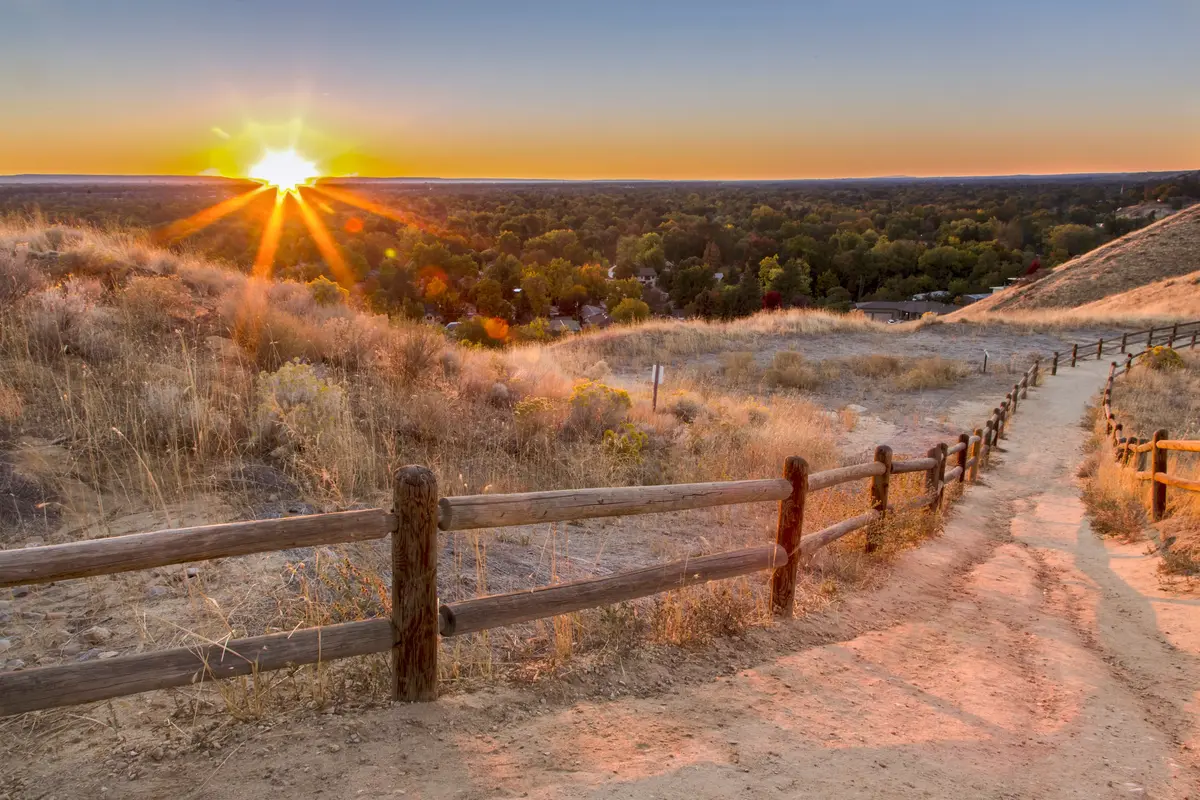
The single divide that matters most in Boise is the Boise Front — the line where the city's flatlands meet the foothills. Neighborhoods that back up to that ridge (the North End, East End, Warm Springs Mesa) carry a persistent price premium and a different daily rhythm from neighborhoods that sit on the valley floor. That isn't just about views; it's about school assignments, proximity to the Greenbelt, and the kind of neighbor you'll have on either side of the fence.
State Street cuts a second divide. Running east-west through the North End and then dropping into the Bench, it has historically been a loud, car-heavy corridor that separates quieter residential blocks from commercial sprawl. The city designated it a priority transit and urban renewal corridor in 2022, and redevelopment is genuinely underway — but the stretch west of 27th Street still feels more like a state highway than a neighborhood street. Buying a home on or just off State Street on the Bench side is a different proposition from buying two blocks north of it in the North End, even though they're technically the same distance from downtown.
The third reality: Boise's school boundary lines do not follow neighborhood names. Two houses on opposite sides of a single street can feed into different elementary schools with meaningfully different reputations. If school assignment is a priority — and for many families with kids, it is the priority — verify the specific address on the Boise schools page before you fall in love with a house. More than one relocating buyer has closed on a home assuming a school assignment that turned out to be wrong.
Neighborhoods at a Glance
| Neighborhood | Best For | Price Range | Vibe |
|---|---|---|---|
| North End | Walkable Luxury | ~$750K–$1.5M+ | Historic bungalows, tree canopy, strong community identity |
| Hyde Park | Walkable First-Time | ~$550K–$900K | Café-lined main street, independent shops, weekend foot traffic |
| East End | Luxury Views | ~$700K–$2M+ | Foothills-adjacent, historic character, close to Old Idaho Pen |
| Bench | Value First-Time | ~$350K–$550K | Postwar ranches, eclectic and affordable, improving corridor |
| Southeast Boise | Families Nature | ~$450K–$750K | River access, Bown Crossing, suburban feel inside city limits |
| Harris Ranch | Luxury Families | ~$600K–$3M+ | Master-planned, new construction, foothills setting |
| Warm Springs Mesa | Views Quiet | ~$550K–$1.1M | Elevated, private, mesa-top lots with Boise skyline sightlines |
| Downtown Boise | Walkable Transit | ~$350K–$750K (condos/townhomes) | Walk Score 81, arts and dining density, urban condo lifestyle |
Price ranges reflect the typical spread of active and recently sold inventory as of mid-2026; the citywide Zillow Home Value Index anchor is $508,045 (May 2026).
Best Neighborhood by Buyer Type
| Buyer Type | Best Neighborhood | Why |
|---|---|---|
| First-Time Buyer | Bench | The Bench is the last corner of Boise where entry-level detached homes regularly appear below $450K, within city limits and minutes from the Greenbelt. |
| Luxury Buyer | Harris Ranch | New construction ranging from $600K to well over $3M in a master-planned foothills setting gives buyers both scale and finish level that older neighborhoods can't match. |
| Walkability Seeker | Downtown Boise | A Walk Score of 81 — the highest in the city — puts more than 80 restaurants and 100 shops within reach on foot, including Bittercreek Alehouse on N. 8th St. |
| Families with Kids | Southeast Boise | Barber Park, the Bown Crossing pedestrian district, and consistently well-regarded school assignments make Southeast Boise a reliable landing spot for parents with school-age children. |
| Commuter | Southeast Boise | Straightforward freeway access and surface road options toward the east side of the metro keep daily drives predictable from this part of the city. |
| Large-Lot Buyer | Warm Springs Mesa | Mesa-top parcels run larger than almost anything else inside Boise city limits, with the elevation providing both privacy and views that other neighborhoods can't replicate. |
| Renter | Hyde Park / Bench | These two areas consistently turn up the widest range of rentals — from vintage duplexes near the 13th Street corridor to newer apartment stock along State Street — at rents that still undercut downtown. |
School boundary verification remains essential for any family-driven purchase; the buyer-type matches above are starting points, not substitutes for address-level research.
Looking to buy in Boise? Estimate your payment.
Enter your numbers to see an estimated monthly mortgage payment.
Estimate only. Excludes HOA fees and mortgage insurance. The interest rate above is a starting point, not a quoted rate — replace it with your own to see real numbers. Insurance is a flat placeholder, not a Boise quote.
Most Popular Neighborhoods in Boise
1. North End
The North End is the neighborhood Boise residents argue about most — whether its prices have crossed into irrational or whether the combination of Camel's Back Park, century-old craftsman bungalows, and the 13th Street corridor justifies every dollar. The average sold price for the trailing 12 months through April 2026 was approximately $990,036, and entry-level in this area now starts closer to $750K for a smaller bungalow needing updates. The trade-off: lot sizes are modest, parking is tight, and the homes that look good in photos often need significant mechanical work behind the original woodwork.
Best for: Buyers who want walkable streets, proximity to Camel's Back, and a neighborhood identity strong enough to feel like a small town inside a growing city.2. Hyde Park
Hyde Park is technically the commercial district anchored along N. 13th Street, but locals use the name to describe the surrounding residential blocks — a zone where postwar ranches sit alongside fully renovated craftsmans, and where a strip of independent shops draws foot traffic on weekends. Prices here run noticeably below the North End proper (~$550K–$900K), which makes it the most attainable entry point into the northern foothills-adjacent section of Boise. The catch: parking on 13th Street on a Saturday afternoon is a genuine test of patience, and some blocks feel the noise from commercial activity more than buyers touring on a Tuesday realize.
Best for: Buyers who want walkable streets and neighborhood energy without paying the full North End premium.3. East End
The East End sits between downtown and the foothills along Warm Springs Avenue, and it is Boise's most architecturally layered neighborhood — Victorians, craftsmans, and mid-century ranches sharing blocks near the Old Idaho Penitentiary and Boise Art Museum in Julia Davis Park. Prices range from roughly $700K to well over $2M for the grander historic properties, and inventory is thin enough that well-priced homes routinely attract multiple offers within a week of listing. The honest friction: the neighborhood's appeal is inseparable from its walkability to downtown, but Warm Springs Avenue itself carries consistent through-traffic that makes blocks directly on the road louder than buyers from quieter markets expect.
Best for: Buyers who prioritize historic character, foothills proximity, and a short walk to Julia Davis Park over new construction and yard space.4. Bench
The Bench — the elevated plateau south of the North End and west of downtown — is where Boise's affordability actually lives. Postwar ranches and bungalows in the $350K–$550K range appear here regularly, and the neighborhood's eclectic, arts-adjacent character has attracted a younger owner-occupant crowd that is gradually updating older stock without erasing the neighborhood's lack of pretension. State Street, which runs along the Bench's northern edge, is the honest downside: it still functions more as a commercial highway than a neighborhood amenity, though the city's urban renewal investment is slowly shifting that calculus. Buyers who avoid blocks within one street of State Street tend to feel more settled after six months than those who didn't think carefully about that buffer.
Best for: First-time buyers, value-focused buyers, and anyone who wants a Boise address and a detached home without stretching to $600K+.5. Southeast Boise
Southeast Boise runs from the Boise River corridor down toward the Bown Crossing district — a genuinely walkable cluster of restaurants and shops anchored near S. Bown Way — and out toward Barber Park, where most Boise River float trips launch every summer. Homes in the $450K–$750K range buy a suburban feel inside city limits, with newer construction mixed into older ranch stock and consistent school assignment stability that draws parents with school-age children year after year. The compromise is that the neighborhood lacks a single identifiable center; it's more of a zone than a village, and buyers used to tight neighborhood cohesion sometimes find it harder to plug into a social scene here than in the North End or Hyde Park.
Best for: Families with kids who want river access, Bown Crossing on foot, and school assignment stability without paying North End prices.6. Harris Ranch
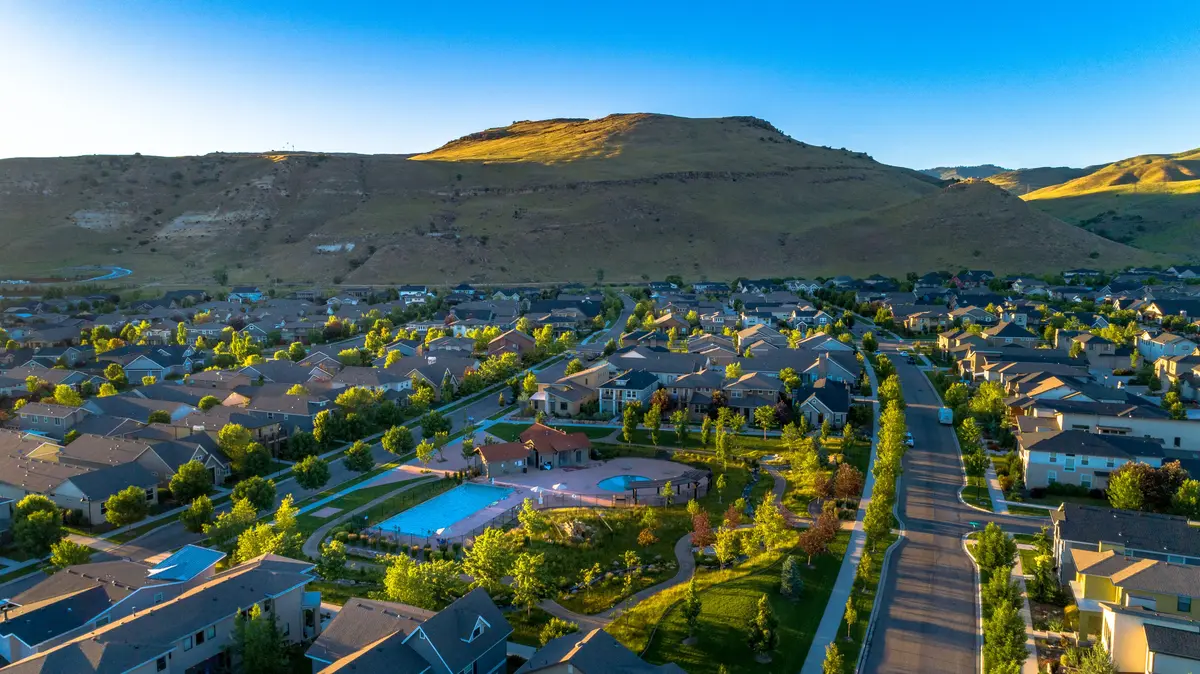
Harris Ranch is Boise's first city-approved Specific Plan district — a master-planned development in the foothills east of the city that currently offers entry prices around $600,000 for smaller production homes and new construction that can exceed $3,000,000 for custom builds on larger parcels. The newest phase, Harris East, was actively under construction in early 2025, and the long-promised Town Center (intended to bring a specialty market, restaurants, and a hotel to the neighborhood) underwent yet another redesign in June 2026, with some commercial square footage shifted to make way for townhomes. That retail amenity gap is the realistic short-term catch — residents currently drive out of the neighborhood for most daily errands, and that will remain true until the commercial phase actually delivers.
Best for: Buyers who want new construction, foothills access, and don't mind being early to a neighborhood that's still building out its own infrastructure.7. Warm Springs Mesa
Warm Springs Mesa sits on an elevated plateau above the East End, accessed primarily via Warm Springs Avenue, and it offers something genuinely rare inside Boise city limits: larger lots, wide sightlines to the Boise skyline, and a quieter daily pace that the more trafficked corridors to the north and west simply don't have. Prices run from approximately $550K to $1.1M depending on lot size and vintage, with mid-century ranches on the lower end and more recent construction at the top. The downside is practical — getting off the mesa during peak morning hours adds meaningful time to any drive toward downtown or the freeway, and there's no shortcut most buyers discover before they're already living here.
Best for: Buyers prioritizing views, larger lots, and quiet over walkability and an easy drive to work.8. Downtown Boise
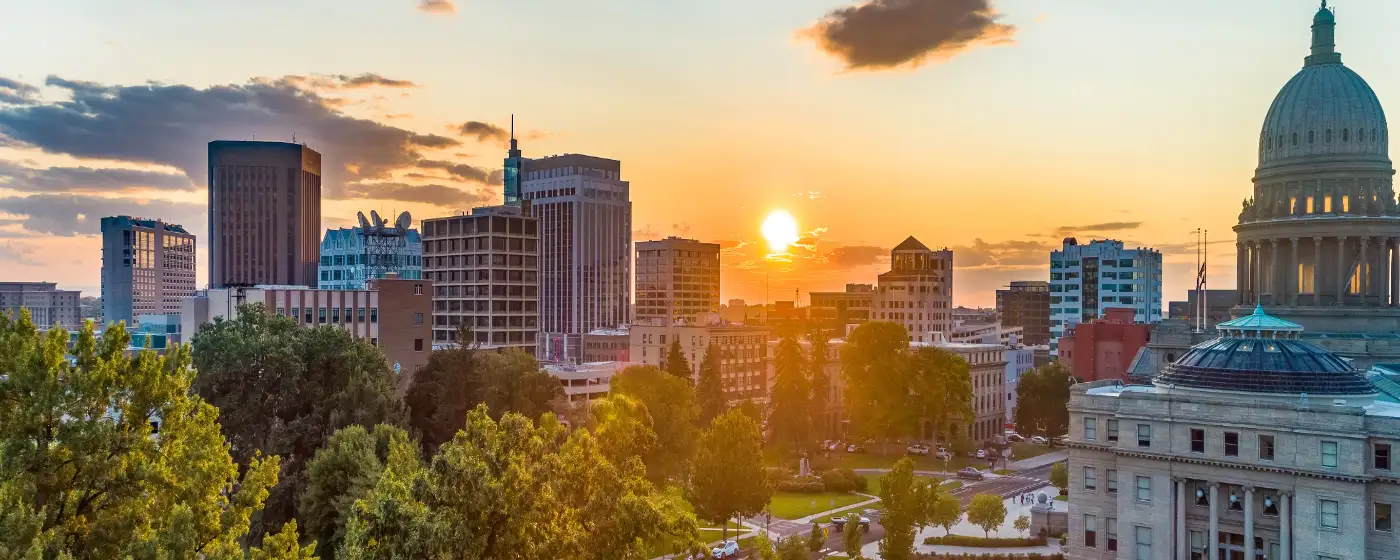
Downtown Boise's residential stock is almost entirely condos and townhomes — priced from roughly $350K for a smaller unit to $750K for a two-bedroom with views — in a walkable urban core that carries a Walk Score of 81, the highest in the city. The Basque Block, the Idaho State Capitol, Morrison Center for the Performing Arts, and Bittercreek Alehouse on N. 8th St. are all within a ten-minute walk from most addresses, and the density of restaurants and independent shops is genuinely high for a city of Boise's size. What downtown living doesn't offer: parking for guests, private outdoor space, and the sense of neighborhood permanence that comes with owning a single-family home — buyers who move here from a house in the suburbs sometimes find that what felt exciting at closing feels constraining by month eight.
Best for: Singles, couples, and lock-and-leave buyers who want maximum on-foot access and are willing to trade yard space and parking for urban convenience.Common Mistakes Buyers Make in Boise
Treating Boise as One Uniform Market
The gap between a $375K Bench ranch and a $990K North End bungalow is not a matter of finish level or square footage alone — it reflects entirely different neighborhood characters, school assignments, and daily rhythms. Buyers who run a price-per-square-foot comparison across all eight neighborhoods and conclude the Bench is the obvious value miss the point. The question is which trade-offs you can live with, not which neighborhood pencils out on a spreadsheet.
Underestimating the State Street Effect
State Street between roughly 15th and 36th carries the traffic volume of a state highway because it is one. Buyers who fall for a Bench home priced attractively on a block directly abutting State Street often don't register the noise and pedestrian hostility until they've moved in. The city's urban renewal investment is real, but the physical transformation of State Street will take years — buying adjacent to it today means buying into a work in progress, not an arrived neighborhood.
Chasing School Reputation Without Checking the Address
Boise School District earns strong ratings overall, but individual school assignments vary meaningfully within the same neighborhood name. Several blocks in Southeast Boise and the East End sit on boundary lines that shift assignment to a less sought-after school while the address still carries the neighborhood's premium pricing. Verifying the exact school boundary on a specific address — not the general neighborhood — before making an offer is the most commonly skipped step among relocating buyers, and the one with the most expensive consequences.
Assuming Harris Ranch Will Feel Complete Soon
The Town Center at Harris Ranch has been promised for years. As of June 2026, the project underwent another redesign, with commercial uses partially displaced by townhomes. Buyers purchasing at the higher end of the Harris Ranch range ($1M+) sometimes assume that walkable retail amenities are months away — that assumption has been wrong repeatedly, and driving out of the neighborhood for groceries and dining is a genuine daily cost that should factor into the price calculation before closing.
Best Areas to Rent in Boise
| Area | Ideal For | Typical Rent Range | Trade-off |
|---|---|---|---|
| Downtown Boise | Young professionals, on-foot access seekers | $1,400–$2,200/mo (studio–2BR) | Smallest square footage per dollar; parking often extra |
| North End / Hyde Park | Renters who want neighborhood character | $1,500–$2,400/mo (1–3BR) | Limited rental inventory; vintage units, older systems |
| Bench | Budget-conscious renters, value seekers | $1,100–$1,700/mo (1–3BR) | State Street noise on some blocks; older building stock |
| Southeast Boise | Families, Greenbelt-adjacent living | $1,400–$2,000/mo (2–4BR) | Fewer walkable amenities; car needed for most errands |
| Harris Ranch | Renters wanting new construction feel | $1,800–$2,800/mo (2–4BR) | Limited rental inventory; daily drive required for groceries |
Boise's rental market tightened through early 2026 alongside the for-sale market, and vacancy rates across most of these zones run thin enough that well-priced units — especially in the North End and Hyde Park corridor — often receive multiple applications within 48 hours of listing.
Renting in the Bench first is a practical strategy for newcomers who want to understand Boise's north-south divide before committing to a purchase: it keeps monthly costs lower, keeps you inside city limits, and puts the North End, Hyde Park, and downtown all within a short drive while you sort out which neighborhood actually fits your daily life.
Local Expert Takeaway: Boise rewards buyers who do the address-level work before falling in love with a neighborhood name. The North End's community identity is real, but so is the $990K average sold price — and the Bench two miles south offers a genuinely livable alternative that many relocating buyers dismiss too quickly. The dividing line most people miss isn't the Boise Front or the river; it's State Street, which cuts differently depending on which side of it you're on. If you're renting first, start in the Bench or near the Hyde Park corridor on N. 13th St. — you'll be close enough to the North End's walkable streets to know whether you want to pay for them, and far enough away to keep your options open.
Quick Takeaways & FAQs
✅ Boise's North End combines a genuine walkable neighborhood identity — Camel's Back Park, the 13th Street corridor, century-old craftsmans — with some of the strongest price appreciation in the Treasure Valley.
⚠️ Harris Ranch's promised Town Center retail amenity has been redesigned repeatedly and as of mid-2026 still hasn't delivered a grocery store, meaning residents drive out for daily needs regardless of what the master plan shows.
📍 State Street is the divide most out-of-state buyers overlook: blocks on the Bench directly abutting State Street carry real noise and traffic friction that doesn't show up on a map or a listing photo.
What is the most affordable neighborhood in Boise to buy a home?
Which Boise neighborhood is best for families with kids?
Is the North End worth the price premium over other Boise neighborhoods?
What should I know about buying in Harris Ranch before making an offer?
Is it better to rent in Boise before buying, and where should I start?
Moving to Idaho?
Tell us what you need help with and we'll connect you with local resources.
