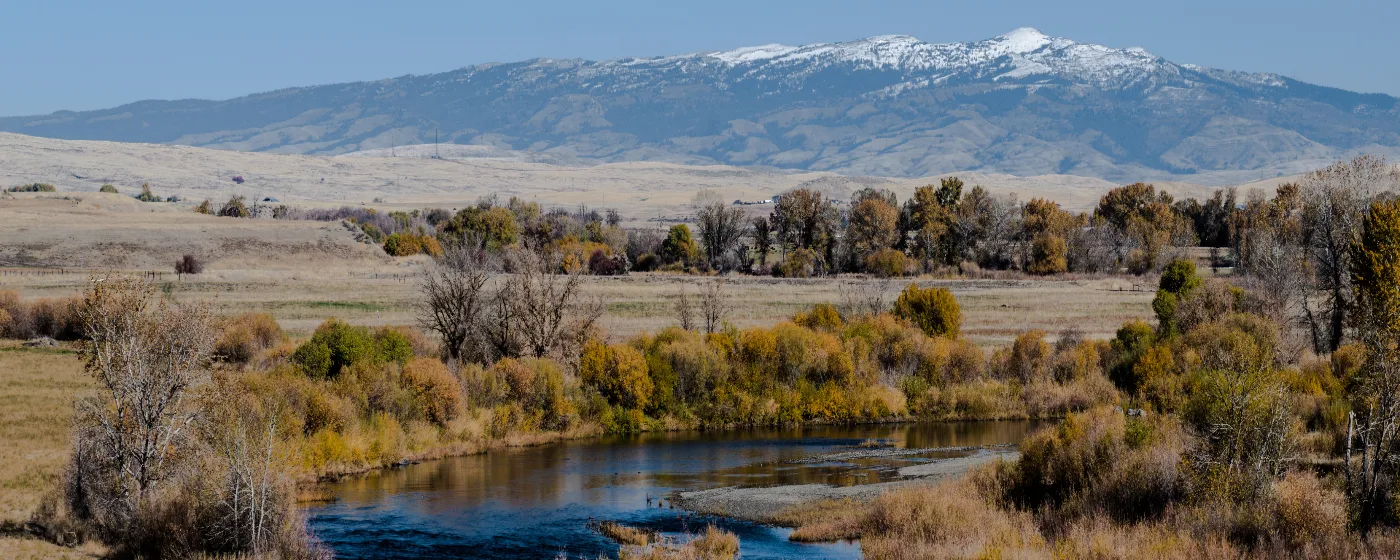
Most families researching a move to Weiser lead with housing costs and quickly pivot to schools. What they find is a small PreK–12 district that doesn't try to hide what it is: a rural Idaho district serving a working-class community, with a clear-eyed stated goal of becoming the highest-achieving rural school district in the state. That aspiration matters because it signals the district is measuring itself against real benchmarks, not just celebrating small-town spirit. Weiser sits on U.S. Highway 95 in Washington County, about 70 miles northwest of Boise, and the geographic reality shapes the school system — this is genuinely small-town education, not a suburb with big-city resources.
Weiser School District 431 enrolls roughly 1,428 to 1,558 students across five campuses, with approximately 57% qualifying for free or reduced-price lunch. That figure, typically lagging one to two school years, tells you something real: this is not a district drawing from a high-income suburban tax base. What it does draw from is a tight community where the school and the town are inseparable — the high school hosts the National Oldtime Fiddlers' Contest every June, the football program has a state-championship pedigree that would be remarkable for any size school, and Career Technical Education tracks connect directly to local industries in agriculture and the trades.
For families coming from larger metro areas, the adjustment is real. There is no Gifted and Talented magnet, no IB program, and no deep bench of Advanced Placement offerings you'd find at a school three times the size. What exists instead is a genuine community investment in kids, a student-to-teacher ratio of roughly 17:1, and extracurricular breadth — 18 varsity athletic programs, a robotics program, performing arts, and a rec department running youth leagues from kindergarten age — that is genuinely impressive for a city of fewer than 6,000 people. The parks and recreation page covers the outdoor amenities that round out family life here.
Whether you're weighing a relocation from the Treasure Valley, moving from out of state, or simply want to understand what Weiser's schools actually look like before committing, the sections below break down the district structure, the standout schools, the CTE and extracurricular landscape, youth sports, and the honest cases for and against this district for different family types.

Weiser School District 431: District-Level Snapshot
Weiser School District 431 is a PreK–12 district operating five schools on what amounts to a single community footprint. The progression runs Pioneer Primary (kindergarten through grade 3), Park Intermediate (grades 4–5), Weiser Middle School (grades 6–8), Weiser High School (grades 9–12), and Indianhead Academy, which serves students who benefit from an alternative high school setting.
Total enrollment across recent school years has ranged from approximately 1,428 to 1,558 students, with about 158 full-time equivalent staff members — a ratio that works out to roughly 17.2 students per teacher. For a district this size, that ratio is workable, though it means teachers carry broad responsibilities that a larger district might split across specialists.
The district's stated vision is direct: to be the highest achieving rural school district in Idaho. That isn't a slogan you'd expect from a district coasting on low expectations, and parents who've moved here from rural districts elsewhere often note that the ambition feels genuine rather than performative. Whether the current outcomes match the aspiration varies year to year, but the direction of travel matters in a district this small.
What the Free-and-Reduced Lunch Figure Actually Means
Roughly 57% of students qualify for free or reduced-price lunch — one of the higher shares among Treasure Valley-area districts. This reflects the local economy: Washington County agriculture, food processing, and public-sector employment don't produce the household incomes that fuel high-test-score suburban districts. If you're moving from a district where that share is below 20%, the classroom dynamics will feel different.
That reality cuts both ways. Teachers here are generally experienced at differentiated instruction and working across wide achievement ranges. The flip side is that resources — technology refreshes, elective depth, counseling ratios — are constrained by a tax base that simply doesn't grow the way a bedroom-community district's does.
| Category | Weiser SD 431 Figure |
|---|---|
| Grade span | PreK–12 |
| Number of schools | 5 |
| Total enrollment (recent range) | ~1,428–1,558 students |
| Student-to-teacher ratio | ~17.2:1 |
| Total staff (FTE, 2024–25) | ~158 |
| Free/reduced-price lunch | ~57% of students |
| IHSAA classification | Class 3A |
| Alternative school | Indianhead Academy (HS) |
Three Schools Worth Knowing
Pioneer Primary School (K–3): Where It Starts
Pioneer Primary is the entry point for every Weiser kid, and it does something that districts twice its size often struggle to coordinate: it houses Head Start classrooms on campus and runs a developmental preschool program for students with disabilities. That means early intervention and preschool access happen in the same building as kindergarten, which smooths the transition and keeps specialists available to the youngest learners without cross-site travel.
For families with children who have IEPs or developmental delays, this is actually a meaningful structural advantage. Rural districts often fragment these services across buildings or contract them out; Weiser keeps them centralized at Pioneer Primary.
Weiser High School (9–12): The Community Anchor
Weiser High School at 690 W Indianhead Road is the heart of this district in a way that goes beyond academics. With an enrollment of 529 students for 2023–24, it's large enough to field 18 varsity athletic programs under Idaho High School Activities Association (IHSAA) Class 3A rules, but small enough that a motivated student can genuinely lead something — a team, a club, a robotics project — rather than wait their turn behind a deep bench of competitors.
The CTE catalog at WHS is where the school punches above its weight class. Tracks in Agricultural Science, Health Occupations, Auto-Mechanics, Construction Technology, and Career and Business Technology all connect to real local industries. The School-To-Registered-Apprenticeship Program, known as STRAP, is a direct pipeline for students who want a trade credential alongside or instead of a four-year degree path.
Every June, the school hosts the National Oldtime Fiddlers' Contest on its campus — an event with national draw that makes WHS something stranger and more interesting than just a high school. If your kid plays a stringed instrument and wants to experience something genuinely unique in American folk music, this is the school for it.
Indianhead Academy: The Alternative Pathway
Indianhead Academy exists for students who don't thrive in a traditional high school structure — whether because of scheduling conflicts, credit recovery needs, or simply a different learning style. Its presence within the district is worth noting for any family with a teenager who's had a rocky relationship with conventional school formats. Not every small district maintains a functioning alternative program; Weiser does.
Best for: Students needing flexible scheduling, credit recovery, or a lower-pressure environment to finish their diploma.

Career Technical Education and Extracurriculars
The CTE program at Weiser High School is where families from larger districts are most likely to be surprised — pleasantly. Six distinct tracks, plus the STRAP apprenticeship pipeline, give students a vocational pathway that doesn't require waiting until community college to get hands-on. Students in Health Occupations can earn industry certificates before graduation; Agricultural Science students connect directly with the farming economy central to Washington County.
That alignment between curriculum and the local economy is harder to find than it sounds. A student graduating with a construction technology credential or a health occupations certificate steps into a job market that actually needs those skills — without leaving Weiser to find them.
Beyond the Shop Floor
The district describes its robotics program as highly successful — and given the competitive landscape of FIRST and similar Idaho competitions, that's a meaningful claim for a Class 3A district. Performing arts include both vocal and instrumental music programs, and the annual National Oldtime Fiddlers' Contest creates a real-world performance context that most school music programs can only approximate with recitals.
What's thinner here: the depth of Advanced Placement course offerings tends to be limited compared to 4A and 5A Idaho districts. Dual-enrollment options through Idaho's community college framework exist as a pathway, but families expecting a full AP suite should verify current course availability directly with the high school rather than assuming it matches what's listed on state-level program pages.
| Program Area | Availability at WHS | Notes |
|---|---|---|
| Agricultural Science | Yes | Ties to local farming economy; industry certificates available |
| Health Occupations | Yes | Credential pathway; connects to local healthcare sector |
| Auto-Mechanics | Yes | Hands-on shop program |
| Construction Technology | Yes | Credential pathway available |
| Career & Business Technology | Yes | Business/office skills track |
| STRAP Apprenticeship | Yes | School-to-Registered-Apprenticeship pipeline |
| Robotics | Yes | District describes as highly successful |
| Performing Arts (vocal/instrumental) | Yes | National Oldtime Fiddlers' Contest adds real performance context |
| Advanced Placement | Limited | Verify current offerings directly with the school |
Looking to buy in Weiser? Estimate your payment.
Enter your numbers to see an estimated monthly mortgage payment.
Estimate only. Excludes HOA fees and mortgage insurance. The interest rate above is a starting point, not a quoted rate — replace it with your own to see real numbers. Insurance is a flat placeholder, not a Weiser quote.
Youth Sports and Kids Activities in Weiser
Youth sports in Weiser run on two tracks: the City of Weiser Recreation Department for younger kids, and IHSAA-sanctioned school programs for high schoolers. Both tracks are active and community-supported in a way that's disproportionate to the city's size — Friday night football games draw genuine crowds, and Saturday morning rec-league games at the city fields are where parents actually meet each other.
City Recreation Department: The Rec League Foundation
The City of Weiser Recreation Department, operating out of 309 State Street, administers the organized youth leagues that serve kids before they reach school-age team sports. For 2026, posted registration programs cover baseball, girls fastpitch softball, youth soccer, tackle football, and youth basketball. All programs run on a volunteer-coach model, which means parents are expected to contribute — and most do, because the alternative is the program not running.
Registration and rules for each sport are posted directly on the city's recreation page at cityofweiser.net. If you're moving with a kid who's already playing organized ball, contacting the rec department before you arrive is worth the five-minute call — leagues here fill based on local registration windows, not rolling enrollment.
Weiser High School Athletics: 18 Varsity Programs in Class 3A
Weiser High School fields 18 varsity programs under the Idaho High School Activities Association, competing at the Class 3A level. The full roster includes football, basketball, baseball, softball, volleyball, soccer, wrestling, tennis, golf, cross country, and track and field — enough variety that a three-sport athlete or a kid who wants to try something new in junior year has real options.
The football program has earned that reputation honestly. Head coach Tom Harrison's Wolverines won the 2021 Class 3A state championship in double overtime, snapping a three-year run by Sugar-Salem. Eleven state championships for one coach at one school is a genuinely unusual résumé, and it attracts kids who want to compete seriously. Under IHSAA rules, all student-athletes must complete an annual athletic packet — parental consent, medical clearance, and student agreement — before the first practice day, consistent with Idaho Code Section 33-1625. The district's WHS Sports page walks through the process.
Club Sports and What Requires a Drive
Here's the honest answer that most relocation guides skip: Weiser does not currently have confirmed club or travel sports organizations operating locally. If your kid is playing competitive travel soccer, select baseball, or club volleyball at a level that requires league play beyond the rec and school programs, you are looking at driving to Payette, Ontario (Oregon), Fruitland, or deeper into the Boise metro for practice and tournament access.
That's a real consideration. A family with a 13-year-old committed to a travel softball program needs to budget the drive time honestly — Payette is about 20 minutes south, but Boise-area club programs run approximately 70 minutes each way. Some families in Weiser absorb that; others find it unsustainable as a weekly commitment.
| Program Type | Provider | Sports Offered | Age Range |
|---|---|---|---|
| Youth rec leagues | City of Weiser Rec Dept | Baseball, girls fastpitch softball, soccer, tackle football, basketball | Elementary/middle school age |
| Varsity school sports | Weiser High School / IHSAA 3A | 18 programs incl. football, basketball, volleyball, wrestling, golf, tennis, track | Grades 9–12 |
| Performing arts | Weiser School District 431 | Vocal and instrumental music | K–12 |
| Robotics | Weiser School District 431 | Competitive robotics | Middle/high school |
| Club/travel sports | Not locally confirmed | Likely requires travel to Payette, Ontario OR, or Boise metro | Varies |
What This District Does Well — and Where It Struggles
Genuine Strengths
The district's CTE pipeline is the clearest win. A student who graduates from WHS with a trade credential and a year of apprenticeship hours has a tangible certificate — not just a diploma. For families where the four-year college path isn't the primary goal, Weiser SD 431 is actually better set up than many Idaho rural districts its size.
Community integration is real, not rhetorical. When the high school hosts the National Oldtime Fiddlers' Contest every June, thousands of visitors come to Weiser — and the school is at the center of it. That's a different relationship between a school and its community than you'll find in most places.
Early childhood access at Pioneer Primary — Head Start classrooms on site, a developmental preschool for students with disabilities — is a structural advantage that parents of young children with special needs should take seriously. It means families don't have to drive to a larger city for early intervention services.
Where the District Falls Short
Resource constraints are real. A district where more than half the student body qualifies for free or reduced-price lunch is going to make different budget tradeoffs than a wealthier district. Technology, facility upkeep, and specialist staffing — counselors, reading interventionists, gifted education — are areas where Weiser SD 431 is working with less than comparably sized districts in higher-income counties.
Academic outcomes vary year to year, and without a current published rating from GreatSchools or Niche, families should pull the Idaho State Report Card data directly for the most recent proficiency figures before drawing conclusions. What's available online lags by a year or two; calling the district office directly is the more reliable approach.
The AP and college-prep depth question is also real. If you have a student targeting selective college admissions who needs four years of AP coursework, verify the current AP catalog with WHS before assuming it matches what a comparable 4A school offers. The catalog exists; the depth varies.
Who This District Is Not the Right Fit For
If your household is moving specifically because of a student with high academic acceleration needs — a kid who exhausted the math sequence at their previous school by 8th grade and needs university-level coursework access in high school — Weiser SD 431 will likely feel limiting. The district is building, not overflowing, in terms of advanced academic infrastructure.
Families with a teenager already deep into competitive club sports at a travel or regional level should do the math on the drive time before committing. The school's varsity program is strong, but if your kid is training four nights a week with a Boise-area club, you are looking at a 70-mile commute each way, multiple times per week. Some families make it work; others move back closer to the metro within a year.
Parents who place significant weight on published ratings and rankings will find the data thin here. Weiser SD 431 doesn't surface prominently on GreatSchools or Niche with a current numeric rating, which some families read as a signal and others recognize as a data-coverage gap common to small rural districts. Either way, if published third-party ratings are a decision driver for you, you should know upfront that you'll need to dig into the Idaho State Report Card directly rather than rely on aggregator scores.
Finally, if your child has significant special education needs that require specialists not commonly found in small rural districts — low-incidence disability specialists, certain therapeutic support staff — verify the district's current capacity directly with the special education coordinator before making any housing decisions. Pioneer Primary's early childhood infrastructure is real; the capacity for more complex high school IEP needs is something to confirm rather than assume.
None of this is a dismissal of the district. It's a realistic read on the gap between what Weiser SD 431 does well and what it isn't resourced to do. The families who thrive here tend to be ones who value community embeddedness, trade-and-skills education, and athletic opportunity over AP course count and published ratings.

Local Expert Takeaway: Weiser SD 431 is a district that rewards families who meet it where it is. The CTE programs at Weiser High School are legitimately strong — the STRAP apprenticeship track and Health Occupations pathway connect directly to the kinds of skilled-trade and healthcare jobs available in Washington County. The City of Weiser Rec Department runs five organized youth sports through its volunteer-coach model, and the Wolverine football program competing in IHSAA Class 3A has a state-championship pedigree that shapes the town's identity every fall Friday. What you won't find is the AP depth of a large 4A or 5A district, and any travel club sports will require a regular drive to Payette or the Boise metro. If your family's priority is a small school where a motivated kid can lead rather than wait, and where the school is genuinely woven into community life, Weiser SD 431 is worth taking seriously.
Quick Takeaways & FAQs
✅ Weiser High School fields 18 varsity programs in IHSAA Class 3A and has a state-championship football program — unusually deep athletics for a city of fewer than 6,000.
⚠️ Roughly 57% of students qualify for free or reduced-price lunch, which shapes resource levels and classroom dynamics; families expecting suburban-district infrastructure should calibrate expectations before visiting.
📍 The City of Weiser Recreation Department runs youth leagues in baseball, softball, soccer, football, and basketball at 309 State Street — but confirmed club and travel sports programs require a drive to Payette, Ontario (OR), or the Boise metro.
How many schools are in Weiser School District 431?
What sports does Weiser High School offer?
Are there youth rec leagues for younger kids in Weiser?
Does Weiser School District have any vocational or trade programs?
What does Pioneer Primary School offer for preschool-age children or kids with disabilities?
Moving to Idaho?
Tell us what you need help with and we'll connect you with local resources.
