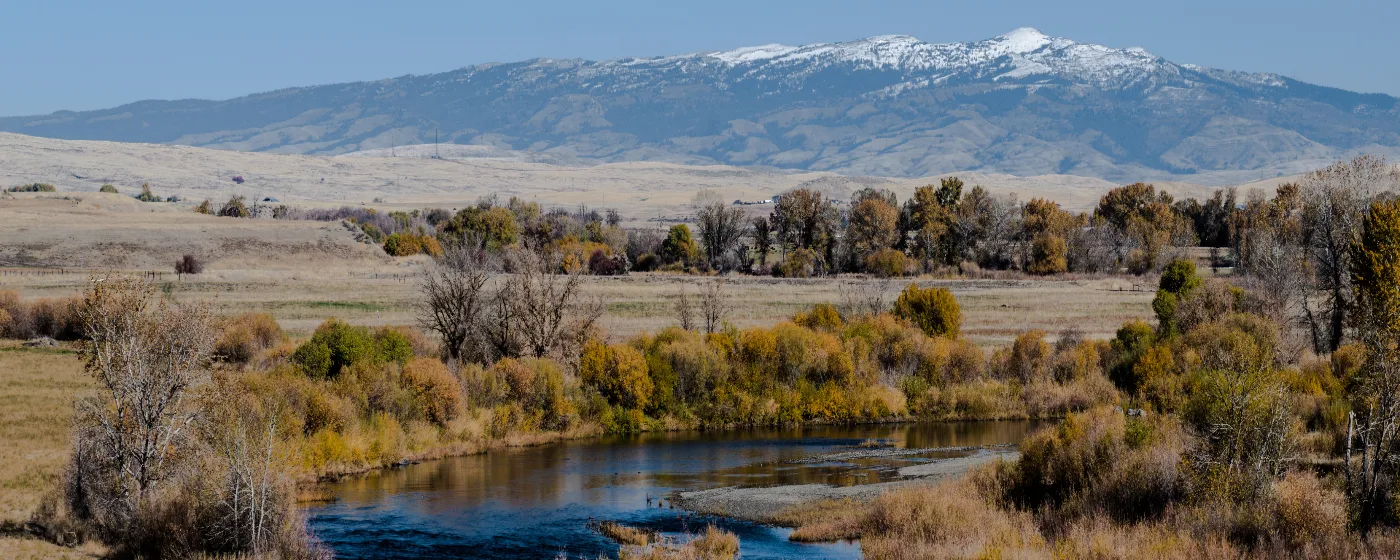
Maybe you've been priced out of the Bay Area, Sacramento, or the Inland Empire and someone mentioned Idaho. Maybe you did the math on your California property taxes and income tax bracket and decided to start over somewhere the numbers actually work in your favor. Whatever brought you here, Weiser, Idaho will surprise you — not because it's a polished suburb trying to attract transplants, but because it isn't. It's a working agricultural city of about 5,900 people sitting where the Weiser River meets the Snake River, right on the Idaho-Oregon border. U.S. Highway 95 connects it north to McCall and south to Ontario, Oregon. Daily life here orbits onion harvests, school calendars, and the rhythms of a place that has not been reshaped by tech money.
The economic backbone is a mix of public-sector and agricultural employment: Weiser School District 431 and Washington County Government anchor the public payroll, while food processing facilities and farming operations — Weiser's onion country is legitimately famous across the Pacific Northwest — drive the private sector. That reality matters to you as a California transplant because Weiser's cost of living benchmarks against local incomes that are significantly lower than what most remote-working Californians earn. The gap between what things cost here and what a California-caliber salary can buy is the defining arithmetic of this move.
On-foot access in Historic Downtown is genuine — the Union Pacific Train Depot, the Snake River Heritage Center, and a handful of independent shops and diners along East Commercial Street are all within a few blocks. The Weiser River Trail extends roughly 84 miles north along a former rail corridor, and the Snake River's high-desert canyon is minutes away. Boise is about 70 minutes east on Highway 95, which means a major airport, costco-level retail, and a full metro medical system are reachable for day trips without being part of daily life. That distance is freedom for some buyers and a friction point for others. Whether you're evaluating a move or deep into the decision, the sections below cover the California-to-Weiser price and tax comparison, lifestyle adjustments, what daily life actually looks like, and the honest downsides you should weigh before signing anything.
The Price Gap: California vs. Weiser in Real Numbers
The single most important number in this comparison: Weiser's typical home value is $329,562 (Zillow Home Value Index, 2025). California's statewide median sits at roughly $776,000. That is not a rounding difference — it is a fundamentally different financial life.
For most California buyers, this gap means arriving with significant equity if you're selling a California home first. A buyer coming out of a Sacramento suburb or a San Diego condo often walks into Weiser with enough cash to purchase outright or put down a substantial down payment and carry a very modest monthly obligation. That shift — from stretching to afford a California mortgage to owning a home comfortably — is what drives the majority of the California-to-Idaho migration that has reshaped Treasure Valley since 2020.
What the Numbers Look Like Side by Side
| Metric | Weiser, Idaho | California |
|---|---|---|
| Typical home value | $329,562 (ZHVI, 2025) | ~$776,000 (statewide median, Jan 2026) |
| Effective property tax rate | 0.60% | ~1.1–1.2% (varies by county) |
| State income tax | 5.3% flat (effective Jan 1, 2025) | 1%–13.3% graduated brackets |
| State Disability Insurance (SDI) | None | 1.3% (2026, no wage cap) |
| Combined sales tax | 6.0% (no local add-on) | 7.25% minimum (often 9–10.5% locally) |
| Overall cost of living index | 85.9 (BestPlaces; 100 = U.S. avg) | ~150–160 (statewide est.) |
* ZHVI = Zillow Home Value Index.
Weiser's 0.60% effective property tax rate means a home purchased at the typical $329,562 value carries an estimated annual tax bill of roughly $1,977 — a figure that would be difficult to match anywhere in coastal California on a comparable purchase. The catch is that Proposition 13 has kept many long-term California homeowners paying artificially low effective rates on homes they bought decades ago; if that's your situation, your actual tax savings from moving to Weiser depend on what you paid in California, not what you'd pay on a new purchase there today.
The Equity-Arbitrage Play
Treasure Valley counties collectively added roughly 109,000 residents between 2020 and 2025 — about 60% of Idaho's total population growth over that period — and a significant share came from California homeowners cashing out. Weiser sits on the western edge of that corridor, 70 minutes from Boise, which means prices here have not run up the way Meridian or Nampa have. For a buyer who wants to maximize purchasing power per dollar of California equity, that relative calm is still intact. The neighborhood breakdown covers what different parts of Weiser feel like on the ground.
State Income Tax: The Calculation Californians Get Wrong
The income tax comparison between Idaho and California is real — but it has a breakeven point that most online articles don't mention, and getting it wrong can cost you.
Idaho levies a flat 5.3% state income tax on all taxable income, effective January 1, 2025, under HB 40. California's brackets are graduated, starting at 1% and reaching 13.3% at the top. If you are earning above roughly $81,000 in taxable income, Idaho's flat rate wins decisively. Below that threshold, California's lower opening brackets can actually produce a smaller state income tax bill — so a worker taking a local Weiser job at local Weiser wages could end up paying more to Idaho than they paid to California.
Where the Savings Are Real
For remote workers, tech employees, self-employed professionals, and anyone whose California-caliber income follows them across the border, the savings are substantial. A household in the 9.3% California bracket drops to 5.3% the day they establish Idaho residency. At higher incomes, that gap widens fast.
The SDI elimination is often overlooked. California's State Disability Insurance rate sits at 1.3% in 2026 with no wage cap — meaning a $500,000 W-2 earner is paying $6,500 per year in SDI alone. That cost disappears entirely in Idaho. For dual-income households earning California-level salaries remotely, the combined income-tax and SDI delta frequently exceeds what most people spend on a year of groceries.
Sales Tax: Smaller Gap, Still Real
Weiser's combined sales tax is 6.0% — Idaho's flat state rate with no county or city add-on layered on top. California's statewide minimum is 7.25%, and many Bay Area and Southern California districts run 9% to 10.75% when local measures are included. The gap is not as dramatic as the income-tax story, but it compounds over time, especially on large purchases. For a fuller look at all the tax line items, the cost of living page breaks them down in detail.
The Residency Timing Trap
California is aggressive about partial-year residency. If you close on a Weiser home in October but kept a California address through December, California can and will tax income earned during that period. This is one of the most common — and expensive — mistakes California transplants make in their move year. Establish your Idaho driver's license, voter registration, and vehicle registration promptly, and document your move date carefully. An accountant who handles cross-state moves is worth the fee that first year.

Daily Life in Weiser: What California Didn't Prepare You For
Six months in, nearly every California transplant says a version of the same thing: they didn't realize how much mental bandwidth they were spending on traffic and noise until it was gone. Weiser's pace is genuinely different, not in a marketing-brochure way but in a functional one — a school pickup that takes four minutes, a grocery run without a parking ordeal, and a Saturday morning where the main street is quiet enough to hear the train depot's old clock.
The Things That Disappear
There is no Trader Joe's in Weiser. The nearest is in the Boise metro, about 70 minutes east. Regional grocery options in nearby Ontario, Oregon, and Payette cover the basics, but if specialty grocery shopping is part of your California weekly routine, that changes here. You plan, you batch, or you make the Boise run once a month.
Restaurant variety is limited. Historic Downtown has a handful of independent spots — the diner at Farmers Cafe on East Commercial Street handles breakfast and lunch in the working-ranch way that Californians either immediately love or quietly miss their old neighborhood taco place over. Weiser Classic Candy on State Street has become the kind of local anchor that turns into a ritual stop on errand days. The dining scene is small; if variety in food was a daily pleasure in California, you'll feel the absence in year one.
What You Gain That No Spreadsheet Shows
The Weiser River Trail — 84 miles north along a former Union Pacific rail corridor — starts practically in town. The Snake River corridor that forms the Idaho-Oregon border is high-desert canyon country, and access is measured in minutes, not hours. Californians who spent their outdoor weekends fighting permit systems and crowded trailheads find that Weiser-area public land feels almost unsupervised by comparison.
The social fabric is tighter than anything most transplants have experienced since childhood. The Weiser Fiddle Festival draws a crowd to the Vendome Events Center every June that locals plan around all year. Washington County's agricultural calendar — planting, harvest, the onion shipping season — creates a shared rhythm that newcomers either plug into or observe from the side. Nobody is going to drag you into it, but it's there if you want it.
The Friction That Catches People Off Guard
Weiser is overwhelmingly conservative politically. If you are moving from the Bay Area or Los Angeles, the cultural shift is significant and daily — not just in election signage but in local conversation, school board culture, and community norms. This is not a reason not to move here; it is something to have clear eyes about before you do. People who move here expecting to find a blue enclave in a red state are disappointed. People who move here understanding what Weiser actually is tend to settle in well.
Looking to buy in Weiser? Estimate your payment.
Enter your numbers to see an estimated monthly mortgage payment.
Estimate only. Excludes HOA fees and mortgage insurance. The interest rate above is a starting point, not a quoted rate — replace it with your own to see real numbers. Insurance is a flat placeholder, not a Weiser quote.
What California Buyers Should Expect from the Weiser Market
Weiser's real estate market operates on a different timeline than anything in coastal California. Listings sit longer. Bidding wars are not a standard feature of the market. A buyer who spent years in California submitting offers sight-unseen over asking price on the day of listing will find Weiser disorienting — in the best possible way.
That said, the California equity advantage means you may be competing with other transplants who can move quickly and pay cash or near-cash. That dynamic has cooled somewhat from the 2021–2022 peak, but it hasn't fully disappeared. A local agent who works the Weiser market regularly will know which pockets have seen transplant pressure and which neighborhoods are still moving at genuinely local pricing.
Property Types You'll Actually Find
The Historic Downtown and Paddock Avenue District have older craftsman and vernacular homes — some well-maintained, some that need work, and a few that have been renovated to a standard that would surprise buyers expecting rural Idaho to mean outdated everything. The Snake River Corridor and West 9th Street areas offer more space and newer construction in some pockets. The Intermountain Institute Area has a distinct character worth walking before you decide. For a detailed look at what each area feels like, the neighborhoods guide covers the on-the-ground differences.
Inspection and Due Diligence Differences
Idaho is a buyer-beware state in a way that California's extensive disclosure regime is not. Sellers are not required to volunteer defects the way they are in California. A thorough independent inspection — not just the lender-required minimum — is essential, especially on older downtown stock. Weiser has homes built in the 1910s through 1940s that have good bones and real character; they also sometimes have wiring, plumbing, and foundation realities that aren't apparent at a walk-through. Budget for discovery.
For California buyers new to Idaho's buying process, the first-time homebuyer guide walks through how the transaction process here differs from what you experienced in California — including earnest money expectations, title company norms, and the absence of some consumer protections Californians take for granted.
The Honest Case Against Moving Here
Weiser is not a city on a growth trajectory that is going to generate California-style equity appreciation. The same low prices that make entry affordable also mean you should not buy here expecting your home to double in value in five years. If building generational wealth through home-price appreciation is a primary goal, the Boise suburbs have a stronger historical case. Weiser makes sense if the goal is low overhead, lower tax burden, paid-off or near-paid-off housing, and a quieter life — not as a real estate investment thesis.
Is Weiser the Right California Exit for You?
The Californians who thrive in Weiser tend to share a few characteristics: they have remote income or a business that travels with them, they genuinely want small-town daily life rather than tolerating it, and they have made peace with the 70-minute drive to Boise for the things Weiser doesn't have. That's not a small list of requirements, but it's a clear one.
Who This Move Works For
| Buyer Profile | Why Weiser Works | Watch Out For |
|---|---|---|
| Commuter Remote professional | California income, Idaho taxes, a paid-off home | Rural broadband can vary by address — verify before closing |
| Families Parents with school-age children | Small district, tight community, low cost overhead | Limited extracurriculars compared to larger districts |
| Nature Outdoor-focused buyers | Snake River, Weiser River Trail, high-desert access | Nearest ski area is a significant drive |
| Value Equity-rich California sellers | Large purchasing power gap; potential to own outright | Appreciation expectations need resetting |
| Quiet Small-town lifestyle seekers | Genuine rural pace, low crime, community rhythm | Cultural and political environment is strongly conservative |
| First Time First-generation homebuyers | Entry prices far below California floor | Income tax break-even is ~$81K — verify your scenario |
Who Should Look Elsewhere
If you're moving from a walkable California urban neighborhood and expecting to replicate that lifestyle, Weiser won't deliver it. Car dependence is real for most errands beyond the immediate downtown blocks. If proximity to a major airport or a wide medical system is a weekly need rather than a monthly one, the 70-minute Boise buffer gets old faster than most transplants expect.
Parents with kids who are deeply invested in competitive athletics or arts programs should check what Weiser School District 431 offers in those specific areas before committing — the schools page covers the district in full. And if your California income is below roughly $81,000 in taxable income, run your numbers carefully; Idaho's flat 5.3% rate does not automatically beat California's graduated brackets at every income level.
The Transplant's Real First Year
Most California arrivals spend the first three months relieved and the next three months recalibrating. The price shock wears off — in reverse. What felt impossibly affordable eventually just feels like what things cost. The second adjustment is social: Weiser is welcoming, but it has its own established networks built around the school, the ag community, the churches, and longtime Washington County families. Breaking in takes longer than proximity to a neighbor's fence line. The people who make it work are the ones who show up — at the fiddle festival, at the high school football game on a Friday night, at the Farmers Cafe counter on a weekday morning — rather than waiting for the town to come to them.
Local Expert Takeaway: The math for a California remote worker or equity-rich seller is hard to argue with: a typical Weiser home at $329,562, an effective property tax rate of 0.60%, a flat 5.3% state income tax, and no SDI surcharge add up to a financial reset that coastal California simply cannot offer. What the math doesn't capture is that Weiser is a small, agricultural, politically conservative Idaho city — not a suburb staging itself for growth. The transplants who are happiest here came for a genuine lifestyle change, not just a cheaper version of what they left. If that's the move you want to make, Weiser delivers. If you're hedging, the Boise suburbs will feel more familiar, at a noticeably higher price.
Quick Takeaways & FAQs
✅ Weiser's typical home value of $329,562 (ZHVI, 2025) is less than half California's statewide median, giving equity-rich California sellers significant purchasing power on arrival.
⚠️ Idaho's flat 5.3% income tax only beats California's graduated rate if your taxable income is above roughly $81,000 — lower earners should run their own numbers before assuming a tax win.
📍 The Farmers Cafe on East Commercial Street is where locals actually gather on weekday mornings — showing up there in your first month will tell you more about Weiser's community culture than any online research.
How much cheaper are homes in Weiser compared to California?
Will I pay less in state income tax if I move from California to Weiser?
Is Weiser far from Boise, and does that matter day to day?
What surprises California transplants most after moving to Weiser?
Is Weiser a good investment if I'm buying primarily to build home equity?
Moving to Idaho?
Tell us what you need help with and we'll connect you with local resources.
