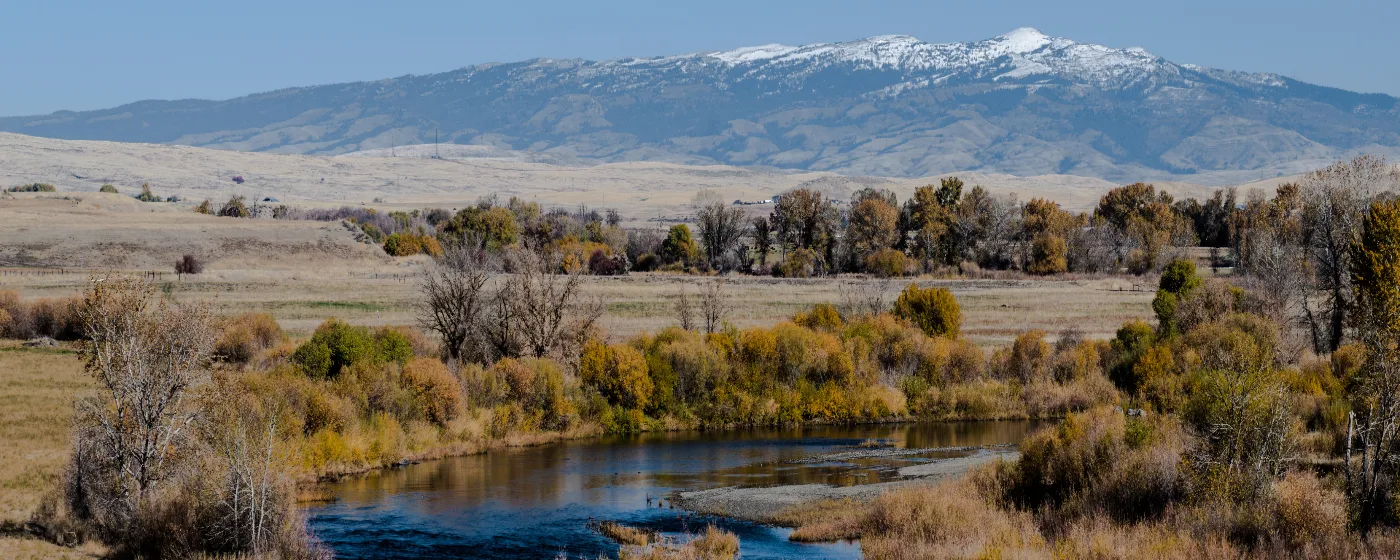
Maybe your spreadsheet already told you Weiser, Idaho makes sense — the home prices are a fraction of what you'd pay in Boise, the property taxes are low, and Idaho's treatment of Social Security income is genuinely favorable. What the spreadsheet doesn't capture is the texture of retirement here: a town of fewer than 6,000 people where the fiddle festival draws more visitors than the population, where Main Street still has a working hardware store, and where the pace slows down in a way that either feels like liberation or like isolation, depending entirely on what you're leaving behind.
Weiser sits at the edge of the Treasure Valley in Washington County, pressed against the Snake River and connected to the larger world by U.S. Highway 95. It's about 70 miles northwest of Boise — close enough for a specialist appointment or a Costco run, but far enough that you're not living in the metro's orbit. The town's largest employer is Weiser Memorial Hospital, which tells you something meaningful: healthcare is woven into the local identity in a way that isn't true of every small Idaho city. The agricultural economy — onion fields, orchards, the Snake River corridor — gives the place a working-town character that retirees from suburban backgrounds sometimes find unexpectedly grounding.
On the cost side, Weiser is meaningfully more affordable than anything in the Boise–Meridian corridor. The Zillow Home Value Index puts the typical home value at $329,562 (2025), and Idaho's effective property tax rate here sits at approximately 0.60% — well below the national average. The full cost-of-living breakdown covers groceries, utilities, and rent in detail; the short version is that a modest fixed income stretches noticeably further here than in most Idaho cities that have caught national attention. The catch — and there is one — is that the amenity layer is thin. No regional mall, no major hospital on-site for complex procedures, and a restaurant scene that runs to a handful of local spots rather than a dining neighborhood.
Whether you're drawn by the price point, the quiet, or the Snake River access, this guide covers everything a retiree needs to evaluate Weiser honestly: healthcare access, the tax picture, daily costs, staying active, downsizing options, and how the town stacks up against nearby retirement alternatives.

Why Retirees Are Choosing Weiser
Weiser fits a specific kind of retiree well: someone who has already scaled down their ambitions for dining out five nights a week and scaled up their appetite for quiet mornings, river access, and a community where people know your name by month three. The annual Weiser Fiddle Contest — the oldest such event in the country — is a reasonable proxy for the culture. It's unpretentious, rooted in place, and genuinely fun if you're the type who enjoys a folding chair and a cooler more than a resort pool.
The financial case is real. At a typical home value of $329,562 (2025 Zillow Home Value Index), a retiree downsizing from a larger or higher-cost market can often purchase without stretching into uncomfortable territory — and the cost of living across daily expenses reinforces that advantage. Homeowners aged 65 and older who qualify for Idaho's Property Tax Reduction Circuit Breaker program can reduce that bill further still. For retirees whose income is primarily Social Security, Idaho's full exemption of those benefits from state income tax is a genuine structural advantage.
Weiser is a harder sell for retirees who need walkable access to diverse medical specialists, want a broad cultural calendar, or are used to the convenience of a large grocery chain within a mile. If your retirement vision involves frequent air travel, the 70-minute drive to Boise Airport is manageable but real. And if mobility declines are already a concern, the limited public transit and car-dependent layout of the city is worth weighing honestly before committing. For the right person — someone valuing affordability, outdoor access, and small-town belonging over urban amenity — Weiser delivers in ways that towns twice its size often don't.
Healthcare & Medical Access in Weiser
What You Have In Town
Weiser Memorial Hospital is the anchor of local healthcare — a 25-bed, not-for-profit Critical Access Hospital (CAH) that has operated continuously since 1950. For a town this size, it punches above its weight. The hospital maintains 24/7 emergency coverage with board-certified emergency physicians, on-site surgical services, full laboratory and radiology capabilities, and a Surgical and Specialty Clinic that brings visiting specialists to Weiser rather than making patients drive to them.
The hospital's Swing Bed rehabilitation program is particularly relevant for retirees: it allows patients recovering from surgery or a health event to transition from acute care to rehabilitation without leaving the building or the community. That's a meaningful detail when you're evaluating small-town healthcare. Weiser Memorial has also added services including oculoplastic surgery, CT bone density scanning, and pain and orthopedic injections — the kind of specialty access that was unheard of in a CAH a decade ago.
The hospital was named to Becker's Healthcare 100 Critical Access Hospitals to Know in the United States, a distinction that fewer than one in fourteen CAHs nationally have received. That credential matters: it signals a level of operational quality that isn't automatic just because a hospital is community-run.
The Honest Distance Reality
For serious cardiac events, complex oncology, neurosurgery, or anything requiring Level II trauma care, Boise is the destination. St. Luke's Regional Medical Center and St. Alphonsus Regional Medical Center — both in the Boise metro — are approximately 70 miles and roughly 70 minutes from Weiser under normal driving conditions. That's a realistic drive for planned specialist appointments. For a true emergency, Weiser Memorial stabilizes and transfers; that's the Critical Access model, and it works, but it's not the same as having a Level II center in town.
Ontario, Oregon, just across the state line, has Saint Alphonsus Medical Center — Ontario, which adds another option for retirees in the region who are closer to the Oregon border. Retirees with complex ongoing health needs — managing multiple specialists, requiring regular infusions, or anticipating orthopedic or cardiac intervention — should factor the Boise drive into their planning before purchasing in Weiser.

The Retiree Budget in Weiser
Social Security and Idaho Income Tax
Idaho exempts Social Security benefits from state income tax entirely — no income test, no phase-out, no means-testing. If your retirement income is primarily or entirely Social Security, you may owe Idaho little to nothing at the state level depending on your total income picture. That's a genuine advantage over states like Montana or Colorado, which tax Social Security under certain conditions.
The catch is that most other retirement income — pension distributions, traditional IRA withdrawals, 401(k) income — is subject to Idaho's flat income tax rate of 5.3% (2025 rate; verify current figures at tax.idaho.gov before filing, as the legislature has adjusted this rate in recent years). Idaho's flat structure kicks in on taxable income above $4,811 for single filers and $9,622 for married filers, so the first dollars of income are effectively untaxed at the state level. For a couple drawing $40,000 from a pension and $30,000 in Social Security, the Idaho tax hit is real but not punishing.
Property Taxes and Circuit Breaker Relief
Weiser's effective property tax rate is approximately 0.60% — roughly half the national average. For homeowners aged 65 or older with qualifying income, Idaho's Property Tax Reduction program (commonly called the Circuit Breaker) reduces the tax on a primary residence by $250 to $1,500 annually. The 2025 income threshold is typically reported around $39,130 for eligibility; applications are filed between January 1 and April 15 at the Washington County Assessor's office. If you're near that threshold, it's worth filing every year — even a $250 reduction adds up over a decade.
Sales Tax and Daily Costs
The combined sales tax rate in Weiser is 6.0%, with no additional county or city layer on top of the Idaho state rate. Prescription drugs and medical products are exempt — a meaningful carve-out for retirees managing chronic conditions. Idaho also offers a grocery tax credit of $155 per resident, claimable on Form 40, which partially offsets what you pay on food at the register. No estate or inheritance tax applies at the Idaho state level, which simplifies estate planning for most Weiser retirees whose estates fall well below the federal threshold. The cost-of-living page goes deeper on rent, utilities, and everyday spending benchmarks for the area.
Looking to buy in Weiser? Estimate your payment.
Enter your numbers to see an estimated monthly mortgage payment.
Estimate only. Excludes HOA fees and mortgage insurance. The interest rate above is a starting point, not a quoted rate — replace it with your own to see real numbers. Insurance is a flat placeholder, not a Weiser quote.
Walkability, Community & Staying Active in Weiser
The Walkability Reality
Weiser is flat — topographically, it presents no hills that would challenge a retiree on foot or on a bike. That's a genuine asset. The downtown core along East Main Street is compact enough that a motivated walker can cover the key blocks without a car: the post office, a pharmacy, the Snake River Heritage Center, and a small cluster of local businesses are all within reasonable distance of each other. But Weiser is not a city where you'd give up a car — grocery shopping, medical appointments, and most errands require driving, and there's no meaningful public transit to fall back on.
The Weiser River Trail is the active-retirement headline. The converted rail-trail runs north from town through the canyon country toward Council, offering flat, paved surface for walking, cycling, and even horseback riding across stretches. Retirees who are serious walkers or cyclists often point to this trail as the thing they didn't expect to love as much as they do. For river access, the Snake River Corridor along the city's eastern edge offers fishing, birdwatching, and the kind of quiet that's hard to find in a larger city.
Community and Social Life
Washington County has a Senior Center that serves as a regular gathering point for local retirees — meals, card games, and the kind of low-key programming that matters more in a small town where informal social infrastructure carries weight. The Vendome Events Center hosts community events that pull people together seasonally. The downtown area has a pizza spot on State Street and a Chinese restaurant on East Main — not a dining scene, but genuine local options for a casual dinner out.
Volunteering is underrated as a retirement strategy in Weiser, and the demand for it is real. Weiser Memorial Hospital and the various agricultural and heritage organizations that run the fiddle festival and the Snake River Heritage Center all rely on committed volunteers. New retirees who plug into one of these organizations tend to build social roots faster than those who wait for the town to come to them. The Galloway House and Pythian Castle draw local history enthusiasts and present ongoing preservation projects that attract a consistent group of engaged older residents.
Right-Sizing: Downsizing in Weiser
What the Market Offers
Weiser's housing stock skews toward older single-family homes — 1950s and 1960s construction is common throughout the Historic Downtown and surrounding residential streets. Many of these are single-story ranch-style homes that suit retirees looking for step-free living without paying a premium for a purpose-built accessible home. At a typical value around $329,562 (2025 Zillow Home Value Index), the market is accessible by the standards of most Idaho cities, and a buyer coming from a higher-cost market with equity to deploy can often purchase outright or with a very modest loan.
The honest constraint is inventory. Weiser does not have a large stock of condominiums, patio homes, or maintenance-free attached housing. If your retirement plan depends on a lock-and-leave property while you travel several months a year, the options are genuinely limited compared to what you'd find in a larger market. Retirees who want a true zero-maintenance lifestyle should ask their agent specifically about what's available before setting expectations around this category.
Assisted Living and Memory Care In Town
For retirees planning ahead — or those whose families are helping evaluate care options — Weiser has two established assisted living and memory care communities within city limits. The Cottages of Weiser, a 32-resident community at 1225 East 6th Street, offers both assisted living and memory care. Indianhead Estates, at 590 West Indianhead Road, provides a 28-resident setting with similar care tiers. Having both options within Washington County means that a spouse or partner who remains in their own home can maintain proximity to a loved one receiving care — something that's not a given in every rural Idaho community.
For retirees who want independent living in a purpose-built community setting, the options in Weiser itself are thin. Payette and Ontario, Oregon offer additional senior housing developments within a reasonable drive, and for a broader selection of active-adult communities and continuing care retirement communities, the Boise metro is the practical answer. Many Weiser retirees treat the local options as a long-term contingency and buy a single-level home on the open market for the independent years — a reasonable approach given how well the price point works here.
Weiser vs Nearby Retirement Destinations
| City | Cost vs Weiser | Primary Hospital | Walkability | Senior Living Depth | Overall Retirement Fit |
|---|---|---|---|---|---|
| Weiser, ID | Anchor | Weiser Memorial Hospital (CAH, 25-bed) | Flat; walkable core, car needed for most errands | Two in-town assisted living / memory care communities | Value Quiet Strong for low-cost, low-key retirement |
| Payette, ID | About the same | No on-site hospital; closest options are in Ontario or the broader region | Similar flat layout; small downtown | Limited; fewer dedicated senior facilities than Weiser | Value Comparable budget, less healthcare infrastructure in town |
| Ontario, OR | About the same | Saint Alphonsus Medical Center — Ontario (stronger specialist depth than Weiser) | Slightly more commercial density; still car-dependent | Several senior living communities in and near town | Community Stronger hospital and more senior housing options |
| Fruitland, ID | About the same | No on-site hospital; relies on Ontario or Boise | Smaller; very limited on-foot access | Minimal dedicated senior living | Quiet Very rural feel; best for buyers who truly want isolation |
| Cambridge, ID | Noticeably cheaper | No hospital; nearest emergency care is Weiser Memorial (~30 mi) | Minimal; tiny community, almost no walkable services | None in town | Nature Privacy Extreme rural retirement only; not for anyone with ongoing medical needs |
| Boise, ID | Pricier | St. Luke's Regional Medical Center and St. Alphonsus Regional Medical Center (Level II trauma) | Far more walkable; some neighborhoods genuinely pedestrian-friendly | Extensive — full spectrum from independent to memory care | Walkable Transit Best healthcare and amenities; highest cost by a wide margin |
Ontario, Oregon is the most direct competitor to Weiser for retirees prioritizing healthcare access: Saint Alphonsus Medical Center — Ontario provides a stronger specialist roster than Weiser Memorial, and the senior living inventory is broader, all at a broadly similar cost of living. Cambridge is for retirees who genuinely want solitude and have minimal ongoing medical needs — it is not a reasonable choice for anyone managing a chronic condition or relying on regular specialist visits.
Boise wins on nearly every amenity metric: hospital depth, walkability, senior housing variety, cultural programming, and airport access. What it can't offer is Weiser's price point or its small-town pace. For retirees who are comfortable with the 70-minute drive to Boise for complex care and who place high value on affordability, quiet, and community rootedness, Weiser competes seriously with anything in this part of Idaho.

Local Expert Takeaway: The retirees who thrive in Weiser are the ones who drove through on Highway 95, pulled off to walk the Weiser River Trail, ate at a local spot, and decided the pace felt right — before they ran the numbers. The numbers cooperate: Idaho exempts Social Security from state income tax, the effective property tax rate sits at approximately 0.60%, and Weiser Memorial Hospital is genuinely better than what you'd expect from a 25-bed Critical Access Hospital. The gap to fill is specialist depth — plan the 70-mile Boise drive into your healthcare routine before you close on a house, not after.
Quick Takeaways & FAQs
✅ Idaho fully exempts Social Security benefits from state income tax, and Weiser's effective property tax rate of approximately 0.60% is roughly half the national average — a real structural advantage for fixed-income retirees.
⚠️ Weiser Memorial Hospital is a strong Critical Access Hospital, but Level II trauma care and full specialist rosters are 70 miles away in Boise — a drive that retirees with complex ongoing medical needs should stress-test before committing.
📍 The Weiser River Trail, converted from a rail corridor, gives retirees a flat, paved route north through canyon country that locals quietly treat as one of the best walking and cycling assets in the Treasure Valley.
Does Idaho tax Social Security income for retirees in Weiser?
What hospital serves Weiser retirees, and how good is it for a town this size?
Are there assisted living or memory care options in Weiser itself?
Does Weiser have a property tax break for seniors?
Is Weiser walkable enough for retirement without a car?
Moving to Idaho?
Tell us what you need help with and we'll connect you with local resources.
