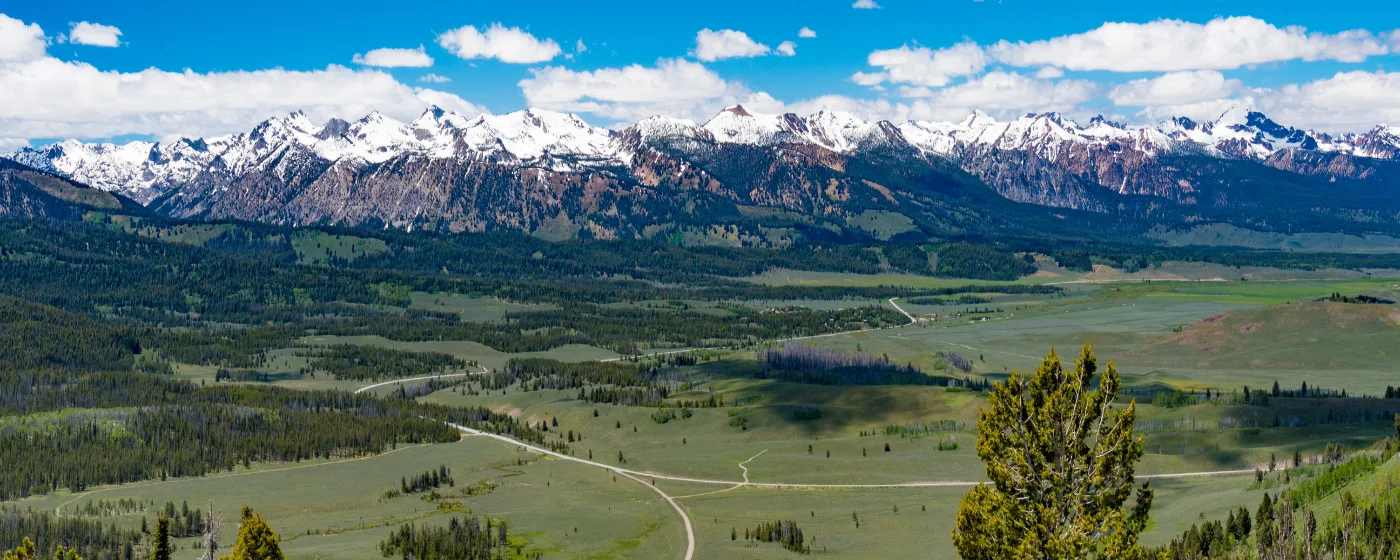
Maybe you found Salmon on a list of affordable Idaho retirement towns and assumed it was just another small town with a gas station and a hardware store. It isn't. Salmon sits at the confluence of the Salmon River and Lemhi River in a high-desert mountain valley, surrounded by the Frank Church–River of No Return Wilderness on three sides, with U.S. Highway 93 as the single artery connecting it to the outside world. That geography is exactly the point — and exactly the warning. This is a place you choose on purpose, not one you stumble into for the commute.
The community already skews older: the median age here is just under 49 for both men and women, which means your neighbors at the Mountain Harvest Community Market downtown or at the Sacajawea Interpretive Cultural and Educational Center on Main Street are more likely to be fellow retirees than young families with strollers. Salmon River Hospital — now operating as Steele Memorial Medical Center — anchors the local healthcare picture, and Lemhi County Government, the U.S. Forest Service, and local outfitters round out the town's working economy. For retirees, the economy mostly matters as context: it keeps the town alive without the traffic and growth pressure that inflate costs elsewhere.
On a fixed income, Salmon's cost structure is one of its most compelling arguments. Total costs run noticeably below the U.S. average, with housing especially affordable compared to the broader Idaho market. The full cost-of-living breakdown covers those figures in detail. The tradeoff is real: you will drive to reach a specialist, a big-box store, or a major airport. Boise is roughly four hours south. Missoula, Montana, is about two and a half hours north. Neither is a quick errand.
This guide covers the retirement-specific picture in depth — who Salmon genuinely suits, what healthcare looks like on the ground, how Idaho's tax code treats retirees, what daily life costs, how downsizing works in a town of 3,300, and how Salmon stacks up against other small Idaho and regional towns that retirees weigh against it.

Why Retirees Are Choosing Salmon
Salmon works best for retirees who made a deliberate choice to leave a bigger place behind — not ones who need the city to be five minutes away. The people who thrive here are typically outdoors-oriented, comfortable with a tight social circle, and genuinely prefer a town where the same faces show up at Wally's Cafe on Main Street and at the Lemhi County Historical Museum volunteer shift.
The financial case is straightforward. The typical home price in Salmon is $329,001 (Zillow Home Value Index, February 2026), which means a retiree selling a home in a higher-cost metro can often buy here outright or carry a very modest mortgage. Combined with Idaho's favorable treatment of Social Security income and one of the lowest effective property tax rates in the region, the monthly cash-flow math tends to work well on a fixed income. The cost-of-living page details how individual expenses compare.
Salmon is a harder fit for retirees who need regular specialist care close to home, want walkable urban amenities, or expect a robust 55+ community with organized social programming. The nearest large hospital system is hours away, and the town has no dedicated active-adult or continuing-care retirement community. If those factors matter more than scenery and low overhead, Challis, Twin Falls, or even the Boise metro are worth weighing seriously before committing.
Healthcare & Medical Access in Salmon
What's Here
Steele Memorial Medical Center is Salmon's anchor healthcare facility — a Medicare-certified critical access hospital with 18 licensed beds on the edge of downtown. It handles emergency services, inpatient care, outpatient services, and surgical procedures, which covers the routine and urgent needs that matter most day-to-day. The hospital has been actively recruiting; it recently brought on a new Family Practice OB physician, a signal that leadership is investing in keeping primary care local rather than assuming residents will drive out.
Salmon River Clinic at 403 Riverfront Drive provides a second primary-care option and celebrated eight continuous years of operation in May 2025. Having two independent primary-care access points in a town of 3,300 is genuinely better than many rural communities this size can claim.
The Honest Distance Reality
For anything beyond primary care, emergency stabilization, and general surgery, you will drive. Cardiology, oncology, orthopedics, neurology, and most imaging beyond basic X-ray typically mean a trip to St. Luke's in Twin Falls (roughly three hours south) or a regional medical center in Missoula (roughly two and a half hours north). Retirees managing a chronic condition that requires quarterly specialist visits need to factor those trips — weather, mountain roads, winter closures — into the retirement-lifestyle calculation, not treat them as footnotes.
Telemedicine has improved rural healthcare access meaningfully, and Steele Memorial does offer telehealth pathways for some follow-up care. Still, a retiree whose health situation demands reliable, same-week specialist access will find Salmon's geography frustrating rather than freeing. That's not a knock on the facility — it's the honest reality of critical access hospital service areas across the rural Mountain West.
Medicare and Insurance Coverage
Steele Memorial's Medicare certification means standard Medicare Parts A and B are accepted, and most Medicare Advantage plans that operate in Idaho include critical access hospitals in their networks. Confirm your specific plan's rural network coverage before relocating — network gaps in low-population counties are real and vary by carrier.
The Retiree Budget in Salmon
How Idaho Treats Retirement Income
Idaho fully exempts Social Security benefits from state income tax, with no income cap on the exemption. That matters most for retirees whose income is primarily Social Security — their state income tax exposure may be minimal or zero. Withdrawals from 401(k)s, IRAs, and private pensions are taxed at Idaho's flat income-tax rate; verify the current rate at tax.idaho.gov before filing, as the rate has been adjusted in recent legislative sessions.
Idaho levies no estate tax, inheritance tax, or gift tax. For retirees with estates to pass along, that simplifies planning considerably compared to states that layer on inheritance taxes after federal obligations.
Property Tax: The Numbers That Matter
Salmon's effective property tax rate is approximately 0.45% — among the lowest in the region. Idaho's Homeowner's Exemption reduces a primary residence's taxable assessed value by 50%, up to a maximum of $125,000, and applies automatically once the county codes your home as a primary residence. For a retiree purchasing at the city's typical price point, that exemption meaningfully shrinks the taxable base before the rate is even applied.
Qualifying retirees can stack a second benefit on top: Idaho's Circuit Breaker Program reduces annual property taxes by $250–$1,500 for homeowners age 65 or older whose income — after allowable medical expense deductions — fell at or below $39,130 in the prior year. Applications go to the Lemhi County Assessor each year between January 1 and April 15. If your retirement income is modest, missing that window is an expensive oversight.
Daily Cost of Living
Salmon's overall cost of living runs approximately 9.6% below the U.S. average and noticeably below the Idaho state average, per BestPlaces. Housing costs are especially below the national norm, and groceries — including locally grown produce available at the Mountain Harvest Community Market in downtown Salmon — run well under the national benchmark. Eating out at Wally's Cafe on Main Street or grabbing a pint at Bertram's Salmon Valley Brewery won't break a retirement budget by regional standards.
Utilities in a mountain-climate home and the inevitable long drives for specialty goods or medical appointments do add up. Budget carefully for fuel — Salmon has no Costco, no Trader Joe's, and the nearest warehouse-club shopping is hours away. Many retirees here batch their Boise or Twin Falls trips quarterly and plan around them rather than treating each as an impulse decision.
Looking to buy in Salmon? Estimate your payment.
Enter your numbers to see an estimated monthly mortgage payment.
Estimate only. Excludes HOA fees and mortgage insurance. The interest rate above is a starting point, not a quoted rate — replace it with your own to see real numbers. Insurance is a flat placeholder, not a Salmon quote.
Walkability, Community & Staying Active in Salmon
The Walkability Reality
Downtown Salmon is flat and genuinely walkable by small-town standards. Main Street runs the core blocks without significant grade change, and the Sacajawea Interpretive Cultural and Educational Center, the Lemhi County Historical Museum, Wally's Cafe, Bertram's Salmon Valley Brewery, and the Mountain Harvest Community Market are all reachable on foot from downtown addresses. If you live in South Salmon or out toward Williams Creek, a car is part of daily life — those areas are suburban in character and spaced accordingly.
For retirees prioritizing car-free errands, a home within six blocks of Main Street is the practical target. Beyond that radius, most daily trips require driving, full stop.
Community Life and Social Anchors
Salmon's median age — hovering near 49 — means the social fabric already tilts toward mid-life and retirement-age residents. The tight population (just over 3,300) means social circles form quickly and tend to hold. Volunteering at the Sacajawea Center or the Historical Museum is a real entry point; both rely on local volunteers and offer structured ways to meet people in the first months after a move.
The Lewis and Clark Back Country Byway, the Salmon River corridor, and the surrounding national forest give active retirees essentially unlimited hiking, fishing, and scenic driving year-round — conditions permitting. The Salmon Hockey Rink draws a community of winter regulars. For retirees coming from urban areas, the social rhythm here is quieter and more self-directed; the town doesn't organize entertainment for you, but it doesn't charge you for it either.
What Surprises People After Six Months
The thing most newcomers don't anticipate: how quickly the valley's rhythm becomes the rhythm. Mornings at Wally's Cafe on Main Street, afternoons on the river corridor trail, evenings where Bertram's Salmon Valley Brewery functions as the de facto town square. After six months, most retirees who chose Salmon intentionally report that the smallness stopped feeling like a limitation and started feeling like the whole point. The ones who leave cite isolation — specifically, the distance from adult children and grandchildren — more than any local deficiency.
Right-Sizing: Downsizing in Salmon
What the Market Actually Offers
Salmon has no dedicated 55+ community or active-adult development in the Sun City mold. There is no gated master-planned retirement neighborhood, no on-site clubhouse with pickleball courts and a pool. What the market does offer is a genuine selection of single-level ranch homes — the kind that work for aging in place — at prices that make right-sizing financially straightforward for buyers coming from higher-cost markets.
Single-story construction is common in older residential blocks, particularly in the areas around downtown and in South Salmon. Many of these homes were built in the mid-20th century and have been maintained or updated over the decades. Buyers downsizing from a larger family home often find they can purchase a well-maintained single-level three-bedroom in Salmon and have equity remaining, depending on their origin market.
Inventory Realities
Salmon's total housing market is small — a town of 3,300 doesn't turn over dozens of homes a month. In any given window, available single-level listings may number in the single digits. Retirees who need a specific configuration (zero-step entry, main-floor laundry, walk-in shower) should expect to be patient or to budget for modifications to an existing home rather than assuming a move-in-ready accessible property will be waiting.
Condos and patio-home developments are limited. The town has some duplex and small multi-unit stock, but purpose-built low-maintenance patio-home communities of the type common in Boise's suburbs don't exist here at scale. If that lock-and-leave lifestyle is non-negotiable, Salmon's housing stock will feel thin. If you're open to a well-located single-story home with a manageable yard, the options are more realistic — and the price point remains among the most accessible in the region for outright ownership.
Planning for the Long Term
Retirees thinking past the first decade of retirement should factor in what happens if driving becomes difficult. Salmon has no public transit system and no rideshare infrastructure. Aging in place here works well through an active, mobile retirement — the calculation changes if mobility is significantly reduced. Some residents in that position relocate to Twin Falls or Boise where assisted-living facilities and transit options are broader. Planning for that transition in advance, rather than waiting until it's urgent, is one of the most practical things a Salmon retiree can do.
Salmon vs Nearby Retirement Destinations
| City | Cost vs Salmon | Primary Hospital | Walkability | Senior Living Depth | Overall Retirement Fit |
|---|---|---|---|---|---|
| Salmon, ID | Anchor | Steele Memorial Medical Center (critical access, 18 beds) | Flat downtown core; car needed outside it | Limited — no 55+ communities; single-level homes available | Nature Value Best for self-directed, active retirees |
| Challis, ID | About the same | Custer County Rural Health Clinic (no inpatient hospital) | Very limited; smaller and more spread out than Salmon | Minimal — smaller market, fewer services | Privacy Even more remote; suits retirees who want maximum solitude |
| Mackay, ID | Noticeably cheaper | Closest hospital in Arco or Salmon (45–60 min) | Very walkable within the small core; few destinations | Minimal — very small town with limited senior resources | Quiet Extreme rural retirement; limited services |
| Twin Falls, ID | Pricier | St. Luke's Magic Valley (full regional medical center) | Moderate — suburban layout, car-dependent but services close | Strong — multiple 55+ communities, assisted living options | Families Commuter Best for retirees who want specialists and senior amenities |
| Boise, ID | Significantly pricier | St. Luke's, St. Al's — full tertiary care | Strong in North End / Downtown; suburban elsewhere | Extensive — full spectrum from 55+ to memory care | Walkable Transit Urban retirement; highest cost, highest services |
| Missoula, MT | Pricier | Regional medical center with full specialist services | Good — university-town walkability, bike infrastructure | Good — growing senior market, active-adult communities | Walkable Views Mountain-town retirement with more urban amenities than Salmon |
Twin Falls is the most direct alternative for retirees who like the Idaho lifestyle but need reliable specialist access or want a structured 55+ community — it delivers both, at a higher price point and without the wilderness setting. Missoula appeals to retirees who want a university-town cultural scene, better walkability, and a full regional hospital, but the cost is noticeably higher and Montana's income tax treatment of retirement income differs from Idaho's.
Challis and Mackay suit retirees seeking even deeper solitude than Salmon offers, but both require accepting that the nearest hospital with inpatient capacity is a significant drive in any direction — a harder trade than most retirees should make without a specific reason. For retirees whose priority list runs outdoor access first, cost second, and community depth third, Salmon sits in a genuinely rare sweet spot that none of its nearest neighbors quite replicate.
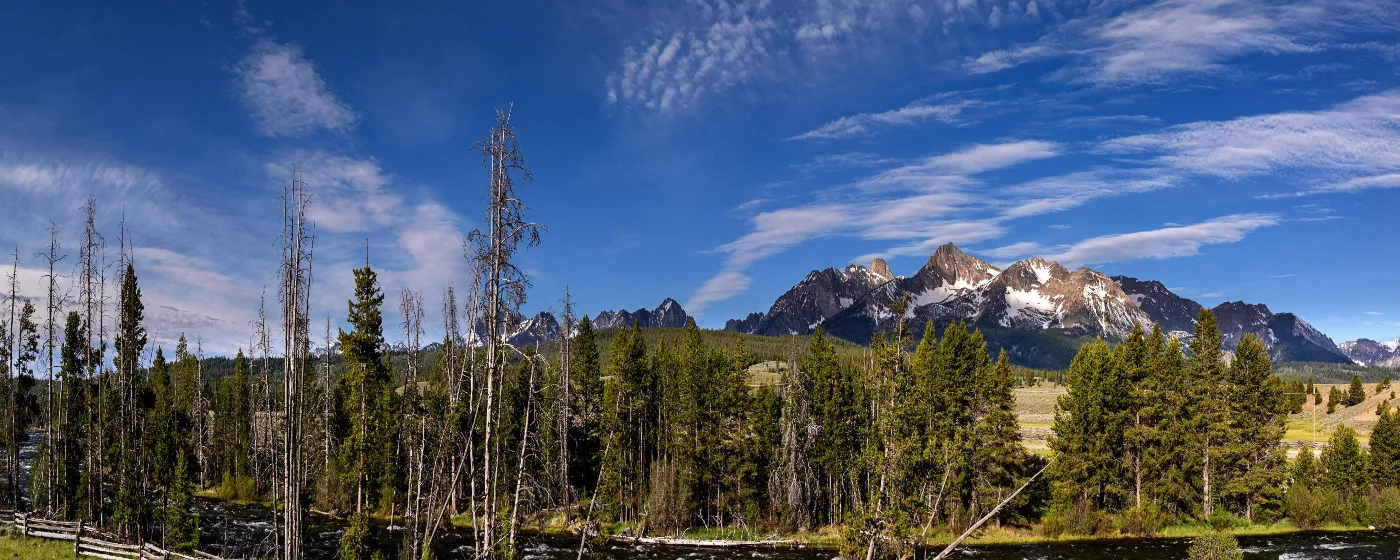
Local Expert Takeaway: Salmon's retirement case comes down to one honest sentence: it's a remarkable place to live if you're healthy, mobile, and deliberately choosing a quieter life — and a difficult one if you need regular specialist care or structured senior amenities. The math works on a fixed income, Idaho's Social Security exemption and the 0.45% property tax rate are among the best in the Mountain West, and the river valley setting that surrounds Steele Memorial Medical Center and Main Street is not something you find at this price point anywhere else in Idaho. Apply for the Circuit Breaker property tax reduction at the Lemhi County Assessor's office before April 15 each year; it's free money that a surprising number of qualifying retirees leave on the table.
Quick Takeaways & FAQs
✅ Idaho fully exempts Social Security benefits from state income tax and Salmon's effective property tax rate of approximately 0.45% makes fixed-income budgeting unusually manageable for a Mountain West town.
⚠️ Steele Memorial Medical Center handles emergencies and primary care well, but specialists in cardiology, oncology, and orthopedics typically require a two-to-three-hour drive to Twin Falls or Missoula — plan accordingly before committing.
📍 Salmon River Clinic at 403 Riverfront Drive and the Mountain Harvest Community Market in downtown Salmon are two anchor stops that give retirees both a second primary-care option and walkable access to locally grown produce within the same compact downtown core.
Is Salmon, Idaho a good place to retire on Social Security?
What hospital is in Salmon, Idaho?
Are there 55+ communities or active-adult developments in Salmon?
What is Idaho's Circuit Breaker property tax program, and do Salmon retirees qualify?
What do retirees who leave Salmon say is the reason they moved away?
Moving to Idaho?
Tell us what you need help with and we'll connect you with local resources.
