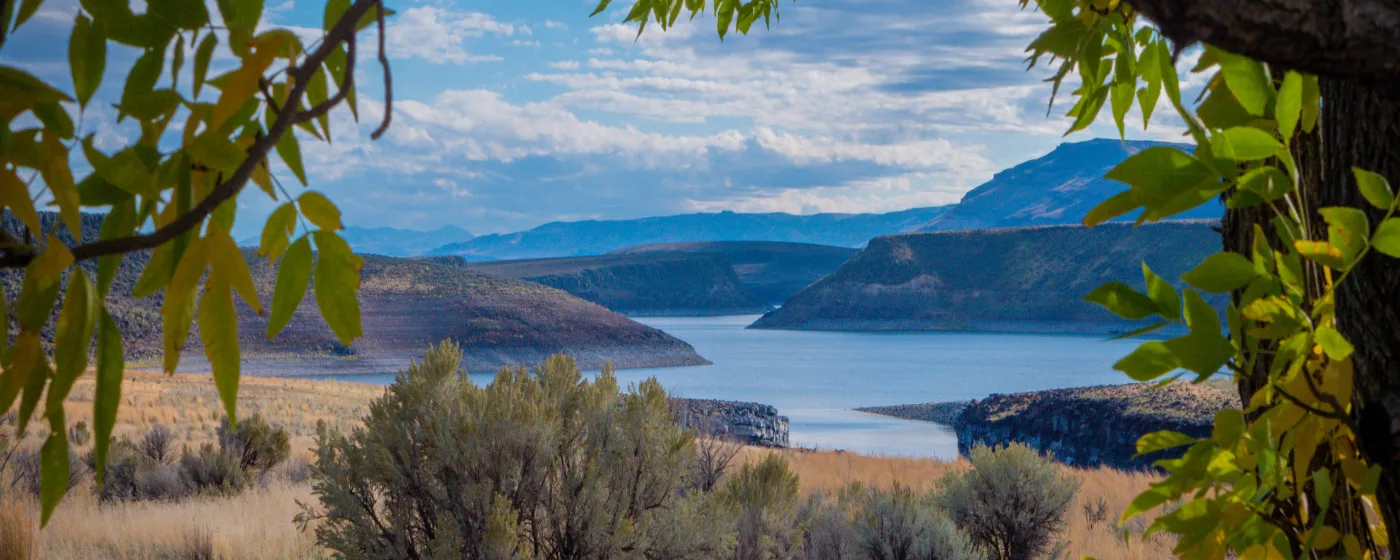
Maybe you've been priced out of Twin Falls and someone mentioned Rupert. Maybe you're relocating for a job at Idahoan Foods or Brewster Cheese and you're trying to figure out where to actually plant roots. Either way, the first thing to understand is that Rupert is a small city — 6,324 people — laid out on a deliberate early-20th-century grid that was literally engineered around irrigation canals. That grid still shapes which streets feel quiet and residential, which feel industrial, and which feel like the civic heart of a town that's genuinely proud of what it built on the high desert.
The city's economic backbone is food manufacturing. Idahoan Foods, Snake River Sugar Company, Gossner Foods, Brewster Cheese, and Gem State Processing all operate here, and they cluster near the southern and western industrial fringe. That matters for buyers because it means the South Side and West Side neighborhoods sit closest to the activity and character of a processing corridor — not a dealbreaker, but worth knowing before you tour a house on those streets. Families with kids in the Minidoka County Joint School District make up a big share of the buyer pool, and they tend to prioritize the neighborhoods with the fastest routes to school campuses.
The citywide median sale price was $266,500 as of January 2026 — noticeably below the state average — which means the conversations here aren't about whether you can afford to buy, but about which block gives you the best combination of condition, quiet, and convenience for what you spend. The miles of dedicated paths for walkers, joggers, and cyclists that service groups have built across the city add real day-to-day value, and Lake Walcott State Park is roughly 15 minutes north, offering kayaking, fishing, disc golf, and camping along the Snake River.
Whether you're comparing a bungalow on the Square to a newer ranch on the South Side, or deciding between East Rupert's established streets and the more rural character of the Jackson area, the sections below break down Rupert's neighborhoods, price bands, buyer types, rental zones, and the specific mistakes to avoid before you make an offer.
The Rupert Reality
The divide that shapes every buying decision in Rupert runs roughly along the industrial corridor between the southern highway-adjacent blocks and the quieter residential interior. It's not a wall — this is a small city, not a sprawling metro — but it is real enough that two houses priced identically can feel like different towns depending on which side of it they sit on.
The second geographic reality is the grid itself. Rupert was platted in 1906 around a central square, and the numbered streets running north-south combined with lettered streets running east-west mean that your position relative to the Square determines almost everything: your on-foot access to the Historic Wilson Theatre, Sofie's Chatterbox on E Street, and the specialty shops in the National Register district; your buffer from the industrial fringe; and your proximity to the canal-side paths that lace through the city.
School boundary awareness matters here more than in larger cities, because the Minidoka County Joint School District serves a wide rural area and school assignments can shift with address. Buyers who assume every block inside city limits feeds the same campus sometimes discover otherwise after closing. Verify the specific assignment for any address you're seriously considering — it's a five-minute call that saves significant regret.
Neighborhoods at a Glance
| Neighborhood | Best For | Price Range | Vibe |
|---|---|---|---|
| Rupert Square | Walkable First-Time | $200,000–$260,000 | Historic, civic, pedestrian-friendly |
| East Rupert | Families Value | $180,000–$250,000 | Established, quiet, residential |
| West Side | Commuter Value | $160,000–$230,000 | Practical, close to industrial employers |
| North End | Nature Families | $210,000–$280,000 | Spacious, near canal paths and Lake Walcott |
| South Side | First-Time Commuter | $155,000–$220,000 | Entry-level, highway-adjacent |
| Jackson area | Privacy Nature | $230,000–$320,000 | Semi-rural, larger lots, open views |
| Myers | Quiet Families | $175,000–$245,000 | Low-traffic, neighborhood-feel |
| Downtown Historic District | Walkable Luxury | $220,000–$300,000 | Architecturally rich, restored, central |
Best Neighborhood by Buyer Type
| Buyer Type | Best Neighborhood | Why |
|---|---|---|
| First-Time Buyer | South Side | Entry-level prices from around $155,000 give first-time buyers the lowest barrier to ownership in the city. |
| Luxury Buyer | Downtown Historic District | Restored early-20th-century homes with Colonial Revival and Art Deco details command the highest per-square-foot prices and the most architectural character in Rupert. |
| Walkability Seeker | Rupert Square | The Square itself — specialty shops, Sofie's Chatterbox, the Wilson Theatre, and the DeMary Memorial Library — is literally walkable from front-door to destination. |
| Families with Kids | North End | Larger lots, lower traffic, canal-side paths, and quick access to Lake Walcott make this an excellent neighborhood for raising school-age children. |
| Work-Close Buyers | West Side | The closest neighborhood to the industrial employers and the I-84 corridor, with no need to cut through the downtown grid to reach either. |
| Large-Lot Buyers | Jackson area | Semi-rural parcels here run significantly larger than anything inside the city grid, with agricultural views and room for outbuildings. |
| Renters | East Rupert | The densest supply of rental stock relative to the neighborhood's size, with established landlords and steady turnover near civic anchors like the Minidoka County Historical Museum. |
Looking to buy in Rupert? Estimate your payment.
Enter your numbers to see an estimated monthly mortgage payment.
Estimate only. Excludes HOA fees and mortgage insurance. The interest rate above is a starting point, not a quoted rate — replace it with your own to see real numbers. Insurance is a flat placeholder, not a Rupert quote.
Most Popular Neighborhoods
1. Rupert Square
Living on or within a block of the Square means your daily errands — a quilting shop, a bookstore, a flower shop, and restaurants — are a short walk, which is genuinely rare in a Magic Valley city of this size. The housing stock skews older and smaller, so buyers who need a three-car garage or a large lot will feel squeezed. Prices typically fall in the $200,000–$260,000 range for bungalows and older single-family homes near the historic core.
Best for: Buyers who want on-foot access to Rupert's civic life and can live without a large footprint.
2. East Rupert
East Rupert is where Rupert's quietly established residential character lives — tree-lined blocks, mid-century ranch homes, and civic anchors like the Minidoka County Historical Museum and the DeMary Memorial Library within easy reach. It's not flashy, which is exactly why families who've been here for decades stay. Expect prices in the $180,000–$250,000 range, with the higher end reflecting updated homes on larger lots.
Best for: Families with kids and buyers who want a stable, low-drama residential block close to everyday amenities.
3. West Side
The West Side is the most practical neighborhood in Rupert — positioned near the I-84 corridor, accessible to the food-manufacturing plants that employ a large share of the local workforce, and priced accordingly in the $160,000–$230,000 range. The neighborhood's character is more utilitarian than residential-cozy, and proximity to industrial activity means the surrounding streets have more working-day movement than the quieter North End or Myers. If keeping housing costs low and living close to your workplace matters most, this is your most efficient base.
Best for: Shift workers at area food processors and buyers who prioritize proximity to the industrial corridor over neighborhood ambiance.
4. North End
The North End is the neighborhood that gets the most out of Rupert's canal-path system and its proximity to Lake Walcott State Park's kayaking, fishing, and disc golf. Lots run larger than the city average and traffic is light, which is why parents with school-age children tend to gravitate here once they can stretch to the $210,000–$280,000 price band. The further north you go, the longer the walk to downtown gets — not a burden for drivers, but something to factor in if you work near the Square.
Best for: Outdoor-oriented families who want space, paths, and a quick drive to Snake River recreation.
5. South Side
The South Side is where Rupert's lowest purchase prices live — entry points around $155,000 make it the first stop for buyers who need to keep monthly costs as low as possible. It's also the neighborhood most directly affected by highway-adjacent noise and the industrial fringe, so the lower prices reflect a real trade-off in day-to-day environment. Homes in the $155,000–$220,000 range here are often older, and many need updating — which can be an opportunity or a burden depending on your tolerance for a project.
Best for: First-time buyers or investors looking for Rupert's lowest barrier to ownership.
6. Jackson Area
The Jackson area sits at the semi-rural edge of Rupert's sphere, where the city grid gives way to larger agricultural-adjacent parcels with open views of the surrounding high desert. Homes here run in the $230,000–$320,000 range and tend to sit on significantly more land than anything on the central grid. The catch is that on-foot access to downtown is essentially zero — this is a drive-everywhere pocket — and the distance from core city services makes it a poor fit for buyers who need frequent urban convenience.
Best for: Buyers who want elbow room, outbuilding potential, and don't mind a short drive for everything.
7. Myers
Myers is Rupert's under-the-radar residential neighborhood — low traffic, consistent housing stock in the $175,000–$245,000 range, and a genuine neighborhood feel that some buyers find in short supply elsewhere in a city this size. It's not walking distance to anything particularly notable, and it lacks the architectural character of the Historic District, but families who've settled here tend to stay for exactly those reasons. If quiet streets matter more to you than proximity to the Square, Myers rewards the compromise.
Best for: Families and buyers who prioritize low-traffic streets and consistent neighborhood character over on-foot access.
8. Downtown Historic District
The Downtown Historic District is Rupert's most architecturally significant neighborhood — 34 contributing buildings spanning Colonial Revival, Art Deco, Early Commercial, and Moderne styles, all within the 15-acre National Register boundary between 5th and 7th Streets. Restored homes here command prices in the $220,000–$300,000 range, and buyers should expect that any renovation will need to navigate historic-preservation considerations. The Wilson Theatre on the Square, Sofie's Chatterbox on E Street, and the Drift Inn on F Street are all walkable, making this the closest thing Rupert has to a live-in-the-middle-of-it-all option.
Best for: Buyers who want Rupert's best architectural bones and on-foot access to everything the city center offers.
Common Mistakes Buyers Make in Rupert
Assuming the Whole City Feels the Same
Rupert is small enough that buyers sometimes tour one neighborhood and assume the rest is identical. The blocks immediately south of the railroad and highway corridor near the West Side and South Side have a fundamentally different feel from the quieter residential streets of the North End or Myers. Spend time on specific blocks before you commit — a single Saturday afternoon drive through one area won't give you the full picture.
Underestimating the Industrial-Fringe Effect
The food-manufacturing plants that anchor Rupert's economy — Idahoan Foods, Snake River Sugar Company, Brewster Cheese — are concentrated near the southern and western industrial fringe. Buyers who tour a West Side or South Side home on a Sunday, when plant activity is minimal, sometimes miss the working-day reality that hits those streets Monday through Friday. If noise or heavy vehicle presence on your street matters to you, prioritize North End or Myers addresses instead.
Chasing Square Footage Over Location on the Grid
At Rupert's price points, it's tempting to maximize square footage and end up on a block that's farther from the canal paths, the Square, or a school route than you'd like. A smaller, well-located house on the north side of the grid — closer to the path system and with a shorter school run — will typically deliver better day-to-day livability than a larger home on an industrial-adjacent block that saved you $20,000 at closing.
Skipping the School-Boundary Verification
The Minidoka County Joint School District serves a wide geographic area, and school assignments inside Rupert's city limits are not uniform by neighborhood. Buyers who assume that any in-city address feeds the same school campus have been surprised after closing. Call the district office with the specific property address before you make an offer — not after — especially if a particular school assignment is part of why you're buying in a specific area.
Best Areas to Rent in Rupert
| Area | Ideal For | Typical Rent Range | Trade-off |
|---|---|---|---|
| Downtown Historic District / Square | Singles, couples, walkability seekers | $750–$1,050/mo | Older building stock; some units lack modern updates |
| East Rupert | Families, longer-term renters | $700–$950/mo | Less turnover means fewer available units at any given time |
| North End | Outdoor-oriented renters, families | $800–$1,100/mo | Highest rents in the city; limited supply of single-family rentals |
| West Side | Plant workers, budget-conscious renters | $650–$875/mo | Industrial-corridor character; more working-day activity on surrounding streets |
| South Side | Budget-conscious renters, first move to the area | $600–$800/mo | Oldest housing stock; highway-adjacent blocks can be noisy |
Rupert's rental market is tight by design — in a city of 6,324 people, total rental inventory is modest, and well-maintained single-family rentals in the North End or East Rupert rarely sit vacant for long. If you're relocating for a manufacturing job and need a place quickly, the West Side and South Side offer the fastest availability and the lowest monthly costs, even if you'll plan to move once you know the city better.
Local Expert Takeaway: Rupert's grid is honest — where you sit relative to the Square, the canal paths, and the industrial fringe tells you almost everything you need to know about a block before you tour the house. Buyers who walk E Street past Sofie's Chatterbox and then drive out to a South Side address on the same afternoon understand the difference immediately. The North End and Myers deliver the best combination of quiet streets and community feel for families with kids; the Downtown Historic District is for buyers who want Rupert's architectural story at a walkable address; and the West Side and South Side make the most sense if your priority is minimizing housing costs or staying close to the industrial employers that anchor the local economy.
Quick Takeaways & FAQs
✅ Rupert's $266,500 median sale price (January 2026) puts full ownership within reach for working households — including first-time buyers — without the financial stretch required in most Idaho markets.
⚠️ The West Side and South Side sit closest to Rupert's industrial employers, which means working-day plant activity and highway noise are real factors on the most affordable blocks.
📍 The Downtown Historic District's 34 contributing buildings span Colonial Revival to Art Deco styles on a 15-acre National Register footprint — an architectural density you won't find anywhere else in Minidoka County.
What is the most affordable neighborhood in Rupert, Idaho?
Which Rupert neighborhood is best for families with school-age children?
Is the Downtown Historic District a good place to buy in Rupert?
Which Rupert neighborhood works best for buyers who work at the local food-processing plants?
What should I know about renting in Rupert before I move?
Moving to Idaho?
Tell us what you need help with and we'll connect you with local resources.
