
Maybe you've been watching Boise prices climb and someone mentioned Pocatello. Maybe Idaho State University brought you to town and renting suddenly feels like a waste. Either way, here's the thing most first-timers don't expect: Pocatello is genuinely affordable by Idaho standards — the typical home value sits at $318,721 (Zillow Home Value Index, 2026) — but "affordable" doesn't mean easy. The market moves faster than out-of-towners assume, and walking in without a pre-approval letter is the single most expensive mistake you can make.
Pocatello sits along I-15 in Bannock County at the convergence of the Portneuf River valley and the Bannock Range. Its economy is anchored by Idaho State University, ON Semiconductor, and Amy's Kitchen — a mix that keeps steady employment without the speculative swings you see in resort towns. That employment base matters for your lender: stable local income profiles make conventional and FHA underwriting here relatively straightforward. Chubbuck sits just north of the city line, so understanding exactly which side of that boundary a listing falls on will affect your municipal services and in some cases your daily logistics.
For a first-time buyer, the practical case for Pocatello is hard to argue with. Prices sit noticeably below the statewide median, giving you more purchasing power than you'd have in the Treasure Valley or Coeur d'Alene. The market carried roughly 174 active listings and 2.6 months of supply as of March 2026 — balanced enough that you're not fighting over every listing, but tight enough that move-in-ready homes still draw competing offers. Zoning here also allows townhomes, two-family homes, and accessory dwelling units alongside single-family houses, which gives entry-level buyers more options than in markets locked into large-lot single-family zoning.
Whether you're budgeting for your first offer or trying to understand the closing process in Bannock County, the sections below break down what your budget actually buys here, the step-by-step local process, a concrete affordability snapshot, and the mistakes that cost first-timers the most in this specific market.
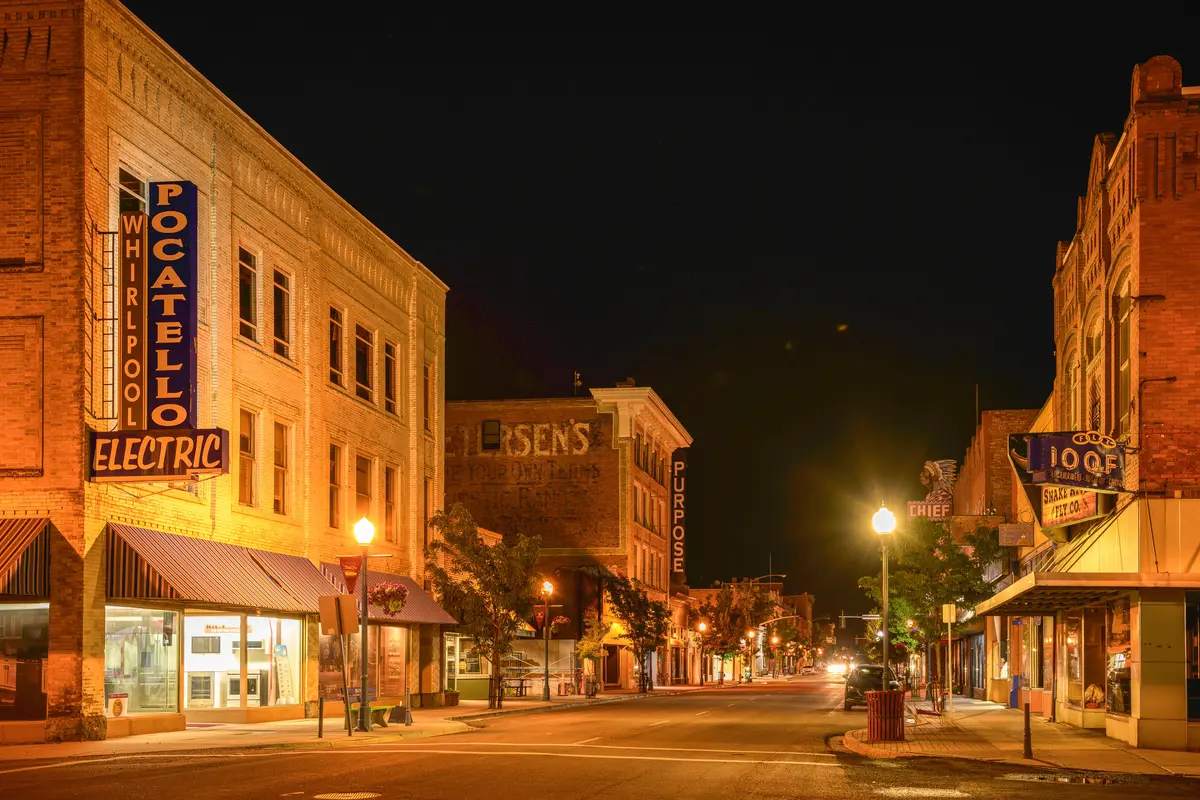
The Pocatello First-Time Buyer Reality
At a typical home value of $318,721 (Zillow Home Value Index, 2026), a 3.5% FHA down payment runs just over $11,000 — and the monthly obligation lands in territory that pencils out for a household earning the city's median income. That combination of accessible price and accessible down payment is genuinely rare in Idaho right now.
The supply picture matters here. With roughly 2.6 months of inventory as of March 2026, this isn't a buyer's market, but it's not the frenzied seller's market of 2021–2022 either. Homes that are priced correctly and in good condition typically go pending in 27–29 days. That's enough time to do your homework — but not enough time to delay getting pre-approved, schedule three weekend visits, and then decide you're ready to write an offer.
The buyers who lose deals in Pocatello aren't outbid by cash investors; they're simply out-prepared by other first-timers who got organized a week earlier. Pre-approval isn't a formality here — it's the difference between being taken seriously and being passed over.
The Homebuying Process in Pocatello, Step by Step
Step 1: Get Pre-Approved Before You Tour Anything
In Pocatello, this isn't a formality — it's a competitive requirement. A pre-approval letter from a lender who has actually pulled your credit and reviewed your income documents is what separates a serious offer from a speculative one. Listing agents here will tell sellers to prioritize pre-approved buyers, and on a home attracting multiple offers, showing up with only a pre-qualification letter can kill your offer before negotiations begin.
Local and regional lenders familiar with Bannock County's property types and the Idaho homeowner's exemption process can sometimes move faster than national online lenders — worth asking about turnaround time when you're shopping rates.
Step 2: Define Your Search by Boundary, Not Just Price
Chubbuck — a separate city directly north of Pocatello — has its own municipal services and utility billing. A home listed as "Pocatello" on a real estate portal may carry a Chubbuck mailing address, or vice versa. Confirm the actual city of record on every listing before you fall in love with it.
Step 3: Write a Clean, Competitive Offer
In a balanced market with 2.6 months of supply, you don't need to waive every protection — but you do need to be decisive. First-timers in Pocatello most commonly stall at the offer stage by asking for too many seller concessions on a fairly-priced home, or by insisting on a 45-day close when the seller wants 30. Talk to your agent about what's typical on the specific listing before you draft terms.
Step 4: Inspection and Appraisal — Don't Skip Either
Pocatello's older housing stock — especially in the North End and University District — can carry surprises: aging electrical panels, original cast-iron drain lines, and foundations that have shifted with the region's freeze-thaw cycles. A thorough inspection by a licensed Idaho home inspector is not negotiable on a home built before 1980. The appraisal, required by your lender, confirms the purchase price is supported by comparable sales; if it comes in low, you'll need to negotiate or cover the gap in cash.
Step 5: Closing — and the Tax Calendar No One Mentions
Idaho closings typically take 30–45 days from accepted offer. One thing that genuinely surprises fall buyers: Bannock County property taxes are billed in two installments — the first half is due December 20, and the second half the following June 20. If you close in October or November, a property tax bill arrives within weeks. Your closing disclosure will show a proration, but the actual county bill still lands in your mailbox.
Also critical: Idaho's homeowner's exemption — which shields 50% of your home's assessed value from taxation, up to $125,000 — does not apply automatically. You must apply with the Bannock County Assessor's Office between January 1 and April 15 of the year following your purchase. Missing that window costs you real money on your tax bill. Put a calendar reminder in your phone the day you close.

How Much Home Can You Afford in Pocatello
The table below shows rough cash requirements at five realistic Pocatello entry points. Closing costs are estimated at 2–3% of the purchase price — a standard range for Idaho transactions that covers lender fees, title insurance, escrow, and prepaid items. These are approximations to help you set a savings target; your actual figures will vary based on your lender, negotiated seller concessions, and the specific transaction.
| Scenario | Purchase Price | Down Payment | Est. Closing Costs | Cash Needed at Table |
|---|---|---|---|---|
| FHA (3.5%) — entry-level | $250,000 | $8,750 (3.5%) | $5,000–$7,500 | ~$13,750–$16,250 |
| Conventional (3%) — entry-level | $250,000 | $7,500 (3%) | $5,000–$7,500 | ~$12,500–$15,000 |
| FHA (3.5%) — near city median | $320,000 | $11,200 (3.5%) | $6,400–$9,600 | ~$17,600–$20,800 |
| Conventional (3%) — near city median | $320,000 | $9,600 (3%) | $6,400–$9,600 | ~$16,000–$19,200 |
| Conventional (5%) — updated mid-range | $360,000 | $18,000 (5%) | $7,200–$10,800 | ~$25,200–$28,800 |
| Conventional (10%) — move-in ready | $400,000 | $40,000 (10%) | $8,000–$12,000 | ~$48,000–$52,000 |
FHA financing in Bannock County allows credit scores as low as 580 with the 3.5% minimum down payment, and the 2026 FHA loan limit for the county is $541,287 — well above any realistic Pocatello purchase price, so you won't hit a ceiling. The interactive mortgage calculator below will let you model monthly principal, interest, taxes, and insurance once you've identified your target price range.
One tax note worth knowing before you run those numbers: the effective property tax rate for a primary residence in Pocatello is approximately 0.71% after the homeowner's exemption and Idaho's HB 292 relief credit are applied — meaningfully lower than what you'd see in many comparable western markets. See the full cost-of-living breakdown for context on how taxes and other expenses stack up.
Looking to buy in Pocatello? Estimate your payment.
Enter your numbers to see an estimated monthly mortgage payment.
Estimate only. Excludes HOA fees and mortgage insurance. The interest rate above is a starting point, not a quoted rate — replace it with your own to see real numbers. Insurance is a flat placeholder, not a Pocatello quote.
Common First-Time Buyer Mistakes in Pocatello
Shopping Without a Pre-Approval Letter
This is the most common and most expensive mistake. Pocatello isn't a market where you can tour homes casually for a month and then scramble to get financing in order when you find the one you want. Desirable homes in the mid-$300,000 range go pending in under four weeks. If you're not pre-approved when you make an offer, a competing buyer who is pre-approved will almost always win — even at the same price.
Waiving the Inspection on Older Stock
Some buyers, spooked by competition, offer to waive the inspection contingency on homes built in the 1950s, 1960s, and 1970s — which make up a meaningful share of inventory in the North End and University District. That's a significant risk in Pocatello specifically. Older homes here can carry original galvanized plumbing, outdated electrical panels, and foundation issues that a competent inspector catches in two hours and that cost tens of thousands to remediate after closing. Keep your inspection contingency; negotiate on price or terms instead.
Ignoring the Chubbuck City-Line Reality
The border between Pocatello and Chubbuck runs through residential neighborhoods in a way that isn't obvious on a map app. Homes on the Chubbuck side have different municipal utility billing and different city services. Buyers who don't verify the actual city of record before writing an offer sometimes end up surprised at closing — confirm it on every listing before you get attached.
Underbudgeting the Cash You'll Need at the Table
First-timers routinely budget for the down payment and forget that closing costs add another 2–3% of the purchase price on top. On a $320,000 home with a 3.5% down payment, you need roughly $11,200 for the down payment plus another $6,400–$9,600 in closing costs — a total closer to $18,000–$21,000. Then add the Bannock County property tax installment that lands in December if you close in fall, and a cash reserve your lender will likely want to see. The buyers who get to closing and scramble are almost always the ones who planned for the down payment and nothing else.
Forgetting to File for the Homeowner's Exemption
Idaho's homeowner's exemption removes up to $125,000 of assessed value from your taxable base — but you have to apply for it. The Bannock County Assessor's Office accepts applications between January 1 and April 15 each year, and the exemption does not transfer automatically when a home changes hands. If you close in August and forget to file by the following April 15, you'll pay taxes on the full assessed value for that year. It's a free application that takes minutes; missing it is the kind of thing buyers kick themselves over for years.

Local Expert Takeaway: Pocatello gives first-time buyers something genuinely hard to find in Idaho right now: a market where a typical home around $318,721 is reachable on a local income without exotic financing. The process itself is straightforward — but only if you're pre-approved before you tour, you keep your inspection contingency on any home built before 1980, and you file for the homeowner's exemption with the Bannock County Assessor by April 15 after your closing. Get those three things right and you're ahead of most first-timers who arrive in this market.
Quick Takeaways & FAQs
✅ Pocatello's typical home value of $318,721 (Zillow Home Value Index, 2026) makes it one of the most accessible entry points for first-time buyers in all of Idaho.
⚠️ The market moves: homes in the mid-$300,000 range go pending in roughly 27–29 days, so buyers who aren't pre-approved before they start touring routinely lose out to those who are.
📍 Idaho's homeowner's exemption — worth up to $125,000 off your assessed value — does not apply automatically at closing; you must file with the Bannock County Assessor between January 1 and April 15 the year after you purchase.
What credit score do I need to buy a home in Pocatello?
How long does it take to buy a home in Pocatello from start to finish?
Is it better to use a local lender or a national online lender in Pocatello?
What does the homeowner's exemption actually save me in Pocatello?
Should I buy in Pocatello or in nearby Chubbuck?
Moving to Idaho?
Tell us what you need help with and we'll connect you with local resources.
