
Maybe you've been renting in Lewiston and someone mentioned Orofino as the place where your dollar stretches further. Maybe you just took a position with the Clearwater National Forest offices and realized you could actually afford to buy. Here's the thing most newcomers don't expect: in a market where the median sold price sits at $255,000 — a fraction of what you'd pay in Boise or Coeur d'Alene — the question isn't whether you can afford to buy in Orofino. The real question is whether you've structured your finances to move fast when the right place comes up, because the inventory pool in a town of 3,260 people is genuinely small.
Orofino's economy leans on stable, government-adjacent employment — corrections, state services, education, federal forest management — and lenders tend to view that kind of income favorably. That stability is also what draws buyers here: predictable employment, a tight-knit community along the Clearwater River, and a cost of living well below the state average. The full cost-of-living breakdown covers what day-to-day expenses look like once you own here.
Active listings range from roughly $129,000 for manufactured homes and fixer-uppers up to multi-million-dollar river properties — which means entry-level buyers have real options, not just leftovers. Homes averaged 64 days on market as of May 2026, which gives you more breathing room than a hot metro market. But with limited total inventory, a desirable three-bedroom in a neighborhood like Michigan Avenue or Johnson Avenue can still attract competing offers when it's priced right. That's why preparation matters more here than speed.
Whether you're a first-time buyer who's never signed a purchase agreement or someone who's looked at homes before but never pulled the trigger, the sections below walk through what your budget actually buys in Orofino, the step-by-step process from pre-approval through closing, a clear budget snapshot table, and the specific mistakes that cost first-timers money or deals in this market.

The Orofino First-Time Buyer Reality
The median sold price in Orofino was $255,000 as of May 2026 — and that number is more meaningful than it first appears. In most Idaho markets that price buys you a starter condo or a home that needs significant work. In Orofino, it typically gets you a modest but livable single-family home with a yard, often within walking distance of Orofino City Park or the Clearwater River corridor. That's a genuinely different lifestyle proposition than what the same budget delivers two hours south.
Entry-level options start well below that figure. Manufactured homes and older fixer-uppers appear in the low-to-mid $100s, and buyers willing to do cosmetic work can find similarly priced properties throughout town. The trade-off: those homes often need updated electrical, plumbing, or roofing, and inspection findings that feel manageable can compound quickly in a rural area where contractor availability is limited.
Competition in Orofino isn't the bidding-war frenzy you'd see in a resort market, but it's also not sleepy. A well-priced, move-in-ready home — say, a three-bedroom near Johnson Avenue or the College Avenue corridor — will move faster than the 64-day average suggests. The buyers losing those homes are almost always the ones who haven't completed pre-approval before they started touring. In a small-inventory market, being ready to write an offer the day you see a home isn't overcautious; it's table stakes.
The Homebuying Process in Orofino, Step by Step
Step 1: Get Pre-Approved Before You Do Anything Else
This is the step first-timers most consistently skip or do halfway. A pre-qualification — where a lender asks about your income and pulls a soft credit inquiry — is not a pre-approval. A full pre-approval means the lender has verified your income documents, reviewed your credit, and issued a conditional commitment to lend. In Orofino, where listing agents know most of the active buyers in town by name, showing up to a seller's table without a pre-approval letter signals that you're not ready.
Credit score preparation matters more than most first-timers realize. A difference of roughly 80 points in your mid-credit score can shift your interest rate by as much as a full percentage point — on a $220,000 loan, that's a meaningful monthly difference over 30 years. Pull your credit reports before you contact a lender, dispute any errors, and pay down revolving balances if you're near a scoring threshold. Give yourself 60–90 days if your credit needs work.
Because Clearwater County qualifies as a USDA Rural Development–eligible area, many income-eligible first-time buyers here can access USDA Section 502 Guaranteed loans, which require zero down payment. The 2026 income limit for a household of one to four people is $122,$800 — well above the local median household income of $53,438 — so most Orofino buyers are likely income-eligible. Confirm current property-specific eligibility with an approved lender before touring, since boundaries update annually. FHA loans (3.5% down, flexible credit requirements) are the practical fallback for buyers who don't qualify for USDA financing or prefer a lower credit threshold.
Step 2: Work With an Agent Who Knows the Local Inventory
In a town this size, your agent's local network matters. Listing agents here often know about homes before they hit the MLS, and a buyer's agent with Orofino relationships can alert you to coming-soon properties. The Idaho Department of Finance licenses all mortgage lenders operating in the state — you don't need to use a local brick-and-mortar lender, but you do need someone familiar with rural loan types, particularly USDA financing.
Step 3: Make the Offer — And Know What to Include
Standard Idaho purchase agreements include an inspection contingency and a financing contingency. Both matter for first-timers, and neither should be waived casually. The inspection period — typically five to ten business days — is your only real opportunity to learn what the home will cost you beyond the purchase price. In a rural market with older housing stock, that matters more than in a newer subdivision.
Step 4: Inspection and Appraisal
Schedule your home inspection immediately after an accepted offer — don't wait. Rural inspectors in Clearwater County book out quickly, and missing your contingency window because you waited three days to call is a real risk. Septic systems, well water quality, and aging roofs are the most common findings in Orofino's older housing stock; budget mentally for the possibility of negotiating repairs or a price reduction after inspection results come back.
Your lender will order the appraisal independently. If the home appraises below the purchase price, you have options: renegotiate the price, cover the difference in cash, or exercise your financing contingency to exit. Don't waive your financing contingency in a market like this — it's the protection that lets you walk away without losing your earnest money if the loan falls through.
Step 5: Closing
Idaho closing timelines typically run 30–45 days from accepted offer. You'll receive a final settlement statement at least three business days before the closing date — read it carefully and compare it to your Loan Estimate from pre-approval. Bring a cashier's check or arrange a wire transfer for the exact amount shown; personal checks are not accepted at closing tables.

How Much Home Can You Afford in Orofino
The table below shows approximate cash requirements for several realistic purchase scenarios in Orofino. Closing costs are estimated at 2–3% of the purchase price for a standard transaction; your actual figure will vary based on lender fees, title insurance, and whether you negotiate seller concessions. These are estimates — your lender's Loan Estimate is the authoritative document once you're in contract.
| Scenario | Purchase Price | Down Payment | Est. Closing Costs | Cash Needed at Table |
|---|---|---|---|---|
| USDA (0% down) — entry fixer | $150,000 | $0 | $3,000–$4,500 | ~$3,000–$4,500 |
| FHA (3.5%) — entry fixer | $150,000 | $5,250 | $3,000–$4,500 | ~$8,250–$9,750 |
| Conventional (3%) — entry fixer | $150,000 | $4,500 | $3,000–$4,500 | ~$7,500–$9,000 |
| USDA (0% down) — near median | $220,000 | $0 | $4,400–$6,600 | ~$4,400–$6,600 |
| FHA (3.5%) — near median | $255,000 | $8,925 | $5,100–$7,650 | ~$14,025–$16,575 |
| Conventional (5%) — move-in ready | $285,000 | $14,250 | $5,700–$8,550 | ~$19,950–$22,$800 |
USDA financing's zero-down structure makes it the lowest cash-to-close option for eligible buyers — but the monthly cost picture is determined by your rate, loan term, and mortgage insurance, which the calculator below will model for you.
One number to carry into your pre-approval meeting: Orofino's effective property tax rate is approximately 0.70%, which is among the lower rates in Idaho. Factor that into your overall housing cost conversation with your lender. The full tax picture is covered on the cost-of-living page.
Looking to buy in Orofino? Estimate your payment.
Enter your numbers to see an estimated monthly mortgage payment.
Estimate only. Excludes HOA fees and mortgage insurance. The interest rate above is a starting point, not a quoted rate — replace it with your own to see real numbers. Insurance is a flat placeholder, not a Orofino quote.
Common First-Time Buyer Mistakes in Orofino
Touring Before You Have a Pre-Approval Letter
In a small market, this one hurts. Orofino's active listing count can drop to a handful of move-in-ready homes at any given time. If you fall in love with a three-bedroom on Michigan Avenue and your pre-approval takes another week to come through, there's a real chance another buyer — who did the work ahead of time — already has an accepted offer. Get the letter first, then tour.
Waiving the Inspection Contingency to Compete
You will occasionally hear that waiving inspection is what it takes to win in a competitive situation. In a market with older housing stock and rural service providers, this is how buyers end up with a septic system replacement or a failing roof they didn't price into their budget. The inspection contingency exists precisely for markets like this one — use it. If a seller won't accept an offer with a standard inspection period, that itself is information worth having.
Underbudgeting for Closing Costs and Reserves
First-timers often focus entirely on the down payment and forget that closing costs add another 2–3% of the purchase price. On a $220,000 home, that's $4,400–$6,600 in additional cash due at closing. Beyond that, lenders typically want to see two to three months of mortgage payments in reserve after closing — money you can't spend on furniture, moving costs, or the repairs you find during inspection. Build that buffer before you start shopping.
Ignoring the Lewiston Commute Reality After Month One
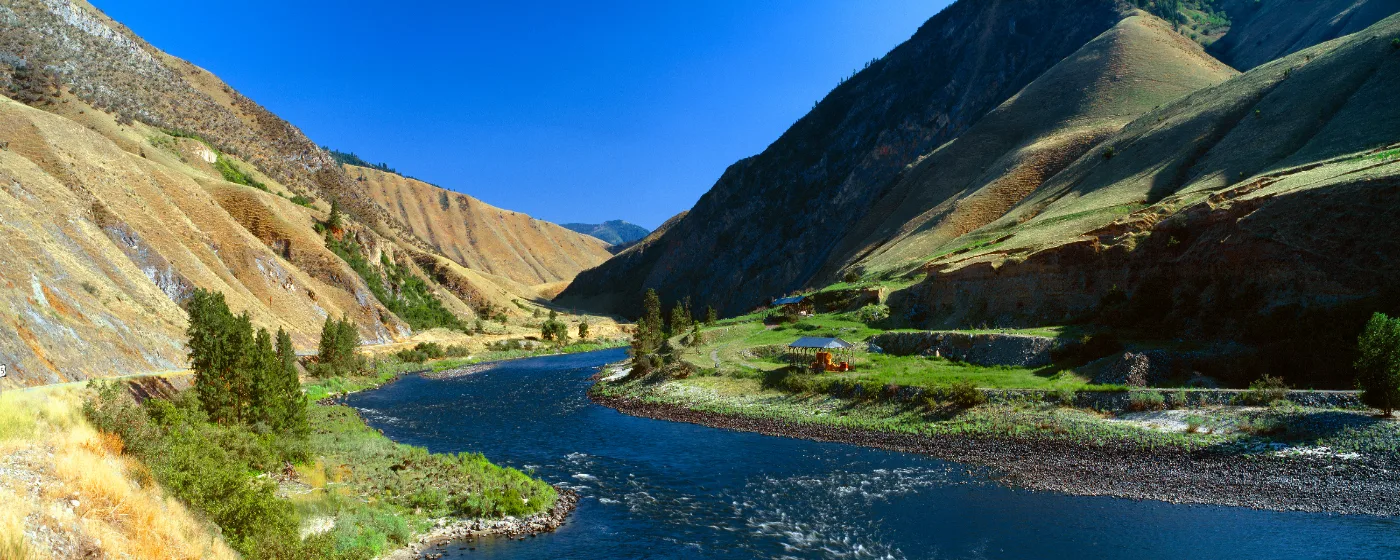
Some first-time buyers choose Orofino primarily for the lower price point and plan to commute to Lewiston for work or services. The drive runs roughly 50 miles each way on US-12 — a scenic route through the Clearwater River canyon that is also prone to seasonal road closures, ice, and rockfall. What feels manageable during a summer house-hunting trip can feel genuinely burdensome in January. If your job or most of your regular errands are in Lewiston, work that commute into your pre-purchase thinking, not your post-purchase regret.
Misreading the USDA Eligibility Window
Clearwater County currently qualifies as a USDA Rural Development–eligible area, and that zero-down loan structure is a genuine advantage for buyers here. But eligibility is property-specific and the USDA updates its maps annually — a property that qualifies today may not qualify next cycle. Don't build your entire financing strategy around USDA without confirming current eligibility with an approved lender for the specific address you're targeting. Have an FHA backup scenario ready.
Local Expert Takeaway: Orofino is one of the few Idaho markets where a first-time buyer earning a median local income can realistically purchase a single-family home without exotic financing — the $255,000 median sold price is accessible, the 64-day average days on market gives you time to do due diligence, and USDA zero-down eligibility covers most of the county. The catch is inventory: when a well-priced three-bedroom near Johnson Avenue or Michigan Avenue hits the market, it doesn't stay available for weeks. Get your pre-approval done before you start driving around. Know your USDA vs. FHA backup plan. And budget for closing costs separately from your down payment — buyers who show up to the table short on cash lose deals at the worst possible moment.
Quick Takeaways & FAQs
✅ At a $255,000 median sold price (May 2026), Orofino is one of the most accessible homeownership markets in North Central Idaho for first-time buyers on a typical local income.
⚠️ Inventory is thin — when a move-in-ready home appears in a neighborhood like Michigan Avenue or Johnson Avenue, buyers without a completed pre-approval letter routinely lose it to someone who prepared first.
📍 Clearwater County qualifies as a USDA Rural Development–eligible area in 2026, making zero-down financing a realistic option for most local income levels — but eligibility is property-specific and must be confirmed with a lender before you make an offer.
What is the minimum credit score needed to buy a home in Orofino?
Can I buy a home in Orofino with no down payment?
How long does it take to buy a home in Orofino from offer to closing?
Are homes in Orofino priced the same as the Zillow estimate I see online?
What closing costs should I expect when buying in Orofino?
Moving to Idaho?
Tell us what you need help with and we'll connect you with local resources.
