
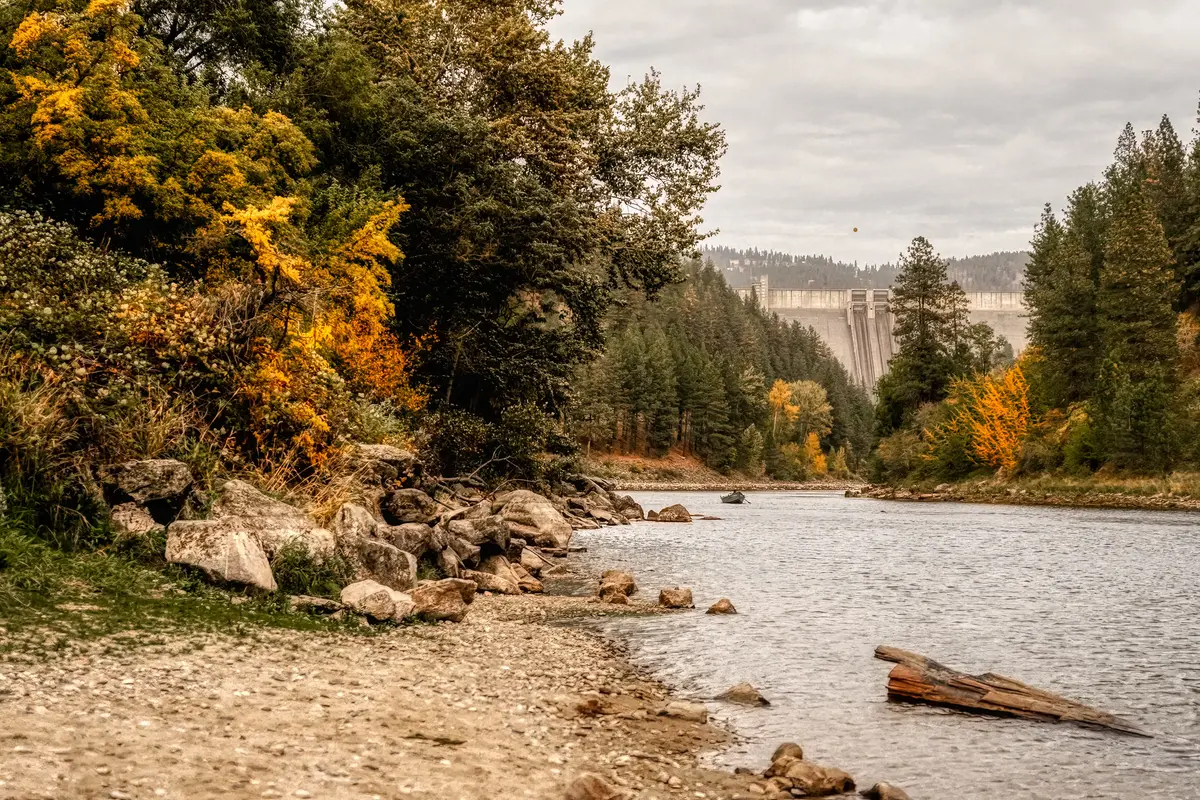
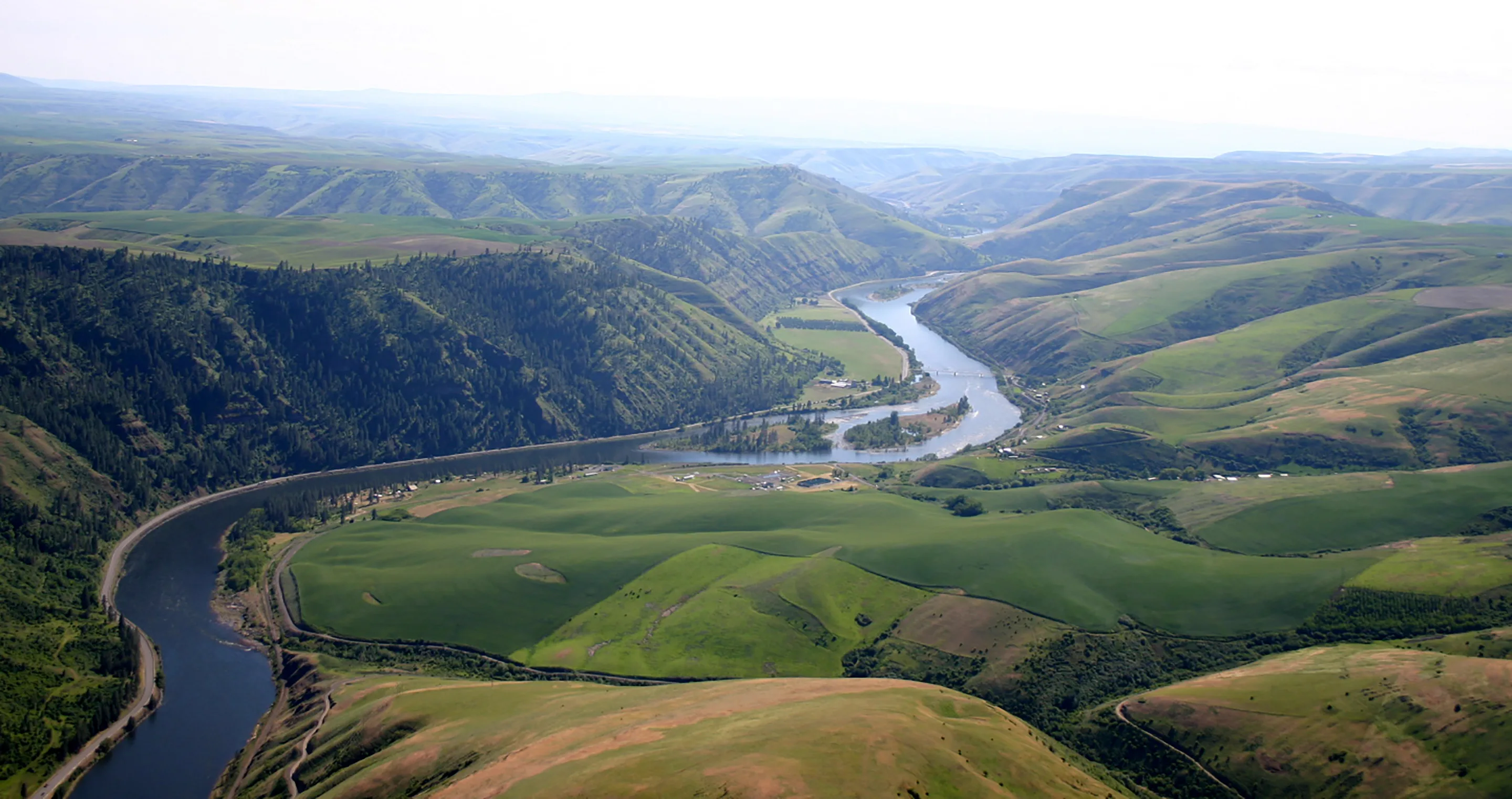
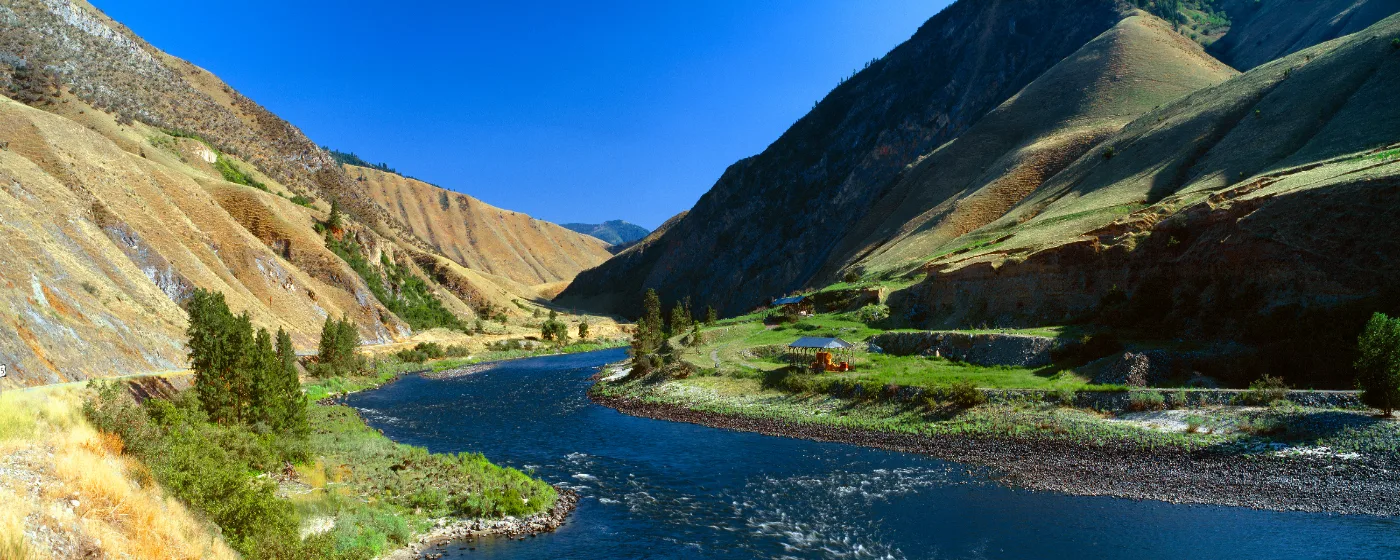
Maybe you've been priced out of Coeur d'Alene or Lewiston and someone mentioned Orofino. Maybe a job posting brought you here and you're trying to decide before you make the drive out. Orofino sits at the confluence of the Clearwater River and its North Fork, tucked into a steep canyon along US Highway 12 — roughly 43 road miles east of Lewiston. The highway is the artery that connects everything here, and the canyon walls that make this place spectacularly scenic are also the geographic reality that keeps the town compact and inventory tight.
With a population of about 3,260, Orofino is the Clearwater County seat. That concentration of institutional and public-sector activity matters when you're buying: proximity to your specific destination, not just "downtown," should shape where you look. Orofino Joint School District #171 serves the whole town, so school-boundary decisions are simpler than in larger cities — for a fuller picture of district performance, see the Orofino schools page.
The median sold price in Orofino was $255,000 as of May 2026 — a figure that looks almost startling if you're arriving from a larger Idaho market. Entry-level older homes and smaller bungalows can come in noticeably below that; larger lots or homes with Clearwater River views push well above it. Outdoor life here revolves around the river, the 54-mile-long Dworshak Reservoir just four miles up the North Fork, and the vast Clearwater National Forest — so the "amenity gap" that would frustrate a Seattle transplant is largely invisible to anyone who came here for water, trees, and quiet. For a deeper look at everyday costs, see the Orofino cost of living page.
Whether you're making an offer or just starting your research, the sections below break down Orofino's neighborhoods by price, character, and buyer type, flag the most common mistakes relocating buyers make, and map out the best areas for renters.
The Orofino Reality
Orofino is not a city where north-side versus south-side distinctions quietly determine school quality or property values the way they do in larger markets. The divide that actually matters here is elevation and flood proximity. The Clearwater River runs directly through the valley floor, and the neighborhoods closest to it — particularly the Riverside corridor — carry real flood-plain considerations that affect insurance costs and long-term peace of mind. Buyers who focus only on the view and miss the FEMA designation often have a rude awakening at closing.
The second reality is the canyon itself. Orofino's buildable land is constrained by the steep hillsides rising on both sides of US-12. Upper Orofino and the ridgeline areas above Johnson Avenue offer the escape from that compression, but they trade on-foot access to downtown and the school for larger lots and cleaner sight lines. Everything in town is within a short drive, but in a place without sidewalk continuity on the hillside streets, "within a short drive" and "walkable" are not the same thing.
The third thing to understand before you buy: essentially every neighborhood in Orofino falls within the same Orofino Joint School District #171, so chasing a school boundary the way buyers do in Boise or Meridian is not a factor here. What you're really choosing between is lot size, flood risk, elevation, and how each neighborhood positions you relative to where you need to be each day — and that framework makes neighborhood decisions in Orofino much more straightforward than buyers from larger cities expect.
Neighborhoods at a Glance
| Neighborhood | Best For | Price Range | Vibe |
|---|---|---|---|
| Downtown Orofino | Walkable First-Time | $180,000–$260,000 | Small-town main street; walkable to dining and Clearwater Historical Museum |
| Riverside | Views Nature | $200,000–$310,000 | River-adjacent, scenic, flood-plain aware |
| Michigan Avenue | Families Value | $175,000–$250,000 | Quiet residential corridor, ranch homes, close to schools |
| Johnson Avenue | First-Time Commuter | $190,000–$265,000 | Mid-valley workhorse; near House of JuJu and everyday services |
| Upper Orofino | Privacy Views | $220,000–$320,000 | Elevated, larger lots, canyon and river views, limited walkability |
| Canoe Camp area | Nature Quiet | $180,000–$270,000 | West-end rural fringe; near the NPS Lewis and Clark historic site on US-12 |
| North Orofino | Commuter Families | $210,000–$290,000 | Practical, north-end location, steady resale demand |
| College Avenue | Quiet Value | $170,000–$245,000 | Understated residential; older stock, calm streets, solid entry-level options |
Best Neighborhood by Buyer Type
| Buyer Type | Best Neighborhood | Why |
|---|---|---|
| First-Time Buyer | College Avenue | The lowest entry-level price band in town keeps the monthly commitment manageable while you learn the market. |
| Luxury Buyer | Upper Orofino | Larger parcels, canyon views, and the most breathing room from the valley-floor density — this is as close to a premium buy as Orofino offers. |
| Walkability Seeker | Downtown Orofino | Dining on the Edge on Main Street, the Clearwater Historical Museum, Orofino City Park, and the Ponderosa Restaurant and Brass Rail Lounge are all within a short walk. |
| Families with Kids | Michigan Avenue | Ranch-style homes on calm streets with quick access to both Orofino Elementary and the junior-senior high school make morning logistics simple. |
| Lewiston Commuters | Canoe Camp area | Positioning yourself on the west end of town near US-12 puts you closer to the highway headed toward Lewiston every single day. |
| Large-Lot Buyers | Upper Orofino | The hillside lots above the valley floor are the only places in town where you can realistically find a full acre without leaving city limits. |
| Renters | Johnson Avenue | The highest concentration of rental stock in town sits along and near Johnson Avenue, giving renters the most options in a thin market. |
Looking to buy in Orofino? Estimate your payment.
Enter your numbers to see an estimated monthly mortgage payment.
Estimate only. Excludes HOA fees and mortgage insurance. The interest rate above is a starting point, not a quoted rate — replace it with your own to see real numbers. Insurance is a flat placeholder, not a Orofino quote.
Most Popular Neighborhoods
1. Downtown Orofino
The walkable core of the city runs along Main Street and the blocks immediately surrounding it, where Dining on the Edge serves Clearwater River views alongside its menu, and the Ponderosa Restaurant and Brass Rail Lounge has anchored the local dining scene for decades. Older bungalows and Craftsman cottages dominate the housing stock, which keeps prices accessible but also means buyers should budget for updates. The catch: lot sizes are small, parking is informal, and US-12 traffic cuts through at all hours.
Best for: On-foot access seekers, first-time buyers comfortable with older homes, anyone who wants to walk to dinner.
2. Riverside
Living next to the Clearwater River is the whole point of this corridor — morning light on the water, quick access to tubing put-ins, and the kind of scenery that makes any long commute feel more bearable when you come home to it. What buyers consistently underestimate is the flood-zone reality: portions of this area carry FEMA flood designations that require separate flood insurance, and that cost adds up over a 30-year ownership window. Prices here reflect the views but not always the insurance math.
Best for: Outdoor enthusiasts who have done the flood-insurance homework, buyers prioritizing lifestyle over lot size.
3. Michigan Avenue
Michigan Avenue is the no-drama neighborhood — a residential corridor of ranch homes on reasonable lots where parents can walk kids to school without crossing the highway. Inventory turns over steadily because the practical appeal is broad: close to schools, close to services, and priced well below what comparable square footage costs in any larger Idaho market. The downside is purely aesthetic — this is functional, not visually dramatic, and if the canyon views are what drew you to Orofino, you won't find them here.
Best for: Parents with school-age children, buyers who prioritize everyday convenience over scenery.
4. Johnson Avenue
Johnson Avenue functions as the mid-valley spine connecting downtown to the highway-side services, and House of JuJu at 235 Johnson Ave — gourmet burgers, salads, and craft beer — is the kind of anchor that makes a neighborhood feel more complete than its size suggests. Rental stock is heavier here than anywhere else in town, which keeps the owner-occupant feel slightly looser but also means more options if you're testing the market before buying. For buyers, prices in the $190,000–$265,000 range are honest for what you get.
Best for: First-time buyers, anyone who wants walkable access to the town's best casual dining, renters looking for available inventory.
5. Upper Orofino
Climb the hillside above the valley floor and the city shrinks into a ribbon of rooftops below you — views of the Clearwater canyon open up in a way that simply doesn't exist at street level. Lots are larger here, the neighborhood is quieter, and the housing stock skews toward more recent construction or substantial older homes that have been maintained. The honest trade-off: you are driving for everything, the roads are steeper and demand more attention in winter, and the $220,000–$320,000 price band reflects a premium that isn't always supported by resale comps when the market softens.
Best for: Buyers wanting large lots and views, remote workers who don't need daily highway access.
6. Canoe Camp area
Four miles west of downtown along US-12, the Canoe Camp area sits at the rural-residential fringe where the Nez Perce National Historical Park component site — where Lewis and Clark's Corps of Discovery carved their dugout canoes in 1805 — is essentially your neighbor along the Northwest Passage Scenic Byway. Properties here tend toward the more rural end: larger lots, fewer street lights, and a sense of separation from the town center that buyers either love immediately or find isolating by month six. Prices hold despite the distance from services, largely because the positioning on the west end of town suits anyone making regular trips toward Lewiston.
Best for: Buyers who want a rural feel without leaving the county seat, Lewiston-direction commuters, history and outdoor enthusiasts.
7. North Orofino
The north end of town sits closer to the institutional and public-sector facilities that anchor much of the local economy, which translates into steady resale demand from incoming residents on assignment or new to the area. Homes here are solidly built, in the $210,000–$290,000 range, and offer real value per square foot. The downside is that the streetscape is purely functional — this is not a neighborhood with strong visual character, but it delivers on the practical appeal that many buyers in this market are actually after.
Best for: Buyers prioritizing north-end proximity and practical resale stability over neighborhood aesthetics.
8. College Avenue
College Avenue is Orofino's quietest, most under-discussed residential pocket — older housing stock, calm streets, and the lowest price ceiling in town at $170,000–$245,000. The neighborhood's character is simply residential calm without a strong identity. That's not a criticism: for a first-time buyer or a buyer who wants low overhead and a low-key block, College Avenue consistently delivers inventory that Downtown and Riverside cannot match at this price.
Best for: Entry-level buyers, anyone prioritizing quiet streets and low price points over proximity to amenities.
Common Mistakes Buyers Make in Orofino
Treating the Flood Plain as a Footnote
Riverside properties along the Clearwater are consistently appealing for a reason buyers only discover post-inspection: FEMA flood zone designations that trigger mandatory flood insurance. In a market where the city-wide median is $255,000, that annual insurance premium is not a rounding error — it reshapes your monthly costs meaningfully. Get the elevation certificate before you fall in love with the river view.
Assuming Every Block Is Equally Convenient
Orofino is small enough that buyers often wave away location as irrelevant. But the town's layout along US-12 means that where you land relative to your daily destinations — schools, services, the north end — does add minutes to every trip. Buying on the wrong side of the corridor for your specific situation is a subtle frustration that compounds over time. Spend a morning driving your actual likely routes before you make an offer.
Chasing Square Footage in Upper Orofino Without Checking Winter Access
The steep streets above the valley floor look manageable in June. By January, after an ice storm, several Upper Orofino hillside approaches require a capable all-wheel or four-wheel-drive vehicle and confident winter driving skills. Buyers who arrive from the Treasure Valley or the Pacific Northwest lowlands consistently underestimate this — verify the grade of your specific street and talk to a neighbor before closing.
Skipping the Inspection on Downtown Bungalows
The Craftsman-era and early ranch homes near Main Street are genuinely appealing, and prices look almost too reasonable. What the listing photos don't show is the deferred maintenance cycle that the combination of canyon humidity and older construction creates — foundation settling, aging wiring, and drainage issues are not rare finds in this vintage of home. Skipping a full inspection to win a multiple-offer situation on a $195,000 bungalow in downtown is the mistake relocating buyers most consistently report regretting.
Best Areas to Rent in Orofino
| Area | Ideal For | Typical Rent Range | Trade-off |
|---|---|---|---|
| Johnson Avenue corridor | Singles, couples, new arrivals testing the market | $750–$1,100/mo (1–2BR) | Most inventory, but also the most tenant turnover and least quiet block |
| Downtown Orofino | Renters who want on-foot access to Main Street dining and services | $800–$1,150/mo (1–2BR) | Older units, limited parking, US-12 noise on some blocks |
| Michigan Avenue | Families with kids, school-proximity seekers | $850–$1,200/mo (2–3BR) | Less rental inventory; units go fast and rarely sit more than a week |
| North Orofino | Residents on short-term assignments needing north-end proximity | $900–$1,250/mo (2–3BR) | Demand from rotating institutional staff keeps vacancy low year-round |
| Canoe Camp / west US-12 fringe | Outdoor enthusiasts, Lewiston-direction commuters who want space | $750–$1,050/mo (2–3BR) | Rural feel means fewer walkable amenities and longer drives for groceries |
Orofino's rental market is thin — this is a town where ownership rates are high and landlords often have standing waitlists rather than vacancy signs. If you're relocating for a new position and want to rent first before buying, start your search 60–90 days ahead of your move date rather than the standard 30; Johnson Avenue is the most reliable place to find an available unit on shorter notice.
Local Expert Takeaway: Orofino's neighborhood decision almost always comes down to three variables: flood risk near the Clearwater, elevation trade-offs in Upper Orofino, and where each area positions you relative to your daily destinations along the US-12 corridor. Downtown's Main Street, anchored by Dining on the Edge and the Ponderosa Restaurant and Brass Rail Lounge, gives the most walkable daily life for the price. House of JuJu on Johnson Avenue marks the center of the town's rental-heavy mid-corridor. And if you're arriving from a larger market and the $255,000 median feels too good to be true, it mostly isn't — but get the flood-zone disclosure and the full inspection before you trust that number.
Quick Takeaways & FAQs
✅ Orofino's $255,000 median sold price (May 2026) delivers genuine square footage and lot size that most Idaho markets above Lewiston simply cannot match at this price point.
⚠️ The rental market is notably tight — units in the Johnson Avenue corridor and near the north end of town rarely sit vacant, and waitlists are common, so plan to search 60–90 days before your move date.
📍 Riverside properties along the Clearwater River carry FEMA flood-zone designations on some parcels — get the elevation certificate and flood-insurance quote before making an offer, not after.
What is the most affordable neighborhood in Orofino, Idaho?
Which Orofino neighborhood is best for families with kids?
Are there flood-zone risks when buying near the Clearwater River in Orofino?
How far is Orofino from Lewiston, and which neighborhood is best for that commute?
Is it better to rent before buying in Orofino?
Moving to Idaho?
Tell us what you need help with and we'll connect you with local resources.
