What Is Living in Orofino, Idaho Like?
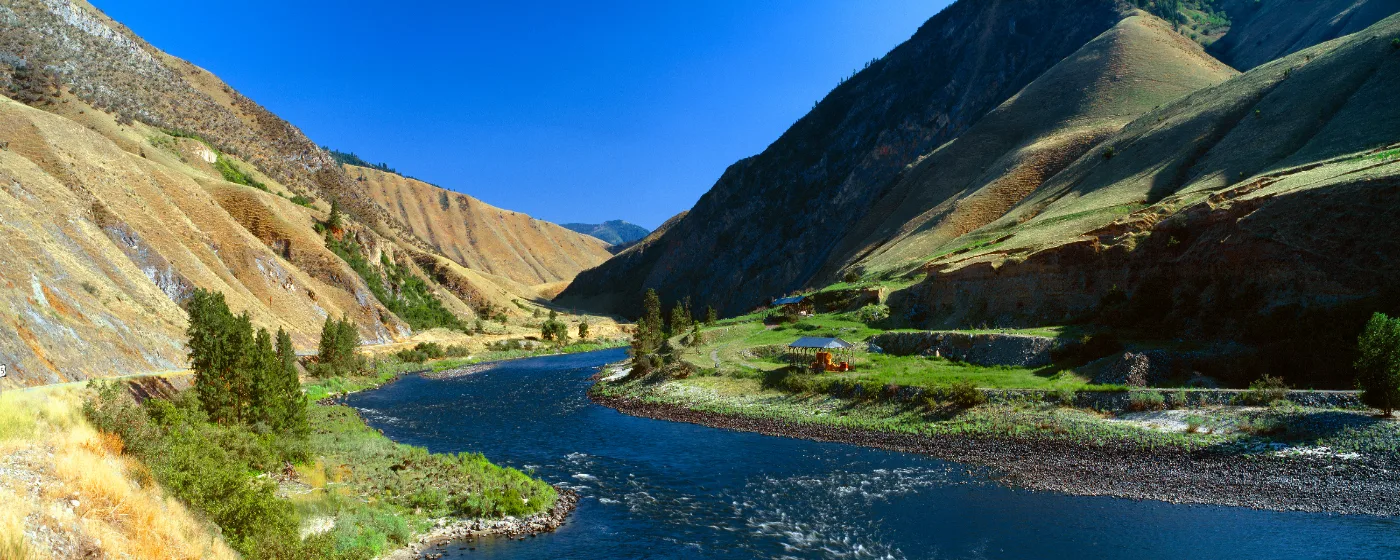
Maybe you've been priced out of the Treasure Valley and someone mentioned a small Idaho river town where a three-bedroom house still costs well under $300,000. Maybe your employer is a state agency and Orofino is where the position is. Either way, the city tends to surprise people who arrive expecting a sleepy backwater. Orofino — whose name means "fine gold" in Spanish, a nod to its gold-rush origins — sits along the Clearwater River at the edge of Clearwater County, roughly 50 miles northeast of Lewiston on U.S. Highway 12. The river defines the geography, the economy leans hard on government work, and the outdoors are genuinely world-class in ways most people outside the region don't know.
The economic backbone here is public-sector employment: Idaho State Hospital North, the Idaho Correctional Institution–Orofino, the Orofino Joint School District #171, a regional hospital, and the Nez Perce-Clearwater National Forests offices are the five largest employers in a city of roughly 3,260 people. That concentration gives Orofino more job stability than many rural Idaho towns its size, but it also means the labor market is narrow. Families with school-age children will want to look carefully at the district — Orofino Joint School District #171 holds a C- rating, according to Niche — before committing. The median age is 44.8, and most residents own their homes, which tells you something about the community's settled, long-rooted character.
The cost of living here is one of the genuine draws for people coming from anywhere west of Boise. The median household income sits at $53,438, and housing is priced well below the Idaho statewide norm — a meaningful gap for anyone watching the Boise market. Day-to-day life means driving almost everywhere: the Clearwater River Trail and Orofino City Park handle most outdoor recreation in town, the Nez Perce-Clearwater National Forests put more than 1,400 miles of maintained trails within range, and the 54-mile-long Dworshak Reservoir five miles west offers boating, fishing, and camping that residents use hard all summer. What the town lacks in commercial density, the landscape compensates for in sheer access.
Whether you're weighing a transfer, escaping higher prices elsewhere, or simply curious what life along the Clearwater actually looks like, the sections below cover Orofino's housing market, daily rhythms, commute realities, top outdoor draws, and who the city genuinely suits.
Orofino at a Glance
Looking to buy in Orofino? Estimate your payment.
Enter your numbers to see an estimated monthly mortgage payment.
Estimate only. Excludes HOA fees and mortgage insurance. The interest rate above is a starting point, not a quoted rate — replace it with your own to see real numbers. Insurance is a flat placeholder, not a Orofino quote.
Why Are People Moving to Orofino?
Most people arrive in Orofino one of three ways: they took a government or corrections job, they retired toward affordability and water access, or they followed someone who did one of those two things. The pattern has been consistent long enough that newcomers often describe the town as friendlier and more welcoming than they expected — partly because nearly everyone here was once the new person too.
The Government-Employment Anchor
Idaho State Hospital North and the Idaho Correctional Institution–Orofino together employ a significant share of the local workforce, and both are state positions with full benefits, defined schedules, and relative job security. The Nez Perce-Clearwater National Forests offices add a federal layer. For anyone already working in mental health, corrections, or federal land management, Orofino offers something rare: a meaningful career alongside some of the best steelhead fishing in the country.
The school district rounds out the public-sector picture as a substantial employer in its own right. That said, anyone moving here for private-sector work will find options limited — most residents who need broader career access commute to Lewiston or work remotely.
Affordability Relative to the Rest of Idaho
The Zillow Home Value Index (ZHVI) for Orofino was $335,598 as of June 2026 — noticeably below the statewide median sale price for Idaho. For buyers priced out of Ada or Canyon County, that gap is real money. The effective property tax rate of approximately 0.70% is modest by national standards, and the cost-of-living breakdown shows a city where a middle-income household can still build equity.
Who This City Actually Suits
| Buyer Type | Why Orofino Works | The Catch | Best For |
|---|---|---|---|
| State/federal employees | Job is already here; stable employer base | Limited upward mobility within the local market | Commuter |
| Outdoor-focused households | Dworshak Reservoir, Clearwater River, 1,400+ trail miles | Nearest urban amenities are 50 miles away | Nature |
| Remote workers | Low housing cost, high quality of outdoor life | Internet reliability varies; rural infrastructure | Value Privacy |
| Retirees downsizing | Affordability, slow pace, river access | Healthcare specialists require Lewiston trip; see retiring in Orofino | Quiet |
| Families with kids | Tight-knit community, outdoor lifestyle | School district rating warrants research; see schools page | Families |
| First-time buyers on a budget | Entry-level homes exist well below Idaho norms | Buyer pool is small; market moves slowly | First-Time Value |
Orofino tends to disappoint buyers who assumed "affordable Idaho" means "convenient Idaho." The trade-off is real: lower prices in exchange for fewer services, longer supply runs, and a 50-minute drive to Lewiston for anything from a regional hospital visit to a big-box shopping trip.
What Locals Know After Six Months
The seasonal rhythm catches newcomers off guard. Spring runoff on the Clearwater and occasional road-impacting weather events — a March 2026 disaster left county infrastructure with an estimated $5.8 million in road damage — are part of the North Central Idaho reality. Buyers of outlying properties in particular should ask direct questions about road access and maintenance before closing.
What Daily Life Feels Like in Orofino
Orofino operates at a pace that people either settle into quickly or find quietly frustrating. The grocery run, the hardware store, the morning coffee stop — all of it happens within a town small enough that you'll recognize faces within a few weeks. That familiarity is one of the things longtime residents cite most often when explaining why they stayed.
The Everyday Rhythm
The commercial center runs along Michigan Avenue and into downtown, where a handful of local diners, service businesses, and the post office create the closest thing Orofino has to a walkable main street. Fiesta En Jalisco on Johnson Avenue has been a local institution since 1994 — the kind of place where you'll find county workers at lunch and families on Friday nights. For anything beyond basic daily needs, most residents build a Lewiston trip into their week.
The Clearwater Historical Museum in downtown offers a grounded look at the region's gold-rush and timber history, and Bicentennial Historical Park marks the Lewis and Clark connection — the Corps camped at what's now called Canoe Camp in September 1805, building the dugout canoes that carried them toward the Pacific. These aren't tourist-brochure footnotes; they're the kind of local history that gives a small city its sense of place.
Community Gathering Points
Orofino City Park along the river is where summer actually happens: the 4th of July fireworks and Rotary BBQ draws essentially the whole town, and Lumberjack Days each fall is a genuine community event rather than a manufactured festival. These two occasions are when you'll understand what 3,260 people in the same small valley actually looks like.
Parents with school-age children find that youth sports through the IHSAA — the Idaho High School Activities Association — create the same social infrastructure they'd have in a larger Idaho city. The scale is just smaller, which means your kid is more likely to make varsity as a sophomore but also more likely to play multiple sports out of necessity.
The Trade-Offs Worth Naming
Dining options are genuinely limited. Orofino has local spots, but the restaurant category is thin, and variety requires a drive. The same applies to shopping: this is not a city where you can source specialty groceries, independent bookstores, or a wide range of retail without planning ahead. People who move here from metros occasionally describe month three as the point when the novelty of the landscape gives way to the reality of the logistics.
The flip side: if your weekend is built around the water, the forest, or the river — rather than around brunch options and retail — Orofino's daily life fits better than almost anywhere in Idaho at this price point.
The Orofino Housing Market Right Now
The Orofino housing market in mid-2026 is one of the more buyer-friendly in Idaho, and it's been that way long enough that the pace feels structural rather than cyclical. The median sale price was $255,000 (Homes.com, May 2026), while the Zillow Home Value Index (ZHVI) registered $335,598 as of June 2026 — the two figures measure different things, but together they frame a market where entry-level ownership is still genuinely achievable.
* ZHVI = Zillow Home Value Index.
Homes here spent a median of 97 days on the market in July 2026 — roughly twice the Idaho statewide median of 49 days. That slower pace gives buyers time to negotiate and inspect without the pressure that defines markets to the south. Multiple-offer situations happen, but they're the exception rather than the rule.
What the Inventory Looks Like
Most of Orofino's housing stock is older single-family construction — wood-frame homes from the 1950s through the 1980s, often on established lots with mature trees and river or hillside views. New construction is limited. Some areas cost meaningfully more than others depending on proximity to the river and elevation, but the full neighborhood breakdown covers those distinctions in detail.
The rental market is small. Median gross rent runs approximately $1,060 per month, and available units turn over infrequently — most households here own. If you're planning to rent first while deciding whether to buy, inventory will be the constraint, not price.
Due-Diligence Note for Outlying Properties
A March 2026 disaster event caused an estimated $5.8 million in road and infrastructure damage across Clearwater County. A separate FEMA claim from a December 2025 windstorm remained unresolved as of spring 2026. Buyers considering properties on county or district roads outside city limits should ask directly about road condition, maintenance responsibility, and any ongoing repair timelines before making an offer. This is the kind of local context that doesn't show up in a listing but matters considerably once you've closed.
The effective property tax rate of approximately 0.70% is among the lower rates in Idaho. For a fuller look at taxes, utilities, and how Orofino's costs compare to statewide benchmarks, the cost-of-living page has the complete picture.
Orofino Neighborhoods
Orofino has several distinct areas — each with its own character and appeal. Here’s a breakdown to help you narrow down where to focus your home search.
🏡 Downtown Orofino
The commercial and civic core of town, where Michigan Avenue runs past local diners, the post office, and the Clearwater Historical Museum. Housing here skews older and smaller, making it a fit for buyers who want to walk to what few errands can be done on foot.
🏠 Riverside
Properties closest to the Clearwater River attract buyers drawn to water access and the views that come with canyon-edge living. Expect older homes on established lots with the kind of river-morning feel that's hard to replicate anywhere else in the city.
🌳 Michigan Avenue
The main commercial corridor doubles as a residential address on its quieter blocks, with a mix of older single-family homes and small businesses. Convenient for daily errands within Orofino's modest commercial footprint.
🏘 Johnson Avenue
A residential street that includes Fiesta En Jalisco, Orofino's most established restaurant, anchoring a neighborhood with a lived-in, working-community feel. A practical choice for state or county employees who want a short drive to the major government employers.
🏔 Upper Orofino
Homes on the hillside above the canyon floor trade river-level access for elevated views across the Clearwater valley. The tradeoff is a steeper driveway in winter — a real consideration for anyone commuting early mornings.
🌆 Canoe Camp area
The westward edge of the city near the Lewis and Clark historic site, with a quieter residential character and proximity to the river corridor. Buyers here get the historical context of one of the West's most significant expedition campsites as a literal neighbor.
Pros & Cons of Living in Orofino
The Pros
- Low cost of living and affordable housing below state median
- Direct access to Clearwater River fishing and Dworshak Reservoir recreation
- Small-town atmosphere with tight-knit community and local festivals
- Low property taxes at 0.7% effective rate
The Cons
- Limited job market with economy reliant on government institutions
- School district ranks in bottom half statewide with 72% graduation rate
- Remote location 50 minutes from nearest city Lewiston
Getting Around & Commuting in Orofino
A car isn't a convenience in Orofino — it's a requirement. There is no meaningful public transit, no rideshare coverage worth planning around, and the geography of the Clearwater Canyon means that even short distances sometimes involve elevation changes and winding two-lane roads. The average local commute within the city is under 20 minutes, which sounds ideal until you remember that Lewiston is 50 minutes away.
The Lewiston Commute Reality
U.S. Highway 12 is the artery that connects Orofino to the rest of the region. The drive to Lewiston follows the Clearwater River canyon — it's one of the more scenic commutes in Idaho, which is genuinely nice in September and considerably less nice in February. The road itself is generally well-maintained, but canyon weather and occasional rock-slide conditions mean it pays to check conditions before an early-morning drive in winter.
State and federal employees whose agencies are based in Orofino obviously avoid the Lewiston run entirely. But anyone commuting for healthcare, retail employment, or professional services will spend real time on Highway 12. Factor that into your decision if the job is in Lewiston and the house is in Orofino: the round trip adds up across a work week.
Intra-City Movement
Within Orofino, most errands are genuinely quick. The city is compact enough that getting from a residential neighborhood to downtown, the school, or the city park rarely takes more than five to ten minutes. Michigan Avenue carries the heaviest traffic in town; the blocks around the bridge and the state hospital campus see the most consistent congestion during shift changes.
Cyclists and walkers use the Clearwater River corridor for recreation, but on-foot errands to most destinations aren't realistic — the topography and the layout of businesses make walking a weekend activity rather than a daily transport mode.
Air Travel
The nearest commercial airport is Lewiston–Nez Perce County Regional Airport (LWS), approximately 50 miles away. LWS offers limited direct connections; most travel to major destinations involves a connection through Seattle, Portland, or Salt Lake City. For residents who fly frequently for work or family, that adds a planning layer — you're not driving to an airport and catching a direct flight; you're building in a connection almost every time.
Remote Work Considerations
Internet reliability in Orofino and the surrounding county has improved but remains uneven. Fiber access exists in parts of the city; rural and canyon-adjacent properties can still be limited to satellite or fixed wireless. Anyone planning to work remotely full-time should confirm connectivity at a specific address before buying — the category answer of "internet is available" doesn't tell you whether a video call will drop during peak hours.
Schools in Orofino
Families relocating to Orofino have public, private, and higher-education options nearby. Here’s a quick overview.
🎓 School District
Orofino Joint School District #171 serves K–12 students across Orofino and the surrounding area. Rated C- (source: Niche.com).
🏆 Graduation Rate
The 4-year high-school graduation rate here is approximately 88%.
📚 Higher Education
Idaho’s public universities — Boise State, the University of Idaho, and Idaho State — offer four-year degrees statewide, with community colleges (CWI, CSI, NIC) providing two-year and workforce programs.
🌐 Online Learning
Boise State Online and University of Idaho Online offer fully accredited online degrees for remote learners across the state.
Safety in Orofino
A quick look at how Orofino compares on the numbers that matter most when weighing a neighborhood or a move.
🛡 Violent Crime
Approximately 3.6 per 1,000 residents.
🔒 Property Crime
Approximately 4.5 per 1,000 residents.
Compared to the FBI’s most recent national data (2024), Orofino’s violent crime is about the same as the national average (about 3.6 per 1,000), and property crime is below the national average (about 17.6 per 1,000).
Against Idaho as a whole, Orofino’s violent crime is about one and a half times the state average, and property crime is roughly half the state average (Bureau of Justice Statistics, Crime Known to Law Enforcement, 2024 (tables 2 and 3)).
Crime rates can vary a lot within a single city, so the citywide numbers above are only a starting point. Some neighborhoods in Orofino run well below these averages, while others run higher — the kind of block-by-block detail that matters most when you’re actually choosing where to live. The full guide below breaks it down neighborhood by neighborhood.
Working in Orofino
Orofino’s largest employers span several industries — here are some of the anchors of the local job market.
🏥 Idaho State Hospital North
Mental health
💼 Idaho Correctional Institution-Orofino
Corrections
🎓 Orofino Joint School District #171
Education
🏥 Clearwater Valley Hospital
Healthcare
💼 Clearwater National Forest offices
Federal
Parks & Recreation in Orofino
Some of the outdoor spaces that shape everyday life in Orofino.
🌱 Clearwater River
🌱 Orofino City Park
🌱 Bicentennial Historical Park
Orofino residents don’t have to go far for green space — spots like Clearwater River and Orofino City Park are part of everyday life here, whether that’s a morning walk, a weekend hike, or just somewhere to unwind outside. The full guide below covers more of what Orofino has to offer for parks and outdoor recreation.
Retiring in Orofino
Orofino draws retirees for its balance of amenities, outdoor access, and cost. Here’s what to weigh.
🌤 Climate
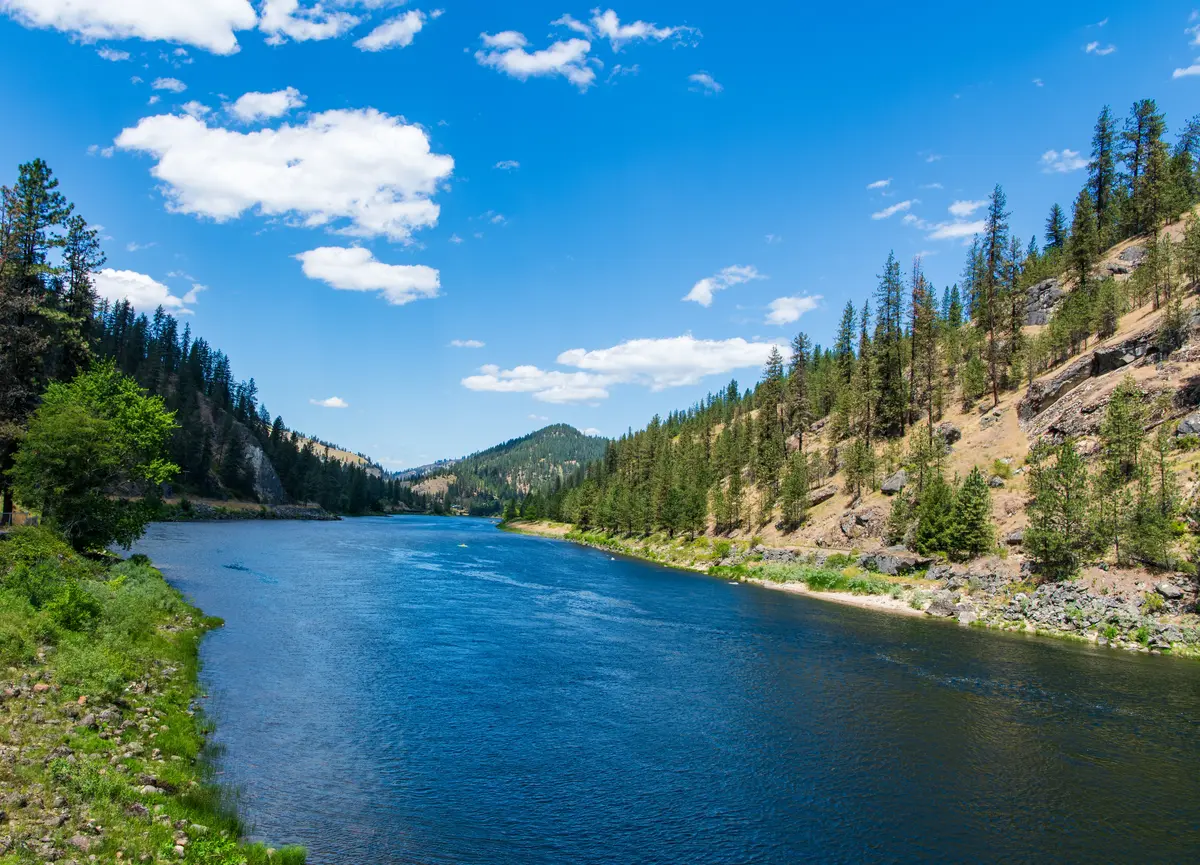
Orofino sits in the Clearwater River canyon at a relatively low elevation for North Central Idaho, which moderates its winters compared to higher-elevation Idaho towns. Summers are warm and dry with long days well-suited to reservoir and river life. Winter brings canyon fog, occasional ice on Highway 12, and stretches of grey that newcomers from sunnier climates notice more than longtime residents do.
🍴 Lifestyle
Daily life here centers on the river, the reservoir, and a compact downtown with local diners and community events like the annual Lumberjack Days festival and the 4th of July Rotary BBQ. Cultural amenities are modest — the Clearwater Historical Museum is the main attraction — but the outdoor lifestyle is genuinely exceptional for retirees who want active years rather than convenient ones.
🏚 55+ Communities
Orofino doesn't have a large-scale active-adult community in the Sun City sense, but its median age of 44.8 and high homeownership rate reflect a settled, older-skewing population. Retirees tend to integrate into the broader community rather than a dedicated 55+ development. Single-story homes and properties with river or hillside views come up in the general market.
✈ Getting Around
A personal vehicle is essential — there is no local transit system. Within town, everything is close and traffic is light. The nearest commercial airport is Lewiston–Nez Perce County Regional Airport (LWS), approximately 50 miles away, with connections primarily through Pacific Northwest and Mountain West hubs.
🏛 Idaho Taxes for Retirees — What to Know
- Social Security is not taxed — Idaho does not tax Social Security benefits at the state level, regardless of income.
- Flat state income tax — Idaho has a flat income tax (5.3% for 2026). Other retirement income — pension distributions and 401(k)/IRA withdrawals — is taxed as ordinary income at that rate.
- Narrow retirement deduction — Idaho’s Retirement Benefits Deduction is limited: it reaches only certain government pensions (federal CSRS, Idaho firefighter/police, and military retirement) for those 65+ (or 62+ if disabled), and is reduced by Social Security received.
- Sales tax is the tradeoff — The state sales tax is 6.0%, and Orofino adds no local sales tax on general retail, so the combined rate is 6.0% (Idaho State Tax Commission, 2026). Groceries are taxed, but a grocery tax credit offsets part of it; prescription drugs are exempt. A small number of resort cities add a local option tax, usually on lodging, alcohol, and prepared food rather than general retail.
- Low property taxes, with senior relief — Idaho property taxes are relatively low. Homeowners 65+ who own and occupy their home may qualify for the “circuit breaker” Property Tax Reduction based on income.
- No estate or inheritance tax — Idaho has no estate, inheritance, or gift tax.
- Capital gains — Capital gains are taxed as ordinary income, though Idaho allows a deduction of up to 60% of the net gain on qualifying Idaho property.
Tax laws change frequently and individual situations vary. This is general information, not tax advice — always consult a qualified Idaho tax professional or CPA for personalized retirement tax planning.
Weekends & Local Favorites in Orofino
Ask a longtime Orofino resident where they spend their weekends and the answer almost always involves water. The Clearwater River runs through the city's front yard, and Dworshak Reservoir — five miles west, created by the 717-foot Dworshak Dam, the highest straight-axis concrete gravity dam in North America — puts 184 miles of forested shoreline within a short drive.
Dworshak: The Anchor of Outdoor Life
The reservoir is where summer weekends go. Boating, water-skiing, kokanee and smallmouth bass fishing, swimming off the $850-acre Dworshak State Park on the western shore — the scale of the place is hard to convey until you're on the water and the canyon walls are rising on both sides. Camping reservations fill early; locals who know the system book their summer sites before spring arrives.
The Dworshak National Fish Hatchery adjacent to the dam is the largest steelhead trout hatchery in the world, and it's earned Orofino an informal identity as the steelhead capital of the world. Fishing the Clearwater during steelhead season is a serious local pursuit — not a tourist activity. If you arrive in the fall without knowing what's happening on the river, you'll figure it out quickly.
Trails and Forest Access
The Nez Perce-Clearwater National Forests ranger station in Orofino is the gateway to a combined forest of roughly 4 million acres with more than 1,400 miles of maintained trails open to hikers, mountain bikers, motorcycles, and ATVs. The density of access from a town this small is one of Orofino's genuine competitive advantages over other affordable Idaho markets that sit in agricultural flatlands with no trail access to speak of.
History on the Ground
Canoe Camp, where Lewis and Clark sheltered and built their Pacific-bound dugout canoes in September 1805, sits within the city's geography and is marked at the Bicentennial Historical Park. The Clearwater Historical Museum in downtown holds the regional story — the gold rush, the timber era, the Nez Perce history — in a building that doesn't feel like a tourist obligation. These are the places worth visiting in your first month, not your first decade.
Food and Community
Fiesta En Jalisco on Johnson Avenue is the restaurant most locals default to when someone asks for a recommendation — a Mexican spot founded here in 1994 that has outlasted several ownership changes in the broader restaurant category. Beyond that anchor, the dining landscape is genuinely sparse; the community table at local events like the Rotary BBQ and Lumberjack Days does more social work than any restaurant in town. Plan your Lewiston runs around days when you want a broader dining option.
Top Things Locals Say About Orofino
The best intel about a city comes from the people who actually live there. Here’s what Orofino residents say when newcomers ask the questions everyone’s thinking.
“I knew it would be quieter, but I didn't expect how quickly I'd stop noticing the quiet and start noticing the river every single morning. What surprised me was how much of my social life ended up organized around the reservoir and the trail system rather than anything in town.”
— Recent Orofino home buyer
“What's the most surprising thing about living in Orofino?”
How fast the seasons actually drive your calendar. Steelhead season in the fall turns Highway 12 into a different road — anglers everywhere, the river the center of conversation. Then winter comes and you realize how much you were taking the canyon road for granted when it wasn't icy. By spring runoff you've developed strong opinions about road conditions that you never expected to have.
“What do locals love most about Orofino?”
The Dworshak Reservoir, honestly. People who live here and haven't been on the water in a few weeks start to feel it. The 184 miles of forested shoreline means you can find a cove that feels entirely yours on a Tuesday in July. And the steelhead fishing on the Clearwater gives people a reason to be outside in October when most of the country has gone indoors.
“What should newcomers to Orofino know?”
Build your Lewiston trip into your week before you need it, not after you've run out of something. The drive is fine — it's 50 minutes along a river canyon, which is genuinely pleasant — but it changes your mental model if you've been used to having a Costco 10 minutes away. Also: introduce yourself at Lumberjack Days in the fall. You'll meet more of your actual neighbors in one afternoon than in six months of waving from the driveway.
“Can you live in Orofino without a car?”
Not really. There's no public transit worth relying on, no rideshare coverage, and the geography makes walking to most destinations impractical outside the immediate downtown area. Within the city center you can manage short errands on foot, but anything requiring a trip outside town — and Lewiston runs happen regularly — requires a reliable vehicle. Remote-work residents especially should make sure their car situation is solid before moving here.
Cities Near Orofino
Other communities near Orofino worth a look — each with its own character and price point.
| City | Distance | Best For | Vibe | Median Rent | Median Buy |
|---|---|---|---|---|---|
| Kamiah | 25 mi | Retirees & quiet river living | Slower pace, Nez Perce heritage | $850 | $310,000 |
| Pierce | 32 mi | Rural privacy seekers | Remote, forested, old mining town | $800 | $280,000 |
| Lewiston | 44 mi | Jobs, services & retail access | Regional hub, urban by comparison | $1,100 | $380,000 |
More Helpful Guides for Orofino
Going deeper on Orofino? Our blog series covers everything from first-time buying to retiring here — explore the guides below.
Local Expert Takeaway: Orofino is the right move for a specific kind of person: someone whose job is already here or whose work is remote, who builds a life around the Clearwater River and Dworshak Reservoir rather than around restaurant rows and retail, and who genuinely wants a small, stable community over an amenity-dense one. The housing price is real, the outdoor access is exceptional, and the commute to Lewiston on Highway 12 is beautiful in summer and demanding in winter. Go in with clear eyes about what the town is — and what it isn't — and it delivers.
Quick Takeaways & FAQs
✅ Dworshak Dam and Reservoir, five miles from downtown, give Orofino residents access to 184 miles of forested shoreline and some of the best steelhead fishing in the country.
⚠️ The dining and retail landscape is genuinely thin — most residents build a weekly Lewiston run into their routine for anything beyond basics.
📍 The Dworshak National Fish Hatchery adjacent to the dam is the largest steelhead trout hatchery in the world, which is why fall on the Clearwater looks the way it does.
What is the median home price in Orofino, Idaho?
What are the main employers in Orofino, ID?
How far is Orofino from Lewiston, Idaho?
How are the schools in Orofino?
Is Orofino a good place to retire?
Helpful Links for Moving to Orofino
Moving to Idaho?
Tell us what you need help with and we'll connect you with local resources.
