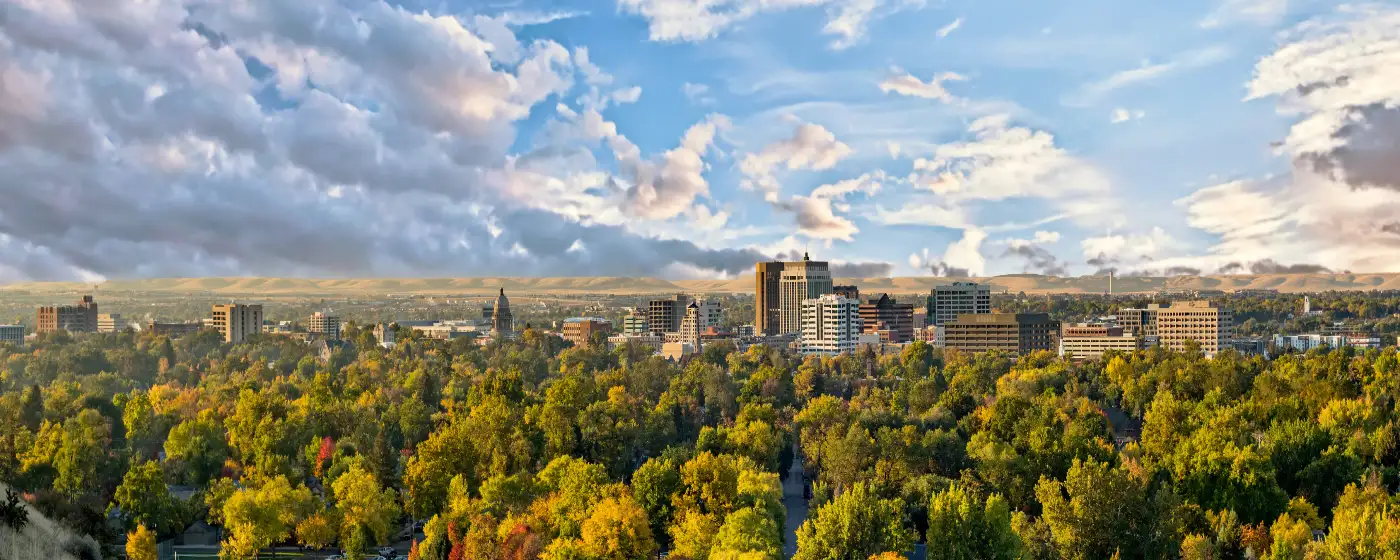
People moving to Boise from larger metros often arrive braced for something — a catch, a compromise on safety that explains why prices here run noticeably below Seattle or Denver. Six months in, most say the same thing: they never use the deadbolt on the car. That's not naivety — it's the Treasure Valley reality. Boise sits at the crossroads of I-84 and State Highway 55 in Ada County, with a downtown core anchored by the Idaho State Capitol and a residential fabric that spreads from the North End's Craftsman blocks up toward the foothills. The city's 238,853 residents live in a place where crime data, year after year, comes in well below what most relocators expected.
The FBI's 2024 calendar-year data, released in fall 2025, puts Boise's violent crime rate at 3 per 1,000 residents and property crime at 11 per 1,000. Those numbers don't exist in a vacuum: Idaho itself ranked 50th among all 50 states for property crime rate in 2024, meaning the state as a whole logs fewer property offenses per capita than anywhere else in the country. Boise, as the state's largest city, carries a somewhat higher rate than rural Idaho — that's true of any urban core — but it still clocks in noticeably below national benchmarks on both measures. A stable, educated workforce drawn by the city's major institutions shapes the character of most residential neighborhoods in ways that consistently show up in the crime data.
The honest version of the Boise safety story has two parts. The headline is genuinely good: property crime trending downward, violent crime rates below the national average, and a Police Department that added six new detective positions for 2026. The footnote is that crime in Boise, like every American city, is not evenly distributed. Downtown and parts of the Central Bench log higher incident counts than the foothills neighborhoods or Harris Ranch. Knowing which side of that divide a specific address sits on matters more than the city-wide average — and that's what most of this guide is built to help you understand.
Whether you're weighing a specific street in the North End or trying to make sense of competing crime-index scores you've found online, the sections below walk through Boise's actual 2024 crime figures, what's driving recent trends, how the numbers compare to state and national baselines, and which neighborhoods consistently rank safest — so you can make a grounded decision about where you want to land.
Boise Crime Rates at a Glance: The 2024 Numbers
The foundation of any honest safety assessment is the underlying data — and Boise's 2024 FBI numbers are straightforward to read.
| Metric | Boise (2024) | U.S. Average (2024) | Comparison |
|---|---|---|---|
| Violent crime rate | ~294 per 100,000 | ~359 per 100,000 | Noticeably below national average |
| Property crime rate | ~1,110 per 100,000 | ~1,760 per 100,000 | Substantially below national average |
| Violent crime (per 1,000) | 3 | — | City-provided baseline |
| Property crime (per 1,000) | 11 | — | City-provided baseline |
| Overall crime trend (YoY) | Down 7% | — | Property crime −11%; violent +9% |
| BPD internal rate change | Down 7.1% | — | Arrests also down 10.85% (2023→2024) |
* Crime figures derived from 2024 FBI UCR data released fall 2025, as reported by NeighborhoodScout, AreaVibes, and OpenCrime. The BPD internal figure uses the department's own classification methodology, which may differ slightly from FBI UCR definitions.
What the Numbers Actually Mean
Boise's violent crime rate runs approximately 18% below the U.S. average. Its property crime rate — the category that covers theft, burglary, and auto theft — sits roughly 37% below the national benchmark. Both are meaningful gaps, not rounding-error differences.
The one number that warrants honest attention: violent crime ticked up 9% year-over-year in the same period that property crime fell 11%. The net result was still a 7% overall decline. But that violent crime uptick is worth watching in future reporting cycles rather than dismissing.
The Idaho Context
Boise's figures look even stronger when measured against Idaho's own baseline. The state's violent crime rate in 2024 ran 35.8% below the U.S. average, and its property crime rate came in 58.2% below the national figure. Idaho ranked 50th — last — among all states for property crime, meaning nowhere in the country logs fewer property offenses per capita. Boise, as the state's largest city, sits above rural Idaho's rates, but well within the favorable Idaho corridor that gives the state that ranking.
Safest Neighborhoods in Boise — and Where to Be More Careful
City-wide averages are a starting point. The neighborhood-level picture is where the real decisions get made. Boise's neighborhoods page covers character and amenities in depth; this section focuses strictly on the safety profile of each area.
The Consistently Safe Tier
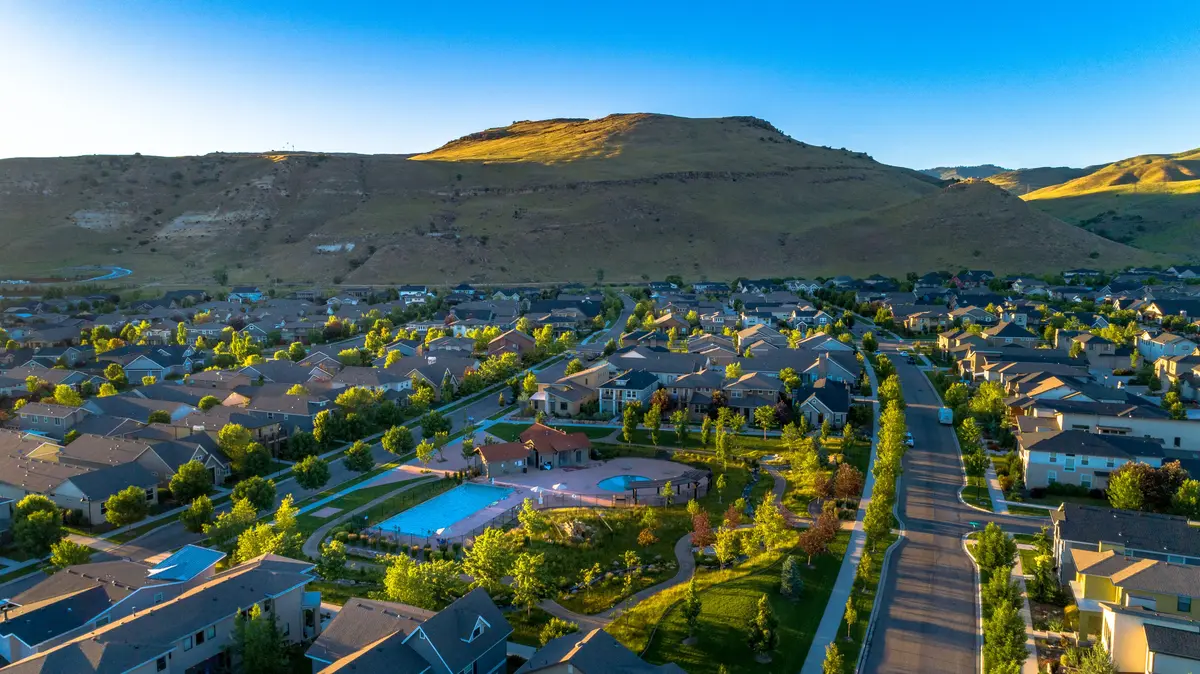
Warm Springs Mesa and Harris Ranch top nearly every 2024–2026 neighborhood safety ranking in Boise, with crime rates reported significantly below the city average. Harris Ranch is a master-planned community on Boise's eastern edge with an active HOA and road layouts that limit through-traffic — both factors that correlate with lower property crime. If your priority is minimizing exposure to even low-level incidents, these two areas set the benchmark.
The North End, centered on the Hyde Park district along North 13th Street, earns its reputation as one of the city's safest established neighborhoods. Tree-lined blocks of Craftsman bungalows, strong neighbor-to-neighbor familiarity, and proximity to Camel's Back Park combine to produce incident numbers well below the city average. It's the neighborhood where people leave bikes unlocked on the porch — not because they're careless, but because years of experience tells them it's fine.
East End and Southeast Boise — including the Bown Crossing area and the stretch near Barber Park that serves as the eastern gateway to the Boise River Greenbelt — log low crime rates that make them consistent recommendations for families prioritizing safety alongside outdoor access.
Warm Springs Mesa deserves a separate mention from Harris Ranch because its dynamic is different: older homes on larger lots, with a mix of longtime residents who've lived on the same street for decades. That social fabric functions as informal neighborhood watch before any official program exists.
The Middle Tier
The Bench — the elevated plateau south of downtown — covers a large geographic area and is harder to generalize. The Central Bench, closer to downtown, sees higher incident rates. The outer Bench, particularly east of Cole Road, settles into quieter residential patterns closer to the Southeast Boise profile. If you're considering a specific address on the Bench, the block matters more than the neighborhood label.
Hyde Park, while part of the broader North End safety picture, has its own micro-character as a commercial strip. More foot traffic, more transient activity around the restaurants and shops, slightly more visible petty incidents — still well below city average, but a notch below the purely residential North End blocks further from 13th Street.
Where to Be More Careful
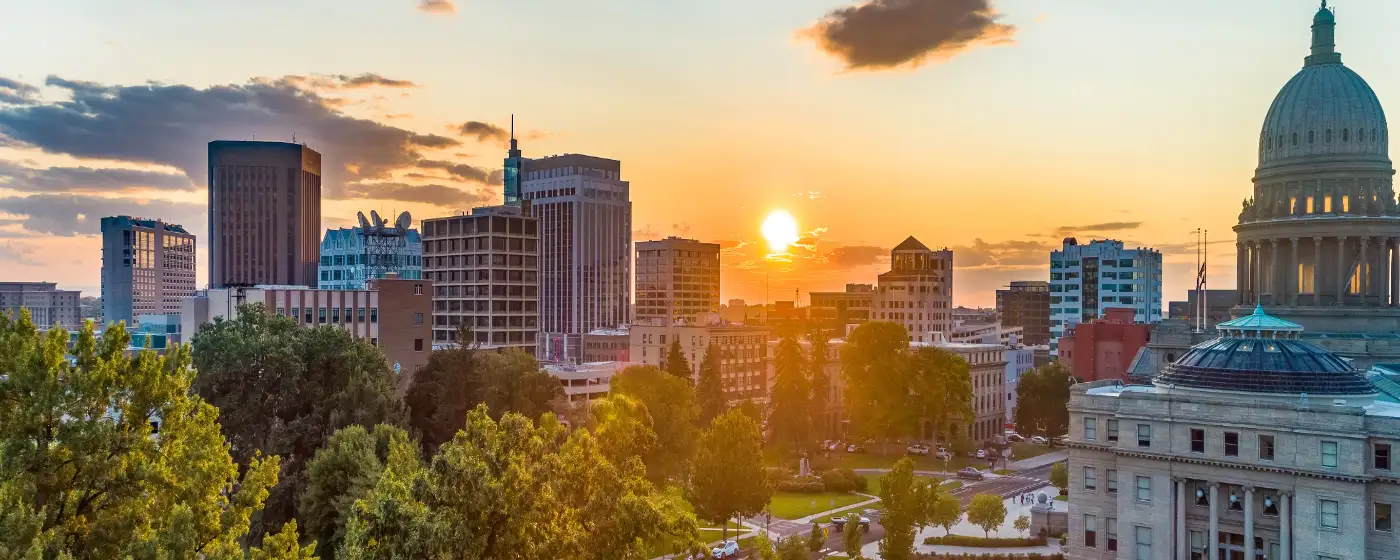
Downtown Boise and the Central Bench register higher crime rates relative to other neighborhoods — a pattern consistent with virtually every American urban core. Downtown's mix of entertainment, services, and unhoused population concentrations produces more reported property incidents than anywhere else in the city. That doesn't make it dangerous in an absolute sense; the city-wide property crime rate is still roughly 37% below the national average, so even Downtown Boise's elevated local rate compares reasonably against most U.S. cities. But if you're choosing between a Downtown condo and a Harris Ranch single-family, the safety trade-off is real and worth factoring in explicitly.
| Neighborhood | Relative Safety Profile | Best For | Notable Safety Factor |
|---|---|---|---|
| Harris Ranch | Among the lowest crime in Boise | Families Quiet | HOA, controlled street access |
| Warm Springs Mesa | Among the lowest crime in Boise | Families Privacy | Long-term residents, low density |
| North End / Hyde Park | Well below city average | Walkable School | Strong neighborhood cohesion |
| East End | Well below city average | Families Nature | Low density, greenbelt proximity |
| Southeast Boise | Below city average | Families Value | Active community, mixed housing |
| Bench (outer) | Near city average | First-Time Commuter | Varies significantly block to block |
| Downtown Boise | Above city average | Walkable Transit | Urban core patterns; property crime higher |
| Central Bench | Above city average | Renter | Highest relative crime area in city |
Trends: Is Boise Getting Safer or More Dangerous?
Trend lines matter as much as snapshots. A city with a moderate crime rate that's falling is a different proposition than one with a low rate that's climbing.
The Downward Direction
The 2024 data shows Boise moving in the right direction overall. Property crime — the category that affects the most residents on a day-to-day basis — fell 11% year-over-year. The Boise Police Department's own 2024 annual report recorded an overall crime rate decline of 7.1% from 2023, with arrests down 10.85% over the same period. Both figures point toward less criminal activity, not more reacting to it.
That's not a small shift. An 11% drop in property crime across a city of nearly 240,000 people represents thousands fewer incidents in a single year.
The One Countertrend
Violent crime rose 9% in the same period. That's the honest caveat to the otherwise positive trend story. It's a real increase, not a statistical artifact — and it warrants attention. The base rate for violent crime in Boise remains well below the national average at 3 per 1,000 residents, so the absolute numbers are not alarming. But a sustained trend upward in any crime category deserves monitoring across the next two or three annual reporting cycles before being dismissed.
Boise's growth-related pressures — rapid population increase, downtown densification, housing cost stress — are the kinds of factors that historically correlate with upward pressure on certain violent crime subcategories. The city is not immune to those forces, even if it has managed them better than most western metros so far.
What the Department Is Doing About It
For 2026, the Boise City Council approved six additional detective positions within the Boise Police Department, alongside technology upgrades targeted at improving both efficiency and transparency. That's a meaningful capacity addition for a department serving a city this size. More detectives means faster case closure rates on the kinds of property and violent incidents that currently get deprioritized when caseloads run high.
The department also runs an active Neighborhood Watch program through its Crime Prevention Unit — with block-level crime information, bi-annual newsletters, and resident training on recognizing and reporting suspicious activity. The North End and Harris Ranch communities both have strong participation rates. If you're moving to a neighborhood with an active block-level watch program, that's a documented deterrent to opportunistic property crime.
Looking to buy in Boise? Estimate your payment.
Enter your numbers to see an estimated monthly mortgage payment.
Estimate only. Excludes HOA fees and mortgage insurance. The interest rate above is a starting point, not a quoted rate — replace it with your own to see real numbers. Insurance is a flat placeholder, not a Boise quote.
What Newcomers Get Wrong About Boise Safety
Mistake One: Treating the City Average as Your Block's Reality
The single most common error relocating buyers make is applying the city-wide crime rate to their specific target address without checking neighborhood-level data. A property in Harris Ranch and a property in Central Bench can be four miles apart and have dramatically different incident profiles. Before you settle on a neighborhood, pull the block-level crime map from the Boise Police Department's public crime data portal — it shows incident dots by type and date, not aggregated averages.
This is especially important on the Bench. The neighborhood label covers enough geographic and socioeconomic variation that the average tells you almost nothing. Two blocks can shift the picture significantly.
Mistake Two: Confusing Downtown Activity With Danger
Downtown Boise logs the city's highest crime rates — but context matters. Most of what drives that number is property crime: bike theft near the Capitol, vehicle break-ins in surface parking lots, and shoplifting around the main commercial corridors. Violent crime in Downtown Boise is not zero, but the neighborhood is not dangerous to walk through in the way that phrase implies for certain other American downtowns. The Basque Block on a Friday evening is crowded and lively, not threatening.
What you'd actually want to avoid: leaving valuables visible in a car parked in an unattended surface lot overnight, anywhere near Downtown or the Central Bench. That's the pattern that generates the most preventable incidents in this part of the city.
Mistake Three: Assuming Rapid Growth Means Rising Crime
Boise's population has grown substantially over the past decade, and the instinct is to assume that growth brings crime. The 2024 data doesn't support that instinct — overall crime fell 7% even as the city continued absorbing new residents. Idaho's underlying culture and sustained police investment appear to have counterbalanced the pressures that rapid growth can introduce elsewhere.
That said, growth is not costless. The 9% uptick in violent crime is real, and a city that adds tens of thousands of residents annually while housing costs climb creates stress that doesn't disappear. The honest assessment is that Boise has managed this well so far — not that it's immune.
What Locals Actually Know
Ask longtime North End residents about safety and they'll tell you the most relevant local fact isn't a crime statistic — it's knowing your neighbors. The neighborhoods with the strongest social fabric, the most active Neighborhood Watch participation, and the highest proportion of owner-occupants consistently outperform their raw numbers. Harris Ranch residents know each other partly because the HOA creates forced interaction. North End neighbors know each other because the sidewalks and proximity to Camel's Back Park make that contact organic. That cohesion is a safety factor that no crime index captures.
How to Research Safety for a Specific Boise Address
Start With the BPD Crime Map
The Boise Police Department publishes a public-facing crime map updated with recent incident data. Before you settle on any neighborhood, search the specific address and expand the radius to show a six-block perimeter. Look for incident clusters, incident types (auto theft vs. assault vs. burglary are different conversations), and time-of-day patterns. A block with three bike thefts and no violent incidents in the past six months reads very differently than one with a pattern of overnight vehicle break-ins.
The map is the single most useful pre-decision tool available, and most buyers researching Boise from out of state never use it.
Talk to the Neighborhood Watch Coordinator
The BPD Crime Prevention Unit can connect you with the Neighborhood Watch coordinator for any active block in the city. That conversation will tell you more about the actual texture of safety on a specific street than any aggregated data source. Coordinators know which incidents get reported and which don't, which blocks have active participation, and where the informal eyes-on-the-street dynamic is strongest.
Visit at Different Times
A neighborhood that feels calm on a Tuesday afternoon can read differently on a Friday night, particularly near Downtown, Hyde Park, or the Bench commercial corridors. If you're seriously considering a block, visit it at least twice — once during a weekday morning and once on a weekend evening. The difference you observe is the actual lived-in safety environment, not the statistical one.
Check Proximity to Specific Infrastructure
Boise's crime distribution correlates with a few specific infrastructure factors. Addresses within a few blocks of major bus transfer points on the Central Bench, or within direct walking distance of the downtown shelter and service corridor, tend to log more incidents than addresses of equivalent neighborhood character further away. This isn't a value judgment about services — it's a practical observation about where concentrated foot traffic from transient populations intersects with property crime opportunity.
It's also worth noting that proximity to Boise's foothills — particularly in Warm Springs Mesa and the upper North End — tends to correlate with lower incident rates, in part because topography limits through-traffic and in part because those areas attract a higher proportion of owner-occupants with strong investment in maintaining neighborhood character.
The Bottom Line Check
Boise's city-wide numbers are genuinely favorable: violent crime noticeably below the national average, property crime substantially below, and an overall downward trend in the most recent reporting year. The work for any specific decision is matching those favorable averages to the specific block you're considering — because within those averages, the spread between Harris Ranch and Central Bench is significant enough to matter to daily life.
Local Expert Takeaway: Boise's safety story is real but not uniform. The city's violent crime rate of 3 per 1,000 and property crime rate of 11 per 1,000 — both well below national averages — reflect a genuinely lower-risk environment than most western metros. But those averages blend Harris Ranch, where neighbors know each other by name and incidents are rare, with Central Bench and Downtown blocks where property crime runs noticeably higher. If you're deciding between neighborhoods, pull the BPD's public crime map for your specific address, check whether an active Neighborhood Watch block is operating on that street, and visit on a Friday evening, not just a Tuesday morning. The Camel's Back Park crowd in the North End on a weekend morning, the Bown Crossing area on a weekday afternoon — these are the places where the city's actual safety culture becomes visible in a way no crime index replicates.
Quick Takeaways & FAQs
✅ Boise's property crime rate ran substantially below the national average in 2024, making it one of the safer western cities of its size — and Idaho itself ranked 50th among all states for property crime that year.
⚠️ Violent crime ticked up 9% year-over-year in the most recent FBI reporting cycle even as overall crime fell 7%, a trend worth watching in future annual data releases.
📍 The Central Bench and Downtown Boise log the city's highest relative crime rates — before settling on a neighborhood, run the specific address through the Boise Police Department's public crime map, not just the city-wide average.
Is Boise safe compared to other cities its size?
What are the safest neighborhoods in Boise?
Which areas of Boise have higher crime?
Is Boise's crime rate going up or down?
How can I check the crime rate for a specific Boise address before moving there?
Moving to Idaho?
Tell us what you need help with and we'll connect you with local resources.
