
Maybe you've been eyeing eastern Idaho for a few years, drawn by the price tags and the open sky. Maybe you're relocating from a higher-cost state and Blackfoot's $334,424 median home value (Zillow Home Value Index, February 2026) stopped you mid-scroll. The honest version: Blackfoot is a genuine small city — population around 13,500 — sitting at the crossroads of I-15 and US-26, roughly equidistant between Pocatello to the south and Idaho Falls to the north. That geography shapes retirement life here more than any marketing brochure will tell you. Daily life runs on a car, winters are cold and flat, and the nearest tertiary medical center is a 25-minute drive. Once you know that, the calculus gets a lot clearer.
The community backbone is agricultural and blue-collar. Bingham Memorial Hospital is the dominant employer and, critically for retirees, the primary healthcare anchor. The Eastern Idaho State Fairgrounds anchor the city's social calendar every September, drawing the broader region together in a way that feels distinctly small-town Idaho. People who move here from the Treasure Valley or the Wasatch Front often remark, around month six, that they expected to feel isolated and instead found themselves knowing half the town by name. That density of familiarity is either the draw or the dealbreaker, depending on what you're leaving behind.
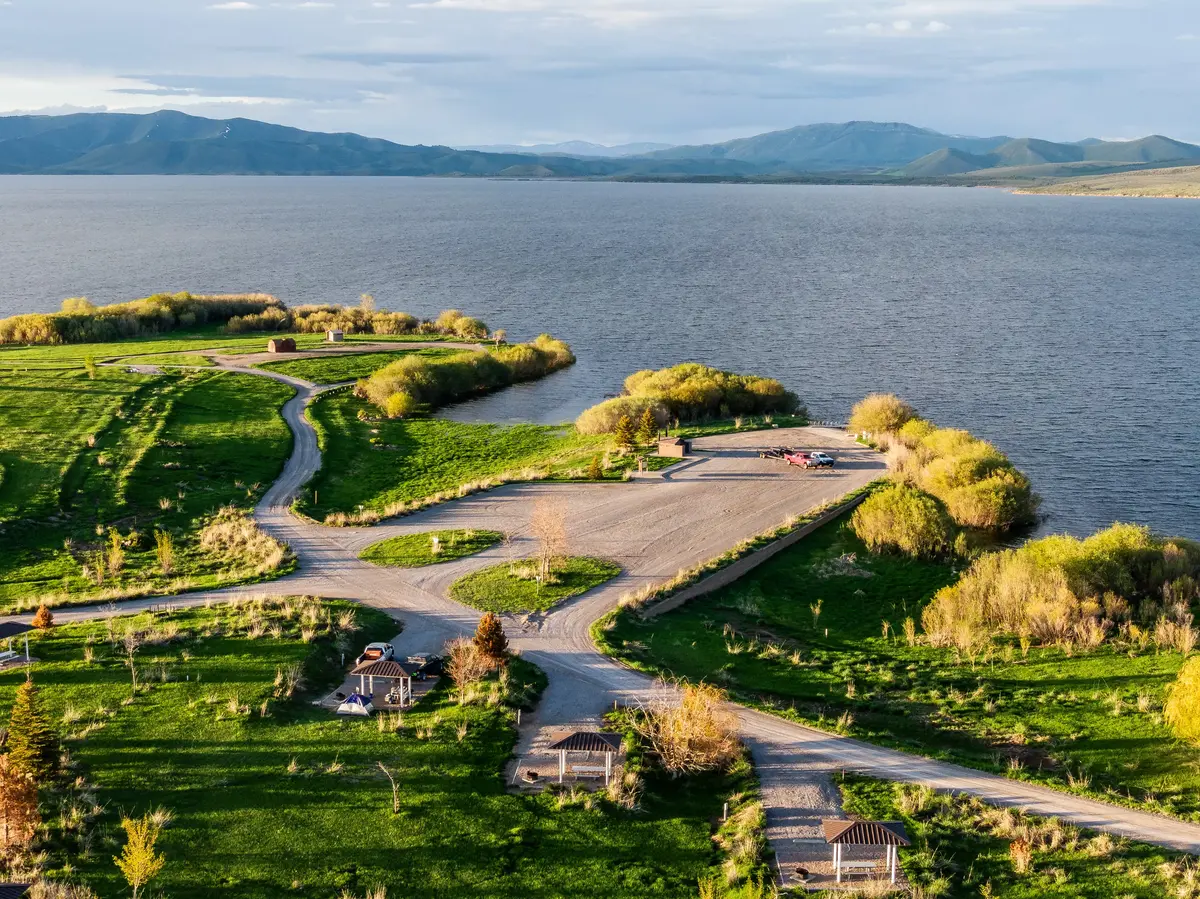
Blackfoot's cost of living runs approximately 3% below the Idaho state average — meaningful on a fixed income, even if it's not a dramatic gap. Property taxes are low by any national measure, and Idaho's tax treatment of Social Security is one of the cleanest in the Intermountain West: the benefit is fully exempt at the state level. Day-to-day grocery and gas costs track close to the state average; you won't find a Trader Joe's here, but you're 25 minutes from a full range of retail in Idaho Falls. Jensen Grove Park, a 200-acre green space with a lake, wheelchair-accessible trails, and free fishing, gives retirees a genuine outdoor anchor without leaving city limits. For more on parks and outdoor recreation, see the parks and recreation page.
Whether you're seriously weighing a move or still in early research mode, the sections below break down Blackfoot's retirement fit, healthcare access, retiree tax picture, walkability, downsizing inventory, and how it stacks up against the other eastern Idaho towns that regularly come up in the same conversation.
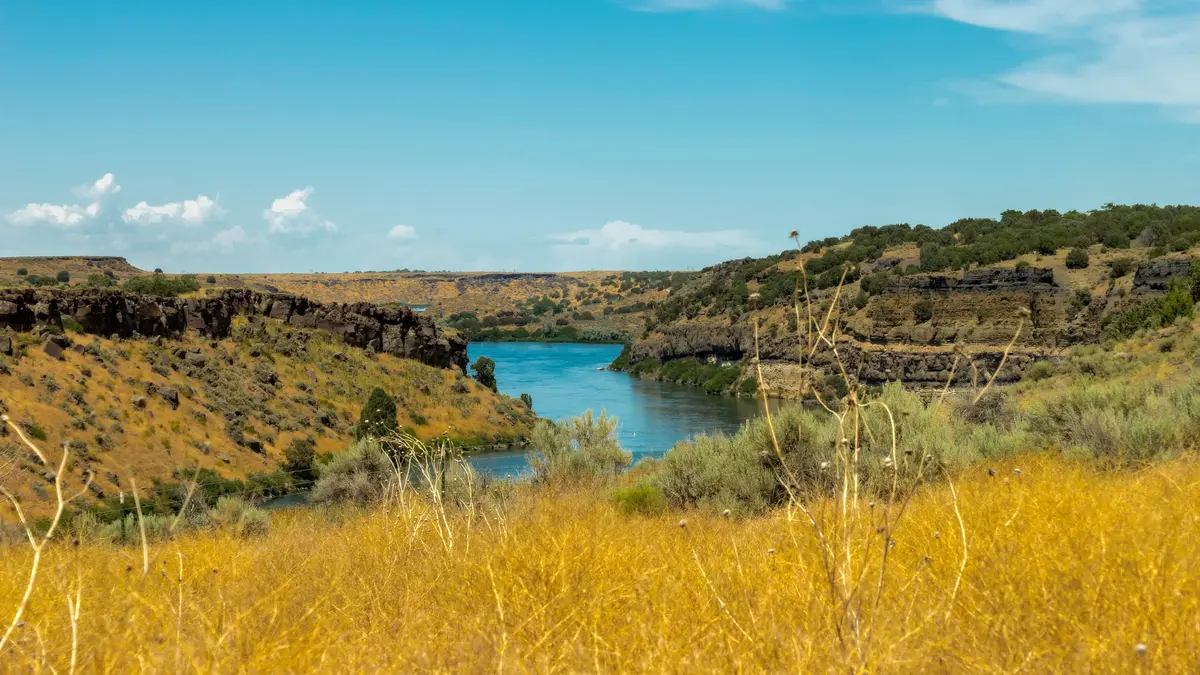
Why Retirees Are Choosing Blackfoot
Blackfoot fits a specific retiree profile well: people who want a genuine small-town pace, low housing costs, and proximity to a regional city without actually living in one. The Zillow Home Value Index median of $334,424 (February 2026) means a retiree selling a median home almost anywhere on the West Coast can likely buy here outright — and that cash position fundamentally changes retirement math. See the full cost-of-living breakdown for how that translates to monthly expenses.
The retirees who thrive here tend to be self-sufficient drivers, comfortable with cold winters (January lows regularly dip into the single digits), and genuinely interested in community events over urban amenities. The Eastern Idaho State Fair, the Blackfoot Performing Arts Center, and the Bingham County Historical Museum aren't consolation prizes — they're what people actually show up for. If you need a theater district or a walkable restaurant row, Blackfoot will disappoint you within 90 days.
The retirees who leave — and some do — most often cite the lack of specialist medical depth in town, the distance from an airport with direct flights, and a social scene that can feel thin if you arrive without an existing network. Families with deep Idaho roots who are returning home after careers elsewhere report the highest satisfaction; people relocating cold from another state take longer to root, and some don't stay. That's the honest read.
Healthcare & Medical Access in Blackfoot
The Local Anchor: Bingham Memorial Hospital
Bingham Memorial Hospital at 98 Poplar Street is the cornerstone of healthcare in Blackfoot. It's a non-profit critical access hospital with more than 140 medical providers and over 100 types of patient services — emergency, in-patient, critical care, same-day surgery, rehabilitation, and transitional care among them. For most routine and urgent needs, you don't leave town.
That's a meaningful statement for a city of 13,500. Critical access hospitals of this size often run thin on specialty coverage, and Bingham Memorial is no exception when it comes to complex oncology, cardiac intervention, or neurosurgery. Those specialties require a trip to Idaho Falls or Pocatello.
The Regional Safety Net
The good news is that Bingham Healthcare — the parent system — operates facilities in Idaho Falls, Pocatello, and Shelley as well. That means your primary care relationship in Blackfoot often travels with you into the regional system; you're not starting over with a new records system when a specialist referral sends you north or south.
Idaho Falls is the practical answer for most advanced care, sitting about 25 minutes up I-15. The regional medical center there handles cardiac surgery, major trauma, and oncology services that Bingham Memorial doesn't offer locally. Pocatello's full-service regional hospital is a comparable drive in the other direction and adds another major system to your regional options.
What to Verify Before You Move
Before committing, confirm that your existing specialists or subspecialists are either part of the Bingham Healthcare network or willing to do telemedicine follow-ups. Retirees managing complex chronic conditions — advanced heart disease, cancer treatment, dialysis — typically find they're making that 25-minute drive to Idaho Falls weekly. For most retirees in reasonable health, Bingham Memorial handles the load without forcing regular long trips. The distinction matters, and it's worth a direct conversation with the hospital's patient services team before you sign a purchase agreement.
The Retiree Budget in Blackfoot
Idaho's Tax Posture for Retirement Income
Idaho's treatment of Social Security is unambiguous: the benefit is fully exempt from state income tax, regardless of your income level or age. That's one of the cleaner exemptions in the region and makes a real difference for retirees whose income comes primarily from Social Security.
The picture gets more nuanced for other income sources. Idaho moved to a flat 5.3% individual income tax rate effective January 1, 2025 — down from the prior 5.69%. Pension income, traditional IRA withdrawals, and 401(k) distributions are generally taxable at that flat rate. Idaho is not a zero-tax retirement state, and presenting it as broadly tax-friendly for all retirees would be misleading. If your retirement income leans heavily on investment accounts, budget for the 5.3% state bite on those withdrawals.
Property Tax: The Real Advantage
Blackfoot's effective property tax rate is approximately 0.49% — well below the national average and one of the lower rates in the state. On a home at the city median, that translates to a modest annual bill by any regional standard; the engine below can calculate your specific scenario.
Idaho's Property Tax Reduction program — commonly called the Circuit Breaker — can reduce that bill further for qualifying homeowners. Residents aged 65 or older whose 2025 household income (after medical expense deductions) was $39,130 or less can qualify for a reduction of $250 to $1,500 on their primary residence. Applications go through the county assessor annually. A separate deferral program allows residents 65 and older with income of $60,000 or less to postpone property tax payments entirely; the deferred amount accrues interest and is settled when the property is sold or transferred.
Estate Planning and Other Taxes
Idaho levies no estate tax and no inheritance tax. The federal exemption threshold sits at $15 million for 2026, meaning the overwhelming majority of retirees here face no estate tax exposure at any level. That simplicity is worth noting if estate planning is part of your move decision.
Daily costs — groceries, gas, utilities — track close to the Idaho state average, running approximately 3% below it overall. The cost-of-living page has the full breakdown by category.
Looking to buy in Blackfoot? Estimate your payment.
Enter your numbers to see an estimated monthly mortgage payment.
Estimate only. Excludes HOA fees and mortgage insurance. The interest rate above is a starting point, not a quoted rate — replace it with your own to see real numbers. Insurance is a flat placeholder, not a Blackfoot quote.
Walkability, Community & Staying Active in Blackfoot
The Geographic Reality
Blackfoot is flat — genuinely flat, sitting at about 4,500 feet on the Snake River Plain. There are no hills to navigate, no steep grades that punish older knees. That's an underrated advantage for retirees who walk for exercise or use mobility aids.
Downtown Blackfoot has a walkable core along Main Street with tree-lined sidewalks and a compact commercial district. From neighborhoods like Old Town or Riverside, you can reach a pharmacy, a diner, and the post office on foot. Jensen Grove Park — 200 acres with a lake, wheelchair-accessible paths, fishing access, and disc golf — sits within reach of several central neighborhoods and gives retirees a genuine daily destination without a car.
The honest limit: Blackfoot is not a car-free city. Beyond the downtown core, most errands require driving. There's no fixed-route bus system that retirees can rely on for medical appointments or grocery runs. If driving becomes difficult later in retirement, the practical options narrow to ride-share services or family assistance — worth thinking through before you buy.
Community Anchors and Social Life
The Blackfoot Performing Arts Center hosts regional theater, concerts, and community productions that draw a consistent crowd. The Eastern Idaho State Fairgrounds come alive each September for one of the region's largest annual events — horse racing, agricultural exhibits, and live entertainment that retirees who've been in town for years still look forward to.
The Potato Station Cafe inside the Idaho Potato Museum on NW Main Street has become a reliable casual gathering spot — the kind of place where you see the same faces on Tuesday mornings. It's an unlikely social hub, but that's Blackfoot: the quirky civic landmarks do real community work here.
Volunteering and civic involvement run deep. The Bingham County Historical Museum, local faith communities, and fair board committees all have active volunteer rosters. Retirees who arrive with a willingness to plug in find social footing faster than those who wait for invitations.
Right-Sizing: Downsizing in Blackfoot
What the Inventory Actually Looks Like
Blackfoot's housing stock is dominated by single-family homes, most of them one- or two-story construction from the mid-twentieth century. True single-level ranch homes — the downsizer's first choice — exist and are findable, but inventory moves quickly and the selection is smaller than you'd see in a purpose-built retirement market like a Sun Belt suburb.
Purpose-built 55-plus communities and active-adult developments are essentially absent from Blackfoot proper. What you get instead is a mix of smaller ranch homes, some newer patio-home construction on the city's west and south edges, and a handful of townhome-style units. If a lock-and-leave lifestyle with a homeowners association handling exterior maintenance is the goal, Blackfoot's ownership market will feel thin.
Assisted Living and Care Continuum
Where Blackfoot punches above its size is in assisted living and memory care. At least eight facilities operate within or immediately near city limits, providing a genuine continuum of care at in-town prices. The Willows Retirement and Assisted Living at 898 S. Meridian is a 75-unit facility; Gables of Blackfoot Assisted Living and Diamond Peak of Blackfoot round out the major options. Aggregated pricing for assisted living in Blackfoot runs around $3,200 per month — verify directly with each facility, as that figure reflects current listings and individual pricing varies by care level and unit type.
That in-town care depth matters for couples where one partner's needs may evolve. The ability to move from independent living to assisted care without relocating to Idaho Falls or Pocatello is a practical advantage Blackfoot holds over smaller nearby towns like Shelley or Aberdeen.
The Downsizing Decision
Retirees who do best here typically arrive having already sold a larger home elsewhere, buy a modest single-level home outright, and treat the low property tax rate and no-Social-Security-tax environment as the financial backbone of a simplified retirement. Those expecting a curated active-adult campus with a clubhouse and resort-style amenities will need to look at Idaho Falls, where that product type exists in greater depth.
Blackfoot vs Nearby Retirement Destinations
| City | Cost vs Blackfoot | Primary Hospital | Walkability | Senior Living Depth | Overall Retirement Fit |
|---|---|---|---|---|---|
| Blackfoot | Anchor | Bingham Memorial Hospital (critical access, 140+ providers) | Walkable core; car needed beyond downtown | Strong for city size — 8+ facilities in/near town | Value Quiet Best for budget-conscious, self-sufficient retirees |
| Idaho Falls | Noticeably pricier | Full-service regional medical center (major trauma, full specialty depth) | Better retail walkability; still car-dependent overall | Significantly deeper — multiple active-adult communities | Amenities Best for retirees who want hospital proximity and more dining/shopping |
| Pocatello | About the same | Full-service regional hospital with broad specialty coverage | Hillier terrain; mixed walkability | Moderate — more options than Blackfoot, fewer than Idaho Falls | Transit Best for retirees who want a university town feel and Amtrak access |
| Shelley | Slightly cheaper | No hospital in city; depends on Bingham Memorial in Blackfoot | Very limited — small town, minimal pedestrian infrastructure | Minimal — few in-town senior care options | Privacy Best for retirees with family nearby who need maximum affordability |
| Aberdeen | Cheaper | No local hospital; Blackfoot or Pocatello for care | Minimal walkability | Very limited | Rural Best for retirees who want true rural quiet with low overhead |
| Firth | Slightly cheaper | No local hospital; relies on Idaho Falls or Blackfoot | Essentially none — small bedroom community | Minimal | Quiet Best suited to retirees with strong family support networks locally |
Idaho Falls beats Blackfoot on almost every amenity dimension — hospital depth, restaurant variety, active-adult housing inventory, and airport access — but at a meaningfully higher cost of housing. Pocatello offers a comparable price point to Blackfoot with better specialist depth and an Amtrak stop that some retirees value for travel flexibility; the hilly terrain is a genuine physical consideration, though.
Shelley, Aberdeen, and Firth are cheaper still, but they trade away the in-town healthcare continuum that makes Blackfoot a more complete retirement destination. Retirees who prioritize medical self-sufficiency — the ability to age in place through multiple care stages without relocating — will find Blackfoot's combination of Bingham Memorial Hospital and its eight-plus assisted living facilities hard to replicate in the smaller surrounding towns. If specialist access is your top priority and cost is secondary, Idaho Falls is the cleaner answer.
Local Expert Takeaway: Blackfoot's retirement case rests on three things working together: a home price well below the regional average, an effective property tax rate of approximately 0.49%, and an in-town assisted living network that most towns this size simply don't have. Bingham Healthcare's regional system means your primary care relationship extends to Idaho Falls and Pocatello without starting over. The catch is honest: you need a car, winters are cold, and the specialist depth that complex chronic conditions require is a 25-minute drive north. Retirees who do the math on arriving debt-free with a paid-off home — and who genuinely want small-town community over urban amenities — often find Blackfoot outperforms their expectations. Those who arrive expecting something they saw in Boise will be on their way back within a year.
Quick Takeaways & FAQs
✅ Blackfoot's effective property tax rate of approximately 0.49% is among the lowest in the region, and Idaho fully exempts Social Security benefits from state income tax — a real advantage for fixed-income retirees.
⚠️ Bingham Memorial Hospital handles over 100 service types and 140+ providers in town, but complex cardiac, oncology, and neurosurgery care requires a 25-minute drive to Idaho Falls — a gap that matters if your health picture is complicated.
📍 The Willows, Gables of Blackfoot, and Diamond Peak give this small city a continuum of assisted living and memory care options in-town — unusually deep for a community of 13,500.
Does Idaho tax Social Security retirement benefits?
What is the closest major hospital to Blackfoot for advanced care?
Is Blackfoot walkable enough for retirement without a car?
What assisted living options exist in Blackfoot, Idaho?
Does Idaho have a property tax break for seniors in Blackfoot?
Moving to Idaho?
Tell us what you need help with and we'll connect you with local resources.
