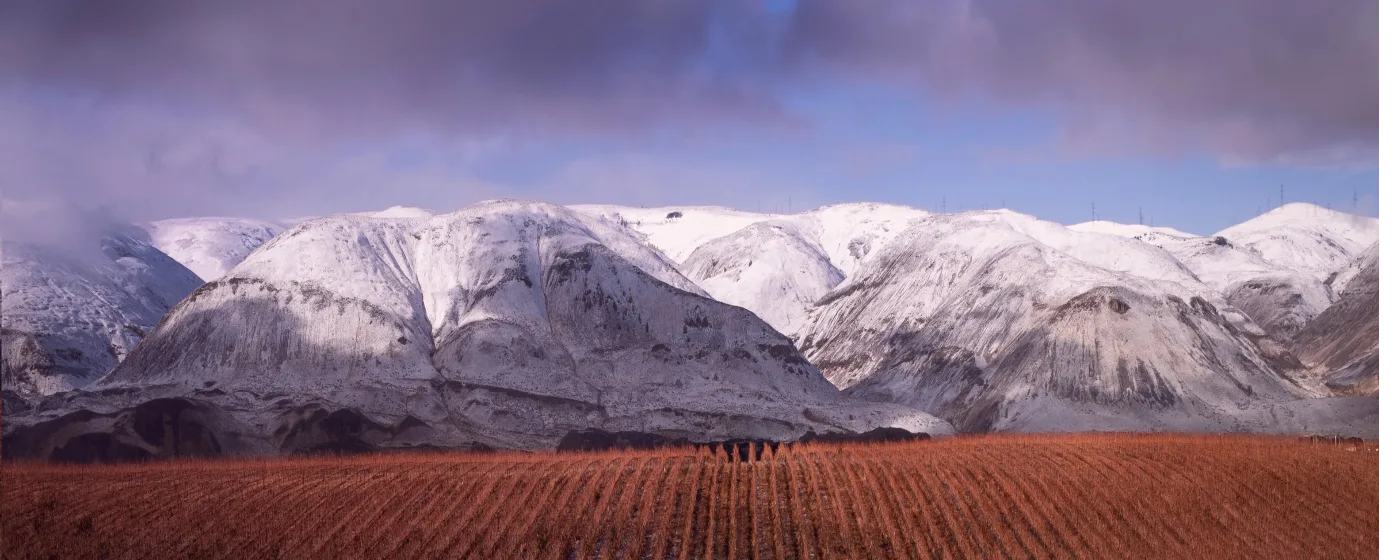
Maybe you've been priced out of the Bay Area or Southern California and someone mentioned a small city in the apple-growing country east of the Cascades. Maybe your employer went remote and you finally have the option to leave. Whatever brought Wenatchee to your radar, here's the thing most Californians don't expect: this isn't a consolation prize. Wenatchee sits in a river valley where the Columbia bends south, ringed by brown hills that blush gold in October, with the kind of sky — clear, enormous, and deeply blue — that the marine layer never gives you. It's a city of about 36,500 people that functions as a regional hub for North Central Washington, with a real downtown, a performing arts center at Numerica, a waterfront market at Pybus Public Market, and an economy built on fruit, power, and healthcare.
The employers here are concrete and stable. Confluence Health anchors the economy as the dominant healthcare employer. Chelan County PUD, a publicly owned utility running on Columbia River hydropower, keeps electric bills unusually low. Stemilt Growers, one of the country's largest tree-fruit shippers, employs hundreds. The Wenatchee School District serves most of the city and holds a B rating, according to Niche — not a perfect score, but solid and actively improving. The people who move here from California tend to fall into two groups: remote workers who want to stretch their dollars without sacrificing outdoor access, and families who want a smaller city where their kids can actually play outside in summer without driving 45 minutes to find a trail.
The cost picture is more nuanced than the headline suggests. Wenatchee sits about 19% above the national average in overall cost of living — driven mostly by housing — but it's roughly 4% below the Washington state average, which puts it well below the Seattle metro. The Zillow Home Value Index pegged the typical home value at $496,728 in May 2026, a figure that would feel almost reasonable to anyone leaving the Bay Area but may still surprise buyers coming from California's Central Valley or Inland Empire. What changes the math dramatically is the tax side: Washington has no state income tax on wages and salaries, which for a California household paying 9–13% to Sacramento represents a meaningful annual shift. See the full breakdown on the cost of living page.
Whether you're running the numbers or already have a moving date, the sections below cover the California-to-Wenatchee comparison in detail: home prices, taxes, climate, what daily life actually looks like after six months, and where the honest trade-offs are.
The Home Price Reality: What Your California Equity Can Buy
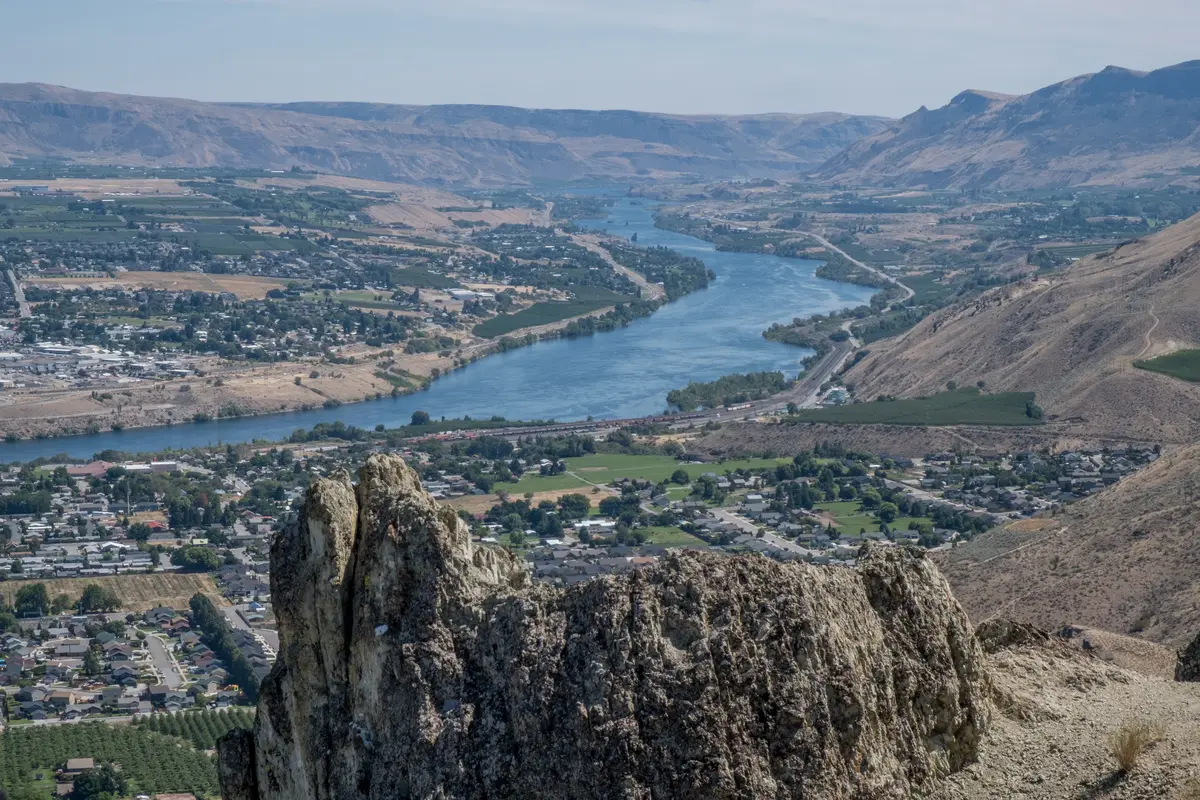
The single most important number for a California buyer is $496,728 — Wenatchee's typical home value per the Zillow Home Value Index in May 2026. For context, that figure sits below the median sold price in Sacramento, far below Bay Area coastal markets, and in a different universe from San Francisco or San Diego.
What that number buys in Wenatchee is genuinely different from what it buys in California. A sub-$500,000 purchase in Wenatchee gets you a detached single-family home with a yard, a two-car garage, and often a view of the canyon or the valley. Entry-level condos and older bungalows start noticeably below the city median. At the top end, homes in areas like Number One Canyon and Wenatchee Heights — where the views are dramatic and the lots are larger — push well above that figure, but those are choices, not the baseline. For more on how specific Wenatchee neighborhoods compare, the neighborhood guide has the detail.
California buyers often arrive with substantial equity from a sale. That equity position changes the conversation: some are buying outright, others are putting down 40–50%, which reframes the monthly payment entirely. The catch is that Wenatchee's market is competitive for its size — inventory is thin, and well-priced homes in desirable areas move quickly. Coming in with a pre-approval and realistic expectations about condition is more important here than buyers used to larger California markets sometimes anticipate.
Property Taxes: A Genuine Advantage
Wenatchee's effective property tax rate is approximately 0.71%. California's statewide average effective rate runs around 0.75%, and in high-value coastal counties — where Proposition 13 hasn't capped a long-held property's assessed value — the effective rate on a newly purchased home is functionally the same or higher on a far pricier base. The practical result: a Wenatchee buyer at the city's typical price point pays less in property taxes annually than a California buyer at the same price point in most coastal counties.
The more important shift is that Washington's property taxes are calculated on current market value without the Prop 13 cap. You won't carry forward a legacy low assessment the way a long-time California homeowner does — but you also won't face a sudden reassessment shock when you buy, because Washington taxes based on assessed value that already reflects the market.
| Metric | Wenatchee, WA | California (statewide avg.) |
|---|---|---|
| Typical home value (May 2026) | $496,728 | Varies widely by market |
| Effective property tax rate | ~0.71% | ~0.75% statewide avg. |
| State income tax on wages | 0% | 1%–13.3% (marginal brackets) |
| State sales tax rate | 6.5% base + local | 7.25% base + local |
| Capital gains tax (state) | 7% on gains above $278,000 standard deduction for 2025, rising to 9.9% on gains above $1,000,000 | Up to 13.3% (taxed as income) |
| Electric utility structure | Publicly owned, hydropower-based | Investor-owned, among highest rates in U.S. |
Treat this table as a starting framework. Your actual tax picture depends on your income level, asset mix, and the specific California county you're leaving.
The Tax Shift: Washington's No-Income-Tax Advantage (and the Asterisks)
Washington has no individual state income tax on wages and salaries. Full stop. A California household paying 9.3% or more in state income tax — the bracket that starts at roughly $66,000 of taxable income for a single filer — walks away from that obligation on day one of Washington residency. For a dual-income household earning $180,000, that difference is real money every year, not a rounding error.
That headline is accurate. The asterisks are worth reading before you make decisions based on it.
The 2028 Millionaires' Tax
Starting January 1, 2028, Washington will impose a 9.9% state income tax on individuals with annual adjusted gross income exceeding $1 million, enacted by the 2026 legislature. If your household income stays below that threshold — as it does for the overwhelming majority of California relocators — this does not affect you. If you are a high-earner, executive, or business owner whose income regularly clears seven figures, talk to a tax attorney before making residency assumptions.
The Capital Gains Tax
Washington taxes 7% on long-term capital gains above a $278,000 standard deduction for 2025, rising to 9.9% on gains above $1,000,000. This matters directly to Californians who are selling a highly appreciated home, a business, or an investment portfolio before or after relocating. California taxes capital gains as ordinary income — at rates up to 13.3% — so Washington's rate is still lower, but it is not zero. Structure the timing of your asset sales with a CPA who understands both states' rules.
Sales Tax: A More Complicated Swap
Washington's state sales tax is 6.5%, and with Wenatchee's local additions the combined rate runs just above 8.5%. California's base rate is 7.25%, and in many counties the combined rate sits at 9.5–10.25%. So Washington's sales tax is modestly lower in practice — and groceries and prescription drugs are fully exempt from sales tax in Washington, which California does not extend to all groceries. That exemption matters more than the rate difference for most households.
Climate: What Californians Get Right and Wrong About Wenatchee
Most Californians assume moving to Washington means gray skies and constant rain. Wenatchee will surprise you on both counts — and in one direction you won't expect.
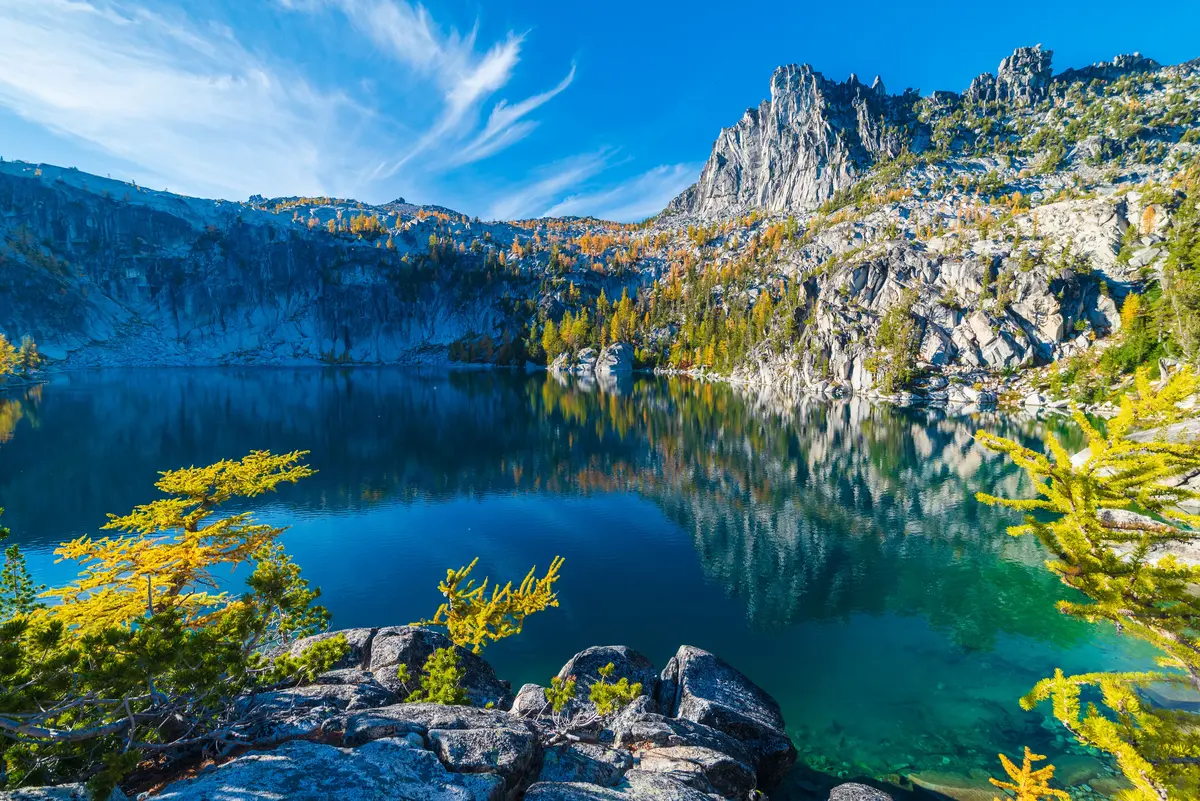
The Cascades block Pacific moisture from reaching the east side of the mountains. Wenatchee gets roughly 10–11 inches of precipitation annually — less than Phoenix, less than Los Angeles, less than almost every California coastal city. The summers are hot and genuinely dry: average July highs run near 90°F, with frequent stretches above 95°F. If you're coming from coastal California, the summer heat will be an adjustment. If you're coming from the Central Valley, it will feel familiar.
The Winter Californians Don't Expect
Here's where the surprise comes. Wenatchee winters are legitimately cold. Average December lows drop near 25°F, and the city sees roughly 24 inches of snow annually — less than the Cascades but enough to require a real winter wardrobe and, occasionally, a set of snow tires. The cold is dry and still rather than damp and gloomy, which many Californians find easier to handle than they anticipated. But the short days of December and January — deep in a valley with ridgelines on both sides — hit people harder than the temperature does. Several California transplants describe month two of their first winter as the adjustment that nobody warned them about.
What the Calendar Actually Looks Like
| Season | What to Expect | California Comparison |
|---|---|---|
| Summer (Jun–Aug) | Hot, dry; avg. July high ~90°F; smoke possible in wildfire years | Hotter than coastal CA; similar to Central Valley |
| Fall (Sep–Oct) | Warm days, cool nights; apple harvest; exceptional color on the canyon walls | More dramatic seasonal shift than most of CA |
| Winter (Nov–Feb) | Cold; avg. Dec low ~25°F; ~24 in. snow; short daylight hours in the valley | Far colder than coastal CA; comparable to mountain communities |
| Spring (Mar–May) | Variable; fruit blossoms in March; rain picks up briefly; warms fast | Faster transition to warmth than Western WA |
| Annual precipitation | ~10–11 inches | Drier than San Francisco (20 in.), Portland (36 in.) |
| Smoke season | Late July–September in active wildfire years | Similar risk pattern to inland Northern CA |
Smoke is the honest asterisk on Wenatchee's otherwise excellent summers. In active fire years, the valley traps smoke from regional fires, and air quality can drop to unhealthy levels for days at a stretch. It's not every summer, but it's not rare either.
Looking to buy in Wenatchee? Estimate your payment.
Enter your numbers to see an estimated monthly mortgage payment.
Estimate only. Excludes HOA fees and mortgage insurance. The interest rate above is a starting point, not a quoted rate — replace it with your own to see real numbers. Insurance is a flat placeholder, not a Wenatchee quote.
Daily Life After the Move: What Actually Changes
The transition from California to Wenatchee isn't just geographic — it's a shift in how daily life works, and a few of those shifts are harder to anticipate from a spreadsheet.
The Outdoor Access Is Real
The Apple Capital Recreation Loop Trail runs roughly 10 miles along the Columbia River through Wenatchee, and it's the kind of paved, accessible riverside path that California cities with three times the population would envy. Ohme Gardens sits on a basalt ridge above the valley. Mission Ridge ski area is a short drive into the mountains. The access to the outdoors here isn't a bullet point — it's part of how people structure their weekends. If outdoor access was a reason you were looking at Wenatchee, it will deliver. For a full picture of what parks and recreation look like, that page goes deeper.
What You Give Up in Convenience
This is the honest side of the trade. Wenatchee is a regional hub, but it's a small one. The nearest major metropolitan area is Seattle — about 170 minutes by car over Stevens Pass, weather permitting. There is no Trader Joe's. There's no Whole Foods. The restaurant scene is improving — Mountainside Baking Co. on Riverside Drive, Pinky's Fresh & Healthy Cafe on Fifth Street, and Atlas Fare have all opened or expanded recently, and a James Beard Award-nominated chef is developing a restaurant inside a 96-year-old firehouse on Main Street. But if you're coming from a California neighborhood where 40 restaurant options are within walking distance, the adjustment is real.
Specialist medical care follows the same pattern. Routine care is accessible locally, and health insurance premiums run noticeably below what you were paying in California. The trade-off is driving farther — often to Seattle — for complex procedures or subspecialty consultations. This matters more to some households than others, but it's worth factoring in before you move.
Where People Actually Gather
Pybus Public Market, on the waterfront, functions as the city's living room on weekends — a public market with vendors, events, and enough foot traffic to feel genuinely alive rather than curated. The Apple Capital Recreation Loop Trail is where you'll see the city's entire cross-section on any given weekend morning. The Numerica Performing Arts Center brings in touring acts and local productions that consistently outperform what a city of this size would normally support.
The Employment Picture
Remote workers have an easier time here than in-person job seekers. The local job market — anchored by Confluence Health, Chelan County PUD, Stemilt Growers, and the school district — is stable but not large. The Wenatchee-East Wenatchee MSA unemployment rate was 4.9% in May 2026, not seasonally adjusted, with notable swings tied to seasonal agricultural and tourism cycles. If you're relocating without a remote income or a job offer in hand, research the local market carefully before making an offer on a house. The living in Wenatchee page covers the employment landscape in more detail.
The Honest Trade-Off Summary: Who Thrives Here and Who Doesn't
The case for Wenatchee is straightforward if you're a California household with remote income, appreciated equity, and a genuine preference for small-city life over metro convenience. The tax savings on income alone can be substantial. The home prices are real. The outdoor access is not exaggerated.
The case against it is also real, and people who overlook it tend to be the ones who leave within two years.
| If you are… | Wenatchee likely works | Think carefully if… |
|---|---|---|
| Remote worker, income from CA or elsewhere | Strong fit | Your employer requires West Coast office time |
| Family with school-age kids | Good fit B-rated district | You need private school options nearby |
| Outdoor-focused household | Strong fit | You expect summer wildfire smoke to be rare |
| Retiree with passive income | Good fit | You rely on frequent specialist care |
| High-earner (income near or above $1M) | Tax picture is nuanced post-2028 | You haven't modeled the 2028 millionaires' tax |
| In-person job seeker | Possible in healthcare or ag sectors | Your field has thin local representation |
| Urban amenity-dependent | Harder sell | Wenatchee's dining and retail scene is growing but limited |
The people who struggle most with Wenatchee are those who moved for the price without fully accounting for the isolation. Seattle is not a quick drive on a winter day. The valley walls close in when the sun sets early in December. These aren't dealbreakers for everyone — for many California transplants they're barely noticeable — but they surface reliably in the six-month reflection that newcomers go through everywhere.
The people who thrive are usually the ones who came for a specific reason: the river, the lower taxes, the slower pace, or the apples in October. They knew what they were choosing, and they chose it clearly. That clarity is the most reliable predictor of whether this move works for a California family.
For a deeper look at buying a home in Wenatchee — including loan programs, down payment options, and what the process looks like for out-of-state buyers — the first-time homebuyer guide has the mechanics covered.
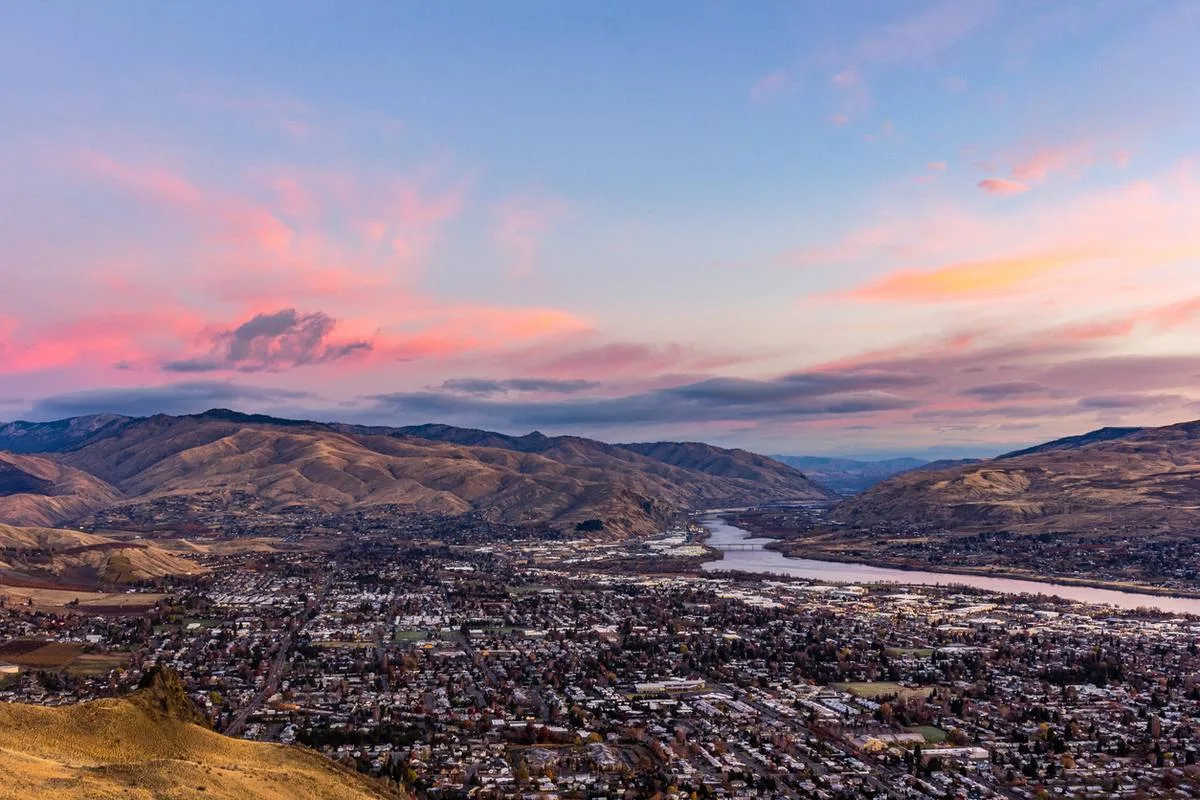
Local Expert Takeaway: California buyers who move to Wenatchee and report the highest satisfaction six months in share one thing: they did the lifestyle audit before the financial one. The tax math is real — no state income tax on wages, a property tax rate of approximately 0.71%, and electric bills softened by Chelan County PUD's hydropower rates add up to genuine savings. But the move works because they also knew they'd be walking the Apple Capital Recreation Loop Trail on Tuesday mornings, picking up produce at Pybus Public Market on Saturday, and driving over the pass to Seattle maybe once a month rather than whenever the mood strikes. Wenatchee rewards people who want exactly what it offers.
Quick Takeaways & FAQs
✅ Washington has no state income tax on wages or salaries, a meaningful annual advantage for California households that were paying 9% or more to Sacramento.
⚠️ Wenatchee sits about 170 minutes from Seattle over a mountain pass — specialist care, major airports, and big-city amenities all require planning ahead, especially in winter.
📍 Chelan County PUD is a publicly owned utility powered largely by Columbia River hydropower, which is why Wenatchee's electric rates run noticeably below the U.S. average — and far below what California households typically pay.
How do home prices in Wenatchee compare to California?
Does moving from California to Washington really save money on income taxes?
What is Wenatchee's climate like compared to California?
Is Wenatchee a good place for remote workers moving from California?
What do Californians typically wish they'd known before moving to Wenatchee?
Moving to Washington?
Tell us what you need help with and we'll connect you with local resources.
