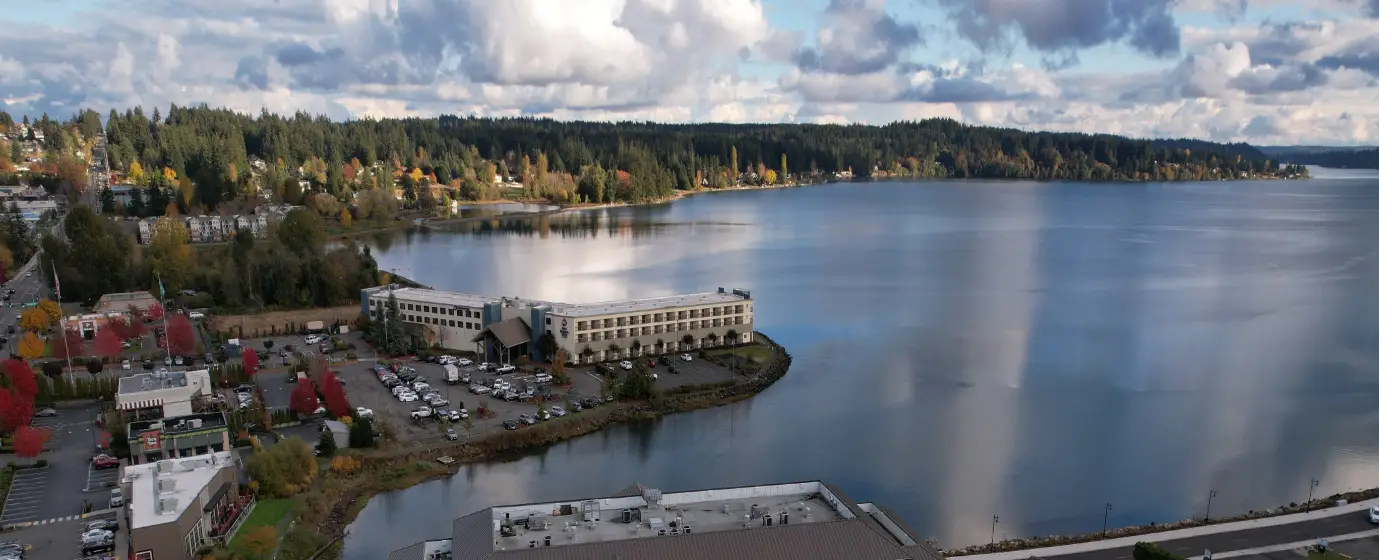
Maybe your company transferred you to Naval Base Kitsap. Maybe you finally ran the numbers on your Bay Area rent and decided enough was enough. Maybe you drove the 101 through one too many three-hour commutes and started looking at maps. Whatever brought you to Silverdale, Washington, the first thing most Californians notice is not what they expected: a working-class waterfront community anchored by the Navy and surrounded by evergreen ridgelines, where the pace of life moves at roughly the speed of a Washington State Ferry — which is, quite literally, how many residents get to Seattle. Silverdale sits in Kitsap County on the western shore of Puget Sound, connected to the rest of the world by Highway 3, the Bremerton and Kingston ferry routes, and the Kitsap Peninsula's network of two-lane roads through Douglas fir.
The economic backbone here is federal, not tech. Naval Base Kitsap and Puget Sound Naval Shipyard anchor the regional job market, making Silverdale's economy notably recession-resistant compared to California metros that rise and fall with venture capital. The Central Kitsap School District serves local families and carries a B+ rating — meaningfully above average and a genuine relief for parents who spent years gaming attendance boundaries back home. Olympic College provides local higher education options. The community skews toward military families, defense contractors, and longtime Kitsap County residents who chose this side of the Sound specifically to avoid Seattle prices.
The cost picture is what drives most California conversations. Silverdale's typical home value is $609,559 (Zillow Home Value Index, May 2026) — a figure that would buy a starter condo in many Bay Area zip codes. Overall cost of living runs approximately 19–21% above the U.S. national average, which sounds alarming until you compare it to where you're coming from: Salary.com's 2026 index puts Silverdale's cost of living roughly 59% below San Francisco's. For more detail on day-to-day expenses, the Silverdale cost of living page has the full breakdown. Washington has no personal state income tax — the single largest financial shift you will feel in year one — and Silverdale, as an unincorporated community, adds no city tax layer on top of the county rate.
Whether you are weighing a military PCS move, leaving a Bay Area tech job for remote work, or simply cashing out California equity and looking for somewhere to land, the sections below cover the tax comparison, housing realities, lifestyle shifts, and the specific things Californians tend to underestimate or get wrong about life on the Kitsap Peninsula.

The Tax Shift: What You Stop Paying the Day You Cross the State Line
Washington has no personal state income tax. For most Californians, that sentence takes a moment to fully land.
California's top marginal income tax rate is 13.3% — the highest of any U.S. state. A household earning $100,000 moving from California to Washington eliminates its state income tax liability entirely, saving approximately $5,762 per year on that income level alone. Higher earners see proportionally larger savings. This is not a tax deduction or a credit; it is simply gone.
One nuance worth knowing: Washington signed legislation in early 2026 (ESSB 6346) that will impose a 9.9% income tax on household income above $1 million, effective January 1, 2028. For the overwhelming majority of Silverdale relocators, this change is irrelevant — the no-income-tax advantage remains fully intact on wages and salaries below that threshold.
The Sales Tax Trade-Off
Here is where Washington takes some of that income tax savings back. Silverdale's combined sales tax rate is 9.2% in 2026 — 6.5% Washington state tax plus 2.7% Kitsap County tax, with no additional city layer (Silverdale is unincorporated and has no municipal government). That rate applies to both Silverdale ZIP codes: 98383 and 98315, confirmed by the Washington Department of Revenue as of July 2026.
California's statewide base rate is 7.25%, but most coastal California counties and cities stack local taxes on top — San Francisco hits 8.625%, Los Angeles reaches 10.25% in some areas. For many Californians, the Silverdale sales tax rate will feel roughly comparable, not like a shock.
The Property Tax Reset
This is where long-term California homeowners need to pay close attention. California's Proposition 13 caps assessed-value increases for existing owners, which means many Californians who have owned their home for a decade or more are paying property tax on an assessed value well below current market. Washington has no equivalent cap — assessed values rise with the market, and your tax resets to full market assessment the day you buy.
The good news specific to Silverdale: Kitsap County's effective property tax rate runs approximately 0.80%, which is meaningfully lower than Washington's statewide average. On a home at the $609,559 Zillow Home Value Index figure, that works out to roughly $4,876 per year in property tax. That figure will adjust as assessed values move, but the rate itself is one of the more favorable in the state.
| Tax Category | California (typical) | Silverdale / Washington | Net Effect for Relocator |
|---|---|---|---|
| State income tax | Up to 13.3% marginal | 0% (wages/salary) | Major annual savings |
| Combined sales tax | 8.625–10.25% (coastal metros) | 9.2% | Roughly comparable |
| Effective property tax rate | ~1.0–1.2% (market-rate buyers) | ~0.80% | Modestly lower in Silverdale |
| Prop 13 / assessment cap | Yes — protects long-term owners | No cap; resets at purchase | Long-term owners lose prior protection |
| City income tax | None (CA cities don't levy it) | None (unincorporated) | No change |
| City sales tax surcharge | Yes (many CA cities add layers) | None (no city government) | Slight advantage vs. CA cities |
The headline takeaway: for a typical Silverdale household, the income tax elimination is the dominant financial shift — larger than any other single line item in the comparison.
What Your California Equity Buys Here
Californians selling into appreciated markets arrive in Silverdale with a structural advantage that resets the entire home search calculus. Equity from a Bay Area or Los Angeles sale can cover a Silverdale purchase outright or leave a substantial down payment that eliminates private mortgage insurance entirely.
Silverdale's typical home value is $609,559 (Zillow Home Value Index, May 2026). That is the full market — not a distressed segment or a compromise. For context, that figure would represent a serious down payment on a median single-family home in coastal California markets. Here, it buys the house.
What $609K Actually Looks Like
At that price point in Silverdale, you are typically looking at a three- or four-bedroom single-family home with a two-car garage, on a lot large enough for a real yard, in an established neighborhood. Entry-level options — older construction, smaller lots, or homes needing cosmetic work — start noticeably below the Zillow Home Value Index figure. The upper end pushes past $800,000 for newer builds on ridgeline lots with territorial views of the Sound.
For neighborhood-level character and geographic divides across areas like Ridgetop, Old Town Silverdale, and Chico, the Silverdale neighborhoods guide covers each in detail. What matters here is the macro comparison: you are buying in a market where your California equity goes to work, not just covers the gap.
One Thing Californians Get Wrong About the Purchase Process
Washington is a non-disclosure state, meaning sale prices are not publicly reported in the same way California's are. Comparable sales data is less transparent to buyers doing their own research, which makes working with a locally experienced agent more important here than it was in markets where Zillow's sold-price data is complete. Do not assume you can price-check a listing the same way you did in Sacramento or San Diego.
The buying process mechanics — earnest money norms, inspection timelines, and financing structures common in Washington — are covered on the Silverdale first-time homebuyer page, which is useful even for experienced California buyers who are new to Washington's specific practices.
Health insurance premiums for individual and family plans in Washington typically run noticeably below what Californians pay in coastal metro markets, though you will drive farther for specialist care than you might have near a major California urban center — a genuine trade-off worth factoring in if your household has ongoing specialist needs.
Daily Life Cost Comparison: Groceries, Utilities, and What Stays Expensive
Silverdale's cost of living runs approximately 19–21% above the U.S. national average — a figure that surprises some Californians who expected the Pacific Northwest to be cheap. It is not cheap. It is cheaper than where you are coming from, which is a meaningfully different thing.
Groceries and Food
Grocery prices in Silverdale run approximately 9.4% above the national average — higher than the U.S. norm, but dramatically below what Bay Area or Los Angeles residents pay for the same basket. You will notice the difference at the checkout line, and it will feel like a relief. There is no Trader Joe's in Silverdale; the nearest is across the water, which is a recurring mild frustration for transplants who built their weekly routine around one.
For sit-down dining, Silver City Restaurant & Alehouse on NW Myhre Rd is a longstanding Silverdale landmark — a full brewery-restaurant where a dinner for two with drinks runs well under what the same meal would cost in a comparable California setting. Old Town Kitchen on NW Byron St handles the scratch café and bakery niche in the Old Town area, the kind of neighborhood spot that becomes a weekend ritual within a few months of moving here.
What Stays Expensive
Housing and transportation are the two primary cost drivers above the national average. Washington's gas prices track closer to national averages than California's, but the Kitsap Peninsula's geography means you are driving meaningful distances for things that would have been blocks away in a California city. Ferry fares for the Seattle commute add up across a month. These are not deal-breakers, but they are costs that Californians occasionally undercount in their initial budgets.
What Drops Noticeably
| Cost Category | California Coastal Metro (typical) | Silverdale | Direction of Change |
|---|---|---|---|
| State income tax on $100K income | ~$5,762/year | $0 | Major drop |
| Home price (typical) | $800K–$1.5M+ (Bay Area / LA) | $609,559 (ZHVI, May 2026) | Significant drop |
| Grocery costs | Well above national average | ~9.4% above national average | Meaningful drop from CA coastal |
| Gas prices | Among highest in the U.S. | Below CA, closer to national avg | Moderate drop |
| Effective property tax rate | ~1.0–1.2% (market buyers) | ~0.80% | Slight drop |
| Overall cost of living vs. SF | Baseline (San Francisco) | ~59% lower (Salary.com 2026) | Dramatic drop |
* ZHVI = Zillow Home Value Index.
The honest summary: almost every major cost category moves in your favor except the one-time adjustment of resetting to Washington's sales tax on large purchases. For utilities, see the cost of living page for current range figures.
Looking to buy in Silverdale? Estimate your payment.
Enter your numbers to see an estimated monthly mortgage payment.
Estimate only. Excludes HOA fees and mortgage insurance. The interest rate above is a starting point, not a quoted rate — replace it with your own to see real numbers. Insurance is a flat placeholder, not a Silverdale quote.
The Lifestyle Shift Californians Don't See Coming
Six months in, the thing most California transplants mention is not the rain. It is the quiet. Silverdale at 9 p.m. on a Tuesday is genuinely quiet — not in a suburban-Southern-California way where everything is behind a gate and you drive everywhere, but in a way that takes some adjustment if you came from a place where noise was just ambient texture.
The Ferry Is Not a Commute — It's a Commitment
The Seattle commute from Silverdale runs approximately 75 minutes via the Bremerton or Kingston Washington State Ferry routes. That number is accurate, but it does not capture what ferry commuting actually means: fixed sailing times, a schedule you plan your day around, and the genuine possibility that you miss a boat and add 90 minutes to your evening. Californians who survived I-5 or the 101 sometimes find the ferry meditative. Others find the lack of flexibility maddening. Know which type you are before you buy.
The commute involves a fundamentally different calculus than gridlock — you can walk on with a book, or drive on and sit in your car. It is not worse than Bay Area traffic in terms of time, but it is less flexible, which matters on the days a meeting runs late.
Where Silverdale Gathers
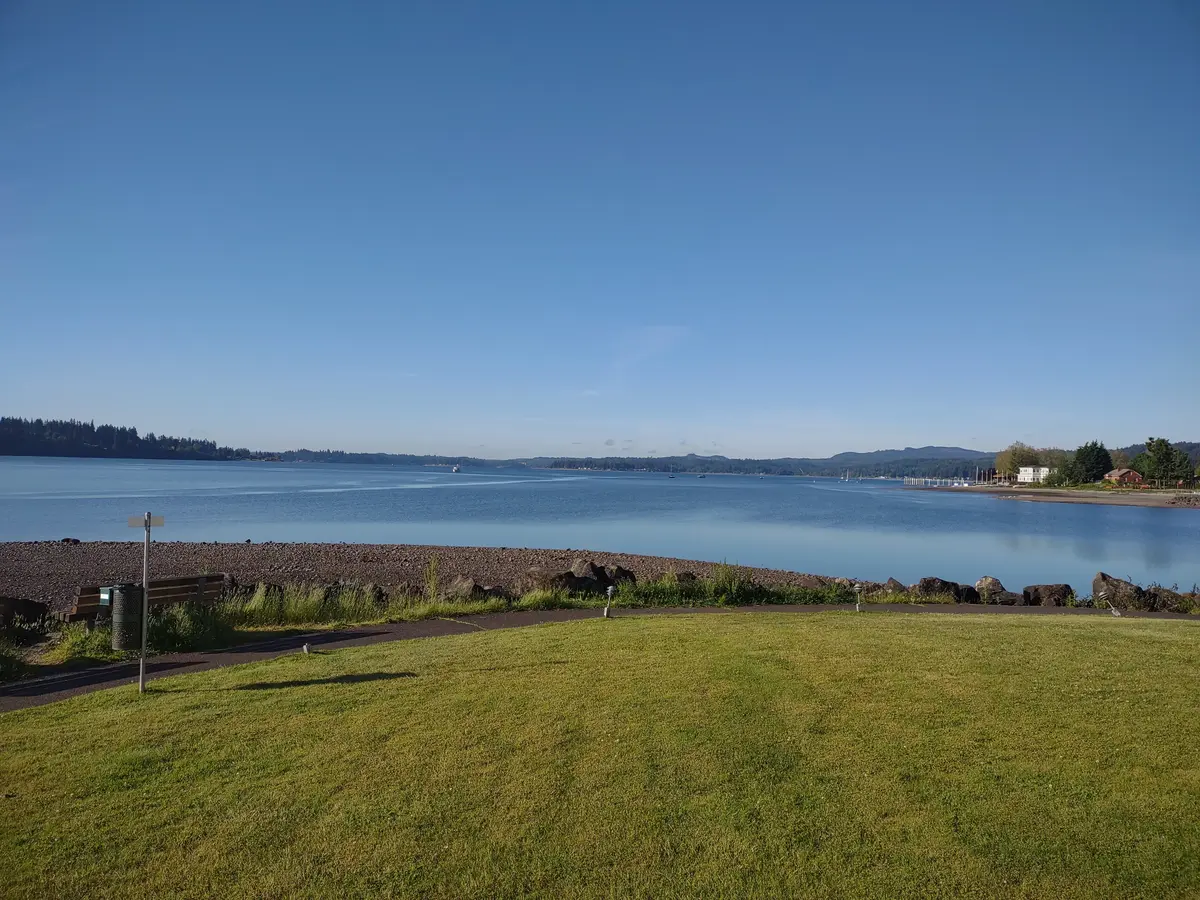
The Clear Creek Trail system and Silverdale Waterfront Park are where you will actually see the community — weekend mornings, dogs off-leash in the areas that allow it, neighbors you start recognizing by face before you know their names. Old Mill Park draws families from across the peninsula. Kitsap Mall and The Trails shopping park handle most of the retail needs that would have been scattered across a California metro; having most of your errands in one corridor is either convenient or monotonous depending on your disposition.
The Rain Is Real, But It's Not What You Think
Western Washington does not get hammered with dramatic rainstorms; it gets persistent grey drizzle from October through April. The annual rainfall total is not particularly high — it is the overcast sky that persists. Californians from the Bay Area, where winter fog is already a lifestyle, adapt faster than those from San Diego or the Central Valley, where 280 sunny days a year is the baseline expectation. The payoff is what the rain produces: the Olympic Peninsula backdrop, the deep green of the Kitsap hillsides, and summer days — mid-June through September — that are genuinely among the finest weather anywhere in the country.
For outdoor specifics, the Silverdale parks and recreation page covers the trail networks, waterfront access, and seasonal activities that define the Peninsula lifestyle.
Who Moves to Silverdale from California — and Who Decides Against It
The California-to-Silverdale move works cleanly for specific situations. It struggles for others, and being honest about which category you fall into saves everyone time.
It Works Well For
- Military families on PCS orders to Naval Base Kitsap who are coming from California installations and want to own rather than rent — the equity equation makes immediate sense.
- Remote workers whose California salary travels with them. Earning Bay Area or Los Angeles wages while paying Silverdale property tax and zero state income tax is a genuinely favorable arbitrage that many transplants describe as the best financial decision they made in their 30s.
- Parents with school-age children who prioritized district quality in California and want that to continue — the Central Kitsap School District's B+ rating holds up to scrutiny, and the Silverdale schools page has boundary and enrollment details.
- California homeowners cashing out equity who want to own outright or dramatically reduce their debt load. The price gap between a coastal California sale and a Silverdale purchase is large enough to be life-changing for many households.
It Struggles For
- Urban-dependent professionals who need daily access to a major city's amenities, walkable restaurant density, and cultural programming. Silverdale is a suburban-to-rural community on a peninsula; the nearest genuine urban core is a ferry ride away.
- Californians who genuinely love California weather — not those who tolerate it, but those who measure quality of life in sun exposure. Seven months of grey requires a real lifestyle recalibration.
- Those expecting Silicon Valley–style career density on the Peninsula. The local job market is defense-anchored and education-driven. Tech workers who are not fully remote will find limited local options outside of federal contracting roles connected to the Shipyard.
The Honest Reason People Leave
The transplants who move back to California — and some do — most often cite social isolation in years two and three. Silverdale's social fabric is tight and established, built around military unit cohesion, longtime Kitsap families, and community institutions that predate most newcomers. Breaking in takes longer than it did in the California neighborhoods where transplant turnover was constant and everyone was new at the same time.
For a fuller picture of neighborhood character and which areas fit which buyer types, the Silverdale neighborhoods guide and the living in Silverdale overview are the right next reads.

Local Expert Takeaway: The California-to-Silverdale move is best understood as a structural financial reset, not just a change of scenery. You eliminate state income tax on day one, buy real estate at a fraction of California coastal prices, and trade urban density for Olympic Peninsula geography and a Navy-town pace of life. The catch no one fully prepares you for: the ferry schedule becomes your actual calendar, Old Town Kitchen on NW Byron St becomes your Saturday morning ritual whether you planned it or not, and the Kitsap social circle takes longer to crack than any California neighborhood you've lived in. Go in knowing that, and the move tends to stick.
Quick Takeaways & FAQs
✅ Washington's zero state income tax saves a household earning $100,000 approximately $5,762 per year compared to California — the single largest financial shift of the move.
⚠️ The 75-minute ferry commute to Seattle runs on a fixed sailing schedule with no flexibility when meetings run late — a meaningful lifestyle adjustment for anyone with a Seattle-based office.
📍 Silverdale is unincorporated, meaning there is no city government and no city tax layer on top of Kitsap County's 9.2% combined sales tax rate.
Is it cheaper to live in Silverdale, WA than in California?
What is the income tax rate in Silverdale, Washington?
How do Silverdale home prices compare to California?
What is the sales tax rate in Silverdale, WA?
What is the property tax rate in Silverdale, WA — and how does it compare to California's?
Moving to Washington?
Tell us what you need help with and we'll connect you with local resources.
