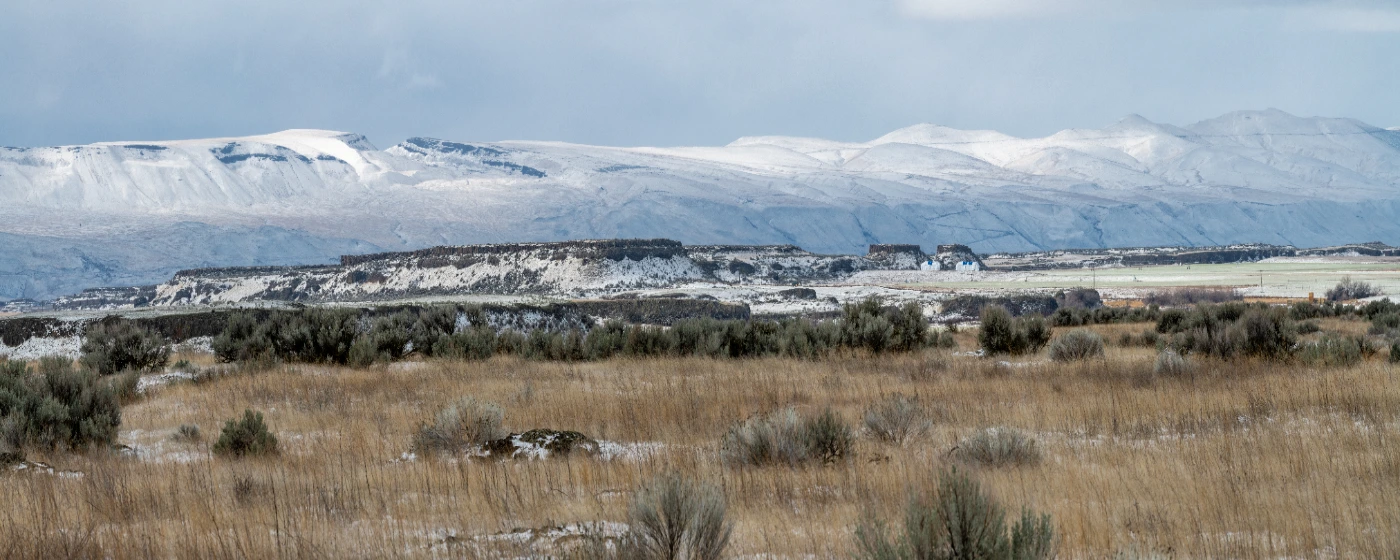
Most people searching "is Othello safe?" expect a simple yes or no. What they find instead is a number — a combined crime rate of 26 per 1,000 residents — that lands above most Washington towns without any of the context that makes that figure useful. Othello sits in the Columbia Basin in Adams County, a community of roughly 8,800 people surrounded by potato fields and federal wildlife land. It is not a suburb of anything; it is its own place, with its own economic rhythms tied to agriculture and food processing. That context matters when you're reading crime statistics.
The short answer is that Othello's crime picture is mixed in a way that most summary scores miss. The violent crime rate of 4 per 1,000 residents does run above both the state and national averages. The property crime rate of 22 per 1,000 is above the national figure — but it actually sits below Washington State's own statewide average, because Washington ranks among the worst states in the country for property crime. Knowing which benchmark you're using changes the story considerably, and this guide is built around giving you the right benchmarks.
What surprises many people who dig past the headline number is how community-oriented Othello's policing model actually is. The Othello Police Department, operating 24 hours a day from its station on East Main Street, is Washington State-accredited and runs a Citizens Academy, neighborhood watch groups, and active youth engagement programs. That infrastructure matters in a small city where the police chief likely knows the names of the neighborhood watch block captains.
Whether you're weighing a move to Othello or just trying to understand what life here actually looks like day to day, the sections below break down the raw crime figures, compare them honestly against state and national data, walk through what varies by neighborhood, and explain what the Othello Police Department is doing about it.

The Raw Numbers: What Othello's Crime Data Actually Says
Othello recorded a violent crime rate of 4 per 1,000 residents and a property crime rate of 22 per 1,000 residents in 2024, based on federal and state crime reporting data compiled by NeighborhoodScout (calendar year 2024, released October 2025). Combined, that's 26 incidents per 1,000 people — or roughly a 1-in-39 chance of being affected by either category in a given year.
That combined figure places Othello above 83% of Washington cities and towns in terms of overall crime rate. That sounds alarming until you look at where the weight sits.
| Crime Type | Othello (per 1,000) | Washington State (per 1,000) | National (per 1,000) |
|---|---|---|---|
| Violent Crime | 4.0 | 3.26–3.29 | 3.59 |
| Property Crime | 22.0 | 24.67 | 17.6 |
| Combined | 26.0 | ~27.9–28.0 | ~21.2 |
Sources: NeighborhoodScout Othello 2024 CY data; federal crime reporting 2024 national summary; USAFacts Washington State 2024 crime data.
The property crime figure tells an interesting story. At 22 per 1,000, Othello is above the national average of 17.6 — but below Washington State's statewide rate of approximately 24.67 per 1,000. Washington ranked 3rd-worst in the nation for property crime in 2024, with larceny-theft making up roughly two-thirds of all property offenses statewide. That state-level baseline is the honest comparison point for anyone moving here from elsewhere in Washington.
Violent crime is the more honest concern. Othello's rate of 4 per 1,000 exceeds both the state figure (3.26–3.29) and the national figure (3.59). The national 2024 violent crime rate was a 20-year low — violent crime nationally dropped 4.5% year-over-year and murder fell 14.9%. Othello running above that improved national floor is a real data point, not a dismissible one.
What the number doesn't tell you: small-city statistics are volatile. In a city of 8,800, a handful of incidents in a single year can swing the rate by a full point. Othello is not in the same category as Washington cities with persistently elevated crime; it is a small agricultural community where the numbers, good or bad, reflect a limited sample.
How Othello Compares to Nearby Cities
Context is everything with small-city crime data. Othello's neighboring communities — Moses Lake, Warden, Connell, Royal City — all share the same Columbia Basin agricultural economy, and their crime profiles tend to track similar dynamics: seasonal workforce movement, limited nighttime commercial activity, and the same reliance on county-level resources.
Moses Lake, the largest city within roughly 30 minutes of Othello, is consistently cited in state crime summaries as one of the higher-crime mid-size cities in Eastern Washington. That matters because people relocating from Western Washington often assume any Eastern Washington small town will be substantially safer than Moses Lake — Othello's numbers don't quite bear that out. They're in a similar range, not dramatically better.
Warden and Royal City, both smaller than Othello, have even thinner data sets — a single incident category shifts their rates substantially year to year. Connell, in Franklin County, runs with a comparable agricultural workforce profile. None of these towns should be treated as a dramatically safer alternative to Othello; the basin-wide crime environment is shaped by shared regional factors more than by local policy differences.
What actually separates Othello from some comparable-size towns is its accredited police department and the community programs it runs. A Citizens Academy and active neighborhood watch infrastructure in a city of under 9,000 is not universal — many towns this size have a police force that is reactive rather than community-embedded. Othello's Community Oriented Policing model, and its Washington State accreditation, represent a genuine structural investment in prevention.
The practical takeaway for someone choosing between Othello and a neighboring community: the crime rate differences at this scale are rarely the deciding factor. The quality of policing infrastructure, neighborhood character, and what you're actually getting for your housing dollar matter more in day-to-day life than a 1–2 point spread in per-1,000 rates. For a fuller look at how Othello's neighborhoods differ from one another in feel and character, see the best neighborhoods in Othello breakdown.

Where Crime Concentrates: A Neighborhood-Level Picture
Othello doesn't publish block-level crime mapping the way larger cities do, and city-wide reporting data is just that — city-wide rather than neighborhood-specific. What you can piece together from local knowledge, patrol patterns, and property context is a meaningful directional picture — not a precise crime map, but enough to inform how you research specific blocks before settling on an area.
Downtown / Main Street
The commercial core along East Main Street sees the highest foot traffic in Othello and, predictably, the highest concentration of opportunistic property incidents. This is where the police station sits at 500 East Main Street, which means response times here are among the fastest in the city. The downtown corridor is active during business hours; it quiets significantly after 8 p.m.
East Othello
East Othello carries Othello's most densely populated residential blocks, with a mix of older rental stock and owner-occupied homes. Rental density in any small city tends to correlate with higher property crime reports, and East Othello fits that pattern. It is not dangerous in any dramatic sense, but it is the part of the city where car prowls and property nuisance calls are most commonly reported anecdotally by longtime residents.
West Othello
West Othello feels meaningfully quieter. The housing stock skews slightly newer and the owner-occupancy rate is higher. Residents here often describe it as the part of town where people actually know their neighbors — which is both a quality-of-life observation and a functional crime-deterrent reality. Neighborhood familiarity is one of the strongest predictors of low property crime in small cities.
Alphabet Homes
The Alphabet Homes area — named for its lettered street grid — is one of Othello's more established residential pockets. It draws a mix of longtime local families and agricultural workers. The community fabric here is tight; block-level familiarity is high. It's not a showcase neighborhood, but residents consistently report it as stable and low-friction.
Sage Vista, Sagewood Acres, and Three Rivers Crossing
These newer-development areas on Othello's edges tend to have lower property crime exposure — not because of any policing difference, but because newer subdivisions with less transient foot traffic and more owner-occupancy simply generate fewer opportunistic incidents. Three Rivers Crossing in particular, with its proximity to agricultural land and newer construction, is where many families with school-age children have settled in recent years.
Sportsmen
The Sportsmen area near Pioneer Park and Lions Park has a neighborhood-park-adjacent feel that draws families during daylight hours. Evening activity thins out quickly. It's among the more residential and quiet corners of Othello, with crime patterns that reflect that lower-density, lower-traffic character.
What the neighborhood picture adds up to: Othello's crime is not uniformly distributed. The downtown corridor and denser East Othello blocks carry more of the property crime load. The newer western and edge neighborhoods carry less. If you're researching a specific address, run it through the Adams County Sheriff's public incident data and walk the block at different times of day — that ground-level check tells you more than any city-wide rate.
Looking to buy in Othello? Estimate your payment.
Enter your numbers to see an estimated monthly mortgage payment.
Estimate only. Excludes HOA fees and mortgage insurance. The interest rate above is a starting point, not a quoted rate — replace it with your own to see real numbers. Insurance is a flat placeholder, not a Othello quote.
What the Othello Police Department Is Actually Doing
The Othello Police Department operates around the clock from its station at 500 East Main Street, and it is Washington State-accredited — a designation that requires meeting professional standards for policy, training, and accountability that many small-city departments never pursue.
The department's Community Oriented Policing model is not just a branding choice. High-visibility patrols in a city of 8,800 mean that residents regularly see officers outside their vehicles, engaged with the community rather than just responding to calls. In practical terms, that means a patrol officer working the Main Street corridor most evenings — a presence that functions as deterrence as much as response.
The Citizens Academy is the program most worth knowing about if you're moving here. It's a multi-week course that walks community members through how the department operates — call prioritization, evidence handling, use-of-force policy. Graduates consistently describe it as the thing that shifted their understanding of what a small-city police department is actually doing with limited resources. It also produces a more informed, engaged pool of neighborhood watch participants.
Neighborhood watch in Othello isn't a passive "we have a sign" situation. The department actively coordinates block-level groups, connects neighbors with crime prevention education, and runs youth engagement programs designed to build relationships before problems develop. In a community where the same agricultural-cycle workforce moves through seasonally, proactive relationship-building matters more than reactive policing.
The honest limitation: Othello is a small department covering a city that has real crime pressures. Response times to the outer residential areas — Sage Vista, Three Rivers Crossing — are longer than to the downtown core by simple geography. If immediate response time matters to your household's safety calculus, that is worth factoring into which part of the city you choose to live in.
Practical Safety Considerations Before You Decide on a Neighborhood
The number people find when they Google Othello's crime rate is real. It is also incomplete without the state-level baseline that makes it interpretable. Here is what actually matters for someone deciding whether to move here — and where to live within the city.
The State Baseline Changes Your Frame
Washington's property crime rate is among the worst in the country. When you're moving from California, Oregon, or the Midwest, you're likely comparing Othello against a lower baseline state. Othello's property crime rate of 22 per 1,000 exceeds the national average but sits below Washington's own statewide average of approximately 24.67 per 1,000. That's a genuinely relevant distinction — it means Othello is not an outlier within its own state on property crime, even if it looks like one against a national map.
What Surprises People After Six Months
The thing newcomers don't expect isn't the crime rate — it's how visible agricultural workforce seasonality is on the streets. Othello's population shifts with the harvest and processing cycles, and that seasonal flux affects the downtown and East Othello corridors more than the residential edges. Longtime residents learn to read those rhythms. New arrivals sometimes mistake peak-season activity for a persistent condition. The two are meaningfully different.
Property Crime Is the Everyday Risk
Violent crime gets the attention, but in Othello, as in most small Washington cities, property crime is the realistic daily exposure. Car doors left unlocked, unsecured sheds, and items left visible in truck beds are the most common reported incident categories. These are habits-of-life adjustments, not structural safety concerns. Locking your vehicle and not leaving tools visible in a truck bed eliminates the majority of your realistic property crime exposure here.
How to Research a Specific Address
The best ground-level research before choosing a neighborhood in Othello: check Adams County Sheriff public incident logs for the street you're considering, drive it on a weekday evening and a Friday night, and talk to a neighbor who has lived there for at least two years. The city-wide rate tells you the average; those three steps tell you about the specific block. The Othello Police Department's non-emergency line is also genuinely accessible — officers here will talk to you about a specific area in a way that is rare in larger cities.
The Honest Trade-Off
Othello's affordability is real, and part of what makes it possible is that this city doesn't carry the "premium safe suburb" designation that adds significantly to comparable square footage in Moses Lake's newer subdivisions or further west toward the Tri-Cities. If safety statistics near the state average — rather than well below it — are acceptable to your household, Othello offers genuine value. If you need to be in a community that ranks in the safest tier of Washington cities, that is an honest conversation to have before you commit to a neighborhood here rather than after.

Local Expert Takeaway: Othello's crime numbers are real, but they require a Washington State lens to interpret honestly. The city's property crime rate of 22 per 1,000 runs above the national average — but below Washington's own statewide rate, because Washington is one of the highest property-crime states in the country. The violent crime rate of 4 per 1,000 is the more meaningful concern and the one worth taking seriously. In practical terms, the areas with lower daily friction are West Othello, Three Rivers Crossing, and Sagewood Acres; the downtown corridor and denser East Othello blocks carry more of the property crime load. The Othello Police Department, accredited by Washington State and operating a genuine Community Oriented Policing model from its East Main Street station, is a more proactive department than you'd expect for a city this size — but it's a small force, and response times to the city's edges are longer than to the core. Do your block-level research, check Adams County incident logs, and talk to a neighbor before settling on a specific street.
Quick Takeaways & FAQs
✅ Othello's property crime rate of 22 per 1,000 is actually below Washington State's own statewide average of approximately 24.67 per 1,000 — a meaningful distinction for anyone moving from within Washington.
⚠️ Violent crime at 4 per 1,000 runs above both state and national averages, and that's the honest number to factor into your decision — don't let the favorable property crime comparison obscure it.
📍 The Othello Police Department at 500 East Main Street is Washington State-accredited, runs a Citizens Academy, and coordinates active neighborhood watch groups — a more structured safety infrastructure than most cities of 8,800 residents maintain.
What is Othello WA's crime rate?
Is Othello WA safer than Moses Lake?
Which Othello neighborhoods have the lowest crime?
How does Othello's crime rate compare to the national average?
What is the Othello Police Department doing to address crime?
Moving to Washington?
Tell us what you need help with and we'll connect you with local resources.
