Maybe you've been priced out of Portland and someone mentioned Longview. Maybe you're comparing southwest Washington cities on a spreadsheet and Longview keeps looking good on paper. The honest answer is that it should look good — the Zillow Home Value Index pegs the city's typical home at $374,268 as of 2026, a figure that looks almost quaint next to the Seattle metro or even comparable I-5 corridor cities in Oregon. But Longview isn't a free lunch. You're trading lower housing costs against Washington's elevated gas prices, a city utility tax that surprises nearly every newcomer, and grocery costs that run meaningfully above the national average.
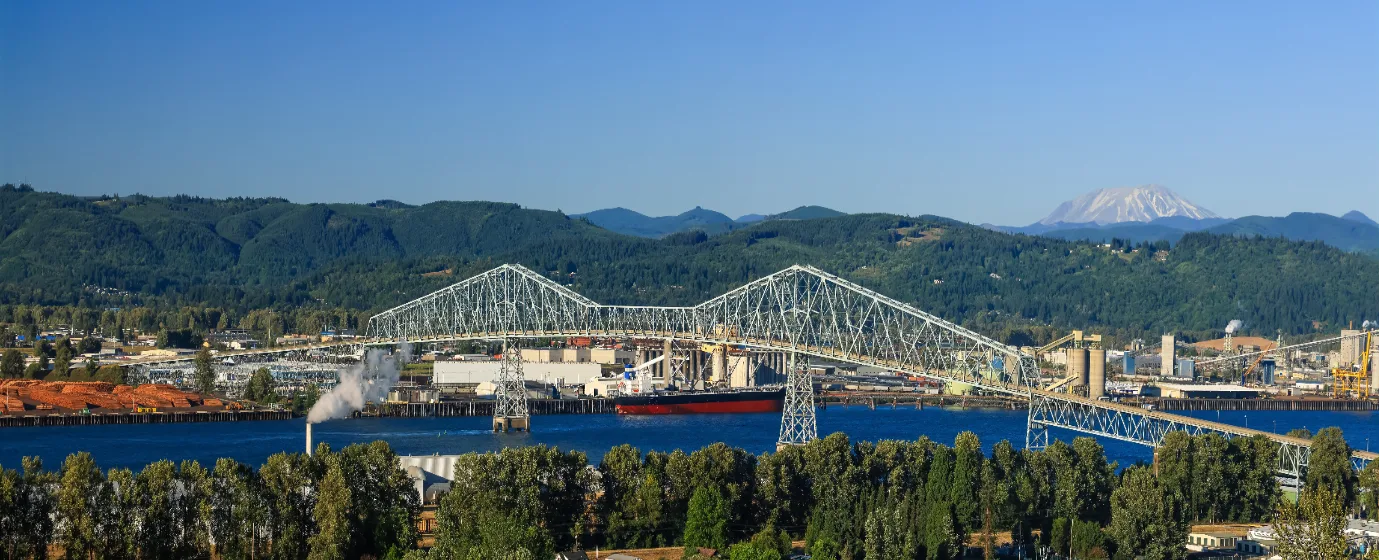
The city sits along the Columbia River at the junction of I-5 and Highway 30, roughly 45 minutes north of Portland on a good traffic day. That Portland commute is the economic lifeline for a significant portion of Longview households — and the reason the local housing market gets pressure it otherwise wouldn't. The industrial and public-sector backbone here spans timber processing, paper and packaging manufacturing, port logistics, and local government employment. The median household income of $61,747 is the number you need to hold in mind when reading the housing section below: the math is workable, but it leaves limited slack.
Longview's overall cost of living runs approximately 5–9% above the national average, but that figure is somewhat misleading in isolation. Compared to the Washington State average, Longview comes in roughly 8–9% cheaper — which means it punches well below its weight for an Evergreen State city with direct Columbia River access and a sub-45-minute freeway shot to a major metro. Utilities are a modest bright spot, running slightly below the national average before the city's utility tax is factored in. Gas and transportation are the line items that tend to sting most.
Whether you're sizing up a first purchase, comparing rents, or trying to model what your paycheck actually buys here, the sections below cover Longview's housing market, everyday expenses, a side-by-side comparison with nearby cities, and the full tax picture.

What It Really Costs to Live in Longview
Longview's typical home price of $374,268 (Zillow Home Value Index, 2026) is the headline that draws buyers out of Portland and down from the Seattle corridor. That figure sits noticeably below the Washington State average and well below the Portland-metro median — but it doesn't tell the whole story of what life costs here month to month.
The forces pushing that number are industrial rather than tech-driven. Longview's economy runs on timber processing, paper and packaging manufacturing, port logistics, and public-sector employment. There's no major tech campus inflating salaries and bidding up entry-level homes the way you see further north in the Puget Sound corridor. That keeps prices grounded — but it also means that income growth here tracks more closely with manufacturing wages than with software salaries.
Beyond housing, Longview's cost posture is mixed. Utilities come in modestly below the national average in index terms, which is genuinely good news. Groceries, however, run about 10–11% above the national baseline per the C2ER cost-of-living index — and transportation costs are one of the city's highest-cost categories, driven largely by Washington State's persistently elevated gas prices. The bottom line: Longview is a real value relative to most of Washington, but it is not a cheap city by national standards.
Housing: Rent vs Buy in Longview
The Buying Picture
The city-wide Zillow Home Value Index of $374,268 (2026) represents a realistic mid-market benchmark. Entry-level homes — older construction, smaller footprints — can be found below $300,000, typically in the parts of the city with more industrial history and less recent reinvestment. The top of the market pushes well past $500,000 for newer builds or Columbia River-view properties. For neighborhood-by-neighborhood price breakdowns, see the Best Neighborhoods guide.
Longview's effective property tax rate is approximately 0.87% — one of the lower rates you'll find among comparable Pacific Northwest cities. That rate, applied to the city-wide median, keeps annual tax carrying costs well below what buyers pay in much of California or even parts of Oregon. Use the mortgage calculator below this section to model your specific purchase price, down payment, and monthly obligation.
The Renting Picture
Renting makes the most financial sense here for two groups: newcomers still figuring out which part of the city fits their life, and households whose income makes the purchase math genuinely tight against that $61,747 median. Typical two-bedroom rents in Longview run roughly $1,200–$1,600 per month depending on condition, age, and location — a range that, unlike in Portland, still leaves meaningful room in a median-income budget.
One thing many renters don't anticipate: the city's 21.5% utility tax. It applies to water, sewer, stormwater, and other city-provided utility services and is a levy on the utility's gross receipts — which means it flows through to your bill. Landlords who include utilities in rent have already priced this in; those who don't, haven't told you about it. Ask before you sign.

Everyday Costs Beyond Housing in Longview
Utilities are the pleasant surprise. Longview's utility cost index sits around 96 — modestly below the national baseline of 100 — and Pacific Northwest hydroelectric power keeps electricity rates relatively low. The average monthly residential electric bill runs approximately $162. What partially offsets that advantage is the city's 21.5% utility tax layered on top of base water, sewer, and stormwater rates, which saw across-the-board increases effective January 1, 2025 to fund aging infrastructure. The stormwater base rate alone is now $18.65 per unit per month.
Gas is the line item that catches most Portland-area transplants off guard. Regular unleaded in the Longview area was running approximately $5.31 per gallon as of June 2026 — Washington consistently prices higher than Oregon, where you can't even pump your own gas. Groceries also run above the national average, though Washington's exemption of groceries from sales tax softens the blow. RCTransit provides local bus service across a 35-square-mile area, logging over 307,000 trips in fiscal year 2024, but most residents drive for most errands.
| Category | Typical Monthly Cost | Notes |
|---|---|---|
| Housing (2BR rent) | $1,200–$1,600 | Owners: use the mortgage calculator above for a purchase estimate |
| Electricity | ~$162 | Average residential bill; hydroelectric mix keeps rates relatively stable |
| Water, Sewer & Stormwater | $80–$130 | Estimate after Jan 2025 rate increases; 21.5% city utility tax applies |
| Groceries | $400–$600 | ~10–11% above national average; exempt from sales tax under WA law |
| Transportation & Gas | $250–$450 | Gas ~$5.31/gal (June 2026); higher if commuting to Portland regularly |
| Phone & Internet | $100–$180 | Competitive broadband options available; 8.2% sales tax applies to phone plans |
| Misc / Discretionary | $200–$400 | Dining, entertainment; independent coffee shops and casual dining spots are priced accessibly by Pacific Northwest standards |
These are estimates for planning purposes; actual costs vary by household size, vehicle type, and lifestyle. The figures above reflect a typical renter household and do not include a mortgage payment.
Looking to buy in Longview? Estimate your payment.
Enter your numbers to see an estimated monthly mortgage payment.
Estimate only. Excludes HOA fees and mortgage insurance. The interest rate above is a starting point, not a quoted rate — replace it with your own to see real numbers. Insurance is a flat placeholder, not a Longview quote.
Longview vs Nearby Cities: Cost Comparison
| City | Median Home Price | Typical 2BR Rent | Cost vs Longview |
|---|---|---|---|
| Longview, WA | $374,268 | $1,200–$1,600/mo | Baseline |
| Kelso, WA | ~$320,000–$340,000 | $1,100–$1,400/mo | Noticeably cheaper |
| Woodland, WA | ~$390,000–$430,000 | $1,300–$1,600/mo | Slightly higher |
| Kalama, WA | ~$380,000–$420,000 | $1,200–$1,500/mo | About the same |
| Castle Rock, WA | ~$280,000–$320,000 | $1,000–$1,300/mo | Meaningfully cheaper |
| Rainier, OR | ~$310,000–$360,000 | $1,100–$1,400/mo | Slightly cheaper |
Kelso and Castle Rock are the two cities where buyers most consistently find lower prices, though both offer fewer amenities and services than Longview proper. Woodland and Kalama price similarly to Longview but appeal to buyers who want a slightly smaller-town feel with still-easy I-5 access.
Taxes & the Bottom Line for Longview
Washington's Income-Tax Advantage
Washington State levies no personal income tax. Every dollar you earn stays in your paycheck — there's no state withholding, no April filing for state income. For a household earning near the median $61,747, that's a meaningful real-money advantage over living in Oregon, where the top marginal rate kicks in relatively early.
Sales Tax: What You Pay and What You Don't
Longview has a combined state and local sales tax rate of 8.2%, which applies to most retail purchases, restaurant meals, and services — including your phone plan. The significant carve-out is groceries: Washington exempts food for home consumption from sales tax, which matters when your grocery index already runs 10–11% above the national average.
Property Tax: Lower Than You'd Expect
The effective property tax rate in Longview is approximately 0.87%. Applied to that city-wide home value figure discussed in the first section, that translates to carrying costs that are genuinely modest by Pacific Northwest standards — and well below what buyers pay in California markets many Longview newcomers are coming from.
The Utility Tax: The Hidden Line Item
Most people moving to Longview don't read the city's utility billing structure before they arrive. The 21.5% city utility tax on water, sewer, stormwater, and other city-provided services is the cost-of-living detail that surprises residents most in their first six months. It's a revenue levy on the utility's gross receipts — not a direct consumer excise — but it flows through to every city utility bill regardless.
Who This Budget Fits
Longview's tax structure strongly rewards earners who would otherwise be paying Oregon or California income tax. If you're a remote worker, a trades professional, or a dual-income household, the combination of no income tax and a below-state-average cost of living is a genuine financial case for moving here. The budget gets tighter for single-income households near the $61,747 median once gas, groceries, and the utility tax stack up — the math works, but it doesn't leave much room for error.
Local Expert Takeaway: Longview's cost of living is best understood as a Washington State bargain, not a national one. The no-income-tax advantage is real and meaningful — especially for anyone relocating from Oregon or California. But newcomers consistently underestimate two things: gas costs that run well above the national average, and a 21.5% city utility tax that shows up on every water, sewer, and stormwater bill. Budget those two line items honestly before you decide whether the housing price makes the move pencil out.
Quick Takeaways & FAQs
✅ Washington's zero income tax means Longview residents keep their full paycheck — a real financial advantage over living just across the river in Oregon.
⚠️ Gas prices in the Longview area ran approximately $5.31/gallon as of June 2026, and the city's 21.5% utility tax catches most newcomers off guard in their first billing cycle.
📍 Groceries are exempt from Washington sales tax, which softens the blow of a grocery cost index that runs about 10–11% above the national average.
What is the median home price in Longview, WA in 2026?
Does Washington State have an income tax?
What is the sales tax rate in Longview, WA?
How much does it cost to rent a two-bedroom apartment in Longview?
What is the property tax rate in Longview, WA?
Moving to Washington?
Tell us what you need help with and we'll connect you with local resources.
