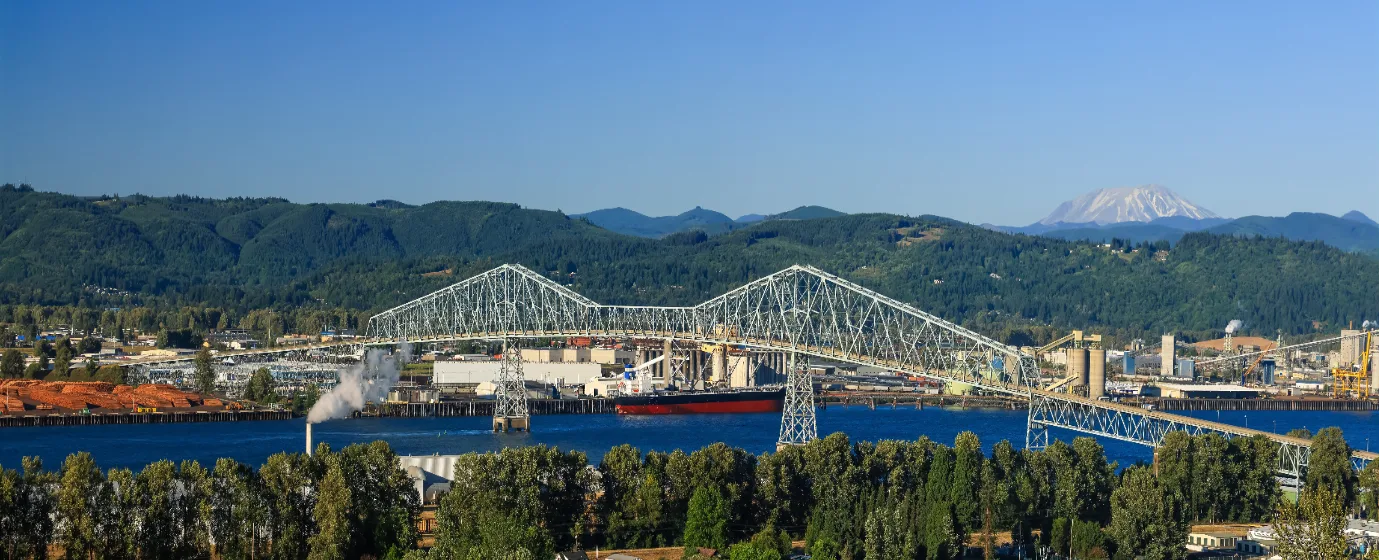
You could be forgiven for assuming Longview is a straightforward mid-size market where any neighborhood works just fine. That assumption costs buyers. Longview was one of America's few planned industrial cities — laid out in the 1920s on a grid between the Columbia River and the Cowlitz — and that history left a permanent mark on its geography. Industrial corridors, rail lines, and the Port of Longview don't just sit in the background; they determine noise levels, commute patterns, and property values block by block. The I-5 corridor connects Longview to Portland roughly 45 minutes south, but which side of town you're on shapes daily life far more than the freeway itself does. Homes pending in around 8 days citywide means you don't have time to learn the nuances after you fall in love with a house.
The city's economic backbone runs deep in timber, paper, and port logistics — Weyerhaeuser and the Port of Longview collectively employ a significant share of the workforce, alongside major paper and packaging operations that have anchored the riverfront for generations. The Longview School District holds a B- rating, according to Niche, but school-boundary lines create real differences in experience depending on which side of a given corridor your address falls on. Parents with school-age children who skip the boundary research almost always wish they hadn't.
The city-wide typical home value sits at $374,268 (Zillow Home Value Index, 2026), which is noticeably below what buyers face in Portland or Vancouver, WA — though that gap is narrowing as Southwest Washington attracts more relocating households. Day-to-day life here centers on genuinely public green space: the 3.5-mile walking and cycling path around Lake Sacajawea Park, the R. A. Long Park corridor along Olympia Way (home to the historic Nutty Narrows squirrel bridge, the oldest known in the country, listed on the National Register of Historic Places since 2014), and the annual Squirrel Fest that has quietly become one of the city's most distinctive community events. For more on how Longview compares on overall living costs, see the cost of living page.
Whether you're being relocated for work, escaping higher prices to the south, or simply doing serious research before an offer, the sections below break down Longview's eight neighborhoods by price band, buyer type, and the trade-offs locals learn the hard way — so you don't have to.

The Longview Reality
The Divide That Decides Everything
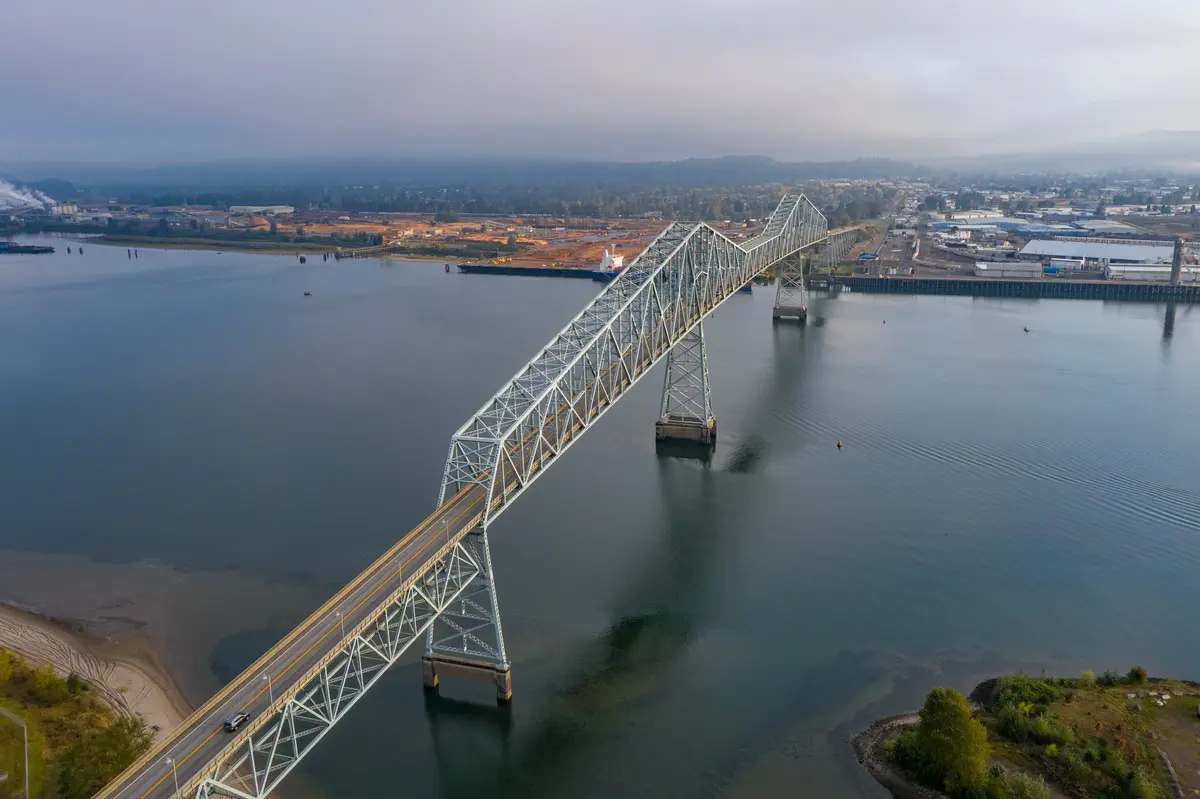
The single most important geographic fact in Longview is the industrial buffer that runs along the river-facing edge of the city. The Port of Longview and the rail and paper-mill infrastructure clustered near the Columbia River create a clear west-to-east gradient: the farther east and uphill you move — toward Mint Valley, Longview Heights, or the Columbia Heights ridge — the quieter, greener, and generally more expensive things get. Buyers who don't understand this gradient often end up in a neighborhood that looks fine on Zillow but sits within earshot of a mill shift change.
School Boundaries Matter More Than the District Rating
The Longview School District's overall rating masks real variation at the individual school level. Elementary school boundaries in particular run through the middle of neighborhoods that look identical on a map, and a move of two or three blocks can mean a different building entirely. Families with school-age children should pull the exact boundary map before writing an offer — not after. The schools page has the full breakdown.
What Six Months Teaches You
Most newcomers don't expect how strongly Longview's weather compounds the industrial geography. The Columbia River basin funnels persistent low cloud and drizzle from October through March, and neighborhoods on lower, flatter ground — especially near the Highlands and Downtown corridor — feel noticeably damper and darker in winter than the elevated areas do. Buyers who move here from California or the inland Northwest are consistently surprised by how much elevation gain (even a modest hilltop in Beacon Hill or Longview Heights) changes the winter experience.
Neighborhoods at a Glance
| Neighborhood | Best For | Price Range | Vibe |
|---|---|---|---|
| Downtown / City Center | Walkable Transit | $280K–$360K | Historic grid, on-foot access, urban energy |
| Highlands | First-Time Value | $240K–$330K | Craftsman bungalows, entry-level, industrial-adjacent |
| Columbia Heights | Luxury Views | $430K–$560K | Ridge-top, panoramic views, newer construction |
| Beacon Hill | Families Nature | $330K–$430K | Hilltop setting, mid-century to newer mix, fishing nearby |
| West Longview | Families Commuter | $370K–$460K | Established, move-up homes, I-5 access |
| Longview Heights | Views Luxury | $410K–$530K | Custom homes, Columbia River views, quiet streets |
| Columbia Valley Gardens | Families Quiet | $300K–$390K | Ranch-style suburb, park-adjacent, low-traffic streets |
| Mint Valley | Nature Privacy | $360K–$480K | Golf course community, wooded lots, outer-edge calm |
Prices reflect typical listed and sold ranges for each neighborhood based on current market data; the city-wide typical home value is $374,268 (Zillow Home Value Index, 2026). Individual sales will vary with condition and lot size.
Best Neighborhood by Buyer Type
| Buyer Type | Best Neighborhood | Why |
|---|---|---|
| First-Time Buyer | Highlands | Craftsman bungalows priced well below the city median give first-timers the most purchasing power in Longview. |
| Luxury Buyer | Columbia Heights | Ridge-top setting and median single-family prices around $519,000 represent Longview's clearest premium sub-market. |
| Walkability Seeker | Downtown / City Center | The historic grid puts daily errands, the Lake Sacajawea path, and the Olympia Way corridor on foot. |
| Families with Kids | Columbia Valley Gardens | Bailey Park Playground, ranch-style lots, and low-traffic streets make this the most kid-friendly day-to-day environment. |
| Commuters to Portland | West Longview | Straightforward I-5 on-ramp access and a median sale price around $420K keeps the Portland commute manageable in both time and cost. |
| Large-Lot Buyers | Mint Valley | Wooded lots surrounding the Mint Valley Golf Course deliver the most separation from neighbors anywhere in the city. |
| Renters | Downtown / City Center | The widest rental inventory, walkable streets, and proximity to downtown services make this the easiest place to rent without a car. |
Looking to buy in Longview? Estimate your payment.
Enter your numbers to see an estimated monthly mortgage payment.
Estimate only. Excludes HOA fees and mortgage insurance. The interest rate above is a starting point, not a quoted rate — replace it with your own to see real numbers. Insurance is a flat placeholder, not a Longview quote.
Most Popular Neighborhoods in Longview
1. Downtown / City Center
Downtown Longview was designed on a deliberate grid in the 1920s, and the wide boulevards and R. A. Long Park anchoring the center still reflect that original planning ambition. The Nutty Narrows Bridge on Olympia Way has drawn more national attention than any other block in the city since its National Register listing, and Squirrel Fest each year turns it into a genuine neighborhood event. The trade-off is that urban amenities and walkability come with more street activity, older housing stock that can carry deferred maintenance, and prices — $280K–$360K — that reflect condition variance more than anywhere else in Longview. Best for: Renters, walkability seekers, and buyers comfortable doing their homework on older homes.
2. Highlands
The Highlands is Longview's most affordable owner-occupied neighborhood, where Craftsman bungalows built during the city's industrial heyday sell well below the city median — typically in the $240K–$330K range. The honest trade-off is the neighborhood's proximity to the industrial buffer near the river: some blocks back up to areas with rail noise or mill-adjacent sightlines, and that adjacency is priced in. For a first-time buyer who does the block-by-block legwork, the value here is real. Best for: First-time buyers, value-focused buyers, and investors comfortable with industrial adjacency.
3. Columbia Heights
Columbia Heights — and particularly the eastern ridge — is where Longview's price ceiling lives, with median single-family sale prices around $519,000 in the Columbia Heights East sub-market. The elevation gives homes panoramic views that lower neighborhoods simply cannot match, and newer construction here is meaningfully more common than elsewhere in the city. The catch is that the ridge location means winding roads, fewer walkable options, and a real car dependency for every errand. Priced at $430K–$560K, this is not a neighborhood where you negotiate much. Best for: Luxury buyers, view-motivated buyers, and households wanting newer construction.
4. Beacon Hill
Beacon Hill sits roughly four miles north of the city center, near the Cowlitz River, with hilltop views that soften the industrial sightlines you'd see from lower ground. Housing stock ranges from solid mid-century ranches to newer builds, and Lake Dorthy nearby gives residents a fishing option that most Longview neighborhoods lack. The trade-off is a longer in-city drive to Downtown errands — this is not a neighborhood you walk out of — and the $330K–$430K range reflects a mid-market position that competes directly with West Longview for similar buyer profiles. Best for: Families with kids, nature-oriented buyers, and anyone who wants elevation without Columbia Heights prices.
5. West Longview
West Longview is Longview's most active and competitive sub-market: the median sale price hit approximately $420,000 in the three months ending June 2026, and homes moved to pending in around eight days — matching the city's already-fast pace. It's the neighborhood most Portland commuters target first, given its relatively direct I-5 access, and the established tree cover and lot sizes feel more suburban than anything closer to Downtown. The downside is that you're paying above the city median for a neighborhood where multiple-offer situations are common enough that buyers who aren't prepared tend to lose. Best for: Commuters to Portland, established-family buyers, and anyone prioritizing resale liquidity.
6. Longview Heights
Longview Heights occupies the Cascade-City View corridor — multilevel and custom homes with elevated sightlines toward the Columbia River that you won't replicate anywhere on flat ground. It's a quieter, more spread-out alternative to Columbia Heights that tends to attract buyers who want the views without paying Columbia Heights East prices, though the $410K–$530K range still puts it firmly in the upper tier. Like every elevated Longview neighborhood, the car dependency is total: there is no walking to anything from here. Best for: View-motivated buyers, custom-home seekers, and households that work from home and can trade convenience for scenery.
7. Columbia Valley Gardens
Columbia Valley Gardens reads as the most straightforwardly suburban neighborhood in Longview — ranch-style homes and cottages on low-traffic streets, with Bailey Park Playground nearby and proximity to the Lake Sacajawea perimeter path making the 3.5-mile loop genuinely accessible. The $300K–$390K range puts it within reach for buyers stepping up from the Highlands without committing to West Longview competition. The honest limitation is that the neighborhood is quiet to a fault: there's very little commercial activity within walking distance, and residents drive for essentially everything. Best for: Families with young children, buyers prioritizing park access, and households trading walkability for a calmer street environment.
8. Mint Valley
Mint Valley is the most distinctly outer-edge neighborhood in the city, anchored by the Mint Valley Golf Course — a public 18-hole par-71 course on Pennsylvania Street that has operated since 1976. Wooded lots give homes a separation from neighbors that nowhere else in Longview can match, and the neighborhood draws buyers who genuinely want to feel outside the city even though they're technically in it. At $360K–$480K, you're paying a premium for that wooded privacy, and the distance from Downtown means the grocery run is a committed trip. Best for: Golf enthusiasts, privacy seekers, nature-oriented buyers, and remote workers who rarely need to commute in-city.
Common Mistakes Buyers Make in Longview
Treating the City as a Uniform Market
Buyers who anchor on the city-wide typical home value of $374,268 and assume every neighborhood trades near that number get surprised fast. Columbia Heights East trades near $519,000 while Highlands Craftsman bungalows can close well below $300,000 — in the same city, within a 10-minute drive of each other. Skipping neighborhood-level price research and writing offers based on the city-wide figure means you're either overpaying in Highlands or underbidding in Columbia Heights.
Ignoring the Industrial Buffer When Choosing a Block
The Highlands and the river-adjacent stretches of the city look like reasonable value buys until you spend a weekday morning there. Rail switching noise, mill-shift timing, and the visual backdrop of port infrastructure are facts of life on specific blocks — and they are not priced uniformly. Two streets over can feel entirely different. Walking or driving the specific block at different times of day before making an offer is not optional in this part of Longview; it's due diligence.
Chasing Square Footage Without Checking School Boundaries
The Longview School District serves the whole city, but elementary attendance zones cut through neighborhoods in ways that don't follow the street logic buyers expect. A larger home priced attractively in Columbia Valley Gardens may sit in a different elementary zone than the house across the street — and that boundary matters to resale value as much as it matters to your own household. Pulling the current district boundary map before shortlisting addresses is the move that most buyers skip and later wish they hadn't.
Underestimating How Fast West Longview Moves
West Longview's eight-day average time to pending is not a fluke — it's a structural feature of the neighborhood's popularity with Portland commuters who arrive prepared and decisive. Buyers who plan to take a week to think after touring a West Longview home typically find it gone. If you're targeting that corridor specifically, having your offer strategy locked and your must-have list narrowed before you start touring is what separates buyers who land a home there from buyers who tour three and miss all of them.
Best Areas to Rent in Longview
| Area | Ideal For | Typical Rent Range | Trade-off |
|---|---|---|---|
| Downtown / City Center | Singles, no-car households, downtown workers | $1,100–$1,600/mo (1–2 BR) | Older building stock; street noise on busier corridors |
| West Longview | Commuters, couples, small families | $1,400–$1,900/mo (2–3 BR) | Limited rental inventory; demand outpaces supply |
| Columbia Valley Gardens | Families with kids, longer-term renters | $1,300–$1,750/mo (2–3 BR) | Car required for all errands; fewer rental listings overall |
| Highlands | Budget-focused renters, single-income households | $950–$1,350/mo (1–2 BR) | Industrial adjacency on some blocks; older units |
| Beacon Hill / Mint Valley | Remote workers, outdoor-oriented renters | $1,350–$1,800/mo (2–3 BR) | Limited options; most rentals are single-family, not managed complexes |
Rental inventory in Longview is tightest in the West Longview corridor, where demand from Portland commuters keeps vacancy low and move-in timelines short — if you're relocating and targeting that area, applying before your trip rather than after is worth the effort.
Downtown offers the most consistent apartment inventory, and the walkability to the Lake Sacajawea path and the Olympia Way green space makes it the easiest landing spot for someone new to the city who wants to learn the neighborhoods before committing to a purchase.
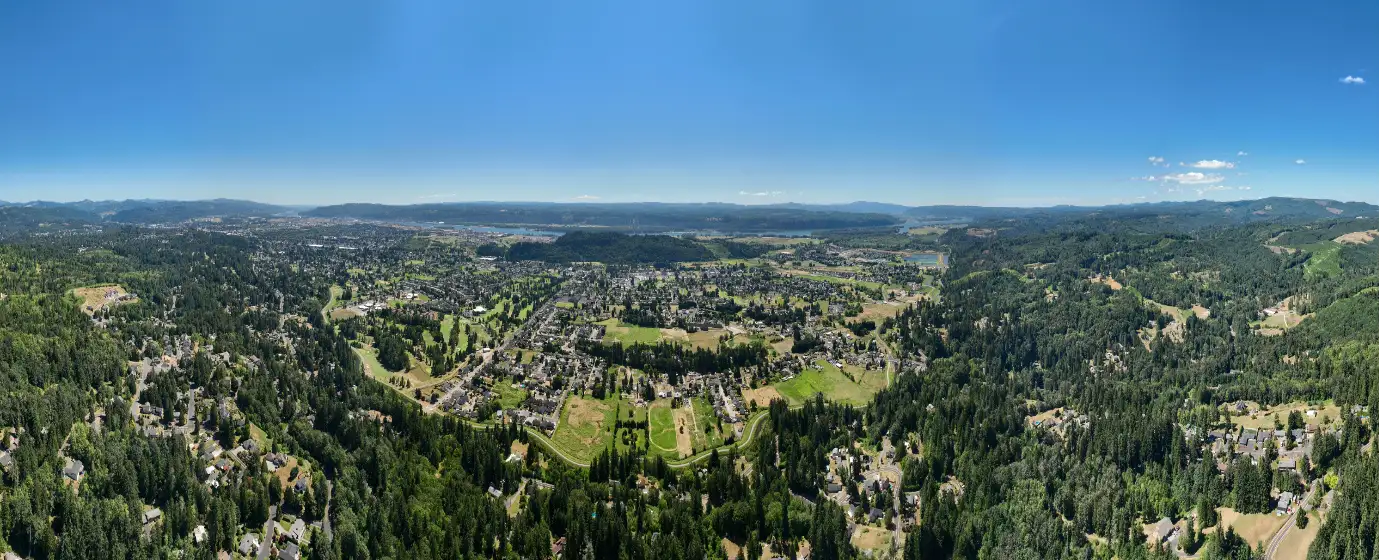
Local Expert Takeaway: The buyers who do best in Longview are the ones who understand it as three distinct markets stacked on top of each other: affordable and industrial-adjacent in the Highlands; mid-market and competitive in West Longview and Columbia Valley Gardens; and elevated — literally and price-wise — in Columbia Heights, Longview Heights, and Mint Valley. The Lake Sacajawea corridor is the social spine of the city, and proximity to it (or to the Olympia Way green space where the Nutty Narrows Bridge sits) adds real lifestyle value that doesn't always show up in price-per-square-foot comparisons. If you're planning a visit, spend a morning walking the Lake Sacajawea perimeter path and an afternoon in the Downtown grid — the gap between the two experiences will tell you more about Longview's neighborhood spectrum than any map can.
Quick Takeaways & FAQs
✅ West Longview is Longview's most competitive sub-market, with homes moving to pending in roughly 8 days and a median sale price near $420,000 — the neighborhood Portland commuters target first.
⚠️ The industrial buffer near the Columbia River creates real noise and sightline trade-offs on specific Highlands and Downtown blocks that Zillow listings won't flag — walk the block at different times before you offer.
📍 Mint Valley Golf Course, open to the public since 1976 on Pennsylvania Street, anchors one of Longview's quietest and most wooded neighborhoods — and it's technically inside city limits.
What is the most affordable neighborhood in Longview, WA?
Which Longview neighborhood is best for families with kids?
How much do homes cost in West Longview specifically?
What is the most expensive neighborhood in Longview, WA?
Is Mint Valley a good place to live in Longview?
Moving to Washington?
Tell us what you need help with and we'll connect you with local resources.
