
Most Californians who move to Lake Forest Park say the same thing around month three: they didn't realize how much of their paycheck they'd been handing to Sacramento. Washington has no individual state income tax on earned income below $1 million — zero — while California's brackets start at 1% and climb to 13.3% at the top. For a dual-income tech household earning $300,000–$400,000 a year, that difference alone can exceed $30,000 annually. Lake Forest Park sits on the northwestern shore of Lake Washington, about 25 minutes north of downtown Seattle via I-5, tucked between Kenmore to the north and Seattle city limits to the south. It is dense with Douglas firs, sloped mid-century modern lots, and a quiet that feels deliberately guarded — the zoning rules make sure of it.
The city's economic backbone is borrowed from its neighbors. Amazon, Microsoft, and Boeing are the dominant employers drawing residents here, along with the University of Washington a bike ride down the Burke-Gilman Trail. The Shoreline School District holds an A rating, according to Niche, and that distinction consistently ranks near the top of why families with school-age children choose this city over closer-in Seattle neighborhoods. The median household income here is $158,868, which tells you something about who already lives here: these are largely dual-income professional households who chose the tree canopy and the school district over a shorter commute.
The cost of living runs approximately 58% above the U.S. average, driven by housing and a 10.4% combined sales tax — noticeably higher than California's statewide base rate of 7.25%. The typical home value is $1,001,137 (Zillow Home Value Index, August 2026), putting Lake Forest Park in roughly the same price tier as established Bay Area suburbs. What changes is everything below the price line: no state income tax, moderate property taxes, and a lifestyle anchored by the Burke-Gilman Trail, Lake Washington waterfront access, and Third Place Commons hosting over 900 free community events a year. Health insurance premiums generally run below California levels, though you will drive farther for specialist care than you would from most major California metro areas.
Whether you're relocating for a tech job, escaping California's tax structure, or both, this guide covers what the move actually looks like — the income tax math, property tax reality, sales tax catch, home prices, lifestyle shifts, and the honest downsides nobody puts in the relocation brochure.

The Income Tax Reversal: What Californians Actually Save
The headline is simple. Washington imposes no individual state income tax on wages or salaries for earned income below $1 million. If you are a software engineer, a project manager, or a dual-income household earning anywhere in the $150,000–$900,000 range, your state income tax bill drops to zero the day you establish Washington residency.
California's progressive brackets start at 1% and escalate quickly. By $100,000 of taxable income, you are already in the 9.3% bracket. At $300,000, effective state rates typically land between 9% and 11%. At $500,000, you are approaching the 12.3% bracket, with the 1% mental health surcharge applying above $1 million to push the top marginal rate to 13.3%.
| Income Level | California Est. State Tax | Washington State Tax (pre-2028) | Annual Difference |
|---|---|---|---|
| $150,000 | ~$10,500–$12,000 | $0 | ~$10,500–$12,000 |
| $250,000 | ~$21,000–$24,000 | $0 | ~$21,000–$24,000 |
| $400,000 | ~$38,000–$43,000 | $0 | ~$38,000–$43,000 |
| $600,000 | ~$61,000–$68,000 | $0 | ~$61,000–$68,000 |
| $900,000 | ~$100,000–$108,000 | $0 | ~$100,000–$108,000 |
| Above $1,000,000 | 13.3% marginal + surcharge | 0% now; 9.9% flat above $1M from Jan 2028 | Narrows significantly post-2027 |
The figures above are estimates based on published bracket structures, not a tax calculation for your specific situation — work with a CPA before making decisions. But the directional reality is clear: for most Lake Forest Park residents working at Amazon, Microsoft, or Boeing, the income tax savings alone cover a meaningful share of the mortgage.
The $1 Million Threshold — Read This Carefully
Washington Governor Ferguson signed ESSB 6346 on March 30, 2026. Starting January 1, 2028, Washington will impose a flat 9.9% income tax on household income above $1 million. Earned income below that threshold remains untaxed.
For senior engineers, tech executives, or dual-income households with RSU vesting pushing combined income above $1 million in a given year, this changes the math substantially. The gap between Washington and California at that level narrows to a few percentage points rather than the full 13.3%. If your compensation package regularly crosses that line, model the post-2027 scenario with your tax advisor before treating Washington as a guaranteed tax haven.
Capital Gains: Still a Real Advantage
Washington's capital gains excise tax applies only to long-term gains above $278,000 (the 2025 indexed standard deduction), taxed at a flat 7%. California taxes all capital gains as ordinary income at rates up to 13.3%, with no preferential treatment. If you are selling California real estate, exercising stock options, or liquidating a portfolio as part of this move, the difference is material — particularly for gains in the $300,000–$700,000 range where the Washington rate is roughly half of California's effective rate on the same amount.
Home Prices and Property Taxes: The Direct Comparison
Lake Forest Park's typical home value is $1,001,137 (Zillow Home Value Index, August 2026). That puts it in the same conversation as established suburbs in the South Bay, the East Bay hills, or coastal Orange County — all markets where $1 million is a real entry point, not a luxury ceiling.
What shifts is the property tax structure. Washington's effective property tax rate in Lake Forest Park runs approximately 0.84%. On a $1 million purchase, that's roughly $8,410 per year. California's statewide effective rate runs approximately 0.76% — modestly lower on paper. But Proposition 13 complicates that comparison significantly.
Why the Prop 13 Comparison Misleads New Arrivals
If you bought a California home years ago, Prop 13 has likely capped your assessed value far below market. Your effective rate on that frozen assessment may feel very low. The moment you sell and buy in Lake Forest Park, you lose that cap entirely — you are assessed at full purchase price in Washington, with no equivalent reset protection.
The practical result: a long-tenured California homeowner selling a home they bought in 2005 for $600,000 and now worth $1.4 million will likely see their annual property tax bill increase after the move, even though Washington's nominal rate is slightly higher. That is the right framing — not which state's rate is lower in the abstract, but what you were actually paying versus what you will pay on a $1 million Washington purchase.
| Factor | California (typical) | Lake Forest Park, WA |
|---|---|---|
| Typical home price (comparison) | Varies widely by metro; comparable suburbs $900K–$1.5M+ | $1,001,137 (ZHVI, Aug 2026) |
| Effective property tax rate | ~0.76% statewide | ~0.84% |
| Assessment cap | Yes — Prop 13 limits increases to 2%/yr | No — assessed at purchase price |
| State income tax on wages | 1%–13.3% progressive | 0% (below $1M through 2027) |
| Capital gains treatment | Ordinary income, up to 13.3% | 7% excise on gains above $278K |
| Sales tax (combined rate) | 7.25%–10.75% depending on county | 10.4% (2026) |
| Estate / inheritance tax | None | Washington estate tax applies above $2.193M (2025 threshold) |
* ZHVI = Zillow Home Value Index.
The housing stock itself also differs from California in a specific way: most Lake Forest Park homes were built between the 1950s and 1980s in mid-century modern styles, frequently on wooded, sloping lots that require maintenance California buyers aren't used to. Strict zoning limits new construction to small infill projects, so inventory is genuinely constrained — you won't find the new-build tract options that exist in parts of California's Central Valley or Inland Empire. For a closer look at how neighborhoods within the city compare, see the Lake Forest Park neighborhoods guide.

The Sales Tax Catch: What California Transplants Miss
Here is the line that surprises almost every California transplant at the register: Lake Forest Park's combined sales tax rate is 10.4% in 2026. California's statewide base rate is 7.25%, though many California counties and cities add local rates that push totals above 9% or even 10% in some areas.
If you moved from San Francisco (8.625%), Los Angeles (10.25%), or the Bay Area's higher-rate cities, the Lake Forest Park rate is either close to what you knew or modestly higher. If you came from a lower-rate California county, the jump is immediately noticeable on big-ticket purchases.
Where It Actually Hits Your Budget
Sales tax at 10.4% is a real line item on a car purchase, appliances, furniture, and home improvement supplies. On a $50,000 car purchase, the difference between a 9% and a 10.4% rate is $700 — not devastating, but real. The compounding effect on a household that buys furniture for a new home, a vehicle, and a season's worth of outdoor gear in year one can add up to several thousand dollars more than expected.
Washington has no income tax partly because it leans harder on consumption taxes — that is the structural trade. For most California households earning above $200,000, the income tax savings dwarf the additional sales tax exposure by a wide margin. For lower-income households, the equation is less favorable, because a regressive consumption tax takes a larger share of a smaller income.
Groceries and Services
Unpacked groceries are exempt from Washington sales tax, which softens the daily impact. Prepared food, alcohol, and most services are taxable. The full cost-of-living breakdown, including utilities and groceries, lives on the Lake Forest Park cost of living page.
Looking to buy in Lake Forest Park? Estimate your payment.
Enter your numbers to see an estimated monthly mortgage payment.
Estimate only. Excludes HOA fees and mortgage insurance. The interest rate above is a starting point, not a quoted rate — replace it with your own to see real numbers. Insurance is a flat placeholder, not a Lake Forest Park quote.
What Daily Life Actually Looks Like After the Move
Lake Forest Park has roughly 13,000 residents and no incorporated downtown of its own. The commercial center is Town Center at Lake Forest Park on Bothell Way NE — an indoor mall that functions as the city's living room. Third Place Books anchors one end, an Albertsons and a Metropolitan Market handle groceries, and Third Place Commons runs the upper level as a nonprofit community hall with more than 900 free events per year, including the LFP Farmers Market. On a Saturday morning, this is where you will find most of the city.
Local 104, a pizza restaurant and taproom on Ballinger Way NE, is the kind of neighborhood spot that fills up with post-trail cyclists and after-school parents — low-key, genuinely local, and exactly what a small city with no bar strip can support.
The Burke-Gilman Trail as a Daily Utility
The Burke-Gilman Trail runs along the Lake Washington waterfront directly through Lake Forest Park, spanning roughly 20–26 miles of paved surface connecting south toward the University District and north toward Woodinville. For fit cyclists, a bike commute to the UW or South Lake Union is a realistic daily option — not aspirational, but actually used. This is one of the things California transplants from car-dependent suburbs consistently say they did not expect to enjoy as much as they do.
The Weather Adjustment — Be Honest With Yourself
Lake Forest Park receives approximately 37 inches of rainfall annually, spread across long stretches of overcast gray from October through April. Winters are mild — lows typically 34–40°F, nothing close to a Sacramento or Bay Area freeze — but the psychological weight of months without direct sun is real. People who grew up in Southern California and move here often underestimate this. The dense tree canopy that makes the city beautiful in July makes it noticeably darker in January. Summers here, with highs in the mid-to-upper 70s and almost no rain, are genuinely extraordinary — the question is whether six months of gray is the price you are willing to pay for them.
What People Move Out For
The honest reason people leave Lake Forest Park after a few years is almost always one of two things: the car dependency for anything beyond Town Center becomes wearing, or the housing inventory is so limited — thanks to those strict zoning rules — that growing families can't upsize without leaving the city entirely. If you need a four-bedroom with a flat yard and a three-car garage, Lake Forest Park is probably not going to deliver it at a price that makes sense. The wooded, sloped lots that define the city's character are also its practical constraint.
Who This Move Actually Makes Sense For
Lake Forest Park is not a city for everyone relocating from California, and being clear about that upfront saves a lot of wasted house tours. It makes the most sense for a specific profile: dual-income tech households earning $200,000–$800,000 combined, with school-age children, who value a wooded residential setting over urban walkability, and who have accepted that their social life will largely be self-assembled rather than handed to them by a restaurant row.
| Buyer Profile | Fit with Lake Forest Park | What to Watch |
|---|---|---|
| Tech Dual-income tech household, $200K–$800K | Strong — income tax savings are immediate and large; Shoreline schools are a strong match | Model the post-2028 income tax law if total HH income approaches $1M |
| Families Parents with school-age children | Strong — Shoreline School District is consistently well-rated; quiet streets, trail access | Limited extracurricular infrastructure within the city itself; plan to drive |
| Commuter Seattle-bound daily commuter | Moderate — 25-min drive is manageable; transit options exist but frequency is limited | King County Metro Route 312 and Sound Transit express buses are there, but schedule flexibility matters |
| Nature Outdoor-focused household | Strong — Burke-Gilman Trail, Lake Washington waterfront, Lyon Creek Waterfront Preserve | If skiing or alpine access matters, you are 90+ minutes from the mountains |
| Walkable Walkability-dependent household | Weak — Town Center is the only walkable node; most of the city is car-dependent residential | If daily errands on foot matter, look at neighborhoods adjacent to Bothell Way NE |
| First-Time First-time buyer from California | Moderate — if income supports a $1M purchase; entry-level inventory is thin | Older construction, sloped lots, and limited new build require more due diligence than a newer suburb |
The tax math works decisively in Lake Forest Park's favor for most California tech workers. What requires more honest accounting is the lifestyle fit — specifically whether a small, quiet, tree-covered city of 13,000 people with one meaningful commercial node matches what you actually want from daily life. For a broader picture of who the city suits, the living in Lake Forest Park guide covers employer access, commute patterns, and community character in more depth.
First-Time Buyer Note
If you are buying for the first time, the $1,001,137 typical home value means your down payment and financing needs are substantial. Washington has its own first-time buyer assistance programs worth understanding before you finalize your approach — the Lake Forest Park first-time homebuyer page covers what is available and how to qualify.
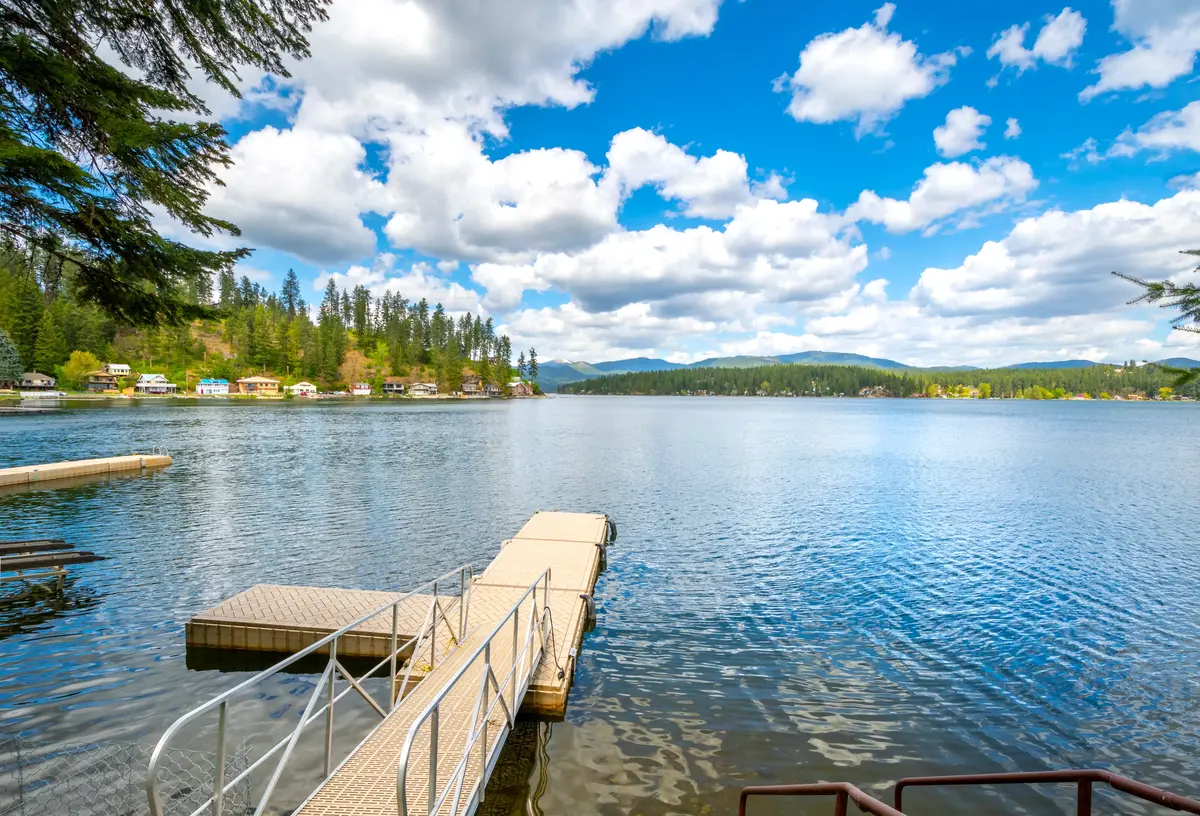
Local Expert Takeaway: The income tax argument for leaving California is real and immediate — a household earning $350,000 at Amazon or Microsoft saves more in Washington income tax than most people expect. But Lake Forest Park is not a tax-optimized suburb with California amenities. It is a quiet, wooded, mid-century city of 13,000 people where the social infrastructure centers on Third Place Commons, the LFP Farmers Market, and the Burke-Gilman Trail. If that trade — lower taxes, good schools, a slower residential pace, and six months of Pacific Northwest gray — is one you can make genuinely, Lake Forest Park will feel like a very good decision by summer. If you need the restaurant energy of the Bay Area or the sunshine guarantee of San Diego, no amount of tax savings closes that gap.
Quick Takeaways & FAQs
✅ Washington's 0% state income tax on earned income below $1 million saves most California tech households tens of thousands of dollars annually the moment they establish residency.
⚠️ Lake Forest Park's 10.4% combined sales tax is higher than California's statewide base rate, and the 2028 income tax on household earnings above $1 million will narrow the advantage for high earners — run the numbers with a CPA before you move.
📍 Third Place Commons at Town Center hosts 900+ free community events per year, including the LFP Farmers Market — it is the closest thing Lake Forest Park has to a town square, and most longtime residents treat it as one.
Does moving from California to Lake Forest Park really eliminate my state income tax?
How does Lake Forest Park's property tax compare to what I was paying in California?
Is the sales tax in Lake Forest Park actually higher than California?
What kind of home can I expect to buy in Lake Forest Park at current prices?
How hard is the California-to-Pacific-Northwest weather adjustment?
Moving to Washington?
Tell us what you need help with and we'll connect you with local resources.
