
Most people researching DuPont find the crime numbers and assume there's a catch. There usually is in a city this close to I-5, this close to Tacoma, and this close to one of the largest military bases on the West Coast. In DuPont's case, the numbers mostly hold up under scrutiny. The city's violent crime rate — 0.52 per 1,000 residents based on FBI 2024 Uniform Crime Report data — sits dramatically below both the Washington state average and the national average. That's not spin. It's a product of how this city was built, who lives here, and what surrounds it.
DuPont was master-planned from the ground up in the 1990s on land once owned by DuPont Chemical and later Weyerhaeuser. The Northwest Landing development that defines most of the city wasn't just an aesthetic project — it created a community with consistent setbacks, well-lit streets, and a neighborhood layout that doesn't lend itself to the kind of transient traffic that drives crime in cities along the I-5 corridor. The adjacency to Joint Base Lewis-McChord brings a high proportion of active-duty military families and federal contractors into the housing stock, a demographic pattern that consistently correlates with lower crime across comparable communities. None of that makes DuPont immune. But it does explain why the numbers look the way they do.
Property crime is where the picture gets slightly more nuanced. At 11.16 per 1,000 residents, it's still well below state and national comparisons, but it's the category worth watching — and the one where proximity to I-5 creates at least some exposure. Residents describe a day-to-day experience focused on power outages, occasional scams, and roadside incidents rather than break-ins or thefts. That tracks with what the data shows, but it's not the same as zero risk, and this guide won't pretend otherwise.
Whether you're narrowing down neighborhoods, comparing DuPont to Steilacoom or Lakewood, or just trying to verify what someone told you at an open house, the sections below break down DuPont's crime data by category, explain the local law enforcement picture, put the numbers in state and national context, and flag the honest caveats worth knowing before you decide on an area.
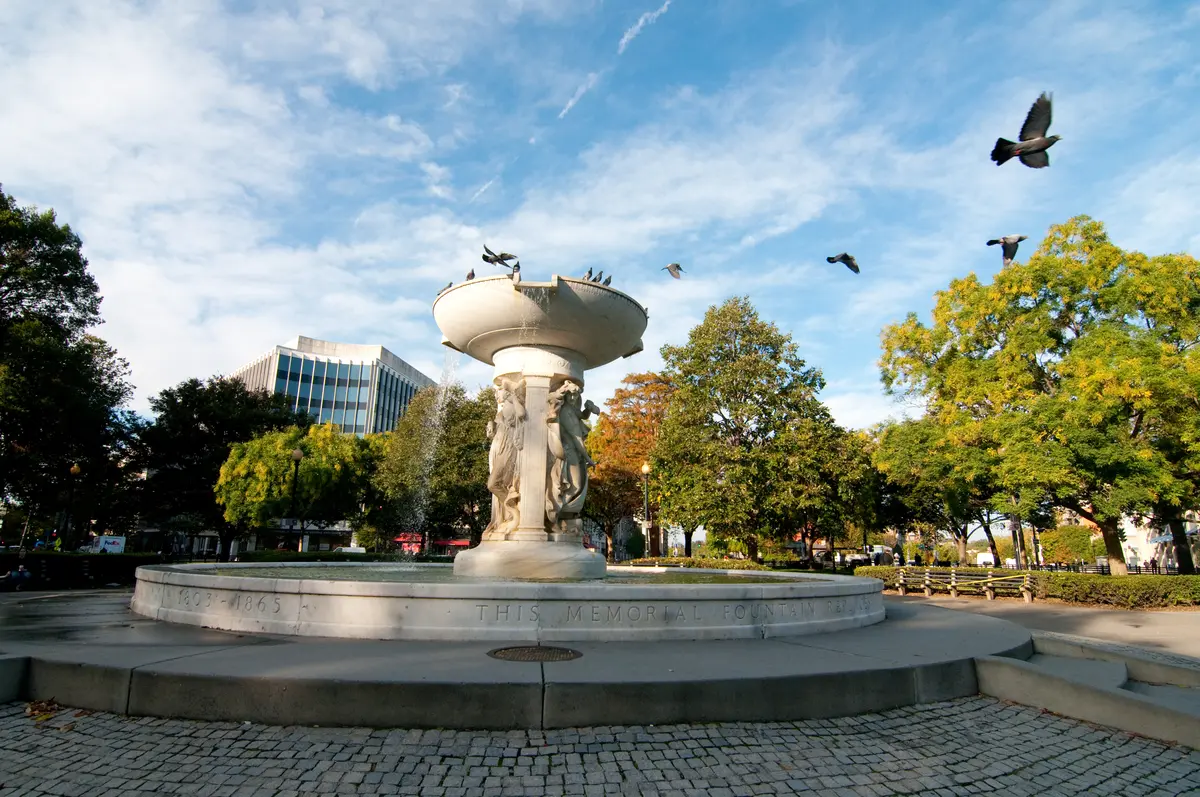
DuPont Crime Rates at a Glance: What the 2024 Data Shows
The headline figure is striking: DuPont's violent crime rate of 0.52 per 1,000 residents is approximately 6.3 times lower than the Washington state average and nearly 7 times lower than the national average, based on FBI 2024 Uniform Crime Report data released in September 2025. For a city of roughly 10,000 people sitting directly on I-5 between Tacoma and Olympia, that number is genuinely unusual.
| Crime Category | DuPont (per 1,000) | Washington State | U.S. Average | DuPont vs. State |
|---|---|---|---|---|
| Violent Crime | 0.52 | ~3.29 | ~3.61 | ~6.3× lower |
| Property Crime | 11.16 | ~24.7 | ~17.6 | ~2.2× lower |
| Violent Crime Index (BestPlaces, 1–100) | 9.2 | — | 22.7 | Well below avg. |
| Property Crime Index (BestPlaces, 1–100) | 14.5 | — | 35.4 | Well below avg. |
| Safer than % of WA cities | 83% | — | — | Top quintile |
| Safer than % of U.S. cities | 71% | — | — | Top third |
DuPont ranks safer than 83% of Washington cities and 71% of U.S. cities — figures that hold up across multiple aggregators, all drawing from the same FBI source data.
The property crime rate of 11.16 per 1,000 deserves its own read. It's noticeably below the state average and still well below the national figure, but it's meaningfully higher than the violent crime picture would suggest. I-5 access and proximity to the commercial logistics corridor near the fulfillment centers creates some exposure to opportunistic property crime — vehicle break-ins in particular are the most commonly reported incidents. If you're choosing between neighborhoods in DuPont, that's the category to pay attention to, not the violent crime numbers.
DuPont vs. Washington State: Putting the Numbers in Context
Washington state's crime picture in 2024 is actually improving. The Washington Association of Sheriffs and Police Chiefs reported that statewide violent crimes fell 7.6% and property crimes fell 13.4% from 2023 to 2024 — real, measurable progress. DuPont's numbers are already so far below the state baseline that these trends matter less here than in cities like Lakewood or Tacoma, where the baseline is much higher.
One structural issue worth understanding: Washington ranks last in the nation for police officers per capita, with approximately 1.38 officers per 1,000 residents statewide compared to a national average of 2.31. That's a context point for the entire state, not a DuPont-specific problem — but it's honest information if you're thinking about response times or community policing resources across Pierce County broadly.
What the City-Data Composite Index Adds
City-Data.com's composite crime index for DuPont in 2025 is 91, compared to a U.S. average of 228.4 — roughly 2.5 times lower than the national composite. That index is a proprietary weighted score, not a raw per-1,000 rate, so it's best used as directional confirmation rather than a standalone figure.
The five-year trend embedded in that index is the more interesting data point: it shows increasing violent crime alongside decreasing property crime over the past several years. The absolute violent crime numbers remain extremely low — 0.52 per 1,000 is still barely above zero — but the directional trend is worth watching rather than dismissing. DuPont is not static, and a city that has grown significantly since the Northwest Landing buildout will face different pressures at 10,000 residents than it did at 6,000.
The Statewide Comparison That Matters Most
Washington state recorded 329.3 violent crimes per 100,000 residents in 2024 — itself about 6% below the national average. DuPont's rate translates to approximately 52 per 100,000. That's not a rounding difference. It's a structural gap that reflects who lives here, how the city was planned, and the sustained influence of the military community anchored at Joint Base Lewis-McChord next door.
Local Law Enforcement: DuPont PD and the JBLM Factor
The DuPont Police Department operates out of 1780 Civic Drive and serves a city of under 10,000 residents. For a community this size, dedicated municipal police coverage is the norm — but DuPont has an unusual supplementary layer that most comparable cities don't: the Provost Marshal Office at Joint Base Lewis-McChord, which provides 24-hour law enforcement on base around the clock.
JBLM is the West Coast's largest military installation. Its presence immediately adjacent to DuPont means that a significant portion of the population moving through the area at any given time is operating within a heavily monitored, access-controlled environment. That doesn't extend to DuPont's city streets, but it does shape the overall character of the corridor — who is here, why they're here, and the baseline expectations around public behavior that tend to come with a large active-duty population nearby.
What Residents Actually Report
Community discussions among DuPont residents consistently surface the same concerns: scams targeting homeowners and seniors, power outages along the I-5 corridor during storms, and roadside emergencies on the surface roads connecting Northwest Landing to the highway. Violent crime almost never surfaces in these community discussions — which is consistent with a rate of 0.52 per 1,000 in a population under 10,000 residents.
As of July 2026, only 2 registered sex offenders resided within DuPont city limits — roughly 1 per 4,769 residents, which is significantly lower than the Washington state average. That figure appears in public registry data and is worth including for families researching the area, though it can and does shift over time as people move in and out.
The Honest Friction Point
What surprises newcomers six months in isn't crime — it's the occasional feeling that DuPont's police presence is stretched thin relative to the pace of growth. The department serves a community that has added significant residential density over the past decade, and the staffing picture reflects statewide constraints rather than local failures. It's not a crisis, but it's the kind of thing residents notice when a non-urgent call takes longer to get a response than they'd expected coming from a suburb they considered very safe.
Looking to buy in DuPont? Estimate your payment.
Enter your numbers to see an estimated monthly mortgage payment.
Estimate only. Excludes HOA fees and mortgage insurance. The interest rate above is a starting point, not a quoted rate — replace it with your own to see real numbers. Insurance is a flat placeholder, not a DuPont quote.
Neighborhood Safety in DuPont: What the Geography Tells You
DuPont doesn't have the kind of dramatic neighborhood-to-neighborhood crime variation you'd see in Tacoma or Lakewood. The entire city covers a relatively compact footprint, and the master-planned character of Northwest Landing creates a more uniform baseline than you'd find in an organically developed suburb. That said, geography still matters — and the neighborhood breakdown goes deeper on what distinguishes each area.
Northwest Landing: The Core
Northwest Landing is where the bulk of DuPont's population lives, and it sets the city's safety tone. The street grid is coherent, sight lines are good, and the mix of single-family homes and townhomes creates consistent activity at street level throughout the day. Best for: Families Quiet Streets
Historic Village (Old Town DuPont)
The Historic Village area around the DuPont Village Historic District and DuPont Historical Museum is among the most stable parts of the city. Traffic is light, the lots are larger, and the pace is slower. Older residents and longer-term owners concentrate here, which tends to correlate with lower turnover and lower property crime exposure. Best for: Quiet Privacy
Palisade Village and Hoffman Hill Village
These sections sit closer to the I-5 on-ramps and the commercial logistics corridor. They're still very safe by any reasonable measure, but vehicle break-ins — the most commonly reported property crime in DuPont — occur slightly more often in areas with higher throughput traffic and more parked cars near commercial zones. If you're choosing between neighborhoods and property crime is your primary concern, this is worth knowing before you decide on an area. Best for: Commuters First-Time Buyers
Yehle Park Village, Edmond Village, and Bell Hill
These areas tend to be quieter and more residential in character, with Sequalitchew Creek Trail accessible from several of them. The trail corridor itself is well-used and generally considered safe during daylight hours. Bell Hill in particular sits at slightly higher elevation and has a more secluded feel that long-term residents tend to value. Best for: Nature Access Families
Practical Safety Research: What to Check Before You Decide on a Neighborhood
Aggregate crime rates tell you the average — they don't tell you about the specific block you're considering. Here's how to go one level deeper before committing to an area in DuPont.
Use Multiple Sources, Not Just One
The figures in this guide draw primarily from FBI 2024 Uniform Crime Report data as aggregated by AreaVibes, cross-referenced with BestPlaces and City-Data. Each aggregator uses slightly different methodology, which is why the precise numbers vary. What matters is the directional consistency: all three sources place DuPont well below state and national averages on violent crime, with a more moderate but still favorable property crime picture.
Check the WA Sex Offender Registry Directly
Washington State's sex offender registry is publicly searchable at county level through the Washington State Patrol. DuPont's total count is very low — 2 registered offenders as of mid-2026 — but registry data updates continuously, and checking directly gives you current-address precision that a third-party aggregator can't replicate.
Spend Time in the Neighborhood at Different Hours
DuPont's feel changes between a Tuesday afternoon and a Friday night, particularly around the commercial stretch on Wilmington Drive where independent restaurants and casual dining draw a consistent evening crowd from both residents and people commuting through. The foot traffic and parking patterns there are meaningfully different from what you'd see in the Historic Village a mile away. Driving your shortlisted streets at 8 p.m. on a weekend tells you something a crime map doesn't.
Talk to Residents, Not Just Data Aggregators
The local community forums for DuPont are active and relatively candid. The conversations there skew toward infrastructure and neighbor-to-neighbor concerns — fence disputes, storm debris, the occasional package theft — rather than anything that would raise a safety flag. That community texture is itself a data point: a neighborhood where the most urgent posts are about power outages is a neighborhood in a fundamentally different situation from one where residents are posting about break-ins or confrontations.
The One Thing Most People Overlook
DuPont's safety profile is largely a product of its planned-community origins and its military-adjacent demographics. Both of those factors are durable — JBLM isn't moving, and the city's built form won't change overnight. What can shift is the pace of growth. DuPont added substantial population in the 2010s and early 2020s, and faster growth along the I-5 logistics corridor could alter the character of the areas closest to the highway before the city's infrastructure catches up. It hasn't happened yet. But checking the five-year trend periodically — rather than assuming today's numbers are permanent — is the kind of thing residents who've been here a while will tell you matters.

Local Expert Takeaway: DuPont's safety numbers are real and they hold up across every data source. A violent crime rate of 0.52 per 1,000 — dramatically below both the state and national average — reflects the city's planned origins, its military-connected population, and the stabilizing presence of JBLM next door. Property crime is the more relevant concern for most residents, particularly in the areas closest to I-5 and the commercial logistics corridor. If you're walking the Sequalitchew Creek Trail or having dinner on Wilmington Drive on a Friday evening, you're not going to feel like you're in a high-crime environment — because you aren't. The honest caveat is the five-year trend: violent crime is still extremely low in absolute terms, but it has been edging upward as the city grows. Watch the annual WASPC report rather than treating today's figures as permanent.
Quick Takeaways & FAQs
✅ DuPont's violent crime rate of 0.52 per 1,000 is safer than 83% of Washington cities and 71% of U.S. cities, based on FBI 2024 data — an exceptional figure for any I-5 corridor community.
⚠️ Property crime, at 11.16 per 1,000, is well below state averages but concentrated near the commercial corridor along Wilmington Drive and the I-5 on-ramps — vehicle break-ins are the most commonly reported incident type.
📍 The DuPont Police Department at 1780 Civic Drive is supplemented by 24-hour Provost Marshal coverage at adjacent Joint Base Lewis-McChord, an unusual dual-layer law enforcement presence for a city of under 10,000 people.
What is DuPont WA's crime rate compared to the rest of Washington?
Is property crime a concern in DuPont?
How does the proximity to Joint Base Lewis-McChord affect DuPont's safety?
Has DuPont's crime rate been going up or down?
Which DuPont neighborhoods are considered the safest?
Moving to Washington?
Tell us what you need help with and we'll connect you with local resources.
