Home ›
Blog ›
Best Cities for Remote Workers in North Texas & Denton County, Ranked
If you're a remote worker weighing a move to North Texas or Denton County, the question isn't simply where prices look reasonable on a map — it's where you can actually build a productive, sustainable home-office life. This corridor stretches from the DFW metro's outer suburbs all the way north to the Red River, tying together university towns, fast-growing lakefront communities, small agricultural towns, and mid-sized cities with regional airports of their own. What holds them together is Texas's fundamental trade-off: no state income tax, but property tax rates that range widely and fund nearly everything local government does.
The cities at the stronger end of this comparison tend to combine genuine broadband infrastructure — the kind that comes with enough population density to attract competitive providers — with either low carrying costs, strong airport access, or both. At the other end sit smaller towns where quiet and affordability come with real trade-offs in connectivity and amenity depth. The sections below walk through each city on the factors that matter most to remote workers: what your home office situation is likely to look like, what ownership actually costs month to month, how easy it is to get on a plane when a client meeting calls, and what daily life feels like when you step away from the desk.
How This Ranking Was Built
Each city is scored 1-10 on every dimension below against a fixed statewide scale — never against the other cities in this region — then combined into one weighted Composite score out of 10.
Internet Speed — 25%Weighted contribution to the composite score, graded 1-10 against a fixed statewide scale.
Tax Burden — 20%Weighted contribution to the composite score, graded 1-10 against a fixed statewide scale.
Airport Access — 20%Weighted contribution to the composite score, graded 1-10 against a fixed statewide scale.
Affordability — 20%Weighted contribution to the composite score, graded 1-10 against a fixed statewide scale.
Quality of Life — 15%Weighted contribution to the composite score, graded 1-10 against a fixed statewide scale.
Top 14 Cities: Best for Remote Workers Snapshot
Ranked by overall composite score. Click any city to jump to the full breakdown.
| # | City | Composite | Internet | Property Tax | Median Price |
|---|
| 1 | Wichita Falls
Wichita County | 8.2/10 | 8.1 | 3.4 | $176,679 |
| 2 | Sherman
Grayson County | 7.1/10 | 6.5 | 9.3 | $255,418 |
| 3 | Denton
Denton County | 6.9/10 | 9.9 | 3.9 | $350,224 |
| 4 | Denison
Grayson County | 6.9/10 | 5.3 | 9.3 | $225,218 |
| 5 | Lewisville
Denton County | 6.6/10 | 9.0 | 3.9 | $392,721 |
| 6 | Flower Mound
Denton County | 6.1/10 | 7.4 | 5 | $610,100 |
| 7 | Corinth
Denton County | 5.7/10 | 5.1 | 5.1 | $412,999 |
| 8 | Little Elm
Denton County | 5.6/10 | 6.9 | 3.9 | $400,423 |
| 9 | The Colony
Denton County | 5.5/10 | 6.4 | 2.4 | $404,746 |
| 10 | Pilot Point
Denton County | 4.6/10 | 2.9 | 3.9 | $323,567 |
| 11 | Aubrey
Denton County | 4.6/10 | 3.1 | 3.9 | $346,440 |
| 12 | Justin
Denton County | 4.2/10 | 2.7 | 3.1 | $370,554 |
| 13 | Van Alstyne
Grayson County | 4.0/10 | 2.8 | 6 | $430,337 |
| 14 | Argyle
Denton County | 4.0/10 | 2.5 | 3.9 | $603,761 |

Property Tax
3.4/10
out of 10
Airport Access
10/10
out of 10
Affordability
10/10
out of 10
Quality of Life
10/10
out of 10
Median Price
$176,679
2026 market price
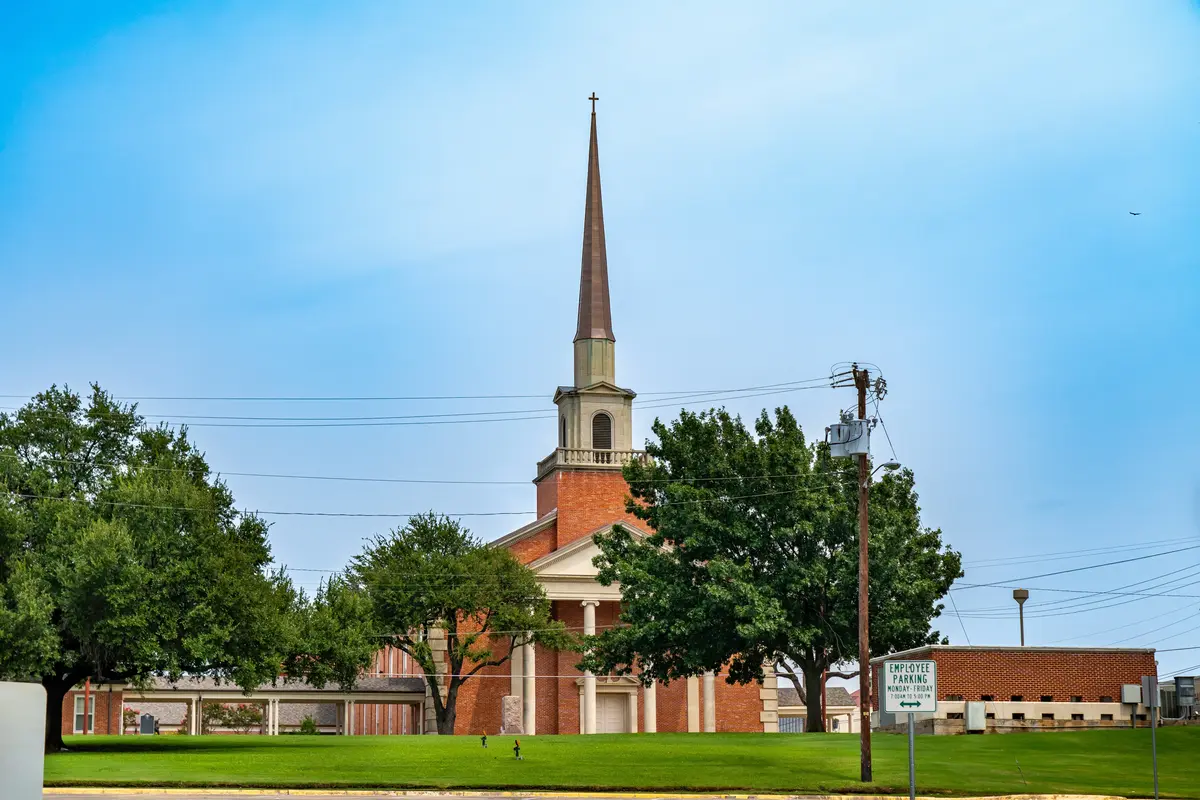
Wichita Falls sits at a scale — the 43rd-largest incorporated city in Texas — where broadband infrastructure is genuinely competitive and a regional airport is practically in the city's backyard, making it unusual in a list that otherwise requires remote workers to build their entire travel life around DFW. With a $176,679 typical home price, the ownership entry point is dramatically below anything else in this comparison. The catch is the property tax rate, which lands on the heavier side for Texas and adds a real line item to the monthly budget that buyers should price in before making an offer.
For a remote worker who wants a low-cost, high-square-footage home office setup and the ability to fly without a long highway run to a major hub, Wichita Falls is the clearest practical answer in this group. It reads less like a suburb and more like a self-contained mid-sized city — with enough restaurants, parks, and local landmarks to fill a weekend without driving somewhere else.
Property Tax
9.3/10
out of 10
Airport Access
4.7/10
out of 10
Affordability
7.7/10
out of 10
Quality of Life
7.3/10
out of 10
Median Price
$255,418
2026 market price
Sherman occupies a middle ground that suits a specific kind of remote worker: someone who wants a genuine small-city feel, manageable home prices, and one of the lightest property tax burdens in the region. At a $255,418 typical home price, ownership here is accessible without the trade-offs that come with the truly small towns farther out. DFW is a longer drive for frequent flyers, so Sherman rewards buyers who board a plane occasionally rather than constantly. Broadband options are solid for the city's size without reaching the depth of a larger metro.
Sherman suits the remote worker who has largely cut the cord from a corporate office and is optimizing for cost and quality of life over airport proximity. It pairs well with buyers who want a walkable downtown, a real local dining scene, and carrying costs that leave room in the budget — Grayson County's property tax structure is among the more favorable in this comparison.

Property Tax
3.9/10
out of 10
Airport Access
7.8/10
out of 10
Affordability
5.1/10
out of 10
Quality of Life
7.3/10
out of 10
Median Price
$350,224
2026 market price
Denton is the university city of this group — home to the University of North Texas and Texas Woman's University — and that academic presence shapes everything from the broadband infrastructure to the live-music calendar to the density of independent coffee shops and coworking-adjacent spaces where remote workers end up. At a $350,224 typical home price, it sits well above the smaller towns in this comparison. The property tax burden is one of the heavier ones here, a function of overlapping city, county, and school levies that buyers should price carefully before committing.
For a remote worker who wants genuine urban texture without moving into DFW's core, Denton delivers a city-feel that few others in this group can match. I-35, I-35E, and I-35W all converge here, giving quick access south when in-person work or airport runs come up. Robson Ranch, the area's established 55+ community, draws retirees who work remotely or consult part-time. The tradeoff is carrying cost — what you gain in lifestyle, you pay for in the tax line.

Property Tax
9.3/10
out of 10
Airport Access
4.2/10
out of 10
Affordability
8.9/10
out of 10
Quality of Life
7.3/10
out of 10
Median Price
$225,218
2026 market price
Denison is a small city with a historic downtown on the Red River side of Grayson County, and it carries one of the lightest property tax burdens in this entire comparison — a meaningful advantage for remote workers whose monthly budget is already stretched by a home loan. At a $225,218 typical home price, ownership is well within reach. The honest limitation is internet infrastructure: at a smaller population scale, provider competition is thinner, and buyers should verify what's available at a specific address before assuming metro-grade speeds.
Denison suits the remote worker who doesn't fly often, has already tested their internet needs with a solid backup plan, and wants low carrying costs in a town with genuine character — a lakefront position on Lake Texoma adds outdoor access that larger suburbs can't match. It's a noticeably different pace than Denton or Lewisville, and buyers who want that separation from suburban density tend to appreciate it most.
Property Tax
3.9/10
out of 10
Airport Access
9.7/10
out of 10
Affordability
4.2/10
out of 10
Quality of Life
5/10
out of 10
Median Price
$392,721
2026 market price
Lewisville is a large, established DFW suburb with the broadband infrastructure to match — with a large enough population that provider competition is real and speeds reflect a city that has been densely built out for decades. The airport situation is as good as it gets in this group without leaving the metro; DFW International is a short drive away on SH-121. What remote workers pay for that convenience is a $392,721 typical home price and a property tax burden that is notably heavy — the carrying cost is a genuine ongoing consideration that should go into any monthly payment estimate.
Lewisville fits the remote worker who needs fast, reliable home internet, flies regularly, and wants full suburban amenity depth — from Lake Lewisville's outdoor access to a revitalized downtown corridor — without moving deeper into Dallas or Fort Worth proper. It's a pragmatic choice for someone whose remote work still involves frequent in-person travel and who values convenience over low cost.
Property Tax
5/10
out of 10
Airport Access
9.6/10
out of 10
Affordability
1/10
out of 10
Quality of Life
7.3/10
out of 10
Median Price
$610,100
2026 market price
Flower Mound is one of the most affluent planned communities in Denton County, and the home prices reflect it: a $610,100 typical home price puts it at the upper end of this comparison by a wide margin. The airport access is excellent — DFW International is just a short drive away — and the infrastructure that comes with a large suburban population means broadband options are competitive. The property tax rate lands in the middle range for Texas, but on a home at this price point, mid-range still represents a substantial annual figure that buyers should model carefully. The Legends and Orchard Flower are the established 55+ communities here for buyers in that stage of life.
Flower Mound suits the remote worker who prioritizes a polished suburban environment, top-tier school districts for families with kids, trail systems, and easy airport access — and has the income to carry the price. It is a lifestyle purchase more than a value purchase, and buyers who approach it that way tend to be satisfied. Those optimizing primarily on cost will find better math elsewhere in this comparison.
Property Tax
5.1/10
out of 10
Airport Access
8.5/10
out of 10
Affordability
3.8/10
out of 10
Quality of Life
6/10
out of 10
Median Price
$412,999
2026 market price
Corinth is a smaller Denton County suburb tucked between Denton and Lake Dallas, offering lake access and a quieter residential character than the larger cities on either side. At a $412,999 typical home price, it sits in the mid-to-upper range for this comparison. The property tax burden runs above average and is worth building into the monthly payment calculation before making an offer. Broadband infrastructure at Corinth's size is functional but doesn't reach the depth of Denton or Lewisville — checking provider availability at a specific address matters here.
Corinth works best for remote workers who want suburban quiet, lake proximity, and a short drive to DFW without paying Flower Mound prices. It's a residential town more than an amenity hub, so buyers who prefer to keep their head down, work from home, and drive into Denton or Lewisville for a wider dining or social scene tend to fit it best.
Property Tax
3.9/10
out of 10
Airport Access
7.7/10
out of 10
Affordability
4.0/10
out of 10
Quality of Life
5/10
out of 10
Median Price
$400,423
2026 market price
Little Elm has grown rapidly along the Lewisville Lake shoreline into one of Denton County's more recognizable bedroom communities, with a lakefront town center that gives it more identity than most fast-growth suburbs manage. At a $400,423 typical home price, ownership is on the pricier side by statewide standards, and the property tax rate runs on the heavier end — a real line item to budget alongside the mortgage. Broadband options are solid for the city's size. Del Webb at Union Park and Ladera Little Elm serve the 55+ segment specifically.
Little Elm fits the remote worker who wants a newer-construction home with lake access and doesn't need to be in the city for much day-to-day. DFW is a manageable drive when flights come up. The trade-off is that outside the lakefront area, the town feels like new development rather than an established community — which suits some buyers and disappoints others.
Property Tax
2.4/10
out of 10
Airport Access
8.9/10
out of 10
Affordability
3.9/10
out of 10
Quality of Life
6/10
out of 10
Median Price
$404,746
2026 market price
The Colony sits on the south shore of Lewisville Lake with Grandscape — a large mixed-use entertainment and retail development — as its commercial anchor, which gives it a livelier weekend character than most suburbs its size. At a $404,746 typical home price, the cost of entry is similar to neighboring lakefront communities. The property tax rate is on the higher end of this group, and buyers should model that carefully — the carrying cost is a genuine ongoing factor. DFW is a short drive, making it one of the more airport-convenient options in the county.
The Colony suits the remote worker who wants easy airport access, lakefront recreation, and an active local scene centered on Grandscape without moving into the DFW core. The broadband infrastructure is reasonable for the city's size. It is not the answer for buyers prioritizing low carrying cost — but for those optimizing on lifestyle and airport convenience, the location logic is clear.
Property Tax
3.9/10
out of 10
Airport Access
6.3/10
out of 10
Affordability
5.7/10
out of 10
Quality of Life
5/10
out of 10
Median Price
$323,567
2026 market price
Pilot Point is a small Denton County town with genuine rural character, sitting north of the suburban growth wave that has swallowed much of the county closer to DFW. At a $323,567 typical home price, the amenity base and infrastructure remain limited relative to the cost of entry. Internet options at this population scale are thinner than in the suburban cities, and buyers should verify provider availability at a specific address before assuming reliable broadband — that step is non-negotiable for full-time remote work. The property tax burden runs on the heavier side.
Pilot Point works for the remote worker who genuinely wants to trade suburban density for land, quiet, and proximity to Texas horse country — and who has already stress-tested their connectivity situation. DFW is a reasonable drive for occasional travel. Anyone who needs metro-grade internet reliability or a short commute to a coworking option will likely find the small-town infrastructure limiting over time.
Property Tax
3.9/10
out of 10
Airport Access
6.9/10
out of 10
Affordability
5.2/10
out of 10
Quality of Life
4/10
out of 10
Median Price
$346,440
2026 market price
Aubrey is a small, fast-growing Denton County town where new subdivisions are appearing faster than the surrounding infrastructure is keeping pace. At a $346,440 typical home price, it no longer qualifies as the rural bargain it once was, while the connectivity options remain constrained by its small-town population base. Internet infrastructure here lags the suburban cities noticeably, and confirming specific provider availability before purchasing is essential — not optional — for anyone whose livelihood depends on a home connection. The property tax burden is on the heavier side.
Aubrey suits a remote worker who values space and a quieter pace over amenity depth, and whose internet needs can be met with a verified provider at a specific address. DFW is a manageable drive when flights are necessary. Buyers who need daily access to coworking, strong dining variety, or a walkable town center will find Aubrey's current amenity base lean — it is growing, but the buildout is uneven.
Property Tax
3.1/10
out of 10
Airport Access
8.4/10
out of 10
Affordability
4.7/10
out of 10
Quality of Life
2/10
out of 10
Median Price
$370,554
2026 market price
Justin is a small Denton County town with a rural character and an outsized airport advantage for its size — DFW is close enough to be genuinely convenient, which is unusual at this price point and population scale. At a $370,554 typical home price, it retains its small-town feel while sitting above bargain territory. The honest limitation for remote workers is twofold: internet infrastructure at a small population reflects limited provider competition, and the built-in amenity base within town is thin — dining, parks, and local services require driving. The property tax rate adds meaningful carrying cost. Ladera at Timberbrook serves the 55+ buyer segment.
Justin fits the remote worker who wants a quiet rural setting, a large lot or property, and an airport that is genuinely close when travel comes up — and who can confirm reliable broadband at the specific address. It is not the answer for anyone who relies on a diverse local scene or wants to step away from the desk into a walkable downtown. The lifestyle is intentionally simple, and the buyers who thrive here tend to prefer it that way.
Property Tax
6/10
out of 10
Airport Access
5.5/10
out of 10
Affordability
3.6/10
out of 10
Quality of Life
2/10
out of 10
Median Price
$430,337
2026 market price
Van Alstyne is a small Grayson County town that has attracted buyers priced out of Collin County's closer suburbs — but at a $430,337 typical home price, the value proposition has narrowed considerably as demand has caught up with the location. Internet infrastructure at this small-town scale is limited, and confirming provider options before buying is essential — a meaningful warning for full-time remote workers. Most dining, shopping, and services require a drive to Sherman or McKinney. The property tax rate is real carrying cost that sits in a range buyers should confirm with the county appraisal district for any specific parcel.
Van Alstyne suits the remote worker who has verified solid internet at a specific address, is drawn to the small-town character and acreage potential, and is prepared to drive for most amenities. The DFW airport run is long enough to make frequent flyer life inconvenient. For buyers who have genuinely tested their connectivity situation and want room to breathe outside the suburban grid, it has appeal — but the infrastructure limitations are real constraints, not just a minor inconvenience.
Property Tax
3.9/10
out of 10
Airport Access
8.4/10
out of 10
Affordability
1.3/10
out of 10
Quality of Life
4/10
out of 10
Median Price
$603,761
2026 market price
Argyle is one of Denton County's most affluent small towns, with an acreage-heavy, low-density character that has made it a destination for buyers who want to be near DFW without living inside its suburban fabric. At a $603,761 typical home price, ownership here reflects the premium the market places on that combination of land and airport proximity, and the carrying cost is compounded by a property tax rate that, stacked with MUD levies in many neighborhoods, runs notably high. Internet infrastructure at a small-town population scale lags the larger suburbs significantly, and connectivity checks before buying are essential.
Argyle suits the remote worker with the income to carry a high-priced home and a high tax burden, who values land, quiet, and a rural-adjacent environment over urban amenity depth — and who has confirmed workable broadband at the specific property. DFW proximity is a genuine asset for frequent flyers. Buyers optimizing on affordability or connectivity will find the math difficult to justify here compared with other towns in this comparison.
In this region, the remote-worker sweet spot depends entirely on your priorities — a buyer who flies constantly needs a different answer than one who never boards a plane, and a buyer stretched on price needs a different answer than one who is not. Confirm broadband options at the specific address before you make an offer, and price the property tax rate into your monthly budget the same way you price the mortgage.
Want to see what's for sale in these neighborhoods?
Sign up for listing alerts — get notified when homes hit the market.
Get Listing Alerts →
Frequently Asked Questions
Which city in this group is the most practical for a remote worker who also flies frequently?
Lewisville and The Colony both put DFW International within an easy drive, and both have the broadband infrastructure of larger suburban cities. Wichita Falls is the outlier in a different way — it has a regional airport practically in town, which removes the DFW dependency entirely for many trips. The right answer depends on whether you're flying out of DFW specifically or just need reliable airport access of any kind.
How much does property tax vary across these cities, and why does it matter for remote workers?
Texas has no state income tax, so property tax is the primary recurring cost of owning here — and it funds the schools, roads, and emergency services the city runs. Rates across this group vary meaningfully based on which county, city, school district, and utility or emergency services districts a parcel falls inside. Sherman and Denison carry some of the lighter burdens in the group; cities like Wichita Falls, Lewisville, Little Elm, and Argyle sit on the heavier end. Always confirm the exact rate for a specific address with the county appraisal district before making an offer.
Can I count on reliable home internet in the smaller towns like Aubrey, Pilot Point, or Justin?
Not automatically. At small-town population scales, provider competition is limited and infrastructure investment typically lags larger suburbs. Before buying in Aubrey, Pilot Point, Justin, Van Alstyne, or Argyle, you should confirm which providers serve the specific address, what speeds are actually available on that parcel, and ideally speak with neighbors about their real-world experience. A verified connection is the non-negotiable first step for full-time remote work in any of those towns.
Is Denton a good fit for remote workers who still want a city feel without living in Dallas or Fort Worth?
Denton delivers a city feel rooted in its dual university presence — the restaurant scene, live music, and broadband infrastructure all reflect a city that draws and retains people who want an active urban life. The broadband infrastructure is as competitive as it gets in this group. The trade-off is carrying cost: overlapping city, county, and school levies push the property tax burden to one of the heavier levels here, and homes are priced above most of the smaller towns. Buyers who can absorb that cost tend to find Denton delivers what it promises.
Which cities here are worth considering for remote-working retirees or semi-retired buyers?
Denton has Robson Ranch, an established 55+ community. Flower Mound has The Legends and Orchard Flower for buyers who want that suburban polish and DFW airport proximity. Little Elm has Del Webb at Union Park and Ladera Little Elm along the lake. Justin has Ladera at Timberbrook for buyers who want a quieter, more rural setting. Sherman and Denison don't have dedicated 55+ communities on record but offer genuinely low carrying costs that make the overall retirement math more comfortable than in the pricier Denton County suburbs.
Moving to Texas?
Tell us what you need help with and we'll connect you with local resources.

Todd Davidson
About the Author
Todd Davidson is the founder of The Move Genie, a premier digital resource offering in-depth city guides, neighborhood profiles, and localized market insights for communities nationwide. Drawing on an extensive background in home financing and real estate, he established the platform to streamline the relocation process, helping families make confident, data-driven decisions when comparing new areas.