
What Is Living in Weatherford, Texas Like?
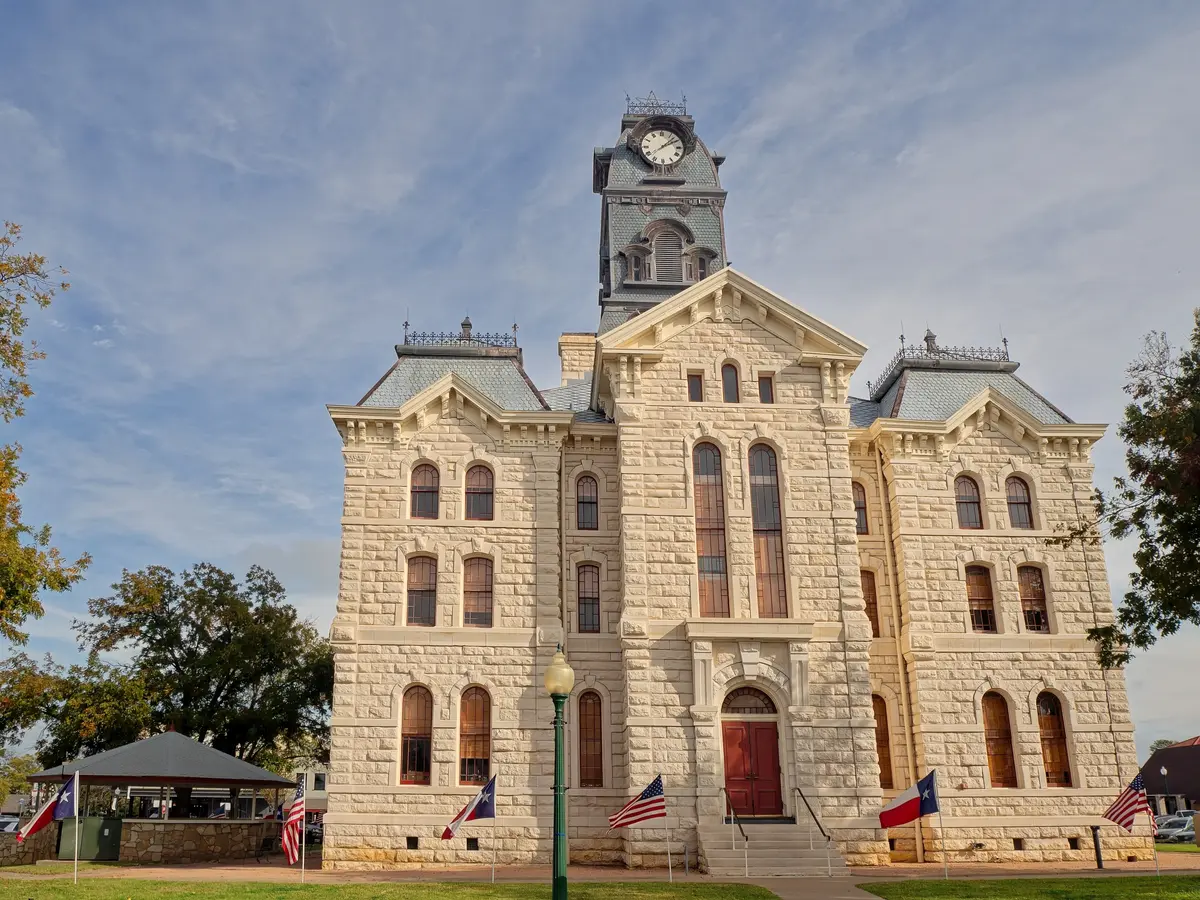
Maybe you've been priced out of the Fort Worth market and someone mentioned Weatherford. Maybe you drove through on I-20, saw the Parker County Courthouse anchoring a genuine downtown square, and thought it deserved a second look. Either way, Weatherford occupies a real tension: it is a working small city with its own economy and identity — the self-styled Cutting Horse Capital of the World and Peach Capital of Texas — that also functions as a western anchor for the DFW commuter belt. That dual identity shapes almost every decision you'll make here, from which neighborhood to buy in to what time you need to leave the house on a Tuesday morning.
The city's economic backbone is anchored by the public sector and healthcare. The City of Weatherford, Parker County government, the Weatherford Independent School District, and a regional health system together account for the largest local employer base. Weatherford College, a community college with programs in nursing, business, and criminal justice, adds an educational institution to the mix. For higher-paying or more specialized positions, many residents commute east — which is a known quantity here, not a surprise. What drew national attention in 2025 was Weatherford's recognition as one of the fastest-growing affordable suburbs in the country, a designation that has only accelerated interest from buyers looking west of Fort Worth.
Day-to-day living costs here track close to the national norm — groceries, utilities, and transportation run near U.S. averages — while home prices remain noticeably below what you'd pay in Aledo or Hudson Oaks. That combination matters: Weatherford isn't a sacrifice move. The city has 234 sunny days a year, a real walkable historic downtown with more than 60 Victorian and Queen Anne mansions, and Holland Lake Park and the Clear Fork Trinity River corridor for outdoor routines. The retail picture is also evolving: a Sprouts Farmers Market was under construction at Weatherford Point, a development that signals a shift toward lifestyle-driven offerings the city hasn't traditionally had.
Whether you're seriously considering a move or still doing early research, the sections below cover Weatherford's neighborhoods, housing market, commute realities, local economy, and what daily life actually looks like once you're here.

Weatherford at a Glance
Looking to buy in Weatherford? Estimate your payment.
Enter your numbers to see an estimated monthly mortgage payment.
Estimate only. Excludes HOA fees and mortgage insurance. The interest rate above is a starting point, not a quoted rate — replace it with your own to see real numbers. Insurance is a flat placeholder, not a Weatherford quote.
Why Are People Moving to Weatherford?
The short version: Weatherford gives you a real town, not just a subdivision with a zip code. The Parker County Courthouse — a Second Empire-style landmark that belongs on a postcard — sits at the center of a National Historic District with more than 60 preserved Victorian, Queen Anne, and Greek Revival mansions. That downtown isn't decorative. Boutiques, antique shops housed in 1800s-era buildings, local restaurants, and the Doss Heritage and Culture Center (which honors Weatherford natives Mary Martin and Larry Hagman) make it a place residents actually use on weekends.
The numbers that drive the migration are straightforward. With a typical home price of $397,734 (Zillow Home Value Index, July 2026), Weatherford sits noticeably below what buyers face in Aledo or Hudson Oaks, two neighbors where prices run meaningfully higher. That gap is wide enough to matter for a household earning around the city's median income of $81,516 — though it's worth knowing that the median income here falls short of what's needed to comfortably carry the typical home, so the full cost-of-living picture deserves a careful look before you make an offer.
The city's growth hasn't been accidental or purely market-driven. Weatherford has maintained strong marks for municipal financial transparency five consecutive years running — the kind of institutional housekeeping that translates into maintained roads, reliable services, and the sort of infrastructure confidence that families want when they're picking a long-term home.
Who Actually Moves Here
The profile skews toward families with school-age children who want more house for the money, remote workers who need a Fort Worth or DFW connection a few times a week rather than daily, and people who have specifically decided they don't want to live inside the Metroplex. Equestrian families are a genuine part of the community — the Cutting Horse Capital designation isn't just a slogan. Retirees land here too, drawn by the historic character and a lower cost base, though no 55+ communities were found in Weatherford, so that segment tends to settle into standard single-family neighborhoods.
What's less common: buyers who underestimate the commute or expect the local job market to match Fort Worth's depth. Weatherford's employment base is solid but concentrated in public-sector and healthcare roles. If your career is in finance, tech, or a specialized industry, the job is almost certainly in Fort Worth or Dallas — and that drive will define your mornings.
What Daily Life Feels Like in Weatherford
Weatherford runs at a pace that DFW transplants consistently describe as the main thing they didn't expect to like so much. The Parker County Courthouse square is a genuine civic gathering point — not a tourist re-creation, but a place where locals eat lunch, browse antique shops, and stop at the farmers market when it runs through the warm months. It anchors the kind of walkable downtown that most suburban communities at this price point simply don't have.
A Town With Its Own Character
The Parker County Peach Festival, held annually in July, is the city's signature event — the kind of thing that brings the whole town out and gives newcomers an immediate sense of how tight the community fabric actually is. The Cutting Horse Capital designation means equestrian culture is woven into daily life in ways that surprise people from purely urban backgrounds: horse trailers in residential driveways, arenas on the outskirts of neighborhoods, an agricultural fair mentality that persists even as the population grows.
Chandor Gardens — a 3.5-acre estate that blends formal English garden design with Chinese architectural elements, created by portrait artist Douglas Chandor — is one of those local assets that residents quietly love and visitors are genuinely stunned by. The city owns and maintains it, which says something about how Weatherford prioritizes its civic character alongside growth.
The Honest Trade-Off
Six months in, most newcomers land on the same observation: you'll do more of your serious shopping online or on a Fort Worth run than you expected. The retail base has traditionally been modest for a city of 40,634 people, though a Sprouts Farmers Market under construction at Weatherford Point signals that the gap is closing. Until it does, a weekend trip to Fort Worth for specialty groceries or a wider dining range is a normal part of life here — not a hardship, but a reality worth building into your routine before you move.
The safety picture here tracks well: the full crime breakdown shows a violent crime rate of 2 per 1,000 residents and a property crime rate of 16 per 1,000 residents — both below the Texas state averages of 4 per 1,000 and 20.7 per 1,000 respectively, and below national figures as well. Families with kids generally find the neighborhoods feel settled and unhurried in a way that higher-density suburbs rarely do.
Schools fall under Weatherford ISD, which holds a C rating, according to the Texas Education Agency — and with 8,153 students enrolled in 2025-26, it's a mid-size district that carries the full range of active UIL athletics programs; the Weatherford Kangaroos' Friday night football is a genuine community anchor. On 2024-25 state assessments, 40% of students reached math proficiency and 54% reached reading proficiency. For a deeper look at schools, boundaries, and individual campuses, the schools page covers the full picture.
The Weatherford Housing Market Right Now
The typical home price in Weatherford sits at $397,734 (Zillow Home Value Index, July 2026) — a figure that still feels like an outlier to buyers relocating from the mid-DFW market, where comparable square footage runs considerably higher. The effective property tax rate here is approximately 1.24%, which is relevant context for monthly carrying costs even if the purchase price feels manageable.
The city-wide typical rent runs $1,514 per month (Zillow, July 2026) — a figure that makes renting a viable first step for people who want to learn the city's geography before committing. For a full comparison of what that rent buys versus owning at current prices, the cost-of-living page breaks it down in detail.
What the Housing Stock Looks Like
Weatherford's inventory spans a wide range of eras and styles. The Historic Downtown and surrounding blocks hold the older Victorian stock — restored and unrenovated alike — while neighborhoods like Canyon West and Woodland Lakes represent newer construction with larger lots and more suburban layouts. Briarwood tends to draw buyers looking for an entry point into homeownership, as it runs below the city median. Saddle Club Estates and Quail Springs Ranch attract buyers who want acreage and the equestrian infrastructure that the city's culture supports.
Some areas run meaningfully above the city median — the neighborhoods guide goes deeper on character and geography for anyone trying to narrow down which part of town fits their life. The main thing to understand before you shop: Weatherford's neighborhoods feel genuinely different from each other, and the divide between historic-core living and newer-subdivision living is more pronounced here than in purely suburban markets.
One affordability note that matters: the median household income in Weatherford falls short of what's needed to carry the typical home here. That gap isn't enormous, but it's real — and it means buyers who are stretching are genuinely stretching. Well-priced homes in desirable neighborhoods do not tend to sit.
Weatherford Neighborhoods
Weatherford has several distinct areas — each with its own character and appeal. Here’s a breakdown to help you narrow down where to focus your home search.
🏡 Historic Downtown / Downtown Square
The heart of Weatherford's National Historic District, where Victorian and Queen Anne architecture lines the streets surrounding the Parker County Courthouse — suits buyers who want genuine walkable character and don't mind older homes that reflect the city's 1800s roots.
🏠 Lake Weatherford
A lakeside residential area organized around the city's primary outdoor amenity, drawing buyers who want a water-adjacent lifestyle and a quieter pace than the downtown core.
🌳 Briarwood
One of Weatherford's more accessible entry points into homeownership, with a mix of established single-family homes that run below the city median — suits first-time buyers and those prioritizing value over proximity to downtown.
🏘 Woodland Lakes
A newer-construction neighborhood with a suburban layout and larger lots, appealing to families with school-age children who want modern floor plans and established greenery.
🏔 Canyon West
One of Weatherford's more developed suburban corridors, with newer homes and easy I-20 access — a practical choice for commuters who prioritize the drive over downtown proximity.
🌆 University Hills
A residential area with a community feel that sits near Weatherford College, drawing a mix of established households and buyers who appreciate the educational institution as a neighborhood anchor.
Pros & Cons of Living in Weatherford
The Pros
- Historic small-town square with real community identity
- Significantly more land and acreage options than closer-in DFW suburbs
- Below-average cost of living relative to the national average
- Strong sense of local heritage (Peach Festival, cutting-horse culture)
The Cons
- Longer commute into Fort Worth and Dallas job centers than inner-ring suburbs
- Property crime runs above the national average even though violent crime is comparatively low
- Hot, humid summers with highs regularly near the mid-90s
Getting Around & Commuting in Weatherford
Weatherford is a car-dependent city. The daily rhythms of life — groceries, school runs, errands, work — mean driving, and most errands require a car regardless of where in the city you live. That's not unusual for a Parker County city at this scale, but it's worth naming directly if you're moving from a place where you occasionally walk somewhere.
The I-20 Corridor
I-20 is the primary artery east to Fort Worth, and the commute runs about 35 minutes to Fort Worth under normal conditions. TxDOT's active "Keep 20-30 Moving" project is widening lanes, adding auxiliary merges, and rebuilding interchanges along the corridor — construction that creates short-term friction but points toward real capacity improvement. When I-20 backs up, US-180 (Mineral Wells Highway) is the realistic alternative route, though it moves more slowly through surface intersections. SH-171 (Cleburne Highway) connects south toward Cleburne and Johnson County.
The morning crawl east is the defining logistical fact of life in Weatherford. Most residents who commute to Fort Worth daily build in a buffer — leaving before the main rush or timing their return to avoid the worst of the backlog. Remote workers and hybrid workers who need Fort Worth access only two or three days a week tend to find the arrangement genuinely workable. People who need to be in downtown Fort Worth or deeper into Dallas five days a week often eventually recalibrate where they live.
What the Drive Means for Neighborhood Choice
Where you land within Weatherford actually affects your I-20 on-ramp time in a meaningful way — the eastern portions of the city load onto the highway differently than areas near Lake Weatherford or the historic core. It's the kind of detail worth testing during a visit rather than assuming. Dallas/Fort Worth International Airport is approximately 45 miles from the city, the closest major airport, and the drive is relevant for anyone who travels frequently for work.
Weatherford College sits within city limits and draws some residents who work or take classes there, but the local job base — concentrated in municipal government, county services, education, and healthcare — doesn't absorb the full working population. Many residents have simply priced that commute into their decision and found the trade acceptable given what they get at home.
Schools in Weatherford
Families relocating to Weatherford have public, private, and higher-education options nearby. Here’s a quick overview.
🎓 School District
Weatherford Independent School District serves K–12 students across Weatherford and the surrounding area. Rated C (source: Texas Education Agency, 2025 A-F accountability rating (2024-25 school year)).
🏆 Graduation Rate
The 4-year high-school graduation rate here is approximately 95.3%.
📚 Higher Education
Texas’s public universities — the University of Texas at Austin, Texas A&M University, and the University of Houston — offer four-year degrees statewide, with one of the largest community college systems in the country (50+ public community college districts) providing two-year and workforce programs.
🌐 Online Learning
UT Austin Online and Texas A&M University Online offer fully accredited online degrees for remote learners across the state.
Safety in Weatherford
A quick look at how Weatherford compares on the numbers that matter most when weighing a neighborhood or a move.
🛡 Violent Crime
Approximately 2 per 1,000 residents.
🔒 Property Crime
Approximately 16 per 1,000 residents.
Compared to the most recent national figures from the Bureau of Justice Statistics (2024), Weatherford’s violent crime is below the national average (about 3.7 per 1,000), and property crime is below the national average (about 18.4 per 1,000).
Against Texas as a whole, Weatherford’s violent crime is roughly half the state average, and property crime is somewhat below the state average (Bureau of Justice Statistics, Crime Known to Law Enforcement, 2024 (tables 2 and 3)).
Crime rates can vary a lot within a single city, so the citywide numbers above are only a starting point. Some neighborhoods in Weatherford run well below these averages, while others run higher — the kind of block-by-block detail that matters most when you’re actually choosing where to live. The full guide below breaks it down neighborhood by neighborhood.
Working in Weatherford
Weatherford’s largest employers span several industries — here are some of the anchors of the local job market.
🏛 City of Weatherford
Municipal government
🏛 Parker County
County government
🎓 Weatherford Independent School District
Education
🏥 Medical City Weatherford
Healthcare
Retiring in Weatherford
Weatherford draws retirees for its balance of amenities, outdoor access, and cost. Here’s what to weigh.
🌤 Climate
Weatherford logs 234 sunny days a year, with hot summers that peak in the upper 90s and mild winters that occasionally bring freezes but rarely sustained cold. Spring and fall are genuinely pleasant — the kind of shoulder seasons that make outdoor routines easy to maintain most of the year.
🍴 Lifestyle
The historic downtown square, Chandor Gardens, the Doss Heritage and Culture Center, and Lake Weatherford give retirees a day-to-day texture that goes well beyond standard suburban amenities. Independent dining options, a walkable courthouse district, and a community calendar anchored by the annual Peach Festival make the social infrastructure real rather than aspirational.
🏚 55+ Communities
No 55+ communities were found in Weatherford. Retirees who move here typically settle into standard single-family neighborhoods, with the historic core and lakeside areas being the most common choices for buyers prioritizing character and walkability over new construction.
✈ Getting Around
Weatherford is car-dependent, and retirees should plan accordingly — most daily errands require driving. Dallas/Fort Worth International Airport is approximately 45 miles away, which matters for those who travel to see family. The city's compact scale means that once you're out, most destinations are a short drive rather than a long one.
🏛 Texas Taxes for Retirees — What to Know
- No state income tax — Texas has no personal income tax — constitutionally protected under Article VIII, Section 24. Social Security, pensions, 401(k)/IRA withdrawals, and annuity payments are all untaxed at the state level, with no state return to file.
- Sales tax is the tradeoff — The state sales tax is 6.25%, and local add-ons bring the combined rate in Weatherford to 8.25% (Texas Comptroller of Public Accounts, city sales and use tax rates, July 2026). Groceries and prescription drugs are exempt.
- Property taxes — the real tradeoff — Texas’s effective property tax rate averages about 1.40%, among the highest in the country, since property tax (not income tax) funds most local government and schools.
- Over-65 homestead exemption and school-tax freeze — Homeowners 65+ (or disabled) get an additional $60,000 exemption from their home’s value for school district taxes, on top of the general homestead exemption — $200,000 off school taxable value combined, following November 2025’s Proposition 11 (SB 23), which raised the over-65 exemption to $60,000, and Proposition 13 (SB 4), which raised the general homestead exemption to $140,000. Once claimed, your school district tax bill is frozen at that year’s amount and cannot increase as home values rise, and the ceiling can transfer if you move to a new home within Texas.
- Deferral option if cash is tight — Homeowners 65+ can defer property tax payment entirely for as long as they live in the home, rather than paying it currently — interest accrues, but no forced sale.
- No estate or inheritance tax — Texas has no estate tax, no inheritance tax, and no gift tax.
- No separate capital gains tax — Because Texas has no state income tax, capital gains — including on investments and home sales — are not taxed at the state level at all, unlike states such as Washington that tax capital gains separately from income.
Tax laws change frequently and individual situations vary. This is general information, not tax advice — always consult a qualified Texas tax professional or CPA for personalized retirement tax planning.
Weekends & Local Favorites in Weatherford
Weekends in Weatherford tend to organize themselves around the downtown square, the lake, and whatever the season is doing. The city has 234 sunny days a year, which means outdoor time is a genuine part of life for most of the calendar — not just a summer possibility.
Food, Coffee & Gathering Spots
The local dining scene punches above what a city of 40,634 would normally sustain. Shep's and Mesquite Pit anchor the casual end of the dining rotation for longtime residents. For a sit-down evening, Beefmaster Steakhouse-Weatherford and Rio Mambo cover the steak-and-Tex-Mex territory that Weatherford does well. Oaxaca (WO-HA-KA) Mexican Cuisine has developed a following among residents who want something a step beyond the standard Tex-Mex template.
The coffee options run from quick to lingering. R&K Cafe II is a morning-routine staple. Major Perk and The Full Cup fill the neighborhood coffee-shop role for residents who want a place to settle in. Ironworks Coffee skews toward the specialty side, and Back Home Bakery rounds out the morning scene with baked goods alongside the coffee.
Outdoors & Culture
Lake Weatherford is the city's main outdoor anchor — boating, fishing, and the kind of weekend rhythm that makes the city feel bigger than its population suggests. Holland Lake Park and Cartwright Park provide green space closer to the urban core, and the Clear Fork Trinity River corridor is where trail-minded residents get their longer walks and runs in. Chandor Gardens — that 3.5-acre estate of fountains, waterfalls, and intricate stonework created by a painter who sat Winston Churchill and FDR for portraits — is genuinely unlike anything else in a city this size.
The Doss Heritage and Culture Center covers Parker County history alongside its exhibits honoring Mary Martin and Larry Hagman, both Weatherford natives. The Parker County Peach Festival in July is the signature community event — the kind of annual gathering that gives the city its civic pulse and gives newcomers a fast read on what Weatherford actually values. And if you're wondering about cutting horse competitions: yes, they happen here, and yes, residents go.
Drone delivery via Walmart Zipline launched in mid-2025 and covers a radius around the Walmart location — a small but telling signal that Weatherford's retail and logistics infrastructure is evolving faster than the city's small-town reputation suggests.
Local favorites in Weatherford
Restaurants
- Shep's
- Mesquite Pit
- Rio Mambo
- Oaxaca (WO-HA-KA) Mexican Cuisine
- Beefmaster Steakhouse-Weatherford
Outdoors
- Lake Weatherford
- Holland Lake Park
- Chandor Gardens
- Clear Fork Trinity River access
- Cartwright Park
Coffee
- R&K Cafe II
- The Full Cup
- Major Perk
- Ironworks Coffee
- Back Home Bakery
Top Things Locals Say About Weatherford
The best intel about a city comes from the people who actually live there. Here’s what Weatherford residents say when newcomers ask the questions everyone’s thinking.
“I knew the commute going in, but what I didn't expect was how little I'd want to make it once I was actually settled here. The downtown square, the lake on weekends, the Peach Festival — after six months I realized I was planning my week around staying in Weatherford, not leaving it.”
— Recent Weatherford home buyer
“What's the most surprising thing about living in Weatherford?”
The downtown is real — that's what surprises most people from suburban DFW. The Parker County Courthouse square isn't a revitalization project; it's been the center of town for over a century, and you can actually walk to lunch, browse genuine antique shops, and feel like you're somewhere specific rather than just somewhere. Canyon West and Woodland Lakes feel like standard suburbia, but the historic core is unlike anything else at this price point in the metro.
“What do locals love most about Weatherford?”
The pace and the community identity. Weatherford has its own culture — the cutting horse world, the Peach Festival, Chandor Gardens — that doesn't feel borrowed from Fort Worth. Long-term residents know each other, show up at the same events, and have a genuine sense of place. That's harder to find than people expect when they're shopping in a metro as large as DFW.
“What should newcomers to Weatherford know?”
Plan your I-20 timing before you need to, not after. The eastbound morning run to Fort Worth is manageable if you leave at the right window; it's a different story if you don't. Also: the retail options downtown and nearby are improving but still limited for a city of 40,000 — most serious shopping runs either happen online or combine with a Fort Worth trip. That's a normal part of life here, not a problem, but newcomers who don't plan for it are the ones who get frustrated.
“How much do you need a car in Weatherford?”
Completely. Most daily errands mean driving — groceries, school runs, work. The historic downtown core is compact enough to walk once you're parked there, and Holland Lake Park and the Clear Fork Trinity River corridor are accessible on foot from nearby neighborhoods, but getting to them in the first place requires a car for most residents. If you're coming from a walkable city, adjust your expectations before you sign a lease.
Cities Near Weatherford
Other communities near Weatherford worth a look — each with its own character and price point.
| City | Distance | Best For | Vibe | Median Rent | Median Buy |
|---|---|---|---|---|---|
| Aledo | 8 mi | Families prioritizing top-rated schools | Upscale, quiet, highly sought-after | $1,900 | $514,139 |
| Willow Park | 10 mi | Suburban families near I-20 | Convenient, growing, mid-range | $1,952 | $417,009 |
| Hudson Oaks | 9 mi | Buyers wanting newer construction | Established, commercial corridor, pricier | $1,800 | $517,683 |
More Helpful Guides for Weatherford
Going deeper on Weatherford? Our blog series covers everything from first-time buying to retiring here — explore the guides below.
Local Expert Takeaway: Weatherford works best for buyers who have honestly made peace with the I-20 commute and want the thing that the commute buys: a real historic downtown, a community with its own identity, and a home price that doesn't require sacrificing square footage. The Parker County Courthouse square, Chandor Gardens, and the Peach Festival aren't marketing — they're what daily life here actually orbits. If you need a five-day Fort Worth or Dallas presence, price the drive carefully. If two or three days a week will do, Weatherford makes a genuine case for itself at $397,734 (July 2026) in a way few DFW-adjacent cities still can.
Quick Takeaways & FAQs
✅ Weatherford was recognized as one of America's fastest-growing affordable suburbs in 2025 — one of only a handful of DFW communities under 50,000 people to earn that distinction — and its National Historic District downtown is a genuine asset, not a revitalization project.
⚠️ The commute is the honest downside: I-20 east to Fort Worth runs about 35 minutes under normal conditions, but the morning rush is real and daily commuters feel it; buyers who need deep Dallas access five days a week often eventually reconsider.
📍 The Parker County Peach Festival in July and the Cutting Horse Capital designation aren't quirky footnotes — they reflect a community culture that's distinctly Western and agricultural in ways that still shape neighborhood life, equestrian infrastructure, and the pace of daily Weatherford.
How far is Weatherford from Fort Worth?
Is Weatherford, TX a good place to raise a family?
What is the typical home price in Weatherford, TX?
What are the best neighborhoods in Weatherford, TX?
Is Weatherford growing, and will that affect my quality of life?
Helpful Links for Moving to Weatherford
Moving to Texas?
Tell us what you need help with and we'll connect you with local resources.
