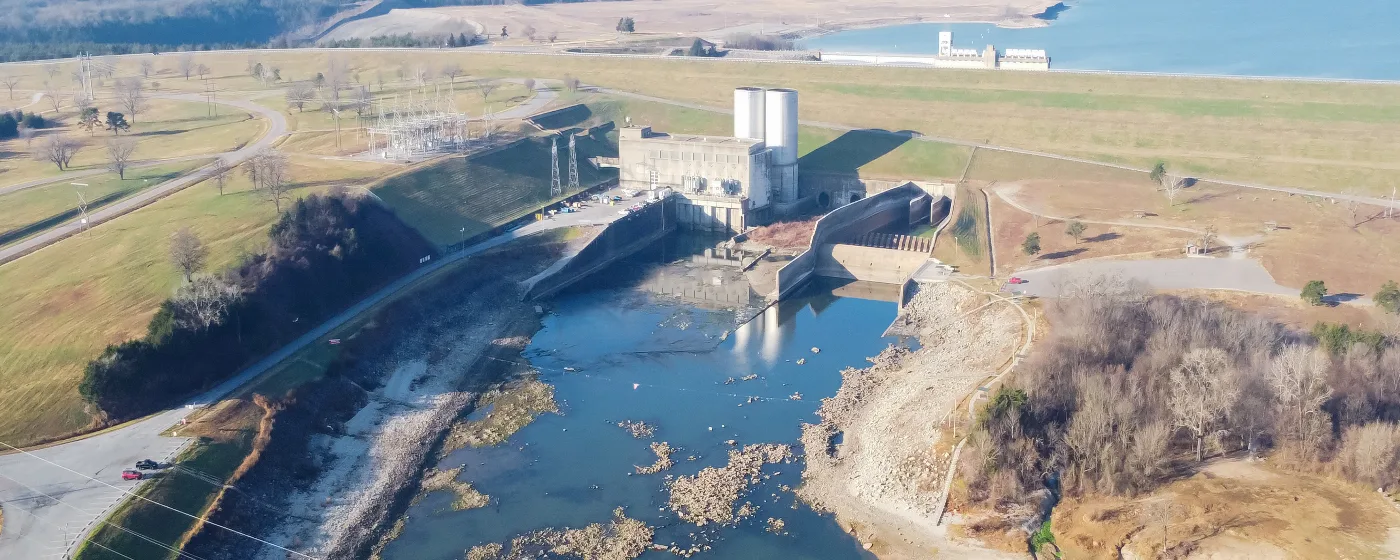
Most Californians who end up in Denison didn't have it on their radar two years ago. They were priced out of Sacramento, exhausted by Bay Area commutes, or watching their homeowner's insurance renewal come in at numbers that made them question the whole arrangement. Someone mentioned North Texas. They Googled Lake Texoma. And then they started running the numbers on a city of 26,822 people sitting right on the Oklahoma border, about an hour north of the Dallas metro. The numbers were hard to ignore.
Denison is the seat of activity in Grayson County — the Denison Independent School District is the largest single employer, followed by the city government and Ruiz Food Products, a major food manufacturing operation. Downtown Denison is in active revival: the Denison Development Alliance's Designing Downtown Denison initiative broke ground on its first completed streetscape improvements in 2023, and the program's second phase was formally approved by city council. This is not a finished product — it is a city actively building itself.
For Californians doing cost-of-living math, Denison clears almost every bar. The typical home price here stood at $225,218 as of July 2026, a figure that sits well below what most California buyers have been working with. Texas collects no state income tax — constitutionally prohibited — which is often the first number that stops a California household in its tracks. Health insurance premiums run noticeably below what most California residents pay, though you will drive farther for specialist care than you were used to. The honest trade-off is real, and worth factoring in before you commit.
Whether you are already under contract on a Denison home or still deciding if it makes sense, the sections below break down the California-to-Denison comparison on home prices, taxes, and daily costs; what the lifestyle shift looks like; the schools and safety picture; the neighborhoods worth understanding; and what long-time residents wish newcomers knew before they arrived.

The Home Price Gap: California vs. Denison
California's statewide typical home value of $773,735 (Zillow Home Value Index) is the number most Californians are comparing against. Denison's typical home price of $225,218 as of July 2026 sits dramatically below that — not noticeably lower, not modestly lower, but in a different category entirely.
What that gap means in practice: the budget that bought a small condo in a mid-tier California city buys a full single-family house in Denison with bedrooms to spare. Parents with school-age children who were priced out of suburban California school corridors find that Denison's entry-level houses — older construction in established neighborhoods like Sunny Side or Belmont — come in well under the city-wide typical. Newer construction in areas like Gateway Village / The Reserve or High Point Estates offers more recent housing stock and modern floor plans, still representing a fraction of what comparable new builds cost in most California suburbs.
One thing Californians underestimate: the building pace here. From 2015 through October 2024, the city issued an estimated 3,000 home permits — roughly six times the permit volume of the preceding fourteen years combined. That growth has consequences for resale dynamics and for what a neighborhood looks like five years from now. The Preston Harbor project, a city-council-approved mixed-use development on the city's northwestern edge along Lake Texoma, plans 7,500 homes with a five-to-ten-year build-out. First homes with full utilities were expected in late 2026 or early 2027. Denison is not a static market.
What Californians Miss About the Insurance Picture
California's wildfire crisis has pushed homeowner insurance premiums up sharply — average annual premiums for standard coverage have risen dramatically since 2020, and more than half a million Californians now rely on the state's FAIR Plan after major carriers restricted coverage. In Denison, homeowner insurance is available from standard carriers at standard market rates. Texas does carry its own weather risks, particularly hail and severe storms, so don't assume insurance is negligible — but you will almost certainly be working with a competitive market again rather than a carrier of last resort.
For a California buyer, the combination of a dramatically lower purchase price and a functioning insurance market is often the deciding factor. Run the full monthly cost comparison, not just the mortgage payment, and the gap widens further.
The Tax Picture: What Texas Gives and What It Takes Back
The income tax headline is real. California's top state income tax rate of 13.3% applies only to the highest earners, but the rate structure is progressive and reaches into middle-income households well before the top bracket. Texas has none. Zero. The Texas constitution prohibits a state income tax, and that prohibition is not subject to annual legislative debate.
For a household earning around Denison's median of $67,365, the effective California state rate would run roughly 4–5% of gross income every year. In Texas, that line item disappears entirely. For higher earners relocating from tech or finance roles and working remotely, the savings scale accordingly.
The Property Tax Rebalance
Here is where Californians need to read carefully. California's effective property tax rate of 0.71% is kept artificially low by Proposition 13, which caps annual assessment increases at 2% and only resets on sale. The moment you buy in California, your assessment reflects current market value — which is why long-time California homeowners pay low bills while recent buyers pay full freight. Texas has no comparable cap. Assessments reset annually, and Denison's effective property tax rate is 1.27%.
That sounds like a penalty. In absolute dollar terms, it often is not. Applied to Denison's typical home price of $225,218 (July 2026), the math produces an annual tax bill that is a fraction of what you would pay on California's statewide typical home value of $773,735, even at California's lower rate. The rate is higher; the base is far smaller. Most California buyers find their total annual property tax obligation in Denison is lower than what they were paying in California — sometimes considerably so.
Sales Tax: Closer Than You Think
Denison's combined sales tax rate is 8.25%, made up of the 6.25% Texas state rate plus a 2% city levy. California's statewide base sales tax rate of 7.25% sounds lower, but most California localities pile additional district taxes on top, routinely pushing effective local rates to 9–10.75%. Depending on where in California you lived, Denison's 8.25% may actually be a modest improvement or roughly equivalent. It is not a dramatic win either direction, but it is not the shock some California transplants expect.
The cleaner summary: Texas's fiscal structure trades income tax for property tax, and the property tax applies to a dramatically smaller home value base in Denison. For most California transplants, the net effect is meaningfully lower total state and local tax burden — even before accounting for the income tax elimination. For a deeper breakdown of all the moving pieces, see the cost of living in Denison page.
Daily Life in Denison: The Honest California Comparison
Six months after moving, most California transplants report the same three surprises. The first is how far the dollar stretches at the grocery store and at restaurants. The second is how long the drive to anything they used to take for granted actually is. The third — and this one catches people off guard — is how much they like it anyway.
Denison is a city of 26,822 people. That means no large urban core, no dense retail corridor, and no international airport in town. Dallas/Fort Worth International Airport is about 72 miles away, which makes flying manageable but not spontaneous. A serious shopping run for things the local stores don't carry means driving out of town or ordering online. If you came from a California suburb where a Whole Foods was incidental to your Tuesday commute, the adjustment is real.
What the City Actually Has
What Denison does have is Lake Texoma — a roughly 89,000-acre reservoir straddling the Texas-Oklahoma border at the city's northern edge, drawing crowds from across the region year-round. Eisenhower State Park sits on its banks with cliff-top views, camping, fishing piers, and a sandy swimming area. Loy Lake Park and Forest Park round out the in-city outdoor options. The pace of life on a Saturday morning near the water is genuinely different from what most California suburbs offer, and residents who prioritize outdoor access over urban density find the trade lands in their favor.
Downtown Denison's Historic Main Street is a working revitalization project, not a finished product — but that is changing fast. The district anchors a growing local food and coffee scene. Independent coffee options include CJ's Coffee Cafe on Main and Revolution Coffee Co., with CJ's Coffee Roasters on the BLVD at Gateway Village offering a newer outpost. For dining, 34 Chophouse & Doc's Lounge handles the upscale end of the market, while Huck's Catfish, Nick's Family Restaurant, and North Rig Grill represent the casual, local-institution side of things. Rustico Fine Mexican Cuisine rounds out a dining scene that is modest by California metro standards but genuinely good for a city this size. For a deeper look at what to do on weekends, see the parks and recreation page.
The Weather Shift
Denison gets 228 sunny days a year — more than most of the Pacific Coast, but with summers that California coastal residents will find punishing. Humidity arrives in July and August in a way that desert-dwellers and coastal Californians alike underestimate. Winter brings genuine freezes, occasionally ice, and the kind of rapid weather swings that catch newcomers unprepared. The 2021 winter storm is a reference point locals mention without being asked. Come with appropriate expectations and actual cold-weather gear.
Looking to buy in Denison? Estimate your payment.
Enter your numbers to see an estimated monthly mortgage payment.
Estimate only. Excludes HOA fees and mortgage insurance. The interest rate above is a starting point, not a quoted rate — replace it with your own to see real numbers. Insurance is a flat placeholder, not a Denison quote.
Schools, Safety, and What Families Should Know
The Denison Independent School District, with 4,757 students enrolled in 2025-26, holds a C rating, according to the Texas Education Agency. On 2024-25 state assessments, 41% of students reached math proficiency and 48% reached reading proficiency. Those are honest figures, and California families accustomed to higher-rated suburban districts should factor them into the decision — particularly if schooling is the primary driver of the move. For the full picture on individual campuses, boundary lines, and available programs, the Denison schools page covers it in depth.
The district supports active UIL athletics programs across its schools, and Friday night football in Denison is a genuine community event — the kind of small-city tradition that California transplants either discover they love or find disorienting. The mascot is the Yellow Jackets, and game nights fill the stands in a way that has nothing to do with the standings.
The Safety Context
Safety is a reasonable question for any relocation. For the full breakdown, see the Denison safety page, which covers the crime data in detail. What the data shows at a headline level: Denison's numbers compare favorably to Texas state averages, which is a meaningful baseline for a city this size.
The Neighborhood Question
Californians used to researching neighborhoods by school rating, walkability, and price band will find Denison works differently. The city's recognized areas — Downtown Denison, Gateway Village / The Reserve, Thompson Heights, Perrin Club Estates, Woodland Park, Belmont, High Point Estates, and Sunny Side — each have a distinct character, but the differences are about age of housing stock, proximity to the lake, and commute logic more than the stratified price tiers California buyers are accustomed to. The best neighborhoods in Denison page breaks down who each area suits and what the trade-offs look like.
One thing worth knowing before you start touring: the city's growth is concentrated on its northwestern edges near the lake, while the older core neighborhoods closer to downtown represent the entry-level price point and the most established community feel. Neither is wrong — they are different answers to different questions about what you want daily life to look like.
What California Transplants Get Wrong (and Right)
The buyers who have the hardest time adjusting to Denison are the ones who treat it as a California suburb with cheaper prices. It is not. The social infrastructure, the retail landscape, the pace of government services, and the cultural baseline are all different in ways that are hard to absorb from a spreadsheet comparison.
The buyers who adapt fastest are the ones who arrive with a specific reason to be in Denison — the lake, the proximity to family in the Oklahoma border region, a remote job that means the commute is a non-factor, or a deliberate decision to trade urban density for space and lower costs. Denison rewards intentional moves more than opportunistic ones.
What You Would Not Do Moving Here
If you are relocating with a household that depends on two local incomes, do your job research before you commit. The local employer base — the school district, the city, Ruiz Food Products, and a regional healthcare system — offers real employment, but it is not the deep, diversified job market of a California metro. Many Denison residents work remotely or commute about 15 minutes to Sherman, TX, where the employment picture is somewhat broader. If remote work is not part of your household's equation, that conversation needs to happen early.
The Growth Question
Denison is actively growing — the permit data and the Preston Harbor development make that clear — and growth creates both opportunity and uncertainty. Neighborhoods that feel established today will have new construction nearby within a few years. Infrastructure and services are catching up to population, not running ahead of it. If you are buying in an area adjacent to planned development, ask specific questions about what is approved and on what timeline. The city's trajectory is upward, but the pace of change is real.
The broader California-to-Denison comparison lands clearly for most households who run the full numbers: dramatically lower home prices, no state income tax, a property tax rate that is higher in percentage but lower in absolute dollars, and a daily cost structure noticeably below what they were carrying in California. The trade is real urban amenity and job depth for space, lake access, and a balance sheet that looks fundamentally different. Most people who make the move know that trade before they make the offer. The ones who struggle are the ones who expected the upside without the adjustment. Go in clear-eyed, and the math is genuinely compelling.

Local Expert Takeaway: Denison is not a California suburb at Texas prices — it is a different kind of city making a different kind of case. The home price gap against California's statewide typical home value is dramatic, the income tax elimination is real, and the insurance market is functioning again in a way that many California homeowners haven't experienced in years. The honest cost is that the job market is thinner, the dining and retail scene is still catching up, and the drive to Dallas/Fort Worth International Airport is real. If you are remote, lake-oriented, and priced out of California, Denison is one of the most financially rational moves in the state. If you are counting on a deep local job market to match what you left, do the employment research first.
Quick Takeaways & FAQs
✅ Denison's typical home price of $225,218 (July 2026) sits dramatically below California's statewide typical home value, and Texas collects zero state income tax — two of the most significant financial shifts any California household can make.
⚠️ The local job market is thin outside of the school district, city government, and a handful of major employers — households that need two local incomes should research employment in Denison and nearby Sherman carefully before committing.
📍 The Preston Harbor development — a city-council-approved project planning 7,500 homes along Lake Texoma's edge — means Denison's northwestern corridor will look significantly different within five to ten years, which matters if you are buying near that growth edge today.
How much cheaper is it to buy a home in Denison compared to California?
Does Texas really have no state income tax, and does that apply to remote workers?
Is Denison's property tax rate higher than California's?
What is the sales tax rate in Denison compared to California?
What do California transplants find hardest about moving to Denison?
Moving to Texas?
Tell us what you need help with and we'll connect you with local resources.
