People researching a move to Denison almost always ask the same question first: is it safe? The answer the data gives is more reassuring than many expect. Denison — a city of 26,822 in Grayson County, sitting along US-75 in North Texas about an hour north of the DFW metro — carries a violent crime rate of 1.7 per 1,000 residents, well below both the Texas state rate and the national average. That single figure reframes the conversation for most people looking at this part of the Red River corridor.
Context matters as much as raw numbers, though. Denison is not a monolithic city where every block looks like every other. The northwest side reads very differently from the central corridors, and the retail-heavy east side can look alarming on a crime heat map for reasons that have more to do with visitor traffic methodology than actual neighborhood risk. Understanding those distinctions is what separates a well-informed decision from one based on a color-coded map snapshot.
The city's trend line also matters. Overall crime fell in 2024, continuing a multi-year decline in both violent and property incidents. Denison has also invested in community policing infrastructure — camera registries, a Citizens Police Academy, a Senior Lockbox Program — that signal an engaged department rather than a reactive one. None of that erases the reality that central neighborhoods see meaningfully more incidents than the quieter northwest, but it does suggest a city that is actively working the problem rather than ignoring it.
Whether you are weighing a specific neighborhood or simply want to understand Denison's safety picture before going further, the sections below break down the city's crime rates in context, the geographic safety gradient across neighborhoods, the tools the Denison Police Department has built for residents, and what locals themselves say about day-to-day life here.

Denison's Crime Rates in Context
The headline numbers favor Denison. The city carries a violent crime rate of 1.7 per 1,000 residents — well below the Texas state rate of 4 per 1,000 and below the national figure of 3.7 per 1,000. On the property crime side, Denison reports a property crime rate of 8.2 per 1,000 residents, again well below the state rate of 20.7 per 1,000 and the national rate of 18.4 per 1,000. Both comparisons draw from a consistent national reporting series, so the methodology is apples-to-apples.
What that means practically: on both measures that matter most to someone choosing a place to live, Denison sits noticeably below the Texas average and below the national average. For a city of its size — 26,822 residents — that is a genuinely better outcome than most comparable American cities produce.
The trend is also moving the right direction. Overall crime in 2024 fell compared to prior years, continuing a pattern of decline across both violent and property categories. This is directional context, not a guarantee — cities can reverse trend — but it suggests the improvement is not an outlier.
One important methodological note: crime rates are expressed per resident, not per person present. A retail corridor, a busy park, or a tourist draw will naturally show more incidents per map square than a quiet residential street — not because the neighborhood is more dangerous to someone who lives there, but because more people cycle through it daily. That distinction becomes critical when you're reading Denison's east side numbers, which we cover in the next section.
The Geographic Safety Gradient: Northwest vs. Central
Denison's safety picture is not evenly distributed across the city, and knowing that before you choose a neighborhood matters more than any city-wide average. The northwest of the city — where neighborhoods like Perrin Club Estates, Woodland Park, and High Point Estates are concentrated — is consistently the quietest part of town. The central corridors see meaningfully more activity, concentrated around the older downtown-adjacent streets.
That gap is real and worth taking seriously. Central Denison, including parts of the older residential stock around Downtown Denison and Belmont, shows higher concentrations of both property and nuisance-level incidents. Buyers drawn to the historic character of Downtown Denison's Main Street should understand they're choosing an area with more activity, not the quietest residential pocket in the city.
The East Side Retail Distortion
Denison's east side — where Gateway Village, The Reserve, and the city's primary retail corridors cluster — can read as elevated on crime heat maps. The reason is largely methodological: incidents there are measured against the residential population, not against the actual daily foot traffic that flows through retail strips, service corridors, and commercial areas. A parking lot theft in a shopping center pulls down the apparent safety score of the surrounding residential area even if no resident was involved.
This is not a reason to dismiss east side numbers entirely. Property crime in high-traffic commercial zones is real, and car break-ins at retail parking areas do happen. But it is a reason not to apply a commercial corridor's heat map reading to the residential streets of Gateway Village or Thompson Heights without looking more carefully at what the incidents actually are. Aggregator tools like CrimeGrade or NeighborhoodScout are worth checking at the address level — just read them alongside this context.
Northwest as the Quietest Residential Zone
Perrin Club Estates, Woodland Park, and High Point Estates consistently represent the lower end of Denison's incident concentration. These are the established residential neighborhoods where the housing stock skews newer, the street activity is mostly neighbors rather than transient traffic, and the incident volume stays substantially below the city center. Sunny Side, on the southern edge, sits in a more mixed position — not as quiet as the northwest, but without the central concentration of activity either.
For more on how these neighborhoods compare in character, housing stock, and fit, see the best neighborhoods in Denison guide.
Downtown Denison: A Nuanced Safety Picture
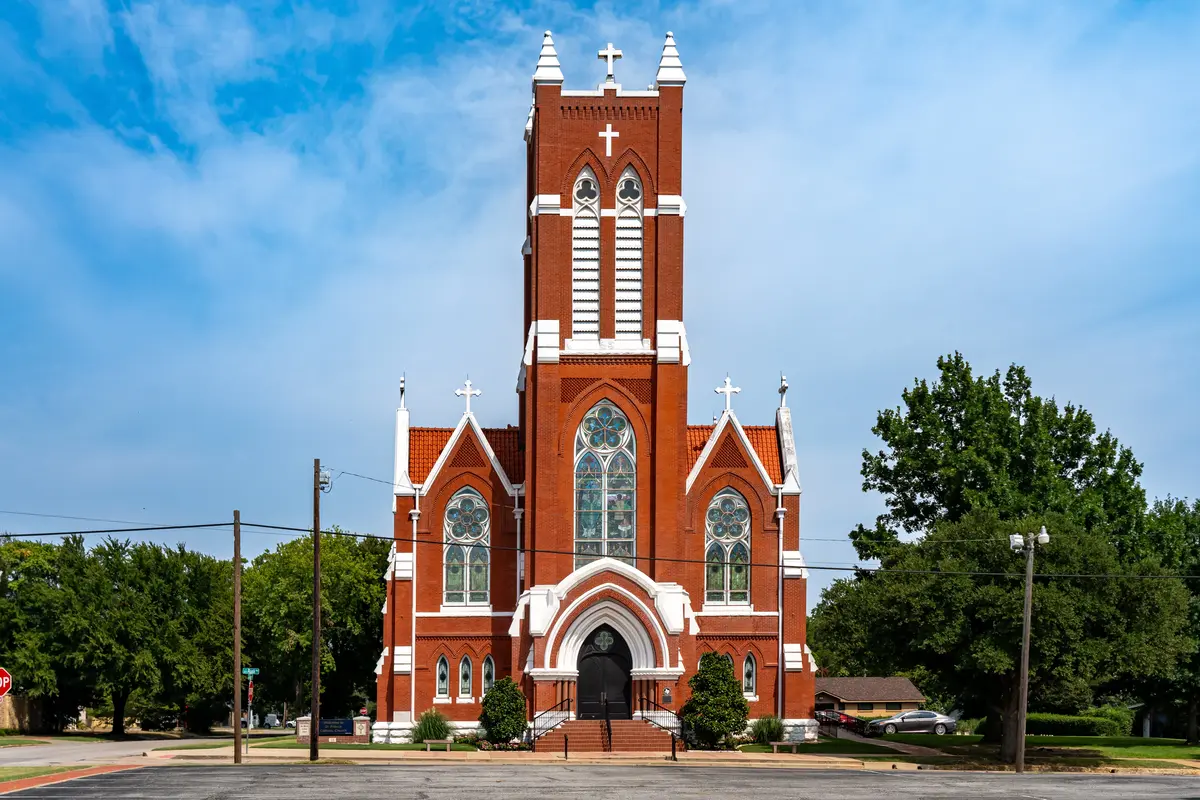
Downtown Denison deserves its own treatment because it is both the most historically active part of the city and the one going through the most deliberate change. The Designing Downtown Denison (D3) infrastructure renovation — described as the most ambitious in the city's 152-year history — earned the district a 2025 Great American Main Street Award from Main Street America. That is a meaningful signal about the trajectory of the corridor.
At the same time, the city is realistic about the challenges an older downtown carries. Roughly 30 buildings in the historic district have been identified as persistently vacant, against an overall commercial occupancy rate of 86%. In October 2025, the city proposed a vacant building registry specifically to allow fire inspectors into those structures to check for electrical hazards and structural risks — a direct fire-safety response that followed a Main Street fire years earlier that destroyed three businesses.
The registry proposal is not a sign that downtown is dangerous to walk. It is a sign that the city is managing the physical infrastructure of an older commercial district proactively rather than waiting for the next incident. For anyone considering a home within easy reach of Main Street, that distinction matters: the daytime streetscape of Downtown Denison — with its historic storefronts and community activity along the main corridor — reads very differently at noon than the pockets of vacancy read at midnight.
The honest picture is that downtown adjacent residential streets sit closer to the central activity zone than to the quiet northwest. That's the trade-off for walkable proximity to the historic district, and most buyers who end up near Main Street make it knowingly.
Looking to buy in Denison? Estimate your payment.
Enter your numbers to see an estimated monthly mortgage payment.
Estimate only. Excludes HOA fees and mortgage insurance. The interest rate above is a starting point, not a quoted rate — replace it with your own to see real numbers. Insurance is a flat placeholder, not a Denison quote.
What the Denison Police Department Has Built
Gauging a city's safety isn't only about crime statistics — it's also about what the police department is doing to stay ahead of incidents and build relationships in the community. The Denison Police Department has several active programs worth knowing about.
Community Camera Program
Launched in February 2025, the Community Camera Program is a voluntary initiative that lets homeowners and businesses register their privately owned security cameras with the department. When an incident occurs, officers can request footage directly from registered camera owners rather than canvassing a neighborhood cold. It's a practical force-multiplier that shortens the window between an incident and an investigative lead.
Citizens Police Academy
The department runs a free, multi-week program that takes residents through the various divisions of the Denison Police Department — from patrol operations to investigations — meeting regularly over the course of the program. It's designed to build genuine understanding between residents and law enforcement rather than a surface-level tour. If you're new to Denison and want to get a ground-level read on how the department operates, this is one of the more direct ways to do it.
Senior Lockbox Program
For residents 65 and older, or those under 65 with a qualifying medical condition, the department offers free lockboxes installed by officers. The purpose is straightforward: if a 911 call comes in and the resident can't get to the door, first responders can enter without forced entry. It's a practical safety program that also signals how the department thinks about its older residents.
National Night Out
The department's 2025 National Night Out event was held at Forest Park — an annual community-building effort that brings neighbors and officers together in a low-stakes, family-friendly setting. The fact that this event takes place at one of the city's established green spaces reflects the department's emphasis on neighborhood-level visibility rather than only reactive policing.
What Residents Actually Say — and What to Watch For
Community reviews on platforms like Nextdoor and Niche reflect a consistent pattern: most Denison residents describe the city as a safe place to live day-to-day. That resident sentiment aligns with the quantitative picture — a city that sits meaningfully below state and national averages on both violent and property crime is generally going to feel that way on the ground.
The nuances residents point to are the ones the data also supports. Central Denison and some older corridors near the historic downtown see more activity than the northwest. Car break-ins in commercial parking areas are the most commonly mentioned property crime concern — a pattern that shows up in almost every Texas city with active retail strips, and one that's more about opportunity crime than neighborhood risk to residents.
What Surprises People After Six Months
Newcomers from larger metro areas are often surprised by how much they recognize individual neighbors and how quickly the community feels knowable. Denison is genuinely a city where the person at the next table at a local diner might be someone you'll see at a school event the following week. That social texture is part of what residents mean when they say it feels safe — not just statistical safety, but the kind of legibility a smaller city provides.
What catches people off guard on the downside is that Denison, like most North Texas cities, sees hot summers and occasional severe weather that can feel more intense than anticipated. The city is in tornado country, and spring storm seasons bring the kind of weather that Texans have protocols for — and newcomers from the coasts or Pacific Northwest do not automatically know how to read.
Research Before You Decide on a Neighborhood
If you're narrowing down a specific block or street, spending time in the neighborhood at different times of day is still the most reliable data point. The northwest quadrant — Perrin Club Estates, Woodland Park, High Point Estates — is where the data consistently points for the quietest residential experience. Downtown Denison and central corridors offer more texture and historic character, with the trade-off of higher incident concentration. The east side retail corridors show inflated heat-map numbers that partly reflect methodology, but still warrant attention to property crime habits like not leaving valuables in vehicles. The city-wide numbers are reassuring; the neighborhood-level gradient is what determines your actual daily experience.

Local Expert Takeaway: Denison's city-wide crime numbers are genuinely better than most people expect — a violent crime rate of 1.7 per 1,000 residents puts it well below both the Texas state rate and the national average. The more useful frame for anyone choosing a neighborhood is the internal gradient: the northwest side around Perrin Club Estates and Woodland Park is measurably quieter than the central corridors near downtown, and the east side's retail-heavy heat map numbers require context before you read them as residential risk. The Denison Police Department has also built a more active community infrastructure than most cities its size, from the 2025 Community Camera Program to the Senior Lockbox Program. Denison is not without its concerns — older central corridors carry real activity — but the data places it in a genuinely favorable position relative to comparable Texas cities.
Quick Takeaways & FAQs
✅ Denison carries a violent crime rate of 1.7 per 1,000 residents — well below the Texas state average, placing it among the safer options in North Texas for its size.
⚠️ The central corridors near downtown see substantially more incident activity than the quieter northwest — the city-wide average is reassuring, but where you choose within Denison matters.
📍 The Denison Police Department's Community Camera Program, launched in 2025, lets residents and businesses voluntarily register security cameras with the department to speed up investigations — a concrete community policing tool worth knowing about.
Is Denison, TX a safe place to live?
Which neighborhoods in Denison are the safest?
How does Denison's crime rate compare to the rest of Texas?
Is downtown Denison safe to live near?
What crime prevention programs does the Denison Police Department offer residents?
Moving to Texas?
Tell us what you need help with and we'll connect you with local resources.
