
Most people researching Boerne ask the safety question late in the process — after they've fallen for the Hill Country scenery, the historic Main Street, and the Boerne Independent School District's reputation. The short answer is that the numbers back up the feeling: Boerne carries a violent crime rate of 1 per 1,000 residents, which is dramatically lower than anything you'd find in the San Antonio metro core. But the short answer leaves out the texture, and the texture is what actually matters when you're choosing a neighborhood.
Boerne is a city of 24,047 people in Kendall County, sitting about 30 minutes from San Antonio along I-10. Its growth over the past decade has brought master-planned subdivisions, a guard-gated estate community, and a busier commercial corridor — and that mix means the safety picture isn't perfectly uniform across every zip code. Knowing which parts of the city generate which kinds of incidents helps you ask better questions and pick the right street, not just the right town.
Property crime, not violent crime, is the category worth watching here. Larceny-theft, vehicle break-ins, and opportunistic burglary are the dominant incident types — the same pattern seen in almost every growing Texas Hill Country city where retail traffic is expanding faster than enforcement resources. None of that makes Boerne a dangerous place; it does mean leaving a garage door open or a laptop visible in a parked car carries real risk, especially near the commercial core. The residential neighborhoods on the outer edges of the city tell a noticeably quieter story.
Whether you're narrowing down neighborhoods or just trying to get an honest read on the city, the sections below walk through Boerne's crime data in context, explain where incidents concentrate and why, cover what the police department does to stay proactive, and give you a practical framework for evaluating any specific address before you settle on one.
How Boerne's Crime Rates Compare to Texas and the U.S.
The comparison table below — rendered from Bureau of Justice Statistics, Crime Known to Law Enforcement, 2024 data — tells a story that surprises people who picture small Texas cities as more dangerous than they are.
Boerne carries a violent crime rate of 1 per 1,000 residents. The state violent crime rate is 4 per 1,000, and the national violent crime rate is 3.7 per 1,000. Boerne's number is not marginally better — it is a fraction of both benchmarks, reflecting a city where serious crime is genuinely rare rather than just underreported.
A property crime rate of 12 per 1,000 residents is the more nuanced figure. Texas as a whole runs a property crime rate of 20.7 per 1,000, and the national property crime rate is 18.4 per 1,000 — so Boerne still comes in noticeably below both. The gap is real, but it is narrower than on the violent side, and property crime is where Boerne residents feel most of the friction in daily life.
Five-year trend data reinforce what the single-year snapshot shows. Over the period from 2019 through 2024, Boerne's average violent crime rate ran well below the national average, and property crime ran meaningfully below the national average as well — suggesting these aren't one-year flukes but a sustained pattern tied to the city's demographics, density, and economic base.
What the Numbers Actually Mean Day to Day
a violent crime rate of 1 per 1,000 residents translates to a city where serious incidents — robbery, assault, homicide — are exceptional events that generate genuine community conversation when they occur, not background noise. Most residents who have lived here for years have never experienced one or known someone who did.
A property crime rate of 12 per 1,000 residents means something more practical: package theft, vehicle break-ins, and larceny happen, especially in higher-traffic parts of town. This is not a reason to avoid Boerne — it is a reason to lock your car, invest in a doorbell camera, and pay attention to where in the city you land.
Where Crime Concentrates in Boerne — and Why
Boerne's crime is not evenly distributed, and understanding the pattern matters more than the city-wide average if you're choosing between specific neighborhoods.
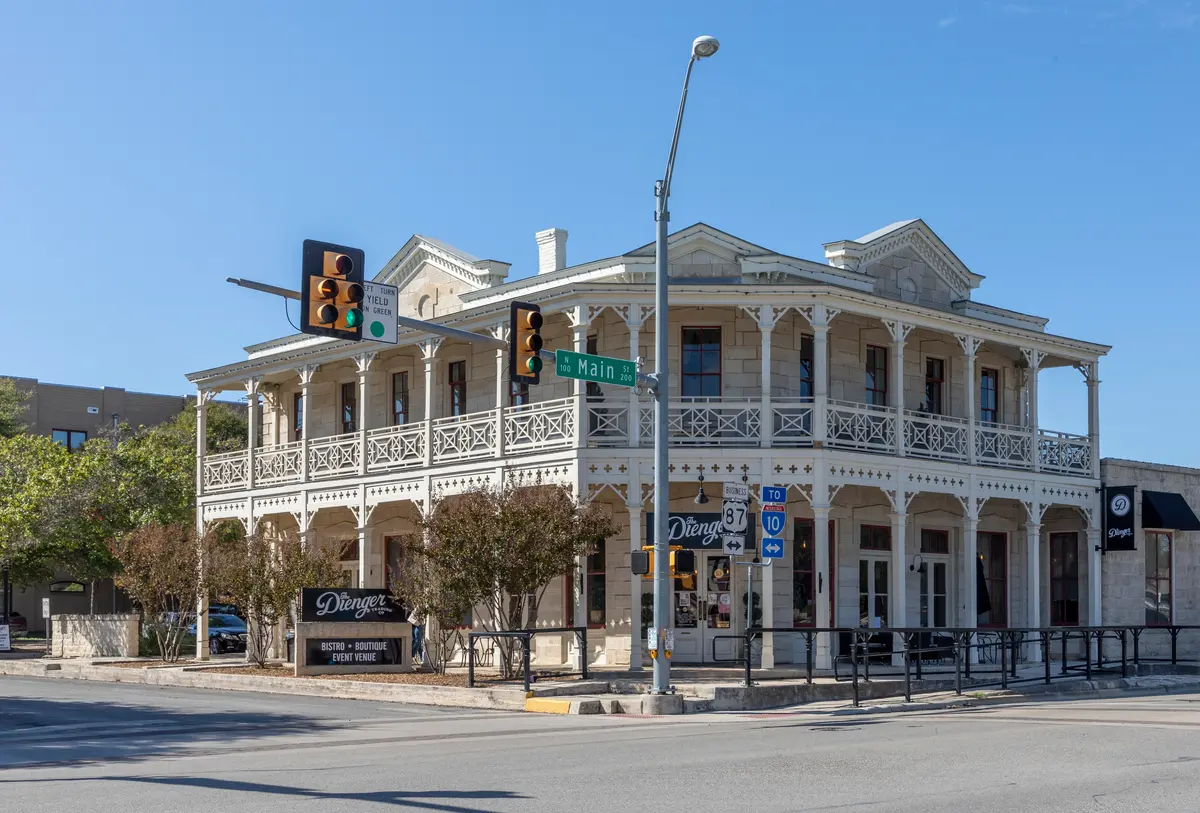
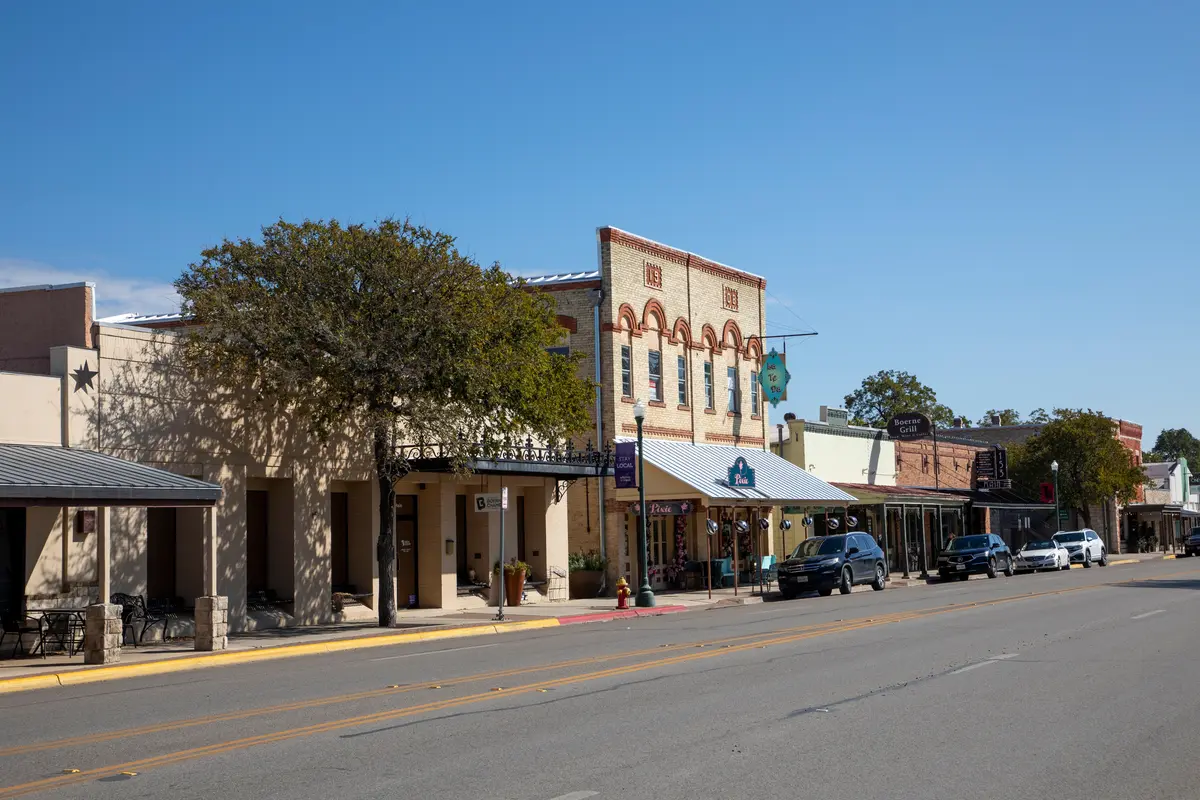
The highest concentration of total incidents — across all crime types — clusters in the central parts of the city, particularly the commercial downtown corridor along the Main Street Historic District and the higher-traffic retail areas that have grown with the city's population. This is not a Boerne anomaly. It is a near-universal pattern in growing small cities: retail activity, foot traffic, and transient visitors generate more property-crime opportunities than quiet residential cul-de-sacs do. A package left on a porch on a busy commercial block faces different exposure than one on a residential street in Menger Springs.
The Quieter Edges of the City
The southwest portion of the city reports the fewest total incidents annually. The southeast areas of Boerne are generally considered the safest for violent crime risk specifically.
Outer residential neighborhoods — Esperanza, Trails of Herff Ranch, Balcones Creek, and Cordillera Ranch — benefit from distance from the commercial core and, in some cases, structural deterrents. Cordillera Ranch is a guard-gated community, which adds controlled access that suburban subdivisions don't have. Esperanza and Trails of Herff Ranch are master-planned communities with active homeowners associations and high pedestrian foot traffic; both function as informal deterrents simply because someone is always around and neighbors know each other's faces.
Downtown and the Commercial Corridor
Living close to the Main Street Historic District gives you walkable access to restaurants, boutiques, and Cibolo Creek — and it also puts you in the part of the city where property-crime incidents are most likely to appear in the police department's monthly activity report. That doesn't mean downtown is unsafe; it means the risk profile is different, and your mitigation looks different too. A home security system and a habit of securing your vehicle matter more there than they do in Corley Farms or Menger Springs.
Residents on Nextdoor describe the city as safe overall, with local conversations most commonly flagging occasional suspicious activity, property damage, and road-safety concerns — not violent crime. That is consistent with what the data shows: Boerne's version of a crime problem is the inconvenient, low-stakes kind.

Neighborhood-by-Neighborhood Safety Picture
Crime reporting in Boerne happens at the city level rather than by individual subdivision, so no public data source definitively ranks each neighborhood against the others. What the research does support is a directional picture by area — useful for framing your decision, even if it can't substitute for pulling specific incident history for a street you're seriously considering.
| Neighborhood | Safety Character | Key Factors | Best For |
|---|---|---|---|
| Cordillera Ranch | Among the lowest incident rates in the city | Guard-gated, controlled access, estate-scale lots | Luxury Privacy |
| Esperanza | Exceptionally low crime, community-reinforced | Active HOA, high pedestrian traffic, master-planned design | Families School |
| Trails of Herff Ranch | Quiet residential, informal deterrents | HOA-governed, walkable streets, neighbors know each other | Families Quiet |
| Balcones Creek | Exceptionally low crime | Collaborative community approach, established neighborhood | Families Value |
| Menger Springs | Quiet outer residential | Distance from commercial core, Hill Country setting | Quiet Nature |
| Tapatio Springs | Low residential incident rate | Resort-adjacent, dispersed layout limits foot traffic | Luxury Views |
| Corley Farms | Quiet outer residential | Newer development on the city's edges, low density | Families Quiet |
| Downtown / Historic District | Higher property-crime exposure near commercial core | Retail foot traffic, parking, visitor activity; violent crime still rare | Walkable Renter |
What to Check Before You Commit to a Neighborhood
The Boerne Police Department publishes monthly activity reports and an annual report on its website — both are public and worth reviewing before settling on an area. For a street-level picture, a local agent familiar with Boerne's subdivisions can pull incident history for specific addresses, which is the most reliable way to move beyond city-wide averages into actual block-by-block context.
This is genuinely useful research to do before you decide on a neighborhood — not because any part of Boerne is alarming, but because the gap between a downtown-adjacent block and a master-planned subdivision on the outer edge is real, and the data exists to quantify it. See the neighborhoods guide for the full character breakdown of each area.
Looking to buy in Boerne? Estimate your payment.
Enter your numbers to see an estimated monthly mortgage payment.
Estimate only. Excludes HOA fees and mortgage insurance. The interest rate above is a starting point, not a quoted rate — replace it with your own to see real numbers. Insurance is a flat placeholder, not a Boerne quote.
How the Boerne Police Department Operates
A city's crime rate reflects both what residents do and what the police department makes possible. Boerne's department runs several programs that go beyond reactive patrol — and they're worth knowing about if community involvement in public safety is something you care about.
Community Programs That Go Beyond Patrol
The Boerne Police Department's National Night Out brings residents and officers together annually in a partnership-building event that has consistently high turnout for a city of 24,047. The Citizen's Law Enforcement Academy gives residents a direct look at how the department operates — investigations, patrol tactics, dispatch — which tends to build both trust and realistic expectations about what police can and can't do alone.
The Neighborhood Video Partnership Program is one of the more practical tools in the department's arsenal: residents voluntarily register home surveillance cameras, and investigators can request footage in connection with nearby incidents. For a city where property crime is the dominant concern, this kind of community-sourced evidence network has real deterrent and investigative value.
For younger residents, Safety Town runs as a summer program for kindergarteners, and the Police Explorer Program gives older young adults structured exposure to law enforcement careers. These aren't just good-news programs — they reflect a department that has made community investment a deliberate part of its safety strategy rather than an afterthought.
Transparency and Reporting
Monthly activity reports and an annual report are published on the city's official website, covering crime rates, department activities, and community interest stories. That level of routine transparency is not universal among Texas cities of similar size, and it means residents don't have to rely on secondhand accounts or rumor to understand what's happening in their neighborhood.
Kendall County Crime Stoppers complements the department's work by offering cash rewards to anonymous informants who provide information leading to the arrest and indictment of people who have committed crimes in Boerne and Kendall County — a mechanism that specifically helps close cases where witnesses are reluctant to come forward directly.
Practical Safety Tips for Life in Boerne
People who move to Boerne from higher-crime metros are often surprised — in month three — by how quiet the police scanner is. That is the good surprise. The less-good one, which nobody warns new arrivals about, is that property crime around the commercial areas of town is more common than the overall city stats suggest. A few habits make a meaningful difference.
Protect Your Property, Especially Near Commercial Areas
Larceny-theft is the dominant incident type in Boerne, and it clusters where retail activity does. If you're parking near the Main Street Historic District, near I-10 access points, or in commercial strip areas, don't leave anything visible in your vehicle. This is less about fear and more about not handing someone an easy opportunity in a city where opportunistic theft is the primary crime pattern.
A doorbell camera or a modest home security setup is a reasonable investment in any part of Boerne, but it matters most for homes with street-facing garages or downtown-adjacent parking. The city's Neighborhood Video Partnership Program means that footage you capture is genuinely useful to investigators if something happens nearby — it's not just protecting your own property.
Engage With the Neighborhood Structure
Boerne's safest neighborhoods share one characteristic: people know each other. Active HOAs in Esperanza and Trails of Herff Ranch mean a stranger on the block gets noticed. Cordillera Ranch's gate means strangers need a reason to be there at all. Even in neighborhoods without that formal infrastructure, getting to know the people on your street is the single most effective informal deterrent available.
The Citizen's Law Enforcement Academy is open to residents who want a deeper understanding of how the department operates — worth the time if you're someone who wants to connect directly with local officers rather than just benefit passively from their presence.
Use the Public Data
The police department's monthly activity reports are a useful early-warning system. Residents who read them occasionally catch localized patterns — a rash of vehicle break-ins in a specific section of town, for instance — weeks before that pattern becomes common knowledge. It takes five minutes and gives you better information than any third-party crime-mapping website. For the neighborhood-level and city-wide picture on lifestyle and livability, see the living in Boerne guide.
Local Expert Takeaway: Boerne's safety profile is genuinely strong — a violent crime rate of 1 per 1,000 residents is not marketing language, it's a figure that holds up against state and national benchmarks. Property crime is the real conversation to have, and it's concentrated near the commercial core, not spread evenly across the city's residential neighborhoods. Families settling into Esperanza, Balcones Creek, or Trails of Herff Ranch are landing in some of the lower-incident residential environments in the San Antonio metro. The Boerne Police Department's community programs — particularly the Neighborhood Video Partnership — reflect a department that treats resident engagement as part of its safety strategy, not a side project. Before choosing a specific block, pull the department's monthly activity reports and ask a local agent to walk you through incident history for the street. That combination of public data and local knowledge closes the gap between city-wide averages and street-level reality.
Quick Takeaways & FAQs
✅ Boerne carries a violent crime rate of 1 per 1,000 residents — a fraction of both the Texas and national averages, and one of the strongest safety numbers in the San Antonio metro.
⚠️ Property crime near the downtown commercial corridor is the genuine tradeoff: larceny-theft and vehicle break-ins are the dominant incident types, and they cluster where retail foot traffic does.
📍 Crime reporting happens at the city level, not by subdivision — pull the Boerne Police Department's monthly activity reports and ask a local agent for street-level incident history before settling on a specific neighborhood.
Is Boerne, TX a safe place to live?
Which neighborhoods in Boerne have the lowest crime?
What type of crime is most common in Boerne?
How does downtown Boerne compare to the outer neighborhoods for safety?
Where can I find official crime data for Boerne?
Moving to Texas?
Tell us what you need help with and we'll connect you with local resources.
