
What Is Living in Signal Mountain, Tennessee Like?
You've probably heard Signal Mountain described as a quiet bedroom community above Chattanooga, and that's technically accurate — but it undersells the thing that makes this town genuinely unusual. Signal Mountain sits approximately 2,000 feet above sea level atop Walden's Ridge, at the southern end of the Cumberland Plateau. The southern edge of town drops 1,000 feet into the Tennessee River Gorge. The primary route down, US-127 (Signal Mountain Boulevard), runs about 8 miles to downtown Chattanooga. That one road is the geographic fact that shapes everything about daily life here: the commute, the social calendar, the sense of separation from the city below, and the reason people stay for decades once they arrive.
The town's population of 8,824 skews toward established families and dual-income professionals. Most residents commute into Chattanooga to work — at BlueCross BlueShield of Tennessee, Erlanger Health System, Unum Group, or the Volkswagen Chattanooga Assembly Plant — and return each evening to a setting that feels genuinely removed from the urban core. Hamilton County Schools serves the town, with Thrasher Elementary, Nolan Elementary, and Signal Mountain Middle/High School all on the mountain. The district holds a B- rating, according to Niche, and the schools are consistently cited as the primary reason families choose Signal Mountain over comparably priced neighborhoods closer to the city. The Eagles compete under active TSSAA athletics programs, and Friday nights at the football field carry the kind of community energy that doesn't need a big-city crowd to feel real.
The cost of living picture is honest rather than flattering. The typical home price stands at $634,620 (Zillow Home Value Index, August 2026), which is noticeably above what you'd pay in Chattanooga proper, Red Bank, or Soddy-Daisy — and the median household income of $139,714 runs somewhat below what's needed to carry that price at current rates. For those who can make it work, the effective property tax rate of approximately 0.56% is one of the more compelling numbers on the spreadsheet. The town logs 209 sunny days a year, but the ridge also catches more precipitation and runs 5–10°F cooler than the valley — lush and green in July, occasionally icy in January, and beautiful in both. More than 600 acres within the town limits are dedicated to parks and natural areas, with 18 miles of trails connecting to Shackleford Ridge Park and Prentice Cooper State Forest.
Whether you're weighing a move from the Chattanooga area or relocating from out of state, the sections below cover Signal Mountain's neighborhoods, housing market, daily commute, schools, local favorites, and the things newcomers consistently say they didn't expect.
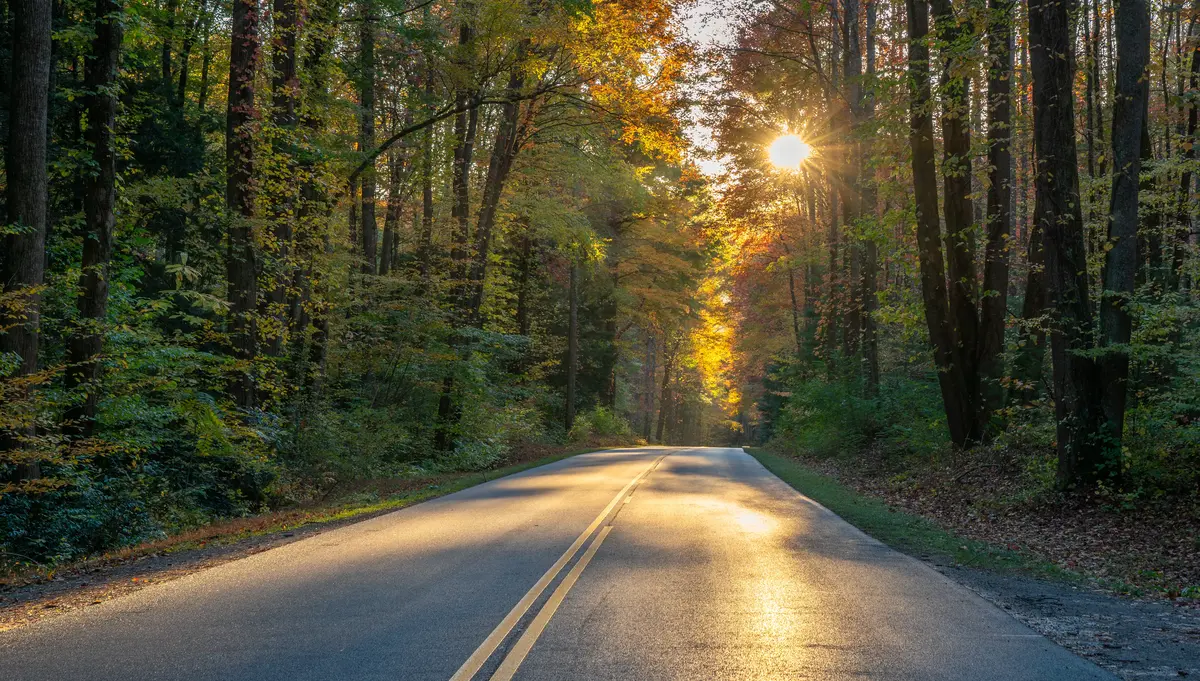
Signal Mountain at a Glance
Looking to buy in Signal Mountain? Estimate your payment.
Enter your numbers to see an estimated monthly mortgage payment.
Estimate only. Excludes HOA fees and mortgage insurance. The interest rate above is a starting point, not a quoted rate — replace it with your own to see real numbers. Insurance is a flat placeholder, not a Signal Mountain quote.
Beyond the Monthly Mortgage Payment — What to Factor In
- The property tax rate above — The 0.56% used in the estimate is the median effective rate — tax actually paid as a share of market value — published by Ownwell, 2026. Half of local homes pay more and half pay less: your own bill depends on that property's assessed value and any exemptions it qualifies for, which can differ a lot from its market price. Confirm with the Hamilton County assessor before you budget.
- Total cost of ownership — Your monthly mortgage payment is just the baseline. Depending on the specific city, county, and service district, homeownership costs also include local utility fees, municipal surcharges, and special assessments (such as water, sewer, storm drainage, or local energy taxes) that vary by location.
- Independent due diligence — Because these recurring local costs and municipal fees change depending on the exact property address, buyers must research them independently during their transaction process.
Tax laws, local municipal fees, and utility costs change frequently and individual situations vary. This page is general information, not tax or legal advice — always consult a qualified tax professional, CPA, or local municipal offices for personalized guidance.
Why Are People Moving to Signal Mountain?
The case for Signal Mountain is easy to make: exceptional schools, low crime, a genuine outdoor lifestyle minutes from a mid-size city, and a median household income that suggests you'll have neighbors who've made similar trade-offs deliberately. The case against it is shorter but worth reading — and it mostly comes down to that single road.
The Schools Pull Hard
For parents with school-age children, the Signal Mountain schools function almost like a closed system in the best sense. Thrasher Elementary and Nolan Elementary feed into Signal Mountain Middle/High School, where organized parent groups and civic organizations like the Signal Mountain Education Preservation Fund actively support every program. Even residents without children invest in the schools — that's the civic culture here. The full schools breakdown covers what the district's numbers actually look like.
The Safety Numbers Are Genuine
Signal Mountain posts a violent crime rate of 1 per 1,000 residents and a property crime rate of 4 per 1,000 residents — well below Tennessee's state violent rate of 6 per 1,000 and the state property rate of 20.8 per 1,000, and below national figures on both measures. Those aren't aspirational marketing numbers; they reflect a small, geographically contained community with strong neighborhood cohesion. The safety page puts these figures in fuller context.
Nature as a Lifestyle, Not a Weekend Trip
Signal Point, the Cumberland Trail's southern terminus, sits at the edge of town — not a drive away, not a regional amenity, but a trailhead residents walk to. The Rainbow Lake Trail, Julia Falls Overlook, Edwards Point, and Falling Water Falls are all accessible without leaving Signal Mountain's network of 18 connected trail miles. The Land Trust for Tennessee protects nearly 800 acres of mountain terrain in and around town. This is the kind of outdoor access that people in other cities pay significantly more for and still don't quite get.
The Honest Trade-Off
The mountain road is not a minor inconvenience — it is the defining feature of life here. US-127 is the one way down, and when it's icy, it's genuinely impassable in spots. Buyers coming from flat-terrain suburbs consistently underestimate what living at elevation actually means: steeper driveways that wear brakes faster, tree maintenance as a regular ownership cost, and the occasional winter morning that simply doesn't cooperate. Anyone who tells you the commute is easy every day hasn't driven it in January.
What Daily Life Feels Like in Signal Mountain
Signal Mountain is a town where people choose the mountain deliberately. The lifestyle isn't accidental — it's the product of a geography that filters for residents who want quiet evenings, strong schools, and a neighborhood culture where people actually know each other.
The Morning Routine
A typical Signal Mountain morning starts on the mountain — a stop at Mayfly Coffee before the drive down US-127 toward Chattanooga. The commute is about 20 minutes to Chattanooga on a clear day. Most residents time their departures to avoid the steeper stretches of the boulevard when traffic backs up, and the rhythm becomes second nature within a few weeks.
Civic Life Is the Social Life
The Mountain Arts Community Center — whose building celebrated its centennial in 2026 — anchors arts and community programming year-round. The Garden Club of Signal Mountain, the Signal Mountain Education Preservation Fund, and a web of school-connected organizations create an unusually dense volunteer culture for a town of under 9,000 people. Non-parents show up for school events. Neighbors organize around trail maintenance. This is not a passive suburb.
The Seasonal Surprise Newcomers Don't Expect
Every August, Signal Mountain becomes a major stop on the World's Longest Yard Sale — a 690-mile event running along US-127 from Alabama to Michigan. In 2026, the Mountain Arts Community Center was designated a Major Vendor Stop, drawing buyers from across the country to a four-day stretch that transforms the boulevard into something entirely different from the quiet commuter road locals know the rest of the year. If you move in July, ask your neighbors what August looks like before you assume the road will be its usual self.
What People Miss When They Leave
Residents who relocate for work consistently name the same things: the cooler summer temperatures (the ridge runs 5–10°F below the valley), the ability to walk out the door and be on a trail within minutes, and the particular quietness of a mountain neighborhood at night. What some don't miss: the single-road dependency when a storm moves in, and the fact that a serious shopping run always means going down the mountain.
The Signal Mountain Housing Market Right Now
The typical home price in Signal Mountain is $634,620 (Zillow Home Value Index, August 2026). That figure sits noticeably above what comparable square footage costs in Chattanooga, Red Bank, or Soddy-Daisy. You are paying for the mountain setting, the school access, and the safety profile — and most buyers here have run that math before making an offer. The cost-of-living page breaks down taxes, rent, and how the overall picture compares.
What the Housing Stock Actually Looks Like
Signal Mountain doesn't have one housing type — it has several distinct layers. The Signal Mountain Historic District (Old Town) holds early 20th-century period homes on tree-lined streets. Mid-century ranches and renovated cottages appear throughout the central neighborhoods. Grandview and similar pockets toward the plateau edge offer estate-size lots with wooded privacy. Newer construction in Fox Run, Hidden Brook, Carriage Hill, and Windtree rounds out the inventory for buyers who want more recent builds.
Most homes sit on larger lots than buyers coming from flat suburban markets expect. Tree cover is dense. Driveways are often steep. Before you make an offer, a careful look at drainage, driveway grade, and whether the property connects to sewer or septic is worth the time — those details vary street by street on the mountain and affect ongoing ownership costs in ways that don't show up in the listing price.
Who the Market Suits
| Buyer Type | What Works Here | What to Weigh |
|---|---|---|
| Families | On-mountain schools, trail access, safe streets, civic community | Single road off the mountain; all errands require a drive |
| Outdoor enthusiasts | 18 miles of trails, Signal Point, Rainbow Lake, Edwards Point — all walkable | Mountain road in winter; property maintenance is higher than flat terrain |
| Chattanooga commuters | about 20 minutes to Chattanooga; quiet return each evening | US-127 is the only route; ice or accidents affect everyone simultaneously |
| Privacy seekers | Large wooded lots, low density, genuine separation from city noise | Some areas have variable broadband; septic vs. sewer varies by street |
| Move-up buyers | Estate lots in Grandview and similar neighborhoods; effective tax rate around 0.56% | Price premium over valley communities is real and consistent |
| First-time buyers | Lower price points exist in older mid-century inventory | Median income runs below what's needed to carry the typical price here |
The neighborhoods page covers the character of each area in detail. For buyers new to the process, the first-time homebuyer guide walks through what to expect in this market.
Signal Mountain Neighborhoods
Signal Mountain has several distinct areas — each with its own character and appeal. Here’s a breakdown to help you narrow down where to focus your home search.
🏡 Old Town (Signal Mountain Historic District)
Period homes dating to the early 20th century line tree-canopied streets in the Historic District, giving Old Town a settled, walkable character unlike any other part of the mountain. It suits buyers who want architectural history and proximity to the town's civic core.
🏠 Grandview
Grandview offers estate-size lots with dense tree cover and a strong sense of wooded privacy — the choice for buyers who want maximum separation and space. The plateau-edge setting means some properties have views toward the Tennessee River Gorge.
🌳 Fox Run
Fox Run draws families with school-age children who want newer construction and a neighborhood feel without the historic-district premium. It's a practical, livable pocket of the mountain with easy access to the trail network.
🏘 Hidden Brook
Hidden Brook has the kind of quiet, forested character that makes Signal Mountain worth the commute for many buyers — larger lots, natural surroundings, and a low-key neighborhood feel that rewards residents who spend their evenings outside.
🏔 Carriage Hill
Carriage Hill offers a mix of housing styles in a well-established neighborhood setting, suiting buyers who want a range of options without committing to one end of the mountain's price spectrum. The neighborhood connects naturally to Signal Mountain's trail system.
🌆 Flipper Bend
Flipper Bend sits at the quieter, more wooded edge of the mountain's residential fabric — a choice for buyers who prioritize privacy and natural surroundings over proximity to Signal Mountain's small commercial core.
Read the full Best Neighborhoods guide for Signal Mountain →
Pros & Cons of Living in Signal Mountain
The Pros
- Top-rated Hamilton County schools, including Signal Mountain Middle/High School
- Dramatic mountaintop scenery with easy access to the Cumberland Trail, Rainbow Lake, and Signal Point
- One of the lower crime rates in the Chattanooga area
- Tight-knit small-town community with a local playhouse, arts center, and shops
The Cons
- Winding mountain roads (Signal Mountain Blvd/Suck Creek Rd) add real time to any trip down to Chattanooga
- Home prices and rents sit well above the regional average, with very limited apartment stock
- Limited retail and dining options mean residents often drive down the mountain for shopping and services
Getting Around & Commuting in Signal Mountain
There is no version of Signal Mountain where you don't own a car. The town sits atop a ridge with one primary route to the valley below, and virtually every errand, commute, or social outing begins the same way: down US-127 (Signal Mountain Boulevard).
The Commute Picture
Most Signal Mountain residents work in Chattanooga, and the drive is about 20 minutes to Chattanooga under normal conditions. That figure holds on most weekday mornings — but it is a figure that assumes the road is clear, traffic is moving, and no incident has occurred on the boulevard's steeper sections. Experienced residents build in margin, especially in winter.
The major employment anchors pulling residents down the mountain include BlueCross BlueShield of Tennessee, Erlanger Health System, and Unum Group — all Chattanooga employers with significant local footprints. The Volkswagen Chattanooga Assembly Plant draws workers in automotive manufacturing. McKee Foods Corporation employs residents who commute east toward Collegedale. A meaningful share of Signal Mountain's workforce has shifted toward remote or hybrid arrangements, which changes the daily calculus of the single-road dependency considerably.
The Road Is the Variable
US-127 handles all of it: the morning commute, the grocery run, the school pickup, the weekend trail day. When the road backs up — due to an accident, ice, or the August yard sale traffic — there is no alternate route that saves meaningful time. Buyers who've lived on flat suburban grids often underestimate this until they've experienced a winter incident on the boulevard that adds an hour to what should have been a 20-minute drive.
The Airport
Chattanooga Metropolitan Airport (CHA) sits about 19 miles from Signal Mountain. For residents who travel regularly for work, the proximity is a genuine quality-of-life asset — CHA is a manageable regional airport, and the drive from the mountain is straightforward once you're in the valley.
On-Mountain Errands
Basic needs — a coffee stop, a quick dinner, a haircut — are available without going down the ridge. For grocery shopping, larger retail, or anything requiring a big-box store, the drive to Chattanooga is part of the plan. Most Signal Mountain households structure their week around one or two valley trips and fill in the gaps with on-mountain options and delivery. It becomes routine quickly, but buyers should understand it before they commit.
Schools in Signal Mountain
Families relocating to Signal Mountain have public, private, and higher-education options nearby. Here’s a quick overview.
🎓 School District
Hamilton County serves K–12 students across Signal Mountain and the surrounding area. Rated B- (source: Niche.com).
📊 District Stats
- Enrollment 2024-25
- 44,855 students
- 4-year graduation rate
- 94.2%
- Math proficiency 2025-26
- 39.9%
- Reading proficiency 2025-26
- 40.3%
- Science proficiency 2025-26
- 47.4%
Source: Tennessee Department of Education Data Downloads (district profile, graduation rate and TCAP assessment files).
📚 Higher Education
Tennessee’s public universities — the University of Tennessee, Vanderbilt University, and Middle Tennessee State University — offer four-year degrees statewide, with a statewide community and technical college system of 13 community colleges and 24 colleges of applied technology, with tuition-free options for residents through Tennessee Promise and Tennessee Reconnect providing two-year and workforce programs.
🌐 Online Learning
UT Knoxville Online and MTSU Online offer fully accredited online degrees for remote learners across the state.
Safety in Signal Mountain
A quick look at how Signal Mountain compares on the numbers that matter most when weighing a neighborhood or a move.
🛡 Violent Crime
Approximately 1 per 1,000 residents.
🔒 Property Crime
Approximately 4 per 1,000 residents.
Compared to the most recent national figures from the Bureau of Justice Statistics (2024), Signal Mountain’s violent crime is below the national average (about 3.7 per 1,000), and property crime is below the national average (about 18.4 per 1,000).
Against Tennessee as a whole, Signal Mountain’s violent crime is a small fraction of the state average, and property crime is roughly a quarter of the state average (Bureau of Justice Statistics, Crime Known to Law Enforcement, 2024 (tables 2 and 3)).
Crime rates can vary a lot within a single city, so the citywide numbers above are only a starting point. Some neighborhoods in Signal Mountain run well below these averages, while others run higher — the kind of block-by-block detail that matters most when you’re actually choosing where to live. The full guide below breaks it down neighborhood by neighborhood.
Working in Signal Mountain
Signal Mountain’s largest employers span several industries — here are some of the anchors of the local job market.
🏥 BlueCross BlueShield of Tennessee
Health insurance, Chattanooga
🏭 Volkswagen Chattanooga Assembly Plant
Automotive manufacturing
🏥 Erlanger Health System
Healthcare, Chattanooga
🏦 Unum Group
Insurance, Chattanooga
🎓 McKee Foods Corporation
Food manufacturing, Collegedale
Parks & Recreation in Signal Mountain
Some of the outdoor spaces that shape everyday life in Signal Mountain.
🌱 Signal Point (Cumberland Trail State Park)
🌱 Rainbow Lake
🌱 Julia Falls Overlook
Signal Mountain residents don’t have to go far for green space — spots like Signal Point (Cumberland Trail State Park) and Rainbow Lake are part of everyday life here, whether that’s a morning walk, a weekend hike, or just somewhere to unwind outside. The full guide below covers more of what Signal Mountain has to offer for parks and outdoor recreation.
Read the full Parks & Recreation guide for Signal Mountain →
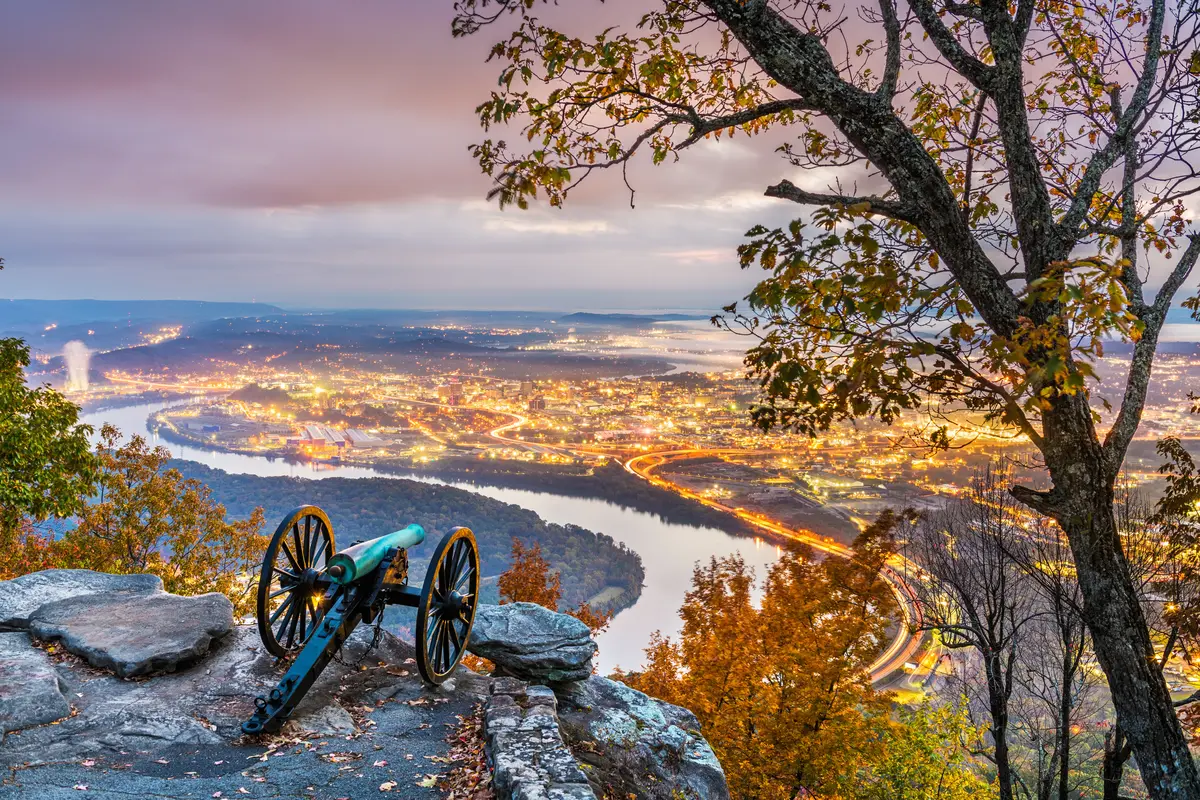
Retiring in Signal Mountain
Signal Mountain draws retirees for its balance of amenities, outdoor access, and cost. Here’s what to weigh.
🌤 Climate
Signal Mountain runs roughly 5–10°F cooler than Chattanooga in the valley, with 209 sunny days a year and more precipitation than the flatlands below. Summers are notably comfortable by Tennessee standards; winters bring occasional ice on the ridge road that can complicate travel for a day or two at a time.
🍴 Lifestyle
Day-to-day life centers on trails, a small collection of well-regarded local restaurants, and a genuinely active civic community anchored by the Mountain Arts Community Center. Retirees who value walkable trail access and a quiet, forested setting find Signal Mountain well-suited; those who want urban amenities at arm's length will make the 20-minute drive to Chattanooga regularly.
🏚 55+ Communities
No 55+ communities were found in Signal Mountain. Retirees who move here typically do so into the general housing market — period homes in Old Town, ranch-style mid-century homes, or larger wooded lots in Grandview and similar neighborhoods. The low property tax rate and strong community infrastructure make it a practical choice even without a dedicated 55+ development.
✈ Getting Around
A car is required for all practical purposes; the mountain's single main route, US-127, handles everything from the grocery run to medical appointments. Erlanger Baroness Hospital is about 9 miles from Signal Mountain. Chattanooga Metropolitan Airport (CHA) is approximately 19 miles away — a workable distance for retirees with travel plans.
🏛 Tennessee Taxes for Retirees — What to Know
- No state income tax — Tennessee has no personal income tax. Social Security, pensions, 401(k) and IRA withdrawals and annuity payments are all untaxed at the state level, with no state return to file. The Hall tax on interest and dividends — the state’s last income-type tax — was fully phased out and repealed effective 2021.
- Sales tax is the tradeoff — The state sales tax is 7.0%, and local add-ons bring the combined rate in Signal Mountain to 9.25% (Tennessee Department of Revenue (SUT-13, SUT-53); Streamlined Sales Tax rate boundary file TNR2026Q3, Q3 2026). Groceries are taxed at a reduced state rate of 4% plus the local rate; prescription drugs are exempt. Prepared food, candy, dietary supplements and alcohol pay the full rate.
- Property taxes are low, not the tradeoff — Property tax in Tennessee is set county by county, and rates are low by national standards. Unlike Texas, which funds local government through high property taxes in place of an income tax, Tennessee leans on its sales tax instead — so a retiree is not trading one bill for another. Your county trustee publishes the current rate.
- Tax relief for owners 65 and over — The state reimburses part of the property tax bill for low-income homeowners who are 65 or older, and for disabled homeowners of any age, through the Property Tax Relief program administered by county trustees. It is income-tested and must be applied for each year.
- A tax freeze — but only where the county or city adopted it — Tennessee also allows a Property Tax Freeze that locks a homeowner’s bill at the amount owed in the year they qualify, for owners 65 and over under an income limit. It is a local option: each county and city chooses whether to offer it, and sets its own income threshold, so it is available in some parts of the state and not others. Check with the county trustee.
- No estate, inheritance or gift tax — Tennessee has none of the three. The inheritance tax was repealed for deaths occurring in 2016 and after, and the gift tax was repealed effective January 1, 2012.
- No separate capital gains tax — Because Tennessee has no state income tax, capital gains — including on investments and on the sale of a home — are not taxed at the state level at all, unlike states such as Washington that tax capital gains separately from income.
Source: Tennessee Department of Revenue and Tennessee Comptroller of the Treasury.
Tax laws change frequently and individual situations vary. This is general information, not tax advice — always consult a qualified Tennessee tax professional or CPA for personalized retirement tax planning.
Weekends & Local Favorites in Signal Mountain
Weekend life on Signal Mountain divides fairly cleanly between the outdoors and the handful of local spots where the community actually gathers. Neither requires going down the mountain, which is the point.
The Trails Are the Main Event
Signal Point anchors the southern end of the Cumberland Trail — a promontory with a history running from Native American signaling fires to Civil War communications posts — and it is where a lot of Signal Mountain mornings begin. The trail descends into Middle Creek Gorge, passes through the Rainbow Lake Wilderness Area, and follows the plateau rim past Julia Falls Overlook and Edwards Point, where the Tennessee River Gorge opens up 1,000 feet below. Rainbow Lake itself traces back to the 1913 Signal Mountain Inn and sits within a town-owned wilderness area. Falling Water Falls is a shorter hike that rewards with a disproportionate payoff. These aren't regional bucket-list destinations that require planning — they're the places residents walk to on a Tuesday after work.
Where Locals Eat and Gather
The dining scene is small and deliberately so. El Metate brings reliable Mexican cooking to a town that doesn't have much competition in that category. Civil Provisions and Bar runs a more elevated concept — the kind of spot that gets referenced when residents want to stay on the mountain for a real dinner. Fortune House Restaurant handles the Chinese food need that a small town often satisfies with one well-regarded option. Rallo's Bar & Grill is where the casual end of the week lands — a neighborhood bar that functions as a social hub in a town without many of them. Southern Star Restaurant fills the comfort food role with a following that stretches beyond the mountain.
The Cultural Anchor
The Mountain Arts Community Center — the MACC — turns 100 in 2026 and remains the town's most consistent gathering place for arts, performances, and community events. The Garden Club of Signal Mountain and civic organizations tied to the schools keep the calendar full year-round. This is a town where the community center is genuinely used, not just listed on a city website.
The August yard sale deserves its own mention: Signal Mountain sits along US-127, which means the World's Longest Yard Sale brings several hundred miles of buyers through town each summer, with the MACC now serving as a designated Major Vendor Stop. It is loud, it is crowded, and newcomers who don't know it's coming are always surprised by it.
Local favorites in Signal Mountain
Restaurants
- El Metate
- Civil Provisions and Bar
- Fortune House Restaurant
- Rallo's Bar & Grill
- Southern Star Restaurant
Outdoors
- Signal Point
- Rainbow Lake Trail
- Julia Falls Overlook
- Edwards Point
- Falling Water Falls
Coffee
- Mayfly Coffee
Top Things Locals Say About Signal Mountain
The best intel about a city comes from the people who actually live there. Here’s what Signal Mountain residents say when newcomers ask the questions everyone’s thinking.
“I knew about the commute before we moved, but I didn't really understand what 'one road' means until the first icy morning in February — we sat on the boulevard for 45 minutes and I was late to a meeting I'd been preparing for all week. That was the adjustment. By spring I'd completely stopped thinking about it.”
— Recent Signal Mountain home buyer
“What's the most surprising thing about living in Signal Mountain?”
The civic engagement catches people off guard. You move here for the schools and the trails, and then you realize that half your neighbors with no kids in the district are showing up to school events anyway. The Mountain Arts Community Center, the Garden Club, the trail maintenance crews — there's a volunteer infrastructure here that most towns this size don't come close to. It's not performative; people actually show up.
“What do locals love most about Signal Mountain?”
The combination of being genuinely away from the city and still only 20 minutes from it. You can walk from most neighborhoods to Signal Point or the Rainbow Lake Trail without getting in a car, and then be at your desk in Chattanooga before 9. The summer temperatures are cooler than the valley by a solid margin, which matters more than people expect after their first July up here.
“What should newcomers to Signal Mountain know?”
Learn the boulevard before winter hits. US-127 has sections that ice before the valley does, and the rhythm of when to leave in the morning versus when to wait it out takes a season to figure out. Also: the August yard sale is not a quiet weekend — the World's Longest Yard Sale runs right through town along US-127, and the traffic is a genuine event. If you're moving in July, ask about it before you assume August is normal.
“How much do you need a car in Signal Mountain?”
A car is essential. Every errand, every commute, every school pickup runs through US-127. On-mountain you can walk to trails, a few restaurants, and Mayfly Coffee, but grocery shopping, larger retail, and most services mean going down the ridge into Chattanooga. Most households structure their week around one or two valley trips and make the rest work with delivery or on-mountain options. It becomes routine, but you should plan for it before you move.
Cities Near Signal Mountain
Other communities near Signal Mountain worth a look — each with its own character and price point.
| City | Distance | Best For | Vibe | Median Rent | Median Buy |
|---|---|---|---|---|---|
| Chattanooga | 7 mi | Urban amenities, renters, urban professionals | Walkable, riverfront, city energy | $1,513 | $319,185 |
| Red Bank | 5 mi | Value buyers, young families | Accessible, transitional, improving | $1,293 | $308,574 |
| Soddy-Daisy | 10 mi | Affordability, lake access | Rural-suburban, laid-back, spacious | $1,491 | $358,922 |
More Helpful Guides for Signal Mountain
Going deeper on Signal Mountain? Our blog series covers everything from first-time buying to retiring here — explore the guides below.
Local Expert Takeaway: Signal Mountain rewards buyers who make the choice with full information: the schools at Thrasher, Nolan, and Signal Mountain Middle/High are the real anchor, the trails at Signal Point and Rainbow Lake are genuinely walkable from most neighborhoods, and the 0.56% effective property tax rate softens the carrying cost on a $634,620 median. What it asks in return is a real commitment to the one-road life — US-127 is the commute, the grocery run, and the social exit, and there's no routing around it when it doesn't cooperate.
Quick Takeaways & FAQs
✅ Signal Mountain's trail network — 18 miles connecting Signal Point, Rainbow Lake, Julia Falls Overlook, and Edwards Point — is walkable from most neighborhoods, not a weekend drive.
⚠️ The entire town depends on a single road off the ridge: US-127 handles every commute, every grocery run, and every emergency, with no practical alternate when it backs up or ices over.
📍 Every August, the World's Longest Yard Sale turns Signal Mountain Boulevard into a four-day, multi-state shopping event — the Mountain Arts Community Center is now a designated Major Vendor Stop, and the traffic is a genuine surprise for anyone who moves in July.
What is the commute from Signal Mountain to Chattanooga like?
How are the schools in Signal Mountain?
Is Signal Mountain, TN a safe place to live?
What are homes like in Signal Mountain and what do they cost?
What outdoor activities are available in Signal Mountain?
Helpful Links for Moving to Signal Mountain
Moving to Tennessee?
Tell us what you need help with and we'll connect you with local resources.
