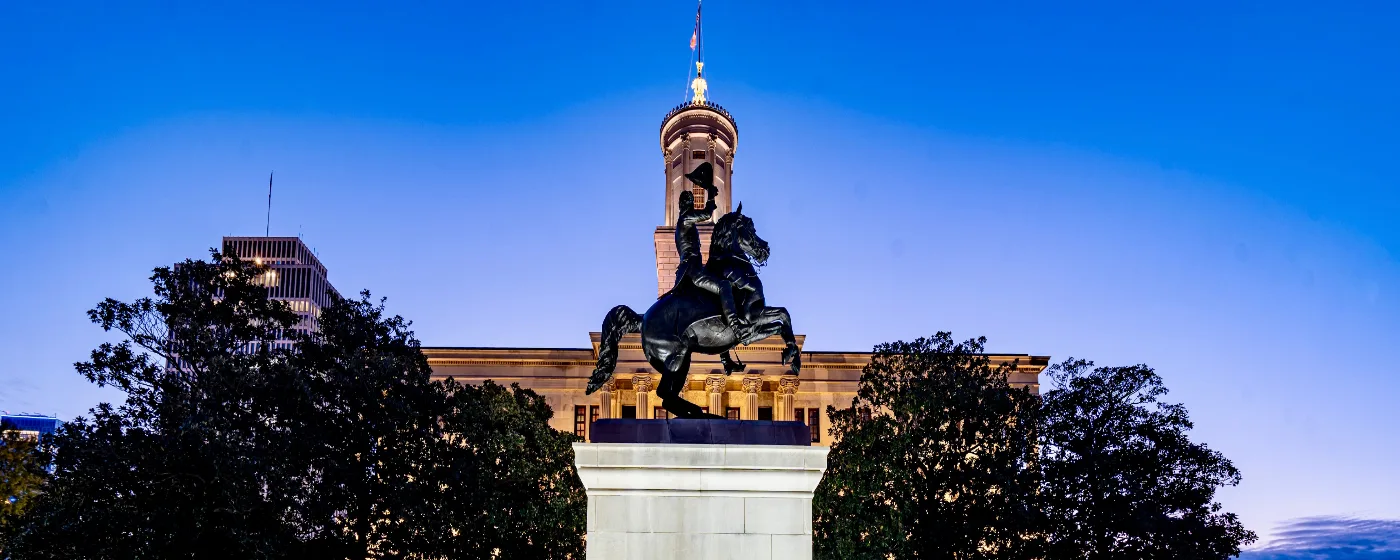
What Is Living in Red Bank, Tennessee Like?
Red Bank has a geographic quirk that surprises almost every newcomer: it is an enclave city, fully surrounded by Chattanooga on all sides, yet it operates as its own incorporated municipality with its own city hall, its own police force, and its own civic identity. At just 6.56 square miles and home to 12,405 residents, it sits at the base of the Cumberland Plateau, with hilly forested slopes rising right behind the residential streets — the kind of terrain that makes a house feel tucked away even when Downtown Chattanooga is about 10 minutes to the south. Dayton Boulevard (TN-8) is the commercial spine running through the middle of the city, with US-27 tracing the western edge. Understanding how those two corridors organize the city is, practically speaking, the first thing a buyer needs to know.
The economic picture here is built around access to a large metro, not a standalone local job base. Hamilton County Schools is the most visible local employer, and the district holds a B- rating, according to Niche. Beyond that, most working residents commute into Chattanooga: a major regional health system anchors one large employer base, BlueCross BlueShield of Tennessee brings insurance-sector jobs, and Volkswagen Chattanooga represents a significant automotive manufacturing presence in the metro. The median age in Red Bank sits around 37, and the largest age cohort is adults 25–44 — a demographic picture that matches what you see on the ground: a mix of young professionals and families with school-age children, attracted by prices well below what comparable square footage would run in the trendier Chattanooga zip codes.
The overall cost of living runs roughly 10% below the U.S. average, with housing pulling that number down the most. The typical home price — $308,574 as of August 2026 — puts real estate noticeably below what you would pay for a similar lot in Signal Mountain, and roughly in line with comparable Chattanooga and Hixson prices, as covered in detail on the cost-of-living page. The terrain gives the housing stock a character you don't get in flat suburbs: lots run from half an acre to a full acre on steep slopes, with early bungalows, brick Tudor cottages, and renovated ranch homes alongside newer Craftsman-influenced builds. Effective property taxes here are low by national standards, at 0.56%. The typical citywide rent runs $1,293 per month, which draws renters who want a Chattanooga address without Chattanooga prices.
Whether you're doing a first pass on neighborhoods or trying to decide between Red Bank and Signal Mountain, this guide covers what daily life actually looks like here — commute patterns, housing stock, the community anchor spots, and the honest trade-offs that don't show up in a Zillow search.
Red Bank at a Glance
Looking to buy in Red Bank? Estimate your payment.
Enter your numbers to see an estimated monthly mortgage payment.
Estimate only. Excludes HOA fees and mortgage insurance. The interest rate above is a starting point, not a quoted rate — replace it with your own to see real numbers. Insurance is a flat placeholder, not a Red Bank quote.
Beyond the Monthly Mortgage Payment — What to Factor In
- The property tax rate above — The 0.56% used in the estimate is the median effective rate — tax actually paid as a share of market value — published by Ownwell, 2026. That is the county-wide median: the source publishes no separate figure for Red Bank, and rates can vary sharply between tax districts within one county. Half of local homes pay more and half pay less: your own bill depends on that property's assessed value and any exemptions it qualifies for, which can differ a lot from its market price. Confirm with the Hamilton County assessor before you budget.
- Total cost of ownership — Your monthly mortgage payment is just the baseline. Depending on the specific city, county, and service district, homeownership costs also include local utility fees, municipal surcharges, and special assessments (such as water, sewer, storm drainage, or local energy taxes) that vary by location.
- Independent due diligence — Because these recurring local costs and municipal fees change depending on the exact property address, buyers must research them independently during their transaction process.
Tax laws, local municipal fees, and utility costs change frequently and individual situations vary. This page is general information, not tax or legal advice — always consult a qualified tax professional, CPA, or local municipal offices for personalized guidance.
Why Are People Moving to Red Bank?
The short answer is Chattanooga access at a lower price point. Red Bank sits inside a larger city's footprint, which means residents get the quiet, tree-lined residential streets of a smaller town with about 10 minutes to Downtown Chattanooga by car. For buyers priced out of the most in-demand Chattanooga corridors, or for remote workers who want a genuine neighborhood feel without giving up metro proximity, that combination is hard to argue with.
The housing stock itself is part of the draw. Lots on steep forested slopes, bungalows from the 1940s and 1950s, brick Tudor cottages that have been renovated rather than torn down — this is not the new-construction subdivision experience. If you want a yard that backs into the side of a ridge, Red Bank has that in a way that few cities at this price point can match.
Several recent civic investments have added momentum. In January 2026, the city was awarded a $4.16 million federal grant for a bike lane and roundabout safety project — a concrete signal that active transportation infrastructure is moving forward. The Godsey Ridge Trail System opened in April 2026 with beginner, intermediate, and advanced routes, funded through a State of Tennessee grant with support from The Trust for Public Land. And in April 2026, Red Bank was selected for the Tennessee Downtowns Program, a statewide revitalization initiative that positions Dayton Boulevard for continued investment.
The buyer profile here skews toward people who have done the comparison: they know Signal Mountain is noticeably higher in price for similar square footage, and they know that Red Bank's enclave status means a stable, locally governed community rather than a neighborhood that could be absorbed into a larger city's policy changes. That political and administrative independence matters more than newcomers expect — it shows up in things like zoning decisions, how quickly roads get repaired, and the sense that the city is actually accountable to 12,405 residents rather than a larger jurisdiction.
Who Moves Here
Young professionals who work downtown and want a real neighborhood rather than an apartment complex. Families with school-age children drawn to the Lions at Red Bank High School and the broader Hamilton County system. Remote workers who want a mortgage payment that doesn't demand a dual income at the top of both earners' salary ranges. And increasingly, buyers relocating from higher-cost metros who find that Red Bank's price point leaves room in the budget for everything else — the outdoor gear, the weekend trips, the renovation project on a house that has actual bones to work with. For more on who this city tends to suit and why, see the best neighborhoods page for the area-by-area breakdown.
What Daily Life Feels Like in Red Bank
The honest version of daily life in Red Bank is this: it is quieter than Chattanooga, hillier than you expect, and more car-dependent than the grid near Dayton Boulevard might suggest. Sidewalks thin out quickly once you move off the main corridor into the residential streets, which means walkability is uneven — functional in some blocks near the commercial strip, and genuinely limited on the steeper hillside stretches. Most errands involve a drive.
That said, the density and scale feel right for a city of 12,405. The community is engaged in a way that shows up practically: the MLK Day community cleanup draws volunteers every January, the Red Bank Jubilee is a spring event that fills the calendar, and the annual Christmas Parade and Festival is the kind of tradition that gives a small city its texture. When the city schedules a public planning workshop, residents actually show up — there's a relationship between City Hall and the neighborhoods that doesn't exist in every suburb.
The Terrain Is Not Optional
Lots frequently sit at inclines of 15% or steeper. Walking to a neighbor's house might mean going around rather than straight through. This terrain shapes everything: it creates the wooded, semi-rural feel that longtime residents cite as one of the city's most distinctive qualities, it affects which homes age well and which need work, and it is the reason that two houses on the same street can feel very different depending on which side of the slope they sit on. If you're coming from a flat suburb, budget some time to walk the specific streets before committing.
Schools and Safety
Red Bank falls within Hamilton County Schools, which holds a B- rating, according to Niche, and serves one of the larger county-wide student populations in Tennessee. Red Bank High School sits on a 54-acre campus, runs active TSSAA athletics programs, and carries enough local pride that Friday night Lions games pull the community together. For the full school breakdown, see the schools page.
On safety, Red Bank shows a violent crime rate of 4 per 1,000 residents and a property crime rate of 12 per 1,000 residents — both below Tennessee's statewide benchmarks. The full safety picture is covered on the safety page.
The Red Bank Housing Market Right Now
The typical home price in Red Bank is $308,574 (Zillow Home Value Index, August 2026). That number sits noticeably below Signal Mountain, and roughly in line with comparable pockets of Chattanooga and Hixson. At this price point, what you are typically buying is an older home — a renovated ranch, a brick bungalow, a split-level on a forested lot — rather than new construction. The supply of move-in-ready homes without a renovation project involved is genuinely limited.
One thing buyers find once they start looking: the median household income in Red Bank, at $61,788, falls below what is needed to carry the typical home at current rates. That gap has real implications for first-time buyers especially, and it means that cash flow planning matters here more than the sticker price suggests. The first-time homebuyer page walks through loan options and what buyers in this market typically need to bring to the table.
The effective property tax rate of 0.56% is low by national standards — one of the genuine financial advantages of buying in Tennessee generally and Red Bank specifically. Some areas cost more than others within the city, shaped mostly by ridge elevation, lot size, and renovation quality, but those distinctions belong on the best neighborhoods page rather than here.
What the Market Rewards
Well-priced homes on flat or manageable lots with updated kitchens and roofs move. Homes requiring significant structural work on very steep lots sit longer, because the buyer pool for that specific combination is narrower. Dayton Boulevard Corridor properties — mixed-use parcels, commercial-adjacent lots — are drawing developer attention given the Tennessee Downtowns Program selection and the planned Midgate Commons mixed-use development near US-27. That kind of investment signals where the next wave of appreciation may concentrate, though buyers should weigh that potential against the realities of living adjacent to a commercial corridor during a construction phase.
Red Bank Neighborhoods
Red Bank has several distinct areas — each with its own character and appeal. Here’s a breakdown to help you narrow down where to focus your home search.
🏡 Paragon
Paragon is one of the more established residential pockets in Red Bank, with a mix of mid-century homes on larger lots and a neighborhood feel that attracts buyers who want space without straying far from Dayton Boulevard. It suits families and longtime residents who value quiet streets with a community character.
🏠 Duncan Hills
Duncan Hills sits on the elevated, hillier terrain that defines much of Red Bank's character — expect forested slopes, generous lot sizes, and a sense of separation from the commercial corridor. It appeals to buyers who prioritize privacy and the semi-rural feel the ridge provides.
🌳 Midvale
Midvale is a settled, walkable-adjacent neighborhood with housing stock that spans older bungalows to mid-century ranches, many of which have been updated over the years. Its proximity to the Morrison Springs Road corridor makes it convenient for families tied to Red Bank High School.
🏘 Brookmoor
Brookmoor has the quiet, tree-lined feel of an older suburb that hasn't been heavily redeveloped — homes here tend toward solid brick construction on manageable lots. It suits buyers looking for a lower-key neighborhood with good bones and room to settle in.
🏔 Hartman Hill
Hartman Hill lives up to its name — elevation is the defining feature, with homes set on steep lots that offer ridge views and serious natural privacy. It appeals most to buyers who have specifically sought out the hillside terrain and are comfortable with the driving that comes with it.
🌆 Stuart Heights / Rivermont
Stuart Heights and Rivermont sit toward the city's edge near the Tennessee River influence, with a residential character that mixes older homes and larger lots. The area suits buyers who want a quieter, more established feel and proximity to the outdoor recreation that the river corridor and nearby ridge trails provide.
Pros & Cons of Living in Red Bank
The Pros
- Homes priced well below the national median with easy access to downtown Chattanooga
- Stringer's Ridge offers five-plus miles of hiking/biking trails right in the city
- Strong small-town, tight-knit community feel
- Low overall cost of living relative to the U.S. average
The Cons
- City property tax rate has risen sharply in recent years (more than doubling since 2023)
- Violent crime rate runs above the national average
- Limited shopping/dining options within city limits, so residents rely on nearby Chattanooga
Getting Around & Commuting in Red Bank
Red Bank is a car city. That is the starting point for any honest commute conversation here. Dayton Boulevard (TN-8) carries most of the daily traffic through the heart of the city, and US-27 runs along the western edge as the primary route connecting Red Bank to the broader Chattanooga metro. Both corridors move efficiently most of the time, with the predictable friction points being the Dayton Boulevard commercial stretches during morning and afternoon rush periods.
The headline commute number is short: about 10 minutes to Downtown Chattanooga. For a city this close to a regional employment center, that figure is one of the strongest arguments for choosing Red Bank over suburbs that are geographically farther out but priced similarly. Most of the major metro employers — the regional health system, the insurance sector anchored by BlueCross BlueShield of Tennessee in Chattanooga, Hamilton County Schools, and Volkswagen Chattanooga — are reachable within a commute window that most buyers from larger metros would consider genuinely short.
What People Actually Drive
Because the terrain is hilly and sidewalk infrastructure becomes sparse away from Dayton Boulevard, most residents drive for everything: groceries, school drop-off, doctor's appointments, dinner out. The distance to downtown is short enough that some residents make multiple trips in a day without thinking about it, which is a different relationship with the car than you have in a true exurb. The $4.16 million federal grant awarded in January 2026 for a bike lane and roundabout safety project will eventually provide more on-foot and on-bike options, but that infrastructure is still in the implementation phase.
The nearest major airport is Chattanooga Metropolitan Airport (CHA), about 13 miles from Red Bank. For regular air travelers, that proximity is a practical advantage — no weekend-destroying drive to a distant hub. For retirees weighing driving range and access to regional services, the full picture is on the retiring page.
One Thing That Surprises Commuters
The enclave geography means there is effectively no way to leave Red Bank without entering Chattanooga's street grid. That sounds like a limitation, and it is one in theory — but in practice, the routes are so short and the transition so seamless that most residents stop thinking about it within the first month. The more relevant surprise is how much the hillside streets slow things down internally: what looks like a five-minute drive across the map can involve a longer route around the terrain, especially in the elevated residential areas away from the main corridors.
Schools in Red Bank
Families relocating to Red Bank have public, private, and higher-education options nearby. Here’s a quick overview.
🎓 School District
Hamilton County serves K–12 students across Red Bank and the surrounding area. Rated B- (source: Niche.com).
📊 District Stats
- Enrollment 2024-25
- 44,855 students
- 4-year graduation rate
- 94.2%
- Math proficiency 2025-26
- 39.9%
- Reading proficiency 2025-26
- 40.3%
- Science proficiency 2025-26
- 47.4%
Source: Tennessee Department of Education Data Downloads (district profile, graduation rate and TCAP assessment files).
📚 Higher Education
Tennessee’s public universities — the University of Tennessee, Vanderbilt University, and Middle Tennessee State University — offer four-year degrees statewide, with a statewide community and technical college system of 13 community colleges and 24 colleges of applied technology, with tuition-free options for residents through Tennessee Promise and Tennessee Reconnect providing two-year and workforce programs.
🌐 Online Learning
UT Knoxville Online and MTSU Online offer fully accredited online degrees for remote learners across the state.
Safety in Red Bank
A quick look at how Red Bank compares on the numbers that matter most when weighing a neighborhood or a move.
🛡 Violent Crime
Approximately 4 per 1,000 residents.
🔒 Property Crime
Approximately 12 per 1,000 residents.
Compared to the most recent national figures from the Bureau of Justice Statistics (2024), Red Bank’s violent crime is above the national average (about 3.7 per 1,000), and property crime is below the national average (about 18.4 per 1,000).
Against Tennessee as a whole, Red Bank’s violent crime is roughly two-thirds of the state average, and property crime is roughly half the state average (Bureau of Justice Statistics, Crime Known to Law Enforcement, 2024 (tables 2 and 3)).
Crime rates can vary a lot within a single city, so the citywide numbers above are only a starting point. Some neighborhoods in Red Bank run well below these averages, while others run higher — the kind of block-by-block detail that matters most when you’re actually choosing where to live. The full guide below breaks it down neighborhood by neighborhood.
Working in Red Bank
Red Bank’s largest employers span several industries — here are some of the anchors of the local job market.
🏥 Erlanger Health System
Healthcare, located in Chattanooga
🏦 BlueCross BlueShield of Tennessee
Insurance, located in Chattanooga
🎓 Hamilton County Schools
Education
🏭 Volkswagen Chattanooga
Automotive manufacturing
Parks & Recreation in Red Bank
Some of the outdoor spaces that shape everyday life in Red Bank.
🌱 Stringer's Ridge Park
🌱 White Oak Park & Dog Park
Red Bank residents don’t have to go far for green space — spots like Stringer's Ridge Park and White Oak Park & Dog Park are part of everyday life here, whether that’s a morning walk, a weekend hike, or just somewhere to unwind outside. The full guide below covers more of what Red Bank has to offer for parks and outdoor recreation.

Retiring in Red Bank
Red Bank draws retirees for its balance of amenities, outdoor access, and cost. Here’s what to weigh.
🌤 Climate
Red Bank gets 210 sunny days a year, with warm, humid summers and mild winters that rarely bring extended cold snaps. Spring and fall are the standout seasons — comfortable temperatures, full tree canopy color in the hills, and low wind. Summer heat and humidity are real and worth factoring in if you spend significant time outdoors.
🍴 Lifestyle
Daily life here moves at a neighborhood pace — independent coffee spots, community events anchored by the annual Jubilee and Christmas Parade, and trail access right inside city limits through the Godsey Ridge system and Stringer's Ridge Park. Downtown Chattanooga's dining and cultural scene is about 10 minutes away, which means retirees get the quiet of a small city without giving up access to a full-service metro.
🏚 55+ Communities
No 55+ communities were found in Red Bank. Retirees here typically buy single-family homes — the bungalows and ranch homes on hillside lots that define the city's residential character. The full context on retiring in the area is on the retiring page.
✈ Getting Around
Most daily movement requires a car, with the commercial strip along Dayton Boulevard the most manageable stretch on foot. Chattanooga Metropolitan Airport (CHA) is about 13 miles away — a manageable drive for regular travelers. A regional hospital sits inside city limits, which matters for retirees weighing proximity to healthcare.
🏛 Tennessee Taxes for Retirees — What to Know
- No state income tax — Tennessee has no personal income tax. Social Security, pensions, 401(k) and IRA withdrawals and annuity payments are all untaxed at the state level, with no state return to file. The Hall tax on interest and dividends — the state’s last income-type tax — was fully phased out and repealed effective 2021.
- Sales tax is the tradeoff — The state sales tax is 7.0%, and local add-ons bring the combined rate in Red Bank to 9.25% (Tennessee Department of Revenue (SUT-13, SUT-53); Streamlined Sales Tax rate boundary file TNR2026Q3, Q3 2026). Groceries are taxed at a reduced state rate of 4% plus the local rate; prescription drugs are exempt. Prepared food, candy, dietary supplements and alcohol pay the full rate.
- Property taxes are low, not the tradeoff — Property tax in Tennessee is set county by county, and rates are low by national standards. Unlike Texas, which funds local government through high property taxes in place of an income tax, Tennessee leans on its sales tax instead — so a retiree is not trading one bill for another. Your county trustee publishes the current rate.
- Tax relief for owners 65 and over — The state reimburses part of the property tax bill for low-income homeowners who are 65 or older, and for disabled homeowners of any age, through the Property Tax Relief program administered by county trustees. It is income-tested and must be applied for each year.
- A tax freeze — but only where the county or city adopted it — Tennessee also allows a Property Tax Freeze that locks a homeowner’s bill at the amount owed in the year they qualify, for owners 65 and over under an income limit. It is a local option: each county and city chooses whether to offer it, and sets its own income threshold, so it is available in some parts of the state and not others. Check with the county trustee.
- No estate, inheritance or gift tax — Tennessee has none of the three. The inheritance tax was repealed for deaths occurring in 2016 and after, and the gift tax was repealed effective January 1, 2012.
- No separate capital gains tax — Because Tennessee has no state income tax, capital gains — including on investments and on the sale of a home — are not taxed at the state level at all, unlike states such as Washington that tax capital gains separately from income.
Source: Tennessee Department of Revenue and Tennessee Comptroller of the Treasury.
Tax laws change frequently and individual situations vary. This is general information, not tax advice — always consult a qualified Tennessee tax professional or CPA for personalized retirement tax planning.
Weekends & Local Favorites in Red Bank
The outdoor infrastructure here improved substantially with the April 2026 opening of the Godsey Ridge Trail System — a beginner loop crossing three wooden bridges, an intermediate dirt trail, and a more challenging 0.6-mile loop toward the ridge summit. The system is free and sits inside city limits, which means Red Bank residents now have genuine trail access without a drive to a trailhead. Stringer's Ridge Park and the broader Godsey Ridge Trail System are the outdoor anchors, and White Oak Park & Dog Park fills a different role as a community gathering spot where you are as likely to meet a neighbor as to get in a proper walk.
The local dining and coffee scene is small but has distinct spots worth knowing. Be Caffeinated is the independent coffee anchor — the kind of place where the regulars are actually regular. Pizzeria Cortile brings a more elevated dinner option, and The Spritzeria adds a lighter, social-hour dimension to the local food scene. None of these are Chattanooga-scale operations, and that is part of the point — the scale matches the city.
Community events are where Red Bank's identity really shows. The Red Bank Jubilee in spring, the Christmas Parade and Festival, and the January MLK Day community cleanup are not one-off occasions — they are repeated enough that they become the rhythm of the year for long-time residents. These are the events where newcomers stop being newcomers.
The Honest Trade-Off
The local dining and retail footprint is limited. A serious shopping run, a wide restaurant selection, or a full-service entertainment night means heading into Chattanooga — which, at about 10 minutes away, is not a hardship, but it does mean Red Bank is not a self-contained live-work-play environment. Residents who are happiest here tend to think of the city as a residential base, not a destination in itself. The payoff is the forested lot, the quiet street, the community-scale events, and a housing cost that leaves room in the budget for the Chattanooga restaurants and outdoor gear that make the region worth living in.
Local favorites in Red Bank
Restaurants
- Pizzeria Cortile
- The Spritzeria
Outdoors
- Stringer's Ridge
- White Oak Park & Dog Park
- Godsey Ridge Trail System
Coffee
- Be Caffeinated
Top Things Locals Say About Red Bank
The best intel about a city comes from the people who actually live there. Here’s what Red Bank residents say when newcomers ask the questions everyone’s thinking.
“I knew it was close to Chattanooga on paper, but I didn't really get what 10 minutes meant until I had been here a month. I pop downtown for dinner and I'm back home before it feels like I went anywhere. What I didn't expect was how much the hills would slow things down inside the city — my neighbor is literally visible from my porch and it's still a four-minute drive to get there without going the long way around.”
— Recent Red Bank home buyer
“What's the most surprising thing about living in Red Bank?”
Most people expect it to feel like a suburb, but it doesn't. The slopes and the tree canopy make it feel more like a mountain neighborhood — you look out your back window and it's forested ridge. The enclave thing also takes some getting used to: you realize pretty quickly that every route out of Red Bank goes through Chattanooga, which sounds claustrophobic and in practice just means your city is seamlessly connected to a much bigger one.
“What do locals love most about Red Bank?”
The terrain and the community scale. You know your neighbors here in a way that doesn't happen in a big city neighborhood. The Christmas Parade pulls everyone out, the Jubilee in spring feels like an actual town event, and the Godsey Ridge trails give you somewhere to go on a Saturday morning without getting in the car. It's a city small enough to feel like a community but close enough to Chattanooga that nothing important is out of reach.
“What should newcomers to Red Bank know?”
Do your homework on the specific street before you make an offer. Two houses with the same zip code can feel completely different depending on elevation, slope, and how close they are to Dayton Boulevard. The corridor near the commercial strip is more walkable and more active; the hillside streets farther out are quieter and more private but require a car for everything. Neither is wrong — they just suit different people, and the difference matters more here than in a flat grid city.
“How much do you need a car in Red Bank?”
For most people, quite a bit. Dayton Boulevard has some genuinely walkable blocks near the shops and coffee spots, but sidewalk coverage becomes sparse once you move into the residential hills. Most errands, most school runs, and anything involving a larger grocery run or shopping trip means driving — either within the city or the short hop into Chattanooga. The bike lane infrastructure funded by the 2026 federal grant will eventually change that math on some corridors, but right now a car is the practical default.
Cities Near Red Bank
Other communities near Red Bank worth a look — each with its own character and price point.
| City | Distance | Best For | Vibe | Median Rent | Median Buy |
|---|---|---|---|---|---|
| Chattanooga | 5 mi | Jobs, dining & urban amenities | Larger, more urban, full-service | $1,513 | $319,185 |
| Hixson | 6 mi | Families, newer construction | Suburban, flat, retail-heavy | $1,300 | $310,000 |
| Signal Mountain | 8 mi | Buyers seeking elevation & space | Quieter, elevated, premium pricing | $2,481 | $634,620 |
More Helpful Guides for Red Bank
Going deeper on Red Bank? Our blog series covers everything from first-time buying to retiring here — explore the guides below.
Local Expert Takeaway: Red Bank is one of the few places in the Chattanooga metro where you can buy a house on a forested hillside lot, walk to a coffee shop on Dayton Boulevard, and be at a downtown Chattanooga restaurant in about 10 minutes — all for a mortgage that does not demand two six-figure incomes. The trade-off is a limited local retail and dining footprint, hilly terrain that makes some streets genuinely car-dependent, and a housing stock that skews older and often needs work. Buyers who go in with clear eyes on those realities tend to stay for a long time.
Quick Takeaways & FAQs
✅ Red Bank is about 10 minutes from Downtown Chattanooga, giving residents metro access at a price point noticeably below what comparable square footage costs in Signal Mountain.
⚠️ The hilly terrain and uneven sidewalk infrastructure make most of Red Bank car-dependent away from Dayton Boulevard — plan accordingly before assuming the walkable grid extends to your specific street.
📍 The Godsey Ridge Trail System opened in April 2026 with beginner through advanced routes inside city limits, funded by a state grant with support from The Trust for Public Land.
Is Red Bank a safe place to live?
What are the schools like in Red Bank, TN?
How much does a house cost in Red Bank, TN?
Is Red Bank part of Chattanooga?
What is the commute like from Red Bank to Chattanooga?
Helpful Links for Moving to Red Bank
Moving to Tennessee?
Tell us what you need help with and we'll connect you with local resources.
