
Cleveland, Tennessee gets overlooked in the retirement conversation — overshadowed by Chattanooga to the south and the mountain towns to the east. That's partly what makes it worth examining. A city of 51,172 tucked into Bradley County, it sits about 35 minutes to Chattanooga via I-75, close enough to access a major metro's hospitals, airports, and cultural draw while keeping you in a mid-sized city where the cost of daily life is noticeably more manageable. The Ocoee River, the Cherokee National Forest, and Red Clay State Historic Park are all within striking distance. This is not a retirement fantasyland, but for the right person it works quietly and practically.
Who moves here in retirement? Mostly people who want Tennessee's favorable tax structure without paying Chattanooga prices, who value a real community over a manufactured one, and who are comfortable owning a car. Manufacturing anchors the local economy — Whirlpool Corporation, Duracell, and Mars Chocolate North America all have a presence here — which means the city feels grounded and working rather than resort-polished. Lee University's campus brings a steady stream of young people and cultural programming that keeps the city from feeling like it's aging in place. The faith community is broad and active, spanning Baptist, Methodist, Catholic, nondenominational, and Church of God congregations throughout Bradley County.
The typical home price of $313,361 (Zillow Home Value Index, August 2026) puts homeownership within reach for retirees arriving from higher-cost markets, though buyers on a fixed income should review the full cost-of-living picture carefully — Tennessee's income-tax-free environment comes paired with a combined sales tax rate that ranks among the highest in the country. With 209 sunny days a year and mild winters that rarely push past a few inches of snow, outdoor life stays accessible across most of the calendar. Four distinct seasons give the area genuine rhythm without the brutality of the upper Midwest or the oppressive heat of coastal Florida.
The sections below walk through healthcare access, the retiree tax picture, what daily life actually looks like on a fixed income, how to stay active and connected here, what downsizing looks like in Cleveland's current housing stock, and how the city stacks up against nearby alternatives worth considering.
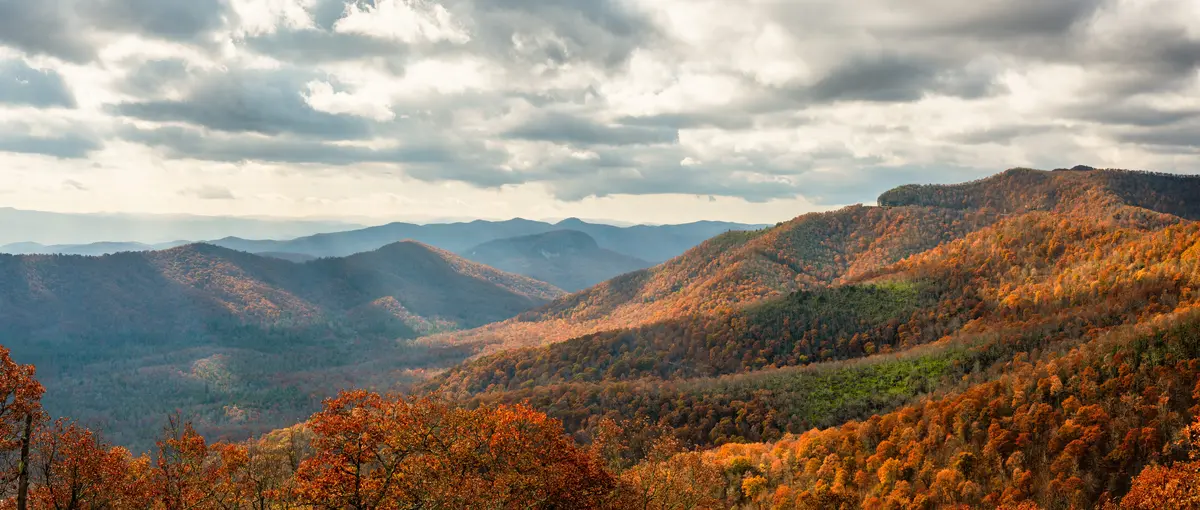
Why Retirees Are Choosing Cleveland
The case for Cleveland starts with value and ends with lifestyle fit. The typical home price of $313,361 (August 2026) is genuinely accessible for retirees arriving from Nashville, Atlanta, or almost anywhere on the East Coast, and Tennessee's zero state income tax means Social Security, pension income, IRA withdrawals, and 401(k) distributions all stay fully intact at the state level. For a retiree drawing $60,000 a year in retirement income, that is a meaningful structural advantage — one that compounds year over year. See the cost-of-living page for the full picture.
Cleveland also fits retirees who want proximity to nature without paying a mountain-town premium. The Ocoee River corridor, Cherokee National Forest, and Parksville Lake are close. The Cleveland/Bradley County Greenway runs four flat, paved miles through the northern part of the city — exactly the kind of low-impact infrastructure that retirees actually use consistently, not just on weekends. And the Ocoee Street Historic District has enough life — restaurants, coffee, walkable blocks — to make downtown feel like a place worth spending time rather than just a grid of errands.
Who should look elsewhere? Retirees who genuinely cannot or prefer not to drive will find Cleveland difficult; transit is limited and car-free daily life is only realistic in the immediate downtown core. Retirees expecting the amenity density of a larger city — a major performing arts center, specialized medical subspecialties on every corner, multiple hospitals to choose from — will find gaps here. And retirees prioritizing a curated 55+ community with peer social infrastructure built in should know upfront: no 55+ communities were found in Cleveland. The city works best for independent, active retirees who want affordability, outdoor access, and a real Tennessee community — not a gated lifestyle product.
Healthcare & Medical Access in Cleveland
The nearest hospital is Tennova Healthcare – Cleveland, located inside city limits. That is a genuine advantage — a community hospital within the city proper means emergency care doesn't require a highway drive. The facility has earned Healthgrades recognition for Outpatient Prostate Care Excellence and Coronary Intervention Excellence, and it accepts both Medicare and Medicaid. In August 2024, Vitruvian Health (formerly Hamilton Health Care System, a not-for-profit) completed its acquisition of the facility, committing to capital investment and expanded clinical capabilities with an explicit goal of keeping more care local. That transition is still relatively recent, and retirees doing due diligence should ask specifically about subspecialty coverage and wait times as the new ownership builds out its clinical depth.
The honest distance-to-advanced-care reality matters here. For complex oncology, advanced cardiac intervention, neurosurgery, or major trauma, residents typically travel to Chattanooga — about 35 minutes away — where larger regional health systems with deeper subspecialty benches are available. For most retirees managing chronic conditions, routine procedures, and primary care, the in-city hospital is adequate. For those with complex or progressive conditions that will require frequent specialist visits, the commute to Chattanooga's medical corridor is real and should factor into the decision.
Primary care and specialist access within Cleveland itself is reasonable for a city of its size. Cardiology, orthopedics, and general surgery have local representation. Mental health and geriatric care options exist but may require some searching, and availability can vary by provider and insurance panel. Retirees moving from a larger metro should expect to spend time establishing care relationships here — the system is manageable but not as abundant as what they may be leaving behind.

The Retiree Budget in Cleveland
Tennessee's income tax posture is the headline: there is no state income tax. Social Security benefits, pension income, IRA withdrawals, and 401(k) distributions are all untaxed at the state level. For retirees who spent decades building tax-deferred savings, choosing Tennessee over a state that taxes retirement income can represent thousands of dollars annually in preserved purchasing power.
Property taxes are genuinely low. The effective property tax rate is approximately 0.44% — one of the more favorable rates in the region. On top of that, Tennessee's Property Tax Relief program offers qualifying senior homeowners (age 65 and older) a partial reimbursement on property taxes paid, with a household income ceiling of $37,530 for the 2025 tax year. A separate Property Tax Freeze Program allows eligible seniors to lock their tax bill at the level owed in the year they first qualify — a meaningful protection against rising assessments for retirees on fixed incomes. Neither program is automatic; retirees need to apply through the county trustee's office.
The one tax category that works against Cleveland retirees is sales tax. The combined state and local rate is 9.75% (state 7% plus local 2.75%), ranking among the highest in the country. Groceries get a reduced state rate of 4%, but everything else — clothing, home goods, restaurant meals — is taxed at the full combined rate. For retirees who spend a large share of their income on goods and services rather than savings, this is the primary trade-off in Tennessee's otherwise retiree-friendly tax profile. Daily expenses like groceries, dining out, and utilities run at roughly regional Southeast norms — not cheap, but not coastal expensive either. The calculator below can help you model what the housing cost side of the budget looks like at current rates.
Looking to buy in Cleveland? Estimate your payment.
Enter your numbers to see an estimated monthly mortgage payment.
Estimate only. Excludes HOA fees and mortgage insurance. The interest rate above is a starting point, not a quoted rate — replace it with your own to see real numbers. Insurance is a flat placeholder, not a Cleveland quote.
Beyond the Monthly Mortgage Payment — What to Factor In
- The property tax rate above — The 0.44% used in the estimate is the median effective rate — tax actually paid as a share of market value — published by Ownwell, 2026. Half of local homes pay more and half pay less: your own bill depends on that property's assessed value and any exemptions it qualifies for, which can differ a lot from its market price. Confirm with the Bradley County assessor before you budget.
- Total cost of ownership — Your monthly mortgage payment is just the baseline. Depending on the specific city, county, and service district, homeownership costs also include local utility fees, municipal surcharges, and special assessments (such as water, sewer, storm drainage, or local energy taxes) that vary by location.
- Independent due diligence — Because these recurring local costs and municipal fees change depending on the exact property address, buyers must research them independently during their transaction process.
Tax laws, local municipal fees, and utility costs change frequently and individual situations vary. This page is general information, not tax or legal advice — always consult a qualified tax professional, CPA, or local municipal offices for personalized guidance.
Walkability, Community & Staying Active in Cleveland
Honest assessment first: Cleveland is a car-dependent city for most retirees. Walkability concentrates in the downtown core around the Ocoee Street Historic District and parts of North Cleveland. Outside those areas, daily errands — groceries, pharmacy, medical appointments — require a vehicle. The Cleveland Urban Area Transit System (CUATS) operates fixed bus routes within the city on weekdays and includes a Demand Response division that picks up mobility-limited clients at home, which is a real resource. But weekend service does not exist, and any retiree evaluating a no-car retirement should weigh that honestly before committing to a neighborhood outside the walkable downtown core.
What Cleveland does well for active retirees is outdoor infrastructure. The Cleveland/Bradley County Greenway is the standout: a four-mile, flat, paved multi-use path that follows South Mouse Creek through the northern part of the city, with multiple access points. It is the kind of everyday walking option that retirees actually build routines around. Cleveland Parks and Recreation maintains parks throughout the city, and Fletcher Park and Blythe-Oldfield Park both offer green space for regular use. Beyond the city limits, the Ocoee River corridor — the site of the 1996 Olympic canoe and kayak events — and the Cherokee National Forest add a scale of outdoor access that few cities of this size can match.
Community life here runs through faith, and that is worth naming plainly. Cleveland has a notably broad and active congregation base — Baptist, Methodist, nondenominational, Catholic, and Church of God communities throughout Bradley County. For retirees who center their social life around a faith community, the density of options here is a genuine draw. The Museum Center at 5ive Points hosts regular performances and community events. Lee University's campus calendar brings lectures, concerts, and arts programming to the city in ways that a purely residential community would not. And the Ocoee Street Historic District's growing restaurant and coffee scene gives the downtown area a gathering energy that residents actually use.
One thing newcomers often don't anticipate: Cleveland's community rhythm runs quietly. There isn't a packed calendar of highly publicized events the way a larger metro produces. Social integration here tends to happen through church, through the greenway, through the Bradley County Farmers Market on Peerless Road, and through the kinds of low-key local touchpoints that take a season or two to discover. Retirees who arrive expecting the activity density of a resort community sometimes feel the adjustment; those who came from a smaller town will feel right at home faster than they expect.
Right-Sizing: Downsizing in Cleveland
No 55+ communities were found in Cleveland. That is not a knock on the city — it simply means retirees who want a purpose-built active-adult community with organized social programming, shared amenities, and neighbors in the same life stage will need to look at Chattanooga or other regional markets. What Cleveland does have is a range of assisted living, independent living, and memory care options — including Legacy Village of Cleveland (a nonprofit), Charter Senior Living of Cleveland, Garden Plaza at Cleveland, and Avail Senior Living — for retirees who are further along in their care needs.
For retirees who are downsizing from a large home but don't need or want a managed care environment, the options are more conventional. The Cleveland housing stock trends toward single-family homes, and single-level ranch-style homes do exist in the market — particularly in South Cleveland and some of the established neighborhoods along US-64. Patio homes and smaller detached homes suited to lower-maintenance living are available, though they're not as abundant as in larger metros with dedicated builder activity in the 55+ segment. The neighborhoods page breaks down where different housing types concentrate.
What the city's price point means in practical terms is that a retiree selling a home in a higher-cost market and moving to Cleveland can often purchase outright or carry a very modest mortgage — freeing up capital for healthcare costs, travel, or simply a more comfortable fixed-income budget. That equity conversion is one of the real financial arguments for this market. Condos and townhomes are a smaller part of the inventory here than in Chattanooga, so retirees seeking a truly low-maintenance, lock-and-leave lifestyle may find the selection thinner than expected and may need patience or flexibility on timing.
Cleveland vs Nearby Retirement Destinations
| City | Cost vs Cleveland | Primary Hospital | Walkability | Senior Living Depth | Overall Retirement Fit |
|---|---|---|---|---|---|
| Cleveland, TN | Anchor | Tennova Healthcare – Cleveland (in city) | Limited; downtown core walkable | Assisted/independent living options; no 55+ communities found | Strong value, outdoor access, limited senior housing variety |
| Chattanooga, TN | About the same | Multiple regional health systems with deep subspecialty depth | Noticeably better; Northshore and downtown walkable | Wide range including 55+ communities and CCRCs | More amenities and healthcare depth; similar price, more urban feel |
| Athens, TN | Noticeably lower | Regional community hospital; specialty care requires travel | Limited; small-town car-dependent | Smaller range; few dedicated senior communities | Maximum affordability; quieter pace; fewer services |
| Ooltewah, TN | Noticeably higher | Close proximity to Chattanooga systems | Suburban; car required for nearly all errands | Some newer senior living options in the growth corridor | Newer construction, growing area; trade-off is cost and sprawl |
| Dalton, GA | About the same | Regional hospital; Georgia Medicare network applies | Limited; requires a car | Modest senior living options | Cross-state tax considerations; lower profile retirement draw |
| Charleston, TN | Noticeably lower | Relies on Cleveland and Chattanooga facilities | Very limited; small community | Minimal dedicated senior living | Rural quiet and lower costs; not for retirees needing services nearby |
Chattanooga is the comparison most retirees end up making, and the honest read is that it offers more — more walkable neighborhoods, deeper subspecialty medical care, a more developed arts and dining scene — at a price point that's about the same as Cleveland. The trade-off is that Chattanooga also brings more urban complexity: traffic, higher property taxes in some parts of the county, and a pace that isn't for everyone. Athens is the right answer for retirees who prioritize maximum affordability above all else and are comfortable with fewer local services. Ooltewah appeals to buyers who want newer construction and suburban comfort and can absorb a higher price. For retirees who want the Tennessee tax advantages, genuine outdoor access, manageable scale, and a real community without paying a metro premium — and who own a car and plan to keep driving — Cleveland makes a quiet, practical case.

Local Expert Takeaway: Cleveland works best for retirees who arrive with realistic expectations: you will own a car, you will drive to Chattanooga for specialized medical care, and you will not find a purpose-built 55+ community. What you get in return is Tennessee's zero income tax on every dollar of retirement income, an effective property tax rate of approximately 0.44%, a housing market priced well below most comparable metros, four miles of flat greenway walking within the city, and proximity to some of the best outdoor recreation in the southern Appalachians. The Ocoee Street Historic District has enough life to make downtown feel like a real destination, not just a service corridor. If that trade-off — genuine affordability and outdoor access, in exchange for car dependence and limited senior-specific housing — fits your retirement picture, Cleveland is worth a serious look.
Quick Takeaways & FAQs
✅ Tennessee's zero state income tax means Social Security, pensions, and retirement account withdrawals are all untaxed at the state level — a structural advantage that compounds every year.
⚠️ No 55+ communities were found in Cleveland, and walkability outside the downtown core requires a car — retirees who cannot drive or want a fully walkable lifestyle should look at Chattanooga instead.
📍 The Cleveland/Bradley County Greenway offers four flat, paved miles of walking with multiple access points throughout the northern city — the kind of everyday outdoor infrastructure retirees actually build routines around.
Is Social Security taxed in Tennessee if I retire in Cleveland?
What hospital serves Cleveland, TN retirees?
Are there 55+ communities or active adult communities in Cleveland, TN?
Can I retire in Cleveland without a car?
How does Cleveland's property tax compare, and are there senior exemptions?
Moving to Tennessee?
Tell us what you need help with and we'll connect you with local resources.
