
Most Californians who land in Cleveland, Tennessee do a double-take at the first house they tour. A three-bedroom with a yard — the kind of house that would push well past California's statewide typical home value of $764,158 even in mid-tier markets — is sitting at a fraction of that price, with acreage, and it has been on the market for a few weeks. That shock is real. What takes longer to absorb is everything else: the rhythm of a city of 51,172 people tucked between Chattanooga and the Cherokee National Forest, where the pace is genuinely slower and the cost of carrying a mortgage is a fundamentally different number than anything you dealt with in California.
Cleveland sits in Bradley County at the edge of the Tennessee Valley, with I-75 as the spine connecting it to Chattanooga about 35 minutes south. The local economy runs on manufacturing — Whirlpool Corporation, Duracell, and Olin Corporation all have operations here, and Mars Chocolate North America adds to the industrial base. Lee University anchors a college-town energy in the southern part of the city and brings a steady stream of younger residents. The Cleveland city schools — covering 5,687 students enrolled in 2024-25 — hold a B+ rating from Niche, which matters to Californian families arriving with school-age children who want to land somewhere with documented academic standards.
The cost picture is where the math gets genuinely striking. Cleveland's overall cost of living runs about 6% below the national average, and Tennessee collects zero state income tax on wages — a structural advantage over California's graduated state income tax that compounds year after year. The Ocoee River is 20 minutes east on US-64, one of the premier whitewater stretches in the country. Fletcher Park and the Cleveland/Bradley County Greenway handle everyday outdoor life. The grocery store and the hardware store are accessible without a forty-minute commute. These are the things that make Californians stay after they arrive skeptical.
Whether you are weighing the move seriously or still doing the first round of research, the sections below break down what the price and tax shift actually looks like, what four seasons of Southeast Tennessee weather means in practice, how the job and income picture stacks up, what Californians consistently say they did not expect, and how daily life in Cleveland is genuinely different from what you left behind.
The Home Price Reality: What Your California Equity Buys Here
The most immediate number in any California-to-Cleveland calculation is the home price gap. Cleveland's typical home value sits at $313,361 (Zillow Home Value Index, August 2026). California's statewide typical home value of $764,158 means the median Cleveland home costs less than half its California counterpart — and that comparison is conservative, because buyers arriving from coastal metros are often clearing equity from homes well above the California statewide figure.
What does that equity unlock in practice? In Cleveland, buyers with California equity routinely find move-in-ready houses with yards in established neighborhoods at prices they would not have considered possible back home. The Ocoee Street Historic District downtown trades in older homes with character — original hardwood, front porches, mature trees — at prices Californians find genuinely startling. South Cleveland stretches into more rural parcels where land comes with the house. For a full picture of how neighborhoods compare, the neighborhood guide covers character and fit by area.
For buyers arriving with California equity, the practical effect is often the ability to buy without a large loan, or to buy a significantly better home than the typical Cleveland buyer can access. The median household income here is $55,904, which is below what a buyer would need to carry the typical home at current rates — but a California equity position changes that calculation entirely. Many Californians arrive as cash-competitive buyers in a market where that is not the norm.
Nearby, prices shift in ways worth knowing before you start touring. Ooltewah, which has drawn considerable suburban growth, runs noticeably higher than Cleveland. Athens, to the southwest, runs noticeably lower. Chattanooga itself is about the same as Cleveland on a typical-home basis, though it carries a different urban character. The full cost-of-living breakdown covers utilities, grocery costs, and rent — the city-wide typical rent sits at $1,400/mo (Zillow ZORI, August 2026) — for buyers who want to model a transition budget before committing.
The Tax Shift: Where Tennessee Wins and Where It Gives Some Back
The income tax difference is not subtle. Tennessee levies zero state income tax on wages. California's graduated state income tax reaches a top marginal rate of 13.3% — the highest in the nation — and the savings are most dramatic for higher earners. The income-tax advantage is real at most income levels, though the exact benefit depends on where you fall in California's brackets; for households in the middle of the income range, the sales-tax difference partially offsets the gain.
Tennessee also eliminated its Hall Tax on investment dividends and interest income as of January 2021. For remote workers with portfolio income, or retirees drawing from investments, that eliminates a category of California taxation entirely. California's effective property tax rate of 0.71% is already below many states thanks to Proposition 13 — but Cleveland's effective property tax rate of 0.44% is lower still, meaningfully reducing the annual carrying cost on a home.
The Trade-Off: Sales Tax
Tennessee funds state services without income tax largely by leaning on sales tax, and buyers should enter that with clear eyes. Cleveland's combined state-and-local sales tax rate is 9.75% — 7% state plus 2.75% local — which is among the higher combined rates nationally. California's statewide base sales tax rate of 7.25% with local add-ons averages around 8.8% statewide, so on everyday purchases Tennessee is not cheaper.
Groceries are partially buffered: unprepared food in Tennessee is taxed at a reduced 4% state rate rather than the full sales tax rate. California exempts most grocery staples from sales tax entirely, so this is a genuine cost difference that Californians notice on the first few grocery runs. The honest framing is that Tennessee's tax structure trades a substantial income-tax advantage for a higher sales-tax burden — and for most Californians arriving with professional incomes or investment portfolios, the income-tax side of that trade wins by a wide margin.
| Tax Category | California | Cleveland, TN | Practical Effect |
|---|---|---|---|
| State income tax (wages) | Graduated, up to 13.3% marginal | 0% — none | Recurring annual saving; benefit scales with income |
| Investment income tax | Taxed as ordinary income | 0% (Hall Tax eliminated 2021) | Meaningful for retirees and remote workers with portfolio income |
| Effective property tax rate | 0.71% (held down by Proposition 13) | 0.44% | Lower annual carrying cost on the same home value |
| Combined sales tax rate | 7.25% base + local add-ons, ~8.8% average | 9.75% (7% state + 2.75% local) | Higher than California on everyday purchases — the direct trade-off for no income tax |
| Grocery sales tax | Most staples exempt | Reduced 4% state rate applies | Californians notice this on first grocery runs |
| Overall cost of living vs. national average | Noticeably above | Approximately 6% below (Salary.com) | Day-to-day expenses stretch further in Cleveland |

What Californians Don't Expect: Climate, Pace, and the Six-Month Surprise
Everyone researches the price. Almost nobody researches the weather carefully enough before the move. Cleveland gets 209 sunny days a year — respectable, but not the relentless California sunshine many transplants picture when they imagine a warmer Southern state. The difference is humidity, summer thunderstorms that arrive fast and loud, and winters with genuine cold and occasional snow. The Ocoee Valley gets ice storms. Californians who arrived planning to replicate their outdoor running schedule discover in January that it requires a different gear kit and more flexibility.
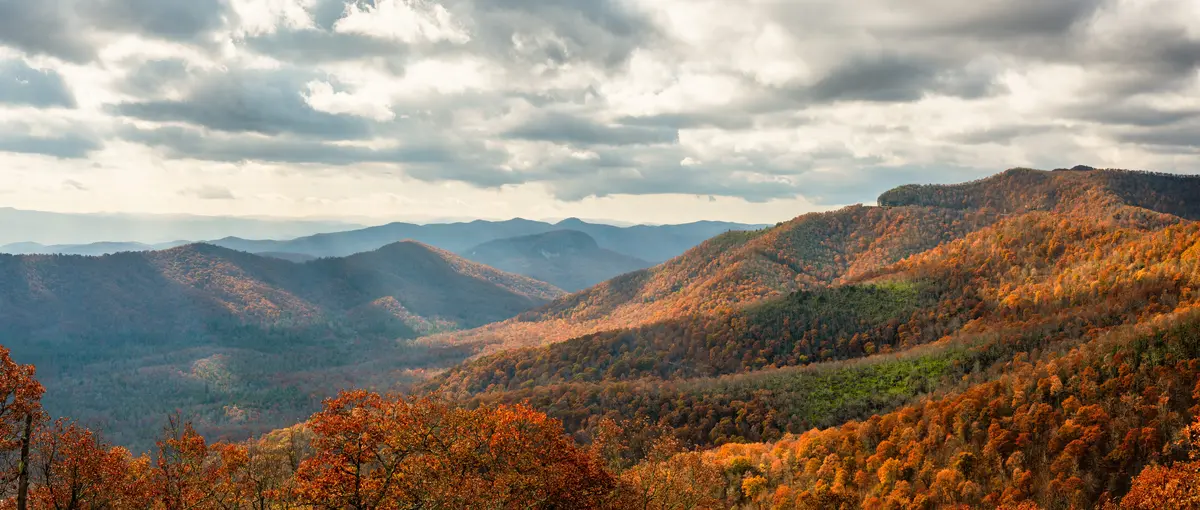
Summer is the season that surprises people most. Humidity in July and August is high enough that a 90-degree day feels different from a 90-degree day in Sacramento or the Inland Empire. The evenings cool, the mountains are close, and the Ocoee River via US-64 east of Cleveland offers a way to spend a hot weekend that has no California equivalent — Class III and IV rapids that drew 200,000-plus visitors a year and hosted Olympic kayak events in 1996. The Cherokee National Forest's Tanasi mountain bike complex, the Little Frog Mountain Wilderness, and the Ocoee Scenic Byway are all accessible within a reasonable drive. Outdoor life here is real; it is just wet-season outdoor life, not desert-dry outdoor life.
Pace and Culture
The pace adjustment is the thing people are least prepared to articulate and most consistently mention after six months. Cleveland is a city of 51,172 people where the Friday night conversation at a local gathering spot involves high school football more than it involves stock options. The TSSAA athletic programs draw genuine community attendance. This is not a suburban bedroom community built around tech commuters — it is a small Southern manufacturing city with its own civic identity, its own long-term residents, and a set of social expectations that differ from what most Californians are used to.
People move out of Cleveland for predictable reasons: limited nightlife, a dining and entertainment scene that does not rival a larger metro, and the reality that serious shopping or specialist services mean a drive to Chattanooga. The Chattanooga Metropolitan Airport, about 25 miles away, handles connections back to California without requiring a major-airport ordeal. That distance matters for remote workers who need to get home to West Coast clients or family.
Health coverage costs run noticeably below what most Californians were paying, though the honest trade-off is fewer local specialist options — advanced care typically means planning a trip to Chattanooga or beyond. For routine care, Cleveland is well-served. For specialized treatment, the distance is real and worth accounting for in a relocation decision. The retiring in Cleveland guide covers this picture in more depth for those whose healthcare needs are a primary consideration.
Looking to buy in Cleveland? Estimate your payment.
Enter your numbers to see an estimated monthly mortgage payment.
Estimate only. Excludes HOA fees and mortgage insurance. The interest rate above is a starting point, not a quoted rate — replace it with your own to see real numbers. Insurance is a flat placeholder, not a Cleveland quote.
Beyond the Monthly Mortgage Payment — What to Factor In
- The property tax rate above — The 0.44% used in the estimate is the median effective rate — tax actually paid as a share of market value — published by Ownwell, 2026. Half of local homes pay more and half pay less: your own bill depends on that property's assessed value and any exemptions it qualifies for, which can differ a lot from its market price. Confirm with the Bradley County assessor before you budget.
- Total cost of ownership — Your monthly mortgage payment is just the baseline. Depending on the specific city, county, and service district, homeownership costs also include local utility fees, municipal surcharges, and special assessments (such as water, sewer, storm drainage, or local energy taxes) that vary by location.
- Independent due diligence — Because these recurring local costs and municipal fees change depending on the exact property address, buyers must research them independently during their transaction process.
Tax laws, local municipal fees, and utility costs change frequently and individual situations vary. This page is general information, not tax or legal advice — always consult a qualified tax professional, CPA, or local municipal offices for personalized guidance.
Jobs, Remote Work, and Why the Employment Picture Matters
Most Californians arriving in Cleveland fall into one of two categories: remote workers who can live anywhere and are specifically choosing cheaper housing and no state income tax, or people following a job offer in the manufacturing or distribution sector. Both paths work — but they require different research.
Cleveland's manufacturing base is real and durable. Whirlpool Corporation and Duracell have been significant employers in Bradley County for decades. Olin Corporation operates here in the chemical manufacturing space, and Mars Chocolate North America adds a household name to the local production economy. Amazon operates a distribution facility in nearby Charleston. For a city of this size, the employer base is meaningfully diversified across manufacturing categories, which provides more stability than a single-industry town.
Tennessee's overall employment environment has been healthy context for this move — the state's labor market has run below national unemployment averages in recent years, and the broader regional economy has been growing. That is state-level color, not a Cleveland-specific figure, but it reflects a labor market that is not contracting.
The Remote Worker's Calculation
For Californians working remotely, Cleveland offers the income-tax and housing advantages at a price: you are trading a deep local professional network and a large-metro job market for structural financial savings. If your employer or client base is entirely West Coast and you never need to be physically present, the Chattanooga airport — about 25 minutes from Cleveland — handles West Coast connections. The trade-off is that if your remote arrangement ends, re-entering the local job market at a California salary level is not straightforward. The local wage base, anchored by manufacturing and the college economy of Lee University, does not scale to West Coast technology incomes. That is worth modeling honestly before the move, not after.
For full context on the local employment landscape, the main Cleveland guide covers the economic and commuter picture in more depth.
Weekends and Local Favorites: What Daily Life Actually Looks Like
Californians who visit Cleveland before committing often come away with the same observation: the daily-life infrastructure is more complete than they expected, and the outdoor access is genuinely exceptional. A Saturday morning might start at LASATERS Coffee & Tea or Ocoee Coffee Company before heading east on US-64 toward the Ocoee River. The Cleveland/Bradley County Greenway handles the mid-week run or bike ride within the city without needing to drive anywhere. Fletcher Park and Blythe-Oldfield Park are where families with younger kids tend to land on weekday afternoons.
The food scene does not pretend to be Chattanooga. City Cafe Diner is the classic diner anchor — the kind of place where the same regulars have been eating breakfast for twenty years. Aubrey's Cleveland TN draws the casual dinner crowd. Old Fort and Big Tom's Backyard Grill & Bar handle the local bar-and-grill category. The Juicy Seafood brings a seafood boil tradition that surprises people who did not expect that in a landlocked Tennessee city. For coffee beyond the morning stop, Lola Beans Coffee - Cleveland, BonLife Coffee Roasters, and First Bloom Coffee and Bakery each have their own following.
The farmers market circuit — Bradley County Farmers Market on Peerless Road and Bennett Acres Farmstand — rounds out the local food sourcing picture. Apple Valley Orchards is the kind of seasonal destination that makes relocating Californians realize the agricultural access here is different from a Whole Foods run, not worse. Red Clay State Historic Park, a short drive away, provides a layer of Cherokee history and trail access that has no equivalent in most California suburbs.
The Ocoee Street Historic District downtown anchors civic life on the east side of the city center, and the Museum Center at 5ive Points handles the cultural and historical programming. This is not a city that will replace what you had in a Bay Area or Los Angeles context — the options are thinner, the scale is smaller, and anyone who needs a dense urban entertainment calendar should know that before the moving truck arrives. What it offers in exchange is a community where you know your neighbors, where the commute does not consume your morning, and where the mountains are close enough to reach before lunch.
For a closer look at how the city is laid out and which neighborhoods suit which buyer profiles, the neighborhood guide and the parks and recreation page cover both in depth.
Local Expert Takeaway: Cleveland is not a consolation prize for Californians who got priced out — it is a deliberate choice that makes mathematical and lifestyle sense for people who have run the numbers and want out of the income-tax and housing-cost pressure of California. The home price gap is real, the property tax rate is genuinely low, and the income-tax savings compound annually in ways that California's Proposition 13 cannot match. The honest catches are the 9.75% combined sales tax on everyday purchases, a food and entertainment scene that requires Chattanooga for anything ambitious, and a summer humidity that takes a full year to adjust to. If you can run your income remotely or plug into the manufacturing and logistics economy, and if you value Ocoee River access over SoHo access, Cleveland makes a strong case for itself on every spreadsheet and most Saturday mornings.
Quick Takeaways & FAQs
✅ Tennessee's zero state income tax is the single biggest structural financial advantage for Californians moving here — the benefit is most dramatic for higher earners and those with investment income.
⚠️ Cleveland's combined sales tax rate of 9.75% runs noticeably above California's statewide average — the direct trade-off for having no income tax, and one Californians feel on every grocery run.
📍 The Ocoee Whitewater Center, Olympic-class rapids, and miles of mountain bike trails are all reachable via US-64 east of town — weekend outdoor access that most California suburbs cannot match at any price.
How much cheaper is Cleveland, TN than California for buying a home?
Does Tennessee have state income tax, and how does it compare to California?
Is sales tax higher in Tennessee than California?
What is the property tax rate in Cleveland, TN compared to California?
What do Californians miss most after moving to Cleveland, TN?
Moving to Tennessee?
Tell us what you need help with and we'll connect you with local resources.
