
Maybe you've been priced out of a California metro and someone mentioned East Tennessee as a place where your money still works. Maybe you've seen the photos of Cherokee Lake and wondered what it would actually cost to live there. Bean Station sits at the edge of that lake — 29,000 acres of TVA water wrapped in ridgeline views — and it is genuinely one of the least expensive lake towns in the eastern United States. The town of 3,190 people sits where US-25E and US-11W converge, a geographic fact that shaped its history as a crossroads settlement and still shapes who settles here today.
The economic picture here is straightforward in a way that California rarely is. Grainger County Schools is the dominant public institution, and the region's employers lean toward logistics, food services, and local government rather than tech or finance. The community backbone is closer to a small Appalachian town than to a suburb — Friday nights follow high school football, the Bean Station Farmers' Market draws regulars who know each other by name, and neighbors on Cherokee Lake wave from their boats. That cultural shift is as significant as any spreadsheet comparison, and Californians who underestimate it tend to be the ones who move back.
On the cost side, the gap between California and Bean Station is not subtle. The typical home here was $271,160 as of August 2026, a figure that reads almost implausibly low to anyone who has shopped in a California coastal market. Groceries run roughly 15–20% lower than California prices, gas is meaningfully cheaper, and Tennessee collects no income tax on wages or retirement income. The catch is a combined state-and-local sales tax of 9.75% — state 7% plus local — which takes a real bite out of everyday purchases. The full cost-of-living breakdown puts all of it in one place.
Whether you are drawn by the price gap, the lake access, or the slower pace, this guide covers what Californians specifically need to know: the real tax comparison, what your housing dollars buy, the trade-offs on schools and services, and the honest reasons some people from California love it here while others find it wasn't what they pictured.
The Home Price Gap — and What It Actually Buys
California's statewide typical home value of $764,158 (Zillow Home Value Index) makes Bean Station's $271,160 median (August 2026) look like a different country. It is, in a meaningful sense. That gap is not the result of something wrong with Bean Station — it reflects a fundamentally different housing market, a rural county economy, and a town where the dominant draw is lake access rather than job density.
What that price buys you is worth understanding concretely. At or below the typical price in Bean Station, buyers regularly find three-bedroom homes with lake views or water access that would cost several times as much in any California waterfront market. Older ranch-style homes on larger lots are the norm across neighborhoods like Bayside, Lakeshore Drive, and Paradise Valley. Newer construction, where it exists, tends to sit in areas like Campbell Heights and Country Club.
The property tax math adds to the appeal. Bean Station's effective property tax rate is 0.59%, applied to that lower base price. California's effective property tax rate of 0.71% sounds similar in percentage terms, but it applies to California's statewide typical home value of $764,158 — meaning actual California tax bills are dramatically higher in dollar terms, even before you factor in Proposition 13's complications for recent buyers.
The honest caveat: the median household income here is $50,114, and it falls noticeably short of what is needed to comfortably carry the typical home. Bean Station is affordable relative to California, but it is not effortlessly affordable for everyone who lives here. Californians arriving with equity from a sale are in a fundamentally better position than local first-time buyers.
| Category | Bean Station, TN | California (Statewide) |
|---|---|---|
| Typical Home Value | $271,160 (August 2026) | $764,158 (statewide typical) |
| Effective Property Tax Rate | 0.59% | 0.71% |
| State Income Tax | None on wages or retirement | Up to 13.3% (top rate) |
| State + Local Sales Tax | 9.75% combined | 7.25% base (up to 10.25% in some counties) |
| Groceries vs. national avg | Noticeably below | Noticeably above |
| Utilities vs. national avg | Near or below average | Noticeably above average |
The Tennessee Tax Advantage — and the One Catch
The income tax story is the one that surprises most Californians. Tennessee levies no state income tax on wages, salaries, capital gains, dividends, or retirement distributions. California's top state income tax rate of 13.3% applies only to the highest earners, but the brackets hit hard well before that ceiling — and that top rate includes a 1% mental health services surcharge on income above $1 million.
For context on what that difference means in practice: modeled estimates suggest a California earner at $100,000 pays roughly $5,762 per year in state income tax that disappears entirely upon moving to Tennessee. At $200,000, the illustrative annual saving exceeds $13,000. These are estimates, not guarantees — your actual California liability depends on deductions, filing status, and income type — but the directional point is real and substantial.
Retirees drawing from 401(k)s, IRAs, or Social Security get the same benefit. Tennessee taxes none of it. That calculation alone shifts Bean Station from "interesting" to "genuinely worth examining" for Californians nearing retirement age.
The Sales Tax Trade-Off
The catch is the sales tax. Tennessee's combined state-and-local rate in Bean Station is 9.75% — state 7% plus local — which is among the highest in the nation. California's statewide base rate of 7.25% is lower, though California counties frequently add to it and some reach 10.25%. For a typical household, the Tennessee sales tax erases roughly $1,000–$2,000 of the annual income-tax savings. That is a real number, and it is worth factoring honestly into any budget projection.
The net position is still strongly in Tennessee's favor for most income levels. But Californians who do a lot of their spending on taxable goods — furniture, appliances, vehicles, boats — will feel the sales tax more acutely than those whose biggest expenses are housing and services. The full tax and cost-of-living comparison covers utilities and groceries alongside the tax picture.

What Californians Don't Expect About Daily Life Here
Six months in, almost every Californian who moves to Bean Station says the same thing: "I had no idea how quiet it would be." That is not a complaint for everyone — for many, it is precisely the point — but it is genuinely disorienting if you arrived expecting a scaled-down version of a California suburb.
Bean Station is a town of 3,190 people at the edge of a large lake in a rural Appalachian county. There is no walkable commercial district in the California sense. Errand-running means driving, and a larger shopping trip means heading toward Morristown — about 25 minutes away — or farther for big-box retail variety. The pace of service, commerce, and social life here operates on a different clock than California coastal metros.
What the Outdoors Delivers
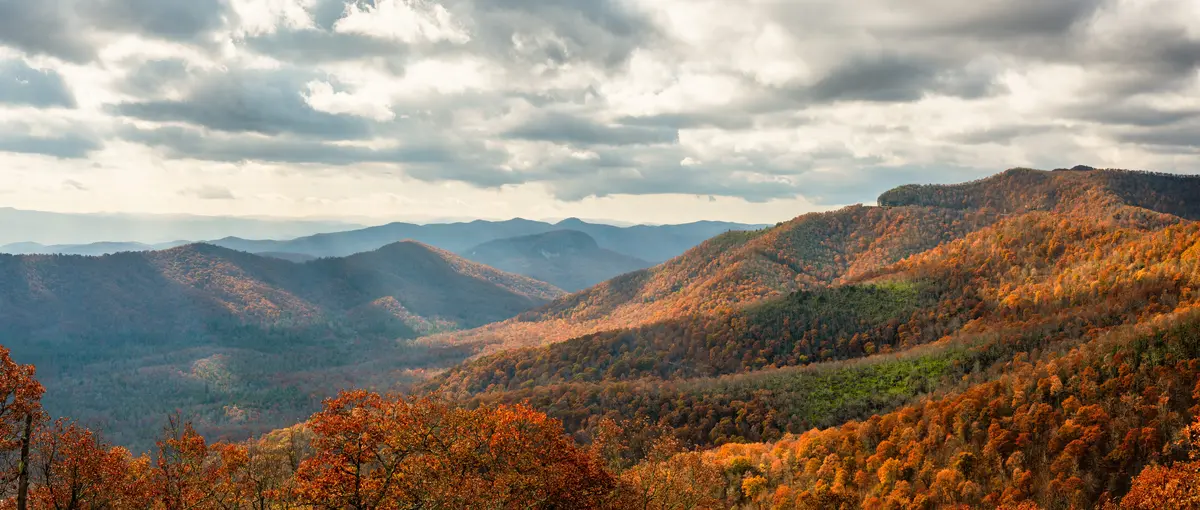
What Bean Station does deliver — and delivers better than most California towns at this price point — is immediate lake access and mountain scenery. Cherokee Lake's 400 miles of shoreline are the town's organizing reality. Lakeside Marina and Huff's German Creek Marina put boating and fishing within reach for anyone who wants it. Veterans Overlook on Clinch Mountain sits above town with panoramic views of the lake and surrounding valleys.
Panther Creek State Park is roughly 24 miles out and offers serious hiking. Great Smoky Mountains National Park is approximately 68 miles away — close enough for a day trip, far enough that it is not a casual after-work run. McGhee Tyson Airport (TYS) is about 57 miles from town, which is the reality of rural Tennessee: you will plan your travel, not just turn up at the gate.
The Cultural Adjustment
Californians who thrive here tend to be the ones who came for the outdoor life and the financial breathing room, not the ones who came expecting the same amenities at lower prices. Community anchors here are the kind that form slowly — the farmers' market crowd, the lake neighbors, the regulars at a local diner. The Bean Station Farmers' Market is a genuine gathering point, not a weekend spectacle. Cook's Boathouse Restaurant, El Paraiso Mexican Grill, Ben's Place, and The Bean House represent the local food-and-coffee scene; it is small and it is what it is, and most long-term residents come to prefer it.
Health insurance premiums run noticeably below what most Californians pay, though the honest trade-off is that you will drive farther for specialist care than you did in a California metro. Routine care is accessible; advanced treatment means planning a trip.
Looking to buy in Bean Station? Estimate your payment.
Enter your numbers to see an estimated monthly mortgage payment.
Estimate only. Excludes HOA fees and mortgage insurance. The interest rate above is a starting point, not a quoted rate — replace it with your own to see real numbers. Insurance is a flat placeholder, not a Bean Station quote.
Beyond the Monthly Mortgage Payment — What to Factor In
- The property tax rate above — The 0.59% used in the estimate is the median effective rate — tax actually paid as a share of market value — published by Ownwell, 2026. Half of local homes pay more and half pay less: your own bill depends on that property's assessed value and any exemptions it qualifies for, which can differ a lot from its market price. Confirm with the Grainger County assessor before you budget.
- Total cost of ownership — Your monthly mortgage payment is just the baseline. Depending on the specific city, county, and service district, homeownership costs also include local utility fees, municipal surcharges, and special assessments (such as water, sewer, storm drainage, or local energy taxes) that vary by location.
- Independent due diligence — Because these recurring local costs and municipal fees change depending on the exact property address, buyers must research them independently during their transaction process.
Tax laws, local municipal fees, and utility costs change frequently and individual situations vary. This page is general information, not tax or legal advice — always consult a qualified tax professional, CPA, or local municipal offices for personalized guidance.
Schools, Safety, and Family Considerations
Grainger County Schools holds a C rating, according to Niche, with 2,852 students enrolled in 2024-25 across the district. On 2025-26 state assessments, 29.8% of students reached math proficiency and 40.3% reached reading proficiency. Those figures are below state averages, and Californians with school-age children should factor them in honestly.
The district is small enough that your child's experience will depend heavily on individual teachers and specific schools rather than the aggregate rating. High school athletics programs give kids real community involvement, and Friday night football is a genuine social anchor in a way that surprises transplants from more fragmented suburban environments. The full schools breakdown covers the district in more detail.
On safety, Bean Station sits well below state and national benchmarks. The town carries a violent crime rate of 2.88 per 1,000 residents — below the national figure of 3.7 per 1,000 and well below Tennessee's state rate of 6 per 1,000. A property crime rate of 10.25 per 1,000 residents also runs significantly below both Tennessee's state property crime rate of 20.8 per 1,000 and the national property crime rate of 18.4 per 1,000. For families leaving a higher-crime California suburb or city, this is a meaningful difference. The safety page has the full context.
Families weighing the move should also consider the neighborhood character honestly. Bayside and Lakeshore Drive attract families who want water access as part of daily life. Gammon Springs and Fishermans Paradise tend toward a quieter residential feel. The neighborhoods guide maps out the distinctions.
Who This Move Works For — and Who It Doesn't
The California-to-Bean-Station move makes the most sense for a specific kind of person. Remote workers who can bring their California income to a Tennessee address see the starkest financial benefit: the income tax savings are real, the housing cost is dramatically lower, and the outdoor access — the lake, the mountains within an hour — is a genuine lifestyle upgrade.
Retirees arriving with home-sale equity from a California property find the math almost impossible to argue with. No state income tax on retirement distributions, a property tax rate far below what they were paying on a California home, and a typical home price that lets them buy outright or carry a very modest mortgage.
Where It Gets Harder
The move is harder for anyone who depends on the amenities California metros make automatic: a wide specialist care network, a deep local job market, a commercial density that makes city life feel effortless. Bean Station is not growing fast, and the local employer base — the U.S. Postal Service, PSSI, Compass Group, and Grainger County Schools — does not offer the kind of career ladder that California tech, finance, or healthcare corridors do.
People who move here expecting a slower version of California often leave within two years. The ones who stay are usually those who consciously chose a different life — a boat on the lake, a larger house, a yard that costs a fraction of what it did in Sacramento or San Diego, and a community where you recognize faces at the farmers' market. That is a real trade, and for the right person it is an excellent one.
What you would not do, moving here from California: buy a property without spending at least a full week in Grainger County in July. The summers are humid in a way that surprises Californians raised on dry heat, and the character of the lake community shifts significantly between off-season quiet and summer boat traffic. Understanding both is how you know whether you are buying a retreat or a life.

Local Expert Takeaway: Bean Station is one of those places where the California price comparison almost reads as fiction — $271,160 for a home on or near Cherokee Lake, zero state income tax, and a property tax bill that is a fraction of what you were paying on a California mortgage. The financial case is real. The adjustment is also real: you are moving to a town of 3,190 people in a rural county where the grocery run, the specialist appointment, and the airport all require planning. Veterans Overlook on Clinch Mountain and the lake itself will feel like your backyard. Morristown is about 25 minutes out when you need more. If that trade sounds right, it usually is.
Quick Takeaways & FAQs
✅ Tennessee collects no state income tax on wages or retirement income — a direct and immediate financial benefit for Californians moving to Bean Station.
⚠️ The local school district holds a C rating, according to Niche, with test scores below state averages, which is a real consideration for families with school-age children.
📍 Bean Station was established in 1776 at the crossroads of Daniel Boone's Wilderness Road, and the Tate Springs Spring House — a remnant of a Victorian-era resort — is listed on the National Register of Historic Places.
How much cheaper is Bean Station than California for housing?
Does Tennessee really have no income tax?
What is the sales tax in Bean Station, and how does it compare to California?
What are the schools like in Bean Station for families moving from California?
Is Bean Station a good fit for remote workers leaving California?
Moving to Tennessee?
Tell us what you need help with and we'll connect you with local resources.
