
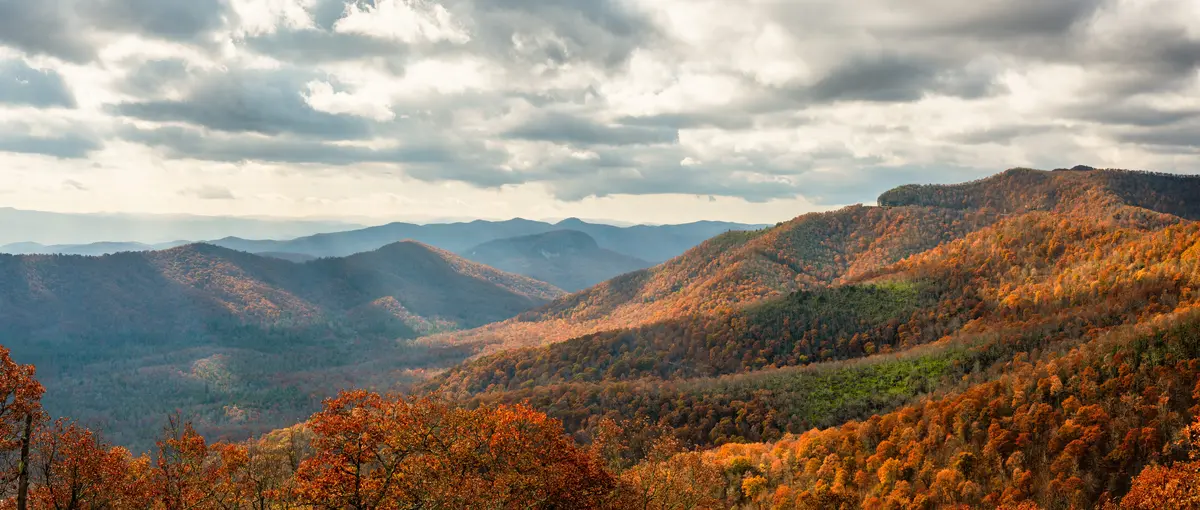
Bean Station sits in a valley between Clinch Mountain and Cherokee Lake, and that geography is not just scenic — it is the organizing logic of every neighborhood decision you will make here. Where a street sits relative to the lake, the mountain, and US-25E determines the character of a home far more than square footage or lot size. A 3,190-person town this compact leaves almost no margin for error: pick the wrong corridor and the commute, the flood zone, or the noise profile can undo everything else the address has going for it.
Grainger County Schools, which serves Bean Station, holds a C rating, according to Niche, with 2,852 students enrolled in 2024-25. That rating shapes where parents with school-age children anchor their search, and it matters because Bean Station is surrounded by counties whose school systems draw different grades. The local economy leans on the U.S. Postal Service, PSSI, Compass Group, and Grainger County Schools itself — a modest base that explains why the median household income sits noticeably below what the typical home here demands. Many residents commute about 25 minutes to Morristown for broader employment options.
Homes here carry a typical price of $271,160 (Zillow Home Value Index, August 2026), which puts Bean Station roughly in line with neighboring Morristown, Rutledge, and Rogersville — not the discount market some expect from a small Grainger County address. What Bean Station does offer that its neighbors cannot fully match is direct lakefront access: Cherokee Lake runs along the town's southern and eastern edge, and a handful of neighborhoods claim genuine waterfront lots that drive the upper tier of the local market well above that city-wide figure.
Whether you are weighing a Cherokee Lake retreat, a golf-course lot, or a hillside ranch with mountain views, the sections below break down Bean Station's eight neighborhoods, flag the common mistakes buyers make here, and map the rental market for those not ready to commit.
The Bean Station Reality
The single divide that matters most in Bean Station is lake access — not proximity to the lake, but actual access to it. Cherokee Lake is everywhere as a backdrop, but the neighborhoods that sit on it, gate it, or give residents a deeded path to the water command a fundamentally different price tier than those that merely look toward it. Buyers who come expecting that any lakeside zip code translates to lakefront living are usually surprised when they see the gap between a Lakeshore Drive address with water views and a Bayside lot with community boat docks.
The second divide is the US-25E corridor. This highway carries most of the town's commercial activity and connects Bean Station to Morristown about 25 minutes away — which is where most of the region's employment, medical services, and big-box retail actually live. Neighborhoods clustered near US-25E enjoy easier access to that commercial spine; those farther out on TN-32 or back toward TN-375 trade convenience for quiet and acreage. Neither is wrong, but confusing the two is one of the most common mistakes relocating buyers make here.
School boundaries in Grainger County are drawn at the county level, so every neighborhood in Bean Station feeds the same district — on 2025-26 state assessments, 29.8% of students reached math proficiency and 40.3% reached reading proficiency. That uniformity means families cannot shop their way into a different school performance profile simply by choosing one Bean Station neighborhood over another. The district-wide picture is what it is, and the schools page covers it in full.
Neighborhoods at a Glance
| Neighborhood | Best For | Vibe |
|---|---|---|
| Bayside | Luxury Nature | Gated, upscale lakefront enclave on Cherokee Lake with underground utilities and community docks |
| Gammon Springs | Families Quiet | Country-setting ranch homes on generous lots; highly regarded by local agents for its settled, neighborly feel |
| Fishermans Paradise | Nature Value | Lakeside fishing-oriented corridor with direct Cherokee Lake access and a low-key, outdoorsy identity |
| Country Club | Luxury Views | Golf-course homes adjacent to Clinchview Golf & Country Club; Tudor Revivals and mixed styles lining the fairways |
| Campbell Heights | Families Commuter | Hillside location with mountain-and-lake views; accessible to the US-25E corridor for Morristown commuters |
| Paradise Valley | Privacy Nature | Acreage-oriented setting on the eastern edge of town with mountain backdrop and room to spread out |
| Crosby Park | First-Time Value | More accessible price point with larger lot potential; lower-density feel on the outskirts of town |
| Lakeshore Drive | Views Nature | TN-375 corridor threading lakefront subdivisions; ranging from ranch-style water-view homes to custom builds at the shoreline |
Bean Station typical home price: $271,160 (Zillow ZHVI, August 2026). Neighborhood tiers on this page are relative to these figures.

Best Neighborhood by Buyer Type
| Buyer Type | Best Neighborhood | Why |
|---|---|---|
| First-Time Buyer | Crosby Park | Lower density and larger lot potential give entry-level buyers more for their money without stretching into the lakefront premium tier. |
| Luxury Buyer | Bayside | The only gated community with underground utilities, community boat docks, and a minimum build standard that enforces long-term value. |
| Walkability Seeker | Country Club | Golf-course proximity gives residents an on-foot destination that no other neighborhood in town replicates. |
| Families with Kids | Gammon Springs | Fenced yards, one-level ranch homes, and a settled country feel make day-to-day family life here the most straightforward of any Bean Station neighborhood. |
| Commuters | Campbell Heights | Hillside position near the US-25E corridor keeps the drive to Morristown — about 25 minutes — as short as the town allows. |
| Large-Lot Buyers | Paradise Valley | Acreage lots on the eastern edge of town represent Bean Station's best option for buyers who want genuine land and a mountain backdrop. |
| Renters | Lakeshore Drive | The TN-375 corridor produces the most consistent supply of rental homes with water views at a range of price points. |
Looking to buy in Bean Station? Estimate your payment.
Enter your numbers to see an estimated monthly mortgage payment.
Estimate only. Excludes HOA fees and mortgage insurance. The interest rate above is a starting point, not a quoted rate — replace it with your own to see real numbers. Insurance is a flat placeholder, not a Bean Station quote.
Beyond the Monthly Mortgage Payment — What to Factor In
- The property tax rate above — The 0.59% used in the estimate is the median effective rate — tax actually paid as a share of market value — published by Ownwell, 2026. Half of local homes pay more and half pay less: your own bill depends on that property's assessed value and any exemptions it qualifies for, which can differ a lot from its market price. Confirm with the Grainger County assessor before you budget.
- Total cost of ownership — Your monthly mortgage payment is just the baseline. Depending on the specific city, county, and service district, homeownership costs also include local utility fees, municipal surcharges, and special assessments (such as water, sewer, storm drainage, or local energy taxes) that vary by location.
- Independent due diligence — Because these recurring local costs and municipal fees change depending on the exact property address, buyers must research them independently during their transaction process.
Tax laws, local municipal fees, and utility costs change frequently and individual situations vary. This page is general information, not tax or legal advice — always consult a qualified tax professional, CPA, or local municipal offices for personalized guidance.
Most Popular Neighborhoods
1. Bayside
Bayside is the only gated subdivision on Cherokee Lake within Bean Station — 70 lots completed in 2007, with underground utilities, community boat docks, and a minimum 1,400 square-foot build requirement that keeps the stock consistent. The annual HOA carries a fee, and while it is modest by East Tennessee lakefront standards, it does add a recurring cost on top of a purchase price that runs well above the city-wide typical home price. If you want true lakefront living with a managed community structure, nothing else in Bean Station competes with it.
Best for: Luxury buyers and lake-lifestyle buyers who want deeded dock access without building from scratch.
2. Gammon Springs
Local agents consistently flag Gammon Springs as one of Bean Station's most sought-after country-setting neighborhoods — one-level ranch homes on generous lots with detached garages and fenced yards, the kind of inventory that moves when it hits the market. Fiber internet availability makes it more remote-work-friendly than it looks on a map. The trade-off is that it sits away from the lake, so buyers who move here for affordability sometimes feel the absence of direct water access once summer arrives.
Best for: Families with kids, remote workers, and buyers who want a settled neighborhood feel without an HOA.
3. Fishermans Paradise
The name is not an exaggeration: Cherokee Lake is regularly restocked with rainbow trout, large and smallmouth bass, striped bass, bluegill, and catfish, and Fishermans Paradise puts residents closer to that fishery than almost any other address in town. Lakeside Marina and Huff's German Creek Marina are both reachable without a long drive. The housing stock here skews toward ranch-style homes and older builds, so buyers expecting turnkey condition at the lakefront price tier will need to adjust expectations — or budget for updates.
Best for: Anglers, outdoor-oriented buyers, and anyone who wants Cherokee Lake access at a more accessible price point than Bayside.
4. Country Club
Country Club's identity is built around Clinchview Golf & Country Club — an 18-hole, par-72 course designed by Charles J. Campbell that stretches 6,901 yards with a covered wooden bridge, four water hazards, Bermuda fairways, and bentgrass greens. Homes lining the course include Tudor Revivals and other architectural styles that give this corridor a more formal character than the rest of Bean Station. The honest catch: golf-course living means the course is the amenity, and if the game isn't part of your life, paying the Country Club premium is harder to justify.
Best for: Golf enthusiasts, buyers who value an established neighborhood aesthetic, and those who want walkable on-site recreation.
5. Campbell Heights
Campbell Heights occupies a hillside position that delivers some of the clearest mountain-and-lake views in town — the valley framing of Clinch Mountain on one side and Cherokee Lake on the other is visible from the upper streets here in a way that flat, in-town addresses cannot match. Its position near the US-25E corridor makes the commute to Morristown about as manageable as it gets from Bean Station. What you trade is the lakefront feel itself: the views are real, but the water is not at your doorstep.
Best for: Commuters to Morristown, view-seekers, and families who want a hillside setting without paying the full lakefront premium.
6. Paradise Valley
Paradise Valley sits on the eastern edge of town with a mountain backdrop and the kind of acreage lots that are increasingly rare inside any incorporated Tennessee city boundary. For buyers who want 10 or more acres without driving deep into unincorporated Grainger County, this is where the search starts. The trade-off is distance from every convenience — groceries, the Bean Station Farmers' Market, Harris Court Park — which means routine errands add time to the day that accumulates quickly.
Best for: Large-lot buyers, hobby farmers, and privacy-seekers who commute out of Bean Station rather than staying close to its commercial core.
7. Crosby Park
Crosby Park is the neighborhood for buyers entering the Bean Station market without the budget for lakefront or golf-course pricing. Larger lots and a lower-density feel distinguish it from the more compact in-town areas, and vacant land in this corridor is still available — a rarity in a small-town market where developed lots are finite. The honest limitation is that Crosby Park lacks a defining amenity or community anchor, so buyers need to be comfortable with the neighborhood's quieter, more dispersed character.
Best for: First-time buyers, budget-conscious buyers, and those who want land potential without the lakefront price tag.
8. Lakeshore Drive
The Lakeshore Drive corridor follows TN-375 as it threads through Bean Station's southern lakefront subdivisions, and the housing stock ranges considerably — from older ranch-style homes with partial water views to larger custom builds with second-story porches extending to the shoreline. That range means the corridor serves both buyers stretching toward the lake and those already at the top of the local market. The practical reality is that TN-375 carries through-traffic, which means road noise is part of the trade for a waterfront address on this stretch.
Best for: Buyers who want a Cherokee Lake address at a range of price points, and renters looking for water-view options.
Common Mistakes Buyers Make in Bean Station
Assuming Any Lakefront Address Means True Water Access
Cherokee Lake borders Bean Station, and real estate marketing here leans hard on that fact. But "lake view" and "lakefront" are not the same thing, and neither means deeded dock access. Buyers who confuse a TN-375 corridor address with a Bayside-level amenity package end up overpaying for a view when they thought they were buying a boat slip. Ask specifically what water rights, if any, convey with the deed before making an offer on any property marketed as lakeside.
Treating the US-25E Corridor as a Neutral Factor
US-25E (Dixie Highway) is the commercial spine of Bean Station and the primary route to Morristown. Homes that back up to it or sit at its busiest intersections carry a noise and traffic profile that photographs don't convey. First-time buyers in particular sometimes chase square footage on the corridor without factoring in what a fast-moving state highway sounds like at 6 a.m. Walk the property at rush hour — not just during a midday showing — before you commit.
Overlooking the HOA Covenants at Bayside
Bayside's HOA carries covenants with real restrictions — including the 1,400-square-foot minimum build requirement and design standards that govern what you can do with your lot. Buyers who plan to add a structure, convert the property, or rent it short-term need to review those covenants carefully before closing. The first-time buyer page covers the basics of due diligence on HOA documents in more detail.
Underestimating the Distance from Outlying Neighborhoods to Services
Paradise Valley and Crosby Park feel close on a map of a 3,190-person town, but Bean Station's commercial footprint is genuinely thin. A shopping trip beyond everyday basics means a drive — and the town's size means that drive is unavoidable regardless of which neighborhood you choose. Buyers moving from a suburban market where a grocery store is two minutes away consistently underestimate how much this changes their daily rhythm after six months. Price that time honestly before choosing the acreage over the in-town address.
Best Areas to Rent in Bean Station
| Area | Ideal For | Trade-off |
|---|---|---|
| Lakeshore Drive Corridor | Renters who want a water-view address and don't need a short-term commitment | TN-375 through-traffic is a constant presence; availability is inconsistent |
| Country Club Area | Renters seeking a quieter, established neighborhood close to the golf course | Rental inventory is thin; most homes here are owner-occupied |
| Campbell Heights | Commuters who want hillside views without paying a lakefront premium | Steeper driveways and less walkable terrain than flatter in-town areas |
| Gammon Springs | Families or remote workers who want space and a settled feel | Longer drives to any commercial amenity; rental turnover is low, so supply is limited |
| US-25E Corridor / In-Town | Renters prioritizing convenience and proximity to the commercial core | Road noise and less residential quiet than outlying neighborhoods |
Bean Station's rental market is thin in the way most small Grainger County towns are — the majority of homes are owner-occupied, and rentals that do list tend to go quickly. Renters willing to look at the Lakeshore Drive corridor often find the most consistent supply, though anyone committed to a specific neighborhood should expect a wait rather than a fast move-in. The cost-of-living page has the city-wide typical rent figure and broader housing cost context.
Local Expert Takeaway: Bean Station's neighborhood decision almost always comes down to one question: how much does lake access matter to you, and what are you willing to pay for it? Bayside is the clearest answer if water access is non-negotiable — gated, docked, and covenant-protected in a way nothing else in town replicates. Gammon Springs is the practical answer for families who want space and a real neighborhood feel without the lakefront price. For buyers who want Clinch Mountain views and a golf course within walking distance, Country Club delivers something genuinely uncommon at this price point. And if your budget needs room to grow, Crosby Park and Paradise Valley offer the acreage that the more popular corridors have largely built out.
Quick Takeaways & FAQs
✅ Bayside is the only gated, HOA-governed lakefront community in Bean Station, with community boat docks and a minimum build standard that protect long-term value.
⚠️ Every Bean Station neighborhood feeds the same Grainger County school district — you cannot shop your way into a better school performance profile by choosing one neighborhood over another.
📍 TN-375 (Lakeshore Drive) threads through the southern lakefront corridor and is the backbone of the town's water-view rental supply, but road noise from through-traffic is a real trade-off on that stretch.
Which Bean Station neighborhood has the best access to Cherokee Lake?
Is Bayside Bean Station worth joining as a buyer?
What is the best neighborhood in Bean Station for families?
Are there good rental options in Bean Station?
How does location within Bean Station affect the commute to Morristown?
Moving to Tennessee?
Tell us what you need help with and we'll connect you with local resources.
