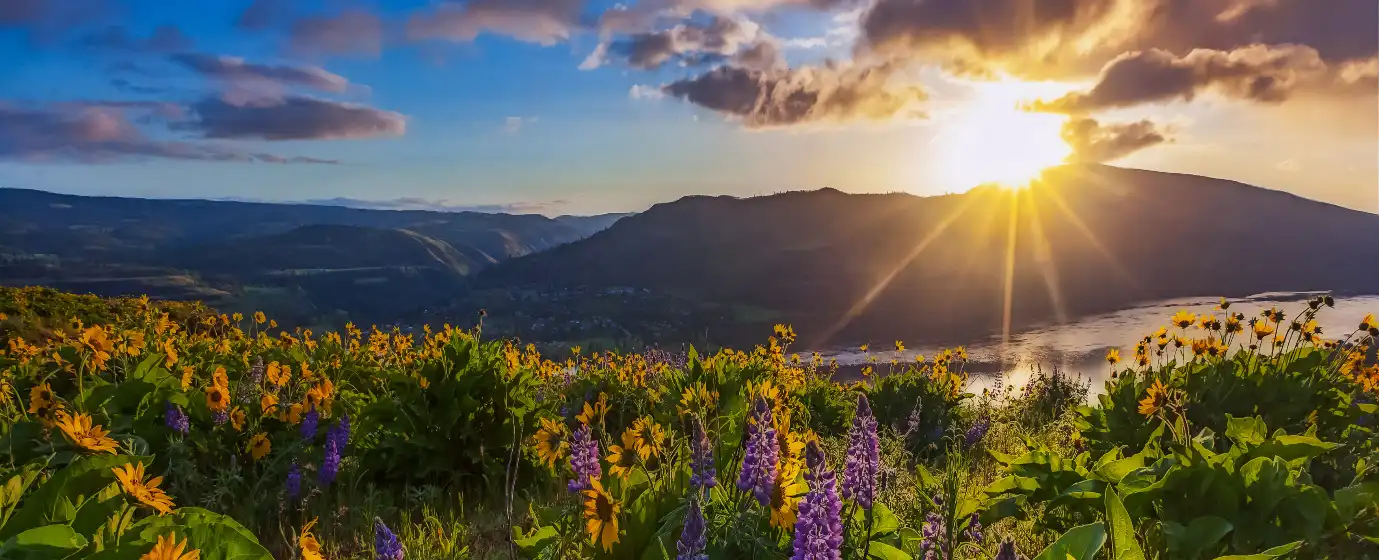
Most people who move to Hood River will tell you the same thing: they knew it was outdoorsy, and they still underestimated it. This is a city of 8,361 people where the recreational infrastructure rivals cities ten times its size — not because of city investment alone, but because the Columbia River Gorge, a working county forest, and nearly 200 days a year of wind above 20 knots have made it unavoidable. Recreation here isn't an amenity you seek out on weekends. It's the organizing principle of daily life.
Sitting where I-84 meets the Columbia River, Hood River is positioned at a geographic intersection that shapes everything outdoors. The river runs wide and wind-charged to the north. OR-35, which locals call the Mount Hood Highway, climbs south through orchards and into high Cascade terrain. The result is a city where a beginner kiteboarder and an expert mountain biker can both find world-class terrain within a ten-minute drive of downtown — and where the Hood River Valley Parks & Recreation District manages trails that connect urban neighborhoods to rural creek corridors without a gap.
What surprises most newcomers isn't the scenery — they saw the photos — it's the access. The waterfront is genuinely walkable from much of downtown. Post Canyon's trailhead is a short drive, not a production. The Hood River Farmers Market brings the valley's agricultural culture into town. The outdoor calendar here doesn't thin out in fall; it rotates. Windsurfing gives way to mountain biking shoulder seasons, the Fruit Loop peaks in late summer and early October, and OR-35 carries skiers toward Mt. Hood through winter.
Whether you're weighing a move or already under contract, the sections below cover Hood River's signature parks, its trail network, the Columbia River waterfront, and the seasonal rhythms that define outdoor life here year-round.
Hood River Waterfront Park and The Hook
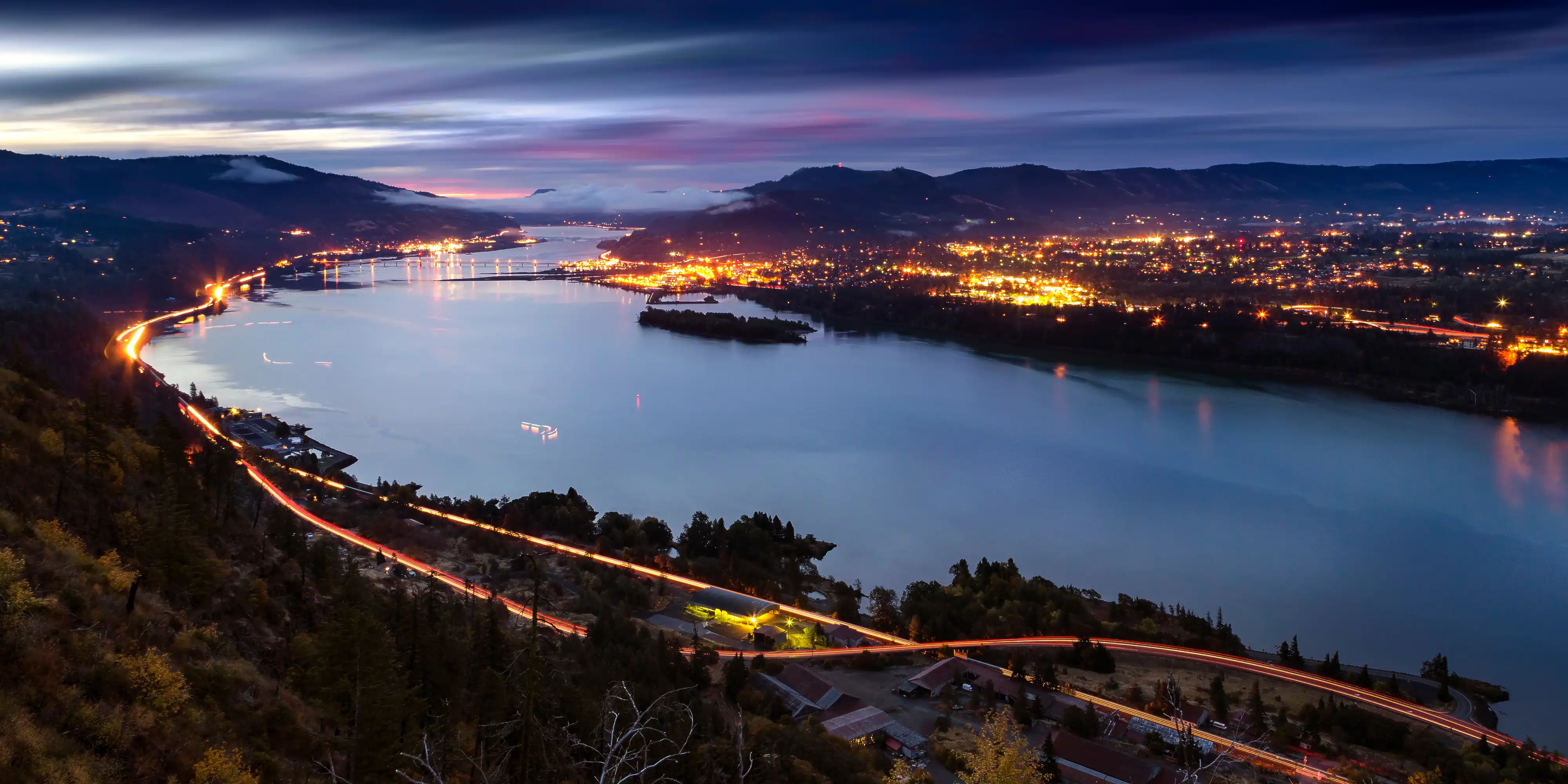
The waterfront is where Hood River's identity becomes impossible to miss. Hood River Waterfront Park sits on nearly six acres along the Columbia River — donated to the city by the Port of Hood River — and packs in a playground, a climbing wall, a sandy swimming beach, public art installations, picnic tables, a covered shelter, walking paths, and restrooms. Eight hundred feet of riverbank along the park has been restored with native riparian plants, and the result is a shoreline that feels tended without feeling manicured.
Outside magazine has called it a summertime hangout, and that's accurate, but understated. On a July afternoon the beach draws families with young kids while kiters rig gear in the grass nearby, paddlers launch from the water's edge, and anglers work the quieter stretches. The Port manages close to two miles of pedestrian trail along the shoreline, connecting parks and open spaces, so a morning walk or run can cover serious ground without retracing steps.
The Hook: Where the Wind Works in Your Favor
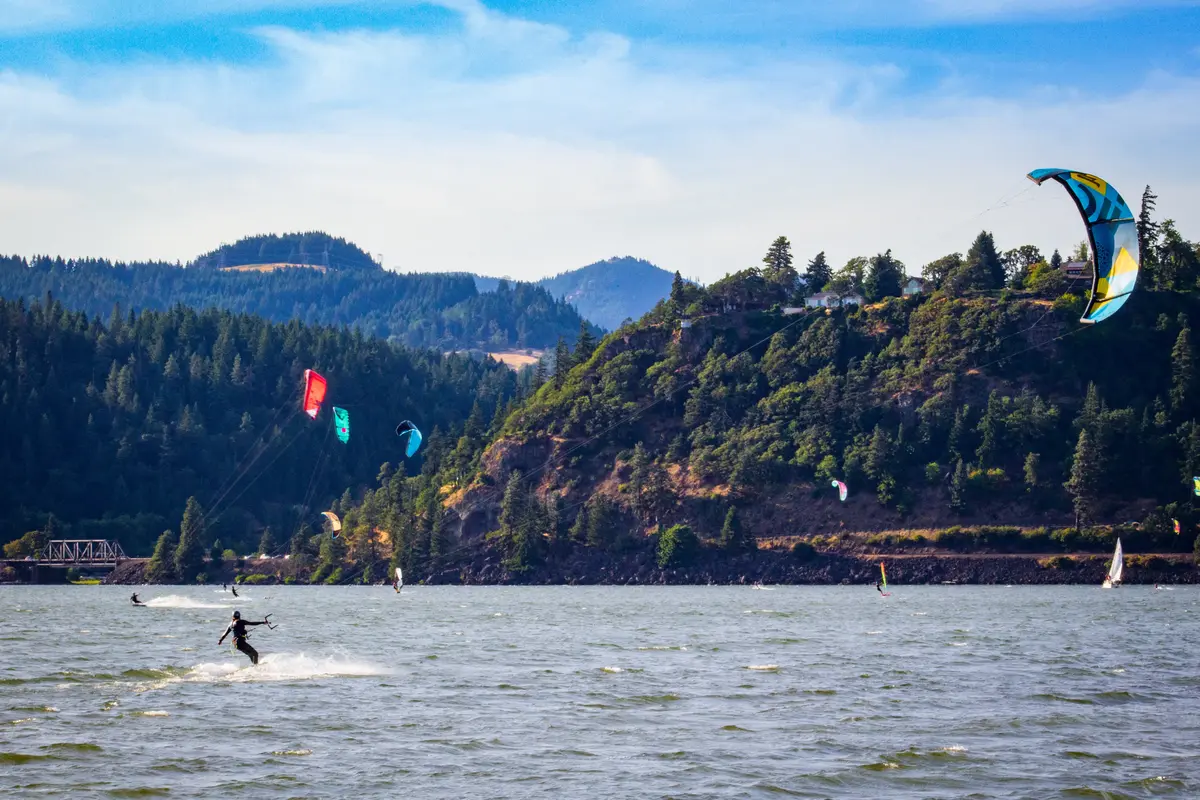
At the western end of the waterfront sits The Hook — a protected cove with onshore wind, minimal current, and shallow water that makes it the premier learning site on the Columbia River for windsurfing and kiteboarding. The grassy rigging area, shade, and picnic tables have made it the de facto starting point for anyone new to wind sports in the Gorge.
Hood River has carried the title of windsurfing capital of the world for decades, and the geography that earns it is real. Air funnels through the Cascade Mountains via the Columbia River Gorge, generating consistent, powerful winds — above 20 knots on approximately 190 days a year. The waterfront draws kiters, wingers, windsurfers, and hydrofoilers and is widely regarded as the epicenter of American kiteboarding. For families moving here with kids who've never touched a sail, The Hook is specifically designed for that introduction.
One honest note: summer parking at the waterfront is a genuine friction point. The Port offers seasonal parking passes, which regular users treat as essential rather than optional. If you're previewing the city on a July weekend, arrive early or expect a walk from the surrounding streets.
Indian Creek Trail: Hood River's Everyday Trail
Post Canyon gets the national press, but Indian Creek Trail is the trail Hood River residents actually use on a Tuesday. The system spans approximately 3.8 miles in three connected sections, running from Hazel Avenue on the city's east side to Barrett Park on the rural west side. It's free, open year-round, and welcoming to hikers, runners, cyclists, and leashed dogs — which in a city with this many active households means it stays in use through every season.
A planned easement through private property would extend the complete trail to nearly 6 miles, a project the Hood River Valley Parks & Recreation District has been working toward incrementally. Even at its current length, the trail crosses enough terrain — creek-side corridors, neighborhood connectors, and open rural stretches — to feel like more than a fitness loop.
What Makes This Trail Specific to Hood River
Two details set Indian Creek Trail apart from a generic multi-use path. The first is a Poetry Walk, developed as a collaboration between the Hood River County Library District and the Parks & Recreation District, with poems installed along the route. The second is a set of historic interpretive markers explaining the old wooden flume that once carried water from Indian Creek to a fruit cannery downtown — and the flume structure itself is still visible along sections of the trail. You're not just running through a creek corridor; you're running through the physical infrastructure of Hood River's agricultural past.
For families with school-age children, Indian Creek Trail is one of the more practical outdoor amenities in the city — close enough to neighborhoods on both the east and west sides to reach without a car, gentle enough for younger kids, and interesting enough to stay a regular destination rather than a novelty. For a deeper look at youth programming and school-connected activities, the schools page covers what the Hood River County School District offers on that front.
Post Canyon: One of the Pacific Northwest's Premier Mountain Biking Destinations
About a ten-minute drive from downtown Hood River, Post Canyon is the kind of trail network that makes riders move to a city. The system runs through Hood River County Forest land — a working tree farm that generates approximately 30% of Hood River County's operating budget, with recreational trail use as a formally recognized secondary purpose managed by the Hood River County Forestry Department in partnership with the Hood River Area Trail Stewards.
The terrain range here is genuine. Tight singletrack threads through the timber. Swoopy flow trails with rollers and berms make up the approachable middle ground. Wooden freeride features, drops, and jumps serve advanced and expert riders. And the Family Man Bike Skills Park gives beginners a structured place to build fundamentals before moving onto the main network. This isn't a trail system where beginners are quietly steered away — it's built to accommodate the full range.
What Locals Know About Post Canyon
The trail network's integration with an active county forest means the experience changes seasonally in ways that don't show up on trail maps. Logging operations occasionally affect access to sections of the forest; checking Trailforks or the Hood River Area Trail Stewards' updates before heading out is standard practice for regulars, not an extra step. Conditions after rain also close sections faster than many riders expect — the soil here can deteriorate quickly under tire pressure when wet, and the stewards take trail sustainability seriously enough to enforce it.
Post Canyon is what Hood River's outdoor reputation rests on for mountain biking specifically. It draws riders from Portland and beyond, which means the trail network is well-maintained but also well-trafficked on summer weekends. Weekday mornings are when locals tend to ride. If you're relocating here partly for the riding, that's the timing worth knowing before you settle into a routine.
| Recreation Type | Primary Location | Skill / Experience Level | Seasonal Peak |
|---|---|---|---|
| Kiteboarding / Windsurfing | Hood River Waterfront / The Hook | Beginner to expert | Summer (June–September) |
| Mountain Biking | Post Canyon trails | Beginner to advanced | Spring and fall (trails wet in winter) |
| Swimming / Beach | Hood River Waterfront Park | All ages | Summer |
| Trail Running / Hiking | Indian Creek Trail | All fitness levels | Year-round |
| Paddling / Kayaking | Columbia River waterfront | Intermediate to advanced (strong current) | Late spring to early fall |
| Scenic Drive / Agritourism | Hood River County Fruit Loop (OR-35) | All ages | June–October |
| Rail Excursions | Mt. Hood Railroad (downtown depot) | All ages | Spring through fall |
Looking to buy in Hood River? Estimate your payment.
Enter your numbers to see an estimated monthly mortgage payment.
Estimate only. Excludes HOA fees and mortgage insurance. The interest rate above is a starting point, not a quoted rate — replace it with your own to see real numbers. Insurance is a flat placeholder, not a Hood River quote.
Seasonal Recreation: The Fruit Loop, Mt. Hood Railroad, and the Year-Round Calendar
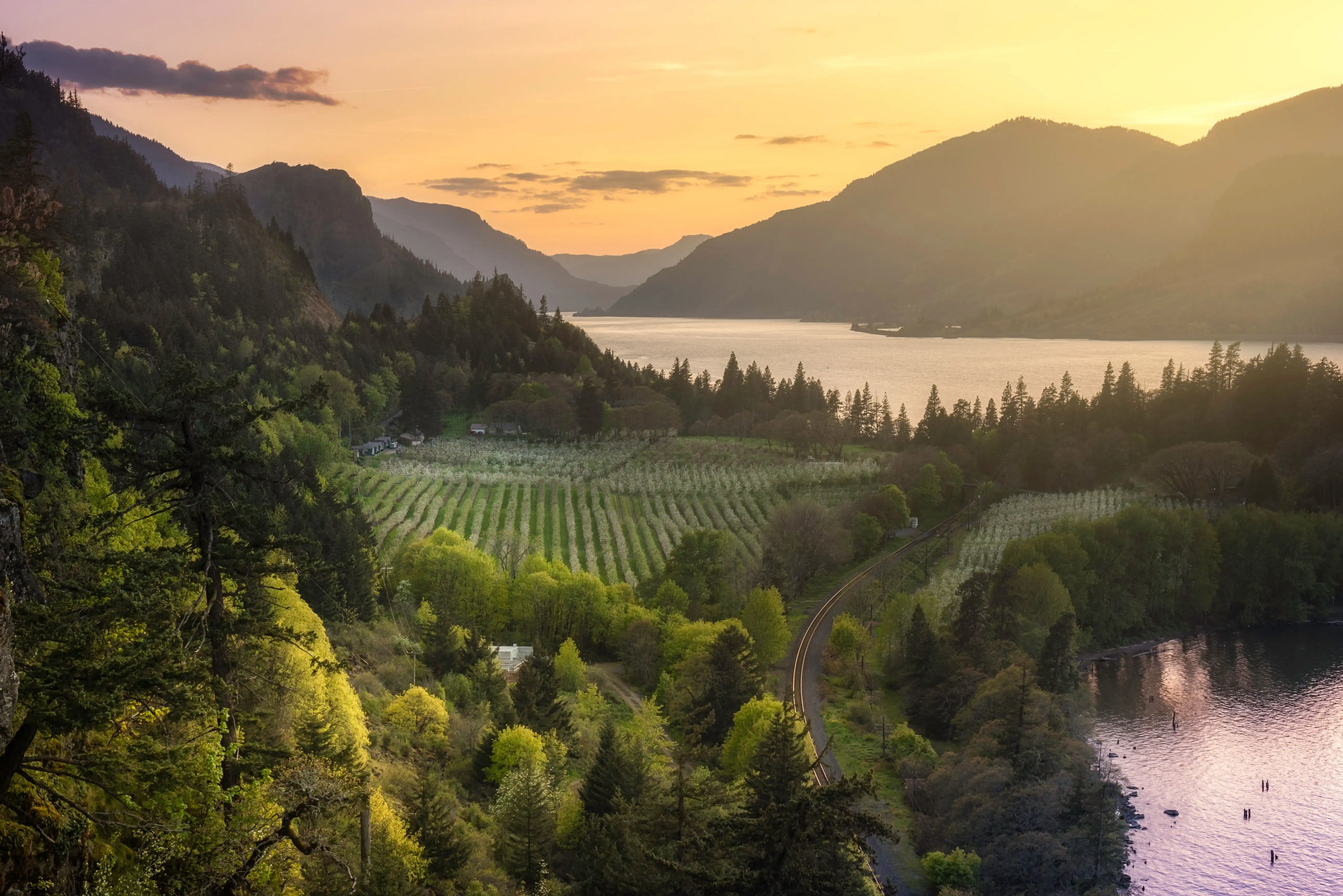
The Hood River County Fruit Loop is a 35-mile self-guided drive through the Hood River Valley, passing 32 on-the-farm fruit stands, wineries, breweries, cideries, lavender farms, and flower fields. The valley holds more than 14,500 acres of pears, apples, and cherries — Oregon.com notes that over 30% of the nation's winter pears are harvested here — and the Fruit Loop routes through the middle of all of it. Access is via OR-35 south from Hood River.
The loop runs through warm months, with the stretch from June through October being when U-pick farms, seasonal festivals, and roadside stands are most active. Newcomers often treat it as a tourist attraction for the first year and then fold it into regular life — a weekend drive for farm-stand peaches in August, a longer loop in October when the valley hits peak harvest color. The Hood River Farmers Market serves a similar role in town, bringing that agricultural culture closer to downtown neighborhoods.
The Mt. Hood Railroad: More Than a Tourist Ride
The Mt. Hood Railroad departs from downtown Hood River and winds through orchards and forests up the valley — a 2.5-hour excursion to Odell and a 4-hour trip to Parkdale. Beyond the standard scenic rides, the railroad runs brunch and dinner excursions and Rail Bike adventures, which have become a draw for weekend visitors and a genuine local outing for residents who want something unhurried.
What's worth understanding about Hood River's recreational calendar is that it doesn't have an off-season so much as it has a rotation. Summer is wind sports and waterfront. Fall is Fruit Loop harvest and mountain biking's best dry conditions. Winter brings snowpack on Mt. Hood — accessible via OR-35 — and a quieter waterfront that locals appreciate after the summer crowds. Spring arrives fast in the valley, and the orchard bloom draws its own visitors before the wind season starts again.
One Thing Worth Knowing Before You Move Here
Hood River's outdoor infrastructure is genuinely exceptional for a city this size. But the summer tourist season is real, and it concentrates hard on the waterfront. Residents who moved here from less-visited places are often surprised by how crowded the park gets from late June through Labor Day — not unpleasantly so, but enough that locals develop habits around it: waterfront walks before 9 a.m., Post Canyon on weekday mornings, Fruit Loop drives mid-week. The outdoor life here is as good as advertised; it just takes a few months to learn how to share it.
For a broader picture of Hood River's neighborhoods — including which ones put you closest to the waterfront or the Post Canyon trailhead — the neighborhoods guide covers the geographic trade-offs in detail.
Local Expert Takeaway: Hood River's outdoor life isn't a weekend add-on — it's why the city exists at the size it does. The waterfront at Hood River Waterfront Park and The Hook give beginners a real on-ramp to wind sports that would take years to find elsewhere. Post Canyon puts nationally recognized mountain biking ten minutes from downtown. Indian Creek Trail connects neighborhoods without requiring a car. And the Fruit Loop, running south on OR-35 through 14,500 acres of orchard country, means the recreational calendar here is genuinely four-season. The catch is summer crowds at the waterfront; the workaround is going early or going mid-week, which is what residents figure out within the first summer.
Quick Takeaways & FAQs
✅ Hood River Waterfront Park and The Hook put world-class wind sports on the Columbia River within walking distance of downtown, with The Hook specifically designed as a learning cove for beginners.
⚠️ Summer parking and crowds at the waterfront are a real seasonal friction — peak July weekends draw visitors from across the region, and the Port's seasonal parking pass is effectively a necessity for regular users.
📍 Post Canyon's trail network runs through an active county tree farm, which means trail conditions and access can shift with logging operations — checking Hood River Area Trail Stewards updates before riding is standard local practice.
Is Hood River's waterfront actually good for beginner windsurfers and kiteboarders, or is it just for experts?
How difficult is the Post Canyon mountain biking trail system? Is it appropriate for families or casual riders?
What is the Hood River County Fruit Loop, and is it worth doing as a resident rather than just a tourist?
How long is Indian Creek Trail, and what is it good for day-to-day?
Does Hood River have good outdoor recreation year-round, or does it shut down in winter?
Moving to Oregon?
Tell us what you need help with and we'll connect you with local resources.
