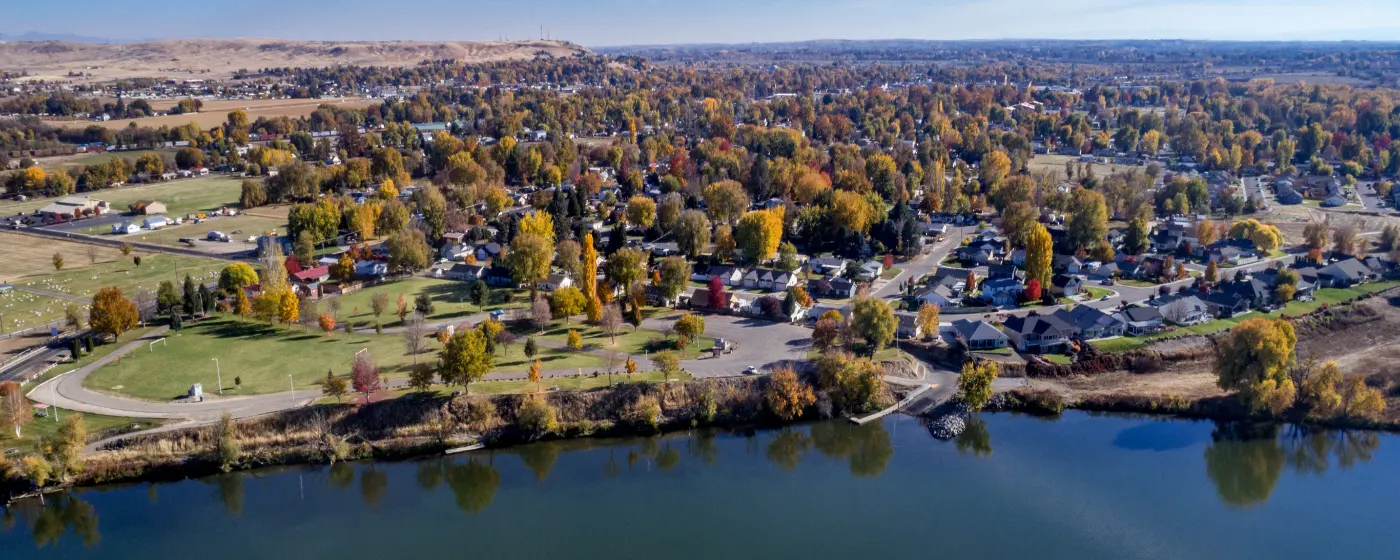
Maybe you've been priced out of the Boise metro and someone mentioned Payette as a place where your retirement dollar still goes far. Maybe you drove across the Snake River on Highway 95 and noticed how quiet the streets felt compared to Nampa or Meridian. Either way, Payette earns a second look — and a skeptical one. At a Zillow Home Value Index median of $353,113 (2026), this small city of roughly 9,000 sits well below the broader Treasure Valley average, which matters enormously when you're trying to make a fixed income work over a 20- or 30-year retirement horizon. What you get in return is a genuinely small-town pace, a grid of flat, walkable streets, and agricultural scenery along the Payette River confluence that no amount of money buys you in Boise's suburbs.
The honest tension in retiring here is about access. Payette has no inpatient hospital within city limits. The nearest acute-care facilities are Saint Alphonsus Medical Center in Ontario, Oregon, roughly 10 miles away, and Weiser Memorial Hospital about 30 miles south. For routine care and chronic-disease management, Valley Family Health Care on NE 10th Avenue covers a surprising range of services. But if you have complex cardiac, oncology, or surgical needs, you will be driving — or waiting for transport — regularly. Retirees who weigh this honestly and decide the trade-off works for them tend to settle in happily. Those who discover it after the move are the ones who leave.
Idaho's tax structure is genuinely favorable for retirees, particularly those drawing primarily from Social Security, which the state exempts entirely from income tax. The effective property tax rate of approximately 0.35% is among the lowest in the western United States, and the state's Circuit Breaker program can reduce that bill further for qualifying seniors 65 and older. Day-to-day living — groceries along Main Street, a round at Scotch Pines Golf Course, lunch at the Senior Center on North Main — runs lean compared to what you'd spend in a larger Treasure Valley city. For a full breakdown of Payette's cost of living, including rent ranges and utility benchmarks, the dedicated page has the detail.
Whether you're seriously weighing a move or just starting to research Idaho retirement options, the sections below cover Payette's healthcare landscape, retiree tax posture, walkability, downsizing options, and how the city stacks up against nearby alternatives like Weiser, Ontario, and Emmett.
Why Retirees Are Choosing Payette
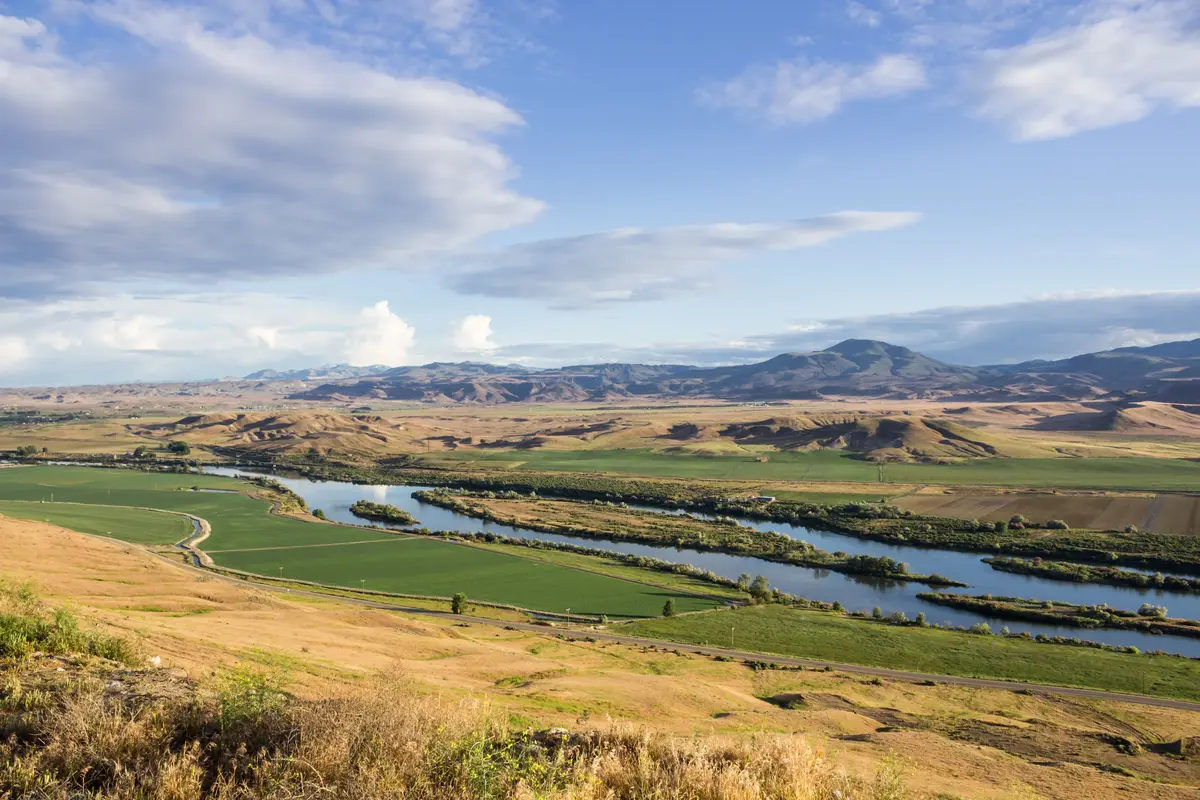
Payette fits a specific kind of retiree well: someone who wants a genuine small town — not a master-planned active-adult resort — and who values financial breathing room over walkable coffee shops and weekend farmers markets. The Zillow Home Value Index median of $353,113 (2026) means a paid-off home from a higher-cost market can fund a cash purchase here, or a modest mortgage that doesn't eat a Social Security check. That math is increasingly rare in Idaho's interior.
The city also suits retirees with existing social roots in the region — people who grew up in Payette County, have family in the Treasure Valley, or spent careers in Ontario and want to stay close. The Payette Community and Senior Center on North Main Street is a genuine social institution, not a recreation afterthought; the people who thrive here tend to plug into it quickly. If you picture retirement as independence and simplicity rather than amenities and density, Payette delivers.
Payette is a harder sell for retirees who need frequent specialist care, those who can't or don't want to drive, and anyone whose social life depends on cultural venues — live theater, a university extension, a large library system. Boise is roughly 50 minutes east, which solves many of those gaps in theory, but driving that corridor in winter or at 80 years old is a different calculation than driving it at 65. Be honest about where you'll be in ten years, not just where you are now.
Healthcare & Medical Access in Payette
What's In Town
Valley Family Health Care at 1441 NE 10th Ave is the backbone of primary care in Payette. As a federally qualified community health center, it covers medical, dental, behavioral health, and OB-GYN services under one roof — and accepts most major insurance plans plus a sliding-fee scale for those with lower incomes. For routine annual care, chronic-disease management, and prescription refills, this is where most Payette retirees start and often end.
Payette Healthcare of Cascadia at 1019 3rd Ave S provides skilled nursing rehabilitation and long-term care within city limits. For assisted living and memory care, the city has three licensed options: Royal Villa on Center Avenue (up to 29 residents), The Cottages of Payette (16 apartments with 24/7 staffing), and Ashley Manor–Beverly Hills on Beverly Hills Drive (a smaller, 9-resident home-style setting). This is a meaningful range of options for a city this size.
The Distance Reality
Acute inpatient care requires a drive. Saint Alphonsus Medical Center–Ontario is about 10 miles west across the Oregon border and handles most emergency and surgical cases for this area. Weiser Memorial Hospital is approximately 30 miles south on Highway 95 — a smaller critical-access facility useful for stabilization but not for complex interventional care.
For advanced oncology, cardiac catheterization, or neurosurgery, you're looking at Saint Alphonsus Regional Medical Center in Boise or St. Luke's Boise — roughly 50 miles and 55 minutes east on a good day. Veterans have the Boise VA Medical Center, approximately 60 miles away, which provides geriatric care and pension-benefit programs for veterans 65 and older. This is not a dealbreaker for many retirees, but it should be a conscious decision, not a surprise.
Planning Ahead
The retirees who manage this landscape best tend to do two things: establish a strong relationship with Valley Family Health Care early, and identify which specialist in Boise or Ontario they'd use for cardiac, orthopedic, or cancer-related follow-up before they need that appointment urgently. Having a plan before a crisis is the difference between this being inconvenient and being dangerous.
The Retiree Budget in Payette
Social Security and Income Taxes
Idaho's treatment of Social Security is simple and favorable: the state exempts it entirely, at every income level. If Social Security is your primary retirement income, you owe Idaho nothing on it. That's not the case in every western state, and it matters when you're modeling 20-plus years of withdrawals.
Other retirement income — 401(k) distributions, IRA withdrawals, and most pension payments — is taxed at Idaho's flat 5.3% state income tax rate (2025 filing year). Qualifying government pensions may have limited deductions available; worth confirming with a tax preparer familiar with Idaho law. There is no state estate or inheritance tax, and the federal exemption threshold sits at $15 million for 2026 — essentially irrelevant for the overwhelming majority of Payette retirees.
Property Taxes and Credits
The effective property tax rate in Payette is approximately 0.35% — substantially below the national average and one of the genuine financial advantages of this location over much of the American West. Idaho's Circuit Breaker program can reduce that bill further: homeowners 65 or older with 2025 income under $39,130 qualify for a property-tax reduction of $250 to $1,500, applied at the county assessor's office between January 1 and April 15 each year. If you qualify, filing is simple and the savings are real.
Idaho charges a 6% sales tax on groceries — an unusual and genuinely regressive feature for retirees on fixed incomes. The state partially addresses this with a grocery tax credit of $155 per resident, claimable on state Form 40 or Form 43. It doesn't fully offset the grocery tax, but it helps. Budget for it rather than being surprised by it at the checkout line at the Albertsons in Ontario or the grocery options along Main Street.
Day-to-Day Fixed-Income Reality
Daily life in Payette runs lean by Idaho standards. Lunch at Erika's Kitchen on 3rd Ave S or a casual dinner in the downtown district won't require the budget you'd need in Boise's North End. Golf at Scotch Pines is priced for locals, not resort visitors. The Senior Center's lunch program three days a week at 137 N Main St offers a social meal for a modest suggested donation — not charity, just the way the town works.
The category where fixed-income retirees feel the pinch is transportation: if you need to get to Ontario or Boise regularly for medical appointments, the cost of gas, maintenance, and eventually ride services adds up. That's the line item most people underestimate when budgeting a Payette retirement.
Looking to buy in Payette? Estimate your payment.
Enter your numbers to see an estimated monthly mortgage payment.
Estimate only. Excludes HOA fees and mortgage insurance. The interest rate above is a starting point, not a quoted rate — replace it with your own to see real numbers. Insurance is a flat placeholder, not a Payette quote.
Walkability, Community & Staying Active in Payette
Getting Around Without a Car
Payette's street grid is flat — genuinely flat, which matters more than people expect when they're in their late 60s or 70s. The historic downtown along South Main Street, Centennial Park, and Kiwanis Park are all reachable on foot from the central residential neighborhoods. Running basic errands on foot is possible if you live near the core, though the city has no public transit system, and the grocery and medical options require a car for most residents.
The walkability picture is honest: you can walk for pleasure and for social engagement, but you cannot reliably walk for every errand. Retirees who stop driving will eventually need to plan around that reality, whether through family support, ride-share access, or proximity to the services they use most.
The Senior Center: Where It Actually Happens
The Payette Community and Senior Center at 137 N Main St is the social anchor for active retirees in town — and it functions like one. Lunch programs run Monday, Wednesday, and Friday. Potluck dinners, bingo nights, and dances with live music fill the calendar. There's an on-site thrift store and a referral network for senior services. This is the place where newcomers get genuinely folded into the community, not just handed a brochure.
Beyond the Senior Center, the Kiwanis organization has a long presence in Payette, and the Payette County Museum near the historic downtown offers volunteer opportunities for retirees interested in local history. Scotch Pines Golf Course is a natural gathering point for the set that golfs; it's a local course, not a private club, and regular play creates the same kind of social rhythm that a gym or a coffee shop does in a larger city.
Outdoors and Physical Activity
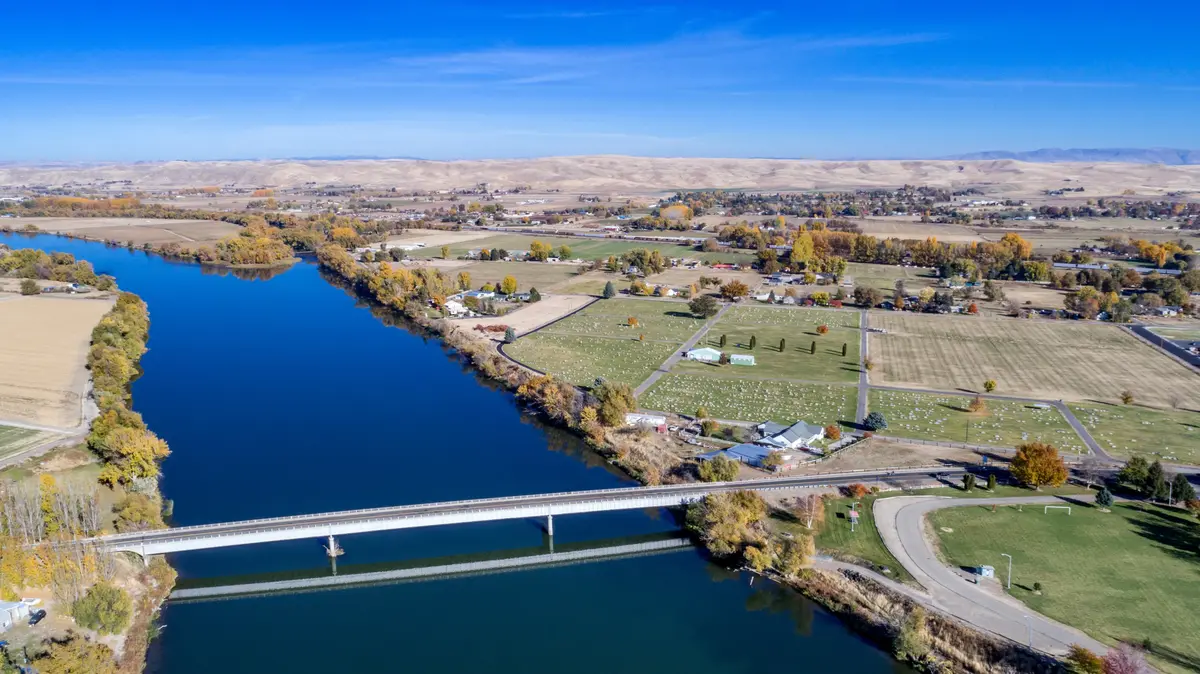
Centennial Park along the river and the trails near the Payette River confluence give retirees accessible flat walking that's genuinely pleasant, not just functional. The agricultural landscape means wide sight lines and light traffic on roads that cyclists use regularly in the warmer months. For more developed parks and outdoor recreation options, the dedicated page covers trail specifics and seasonal activities. Winters are cold but not brutal by Idaho standards — snow is manageable, and ice is the bigger concern for older walkers. Most active retirees here plan outdoor activity around a roughly March-through-November window and fill winter with indoor social programming at the Senior Center.
Right-Sizing: Downsizing in Payette
What the Market Offers
Payette's housing stock skews toward single-family homes built between the 1950s and 1990s — many of them ranches and one-story layouts that suit downsizers naturally. The inventory of purpose-built 55+ or active-adult communities is limited; this is not a Sun City or a Del Webb market. What you find instead are smaller single-level homes with manageable lots, some in the Centennial Park Area and West Payette neighborhoods, that trade the yard maintenance of a larger property for a simpler footprint at a price that often surprises buyers coming from larger metro markets.
Patio homes and true maintenance-free condo developments are rare in Payette itself. Buyers who want a lock-and-leave lifestyle — travel freely, no yard — typically need to look toward Ontario or the outer Boise suburbs where that product type is more common. If you can accept minimal exterior upkeep as your own responsibility or hire it out locally, the single-level ranch inventory in Payette works well at the price point.
Assisted Living and Care Continuums
For retirees thinking about the full continuum — independent living today, assisted living in a decade — Payette has more in-town options than you'd expect for a city of 9,000. Royal Villa on Center Avenue serves up to 29 residents in a licensed assisted-living setting. The Cottages of Payette offers 16 apartments with 24/7 staffing, a model that appeals to retirees who want some privacy but know care access matters. Ashley Manor–Beverly Hills on Beverly Hills Drive is a smaller, 9-resident home-care setting — more intimate than institutional.
Payette Healthcare of Cascadia on 3rd Ave S handles skilled nursing and rehabilitation for post-surgical recovery or longer-term care needs. Having this range within one small city means you don't necessarily have to relocate again if your needs change — a meaningful consideration when evaluating whether to plant roots here versus in a larger nearby city.
The Practical Downsizing Move
The cleanest downsizing path in Payette is selling a larger home in the North End or South Payette neighborhoods and buying a smaller ranch closer to downtown or the Centennial Park corridor — trimming square footage, yard size, and maintenance costs in one transaction. At current market prices, that move often generates equity to supplement retirement income or fund future care costs. Buyers coming from higher-cost Idaho markets or out of state tend to find the numbers surprisingly workable.
Payette vs Nearby Retirement Destinations
| City | Cost vs Payette | Primary Hospital | Walkability | Senior Living Depth | Overall Retirement Fit |
|---|---|---|---|---|---|
| Payette, ID | Anchor | Valley Family Health Care (primary); Saint Alphonsus–Ontario & Weiser Memorial for acute care | Flat grid, limited errands on foot | 3 assisted-living options, skilled nursing, no dedicated 55+ community | Strong for budget-conscious, socially independent retirees |
| Weiser, ID | About the same | Weiser Memorial Hospital (critical access, in town) | Similar flat grid, slightly smaller downtown | Limited; fewer in-town options than Payette | Good for those who want a hospital in town; quieter socially |
| Fruitland, ID | About the same | Relies on Saint Alphonsus–Ontario (very close) | Less walkable; more suburban layout | Very limited; primarily residential | Works as a lower-key alternative; fewer services than Payette |
| Ontario, OR | Noticeably pricier | Saint Alphonsus Medical Center–Ontario (full-service, in town) | More walkable downtown; better retail access | Broader range of senior communities and care facilities | Best for retirees who prioritize hospital access and services over Idaho tax advantages |
| Emmett, ID | Roughly similar | No inpatient hospital; relies on Boise facilities | Compact, flat downtown; walkable core | Some assisted-living options; growing but limited | Appeals to orchard-country lifestyle fans; similar healthcare gap as Payette |
| New Plymouth, ID | Noticeably cheaper | No local hospital; nearest is Payette's options | Minimal; very small town footprint | Very limited | Ultra-low-cost option for self-sufficient retirees; not for those needing services |
Ontario wins on healthcare depth — a full-service Saint Alphonsus campus in town is a genuine differentiator for retirees managing chronic conditions or planning for surgical needs. The trade-off is that Ontario's Oregon address means Oregon income tax rules apply, and Oregon taxes retirement income more aggressively than Idaho does.
Weiser is worth considering specifically for retirees who want a hospital within city limits without paying Ontario's prices or crossing into Oregon's tax structure — Weiser Memorial Hospital is a critical-access facility, which means it handles stabilization and routine inpatient care, though not complex interventional procedures. Emmett, about 45 miles east of Payette, draws retirees who want Treasure Valley access with a rural feel; its healthcare gap is comparable to Payette's, so it doesn't solve that problem, but it does sit closer to Boise specialists. New Plymouth suits only the most self-sufficient retirees who have already accounted for every service gap — it's cheaper, quieter, and genuinely remote by small-town Idaho standards. Payette lands in the middle of this field: better services and social infrastructure than Fruitland or New Plymouth, better Idaho tax positioning than Ontario, and a Senior Center that none of the smaller alternatives can match.
Local Expert Takeaway: The retirees who do best in Payette are the ones who visited the Community and Senior Center at 137 N Main St before they made an offer — not after. That building tells you more about whether you'll fit here than any spreadsheet. Combine that with an honest conversation about how often you'll need to drive to Saint Alphonsus in Ontario or a Boise specialist, and you have the two data points that actually drive the retirement decision here. The tax math is favorable, the home prices are real, and the town is genuinely welcoming. The healthcare distance is also real, and it compounds as you age.
Quick Takeaways & FAQs
✅ Idaho exempts Social Security from state income tax entirely, and Payette's effective property tax rate of approximately 0.35% keeps annual housing costs low — two advantages that compound meaningfully over a 20-year retirement.
⚠️ Payette has no inpatient hospital; acute care requires a drive to Saint Alphonsus Medical Center in Ontario, Oregon (about 10 miles) or Weiser Memorial Hospital (about 30 miles) — a real planning consideration for retirees with complex health needs.
📍 The Payette Community and Senior Center at 137 N Main St runs lunch three days a week, hosts live-music dances, and functions as the genuine social hub for retirees — plug in there first and the town opens up fast.
Does Idaho tax Social Security retirement income?
What is the nearest hospital to Payette, Idaho?
Are there 55+ or active-adult communities in Payette?
What is Idaho's Circuit Breaker property tax program and do Payette retirees qualify?
Is Payette a good place to retire if I'm a veteran?
Moving to Idaho?
Tell us what you need help with and we'll connect you with local resources.
