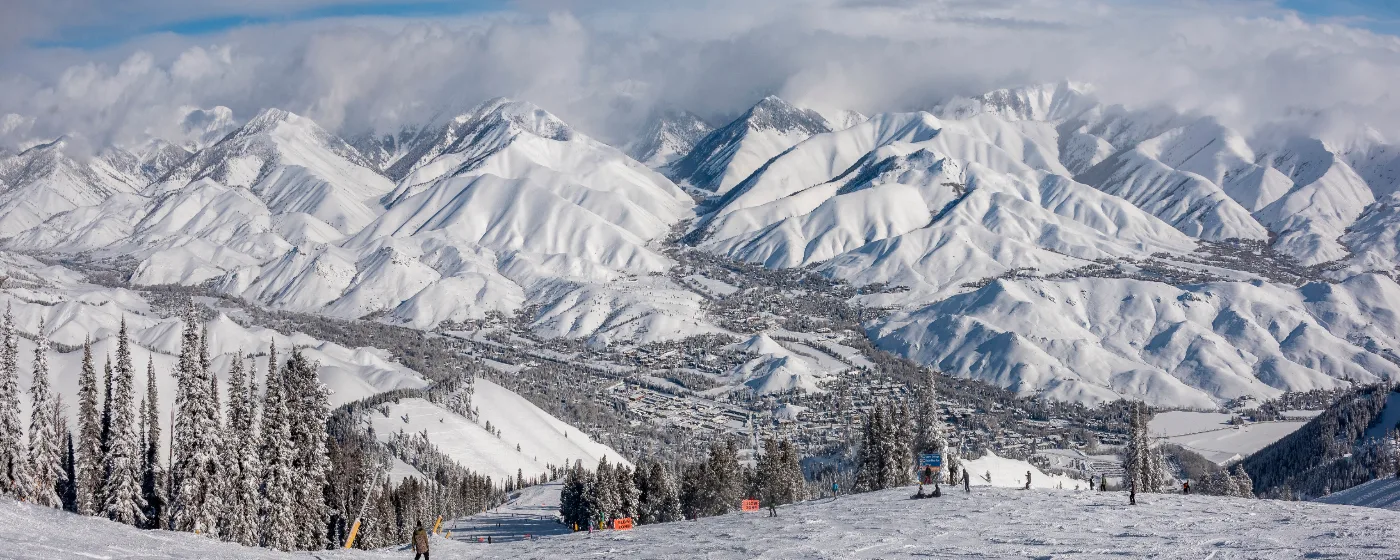
You've probably heard that Sun Valley is one of the most expensive resort communities in the American West. What surprises most people researching a move here is how directly that economic reality connects to the safety picture. A city where the typical home carries a price tag well above seven figures attracts a very specific residential profile — and the crime numbers reflect it. Sun Valley's violent crime rate sits at 1.1 per 1,000 residents and its property crime rate at 2.2 per 1,000, both among the lowest you'll find in any comparably sized community in the country.
Context matters here, though. Sun Valley is simultaneously a residential village of 1,761 registered residents and one of the most visited ski destinations in the American West. Bald Mountain and Dollar Mountain pull tens of thousands of visitors through Sun Valley Resort each winter season, and the Sun Valley Ice Rink and the outdoor concert series bring crowds in summer. That gap between the permanent population and the actual number of people moving through the city on any given weekend in January shapes how you should read — and how you should not read — the raw crime figures.
Idaho as a whole is a low-crime state. The Idaho State Police reported that statewide offenses dropped 6.3% from 2023 to 2024, hitting their lowest point in at least 20 years. Sun Valley sits well below even that already-favorable state baseline. The city's crime profile owes something to geography — it's an insular, gated-feel community at the end of a long valley with limited through-traffic — and something to economics, since the cost of living here effectively self-selects for a stable, high-income residential base.
Whether you're evaluating Sun Valley as a full-time residence, a part-time retreat, or a long-term investment, the sections below break down the actual crime data, contextualize it against state and national benchmarks, walk through what the figures mean neighborhood by neighborhood, and give you an honest look at the one methodological wrinkle that every safety ranking of Sun Valley quietly glosses over.
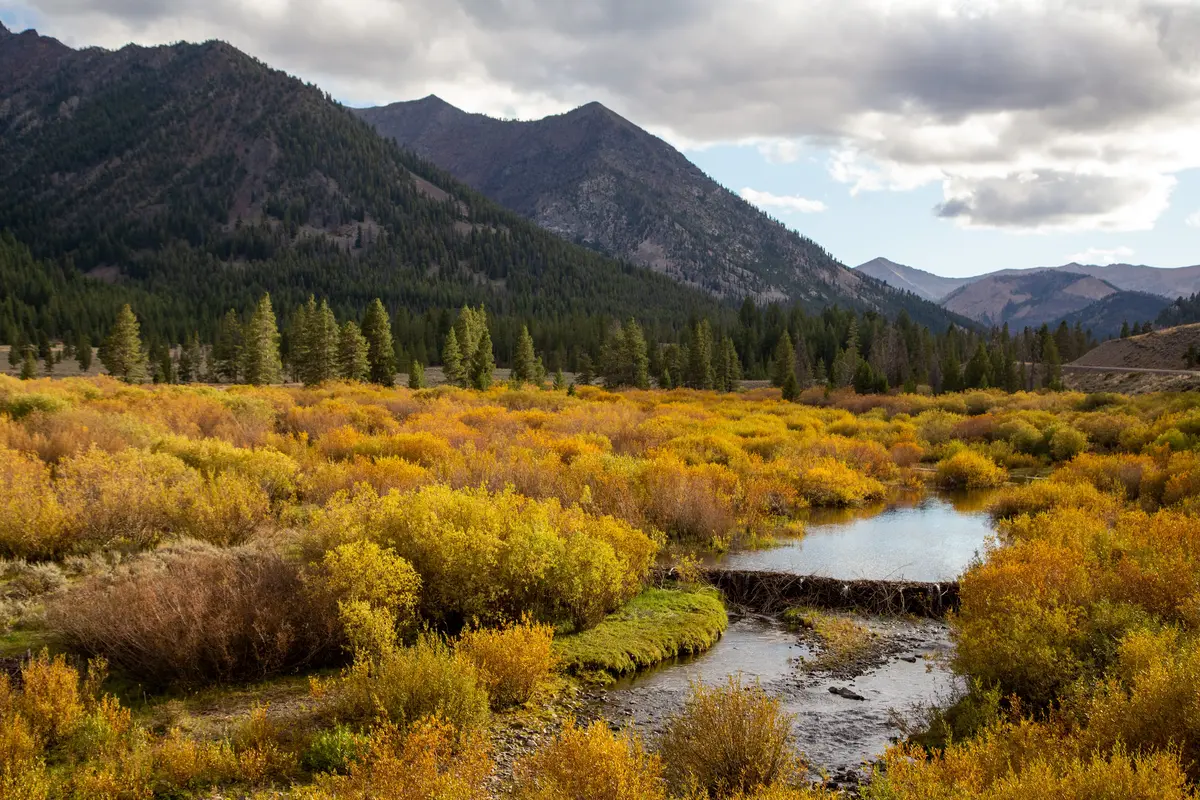
Sun Valley Crime Rates by the Numbers
Sun Valley's violent crime rate of 1.1 per 1,000 residents and property crime rate of 2.2 per 1,000 are the authoritative figures from FBI crime data — and both require a comparison to mean anything.
| Benchmark | Violent Crime (per 1,000) | Property Crime (per 1,000) |
|---|---|---|
| Sun Valley, ID | 1.1 | 2.2 |
| Idaho statewide (2024) | 2.4 | ~9.7 |
| National average (2024, FBI) | 3.59 | 17.6 |
| Sun Valley vs. Idaho | 54% below state rate | 77% below state rate |
| Sun Valley vs. National | 69% below national rate | 87% below national rate |
| NeighborhoodScout U.S. percentile | Safer than 86% of all U.S. communities | |
Idaho already ranks among the nation's safest states — 1st in the country for lowest property crime rate and 13th for violent crime, per federal uniform crime reporting data. Sun Valley's figures are meaningfully below even that low statewide floor.
The five-year picture reinforces what the annual rate suggests. Between 2019 and 2024, Sun Valley recorded 28 violent crimes total, according to federal crime data explorer figures — fewer than 6 per year across the entire city. That is not a rounding error or a statistical quirk. It is a genuinely low-incident environment by any measure.
NeighborhoodScout's analysis of FBI crime data places Sun Valley's combined rate as lower than approximately 76% of Idaho's cities and towns — meaning it is safer than most of the state, not just most of the nation. For a small resort community that hosts far more visitors than it has registered residents, that figure carries real weight.
The Resort-Town Caveat Every Safety Report Misses
Why the Raw Rate Understates How Safe Sun Valley Feels
Here is the methodological wrinkle that matters more in Sun Valley than almost anywhere else in Idaho. The FBI calculates crime rates by dividing reported incidents by the registered residential population — in Sun Valley's case, 1,761 people. That denominator does not include the thousands of visitors flowing through Sun Valley Resort on a busy ski weekend, the attendees at summer events at the Sun Valley Ice Rink, or the seasonal workers housed temporarily in the valley.
What this means in practice: if a property crime occurs in a resort parking area during peak season, it gets counted against a residential population of 1,761 — inflating the per-capita rate relative to what a year-round resident actually experiences. The 2.2 property crime rate, already low in absolute terms, is arguably even lower from the perspective of a permanent resident who avoids the resort's high-traffic zones during peak weekends.
What This Means When You're Evaluating Neighborhoods
The resort-area corridors — Sun Valley Road near the Lodge, the base of Dollar Mountain, the parking structures around the Sun Valley Golf Course — see the highest visitor concentration. These are not dangerous areas, but they are where the property crime that does occur in this city is most likely to happen: opportunistic vehicle break-ins during ski season, lost or stolen gear near the lifts.
Residential areas like Dollar Meadows, Independence Creek, and the quieter reaches of Trail Creek sit away from those high-traffic zones. Incidents there are genuinely rare. When longtime residents talk about Sun Valley feeling safe, they are largely describing those quieter residential pockets rather than the resort core on a January Saturday.
The honest takeaway: Sun Valley's numbers are good even before you apply this correction. With the correction factored in, the residential experience is even safer than the headline figures suggest.
Neighborhood-Level Safety Picture
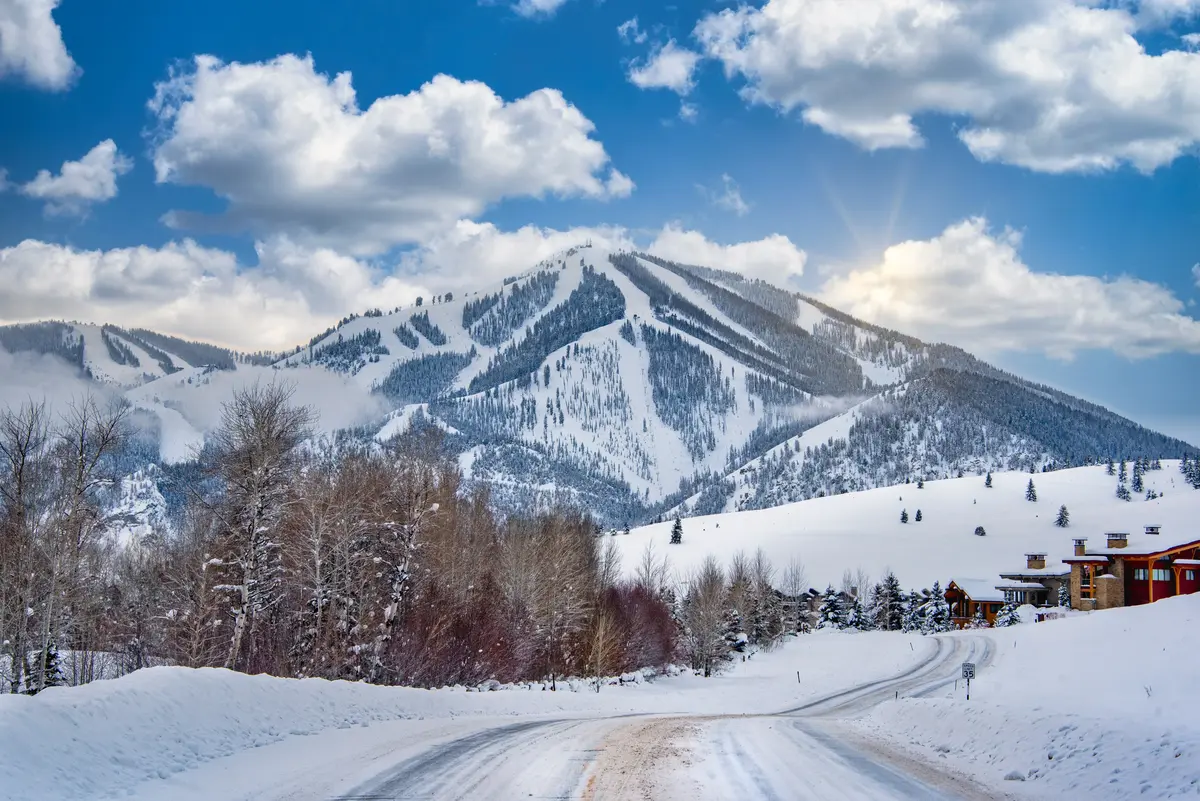
Sun Valley does not publish granular precinct-level crime maps the way larger cities do — at 1,761 residents, the geography is simply too small for that level of disaggregation. What you can use is a combination of the city's overall data and the physical and social character of each area to understand where incidents are more and less likely to occur. For a full breakdown of each neighborhood's character and layout, see the best neighborhoods in Sun Valley guide.
| Neighborhood | Character | Safety Notes | Best For |
|---|---|---|---|
| Sun Valley Village | Resort core; Lodge, Ice Rink, retail | Highest foot traffic; most exposure to visitor-related property incidents | Walkable Luxury |
| Elkhorn Village | Planned resort community; condo-heavy | Gated-feel entry; lower through-traffic than Village core | Renter Views |
| Dollar Meadows | Residential; near Dollar Mountain base | Quieter than Lodge area; seasonal lift-base activity nearby | Families Quiet |
| Trail Creek | Luxury residential corridor east of Village | Low through-traffic; predominantly owner-occupied | Luxury Privacy |
| Snow Creek | Established residential; creek-side | Among the lowest incident exposure in the city | Nature Quiet |
| Prospector | Mixed residential and seasonal | Moderate visitor adjacency; stable owner-occupied core | Value Families |
| Sun Valley Golf Course | Golf community; seasonal rhythm | Off-season quiet; summer events bring periodic activity | Luxury Views |
| Independence Creek | Peripheral residential; low density | Furthest from resort traffic; very low incident exposure | Privacy Nature |
The practical divide in Sun Valley is not east versus west or uphill versus downhill — it is resort-adjacent versus residential-interior. The closer a property sits to Sun Valley Road and the main Lodge campus, the more it shares the foot traffic (and the occasional opportunistic incident) that comes with being at the center of a world-class ski resort.
Independence Creek and Snow Creek, by contrast, feel more like a private mountain community than a resort address. The Hemingway Memorial sits at the quiet eastern edge of the valley — the kind of landmark that tells you something about the pace of life in those surrounding streets.
Looking to buy in Sun Valley? Estimate your payment.
Enter your numbers to see an estimated monthly mortgage payment.
Estimate only. Excludes HOA fees and mortgage insurance. The interest rate above is a starting point, not a quoted rate — replace it with your own to see real numbers. Insurance is a flat placeholder, not a Sun Valley quote.
Police Presence and Community Response
A Staffing Ratio That Stands Out
Sun Valley deploys approximately 7.1 police officers per 1,000 residents — 192% above the Idaho average and 119% above the national average, according to AreaVibes data derived from FBI 2024 figures. For a city of 1,761 people, that is an unusually high commitment to law enforcement resources.
The explanation is straightforward: Sun Valley Resort drives an economy that depends on visitor confidence. The city has strong financial incentive to maintain a visible, responsive police presence year-round, and especially during peak ski season when the effective population of the valley swells dramatically. That staffing level is not a response to crime — it's a structural feature of a resort municipality that takes public safety as a core operating priority.
What Locals Actually Experience
Residents who have lived in Sun Valley Village or Elkhorn Village for multiple seasons consistently report the same thing: the police presence is visible without feeling aggressive. Officers know the regular faces. Response times in a community this compact tend to be short. The social fabric — the kind built when year-round residents see each other at a local breakfast spot or run into the same neighbors on the path to the Ice Rink — creates informal community oversight that supplements the formal one.
After six months here, most new residents say the biggest surprise is not the safety level but the smallness. Everyone knows who belongs and who doesn't. That social familiarity is its own layer of security that no crime statistic can fully capture.
Seasonal Awareness
The one period that warrants slightly more awareness is peak ski season — January through early March — when the resort-adjacent areas see their highest visitor density. Vehicle break-ins in resort parking areas are the most commonly reported property incidents during this window. Residents who park near the Sun Valley Golf Course or Dollar Mountain base during that season follow the same simple rule applied at ski areas everywhere: don't leave valuables visible in parked cars. That is genuinely the extent of the seasonal crime advisory here.
Honest Limitations and What to Research Before Choosing an Area
What the Data Doesn't Tell You
Sun Valley's crime figures are among the cleanest arguments for the city's safety that exist in any Idaho community. But two honest limitations are worth naming before you anchor on those numbers.
First, the small-population effect cuts both ways. In a city of 1,761 residents, a handful of additional incidents in a single year can move the per-capita rate more than it would in a city ten times the size. The five-year average of fewer than 6 violent incidents per year is a more reliable signal than any single year's figure.
Second, some crime-rating platforms — most notably CrimeGrade.org — apply methodologies that weight Sun Valley's figures differently, often producing lower letter grades than NeighborhoodScout or AreaVibes. This is not because those platforms have different incident data. It's because they use different denominators or weight certain incident types more heavily. The FBI-derived figures used throughout this guide are the most widely accepted standard, but if you see a conflicting grade somewhere, the methodology difference is the likely explanation — not a hidden crime wave.
What to Actually Look Into Before Choosing a Neighborhood
The most useful research you can do isn't comparing Sun Valley to Hailey or Ketchum on a safety index — it's understanding which part of Sun Valley you're considering. Properties on or immediately adjacent to Sun Valley Road near the Lodge sit in the resort's daily orbit. Properties in Independence Creek or Snow Creek sit in a fundamentally quieter residential environment. Both are safe by any reasonable measure. They feel different, and they come with different neighbor profiles and seasonal rhythms.
Talk to full-time residents, not seasonal visitors, before settling on a specific area. Ask what the parking situation looks like in January. Ask whether the street quiets down after Labor Day or stays active through the fall foliage season. Those texture questions will tell you more about daily life — and the practical safety experience — than any ranking website.
The bottom line is simple. Sun Valley's crime data is genuinely good, grounded in a small residential population, a high-income economic base, exceptional police staffing, and a geography that limits the kind of transient through-traffic that drives property crime in other tourist corridors. People who move out of Sun Valley typically cite the cost, the isolation, or the limited services — not safety. That itself is a data point worth weighing.

Local Expert Takeaway: Sun Valley's violent crime rate of 1.1 per 1,000 and property crime rate of 2.2 per 1,000 put it safer than 86% of U.S. communities — and the five-year record of fewer than 6 violent incidents per year in a city of 1,761 people makes that number concrete, not just statistical. The one thing to calibrate: resort-adjacent areas near Sun Valley Road and the Dollar Mountain base see more visitor-driven activity, particularly during ski season. If maximum quiet is the priority, the residential pockets around Independence Creek and Snow Creek deliver a noticeably different — and lower-incident — daily experience than the Village core.
Quick Takeaways & FAQs
✅ Sun Valley's violent crime rate of 1.1 per 1,000 is less than half of Idaho's already-low statewide rate — and Idaho already ranks 13th safest in the nation for violent crime.
⚠️ The city's small registered population of 1,761 means resort visitor incidents can inflate per-capita rates; the residential experience away from Sun Valley Road is quieter than the headline numbers suggest.
📍 Sun Valley deploys approximately 7.1 police officers per 1,000 residents — nearly twice the Idaho average — reflecting the resort municipality's structural commitment to maintaining a visible, responsive presence year-round.
What is Sun Valley's crime rate compared to the national average?
Is Sun Valley safe for full-time residents, or is the safety picture skewed by resort visitors?
Which Sun Valley neighborhoods are the safest?
Does Sun Valley's safety ranking vary between summer and winter?
How does Sun Valley's police presence compare to other Idaho cities?
Moving to Idaho?
Tell us what you need help with and we'll connect you with local resources.
