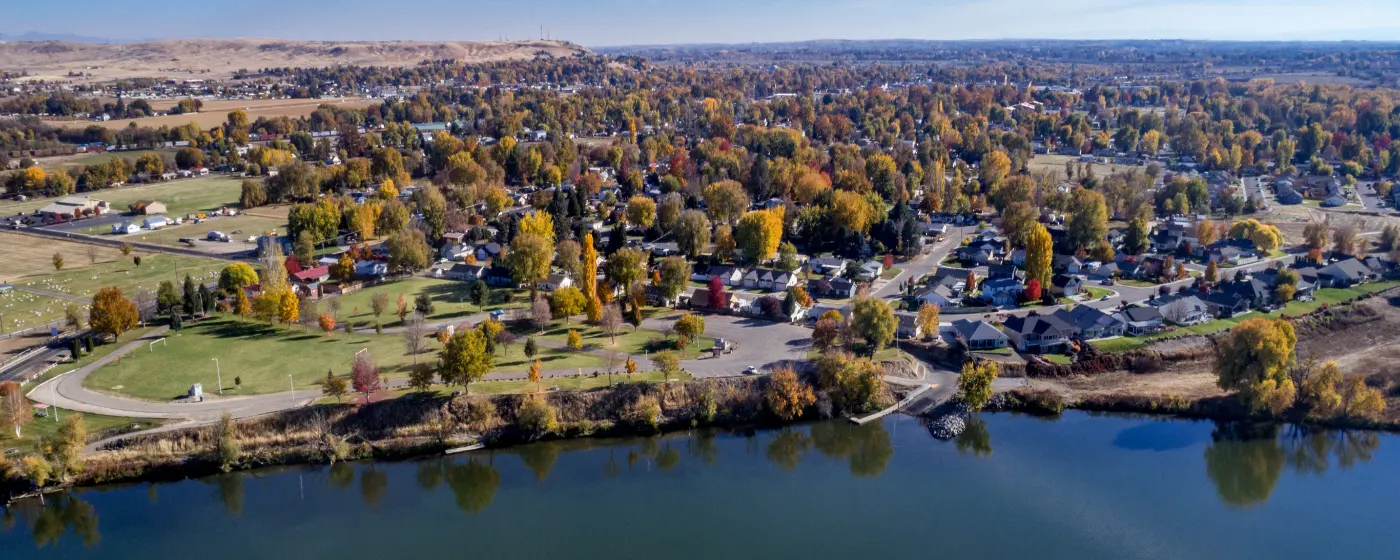
Most people sizing up a small Idaho city expect a single park with a swing set and maybe a baseball diamond. Payette surprises them. Within a city of roughly 9,000 people, the parks system covers more than 51 acres across 9 developed sites — and two of the country's most significant rivers run along the city's edge. The Payette River, draining 82.7 miles from headwaters above 10,000 feet in the Sawtooth and Salmon River Mountains, meets the Snake River right here, at the city's western boundary. That confluence isn't a backdrop. It's the organizing fact of outdoor life in Payette.
What shapes the day-to-day recreation picture is how deliberately the city has built around that geography. Kiwanis Park, the largest in the system, sits directly on the Payette River at 6th Avenue South and Highway 95. Centennial Park anchors the north end of a planned riverfront greenway. The Harmon Killebrew Miracle Field — Idaho's first and only Miracle League baseball field, named for Payette's own legendary home-run hitter — stands at 400 N Iowa Ave, a facility that raised over $385,000 in community donations to build. These aren't amenities that arrived by accident; the town invested in them on purpose.
Seasonally, Payette's outdoor calendar runs almost year-round. Spring brings the Apple Blossom Festival and the Payette River's most dramatic water levels. Summer opens the pools at Kiwanis, fills the boat ramp at Centennial Park, and draws anglers to both rivers. Fall is quiet in the best sense — the golf course at Scotch Pines stays open, the trails along the riverfront see light traffic, and the crowds are gone. Winters are cold but not severe enough to shut outdoor life down entirely. For families moving here from denser, pricier markets, the access-to-cost ratio is genuinely hard to argue with.
Whether you're moving to Payette and want to know where you'll actually spend your weekends, or you're still deciding and want to understand what the recreational infrastructure looks like on the ground, the sections below cover the city's signature parks, river access, trail system, golf, and the seasonal events that give the outdoor calendar its rhythm.
Kiwanis Park: The Center of It All
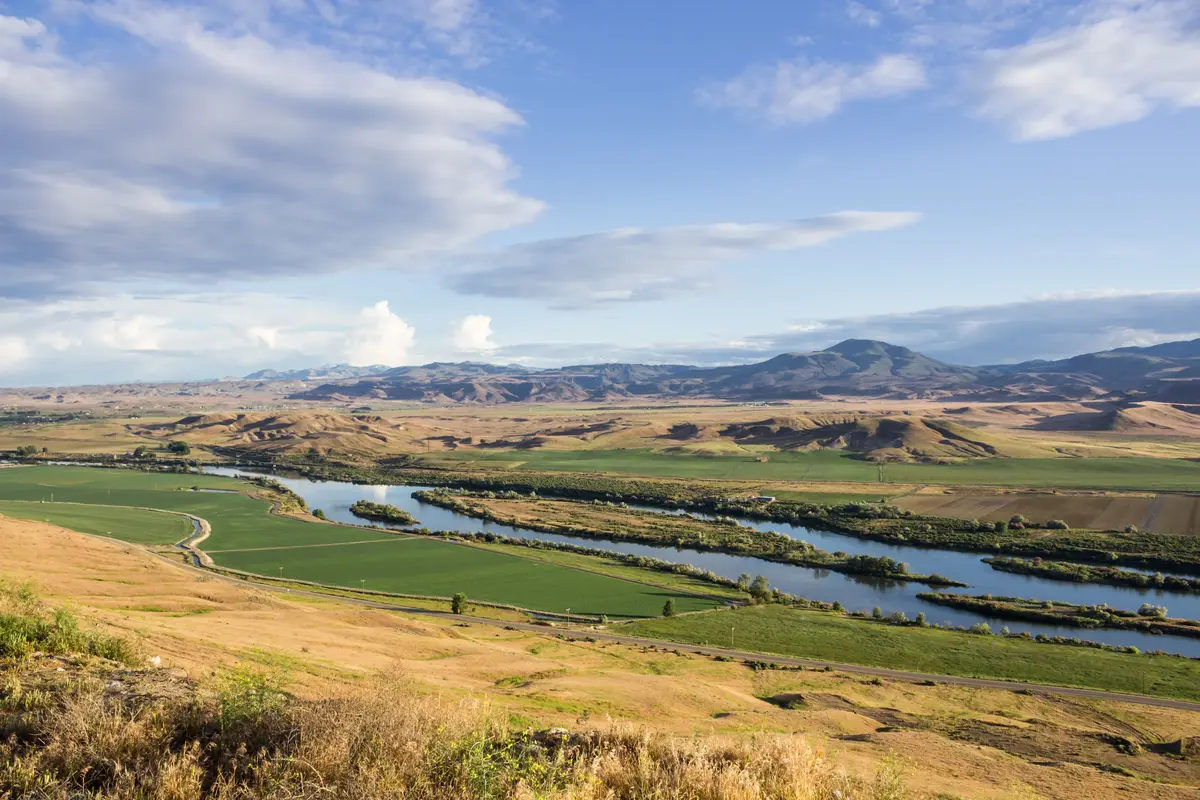
Everything in Payette's parks system orbits Kiwanis Park. At 15 to 18.5 acres along the Payette River — sources vary, and the city's own master plan puts it closer to 15 — this is the facility that handles the broadest range of residents simultaneously and the one you'll hear about first from any longtime local.
The amenity list is unusually complete for a city this size. There are two regulation swimming pools: an indoor pool and an outdoor pool, together totaling 15 competition lanes plus a wading pool for younger kids. Four tennis courts, basketball courts, a skate park built largely through community fundraising, a bandshell and stage for outdoor concerts, a lodge available for private rentals, barbecue facilities, and a full playground round out the complex. Forty-nine Creek runs through the park on its way to the Payette River, giving the grounds a natural edge that a purely developed park wouldn't have.
The river access at Kiwanis is real, not decorative. Water-quality monitoring data for the Payette River at this location is available publicly through the Swim Guide platform — meaning the city actually tracks conditions here, which matters when you're deciding whether to let kids swim. This is also a paddling put-in point, convenient for anyone who wants to float a stretch of the Payette without driving upstream to find access.
The Apple Blossom Festival Anchors Kiwanis Every May
Each mid-May, the park hosts free concerts as part of the annual Payette Apple Blossom Festival — one of the region's larger carnivals also sets up nearby, and the event includes a parade through town. For families new to Payette, the Apple Blossom weekend is the fastest way to meet a cross-section of the community. It draws people from Fruitland, Ontario, and New Plymouth, not just Payette proper.
Six months after moving here, most residents say the same thing about Kiwanis: they didn't expect to use it as much as they do. The pool complex alone justifies the park's central role — there aren't many comparable public aquatic facilities within easy reach, and on a July afternoon in Payette's high-desert heat, that indoor-outdoor combination matters.
Centennial Park, the Greenway, and River Access
Centennial Park at 1800 N 6th Street operates differently from Kiwanis — quieter, more oriented toward the river itself than toward programmed amenities. It's the starting point for a short riverfront greenway walk that runs west along the Snake River toward the mouth of the Payette River, then turns south with scenic overlook spots along the route. The path is designed for both pedestrians and cyclists.
The park's boat ramp was rehabilitated with a 12-foot by 50-foot precast structure, new grading, paved parking, restrooms, a sprinkler system, and a grass area. That upgrade matters practically: the old ramp had safety and access problems that discouraged casual use. Now it functions as a genuine public launch point for fishing, floating, and paddling on the Payette River — no trailer gymnastics required.
The Payette Greenway: What's Planned vs. What's Built
The Payette Greenway is an ongoing city-county project intended to create a continuous river trail connecting Kiwanis Park to Centennial Park, with tentative extensions planned toward Fruitland and New Plymouth. As of the most recent available information, the greenway trail covers approximately a half-mile — a solid start, but not yet the full corridor the master plan envisions. Before assuming the trail connects specific points, it's worth checking current status directly with the city, since completion timelines on greenway projects like this tend to shift.
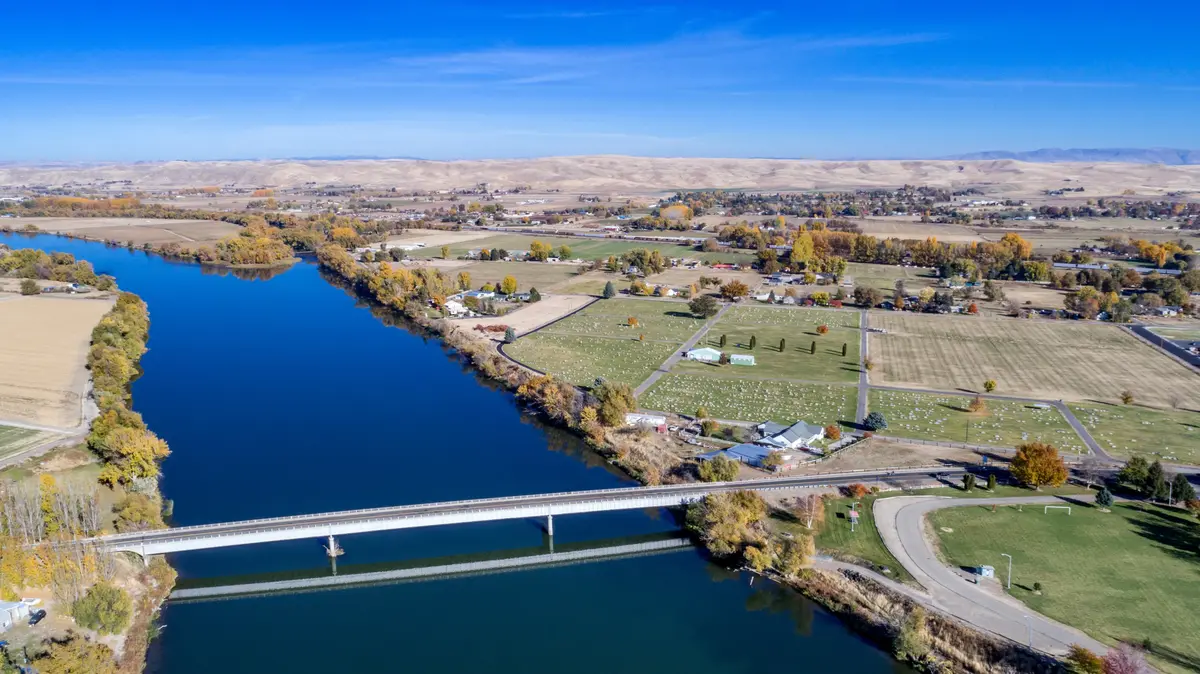
What already works well is the combination of Centennial Park's launch infrastructure and the confluence geography itself. The Snake River marks the Idaho–Oregon state line here, with Ontario, Oregon directly across the water. Standing at the Centennial Park overlook and watching two major rivers meet while looking into another state is one of those Payette moments that doesn't show up on any amenity checklist but sticks with people who live here.
| Feature | Centennial Park | Kiwanis Park |
|---|---|---|
| Primary use | River access, trails, overlooks | Pools, courts, events, paddling |
| Boat ramp | Yes — rehabilitated precast ramp | No dedicated ramp |
| Swimming pools | No | Yes — indoor + outdoor, 15 lanes |
| Greenway trailhead | Yes | Southern anchor (planned) |
| Restrooms | Yes (post-rehab) | Yes |
| Parking | Paved lot (post-rehab) | Yes |
| River frontage | Snake River + Payette confluence | Payette River |
Together, these two parks give Payette a north-south river corridor that most comparably sized Idaho cities simply don't have.
The Harmon Killebrew Miracle Field and Scotch Pines Golf Course
The Miracle Field: A Community Project Worth Understanding
At 400 N Iowa Ave, the Harmon Killebrew Miracle Field is Idaho's first and only Miracle League baseball field. The specialized rubberized surface allows players using wheelchairs, walkers, or other mobility aids to navigate the diamond freely, with volunteer buddies assisting each player on the field. The project took years of community fundraising — over $385,000 raised — and was completed in 2015.
The field is named for Harmon Killebrew, who was born and raised in Payette and went on to hit 573 career home runs, earn 13 All-Star selections, and be enshrined among baseball's all-time greats in 1984. Killebrew personally requested that the only Miracle Field bearing his name be in his hometown. That detail matters to Payette residents in a way that goes beyond civic pride — it's a reminder that the city produced one of the sport's most recognizable power hitters, and that he chose to honor his roots here specifically.
For families with children who have disabilities, the Miracle Field's existence is often cited as a meaningful factor in the decision to stay in or relocate to Payette rather than a larger metro area. Inclusive sports infrastructure at this level is rare in cities of any size.
Scotch Pines Golf Course: Public and Serious
Scotch Pines Golf Course at 10610 Scotch Pines Rd has been a Payette institution since 1962. The 18-hole, par-72 layout measures between 6,487 and 6,605 yards from the back tees — long enough to challenge single-digit handicappers without being punishing for casual players. Bluegrass fairways and bentgrass greens hold up well in the high-desert climate, and the driving range offers five practice tees for warm-ups or standalone range sessions.
A PGA professional is on staff for lessons, the pro shop is fully stocked, and the Pine Room bar and grill operates on-site with a patio that looks directly out over the 18th green. As a public course at this length and quality level, Scotch Pines draws golfers from across the Treasure Valley — it's not just a local convenience, it's a destination for players in Fruitland, Ontario, and beyond.
| Detail | Scotch Pines Golf Course |
|---|---|
| Address | 10610 Scotch Pines Rd, Payette |
| Type | Public, 18-hole, par-72 |
| Yardage (back tees) | 6,487–6,605 yards |
| Opened | 1962 |
| Fairways / Greens | Bluegrass fairways / Bentgrass greens |
| Practice facilities | Driving range, 5 practice tees |
| On-site instruction | PGA professional available |
| Dining | Pine Room bar & grill, patio over 18th green |
If you play golf and you're weighing Payette against other Treasure Valley communities, having a course of this quality as your home course — public, no membership required — is a genuine lifestyle advantage.
Looking to buy in Payette? Estimate your payment.
Enter your numbers to see an estimated monthly mortgage payment.
Estimate only. Excludes HOA fees and mortgage insurance. The interest rate above is a starting point, not a quoted rate — replace it with your own to see real numbers. Insurance is a flat placeholder, not a Payette quote.
The Payette River: Fishing, Floating, and Seasonal Conditions
The Payette River's final miles, as it drops from 10,000-foot headwaters in the Sawtooth and Salmon River Mountains down to its confluence with the Snake River at elevation 2,125 feet, pass directly through and alongside the city. That's not background scenery — it's usable water, seasonally variable, and the character of recreation on it changes month to month.
Whitewater: Upstream Is Where the Action Is
The broader Payette River system runs from Class II beginner floats to Class IV–V expert sections. The water near the city itself is calmer — more suited to paddling, fishing, and casual floating than to whitewater runs. Spring snowmelt in May and June produces the most challenging conditions upstream; summer levels from July through August settle into the range that families and newer paddlers handle comfortably. If whitewater is the draw, you'll drive upstream from Payette to find the technical sections, but the city is a reasonable base for doing so.
Fishing Access and Licensing
Anglers need an Idaho fishing license if they're 14 or older — that applies to both the Payette River and the Snake River at the confluence. Both rivers carry trout, bass, and other species depending on the stretch and the season. The Centennial Park boat ramp makes launching a small craft onto the Payette River straightforward, and Kiwanis Park offers additional river-edge access without requiring a trailer.
One thing that catches newcomers off guard: the Snake River at Payette's western edge is technically in Oregon on the far bank. If you drift too far west, you're in a different state with different license requirements. That's a quirk of fishing the confluence that most out-of-state transplants don't think about until someone mentions it.
What the River Looks Like Day to Day
For most residents, the Payette River is a place to walk along, fish on summer evenings, or paddle recreationally — not an extreme sports venue. The parks system has deliberately organized around that reality, with Kiwanis Park and Centennial Park both providing managed, accessible river frontage rather than just pointing toward the water from a distance. That combination of infrastructure and geography is what makes Payette's outdoor scene feel more substantial than the city's size would suggest.
| Season | River Conditions | Best Activities |
|---|---|---|
| March–April | Rising, cold snowmelt beginning | Fishing, riverside walks |
| May–June | Peak flow, most challenging upstream | Whitewater (upstream), bank fishing |
| July–August | Calmer, warmer, family-friendly | Floating, paddling, swimming at Kiwanis |
| September–October | Dropping levels, clear water | Fishing, kayaking, walking trails |
| November–February | Low, cold | Walking, occasional fishing (check regs) |
Summer is the clear peak for water recreation, but the shoulder seasons — especially September — offer fishing conditions and trail access without the July crowd at the parks.
Local Expert Takeaway: Payette's recreational infrastructure punches well above its population. Kiwanis Park's dual pool complex — indoor and outdoor, 15 competition lanes — is the kind of facility you'd expect in a city three times the size. The Harmon Killebrew Miracle Field at 400 N Iowa Ave is genuinely one-of-a-kind in Idaho. And Scotch Pines Golf Course gives residents a serious public 18-hole track at their doorstep. The catch: the Payette Greenway trail that's supposed to connect it all is only partially built, so don't move here expecting a finished river trail system — verify current status with the city first.
Quick Takeaways & FAQs
✅ Kiwanis Park offers two regulation swimming pools — indoor and outdoor — totaling 15 competition lanes, an unusually complete aquatic facility for a city of 9,000.
⚠️ The Payette Greenway trail connecting Kiwanis Park to Centennial Park is planned but only partially complete; check current status with the city before assuming it's a finished corridor.
📍 Scotch Pines Golf Course at 10610 Scotch Pines Rd has operated since 1962 as a public 18-hole, par-72 course with a PGA professional on staff and the Pine Room bar and grill overlooking the 18th green.
Does Kiwanis Park in Payette have an outdoor swimming pool open to the public?
Can you launch a boat at Centennial Park in Payette?
Is Scotch Pines Golf Course open to the public or is it a private club?
What is the Harmon Killebrew Miracle Field and who can use it?
Do you need a fishing license to fish the Payette River near Payette, Idaho?
Moving to Idaho?
Tell us what you need help with and we'll connect you with local resources.
