
Maybe you've run a quick search on Nampa crime statistics and come away more confused than when you started. One aggregator calls it dangerous; another says it's among Idaho's safer mid-size cities. Both are technically drawing from the same FBI data — they're just framing it very differently. The honest answer sits somewhere in the middle: Nampa is a working-class city of 125,310 people growing fast enough to rank among the 100 fastest-growing U.S. cities from 2020 to 2024, and rapid growth always creates uneven safety conditions across neighborhoods. Understanding which areas those are is the real job of this guide.
The city's violent crime rate — 3.6 incidents per 1,000 residents, per FBI Uniform Crime Report 2024 data — lands above Idaho's statewide figure of 2.4 per 1,000 but meaningfully below the national average of 4.0 per 1,000. That context matters. Idaho as a whole recorded its lowest total offense rate in at least 20 years in 2024, down 6.3% from 2023 statewide. Nampa isn't bucking that trend — City-Data.com's FBI-derived index shows Nampa's own crime rate index dropped roughly 17% from 2024 to 2025, with homicides falling from three to one. The trajectory is encouraging even if the current numbers aren't spotless.
Property crime tells a similarly nuanced story. At 8 incidents per 1,000 residents, Nampa sits right at what NeighborhoodScout describes as average for U.S. cities of all sizes. That figure actually comes in below Idaho's statewide property crime rate — and Idaho's statewide rate of 9.67 per 1,000 is the lowest in the nation per SafeWise's 2026 rankings. The most common offense is larceny and theft, running roughly 13% below the national average for that crime type. Catalytic converter thefts, porch packages, and car break-ins in commercial parking lots are the day-to-day reality — not the violent crime headline most people fear when they type this question.
Whether you're narrowing down neighborhoods or just trying to calibrate your expectations before visiting, the sections below break down Nampa's crime numbers in full context, explain how safety varies by area, and give you the practical tools to research any block before you decide to put roots down here.
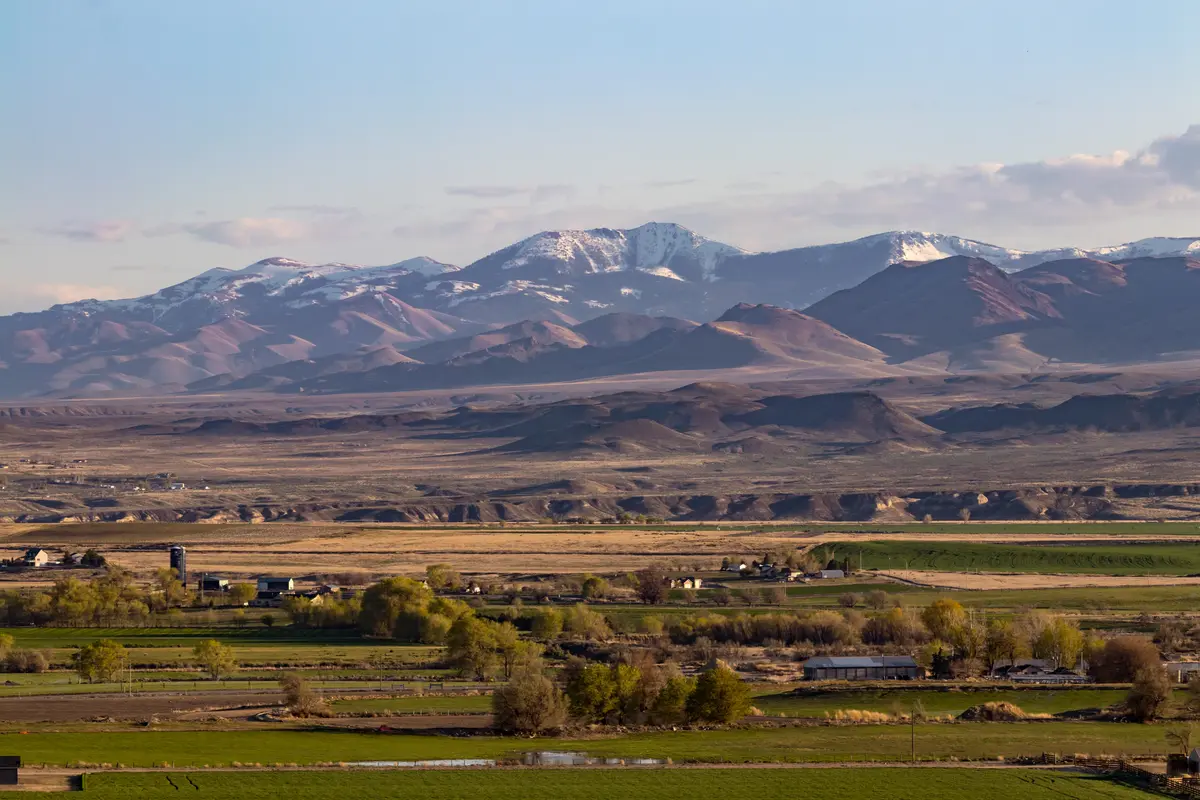
Nampa Crime Numbers in Context: What the Data Actually Says
The Numbers at a Glance
| Metric | Nampa | Idaho Statewide | U.S. National |
|---|---|---|---|
| Violent crime (per 1,000) | 3.6 | 2.4 | 4.0 |
| Property crime (per 1,000) | 8.0 | 9.67 | ~19.0 (NeighborhoodScout baseline) |
| Most common offense | Larceny / theft | Larceny / theft | Larceny / theft |
| Crime trend (2024–2025) | Index down ~17% | Total rate down 6.3% | Violent down 4.4%; property down 8.1% |
| Data source | FBI UCR 2024 / City-Data 2026 | Idaho State Police / ISAC 2025 | FBI 2024 Reported Crime in the Nation |
| Homicides (most recent year) | 1 | N/A (statewide) | N/A (national) |
Nampa's violent crime rate sits in the space between an unusually safe state and a less-safe nation. You are more likely to experience a property crime here than in rural Canyon County, but the odds remain well below what you'd face in most U.S. metro areas of comparable size.
What "Per 1,000" Means on the Ground
A rate of 3.6 violent incidents per 1,000 residents means roughly 1 in 278 Nampa residents is a victim of violent crime in a given year — statistically. That figure isn't random across geography; it clusters around specific corridors, which the neighborhood section below addresses. The 8.0 property crime rate translates to about 1 in 125 residents experiencing theft, vehicle break-in, or similar property offense annually — the kind of risk that's manageable with basic precautions but real enough to know about before you choose a block.
Larceny and theft dominate the property crime picture, running approximately 13% below the national average for that offense type. Burglary and auto theft are the categories worth watching by neighborhood; they vary more than the city-wide figure suggests.
The Trend Line Is Moving the Right Direction
Nampa's five-year crime trajectory is one of decline, not stagnation. Homicides fell from three to one between 2024 and 2025. Both Idaho's statewide crime drop and the national pullback in violent and property crime provide a tailwind — Nampa's numbers are moving with that current, not against it. Rapid population growth often pushes crime indexes upward in fast-growing Sun Belt cities; Nampa's declining trend while adding roughly 16,922 residents between 2020 and 2024 is a meaningful data point in the city's favor.
Neighborhood-Level Safety: Where Things Are Calmer and Where to Be Aware
City-wide averages obscure what matters most to someone choosing where to live. Nampa's safety profile is genuinely uneven across its eight primary neighborhoods — the gap between the quietest areas and the most active corridors is wide enough that two families could have completely different experiences of the same city. For a fuller picture of neighborhood character beyond safety, see the best neighborhoods in Nampa guide.
Calmer, Lower-Activity Areas
Lake Lowell Estates sits along the southern edge of the city near Deer Flat National Wildlife Refuge and consistently draws residents specifically because it feels removed from the commercial corridors where property crime concentrates. Larger lots, a more established homeowner base, and distance from the I-84 interchange all contribute to a quieter profile.
Highline Estates and Centennial, both in the newer northwest-growth corridor, benefit from the practical reality that newer subdivisions attract less opportunistic crime — fewer rentals cycling in unfamiliar tenants, more owner-occupants, and active HOA structures that tend to generate more eyes on the street. Residents in these areas report fewer vehicle break-ins than those closer to downtown.
Tierro Bello is a mid-size established neighborhood that sits in the calmer southwest quadrant. It's not as insulated as Lake Lowell Estates, but it also doesn't carry the concentration of commercial foot traffic that elevates property crime risk near the Nampa Gateway or 12th Avenue corridors.
Higher-Activity Areas: Know Before You Decide
Downtown Nampa carries the highest crime density in the city — a pattern common to older downtown cores in fast-growing Idaho cities. The area around the Nampa Train Depot Museum and along 1st Street South has seen investment in recent years, and the Nampa Civic Center anchors a more active daytime presence, but auto theft and theft from vehicles remain elevated compared to suburban neighborhoods. That doesn't make it unlivable — many people choose downtown specifically for its walkable streets and older housing stock — but it's the area where you'd most want to research specific blocks before deciding.
West Nampa, particularly along the Caldwell Boulevard corridor, reflects the mixed commercial-residential character that tends to correlate with higher property crime. The Caldwell Blvd stretch runs through stretches of older commercial development that see high foot and vehicle traffic at all hours.
South Nampa sits in an actively developing zone where older housing stock meets new construction pressure. Crime activity here is more variable by block than in other areas — some streets feel settled and quiet; others adjacent to industrial-adjacent parcels or transitional commercial zones see more incidents.
Lakeview is a middle-ground neighborhood: not the hot spots of downtown, but not the insulation of the estate neighborhoods either. It benefits from proximity to Lakeview Park, which generates regular foot traffic from families and tends to deter the kind of low-visibility opportunistic crime that concentrates in dead-end commercial zones.
The Pattern That Repeats
Across Nampa's neighborhoods, property crime tracks most reliably with two variables: proximity to high-traffic commercial corridors (Caldwell Blvd, 12th Ave South, Garrity Blvd near the Ford Idaho Center), and density of rental vs. owner-occupied housing. The neighborhoods with the cleanest records tend to have the highest rates of owner-occupancy and the most distance from those main arteries — a pattern that holds in most Canyon County cities, not just Nampa.

What Nampa's Police Department Is Actually Doing
Staffing Levels and the Growth Challenge
The Nampa Police Department had 152 authorized sworn officer positions for fiscal year 2025 — up from 117 in 2015, a meaningful increase that tracks with the city's population growth. The department's stated target is 1.5 officers per 1,000 residents. At 125,310 residents, full staffing toward that ratio would require around 188 officers; the current 152 authorized positions leaves a gap that department leadership has acknowledged publicly.
That gap matters in practical terms: response times in lower-priority calls can stretch longer than residents expect, particularly in newer outlying subdivisions. It's not a crisis, but it's an honest constraint on a department serving a city that added the equivalent of a small town's population in four years.
Community Programs Worth Knowing
The department's Community Service Officer program runs Neighborhood Watch coordination, a Public Safety Academy for residents, National Night Out events, and ride-along opportunities. These aren't feel-good extras — Neighborhood Watch programs with active participation measurably reduce opportunistic property crime in residential areas. If you're choosing between two neighborhoods and one has an active watch group registered with the NPD, that's a real differentiator.
National Night Out in Nampa typically draws participation from neighborhoods across the city's growth edge — Centennial, Highline Estates, and some South Nampa blocks have historically had organized block-level participation. Asking about your specific block's participation before you decide on an area is one of the more reliable indicators of neighborhood cohesion you won't find in any crime database.
How to Research a Specific Address
The NPD's online crime mapping, combined with Canyon County's public records system, lets you pull incident reports by address or corridor. Running a 90-day incident query on any street you're seriously considering takes about five minutes and gives you more actionable information than any city-wide crime rate. The pattern to look for isn't a single incident — it's repeated incidents at the same address or within the same half-block, which signals a structural issue rather than a one-off event.
Looking to buy in Nampa? Estimate your payment.
Enter your numbers to see an estimated monthly mortgage payment.
Estimate only. Excludes HOA fees and mortgage insurance. The interest rate above is a starting point, not a quoted rate — replace it with your own to see real numbers. Insurance is a flat placeholder, not a Nampa quote.
What Longtime Residents Say (and What Surprises New Arrivals)
The Six-Month Reality Check
People who move to Nampa from larger metros — especially those coming from the Pacific Northwest or California — consistently report one surprise: the property crime feels more present in daily life than the violent crime statistics suggest it should. The reason is simple. Auto burglaries and porch theft are high-frequency, low-severity events that don't show up dramatically in violent crime indexes but absolutely affect quality of life. Leaving anything visible in a parked car along Caldwell Blvd or near the commercial strips on Garrity is a lesson most new residents learn once and don't repeat.
The second surprise runs in the opposite direction: people who arrive expecting a dangerous city often find their immediate neighborhood feels nothing like the aggregate statistics. Highline Estates residents, for example, frequently describe their streets as quieter than suburbs they left in larger metros. Both experiences are accurate — they're just measuring different parts of the same city.
Where Families Actually Gather
Lakeview Park on the north end draws regular weekend foot traffic from parents with young children — it's the kind of high-visibility public space where community presence itself functions as a deterrent. Wilson Springs Ponds on the east side similarly draws consistent morning and evening users. The Ford Idaho Center corridor near the interchange sees the largest event crowds in the city, and with those crowds come the parking-lot opportunists; if you're attending an event there, don't leave valuables in the car.
Why Some Residents Leave
People who move out of Nampa after two or three years most often cite two things: the pace of growth making traffic and infrastructure feel strained, and the downtown core not maturing as fast as they hoped. A subset specifically name the Caldwell Blvd corridor as a safety factor in their decision — it's the one part of the city that most consistently generates the anecdotal complaints you'll find in local Facebook groups. That frustration is real and worth factoring in if you're looking at West Nampa or downtown-adjacent rentals specifically.
What You Would Not Do Here
If you were moving to Nampa tomorrow, you would not park an unlocked vehicle overnight on any commercial-adjacent street in downtown or along the West Nampa Caldwell Blvd stretch without expecting to check your mirrors in the morning. That's not alarmism — it's the single most consistent piece of advice long-term residents give newcomers. It's also the kind of low-stakes precaution that costs nothing once it's a habit.
Safety Compared: Nampa vs. Nearby Treasure Valley Cities
Regional Perspective
| City | Violent Crime (per 1,000) | Property Crime (per 1,000) | Safety Profile vs. Nampa | Notable Context |
|---|---|---|---|---|
| Nampa | 3.6 | 8.0 | — | Below national violent crime avg; property crime near U.S. average |
| Caldwell | Higher than Nampa | Higher than Nampa | More active crime environment | Older city core; historically higher property crime along U.S.-20 |
| Meridian | Noticeably lower than Nampa | Noticeably lower than Nampa | Among the safer Treasure Valley cities | Newer planned development; consistently appears on Idaho safest-city lists |
| Boise | Comparable to Nampa | Higher than Nampa | Similar violent; more property crime | Larger urban core inflates commercial corridor theft |
| Star | Lower than Nampa | Lower than Nampa | Very low activity, small-town character | Small population; limited data; minimal commercial crime targets |
| Middleton | Lower than Nampa | Lower than Nampa | Rural-suburban, low density | Minimal commercial corridors; trade-off is limited local amenities |
Meridian consistently out-performs Nampa on both metrics — it's the reference point for Treasure Valley families who treat safety as their top variable. The catch is that Meridian's housing market reflects that premium.
What the Comparison Really Means
Nampa sits in the middle of the Treasure Valley safety spectrum. It's meaningfully safer than Caldwell, roughly comparable to Boise in violent crime while running below Boise in property crime, and below Meridian on both measures. If you're choosing between Nampa and Meridian primarily on safety grounds, Meridian wins that comparison — but Nampa's gap with the national average is smaller than most people expect when they first start researching. The city is not the outlier its occasional crime-ranking headlines imply.
The Growth Factor
Nampa's rapid growth — one of the 100 fastest-growing U.S. cities over the 2020–2024 period — creates an inherent tension in any safety comparison. Fast-growing cities typically see crime metrics improve as higher-income owner-occupants fill new subdivisions and outpace legacy crime concentrations in older cores. Nampa's declining five-year trend suggests that dynamic may already be underway. The city you're researching today is measurably safer than the one that generated the statistics from four years ago.

Local Expert Takeaway: Nampa's safety picture is more nuanced than any single ranking will tell you. The city's violent crime rate of 3.6 per 1,000 sits below the national average, and the trend line is pointing down — homicides fell from three to one between 2024 and 2025. Property crime is the real daily concern, and it clusters in predictable places: the Caldwell Boulevard corridor, downtown adjacent blocks near 1st Street South, and commercial parking lots around the Ford Idaho Center. If you're deciding between neighborhoods, Lake Lowell Estates and the Highline Estates–Centennial corridor represent the quietest end of the spectrum; downtown Nampa is the most active. Run a 90-day incident query on any specific street through the NPD's crime mapping tool before you settle on a location — five minutes of research there tells you more than any city-wide average.
Quick Takeaways & FAQs
✅ Nampa's violent crime rate of 3.6 per 1,000 residents is below the U.S. national average of 4.0, and the city's overall crime index dropped roughly 17% between 2024 and 2025.
⚠️ Property crime clusters heavily along the Caldwell Boulevard corridor and downtown adjacent streets — neighborhoods like Lake Lowell Estates and Highline Estates see significantly less activity.
📍 The Nampa Police Department's Neighborhood Watch program is block-registered — asking whether the specific street you're considering has an active watch group is a quick, reliable indicator of neighborhood cohesion that no crime database captures.
Is Nampa, Idaho a safe place to live?
Which parts of Nampa have the highest crime?
How does Nampa's crime rate compare to Boise and Meridian?
Is Nampa getting safer or more dangerous over time?
What practical steps can I take to research safety in a specific Nampa neighborhood?
Moving to Idaho?
Tell us what you need help with and we'll connect you with local resources.
