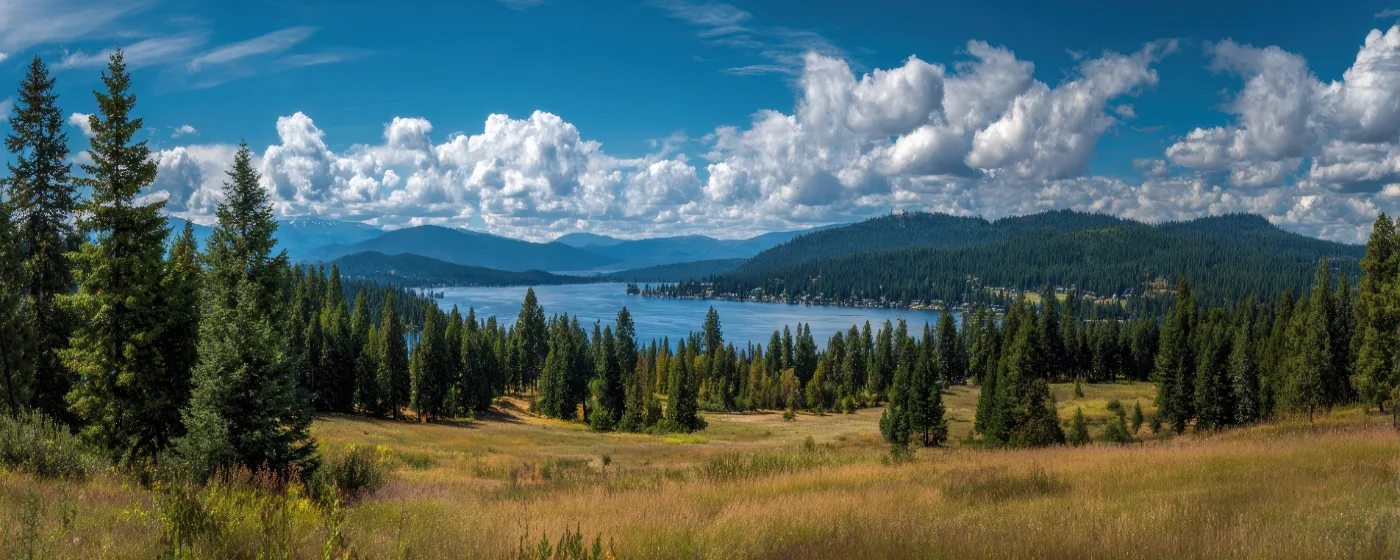
The number that surprises most people researching McCall is how small the actual crime pool is. With a population of just 4,297 permanent residents, even a handful of incidents can move a per-1,000 rate dramatically — and in a resort town anchored by Brundage Mountain Resort, Ponderosa State Park, and the Winter Carnival, McCall's population can swell to multiples of that figure on a busy winter weekend. Understanding that context is the single most important thing you can do before interpreting any crime statistic attached to this city.
The raw numbers, sourced from 2024 FBI data released in October 2025, put McCall's violent crime rate at 3 per 1,000 residents and its property crime rate at 13 per 1,000. Those figures sit modestly above Idaho's own ultra-low state baselines — Idaho's violent crime rate runs approximately 2.4 to 2.54 per 1,000, and its property crime rate of 9.67 per 1,000 is the lowest in the nation — but both McCall figures land well below the U.S. averages of roughly 4.0 to 4.43 per 1,000 for violent crime and approximately 19.6 per 1,000 for property crime. In the most recently reported year, McCall recorded zero murders. The trajectory matters too: a 15-year trend shows crime moving consistently downward, and McCall's City-Data crime index dropped 41% from 2023 to 2024 alone.
McCall is also unusually well-policed for its size. The department runs 19 officers — roughly 6.5 per 1,000 residents, a ratio nearly double the national average and dramatically higher than the Idaho average. That presence is visible year-round on the streets around Legacy Park, along W Lake St, and through downtown. Full-time residents consistently describe the town as one where they feel comfortable, where they know their neighbors, and where the biggest day-to-day concern tends to be a tourist double-parking on 3rd Street rather than anything more serious.
Whether you're weighing a permanent move or a second home near Payette Lake, the sections below break down McCall's crime statistics against state and national context, explain what the tourism factor actually means for residents, walk through neighborhood-level safety differences, and give you a clear picture of the policing and long-term trends that shape daily life here.
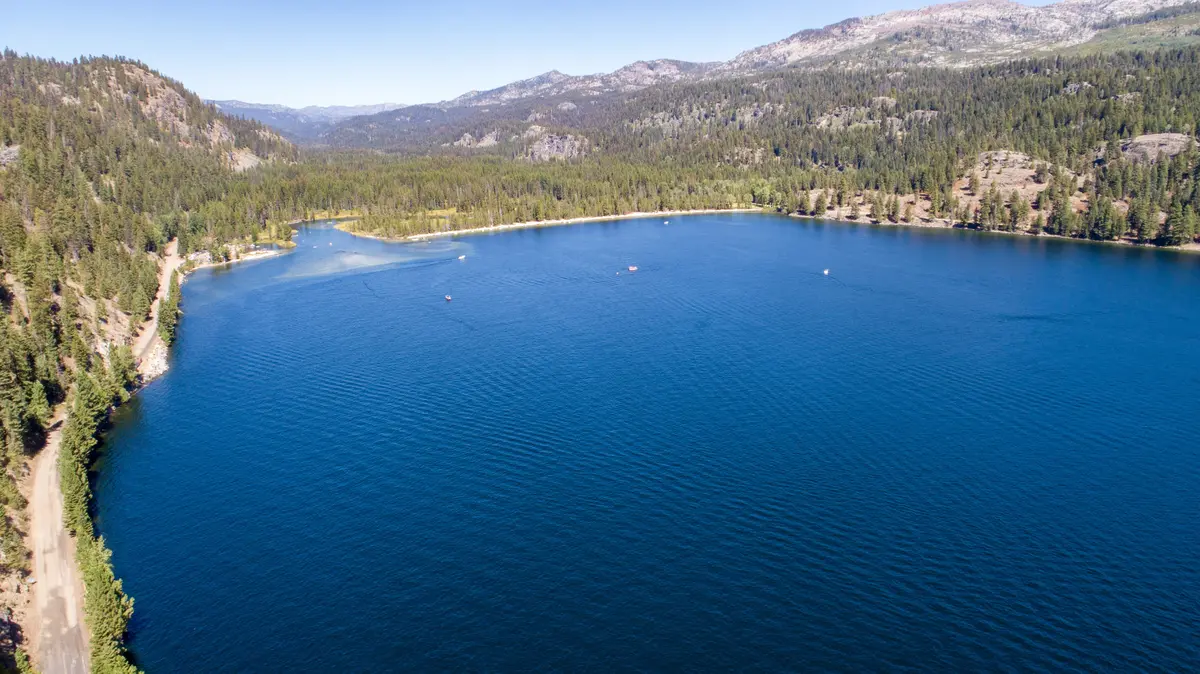
McCall Crime Rates vs. Idaho and the U.S.: The Full Context
Raw crime rates for small resort cities are easy to misread. McCall's numbers look different the moment you place them next to real benchmarks.
| Geography | Violent Crime (per 1,000) | Property Crime (per 1,000) |
|---|---|---|
| McCall, ID (2024 FBI data) | 3.0 | 13.0 |
| Idaho statewide (2024) | ~2.4–2.54 | ~9.67 (lowest in U.S.) |
| U.S. national average (2024) | ~4.0–4.43 | ~19.6 |
McCall's violent crime rate runs modestly above Idaho's already-low state baseline, but it sits clearly below the national norm. On property crime, the same pattern holds: higher than Idaho's record-low figure, but noticeably below what you'd encounter in most American cities.
Idaho itself reached a 20-year crime low in 2024, with the Idaho Statistical Analysis Center reporting a 6.3% statewide drop from 2023. McCall's 2024 City-Data crime index of 123 — compared to a U.S. average of 235.3 — puts it roughly half the national baseline. The one figure worth sitting with: no murders were recorded in McCall in the most recently reported year. For a town of under 4,300 people, that is the statistical norm, but it is still worth stating plainly.
What the Crime Composition Tells You
Statewide, 76.9% of Idaho violent crimes in 2024 were aggravated assaults, with murders accounting for just 0.69% of violent incidents. The category composition matters: most of what registers as "violent crime" in a place like McCall is closer to a bar fight after a ski weekend than a predatory street crime.
On the property side, Idaho's crime breakdown shows 75.1% of property crimes are larceny-theft — a category that includes shoplifting and vehicle break-ins — versus just 9.2% motor vehicle theft. That pattern is consistent with what you'd expect in a tourist-heavy mountain town where opportunistic petty theft at trailheads or from unlocked cars during a busy Brundage weekend outpaces anything more serious.
The Tourism Effect: Why McCall's Per-Resident Rate Can Mislead
McCall's permanent population is 4,297. On a Winter Carnival weekend in February, that number multiplies — and every incident that occurs during that swell still gets divided by 4,297 when the annual rate is calculated.
This is not a quirk unique to McCall. NeighborhoodScout and City-Data both include methodology notes acknowledging that visitor and seasonal populations can inflate per-resident crime ratios for resort communities. A property crime that happens in a Shore Lodge parking lot or along Ice Cream Alley during peak summer affects the annual count the same way one that happens in a quiet residential pocket in February does — but a full-time resident's actual lived exposure to crime is very different from what the aggregated rate implies.
What This Means for Full-Time Residents
If you're planning to live in McCall year-round rather than visit for ski season, the relevant question is not "what is the annual rate" but "what is my day-to-day risk." Long-term residents consistently describe a town where you leave your car unlocked in your own driveway without giving it a second thought — then remind visitors not to do the same during July 4th weekend.
The practical upshot: be more thoughtful about petty property precautions during peak tourist windows — Winter Carnival in February, Fourth of July week, and Labor Day weekend. Leave nothing visible in a car parked near Legacy Park or along the lakefront. Outside those windows, the risk profile for permanent residents is substantially lower than any annual average suggests.
McCall's Economic Character as a Safety Factor
Resort-economy towns with high property values tend to have lower rates of poverty-driven property crime. McCall's median household income is $60,253, and the housing market reflects significant wealth concentration for a city of its size. That economic character doesn't eliminate risk, but it does shape it — the dominant concern here is opportunistic tourist-season theft, not the structural conditions that drive persistent crime in economically distressed areas.
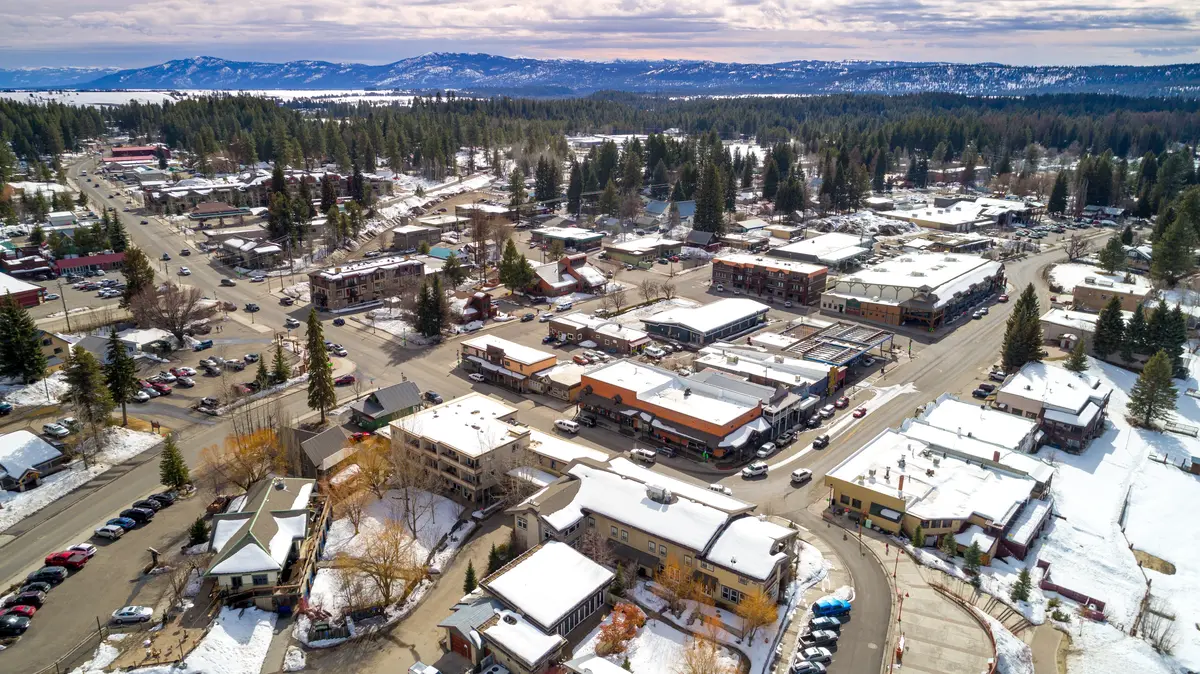
Neighborhood-Level Safety in McCall: What the Data Shows
McCall is small enough that any neighborhood-level crime breakdown needs to be read carefully — a single block-party dispute can move the needle in a neighborhood of 200 homes. That said, resident perception and available crime-mapping data do point to some meaningful differences across the city's areas. For a full picture of each area's character, see the best neighborhoods in McCall guide.
East Shore: The Resident-Preferred Side of Town
CrimeGrade.org's May 2026 analysis identifies the east side of McCall — anchored by the East Shore neighborhood along Payette Lake — as the area residents generally consider safest. The reasons are structural: East Shore sits away from the highest-density tourist corridors, has no through-traffic from Highway 55, and is primarily full-time residential rather than short-term rental concentrated.
Ponderosa Heights and Spring Mountain Ranch carry similar reputations among longtime locals — quieter, removed from the downtown activity center, and composed largely of owner-occupied homes. The residential pockets near the elementary school on the north end benefit from the same character, with the school itself serving as a natural anchor for community stability.
Downtown McCall and the W Lake St Corridor
Downtown McCall — the stretch centered on 3rd Street and W Lake St where independent cafés, grill spots, and the local gathering bar draw consistent foot traffic — is where the tourism effect is most concentrated. It is also the area where opportunistic property crime is most likely to occur, precisely because it's where visitor volume peaks and where cars sit in parking lots for hours while their owners are on the lake or at a restaurant.
This doesn't make downtown dangerous to walk through — it doesn't. But it is the area where a car break-in is most plausible, and where the gap between a summer Saturday and a Tuesday in March is most stark in terms of incident volume.
West McCall and the Mill Road Area
West McCall and the Mill Road area sit in a middle tier — more activity than East Shore, less concentrated tourist exposure than the lakefront downtown blocks. Aspen Village follows a similar pattern: residential enough to feel removed from the visitor economy's peaks, but close enough to downtown that the seasonal pulse is still felt. None of these areas carry red-flag reputations among McCall residents; the differences are relative within an already-low overall baseline.
Looking to buy in McCall? Estimate your payment.
Enter your numbers to see an estimated monthly mortgage payment.
Estimate only. Excludes HOA fees and mortgage insurance. The interest rate above is a starting point, not a quoted rate — replace it with your own to see real numbers. Insurance is a flat placeholder, not a McCall quote.
McCall's Police Department: Coverage for a Small Mountain City
Nineteen sworn officers for a city of 4,297 people is a meaningful resource commitment. That 6.5-officers-per-1,000 ratio is approximately 165% above the Idaho average and nearly double the national average — which matters in a town that has to scale its public safety response to handle both a quiet February Tuesday and a 20,000-person Winter Carnival weekend.
The McCall Police Department operates within a Valley County environment where mutual aid with the Valley County Sheriff's Office is standard practice during peak events. The combination means the town isn't relying solely on its 19-officer force when Brundage Mountain opens for the season or when Legacy Park fills for summer events.
Response Time Reality
McCall is not Boise. The city is situated roughly two hours north of the Treasure Valley on Highway 55, and that geographic reality shapes what "emergency response" means in practical terms for any serious incident. For most residents, the practical safety experience is shaped less by this distance and more by the visibility and familiarity of a small-town department.
Officers know regular faces. When something does happen — a car window smashed on the lakefront, a noise complaint after a short-term rental house party — the follow-through tends to be personal in a way that a precinct in a city of 250,000 simply cannot replicate. The tradeoffs of small-mountain-town infrastructure are real, but for day-to-day crime concerns, the local department's staffing ratio more than compensates.
Crime Trends Over Time and What to Watch Going Forward
The direction of McCall's crime trend is the most reassuring data point in this entire picture. Fifteen years of federal crime reporting data show an overall downward trajectory in both violent and property crime, and the projected 2025 rate is expected to come in below 2019 levels. That's not a rounding-error improvement — it reflects sustained reduction through a period that included COVID-related tourism spikes and significant in-migration from higher-cost western markets.
The 41% single-year drop in McCall's City-Data crime index from 2023 to 2024 is particularly notable. Year-to-year swings in a city this small can be statistically noisy, but a decline of that magnitude — echoing the broader 6.3% statewide drop in the same year — suggests structural improvement rather than random variation.
What Could Push Numbers in the Wrong Direction
Honest safety analysis includes the risk factors, not just the reassuring ones. McCall's continued growth as a destination — more short-term rentals concentrated around Legacy Park and along the East Fork Road corridor, more seasonal workers, more visitor traffic — creates the conditions where property crime rates could drift upward even if per-incident risk for full-time residents stays flat.
Short-term rental concentration is worth paying attention to in a specific, practical way: streets with high Airbnb and Vrbo density tend to have more transient foot traffic and more parked cars with out-of-state plates, which historically correlates with opportunistic vehicle break-ins. This is not unique to McCall — it's a pattern documented in mountain resort towns throughout the West — but it is the most plausible mechanism by which McCall's property crime rate could tick upward over the next several years if vacation rental density continues growing.
The Bottom Line on Safety Trends
McCall's crime picture in 2024 and 2025 is meaningfully better than it was five to ten years ago. The department is well-staffed. The resident community is tight-knit enough that neighbors notice anomalies. And the economic character of the city — a high-value resort market with low poverty rates — continues to provide structural insulation from the conditions that drive persistent crime elsewhere. The risks that do exist are concentrated, seasonal, and largely preventable with basic precautions.
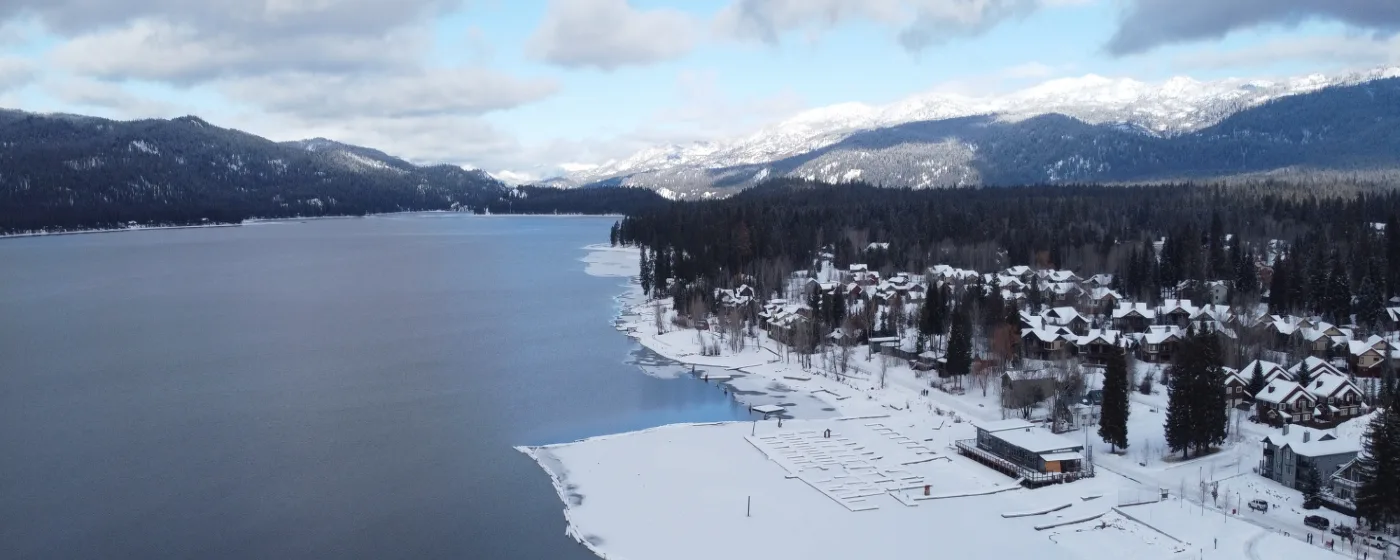
Local Expert Takeaway: McCall is genuinely safe for full-time residents by any reasonable measure — zero murders in the most recent reporting year, a 15-year downward crime trend, and a police-to-resident ratio nearly double the national average. The property crime rate running above Idaho's record-low state average is real, but it's almost entirely a function of tourist-season opportunism: don't leave valuables visible in a car parked near Legacy Park during Winter Carnival weekend or along Lake St on a July Saturday, and your actual exposure is minimal. The east side of the city — particularly East Shore along Payette Lake — is where residents point when asked which areas feel most removed from the seasonal foot-traffic patterns that drive the small property-crime numbers that do occur.
Quick Takeaways & FAQs
✅ McCall recorded zero murders in the most recently reported year and has maintained a consistent downward crime trend over 15 years of federal crime data.
⚠️ Property crime rates run above Idaho's record-low state average, driven largely by tourist-season opportunism near the lakefront and downtown corridors rather than persistent neighborhood-level risk.
📍 McCall runs 19 police officers for a city of 4,297 — a staffing ratio roughly double the national average — which means visible patrol presence even during the quiet off-season months between ski season and summer.
Is McCall, Idaho a safe place to live?
What is McCall's violent crime rate compared to the rest of Idaho?
Which neighborhoods in McCall are considered safest?
Does McCall's tourism industry affect the crime rate?
How many police officers does McCall have?
Moving to Idaho?
Tell us what you need help with and we'll connect you with local resources.
