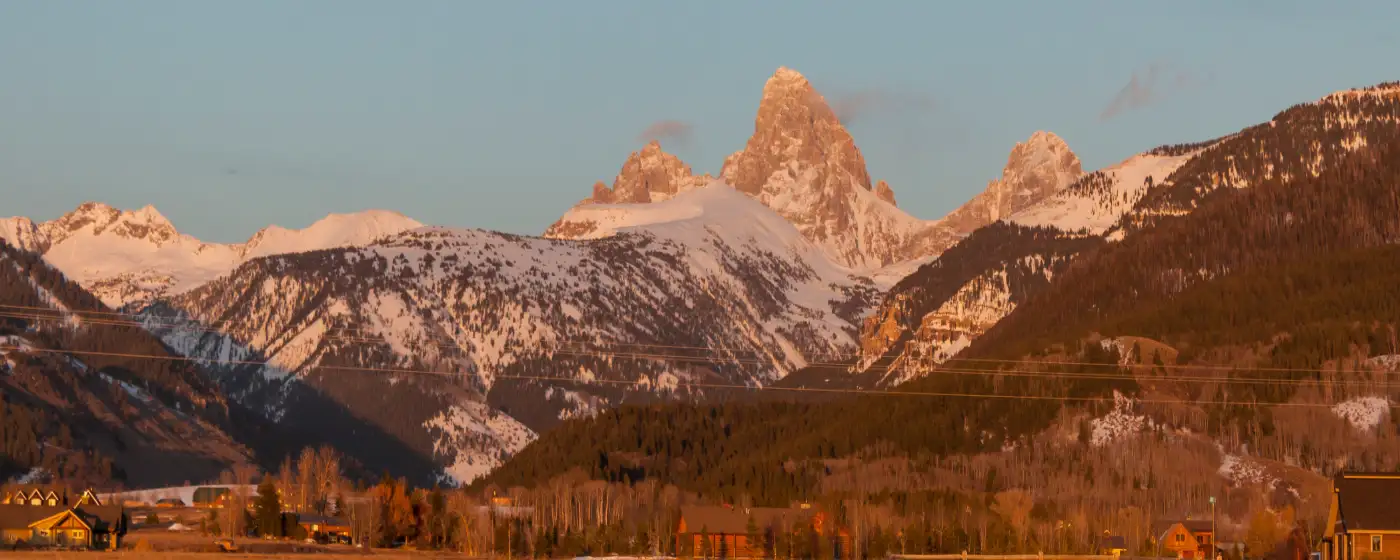
Most people who retire to Driggs didn't stumble into it. They spent years skiing Grand Targhee, hiking the Jedediah Smith Wilderness, or driving over Teton Pass on a summer weekend — and eventually stopped asking why they didn't just live here. That pull is real, and it's specific: Driggs sits on the quieter, less expensive west slope of the Tetons in Teton Valley, Idaho, about 45 minutes from Jackson, Wyoming via Highway 22. The views are identical to Jackson's. The property tax bill is not. The trade-off is that Driggs is a small town of roughly 2,500 people, and everything that implies — limited specialty medical access, no big-box retail, winters that close Teton Pass for hours at a time — applies fully.
The retirees who land here tend to share a profile: outdoor-focused, financially comfortable, and genuinely uninterested in the restaurant-and-nightlife retirement the Sun Belt sells. About 15% of Driggs's population is already over 65, a meaningful share for a town this size, drawn by the combination of Teton Valley's landscape and costs that run noticeably below Jackson Hole. The community is service-oriented and outdoor-industry adjacent, which means you'll find neighbors who ski into their 70s and volunteers who know everyone at the farmer's market by name.
Cost of living in Driggs runs approximately 27% above the U.S. national average, driven mostly by housing. A full cost-of-living breakdown covers the specifics, but the short version is that Driggs is meaningfully more affordable than Jackson while still requiring a real financial commitment — the typical home value sits at $781,920 (Zillow Home Value Index, 2026). Idaho's tax structure is genuinely favorable for retirees, particularly the full Social Security exemption. Daily life centers on outdoor recreation, a compact walkable downtown along Main Street, and a tight community calendar anchored by events like the Teton Valley Foundation's Music on Main summer concert series.
Whether you're ready to put in an offer or still weighing whether Teton Valley fits your retirement picture, the sections below cover healthcare access, the retiree tax picture, what downsizing actually looks like here, how walkable the town is day-to-day, and how Driggs stacks up against the nearby alternatives worth considering.
Why Retirees Are Choosing Driggs
The honest case for retiring in Driggs starts with what it is not: it is not a retirement community, a golf-course suburb, or a Sun Belt city with a senior center on every block. It is a small mountain town where retirees who love the outdoors happen to find themselves very well-served. If skiing, fly-fishing the Teton River, or hiking the Caribou-Targhee National Forest three seasons a year sits at the center of your retirement vision, Driggs delivers that at a scale that Jackson, Wyoming no longer can — and at prices that still, for now, reflect that distinction.
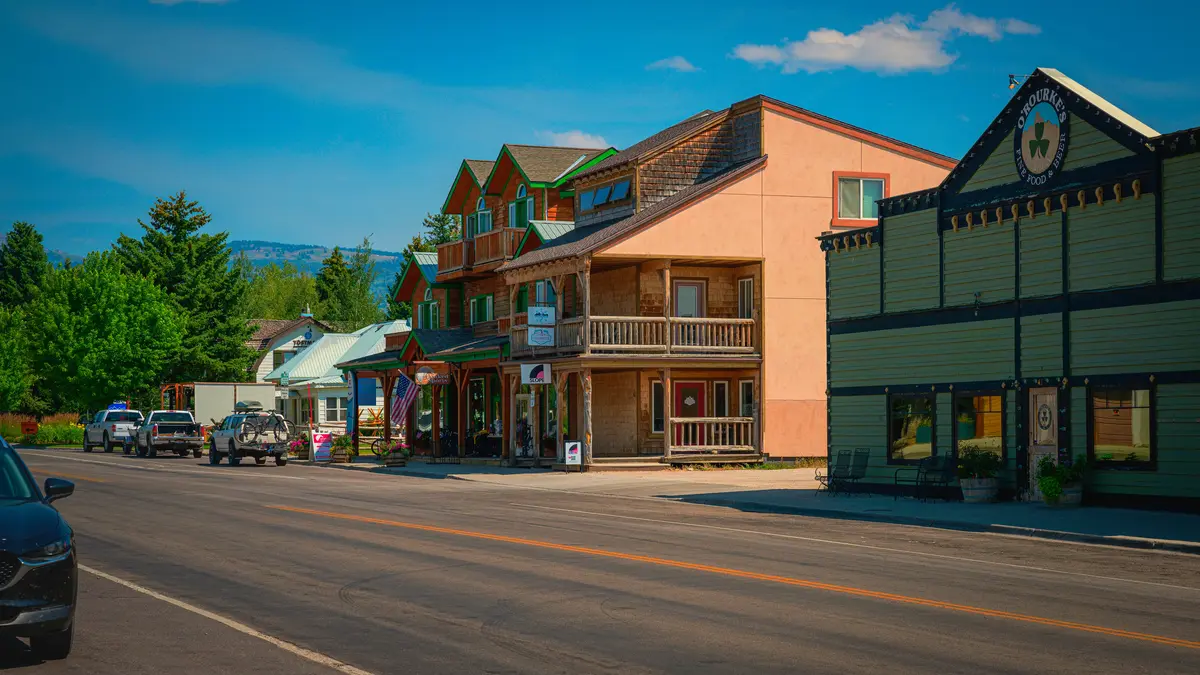
The retirees who thrive here are typically mortgage-free or nearly so, comfortable driving 45 minutes to Jackson for a specialist appointment or a wider grocery run, and genuinely content with a smaller social orbit. Driggs's Main Street has enough — morning coffee at an independent café, dinner at one of the handful of local restaurants — but it won't satisfy someone who wants walkable urban energy or a rotating cultural calendar year-round.
The retirees who tend to leave, or who choose not to come in the first place, cite two things: the isolation that sets in after the first winter, when Teton Pass closures can make even Jackson feel unreachable, and the absence of a peer senior-living infrastructure. There are no continuing-care retirement communities in Driggs proper. If your retirement plan includes the realistic possibility of needing assisted living within five to ten years, you should factor in that the nearest facilities are roughly 90 minutes away in Idaho Falls. For healthy, active retirees in their 60s and early 70s, Driggs is a strong fit. For those already navigating significant health complexity, it deserves a harder look.
Healthcare & Medical Access in Driggs
What's Here: Teton Valley Health Care
Teton Valley Health Care is the local system retirees rely on — and for a rural critical-access facility, it punches well above its weight. The main campus is Teton Valley Hospital at 120 East Howard Avenue, Driggs, open 24 hours every day. The system also operates the Driggs Health Clinic, the Victor Health Clinic, a Rehabilitation Center, and a Specialty and Orthopedic Clinic.
On-site services include emergency care, orthopedic care, MRI, CT scans, digital mammography, physical and occupational therapy, mental health counseling, pharmacy, endoscopy, and general surgery. For a town of 2,500, that list is genuinely impressive. Most retirees managing routine chronic conditions — blood pressure, diabetes, joint replacement recovery — will find Teton Valley Hospital adequate for day-to-day needs.
The Distance Reality for Advanced Care
Cardiology, oncology, neurology, and complex surgical subspecialties are a different story. Driggs does not have them. Your realistic options are Jackson, Wyoming — roughly 45 minutes on a good day, but Teton Pass is a mountain road that closes in serious weather — or Idaho Falls, approximately 85 miles and 90 minutes to the west via Highway 33 and US-26. Idaho Falls has the regional hospital infrastructure that handles high-acuity cases.
This is the healthcare calculus every prospective retiree should run honestly. For an active couple in their early 60s with no serious conditions, Teton Valley Hospital covers most scenarios and the drive to Jackson or Idaho Falls is an occasional inconvenience. For someone managing heart disease or undergoing cancer treatment, a 45-to-90-minute drive to specialty care is not a minor inconvenience — it is a daily reality that shapes every appointment, every scan, every infusion.
What to Ask Before You Buy
Ask your own physicians whether telehealth can substitute for any of your current specialist visits. Ask how Teton Valley Hospital handles transfer protocols for cardiac emergencies — the answer will tell you a lot. And check whether your Medicare Advantage or supplement plan has adequate in-network providers in both Driggs and Idaho Falls, because the network gaps in rural Idaho can be real.
The Retiree Budget in Driggs
Idaho's Tax Posture for Retirees
Idaho fully exempts Social Security benefits from state income tax at all income levels — no means testing, no phase-out. That's a meaningful advantage if Social Security makes up a significant portion of your retirement income. Other retirement income — IRA and 401(k) withdrawals, most pensions — is taxed at Idaho's flat 5.8% state income tax rate (subject to legislative change; verify with a tax advisor). Idaho also levies no estate or inheritance tax, and the federal estate tax exemption threshold is $15 million for 2026, meaning virtually no Driggs retiree faces estate-tax exposure at either level.
Property Tax: Genuinely Low, With Relief Available
Driggs's effective property tax rate is approximately 0.35% — among the lowest in the Mountain West and a real financial argument for buying here rather than renting in retirement. Idaho's Circuit Breaker program can reduce property taxes by $250 to $1,500 annually for qualifying seniors age 65 and older whose 2025 household income was under $39,130. Applications are filed between January 1 and April 15 at the Teton County Assessor's office. If you qualify, file — it's not automatic.
Sales Tax and Daily Costs
Driggs has a combined state and local sales tax rate of 6.0%, which applies to most goods. Dining out carries an additional layer: the city levies a 1% tax on prepared foods and a 2% tax on liquor by the drink. If you eat out regularly, those layers add up noticeably on a fixed income. Groceries themselves are not cheap in Teton Valley — the nearest Costco and full-service grocery options at scale are in Idaho Falls, and many retirees batch their big shopping trips accordingly. Overall cost of living runs roughly 27% above the national average, with housing as the dominant driver. The cost-of-living page has a full breakdown of what a monthly budget realistically looks like here.
Looking to buy in Driggs? Estimate your payment.
Enter your numbers to see an estimated monthly mortgage payment.
Estimate only. Excludes HOA fees and mortgage insurance. The interest rate above is a starting point, not a quoted rate — replace it with your own to see real numbers. Insurance is a flat placeholder, not a Driggs quote.
Walkability, Community & Staying Active in Driggs
The Walkability Reality
Driggs's downtown is genuinely walkable in the narrow sense — Main Street is flat, compact, and easy to navigate on foot. Morning coffee at an independent café, dinner at one of the local restaurants, the Teton Geotourism Center, the Teton County Courthouse, a handful of local shops — all within a few blocks of each other. What Driggs does not offer is the kind of on-foot errand coverage that would let you go car-free in retirement. A pharmacy run, a larger grocery trip, a hardware store visit — those require a car. In winter, they occasionally require good tires and a weather check before leaving the house.
The terrain around town is flat, which is an advantage over many mountain towns. The Teton Valley itself sits at around 6,000 feet elevation — high enough to affect newcomers' energy levels in the first few months, but the valley floor poses no gradient challenges for walking or cycling. Most retirees find they ride bikes or walk the Trails of Teton Valley pathway system far more often than they expected.
Community Life and Social Infrastructure
Driggs does not have a standalone senior center in the traditional suburban sense. What it has instead is a community small enough that retirees integrate into the general fabric — volunteering with the Teton Arts Council (which runs a $2,400-square-foot arts center with a ceramics studio and multi-use space), attending Music on Main concerts on summer evenings, joining one of the valley's active Nordic ski clubs or the local fly-fishing community. The Teton Valley Foundation runs a consistent schedule of community events that draw a broad age range.
The social scene here rewards people who introduce themselves. Driggs is the kind of town where six months of showing up at the farmers market or volunteering at the Warbird Museum means you genuinely know people. Retirees who wait for community to come to them often find it slow-building. Those who lean in tend to be surprised by how quickly they feel embedded. That said, if your social world depends on a robust peer group of age-matched retirees doing organized activities together, Driggs's infrastructure is thin compared to a purpose-built active-adult community.
Staying Physically Active
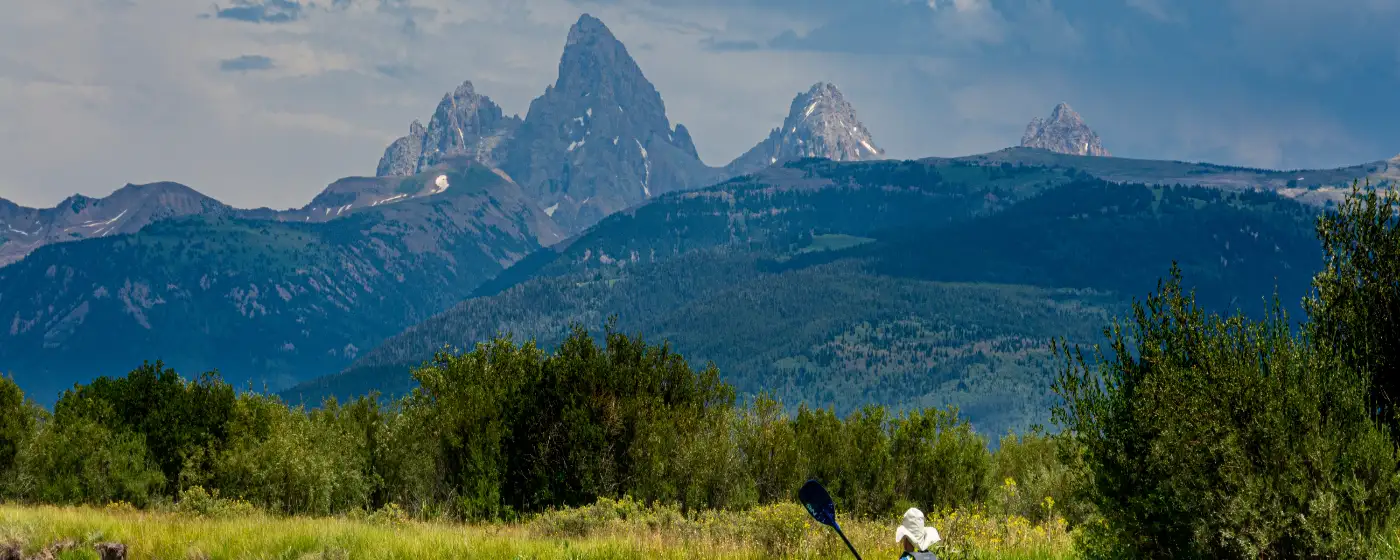
Grand Targhee Resort sits 12 miles up the hill from town and offers skiing, snowshoeing, and lift-accessed hiking without the crowds or prices of Jackson Hole Mountain Resort. The Caribou-Targhee National Forest trails start practically at the edge of subdivisions like Targhee Ranch and Ski Hill Road. The Teton River, which runs through the valley, supports one of the better blue-ribbon trout fisheries in the Mountain West. For retirees whose fitness plan is built around the outdoors rather than a gym, Driggs's outdoor recreation access is genuinely exceptional.
Right-Sizing: Downsizing in Driggs
What the Market Actually Offers
There are no purpose-built 55-plus communities or continuing-care retirement campuses within Driggs city limits. The nearest dedicated senior living facilities are in Idaho Falls, roughly 90 minutes away. If you're arriving in Driggs expecting the kind of lock-and-leave patio home community common in Scottsdale or Boise, you won't find it here. What you'll find instead is a standard small-town real estate market where the right property for a downsizing retiree exists but requires specific searching.
Single-level living is available — ranch-style homes on the valley floor, lower-maintenance newer construction in subdivisions like Aspen Pointe and Falcon Creek, and a smaller inventory of condominiums and townhomes clustered near downtown and in planned communities like Stoneridge and Miller Ranch. These properties tend to move quickly when they hit the market, because the pool of buyers seeking low-maintenance options in Driggs includes both retirees and part-time residents who want a Teton Valley base without the upkeep of a large mountain home.
Price Reality for Downsizers
The typical home value in Driggs is $781,920 (Zillow Home Value Index, 2026) — and that figure reflects the whole market, not just the larger properties. Entry-level condos and smaller single-family homes come in below that median, but not dramatically below it. Retirees selling a California or Colorado home at a significant gain will find Driggs relatively accessible; those moving from other parts of Idaho or the Mountain West may experience a genuine sticker shock relative to what they're leaving behind.
The practical advice from longtime locals: if single-level living and low exterior maintenance matter more than square footage, focus your search on Aspen Pointe, Falcon Creek, and the condo pockets near the city center. Avoid larger lots in areas like Targhee Ranch or Ski Hill Road unless you have a plan for snow removal and landscaping — those properties are beautiful but carry real seasonal maintenance demands that become burdensome as you age into your 70s and 80s. Working with an agent who specifically knows the Teton Valley inventory of smaller, lower-maintenance properties is worth the extra conversation upfront.
The Honest Long-Term Picture
Driggs works as a retirement base for the years when you are healthy, mobile, and driving yourself. The long-term aging-in-place question is harder. There is no assisted living in town. Home health agencies serve the valley but with limited staff. Families considering Driggs for a parent in their 80s should build a realistic contingency plan around what happens if a higher care level becomes necessary — because the answer to that question, today, is Idaho Falls or beyond.
Driggs vs Nearby Retirement Destinations
| City | Cost vs Driggs | Primary Hospital | Walkability | Senior Living Depth | Overall Retirement Fit |
|---|---|---|---|---|---|
| Driggs, ID | Benchmark | Teton Valley Hospital (critical access, 24/7) | Compact downtown; car needed for errands | Thin — no 55+ or CCRC on-site | Nature Quiet Strong for active, healthy retirees |
| Victor, ID | About the same | Teton Valley Hospital (shared system) | Smaller downtown than Driggs; similar car dependency | Very thin; small-town market | Quiet Similar profile to Driggs; slightly less amenity access |
| Tetonia, ID | Noticeably cheaper | Teton Valley Hospital (~20 min drive) | Minimal — rural setting, no walkable core | Minimal | Privacy Rural retreat; best for fully self-sufficient retirees |
| Jackson, WY | Significantly pricier | St. John's Medical Center (full-service regional) | Walkable downtown; seasonal crowds complicate daily life | Some options; limited CCRC | Luxury Views Best healthcare of the group; high price of entry |
| Alta, WY | Pricier | St. John's Medical Center (~30 min) | Rural; no walkable commercial center | Essentially none | Nature Privacy Scenic but more isolated than Driggs |
| Idaho Falls, ID | Noticeably cheaper | Idaho Falls (full regional system, multiple hospitals) | Walkable core; suburban grid; car still useful | Substantially deeper — multiple CCRCs and 55+ communities | Value Community Best for retirees prioritizing healthcare access and senior infrastructure |
* Senior living depth assessed by availability of 55+ communities and continuing-care retirement campuses (CCRCs) within or near each city.
Jackson beats every option on this list for healthcare depth — St. John's Medical Center is a full-service regional hospital, and the difference between it and a critical-access facility matters in a cardiac or stroke emergency. The price of that advantage is substantially higher housing costs. Idaho Falls is the strongest overall senior-living infrastructure choice: it has the hospitals, the assisted-living facilities, the 55-plus communities, and costs that run noticeably below Driggs. If your retirement plan includes a realistic probability of needing structured care within a decade, Idaho Falls deserves serious consideration as a base — with Driggs as the weekend-and-summer destination rather than the permanent address. Victor is essentially the same trade-off as Driggs with slightly fewer amenities. For retirees whose health is strong, whose financial picture is solid, and whose retirement vision centers on the Tetons rather than the services around them, Driggs remains the most compelling address in Teton Valley.
Local Expert Takeaway: Driggs rewards retirees who come for the right reasons and plan honestly. The 0.35% property tax rate and Idaho's full Social Security exemption are real financial advantages. Teton Valley Hospital is a legitimate anchor for routine care. But the 45-to-90-minute drive to specialist-level medicine is not a hypothetical inconvenience — it shapes daily life for anyone managing a serious condition. The retirees who stay happiest here are those who ski or hike until their 70s, know the staff at their favorite downtown café by name, and accepted years ago that a major grocery run means planning ahead. The ones who leave usually say the same thing: the winters were longer than expected, and the nearest CCRC is 90 minutes away.
Quick Takeaways & FAQs
✅ Idaho fully exempts Social Security from state income tax and Driggs's effective property tax rate of approximately 0.35% is among the lowest in the Mountain West — a genuine financial argument for retiring here.
⚠️ No assisted living or continuing-care retirement community exists within Driggs itself, and specialist medical care requires a 45-to-90-minute drive to Jackson or Idaho Falls — a meaningful constraint for retirees managing complex health conditions.
📍 The Teton Arts Council's ceramics and arts studios and the Teton Valley Foundation's Music on Main summer concerts are the core of Driggs's retiree social scene — community here is built by showing up, not by signing up for an amenity package.
Is Social Security taxed in Idaho if I retire in Driggs?
What hospital serves Driggs, and how far is specialist care?
Are there any 55+ or active-adult communities in Driggs?
Can retirees get property tax relief in Driggs?
How does retiring in Driggs compare to retiring in Jackson, Wyoming?
Moving to Idaho?
Tell us what you need help with and we'll connect you with local resources.
